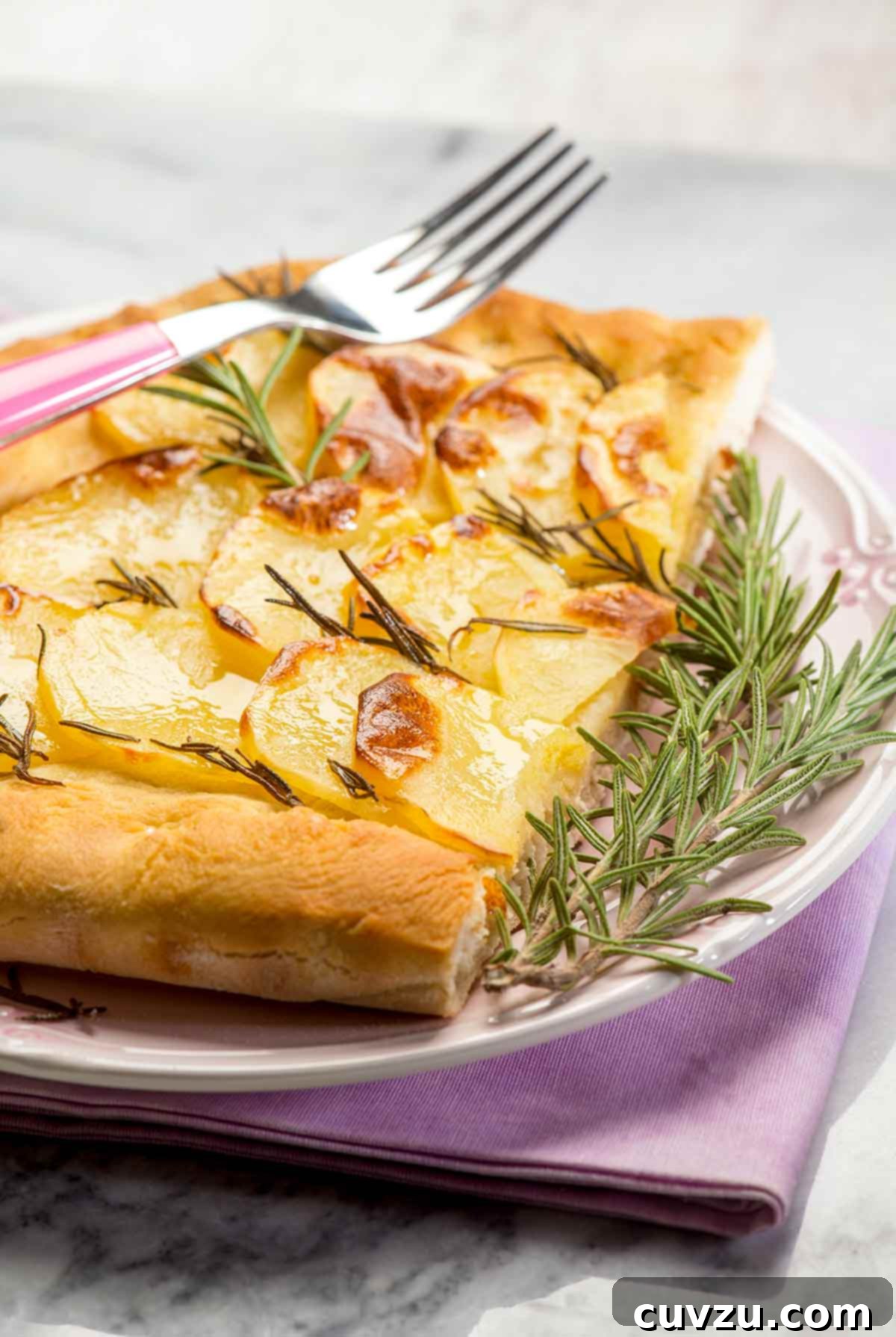
Welcome to the world of aromatic, tender, and irresistibly crusty bread. This potato rosemary focaccia recipe isn’t just a dish; it’s an experience, a journey into the heart of Italian baking tradition, reimagined for the modern kitchen. Imagine golden-brown focaccia, its surface dimpled and glistening, generously adorned with tender slices of potato, sweet caramelized onions, and fragrant rosemary, all brought together by an intense herb oil. This culinary masterpiece features a potent blend of basil, oregano, thyme, and garlic, making every bite a symphony of flavors and textures.
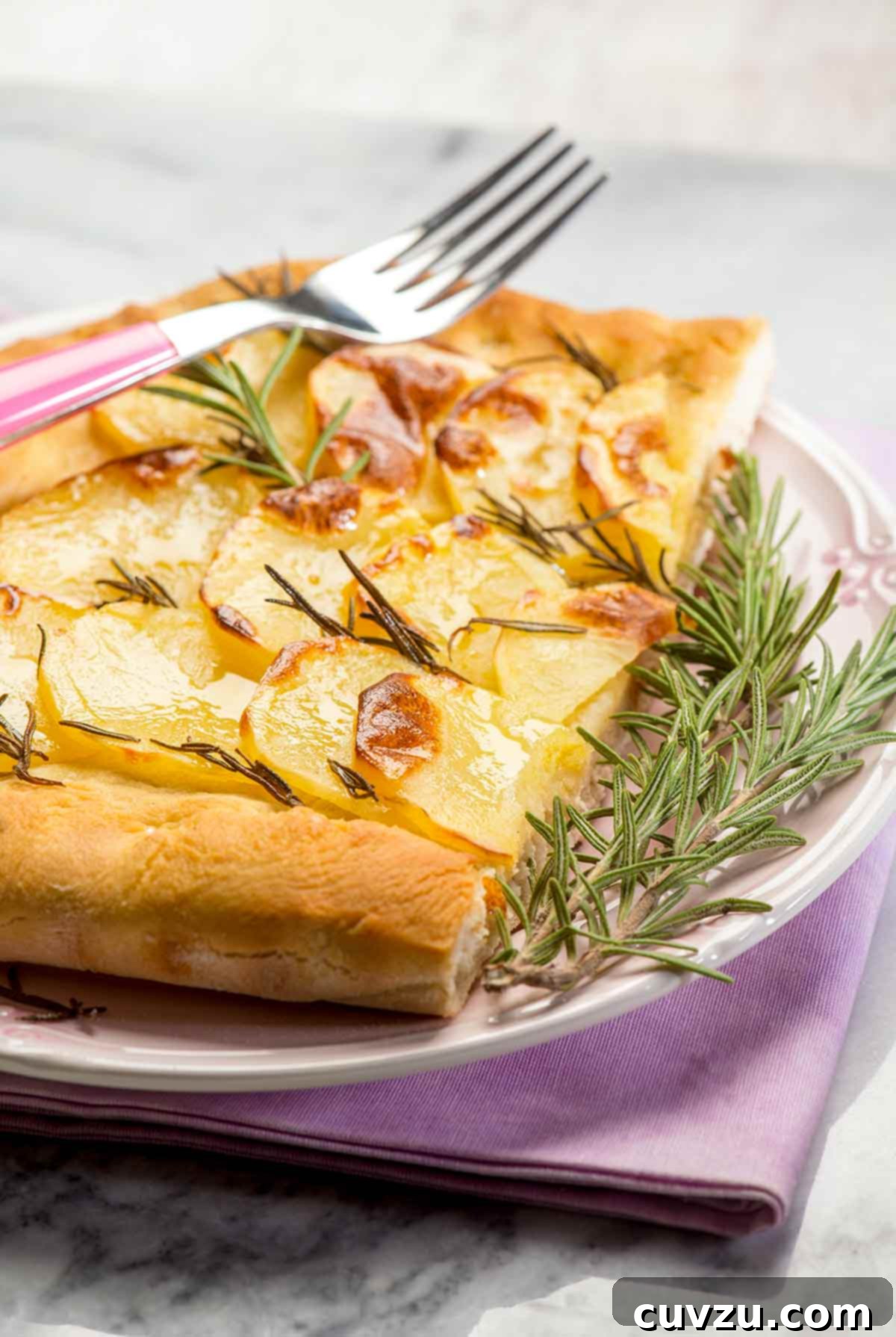
Known as focaccia con patate e rosmarino in its native Tuscany and affectionately dubbed “potato pizza” in bustling New York City, this variation of focaccia is rapidly captivating a new generation of bread enthusiasts. It has become a true benchmark, much like the iconic pizza Margherita sets the standard for pizza or a perfectly baked baguette defines artisanal bread. Once you taste it, you’ll understand its undeniable charm and why it’s gaining such widespread adoration.
Crafted by the esteemed Peter Reinhart, this recipe, like many others in his acclaimed collection, utilizes a delayed-fermentation technique. This method is so exquisitely suited to focaccia that it has become the gold standard, surpassing many conventional focaccia recipes. It imparts an unparalleled depth of flavor and a superior texture that is simply unattainable through quicker methods.
What is Focaccia? A Journey into Italian Bread
Focaccia, a culinary jewel from Italy, stands as a testament to the country’s rich baking heritage. While often compared to pizza crust due to its relatively flat profile, focaccia possesses a distinct identity characterized by its unique texture and the signature dimples adorning its surface. These delightful indentations aren’t merely decorative; they serve a practical purpose, helping to release air from the dough and prevent it from rising too rapidly, ensuring a flat, airy, and wonderfully lightweight texture. Moreover, these dimples become perfect little pockets, ideal for cradling whatever delicious toppings you choose to sprinkle over your bread—whether it’s a generous drizzle of olive oil, a scattering of sea salt, briny olives, sun-dried tomatoes, or an assortment of aromatic herbs.
The history of focaccia stretches back to ancient times, believed to have originated with the Etruscans or ancient Greeks before becoming a staple in Roman kitchens. The word “focaccia” itself is derived from the Latin word “panis focacius,” meaning “hearth bread,” referring to how it was traditionally baked in the ashes of a hearth fire. This simple yet profound bread has evolved over centuries, with regional variations showcasing the diverse culinary landscape of Italy. From the savory, thin Ligurian focaccia often enjoyed plain or with onions, to the thicker, richer versions found in Puglia, often topped with tomatoes and olives, each region tells its own story through this versatile bread.
What sets focaccia apart is its incredible versatility. It can be served as an appetizer, a side dish, or even a light meal. It’s perfect for dipping in olive oil, alongside a fresh salad, or as a base for sandwiches. Its airy crumb and flavorful crust make it a beloved companion to a wide array of dishes, from hearty stews to light antipasti. The beauty of focaccia lies in its simplicity and its ability to absorb and enhance the flavors of its toppings, making it a truly adaptable canvas for culinary creativity.
Irresistible Potato Rosemary Focaccia
Experience the ultimate focaccia with this extraordinary recipe, renowned for its incredible flavor and surprising ease of preparation. This dough forms the perfect foundation for a topping of tender potatoes, sweet onions, and fragrant rosemary, all generously infused with a vibrant herb oil boasting basil, oregano, rosemary, garlic, and thyme. This is more than just bread; it’s a culinary masterpiece that will impress and delight.
David Leite
PIN
Sides
Italian
8
servings
798
kcal
45
55
18
Ingredients
For the dough
- 5 3/4 cups unbleached bread flour
- 2 teaspoons table salt, or 3 1/2 teaspoons kosher salt
- 2 1/2 teaspoons instant yeast
- 2 1/2 cups ice-cold water, (40°F or 5°C)
- 1/4 cup olive oil
For the herb oil
- 2 cups olive oil
- 2 tablespoons dried basil
- 2 tablespoons dried parsley
- 1 tablespoon dried oregano
- 1 tablespoon rosemary leaves
- 1 teaspoon dried thyme
- 2 tablespoons granulated garlic powder, or 10 cloves fresh garlic, pressed and lightly sauteed in 1/2 cup of the olive oil, above
- 1 tablespoon kosher salt, or coarse sea salt
- 1/4 teaspoon freshly ground black pepper
- 1 teaspoon chile flakes, (optional)
- 1 teaspoon sweet or hot paprika, (optional)
For the focaccia topping
- 1/4 cup plus 2 tablespoons olive oil (for pan and dimpling)
- 1 1/2 pounds new potatoes, or Yukon Gold potatoes, peeled if desired
- 1 large white or yellow onion, cut into thin strips (optional, but highly recommended by testers!)
- Leaves from 1 rosemary sprig, roughly chopped
- 1 cup Herb Oil (prepared above)
- 1/2 teaspoon each coarse sea salt or kosher salt and freshly ground black pepper, or to taste
Instructions
Make the Dough: The Foundation of Flavor
-
In a spacious 4-quart bowl or the bowl of your electric mixer, combine the flour, salt, yeast, and water. Stir thoroughly with a large metal spoon until all ingredients are well-hydrated and begin to form a shaggy, wet dough ball. If using an electric mixer, attach the paddle and mix on low speed for approximately 2 minutes. Once combined, let the dough rest for 5 minutes, allowing the flour to fully absorb the liquid.
-
If using an electric mixer, switch to the dough hook attachment. Add the ¼ cup olive oil and continue mixing on medium-low speed for 3 to 4 minutes. The goal is for the oil to be completely incorporated, resulting in a dough that is sticky, yet supple and smooth. It should mostly clear the sides of the bowl, sticking only slightly to the bottom. If your dough appears more like a batter and lacks sufficient structure, incorporate additional flour, one tablespoon at a time, until the desired consistency is achieved.
-
Even with its sticky nature, the dough should be able to pass the windowpane test – a crucial indicator of gluten development. To perform this test, gently stretch a small piece of dough; if it forms a translucent membrane without tearing, your gluten is well-developed. If you’re mixing by hand, repeatedly dip your hand or spoon into cold water to prevent sticking. Vigorously work the dough, rotating the bowl with your free hand, for about 3 minutes until all the flour is incorporated and a wet ball forms. Rest the dough for 5 minutes.
-
For hand mixing, after the rest, add the olive oil, dip your hand or spoon in water again, and continue working the dough for another 3 to 4 minutes. At this point, the dough will be very sticky, but it should possess a discernible texture and structure, indicating proper development.
-
Form the prepared dough into a ball and transfer it to a bowl that has been lightly brushed with olive oil. Turn the dough over to ensure it is evenly coated. Cover the bowl tightly with plastic wrap and immediately refrigerate it overnight. This crucial delayed-fermentation step allows the flavors to deepen and the texture to improve dramatically. The following day, the dough should have almost doubled in size. Remove it from the refrigerator and let it come to room temperature for approximately 2 hours before proceeding with the focaccia preparation.
Craft the Aromatic Herb Oil
-
In a medium-sized bowl, vigorously whisk together all the ingredients listed for the herb oil until thoroughly combined. The quality of your olive oil will significantly impact the final flavor, so choose a good extra virgin olive oil if possible. Allow the herb oil to sit at room temperature for at least 2 hours before using it. This resting period is essential for the dried herbs and garlic to fully infuse their potent aromas and flavors into the oil, creating a rich, fragrant drizzle for your focaccia.
Assemble and Bake the Focaccia
-
Prepare a 12 by 17-inch (30 by 43-cm) sheet pan by generously drizzling 2 tablespoons of olive oil across its surface. Carefully transfer the rested dough to the pan. Using well-oiled fingertips (you’ll use the remaining 1/4 cup of olive oil for this), gently press and stretch the dough to fill the entire pan, creating those characteristic dimples on the surface. Once shaped, cover the pan loosely and allow the dough to rise at room temperature for 2 to 3 hours, or until it has visibly expanded and fills the pan.
-
While the dough is undergoing its final rise, prepare your potatoes. If you’re using new potatoes, place them in a saucepan and cover with water. Bring to a boil and cook for approximately 10 minutes, or until they are tender enough to be easily pierced with a fork. Drain the potatoes and let them cool completely (you can plunge them into cold water to speed this process). Once cooled, slice them into 1/4-inch-thick (6 mm) rounds. If opting for regular-sized Yukon Gold potatoes, slice them paper-thin using a food processor, mandoline, or a sharp chef’s knife for consistent results. In a separate bowl, combine the sliced potatoes, the thinly sliced onion (if using), and the fresh rosemary leaves. Pour in 1 cup of the prepared herb oil and gently toss to ensure all the ingredients are beautifully coated.
-
Preheat your oven to a blazing 500°F (260°C). When the focaccia dough has fully risen and is ready for baking, carefully remove the potato and onion mixture from the herb oil, shaking off any excess. Arrange the slices over the surface of the dough. You can spread them randomly for a rustic look or arrange them neatly like dominoes. If using paper-thin Yukon Gold slices, you might need to overlap them slightly to fit them all onto the dough. If adding onions, scatter them evenly over the potatoes. Place the sheet pan on the middle rack of your preheated oven and bake for 5 minutes. After this initial blast, reduce the oven temperature to 400°F (200°C) and continue baking for another 15 minutes. Then, rotate the pan 180 degrees to ensure even browning. Continue baking for an additional 20 to 25 minutes, or until both the focaccia dough and the potato toppings achieve a gorgeous golden-brown hue around the edges.
-
Once baked to perfection, remove the focaccia from the oven. Immediately and carefully transfer the hot focaccia to a wire cooling rack. This prevents the bottom crust from becoming soggy. Drizzle any remaining herb oil from the pan, or extra herb oil you have, over the potatoes and focaccia to enhance the flavors further. Season generously with additional coarse sea salt and freshly ground black pepper to taste. Allow the focaccia to cool for at least 20 minutes before slicing and serving. This cooling period allows the flavors to meld and the texture to set, resulting in the best possible eating experience.
Adapted From
American Pie
Buy On Amazon
Nutrition
Serving: 1 portion
Calories: 798 kcal
Carbohydrates: 84 g
Protein: 15 g
Fat: 46 g
Saturated Fat: 25 g
Monounsaturated Fat: 16 g
Sodium: 1470 mg
Fiber: 6 g
Sugar: 1 g
Nutrition information is automatically calculated, so should only be used as an approximation.
Tried this recipe?
Mention @leitesculinaria or tag #leitesculinaria!
Recipe Testers’ Reviews: Real Feedback for Your Baking Success
Trisha T.
Trisha found this potato rosemary focaccia to be the ideal project for a long weekend, offering a rewarding baking experience. She praised the finished focaccia for its perfect balance of olive oil richness, crusty exterior, and wonderfully chewy interior—everything one could desire from this type of bread. While the potatoes and herbs were lovely, the standout for Trisha was the optional onions. She used thinly sliced yellow onions, scattering them both over and under the potatoes, which transformed into delightfully brown and crunchy morsels during baking. Her strong recommendation is to consider the onions a mandatory addition, not optional, for an extra layer of flavor and texture.
The focaccia was so delicious that it became the centerpiece of their dinner, paired simply with vegetables. Trisha emphasized the critical role of high-quality olive oil in this recipe, noting that a “lovely, fruity one” enhanced every stage of the process. She also confirmed the success of the overnight refrigeration for the dough, allowing it to rise for about 12 hours. Finally, while drizzling the remaining herb oil over the potatoes as instructed was good, her spouse particularly enjoyed dipping pieces of focaccia into the leftover oil for an intense burst of herbal flavor.
Linda Pacchiano
Linda declared this recipe one of the best and easiest focaccias she has ever made. She was particularly impressed by the crust, describing it as perfectly baked with a satisfying crunch and a very tender interior, boasting an ideal crumb structure. She noted that while the herbs and potatoes create a fantastic topping, the versatility of this dough means it would be equally delicious with other additions such as caramelized onions, olives, sun-dried tomatoes, or bell peppers, encouraging bakers to experiment with their favorite flavors.
To maximize flavor, Linda strongly suggested using any leftover herb oil as a dipping sauce for the focaccia. She also offered valuable advice regarding the dough’s initial stickiness: if it feels too wet or lacks structure, a common issue, the recipe wisely advises adding more flour by the tablespoon. Linda highlighted the importance of the “windowpane test,” explaining it as a reliable method to determine if the dough has been sufficiently kneaded for optimal gluten development. This involves gently stretching a small piece of dough until it forms a translucent membrane without breaking.
In her own experience, baking in Florida’s high humidity, Linda found she needed to add a little over half a cup of extra flour. This illustrates how environmental factors, specifically moisture content in flour due to humidity, can impact dough consistency. Her insights underscore that adaptability and understanding dough behavior are key to successful bread making, emphasizing that flour consistency can vary unexpectedly.
Daisy Lewis
Daisy enthusiastically endorsed this recipe for anyone seeking a focaccia that is crispy on the outside and wonderfully pillowy on the inside. She praised the dough recipe, stating it’s one she would return to repeatedly for its amazing texture. While the process was time-consuming, she noted it wasn’t overly hands-on, making it manageable for home bakers. Her experience highlights the rewarding nature of this specific dough formulation.
However, Daisy offered a constructive suggestion regarding the herb oil. She felt it contained too many dried herbs, which resulted in the potatoes being heavily coated without significantly enhancing the flavor profile. She proposed a modification: straining the herb oil and then adding more fresh herbs, particularly additional rosemary, alongside the main rosemary topping. This indicates a desire for a more refined, fresher herb presence. She also noted that a single sprig of rosemary didn’t provide enough of the signature rosemary flavor she anticipated from the recipe’s name, suggesting that an increased amount of fresh rosemary might be beneficial for those who love this herb.
Despite her note on the herb oil, Daisy confirmed the potatoes cooked beautifully. She used thinly sliced Yukon Golds, which turned out buttery and perfectly caramelized, showcasing the success of the potato preparation method within the recipe.
Sheara G.
Sheara observed the widespread fascination with bread making, noting the prevalence of sourdough and French loaves among friends and family. Yet, she highlighted a surprising gap: the lack of homemade focaccia. This potato rosemary recipe, she believes, perfectly blends the allure of bread making with the creative spirit of pizza, resulting in a truly irresistible treat. She assured readers that despite the seemingly long total time, “every minute for this focaccia is absolutely worth it.”
Sheara raved about the combination of the airy dough with the subtly spicy herb oil (she opted for the optional chili flakes and hot paprika) and the crispy potatoes, describing it as “absolute heaven.” She particularly appreciated how the thinness of the potatoes contributed a delightful crisp element without making the bread heavy, perfectly counterbalancing the focaccia’s inherent chewiness. This textural contrast, she found, was a key highlight of the dish.
Innovatively, Sheara decided to add the onions to the potatoes during their herb oil marinade, aiming for a touch of sweetness. To prevent the onions from burning on top of the focaccia, she cooked them separately in the leftover herb oil while the focaccia baked, until they were soft and the fresh rosemary in the oil became crispy. She then served these cooked onions alongside the fresh focaccia, creating an additional texture and amplifying the herbaceous flavor. Sheara concluded by highly recommending this recipe as an excellent side dish for a potluck or a delightful light lunch, emphasizing its crave-able qualities.