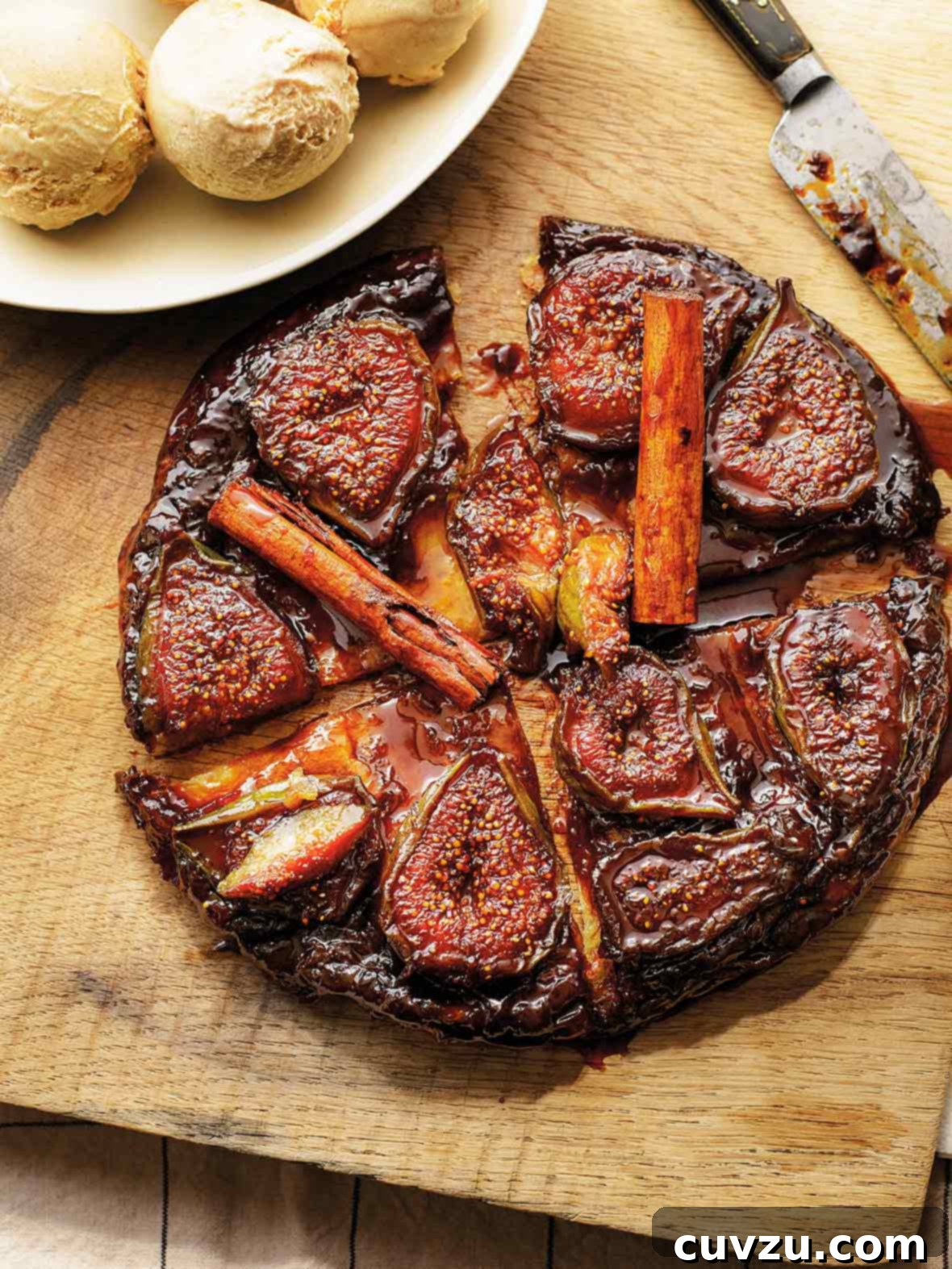
Just when you thought the classic apple tarte Tatin couldn’t get any more enchanting, prepare to be captivated by the exquisite Fig Tarte Tatin. This sophisticated yet surprisingly simple dessert transforms luscious, tender figs into a caramelized dream, nestled beneath a golden, flaky puff pastry crust.
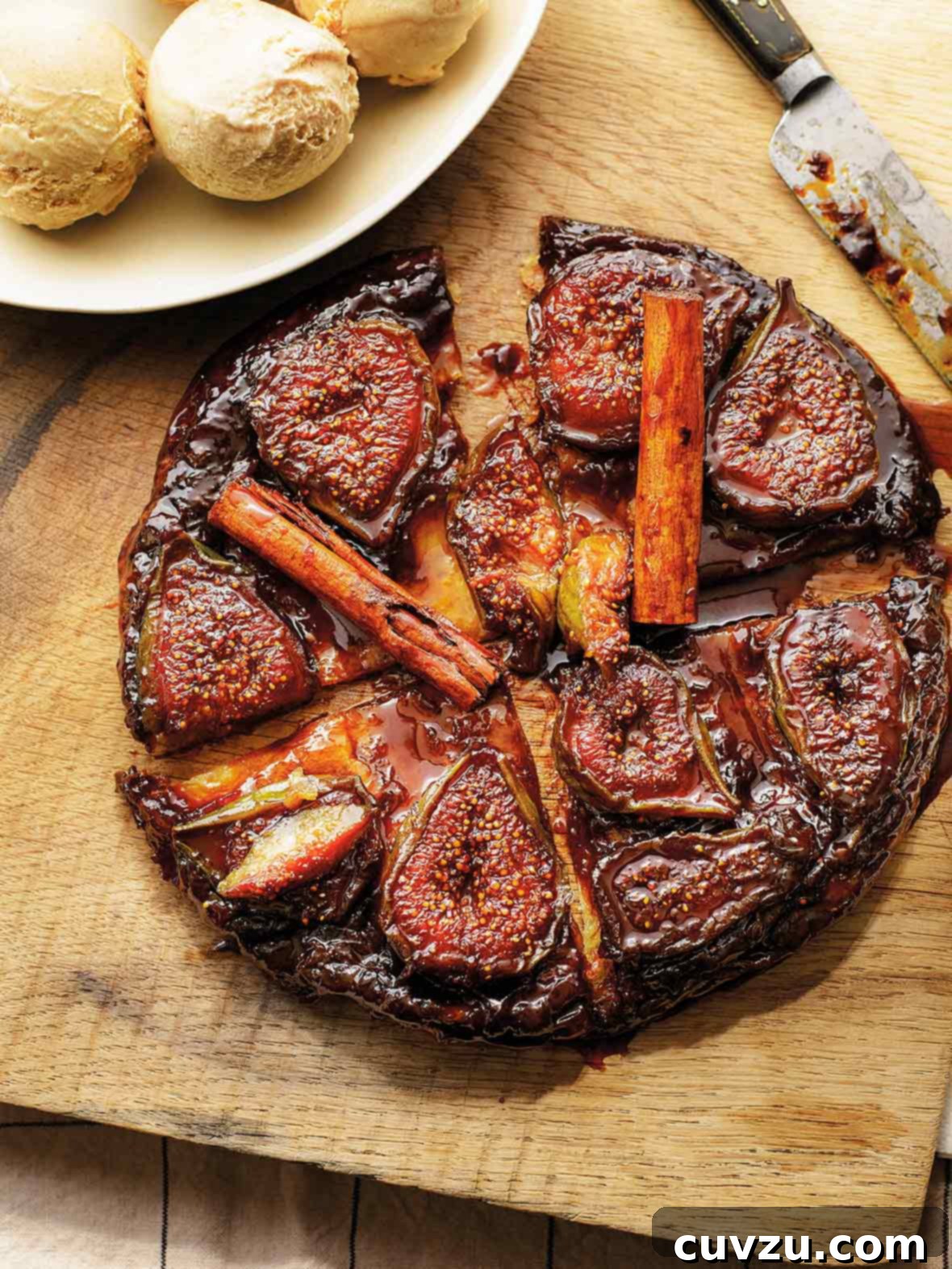
This Fig Tarte Tatin offers a truly lovely early fall rendition of the iconic French apple tarte Tatin dessert. Imagine succulent, ripe figs, gently cooked until tender in a fragrant cinnamon-scented caramel sauce. This glorious mixture is then baked beneath a sheet of rich, buttery puff pastry, culminating in a spectacular dessert that is flipped upside down to reveal its stunning presentation. It’s a dish so remarkable, it makes us wish fig season could last indefinitely.
The Journey From Grill to Oven: Perfecting the Method
Our profound admiration for this recipe led us to adapt its original preparation method. While initially conceived as a grilled tarte tatin, we’ve carefully refined it for oven baking, a technique detailed in the recipe below. We believe this oven method makes the lovely and ingenious dessert far more approachable and manageable for many home cooks. The controlled, consistent heat of an oven offers a more predictable environment for achieving that perfect caramel and a uniformly baked pastry, eliminating the variables often associated with grilling. This adaptation ensures that even those who are less confident with outdoor cooking can recreate this masterpiece with ease, bringing the professional touch of a French patisserie right into their own kitchen. The oven allows for a gentle bubbling of the caramel, ensuring it develops a deep, rich flavor without the risk of scorching, while the puff pastry bakes to a beautiful golden crispness.
Fig Tarte Tatin
Indulge in this elegant early fall dessert, featuring tender figs caramelized in a cinnamon-spiced sauce and baked with flaky puff pastry.
Recipe by David Leite
Print Recipe
Dessert
French
4 to 6 servings
508 kcal
20 minutes
40 minutes
1 hour
Ingredients
- 1 sheet store-bought or homemade puff pastry, thawed if frozen. Choose a good quality all-butter puff pastry for the best flavor and flakiness.
- 1 tablespoon cold unsalted butter, thinly sliced. This butter will melt to create the initial rich base for the caramel.
- 1/3 cup dark muscovado (brown) sugar. Muscovado sugar provides a deeper, more complex caramel flavor than regular brown sugar.
- 6-12 oz (approx. 340g) black figs, cut in half. Look for ripe, plump figs that are firm but yield slightly to pressure.
- One long cinnamon stick. This infuses the caramel with a subtle, warming spice that complements the figs beautifully.
- Finely grated zest of 1/2 lemon, preferably organic (about 1 tablespoon). The lemon zest brightens the entire dessert, cutting through the richness of the caramel.
- 1 large egg, preferably free-range, lightly beaten. This is for brushing the pastry, giving it a beautiful golden sheen.
- Store-bought or homemade cinnamon gelato, to serve (optional, but highly recommended). The cool, creamy gelato contrasts wonderfully with the warm tart.
Instructions
-
Prepare the Oven and Pastry: Preheat your oven to 375°F (190°C). On a sheet of baking paper, carefully roll out the puff pastry into a rough circle. Aim for a diameter of approximately 11-inches (28-cm) and a thickness of 1/8-inch (3-mm). If your pastry sheet is already rectangular, simply shape it as best you can to fit your pan. Prick the entire surface of the pastry multiple times with a fork to prevent it from puffing up too much, then transfer it to the fridge to chill for at least 30 minutes. This chilling step helps the pastry retain its shape and flakiness during baking.
-
Arrange the Fruit: In a shallow, oven-safe nonstick or cast iron skillet (ideally 10-inch or 25-cm in diameter), lay the thin slices of cold butter evenly across the bottom. Sprinkle the dark muscovado sugar over the butter. Next, meticulously arrange the halved figs on top of the sugar and butter layer, ensuring they are cut-side down. Gently press them down a little so they fit snugly in the pan, forming an attractive pattern. Tuck the cinnamon stick among the figs, allowing its aroma to infuse the caramel, and finally, sprinkle the finely grated lemon zest generously over all the figs. This layering creates a beautiful foundation for your inverted tart.
-
Caramelize the Figs: Place the skillet directly into your preheated oven. Cook until the sugar has completely melted and transformed into a deep, rich caramel color. You’ll also notice the juices just beginning to ooze from the figs, a sign that they are starting to soften. This process usually takes between 5 to 9 minutes, but keep a close eye on it, as caramel can burn quickly. Once achieved, carefully remove the skillet from the oven and let it cool for about 5 minutes. This brief cooling period helps the caramel set slightly and prevents the pastry from becoming soggy.
-
Top with Pastry and Bake: Gently place the chilled puff pastry circle directly on top of the figs in the skillet. Carefully tuck the edges of the pastry down between the sides of the skillet and the figs, forming a neat border that will become the crust once flipped. Using a pastry brush, generously brush the top surface of the pastry with the lightly beaten egg. Return the skillet to the oven and continue to bake until the puff pastry is wonderfully crisp, puffed, and a deep golden brown. This usually takes an additional 15 to 30 minutes, depending on your oven. The pastry should look irresistible.
-
Invert and Serve: Once baked, remove the skillet from the oven and let everything cool for another 5 minutes. This cooling time is crucial as it allows the caramel to firm up slightly, making the tart easier to release. Now for the grand reveal: carefully hold a plate or cake stand firmly against the top of the skillet and, with a quick, confident motion, carefully flip the tart out onto the plate. If, by chance, a fig or two remains stuck to the bottom of the skillet in the sticky caramel, don’t worry! Simply use a small spatula to gently scrape them off and artfully nudge them back into place on the tart. Serve your spectacular Fig Tarte Tatin warm, perhaps with a scoop of cinnamon gelato for an extra layer of indulgence.

Adapted From
Grill Smoke BBQ
Buy On Amazon
Nutrition Information
Serving: 1 portion
Calories: 508 kcal
Carbohydrates: 61 g
Protein: 7 g
Fat: 28 g
Saturated Fat: 8 g
Monounsaturated Fat: 14 g
Trans Fat: 0.1 g
Cholesterol: 54 mg
Sodium: 177 mg
Fiber: 4 g
Sugar: 31 g
Nutrition information is automatically calculated and should be used as an approximation only.
Tried this delicious recipe?
Share your culinary creations! Mention @leitesculinaria or tag #leitesculinaria on Instagram. We love seeing your results!
Insights from Our Recipe Testers
Our dedicated team of recipe testers put this Fig Tarte Tatin through its paces, offering valuable feedback and confirming its delightful qualities. Here’s what they had to say about this seasonal stunner:
Helena Pereira
Helena raves about the delectable nature of this fig tarte Tatin, emphasizing its ease of preparation—a hallmark of any good tarte Tatin. She highlights how the choice of fruit truly defines the final dish, and in this case, the caramelized figs are an absolute triumph, especially when figs are at their peak flavor. The subtle addition of cinnamon, she notes, imparts a rich, warm, and wonderfully complex flavor profile that elevates the entire dessert. Her recommendation to serve it with ice cream underscores the perfect balance it strikes between warm fruit and cool creaminess, making it an ideal autumn treat.
Joel Jenkins
Joel, testing from Napa during a reportedly extended fig season, used about a pound (half-pint container) of organic figs, totaling nine pieces due to varying sizes. He utilized one sheet of store-bought puff pastry, rolling it out to fit his 11-inch pan. Joel carefully monitored the caramelization process, melting the butter over medium heat before adding the figs. He observed the sugar starting to caramelize around the 5-minute mark, wisely reducing the heat to medium-low to prevent burning. By 8 minutes, the figs were considerably softened. He found his pan made it easy to form the pastry and tuck the edges, realizing this creates the essential “crust” for flipping. The tart generously served five people, with one piece left over, humorously noting his loss in the race for the morning-after slice. His experience highlights the importance of attentiveness during caramelization and the structural role of the pastry edges.
Jessica Roble-Cinelli
Jessica found this fig tarte Tatin absolutely lovely and commendably easy to assemble, making it a delightful finale for a small dinner party. Her only minor caveat was the inherent stickiness of the caramel, which might require a bit of awkward picking to clear from teeth—perhaps a dessert best shared with very close friends! Opting against shaping her puff pastry into a perfect circle, she rolled it to 12-by-10-inches. Her reasoning was sound: she worried that cutting off rounded corners and trying to re-roll the scraps into the dough might compromise the delicate flaky layers of the pastry. While this made placing the dough over the caramelized figs a tad awkward, it’s a valid consideration for preserving pastry texture. Her review offers practical advice for those prioritizing flakiness over perfectly round aesthetics.
Hillary Hawkins
Hillary declared this fig tarte Tatin a clear winner! She appreciated that it appears fancy enough for an elegant dinner party yet is remarkably straightforward to prepare, echoing the sentiments of other testers regarding its ease. A key point she noted was that the tart is not overly sweet, striking a pleasant balance that allows the natural sweetness of the figs and the warmth of the caramel to shine without being cloying. Like others, she encountered a few figs that didn’t immediately detach during the flip, but quickly discovered that gently placing them back onto the tart was a simple and effective remedy. Her feedback reinforces the dessert’s impressive presentation and approachable preparation.
Why Fig Tarte Tatin is a Must-Try
Fig Tarte Tatin is more than just a dessert; it’s an experience. The transformation of fresh figs into a sweet, jammy, and caramelized delight, paired with the buttery crispness of puff pastry, creates a symphony of textures and flavors. Figs, with their delicate sweetness and subtle earthiness, are often underutilized in desserts, making this tarte a refreshing and unique offering. The cinnamon adds a comforting warmth, making it an ideal choice for cooler evenings or festive gatherings.
Choosing the Perfect Figs
The success of your Fig Tarte Tatin heavily relies on the quality of your figs. For this recipe, black figs (such as Black Mission or Brown Turkey) are recommended for their deep color and intense sweetness. When selecting figs, look for ones that are soft to the touch but not mushy, with no visible bruising or mold. A slight crack in the skin is a good sign of ripeness. Avoid overly firm figs, as they may not caramelize as beautifully or develop the desired tenderness. If fresh figs are unavailable, you might consider using dried figs rehydrated in a little warm liquid, though the texture and flavor will be different, offering a more intense, chewy result.
Expert Tips for a Flawless Tarte Tatin
- Pan Choice Matters: A heavy-bottomed, oven-safe nonstick or cast iron skillet is crucial. It ensures even heat distribution, which is key for perfect caramelization and prevents sticking. Make sure your skillet is approximately 10 inches (25 cm) in diameter for the given ingredients.
- Don’t Rush the Caramel: Watch the caramel closely. It goes from perfect to burnt very quickly. The ideal caramel should be a deep amber, not dark brown. Remove it from the heat as soon as it reaches the desired color.
- Chilled Pastry is Key: Ensure your puff pastry is very cold when you place it on the figs. This helps it puff up beautifully and creates those coveted flaky layers. If it gets too warm, pop it back in the fridge for a few minutes.
- The Flip: The inversion can be daunting, but confidence is your friend. Place your serving plate over the skillet, ensuring it covers the tart completely. Then, with oven mitts, hold the plate and skillet firmly together and flip them in one swift motion. A slight hesitation can cause the tart to shift or break.
- Fixing Stragglers: It’s common for a fig or two to stick to the pan. Don’t panic! Simply use a small spatula or spoon to gently lift them and place them back onto the tart. The beauty of tarte Tatin is its rustic charm.
- Serving Temperature: Tarte Tatin is best served warm, allowing the caramel to remain slightly gooey and the pastry crisp. If made ahead, gently rewarm it in a low oven (around 250°F / 120°C) for 10-15 minutes before serving.
Serving Suggestions and Variations
While delicious on its own, this Fig Tarte Tatin truly shines when accompanied by a scoop of cinnamon gelato or a dollop of crème fraîche or whipped cream. The cool, creamy counterpoint balances the warm, sweet tart perfectly. For an added touch of elegance, a drizzle of balsamic glaze or a sprinkle of toasted pistachios can elevate the flavor profile even further. Experiment with different spices like a pinch of cardamom or star anise for subtle variations, or even add a splash of orange liqueur to the figs for a more complex adult twist.
Conclusion: A Dessert to Remember
The Fig Tarte Tatin is a testament to the beauty of simple, quality ingredients transformed into something extraordinary. It’s a dessert that speaks of autumnal comfort, French culinary tradition, and the sheer joy of seasonal produce. Whether you’re an experienced baker or trying your hand at tarte Tatin for the first time, this recipe promises a rewarding experience and a show-stopping dessert that will impress your guests and delight your palate. Embrace the fig season with this elegant, easy-to-make treat, and let its caramelized goodness become a new favorite in your kitchen.