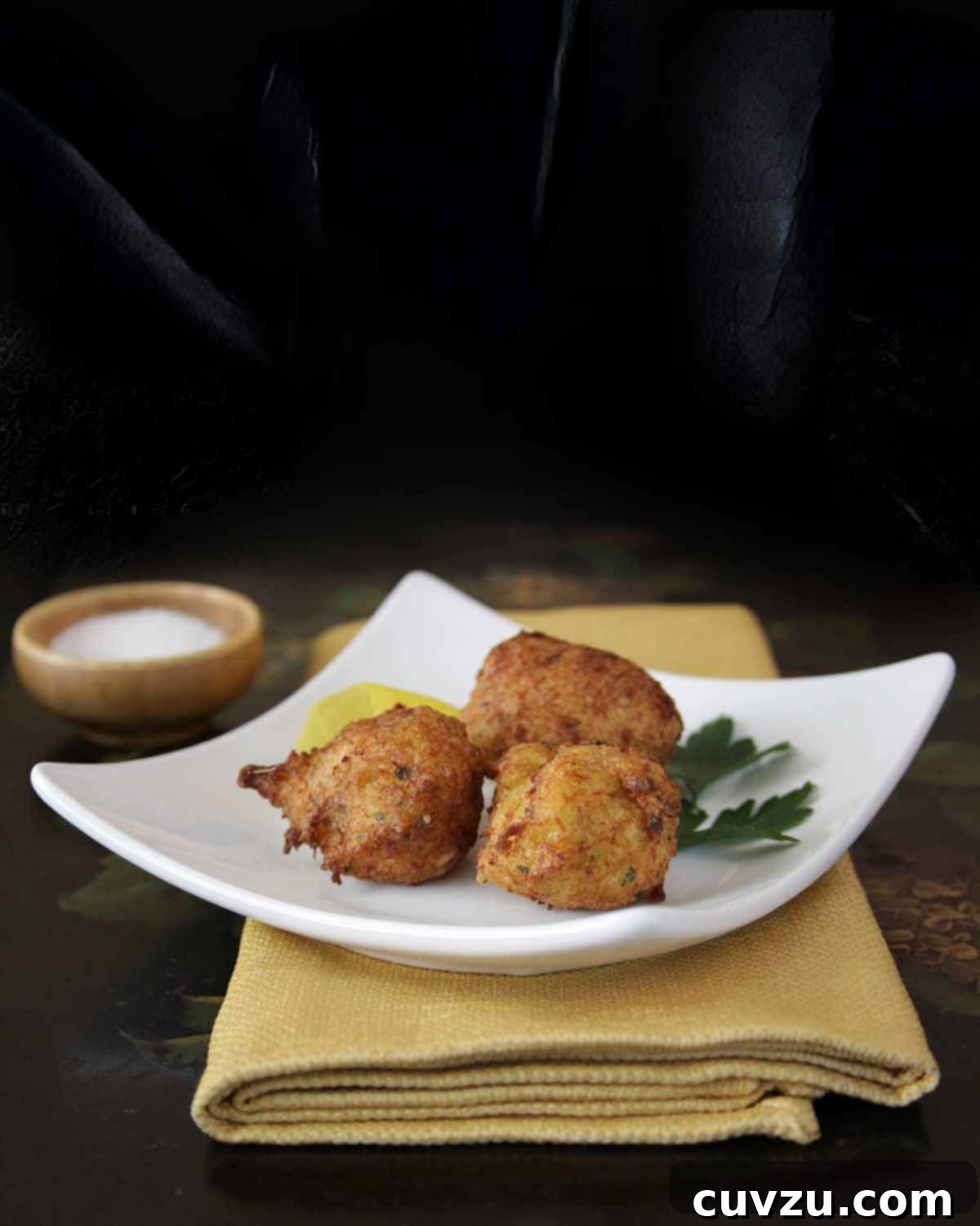
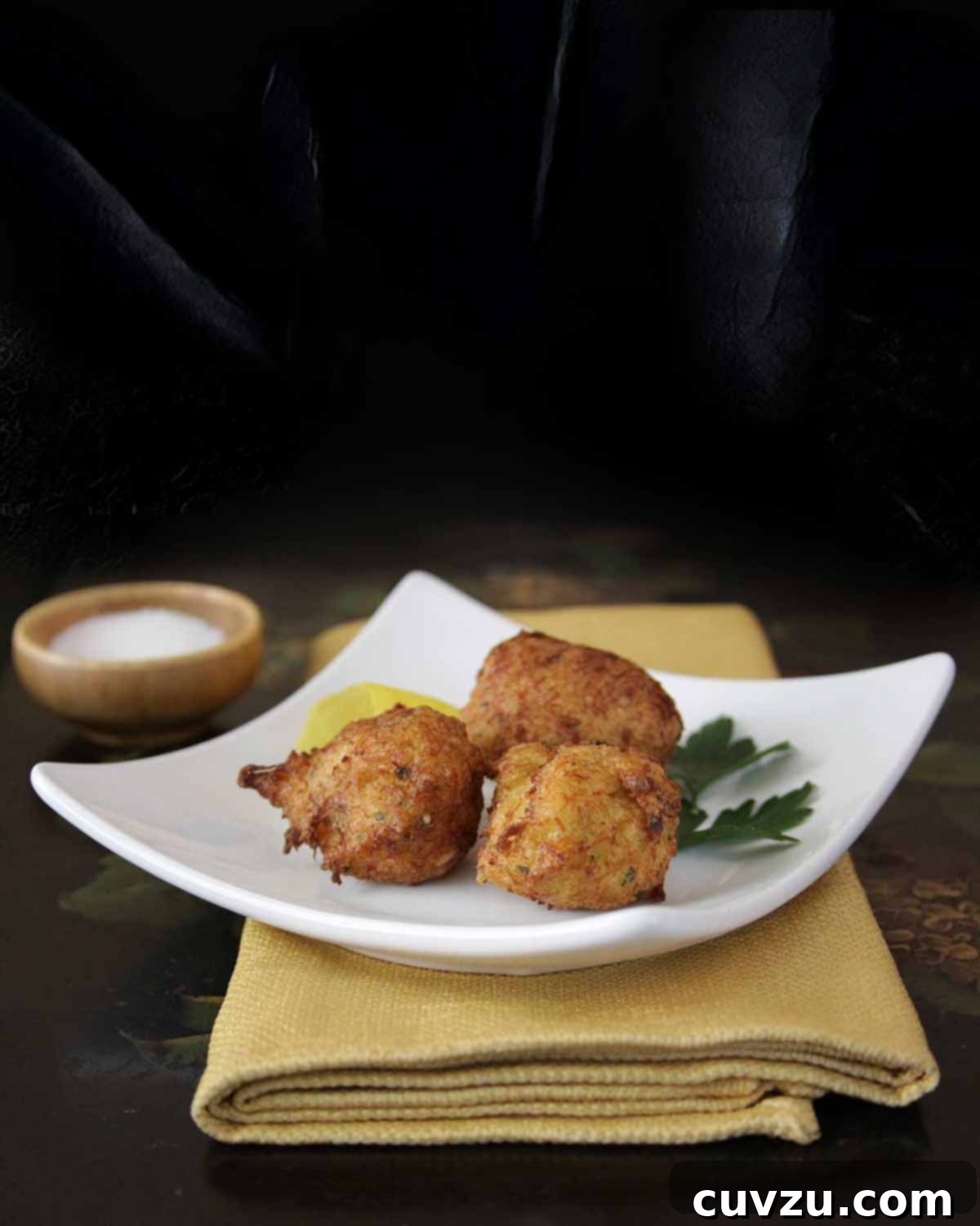
These Spanish salt cod fritters, known as *buñuelos de bacalao*, offer a delightful symphony of textures and flavors. Light, exquisitely crunchy, and perfectly seasoned with just the right amount of oceanic saltiness, they are more than just an appetizer—they are a culinary invitation. Whether served as an elegant starter for a sophisticated dinner party or as a casual, irresistible bite at a cocktail gathering, these fritters promise to captivate taste buds and transport you straight to the vibrant tapas bars of Spain.
The Iberian Love Affair with Bacalao
As a true Portuguese, with family roots tracing back through generations in the Azores, my culinary compass has always pointed firmly towards *bacalhau*. Salt cod isn’t just an ingredient in Portugal; it’s a way of life, an emblem of national identity. It would be nothing short of cultural heresy not to adore our beloved bolinhos de bacalhau, those golden-fried nuggets of salt cod and potato perfection. Our enduring love affair with these two humble ingredients has graced Portuguese tables for centuries, manifesting in countless iconic dishes. From the comforting layers of bacalhau à Gomes de Sá—a rich casserole brimming with cod, sliced potatoes, onions, hard-boiled eggs, and olives—to the delicate scramble of bacalhau à Brás, which artfully encases shoestring potatoes and tender cod flakes in scrambled eggs, and the rustic simplicity of *bacalhau cozido com todos* (boiled cod with potatoes and vegetables), the versatility of salt cod is unmatched. These dishes are more than just recipes; they are deeply ingrained traditions, each telling a story of Portuguese heritage and culinary ingenuity.
A Moment of Culinary Revelation: The Spanish Intrigue
It was during a recent visit to a charming restaurant in Great Barrington, Massachusetts, that my long-held culinary perceptions were delightfully challenged. Glancing at the appetizer menu, a simple phrase—”salt cod fritter with harissa aïoli”—sent a pleasant wave of anticipation through me. While harissa, a North African condiment, hinted at an unexpected twist, my focus remained squarely on the fritters themselves. As a proud citizen of Portugal, I felt a national duty to order them, certain I knew what I was in for.
However, when the plate arrived, presented by a young waitress seemingly unaware of the dish’s origins, I immediately sensed something was profoundly different. Gone were the neatly shaped, uniform golf balls or elegant quenelles of my Portuguese upbringing. In their place were irregularly formed, almost asteroid-like fritters, boasting spiky, crisp edges and, on some, delicate beards of shredded cod, fried to a golden perfection. This unconventional appearance was a stark contrast to the familiar, comforting shapes I had grown up with. It was a visual cue that hinted at a distinct culinary identity, setting the stage for a taste experience that would challenge my loyalties.
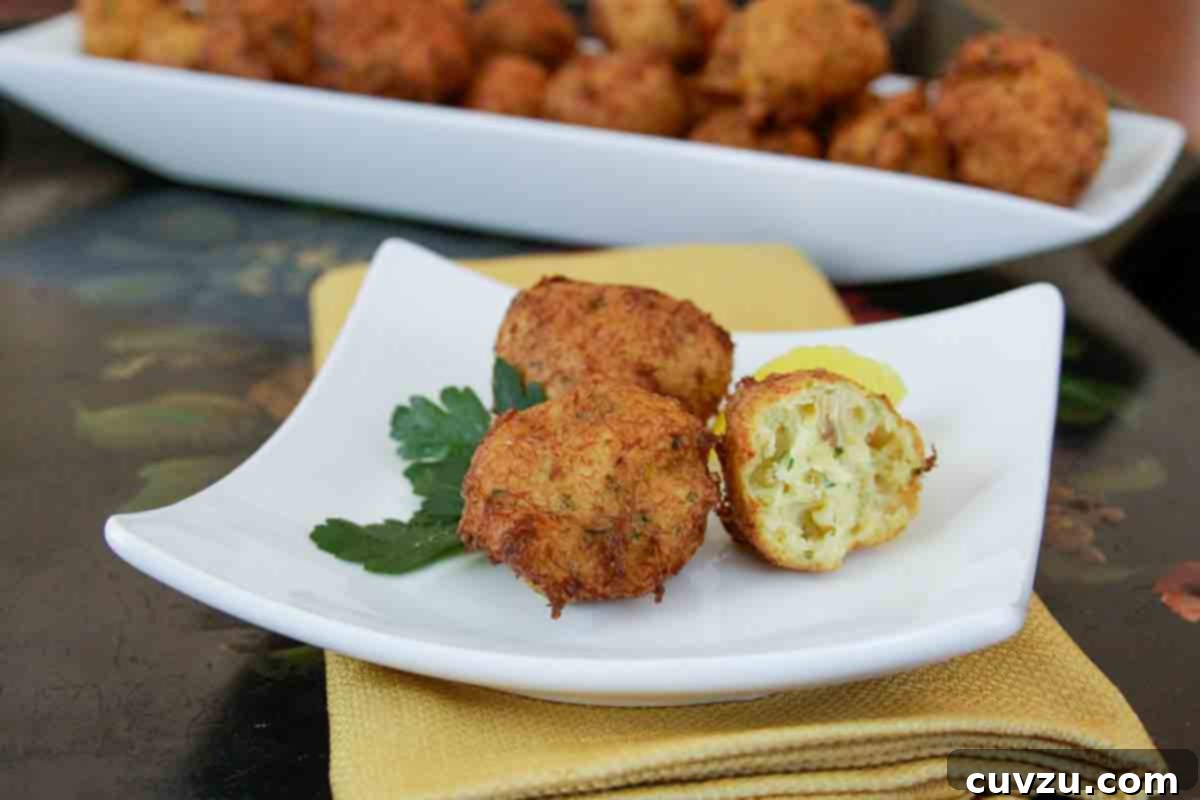
(It’s worth noting, the accompanying photo above features beautifully coiffed *bolinhos*. Old habits die hard, and yes, I admit to shaping these with a spoon. Forgive my momentary lapse into Portuguese tradition!)
Taking my first bite, those fuzzy, crisp ends shattered with a delightful crunch, revealing an interior that was astonishingly light. This was a revelation, entirely unlike the softer, denser fritters I had enjoyed for decades. They possessed such an ethereal quality that eating just one was an impossible feat. Confession time: my dining companion received less than his fair share as I seized the opportunity to get a head start while he excused himself to wash his hands. What truly set these apart was how the potato played a supporting role, not as a binding agent, but as a crucial counterpoint, balancing the dish rather than dominating it. These were, without exaggeration, among the finest fritters I had ever tasted, redefining my understanding of what a salt cod fritter could be.
Cultural Treason: Unveiling the Spanish Secret
After a persistent effort to extract the recipe from Chef Michael Pancheri, the secret behind these golden nuggets of deep-fried bliss was finally revealed: they weren’t Portuguese at all. They were, in fact, Spanish – the famed *buñuelos de bacalao* I had heard whispers about but never truly encountered. The defining difference lay not just in the potato, but in the addition of a unique batter crafted from flour, water, and oil. While seemingly a minor detail to some, this distinction represents a colossal divergence for any Portuguese palate. I genuinely tried *not* to like them – it felt like an act of culinary betrayal, a moment where an entire nation, metaphorically wrapped in its shawl, might turn its back on me. Nothing, after all, comes between the Portuguese and their salt cod fritters, especially anything *espanhol*. Our nations have long maintained an uneasy détente, shaped by centuries of historical rivalries and perceived one-upsmanship. Yet, despite this deeply ingrained cultural tension, I found myself truly, madly, deeply in love with these Spanish fritters. What’s a proud *Portagee* boy to do? The answer was clear: master them, and perhaps, in doing so, bridge a small culinary divide.
The Fritter Throwdown: A Playful Challenge
Just this past Saturday in Connecticut, as I was secretly savoring yet another treasonous bite of my perfected Spanish *buñuelos* before serving them to my companion and the renowned Brazilian cookbook author Leticia Moreinos Schwartz, an email arrived. A friend had sent a link to a post about Portuguese salt cod fritters, eloquently penned by the talented food writer Francis Lam. My eyes then caught his accompanying Tweet: “COD FRITTERS good enough to make even the Portuguese happy.”
COD FRITTERS good enough to make even the Portuguese happy: http://bit.ly/5pc5TP
— Francis Lam (@Francis_Lam) January 9, 2010
Oh, poor Francis. Poor, wonderfully misguided Francis. There’s been a four-decade-long kitchen war within the Leite clan over a fritter that can merely satisfy *us*, let alone an entire nation of citizens, each utterly convinced that their own mother crafts the world’s finest *bolinhos*. Such sweeping generalizations, my dear Francis, are prone to getting a man into culinary hot water. And, I don’t know about you, but I have a strong suspicion that a fritter throwdown is brewing in our near future. Picture it: you, me, an abundance of salt cod, and gallons upon gallons of glistening hot oil. It promises to be an epic battle of Iberian fried fish!
Why You’ll Adore These Spanish Salt Cod Fritters
These *buñuelos de bacalao* are more than just a recipe; they are an experience waiting to unfold in your kitchen. Their inherent lightness makes them dangerously addictive, and their irregular, crispy texture offers a satisfying contrast to the tender, savory interior. They’re a fantastic conversation starter, an intriguing culinary adventure, and a testament to the diverse and delicious world of salt cod. Embrace the Spanish spirit and prepare to be enchanted by these remarkable fritters.
If you’re looking to complete your Spanish culinary journey with a show-stopping dessert, I highly recommend checking out my decadent pomegranate Basque cheesecake. It’s the perfect sweet finale to an unforgettable meal. You’ll certainly thank me!
Chow,

Spanish Salt Cod Fritters FAQs
While both hail from the Iberian Peninsula and celebrate the beloved salt cod, the distinctions are significant, particularly to those of Portuguese heritage. Portuguese *bolinhos* are typically denser, made primarily with salt cod, potatoes, onion, garlic, eggs, and parsley. They are renowned for their beautifully sculpted, uniform shapes—either perfect balls or elegant quenelles (ovals). Spanish *buñuelos*, on the other hand, incorporate flour and often baking soda into their batter, which contributes to their characteristic lightness and crispiness. Frequently, saffron or turmeric is added to Spanish versions for an extra layer of flavor and a vibrant golden hue. Visually, *buñuelos* are distinctly irregular in shape, boasting wonderfully crunchy, jagged edges, a stark contrast to their more formal Portuguese cousins.
Properly stored, salt cod boasts an impressively long shelf life, lasting for months, if not longer. The age-old process of salting and drying was, after all, the primary method sailors used to preserve cod for long voyages centuries ago. Keep it in a cool, dry place, ideally in its original packaging, until you’re ready to reconstitute it.
Desalting salt cod is a crucial step that requires patience and attention. Begin by rinsing the cod thoroughly under cold running water to remove any surface salt. Then, place the piece or pieces of cod in a large bowl or a more oblong container, ensuring it’s covered by at least a couple of inches of cold water. Cover the bowl tightly with plastic wrap and refrigerate. The soaking time can vary significantly, ranging from 12 to 48 hours, depending on the thickness and size of your cod fillets. You’ll need to change the water several times throughout this process – every 6-8 hours is a good guideline for thicker cuts, or more frequently for thinner pieces. To check if it’s sufficiently desalted, simply snip off a small piece and taste it. Remember, it’s always easier to add more salt to your recipe later than to remove it from overly salty cod. Aim for a balanced, slightly salty flavor that complements the dish, rather than overwhelms it.
Absolutely! One of the fantastic advantages of *buñuelos de bacalao* is that the batter can be prepared several hours, or even up to a day, in advance. Once the batter is mixed and has cooled to room temperature, cover it tightly and refrigerate. This makes them an ideal choice for entertaining, as you can simply fry them off in batches as guests arrive or when hunger strikes, ensuring they are served piping hot and wonderfully crisp. While they are undeniably best fresh from the fryer, our recipe testers noted they hold their texture surprisingly well, even when cool.
For achieving that perfectly crispy exterior and golden hue, a neutral-flavored oil with a high smoke point is generally recommended for deep frying. Vegetable oil, canola oil, or peanut oil are excellent choices. However, for an authentic Spanish touch and an added layer of flavor, some enthusiasts, like our recipe tester Sofia Reino, advocate for frying them in good quality olive oil. While olive oil has a lower smoke point, it imparts a distinct richness that can enhance the overall experience, especially when paired with a spicy dipping sauce. Experiment with both to discover your personal preference!
Spanish Cod Fritters ~ Buñuelos de Bacalao
David Leite
- PIN
Appetizers
Spanish
24
fritters
67
kcal
45 minutes
30 minutes
13 hours
15 minutes
Equipment
-
Deep-fry or candy or instant-read thermometer
Ingredients
-
10
ounces
salt cod,
soaked
-
1
small
onion,
peeled and quartered -
1
bay leaf -
1
medium
Yukon Gold potato,
diced -
2
garlic cloves,
minced -
2
tablespoons
chopped flat-leaf parsley leaves -
Salt and freshly ground black pepper -
3/4
cup
water -
1
tablespoon
olive oil -
1/4
cup
all-purpose flour -
2
large
eggs -
Vegetable oil,
for frying
Instructions
Prepare the filling
-
Transfer the soaked cod to a medium saucepan. Add the quartered onion and bay leaf, then cover everything with fresh water by about 2 inches. Bring the mixture to a gentle simmer over medium-low heat. Continue to cook the salt cod until it becomes tender and flakes easily when gently poked with a fork, which should take approximately 10 to 12 minutes. Using a slotted spoon, carefully remove the cod from the pan and transfer it to a plate to cool, leaving the onion and bay leaf in the saucepan. Set the fish aside until it’s cool enough to comfortably handle.
-
Bring the same water in which the salt cod simmered to a rolling boil. Carefully drop in the diced potato and cook until it is tender, typically around 10 minutes. Drain the potatoes in a colander, discarding the bay leaf, but retaining the cooked onion.
-
Combine the cooked potato and onion in a bowl and mash them thoroughly until smooth. If the onion proves resistant to mashing, feel free to give it a chop with a knife to ensure a consistent texture.
-
Once the cod has cooled sufficiently, carefully remove any remaining skin, bones, or other undesirable bits. Then, shred the cod finely. My grandmother, Vovó Costa, had a charming method: she would place the cod on one half of a tea towel, fold the other half over, and massage it, rubbing the towel back and forth with the heel of her hand until the fish was transformed into delicate clouds of finely shredded flakes. For a quicker alternative, a food processor can achieve the same result in a mere 10 seconds (apologies, Vovó!). Gently stir the shredded cod, minced garlic, and chopped parsley into the mashed potato and onion mixture. Season generously with salt and freshly ground black pepper to taste. It’s often a good idea to slightly over-season at this stage, as the subsequent batter will mellow out the flavors. Set the filling aside.
Make the batter
-
Rinse out the saucepan you’ve been using (truly a one-pot meal!). Pour in the water and olive oil, then bring to a boil over medium heat. Gradually shake in the flour, stirring continuously with a sturdy wooden spoon to form a batter. Don’t be concerned if it appears lumpy at first; with a few more minutes of stirring, it will smooth out beautifully.
-
Remove the pan from the heat and continue to beat the batter vigorously for 2 to 3 minutes. This step helps to cool the mixture slightly. Add the eggs one at a time, ensuring each egg is fully incorporated into the batter before adding the next.
-
Add the prepared cod mixture to the pan with the batter and stir thoroughly to combine all ingredients. The resulting mixture should have a thick consistency, similar to a hearty oatmeal – thick enough to hold a spoon upright. Allow the batter to cool completely to room temperature. This is where the magic of make-ahead flexibility comes in: you can prepare this batter several hours in advance, or even the day before, and store it in the refrigerator. This allows you to fry the fritters whenever guests arrive, or whenever you find yourself in a state of white-hot hunger!
Fry the fritters
-
In a high-sided saucepan, heat about 3 inches of vegetable oil over medium-high heat until it reaches a temperature of 350°F (177°C). To form the fritters, scoop out a rounded tablespoon or so of the prepared batter. Using a second spoon, gently scrape the batter into the hot oil – remember, irregular shapes are key for that authentic, rustic appeal! Fry the fritters until they are beautifully golden brown and thoroughly cooked through, which typically takes about 2 to 3 minutes per batch. Once fried, transfer the fritters to a brown paper bag to drain excess oil (my Vovó always insisted that paper towels can make fried foods soft, so a paper bag is the traditional choice for maximum crispness). Serve these delightful puppies hot, hot, hot! Don’t allow them time to cool down and lose their irresistible crunch.

An LC Original
View More Original Recipes
Explore More with AI
Substitutions
Scale
Summarize
Nutrition
Serving:
1
fritter
Calories:
67
kcal
Carbohydrates:
3
g
Protein:
8
g
Fat:
2
g
Saturated Fat:
1
g
Monounsaturated Fat:
1
g
Trans Fat:
1
g
Cholesterol:
33
mg
Sodium:
837
mg
Fiber:
1
g
Sugar:
1
g
Nutrition information is automatically calculated, so should only be used as an approximation.
Tried this recipe?
Mention
@leitesculinaria or tag
#leitesculinaria!
Recipe Testers’ Reviews
Sofia Reino – A Portuguese Perspective
As a proud Portuguese, the idea of making Spanish salt cod fritters felt, much like for David, a tough pill to swallow. What could Spaniards possibly teach us about our 400 different ways of cooking *bacalhau*? But, setting my Portuguese pride aside, I embarked on making this recipe. Initially, the preparation seemed quite similar to our Portuguese cod fritters. The main distinction, however, lies in the Spanish method of creating a béchamel-style batter, something we don’t typically do.
The end result was surprising: a fritter that was creamier, noticeably lighter, and possessed a more subtle cod flavor compared to our robust Portuguese versions. I must admit, if you’re new to salt cod, these *buñuelos* are an excellent starting point before delving into the more intensely flavored Portuguese *bolinhos*. Their refined taste and elegant texture make them perfect for a cocktail party, or simply as a superb appetizer or snack. While they are undeniably best straight from the frying pan, they remarkably retain their deliciousness and a pleasant texture even when served cool an hour later.
For those concerned about sourcing salt cod, I recommend checking Latin American or Asian grocery stores, where it’s often readily available. To truly embrace the Spanish character of this dish, consider frying them in olive oil – Spaniards famously fry everything in it! I experimented with two batches: the first in canola oil and the second in olive oil. While the canola oil batch was lighter and less greasy, the olive oil fritters offered a wonderful depth of flavor that I found quite appealing, especially when envisioning them paired with a spicy sauce. Post-frying, a thought struck me: adding smoked sweet paprika to the batter would be an authentic and delicious Spanish enhancement, something I’ll definitely try next time.
Ralph Knauth – The Entertaining Expert
These Spanish cod fritters were absolutely amazing. I’ve prepared and tasted various cod fritters before, but none compared to the soft, fluffy interior and incredibly crisp exterior of these *buñuelos de bacalao*. They were utterly delicious. I served them as an appetizer alongside some chipotle mayo and oven-roasted Romanesco florets, and they were a huge hit.
Interestingly, when I told guests these fritters were made from salt cod – you know, that dried, sometimes intimidating-looking fish found in specialty markets – many couldn’t believe it. Everyone adored them! They’re also wonderfully suited for entertaining, offering great flexibility. You can prepare the batter several hours in advance and simply fry them off and serve them piping hot as your guests arrive. This convenience is a game-changer for hosts.
For my batch, I soaked the cod for approximately 36 hours, which resulted in a delightfully mild flavor (I actually had to add a touch more salt later). I then roughly shredded the desalted cod by hand before placing it in a Cuisinart with the roughly chopped cooked onion; just 10 seconds was all it took to achieve the perfect consistency. It worked brilliantly. I prepared the batter around noon and kept it chilled in the refrigerator, frying it off perfectly at 6 PM that evening. To ensure uniform size, I used a #40 ice cream scoop (roughly 1 ounce/25 grams) to form the fritters, which released effortlessly into the hot oil. My frying time was slightly longer than stated in the recipe, about 4 minutes per side at 350°F. I fried them in three batches, keeping the already fried fritters warm and crisp in a hot oven on a bed of newspaper, a trick that really helped maintain their crunch.
Melissa Maedgen – Gluten-Free Adaptation
Bolinhos de bacalhau have long been a staple in my entertaining repertoire. These crisp and savory fritters are universally loved, even by those who typically shy away from fish. My introduction to them was in Brazil, so my usual version aligns closely with Portuguese traditions. However, this Spanish *buñuelos de bacalao* rendition presents a fascinatingly different culinary beast.
One notable distinction I observed was that in this recipe, the onion is boiled along with the salt cod, whereas my traditional version incorporates raw onion into the potato and cod mixture. The cooked onion here became completely soft and imparted a remarkably mellow flavor. Given my need for a gluten-free diet, a small adaptation was necessary for the flour-based batter. I successfully used sweet rice flour. As expected, it formed a thick paste when added to the oil and water. Everything seemed to be on track, and once the finished batter was combined with the salt cod mixture, the texture matched the recipe’s description perfectly. However, during frying, the initial fritters tended to break apart and absorb too much oil. Increasing the oil temperature didn’t solve the issue, so I incrementally added more sweet rice flour to the mixture. A total of 5 tablespoons did the trick, and after that adjustment, the fritters fried up perfectly crisp and held their shape beautifully.
The soaking time for salt cod is highly variable, depending greatly on the thickness of the fillets. It truly is something you have to develop a feel for. I worked with very thin fillets, and a thorough rinse to remove surface salt followed by a 24-hour soak in a bowl (without changing the water) was sufficient. Bear in mind that the cod will lose even more salt during the boiling process, so taste frequently. For breaking up the cooked fillets, I prefer to do it by hand, then add them to the potatoes, and mash everything together to ensure a cohesive blend.
Now, for the all-important taste test. How did they fare? Delicious, of course! How could fried potato and salt cod ever be anything but delicious? These *buñuelos* differ significantly from my usual *bolinhos*; deciding which is “better” is ultimately a matter of personal preference. This Spanish version is distinctly milder in flavor, boasts a fluffier interior, and possesses a more delicate overall texture. Typically, I don’t feel that salt cod fritters require a dipping sauce, but these, being so mild, genuinely made me crave one. Wait a minute… didn’t the essay mention a harissa aïoli? A quick rummage through the fridge led me to whip together an ad hoc version: a simple mix of mayonnaise, harissa, and a squeeze of lemon. While it would undoubtedly be elevated with homemade harissa and mayonnaise (both of which have excellent recipes on this site), it still hit the spot. Even better, consider making David’s milk mayonnaise and seasoning it with a touch of harissa; its lighter texture would be an even more perfect complement to these delicate fritters.