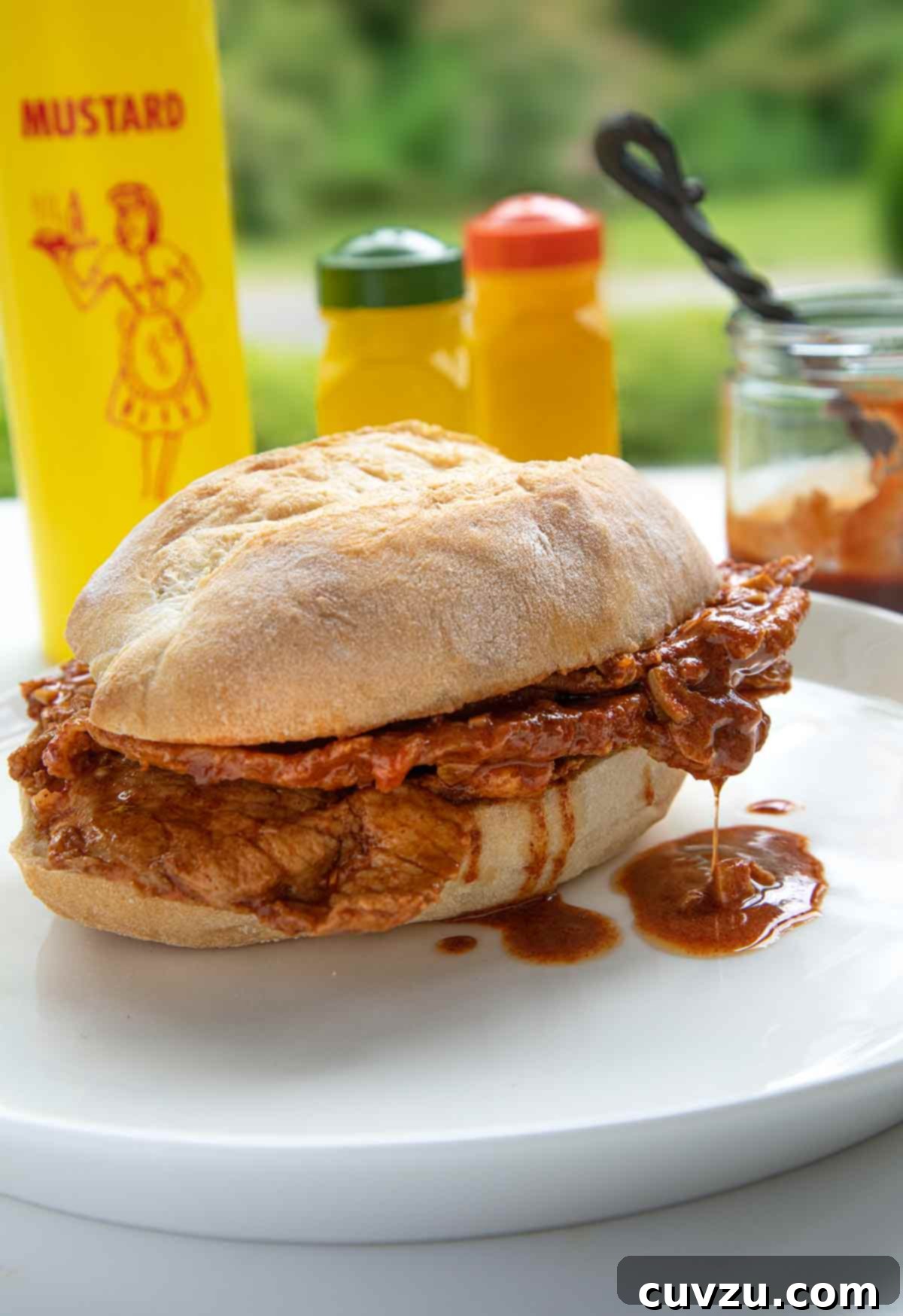
In the vibrant tapestry of Portuguese cuisine, certain dishes stand out not just for their flavors but for the stories they tell and the emotions they evoke. Among these, the Bifana, a seemingly simple pork sandwich, holds a special place in the hearts of locals and visitors alike. It’s an iconic street food, a beloved comfort meal, and for many, an instant taste of Portugal. Imagine tender, marinated pork slices, simmered in a rich, garlicky white wine sauce, nestled within a soft, airy roll. It’s a symphony of savory notes that encapsulates the very essence of Portuguese home cooking and bustling café culture. Yet, for all its widespread adoration and omnipresence across Portugal, my personal journey to discovering this culinary gem was a winding and rather oblivious one.
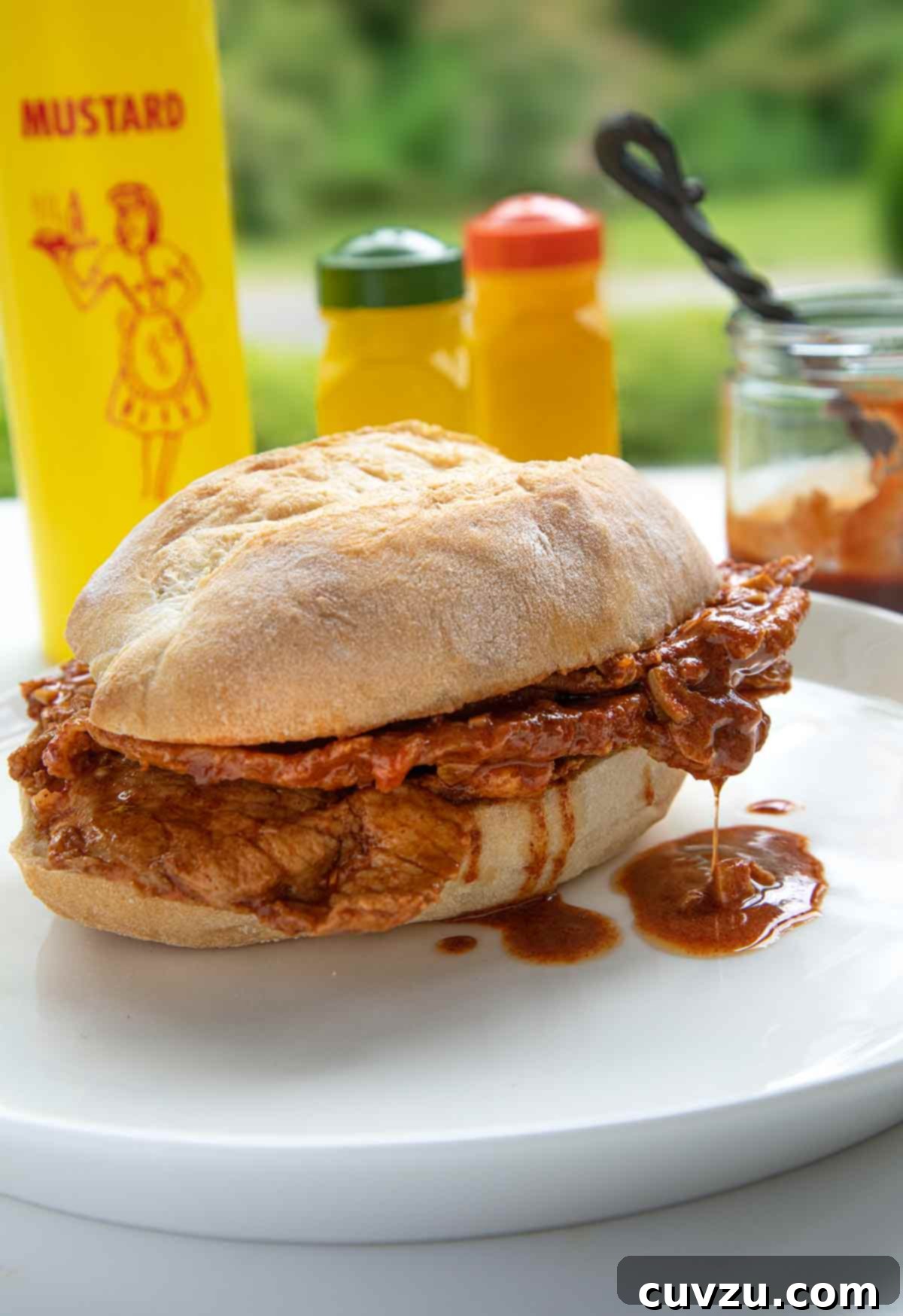
Discovering Portugal’s Iconic Pork Sandwich: The Bifana
A Childhood Without Bifanas: An Unexpected Culinary Gap
Growing up in a Portuguese-American household, my culinary landscape was rich and diverse, filled with the aromas of my family’s traditional dishes. We savored hearty stews, succulent roasts, and an array of seafood, each meal a testament to our heritage. However, the word bifanas was never uttered around our dinner table. These savory, sometimes gloriously drippy, always alluring Portuguese pork sandwiches simply weren’t part of our family’s repertoire. We never ordered them during our rare visits to a restaurant, nor did they make an appearance at the festive summer fairs. It seems these flavorful bombs, so fundamental to Portuguese street food culture, managed to bypass my early gastronomic experiences entirely.
☞ MAKE THE RECIPE: BIFANAS ~ AUTHENTIC PORTUGUESE PORK SANDWICHES
It wasn’t until 2007, when I embarked on an immersive journey to Lisbon to research and write my cookbook, The New Portuguese Table, that my path would finally intersect with the bifana. And here’s the most astounding part: for the entire duration of my stay, I remained blissfully unaware of their name, even though Lisbon is literally adorned with establishments dedicated to these sandwiches. From the historic Casa das Bifanas to the bustling As Bifanas Do Afonso and the vibrant Café Beira Gare, these “bifanas palaces” dot the city landscape. In a twist of fate, Casa das Bifanas itself was mere steps from my apartment! This isn’t to say I wasn’t indulging in them; I was, almost every day. I just hadn’t yet learned to call them by their proper name.

Lisbon: A City of Flavors, A Journey of Self-Discovery
The Ache of Homesickness and the Comfort of the Unknown
My relocation to Portugal meant leaving behind The One, my beloved partner, and our cherished cats, Chloe and Raja. For me, home, hearth, and family are the pillars of my existence. Deprived of their constant reminders of my belovedness, I often struggle. I am, unfortunately, predisposed to bouts of profound sadness, a genetic predisposition that causes the chromosomal markers for bipolar disorder to flicker erratically, much like faulty Christmas lights. Thus, my days in Lisbon were often consumed by a deep yearning for my family. The ache was not merely emotional; it was a physical sensation, as if an unseen hand had plunged into my chest, squeezing my heart like a stress ball. To compound this melancholic state, my apartment was situated directly next door to a souvenir shop that perpetually played fado, Portugal’s hauntingly beautiful and soulful music, from dawn till dusk. So, as I engaged in Skype calls with The One, hearing him recount tales of our backyard glittering with an unprecedented number of fireflies, I found myself weeping to the plaintive, mournful voice of Amália Rodrigues drifting up from below.
Given that my Portuguese wasn’t fluent enough (and my euros not plentiful enough) to recline on an expensive psicanalista’s couch twice a week, I turned to the next best method I knew for self-soothing: I ate. Food, in its purest form, offered a primal comfort, a tangible connection to the world when emotional ties felt distant.
The Serendipitous Encounter on Rua Barros de Queiròs
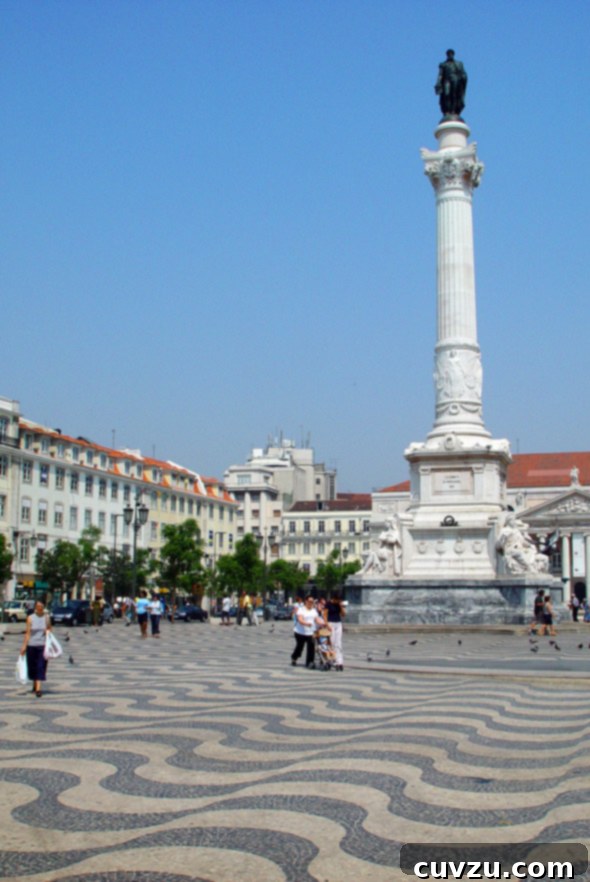
One particular afternoon, as I ambled towards the magnificent Rossio square, a grand expanse that anchors a significant portion of Lisbon’s historic center, my mood was undeniably sullen. I found myself moping along Rua Barros de Queiròs, a charming pedestrian thoroughfare paved with smooth limestone. On my left, nestled between a bustling restaurant and a shoe boutique, stood an unassuming shop, a mere sliver, perhaps no wider than ten feet. Its name has long since faded from my memory, and a quick check of Google Maps confirms its unfortunate disappearance. Yet, etched vividly in my mind’s eye is the image of its open window, where two colossal skillets simmered, filled with rippled slices of pork bathing in an inviting orange liquid. Initially, I walked past, largely unimpressed by the visual, until I traversed through an intoxicating cloud of aroma – the holy trinity of Portuguese cooking: pork, wine, and garlic. Could such an incredible fragrance truly be emanating from those satellite-dish-sized pans? The thought lingered, pulling me back.
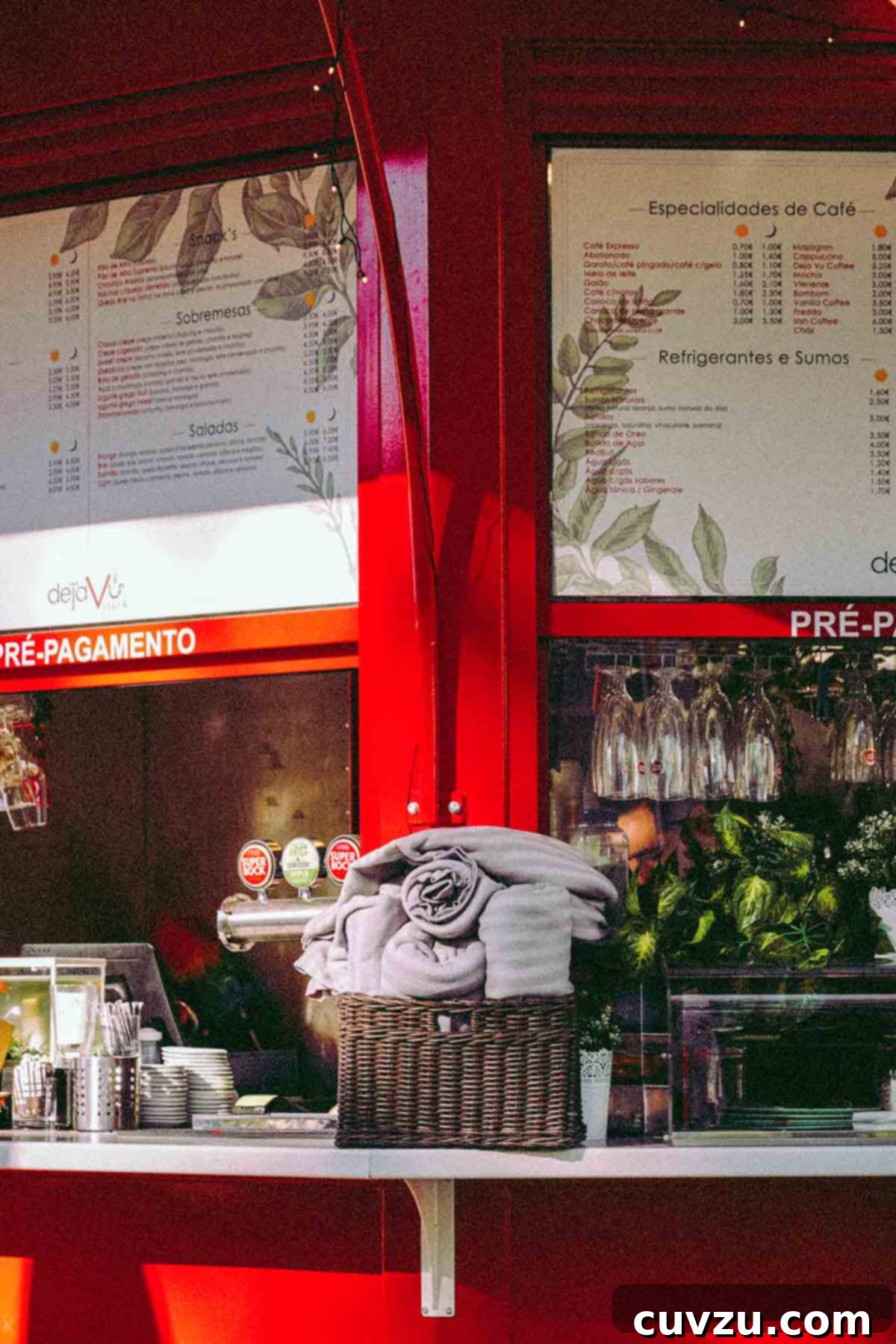
Doubling back, I confirmed that it most certainly was. I slipped inside the narrow shop, joining a small queue, and waited patiently at the counter for the owner. He was a man with a distinctive presence, sporting a surprisingly pronounced underbite and a formidable chin beneath it. Not wanting to reveal my complete ignorance about the culinary magic unfolding in his pans, I resorted to my usual strategy in such situations. I subtly nudged my chin in the direction of the window and, with as much confidence as I could muster, declared, “Uma, se faz favor. E uma Coca.” This concise combination of sentences – “One, please, and a Coke” – had become my linguistic lifeboat, navigating me through countless solo dining encounters when my Portuguese was still a clumsy, verbally-machete-wielding endeavor.
A Taste of Home: Decoding the Bifana’s Magic
The owner, with practiced ease, sliced open a papo seco. This classic Portuguese roll, characterized by its distinctive split top, often reminded me of the firm, cherubic backside of a putto or a newborn baby. These rolls, however, I knew intimately. “Butt buns,” as I affectionately called them as a child, were a constant presence on our family table, cradling everything from humble hamburgers to spicy chouriço, or a hearty combination of eggs, peppers, and sausage – truly, you name it. I held what I considered “BBF status” (Best Bun Friend) with their incredibly soft, chewy interior, surprisingly buttery flavor, and lightly floured, dusty crust.
Next, he swiftly slapped a generous few slices of the dripping, steaming pork onto the bottom half of the roll. In a masterstroke, he dunked the cut side of the top half of the bun directly into the simmering, flavorful liquid, allowing it to soak up the essence of the stew. Finally, he capped off my meal, completing the sandwich. The accompanying Coca-Cola, made with real sugar, slid perfectly into place, completing my order. The grand total? A mere 3 euros for this masterpiece.
Though I had never consciously eaten one of these mighty sanduíches before, its flavor was instantly, intimately familiar. It was the deeply garlicky and wine-soaked pork roast of my Aunt Irene, the quahogs stuffed with spicy chouriço sausage from my mother’s kitchen, the paprika-freckled stew perfected by my grandmother – all these beloved childhood tastes, miraculously, rubbing elbows within a single roll. It was, quite simply, the taste of my childhood resurrected.
Finding Solace in a Simple Bite: A Bridge Across Continents
Standing there, amidst the vibrant chaos of Lisbon, yet enveloped in my personal cloud of despair, I suddenly felt profoundly at home. More than just home, I felt gloriously, unequivocally home. Somehow, that deceptively simple, inelegant sandwich had managed to bridge two continents and traverse what I had convinced myself was a galactic expanse of distance. In a matter of mere bites, The One, Raja, and Chloe no longer seemed impossibly far away. And the most miraculous part? The agonizing two weeks that remained before The One’s anticipated visit folded in on themselves, transforming into exactly what they were: two short weeks. Not the two decades that my fantastically self-martyring self had so melodramatically declared it would be.

Shared Experiences and New Discoveries: Portugal Beyond the Bifana
When The One finally arrived, I practically dragged him by the wrist to my newfound sanctuary. Still unable to name the culinary marvel I’d been devouring, I simply nodded to my benevolent, behemoth-chinned friend and held up two fingers. In what felt like no time at all, The One and I had devoured our lunch. Even after consuming a bifana almost every afternoon for a fortnight, I remained utterly bewitched by its charm. The One, while certainly enjoying his sandwich and appreciating its unique allure, didn’t experience it with the same profound depth; it didn’t hold the same role of rescuer, comforter, or surrogate that it had so vitally assumed for me.
We didn’t revisit the shop during that trip. The One was far too captivated by the vast array of other culinary treasures Portugal had to offer, unwilling to let his meals fall into a “repeat” pattern. And I didn’t mind. Our journey took us northward to Coimbra, where we marveled at its stunning, ancient university, a beacon of learning steeped in history. Further north still, we ventured to Mealhada, a town famed for its leitão, whole roast suckling pig. We indulged in its crispy, mahogany skin and hunks of incredibly tender meat, slicked with sweet, savory fat – a truly unforgettable feast. Our explorations then led us westward to Tentúgal, renowned for its exquisite egg-yolk sweets, meticulously wrapped in the sheerest, hand-stretched pastry, a delicacy so delicate it put even phyllo dough to shame. Finally, we traced our way south along the picturesque coast, allowing The One to indulge in his ultimate favorite: perfectly grilled sardines, fresh from the ocean. Having The One by my side satiated a deeper hunger for home, and during those weeks, I didn’t even miss my beloved-whatever-the-hell-the-name-was-of-that-pork-sandwich.
The Enduring Power of a Comfort Food: My Return to the Bifana
I am, if nothing else, predictable. As soon as The One departed – and I mean, literally on my way home from dropping him off at the airport – I instinctively stopped for a bifana. It was my first in weeks. I knew I would, even though we had just shared a meal at McDonald’s. (It’s a quirky tradition of ours: our last meal in a foreign land is always something deeply familiar, a grounding ritual.) Yet, neither our “Chez McD” experience nor the lingering scent of his cologne on me from our farewell embrace at security was quite enough to fully anchor me. So I ate, not with the fervent passion of discovery, but with a quiet, resolute purpose.
For the remaining several months of my stay, I diligently adjusted to a life without him and our cats. My days became increasingly consumed by travel, interviewing, and the intensive research required for my cookbook. Along the way, I had the pleasure of entertaining a stream of friends who, for various reasons, found themselves passing through Lisbon. But during those specific times when the familiar ache of longing grew unbearable, I would drop whatever I was doing – whether it was abandoning a recipe test, ignoring towering piles of research notes, or discreetly excusing myself from a cocktail party – and make my pilgrimage to Rua Barros de Queiròs. There, I would slump against the counter, much like a jilted lover might hunch over a bar. But instead of a bartender to whom I could unburden my woes, I had my amigo com o queixo grande – my friend with the big chin. We couldn’t truly understand each other’s words, yet he unfailingly knew my order: “Uma, se faz favor. É uma Coca.” And, in those moments of profound solitude, that silent understanding, that simple, comforting ritual, was often enough.