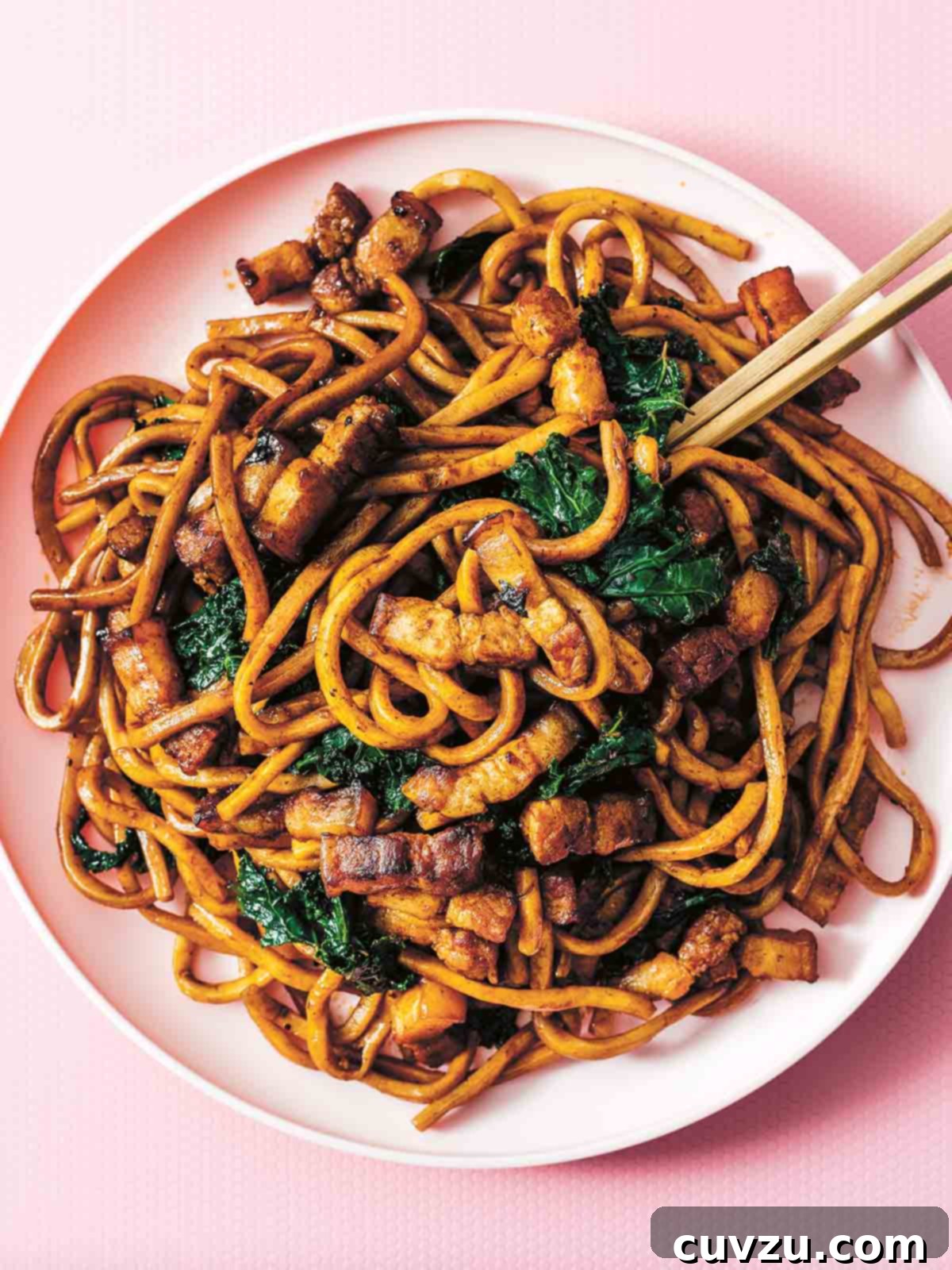
Shanghai Fried Noodles with Crispy Pork Belly and Kale: Your 20-Minute Weeknight Delight
Imagine a comforting bowl brimming with perfectly chewy **Shanghai fried noodles**, succulent crispy pork belly, and vibrant kale, all brought together by an irresistible savory sauce. Now imagine enjoying this restaurant-quality dish in just **20 minutes**, right in your own kitchen – no wok required! This recipe isn’t just fast; it’s a game-changer that might just make you rethink your takeout habits forever. Get ready to elevate your weeknight dining experience with this incredibly flavorful and surprisingly simple stir-fry.
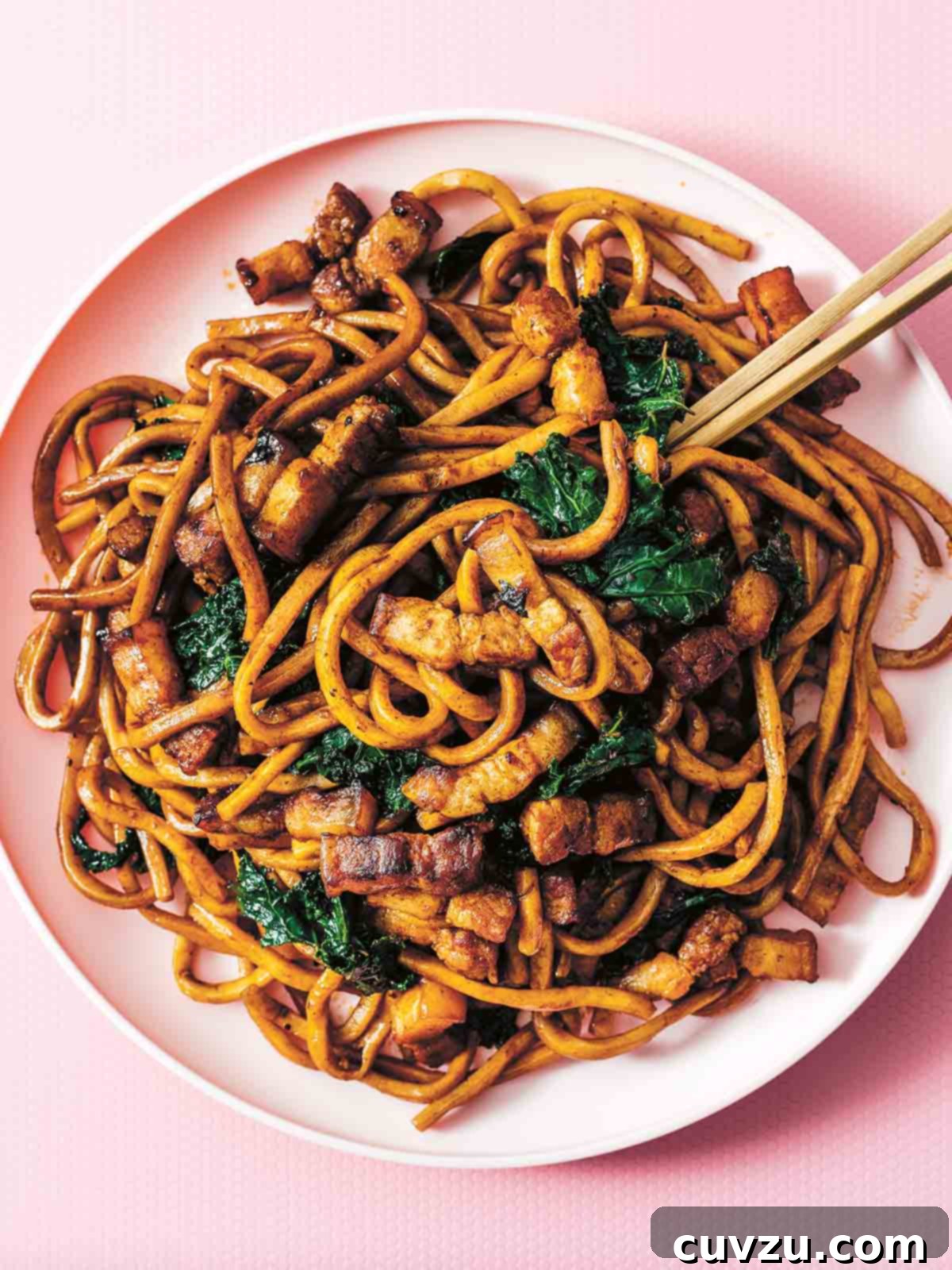
Why settle for ordering in when you can effortlessly create your own fresh, flavorful plate of Shanghai-style noodles in less time than it takes for delivery? This recipe for Shanghai fried noodles is designed for efficiency without compromising on authentic taste. It’s a fantastic solution for busy weeknights when you crave something satisfying and homemade but are short on time. Forget the greasy takeout containers and embrace the simplicity and superior taste of this speedy stir-fry.
Achieving a truly exceptional plate of stir-fried noodles at home is easier than you might think, even without a professional wok. A few clever techniques ensure a restaurant-quality result: first, a quick cornstarch and Shaoxing wine marinade works wonders, tenderizing the pork belly and promoting a beautiful golden-brown crispness. Second, a thoughtful blend of dark and light soy sauce provides depth of color and a balanced savory profile. Finally, searing the noodles over high heat is crucial; it replicates the smoky, charred flavor (often called “wok hei”) that is the hallmark of expertly stir-fried dishes, even if you’re using a standard skillet.
Finding the right noodles is key. Fresh Shanghai noodles, known for their delightful chewiness, are readily available in the refrigerated sections of most Asian grocery stores. Alternatively, frozen udon noodles make an excellent and convenient substitute, offering a similar robust and satisfying texture. Both varieties come pre-cooked, making your prep even quicker. This recipe, expertly crafted by Mike Le and Stephanie Le, brings authentic flavors to your home kitchen with incredible ease.

Why Our Testers Raved About This Shanghai Noodle Recipe
Our team of dedicated recipe testers couldn’t get enough of these incredible Shanghai fried noodles, happily slurping up every last strand. Their enthusiasm wasn’t just for the delicious taste but also for the unparalleled convenience this recipe offers. They consistently highlighted how **quick and easy** the dish was to prepare, making it an ideal choice for busy schedules. The simplicity of requiring only a **handful of readily available ingredients** also stood out, solidifying its status as the **perfect solution for a satisfying mid-week meal**.
Rema S. perfectly captured the collective sentiment with her enthusiastic comment: “**Who doesn’t love a bowl of squishy, saucy, chewy noodles?**” It’s this irresistible combination of textures and flavors, coupled with remarkable ease, that makes this Shanghai noodle recipe a true standout and a cherished addition to any home cook’s repertoire.
Essential Ingredients for Perfect Shanghai Fried Noodles
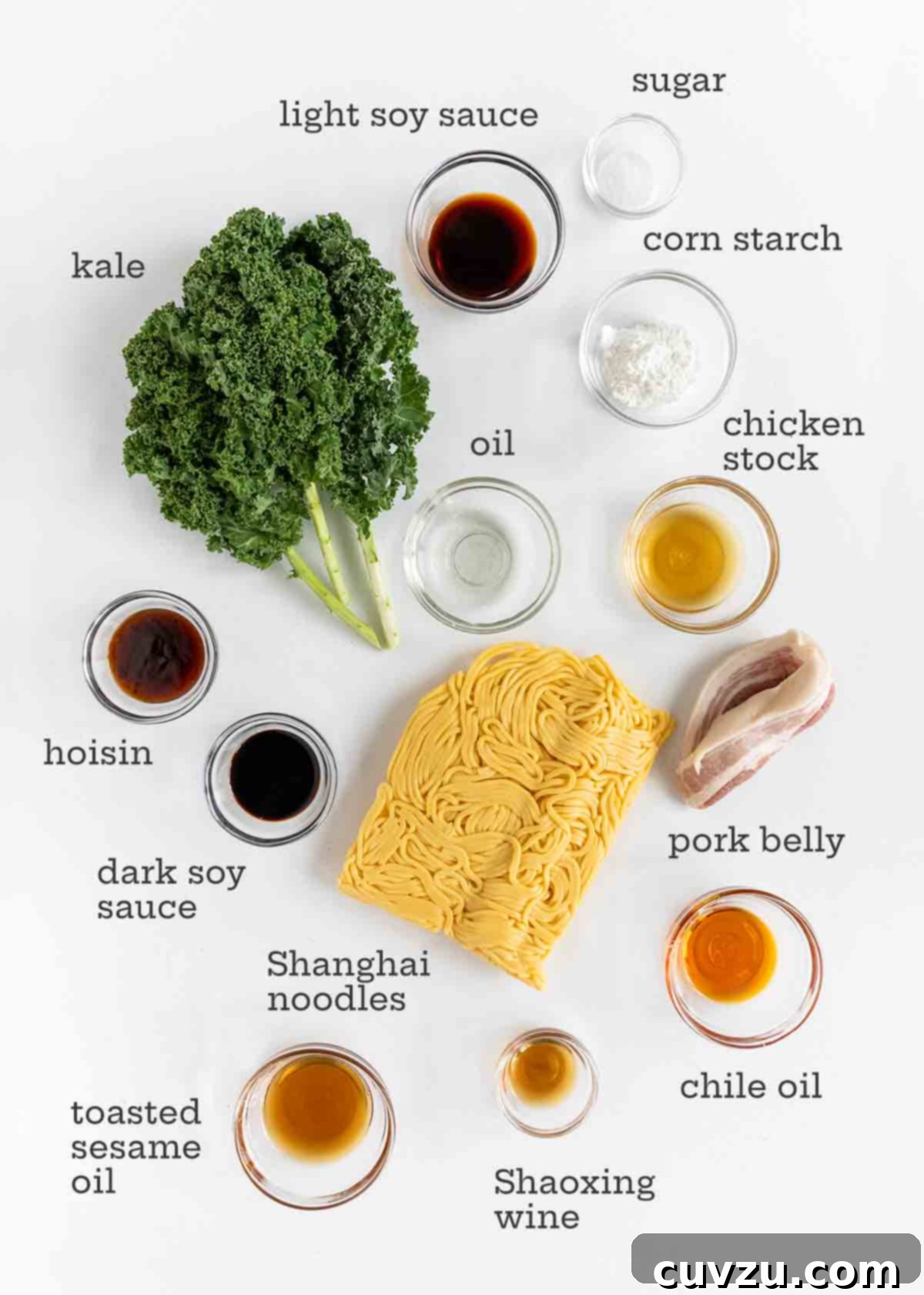
Each ingredient in this Shanghai fried noodle recipe plays a vital role in creating its balanced and delicious flavor. Understanding their purpose and potential substitutions will help you master this dish.
- Shaoxing Wine (Chinese Rice Wine): This is a cornerstone of Chinese cooking, essential for tenderizing meat and adding a distinct aromatic depth. It’s often found in the Asian section of large supermarkets or, more reliably, at Asian markets. If you can’t find Shaoxing wine, a dry sherry is the best substitute, offering a similar complexity and acidity that complements the pork and sauce.
- Pork Belly: The star protein of this dish, pork belly, is chosen for a reason. Its layers of meat and fat render beautifully when seared, providing irresistibly crispy bits and a rich, luxurious flavor to the noodles. Do not be tempted to trim too much fat; it’s what makes the pork belly wonderfully tender and crispy. The fat renders down, infusing the dish with incredible taste.
- Shanghai Noodles or Udon Noodles: These fresh wheat noodles are characterized by their thick, chewy texture, which holds up perfectly to the stir-frying process and absorbs the flavorful sauce. Look for them in the refrigerated section of Asian markets or larger grocery stores. If fresh Shanghai noodles are unavailable, frozen udon noodles are an excellent alternative. Their thick, springy texture provides a similar mouthfeel and they are equally adept at soaking up the sauce. Ensure they are defrosted and separated before stir-frying.
- Neutral Oil: When stir-frying, you’ll be cooking at very high temperatures. Therefore, using a high smoke-point oil is crucial to prevent burning and ensure a clean flavor. Canola, peanut, grapeseed, or sunflower oil are all excellent choices. Avoid olive oil or butter, as they have lower smoke points and will burn at the required stir-fry temperatures.
- Kale: The robust and slightly bitter notes of kale stand up exceptionally well to the intense heat of a stir-fry, adding both texture and nutritional value. Its sturdy leaves maintain a satisfying bite even after cooking. If kale isn’t to your liking or available, other sturdy greens like collard greens or mustard greens can be substituted. For an authentic Asian touch, consider using gai lan (Chinese broccoli), which offers a similar hearty texture and earthy flavor. Ensure any greens are washed and thoroughly dried before adding to the wok or skillet to prevent steaming.
Easy Steps to Perfect Shanghai Fried Noodles
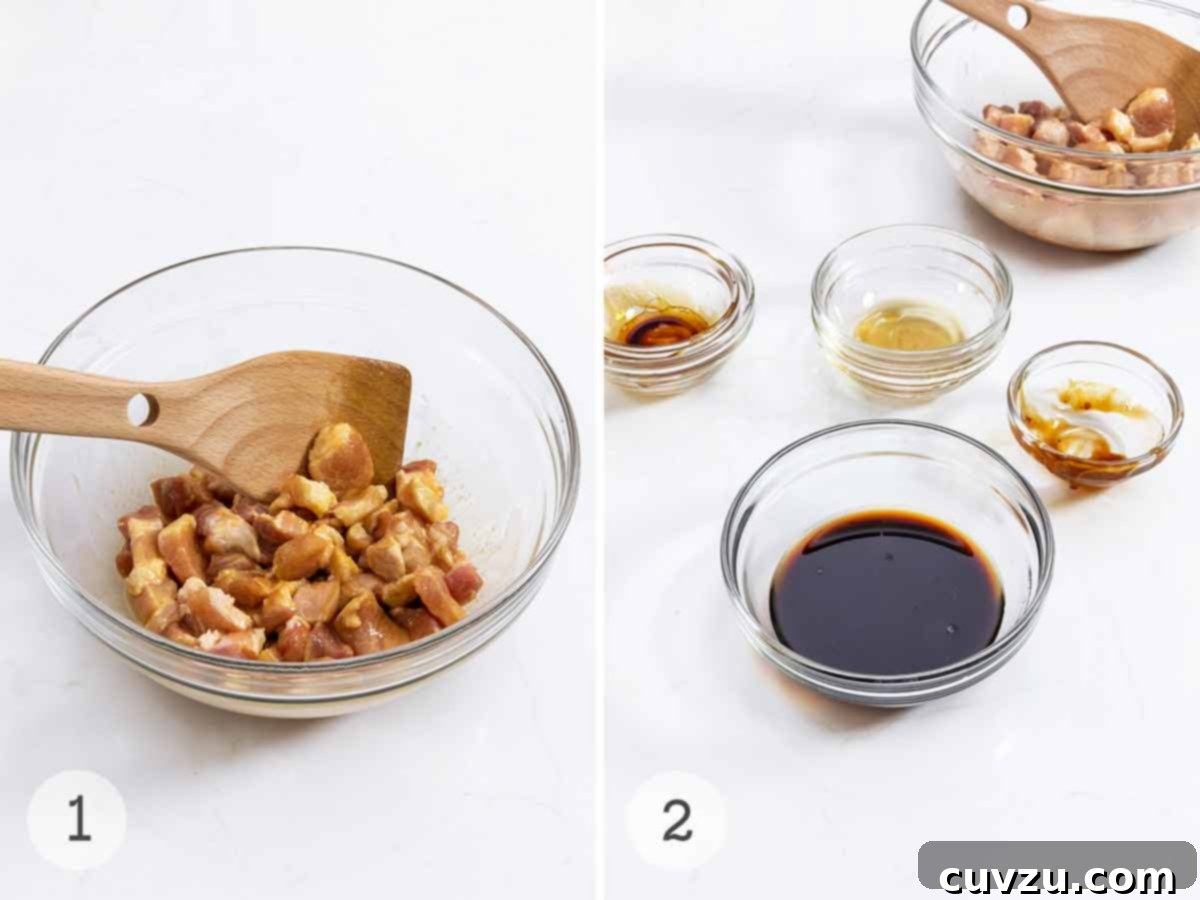
Follow these straightforward steps to create a delicious and authentic Shanghai fried noodle dish in no time:
- Prepare the Pork Belly Marinade: In a large mixing bowl, combine 1 tablespoon of light soy sauce, 2 teaspoons of cornstarch, 1 teaspoon of Shaoxing wine, and 1 teaspoon of granulated sugar. Whisk these ingredients together until thoroughly mixed and the cornstarch is dissolved. Add the matchstick-sliced pork belly to this marinade, ensuring each piece is completely coated. This “velveting” technique tenderizes the pork and helps it brown beautifully.
- Whisk Together the Flavorful Sauce: In a separate small bowl, combine the remaining 1 tablespoon of light soy sauce with 1 tablespoon of dark soy sauce, 1 tablespoon of hoisin sauce, 2 tablespoons of chicken stock (homemade or low-sodium canned broth), and 2 teaspoons of toasted sesame oil. Stir well until all the ingredients are fully incorporated. This rich sauce will be the backbone of your noodle dish.
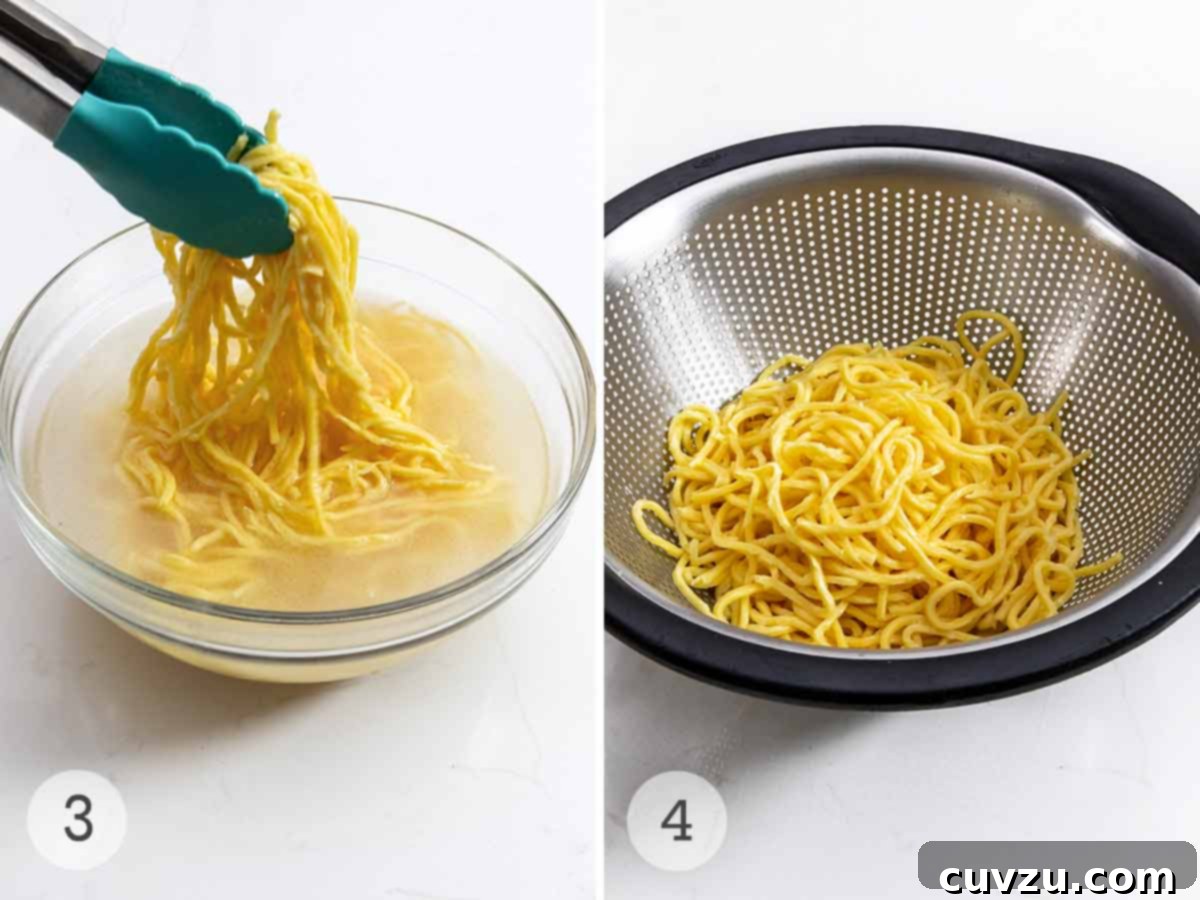
- Soak and Prepare the Noodles: Fill a large bowl with hot tap water. Add the fresh Shanghai noodles or frozen udon noodles. Allow them to soak until they are warmed through and loosened, typically about 30 seconds to 1 minute for fresh noodles, and 2 to 3 minutes for frozen udon until defrosted and pliable. The goal is to separate the noodles without fully cooking them, as they will finish cooking in the stir-fry.
- Drain the Noodles Thoroughly: Once softened, carefully drain the noodles in a colander. Shake off any excess water and set them aside. If they seem a bit sticky, a quick rinse under cold water can help, but ensure they are very well-drained afterwards to avoid diluting your sauce and to promote better searing.
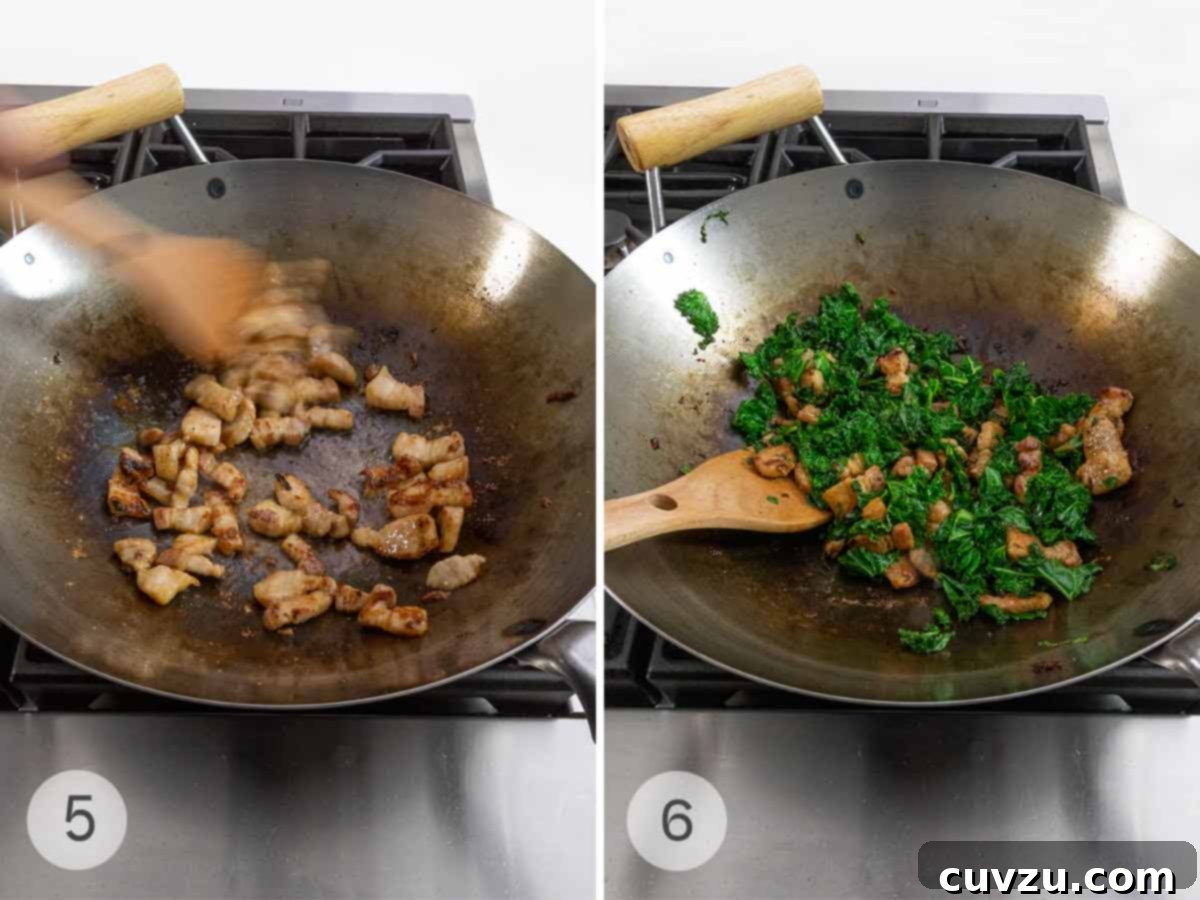
- Sear the Pork Belly: Heat a large wok or a heavy-bottomed skillet over medium-high heat. Allow it to get very hot until you see wisps of smoke. Swirl in 1 tablespoon of neutral oil until it shimmers. Add the marinated pork belly (with any remaining marinade) to the hot pan in a single layer. Cook, stirring occasionally, until the pork is beautifully golden brown, wonderfully crispy, and cooked through, which should take approximately 3 to 5 minutes. Remove the pork from the pan, leaving any rendered fat behind.
- Stir-fry the Kale: Add the chopped kale directly to the same hot wok or skillet, utilizing the flavorful rendered pork fat. Toss the kale vigorously, cooking it just until it begins to wilt and becomes tender-crisp, usually within 1-2 minutes. You want it vibrant and slightly softened, not mushy.
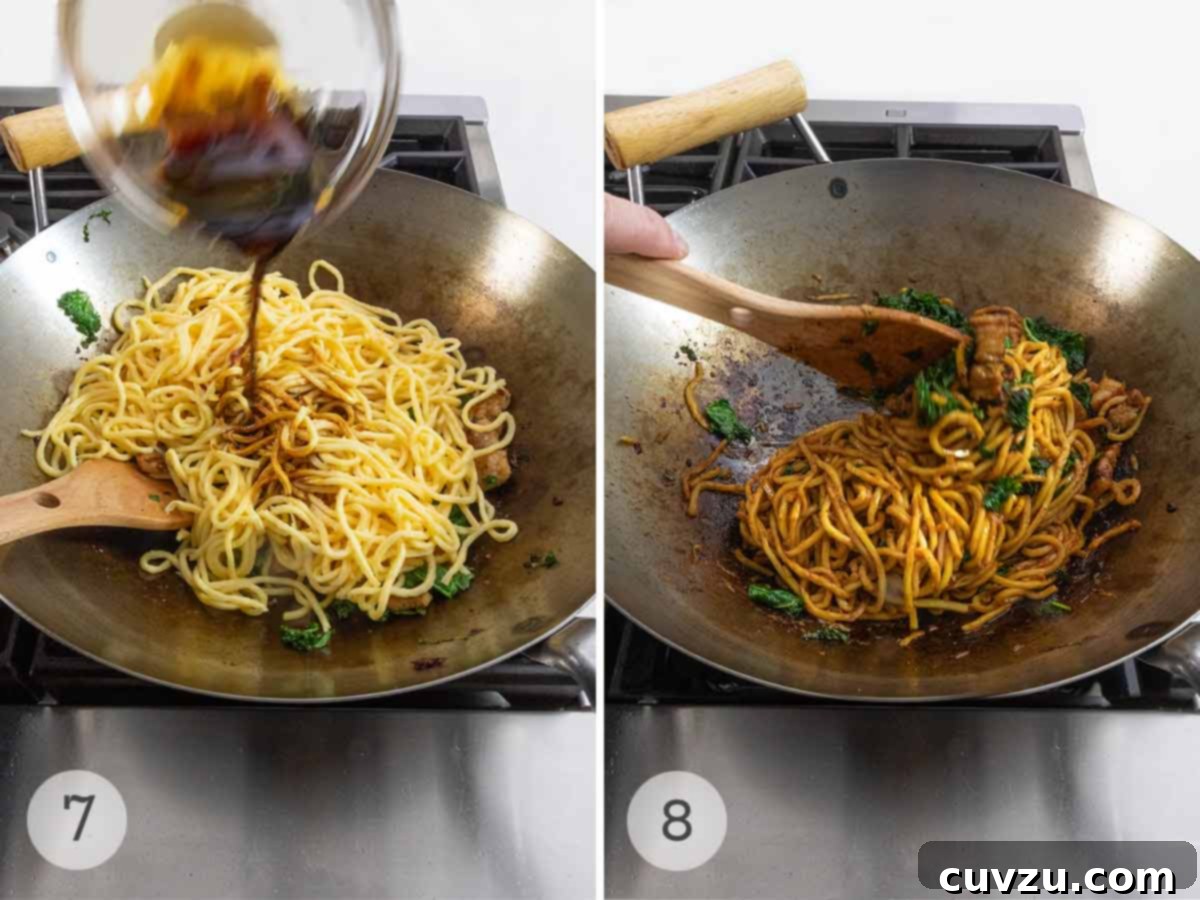
- Combine Noodles and Sauce: Return the crispy pork belly to the wok with the wilted kale. Immediately add the drained noodles and pour in the prepared sauce mixture.
- High-Heat Stir-Fry for “Wok Hei”: Increase the heat to high. Cook the mixture, stirring and tossing constantly and vigorously, ensuring all ingredients are evenly coated with the sauce. Continue to fry for about 2 minutes, until everything is piping hot, slightly charred, and infused with that desirable smoky, stir-fried flavor. This high-heat, quick cooking is key to preventing soggy noodles and achieving the perfect texture.
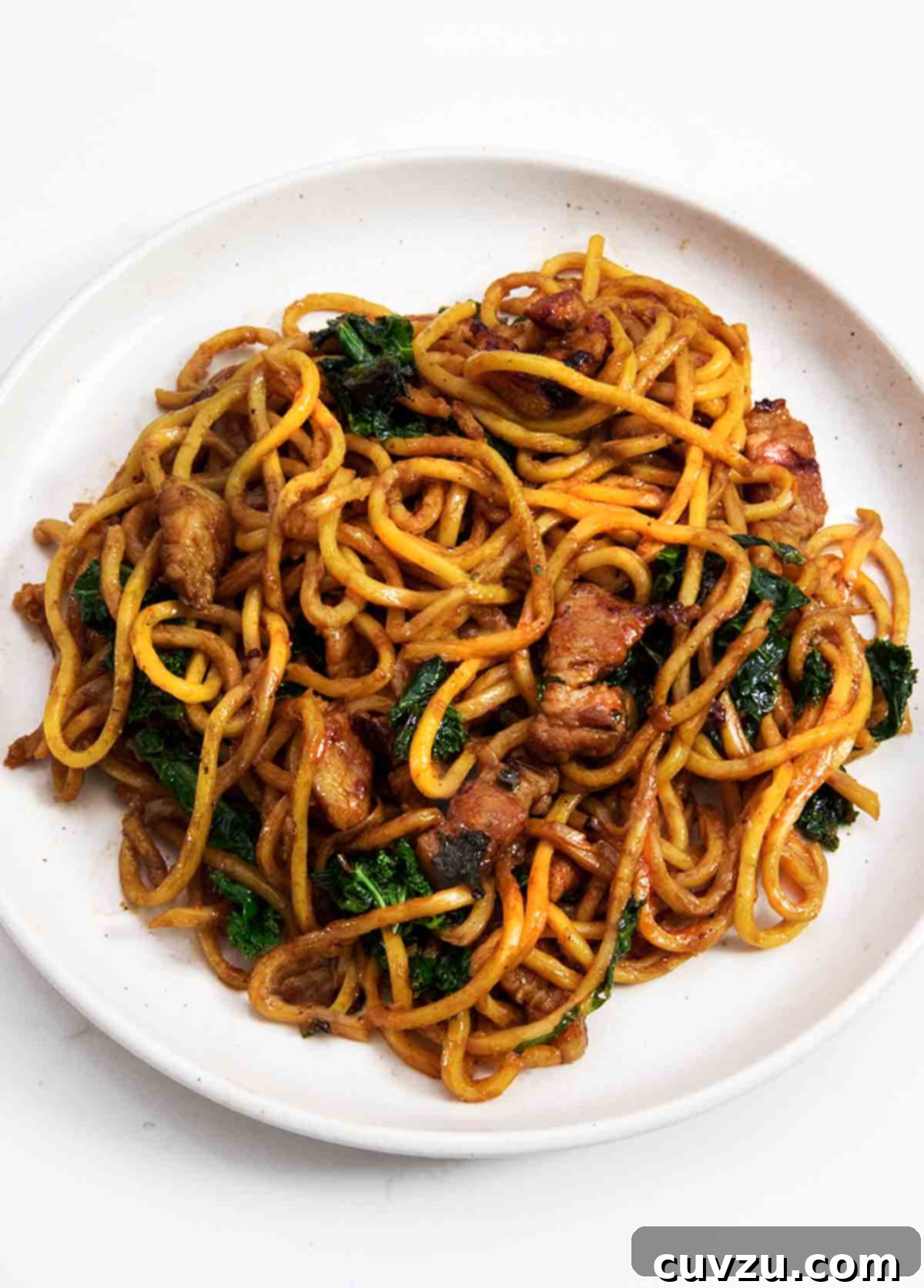
- Serve Immediately: Transfer the Shanghai fried noodles to individual bowls. For an extra layer of flavor and texture, garnish generously with sliced scallions, crispy fried onions, and a drizzle of chile oil, if desired. Serve hot and enjoy your homemade Asian feast!
Common Questions About Shanghai Fried Noodles
Shanghai noodles are a popular type of Chinese wheat noodle, distinctive for their thick, round, and slightly chewy texture. They are thicker than standard spaghetti but thinner than udon, making them ideal for absorbing sauces and holding up well to robust stir-frying. Traditionally, they are a staple in many stir-fried dishes, often paired with various meats like pork, chicken, or shrimp, along with an array of vegetables and savory Asian-style sauces. Their hearty nature makes them a favorite for comforting and substantial meals.
Both light and dark soy sauces are fundamental to Chinese cuisine, crafted from fermented soybeans, wheat, water, salt, and a fermenting agent like yeast or mold. However, they serve distinct purposes and have noticeable differences.
Light soy sauce, despite its name, is often referred to as “regular” or “all-purpose” soy sauce in English. It is thinner in consistency and primarily used for its salty flavor. It adds umami and seasoning without significantly altering the color of the dish.
Dark soy sauce, on the other hand, is aged longer, often with added molasses or caramel coloring. This gives it a thicker consistency, a slightly sweeter and less salty flavor profile, and a much deeper, richer dark brown color. It’s primarily used for coloring dishes and adding a beautiful sheen, as seen in these Shanghai noodles. It contributes a subtle sweetness and a more complex, mellow soy flavor.
Due to these significant differences in flavor, color, and texture, light and dark soy sauces are **not interchangeable** in recipes that call for both. Substituting one for the other would drastically change the outcome of the dish. If light soy sauce is unavailable, use a regular good-quality soy sauce (ensure it’s not labeled “low-sodium” unless specified, as that’s a different product entirely). However, for dark soy sauce, there isn’t a direct substitute that provides both the color and flavor depth, making it a key ingredient for authentic results.
Absolutely! This Shanghai noodle recipe is wonderfully versatile and provides an excellent basic framework for stir-fried noodles. Feel free to unleash your creativity and adapt it to your preferences or what you have on hand. For proteins, sliced chicken breast or thighs, tender shrimp, thinly sliced beef (like flank steak or sirloin), or even firm tofu can be swapped in for the pork belly. Ensure any new protein is cut into small, even pieces for quick cooking and marinate it if desired.
When it comes to vegetables, the possibilities are endless. While kale offers a fantastic sturdy texture, you could easily substitute it with other robust greens like Chinese broccoli (gai lan), bok choy, or snap peas. Bell peppers, carrots, mushrooms, or bamboo shoots would also make excellent additions, adding different textures and flavors. Just remember to add vegetables in stages according to their cooking times – denser vegetables first, tender ones last – to ensure everything is perfectly cooked without becoming mushy.
Pro Tips & Troubleshooting for Perfect Stir-Fried Noodles
- Adjusting Sauce Quantity: This recipe yields a noodle dish with a light, flavorful coating of sauce. If you prefer your noodles to be significantly “saucier” – more akin to some takeout styles – simply double the sauce ingredients. This will ensure every strand is drenched in flavor without overwhelming the dish.
- Preventing Sticky Noodles: Shanghai noodles, especially fresh ones, can sometimes clump or stick together after soaking. To prevent this, after draining them from the hot water, give them a quick rinse under cold water. This helps to wash away excess starch and separate the strands. Just remember to drain them very thoroughly afterwards to avoid introducing extra moisture into your stir-fry, which can hinder proper searing and charring.
- Storing and Reheating Leftovers: Leftover Shanghai fried noodles are a fantastic option for lunch the next day! Store them in an airtight container in the refrigerator for up to 3 days. To reheat, warm the noodles in a skillet over medium heat. If they appear a bit dry or clumped, add a splash of water or chicken broth (about 1-2 tablespoons) to help loosen them and restore their moisture. Stir frequently until warmed through. Avoid microwaving if possible, as it can make the noodles rubbery.
- Achieving the “Wok Hei” Char: For that authentic smoky, slightly charred flavor, ensure your wok or skillet is extremely hot before adding the ingredients. Don’t overcrowd the pan; cook in batches if necessary, especially if you’re doubling the recipe. High heat and continuous movement are crucial for achieving the desired “wok hei” without steaming the ingredients.
- Prepping is Key: Stir-frying moves very quickly. Have all your ingredients prepped, chopped, and measured before you even turn on the heat. This is often called “mise en place” and is essential for successful stir-frying, ensuring a smooth and stress-free cooking process.
Expand Your Culinary Horizons with More Asian Noodle Recipes
If you’ve fallen in love with the ease and flavor of these Shanghai fried noodles, you’re in for a treat! The world of Asian noodles is vast and incredibly diverse, offering a multitude of textures and flavor profiles to explore. Here are a couple more exceptional noodle dishes that promise to deliver equally satisfying and delicious results in your home kitchen. Dive in and discover your next favorite noodle creation!
Share Your Experience: Write a Review!
We love hearing about your culinary adventures! If you make this fantastic Shanghai fried noodle recipe, or any other dish featured on Leite’s Culinaria, please consider taking a moment to leave a review. Share your thoughts, a star rating, and even your best photo in the comments section below. Your feedback and beautiful food photography inspire us all!–David
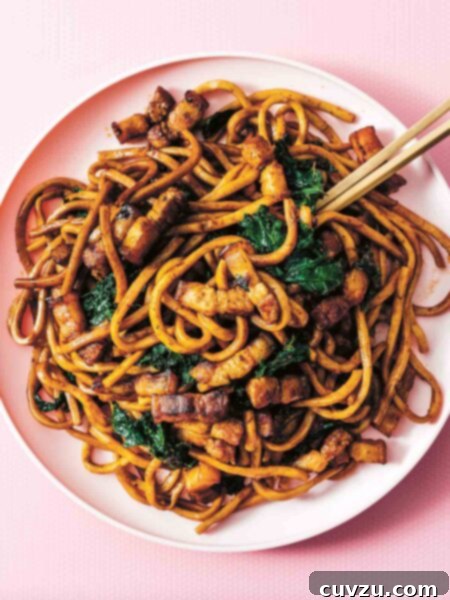
Shanghai Fried Noodles
David Leite
Ingredients
- 2 tablespoons light soy sauce
- 2 teaspoons corn starch
- 1 teaspoon Shaoxing wine
- 1 teaspoon granulated sugar
- 1/2 pound pork belly, sliced into matchsticks
- 1 tablespoon dark soy sauce
- 1 tablespoon hoisin sauce
- 2 tablespoons homemade chicken stock or low-sodium canned chicken broth
- 2 teaspoons toasted sesame oil
- 1 pound fresh Shanghai thick noodles or frozen udon
- 1 tablespoon neutral oil
- 1 small bunch (7 oz) kale, stemmed and chopped
- Sliced scallions, for topping (optional)
- Crispy fried onions, for topping (optional)
- Chile oil, for topping (optional)
Instructions
-
In a large bowl, combine 1 tablespoon of the light soy sauce with the cornstarch, Shaoxing wine, and sugar. Add the pork and mix until the pork is thoroughly coated.
-
In a small bowl, combine the remaining 1 tablespoon light soy sauce with the dark soy sauce, hoisin sauce, chicken stock, and sesame oil.
-
Fill a large bowl with hot tap water and add the noodles. Let soak until loosened and warmed through, 30 seconds to 1 minute. Drain and set aside. (If using frozen udon, soak them until defrosted, 2 to 3 minutes.)
-
Heat a large wok or skillet over medium heat. When the wok starts to smoke, add the oil and swirl until shimmery. Add the pork with its marinade and cook, stirring occasionally, until it is golden brown and crispy, 3 to 5 minutes.
-
Add the kale and toss to combine. When the kale has wilted slightly, add the noodles and the sauce. Crank the heat to high and toss to combine. Sear until everything is smoky and slightly charred, about 2 minutes.
-
Serve hot with sliced scallions, crispy fried onions, and/or chili oil, if desired.
Notes
- Double the sauce–This recipe makes a noodle dish that’s lightly coated with sauce. If you prefer saucier noodles, double the sauce.
- Sticky noodles–If your noodles are clumping or sticking together after soaking, give them a quick rinse with cold water before setting them aside.
- Storage and reheating–Leftover noodles can be stored in a sealed container for up to 3 days. To reheat, warm in a skillet over medium heat until warmed through, adding water or chicken broth as needed to loosen the noodles.
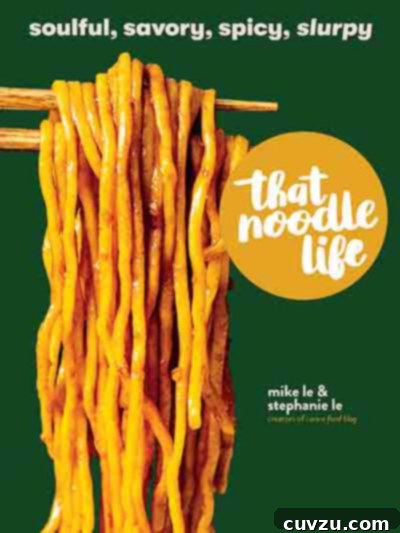
Adapted From
That Noodle Life
Buy On Amazon
Explore More with AI
Nutrition
Nutrition information is automatically calculated, so should only be used as an approximation.
Recipe Testers’ Reviews: Real Feedback for Shanghai Fried Noodles
Lily Wong
This Shanghai noodle recipe is a wonderfully quick and incredibly versatile Asian dish. My mind was already buzzing with ideas for different protein and green vegetable variations even as I was cooking! The pork belly, with its perfect crispy texture and rich flavor, truly adds a lusciousness to the noodles. However, I can easily envision using leaner proteins like chicken or flank steak for a lighter alternative without sacrificing flavor.
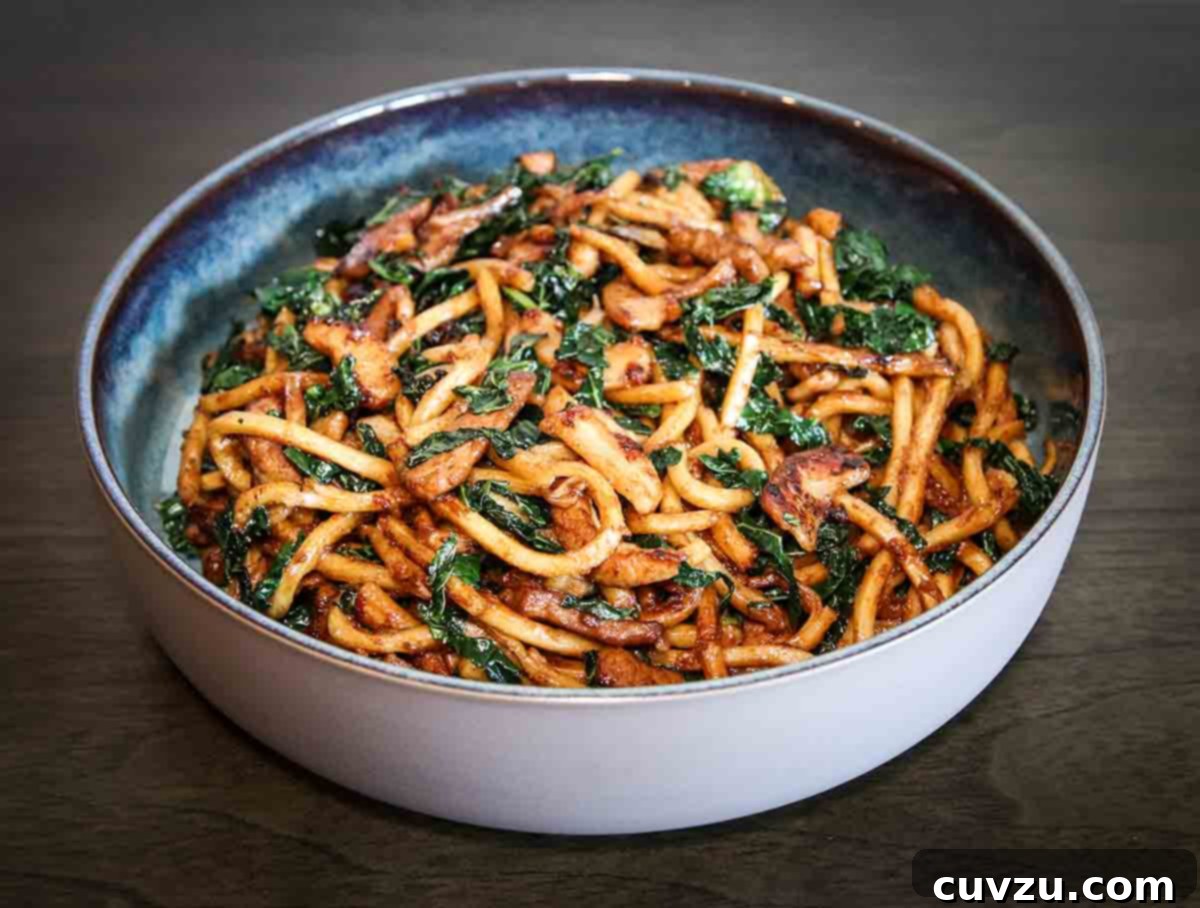
Instead of kale, I would personally opt for Chinese broccoli (gai lan). It’s a classic choice for stir-fries and boasts a sturdy texture quite similar to broccolini, making it a perfect fit. Gai lan might also come with a few small, edible flowering bulbs that add visual appeal to the finished dish. When selecting, try to choose a bunch without too many flowers, as these indicate more mature and potentially tougher stalks.
The “velveting” technique, utilizing Shaoxing wine and cornstarch for the pork, is a brilliant touch. It ensures the protein remains incredibly moist and tender, creating that signature, melt-in-your-mouth texture often associated with high-quality takeout dishes. While Japanese soy sauce is typically thinner and great for sushi, Chinese soy sauce, with its richer flavor profile, truly reigns supreme for stir-fries like this one, providing an authentic depth of taste.
Daniela Trapani
You can truly make this Shanghai noodle stir-fry faster than you can even place a takeout order – and that’s no exaggeration! It was absolutely delicious and surprisingly simple to prepare. I particularly enjoyed that it’s not an overly saucy stir-fry; it leans more towards the drier side, which was perfect for my preference. However, if you’re someone who loves extra “slurpy” noodles coated in abundant sauce, then I would definitely recommend doubling the sauce ingredients. It’s easily customizable to your taste!
I served my portion garnished with a sprinkle of freshly chopped scallions and a generous drizzle of chili oil, which added a fantastic kick. The ultimate testament to its deliciousness? There were absolutely no leftovers! This recipe is a clear winner for a quick, flavorful meal.
Tricia M.
This dish was truly delicious! I don’t often delve into Asian cuisine at home, primarily because I hadn’t invested in the foundational ingredients until quite recently. So, I absolutely loved trying this recipe as a way to gain practice with stir-frying techniques and expand my culinary skills in this area.
For anyone who hasn’t frequently prepared Asian dishes and is keen to broaden their cooking repertoire, this is an excellent introductory recipe. It provides the perfect entry point to the world of stir-frying, teaching fundamental skills without being intimidating. And for those already familiar with this technique and ingredients, it stands out as a super quick, utterly delicious, and satisfying meal that can be whipped up in minutes.
Deb Lynch
My family and I thoroughly enjoyed this easy noodle stir-fry as a perfect weeknight meal. It came together incredibly quickly with just a few core ingredients, making it an ideal choice for busy evenings. I opted for refrigerated Udon noodles, which I allowed to come to room temperature before adding them to hot water. I let them sit for about 3 minutes to loosen them up, which helped prevent them from breaking during the stir-fry process.
Initially, I thought I might miss the pronounced ginger and garlic flavors typically found in many stir-fries. However, I was pleasantly surprised! The hoisin sauce and sesame oil provided an abundance of rich, aromatic flavor that perfectly seasoned the entire dish, proving that sometimes simplicity truly shines. For added convenience, I used baby kale instead of mature kale leaves. This eliminated the step of stripping the leaves from the tougher veins, saving precious prep time and making the recipe even faster.
Rema S.
Who doesn’t absolutely adore a bowl of tender, saucy, and wonderfully chewy noodles? This dish truly has it all! With its perfect balance of textures from the soft noodles and crispy bites of pork belly, combined with a slightly sweet and savory sauce, it’s a culinary delight. There is so much to love about this recipe.
I also appreciate the incredible adaptability of this recipe. It can be made exactly as written, featuring delicious pork belly and fresh kale, or it can be endlessly adapted to incorporate whatever protein or vegetables I happen to have on hand. This flexibility means this dish, and its countless variations, could easily become a staple in my household, providing endless delicious meal options without boredom.
I did encounter a minor challenge with the Shanghai noodles sticking together and clumping during the process. To remedy this next time, I plan to either transfer them directly from the hot water into the wok for immediate stir-frying, or give them a quick, thorough rinse with cold water before setting them aside. Additionally, I found I didn’t achieve as much charring or browning on the noodles as I would have liked. For my next attempt, I’ll try adding a tiny pinch more sugar to the sauce to encourage a little extra caramelization and enhance that beautiful stir-fried depth of flavor.