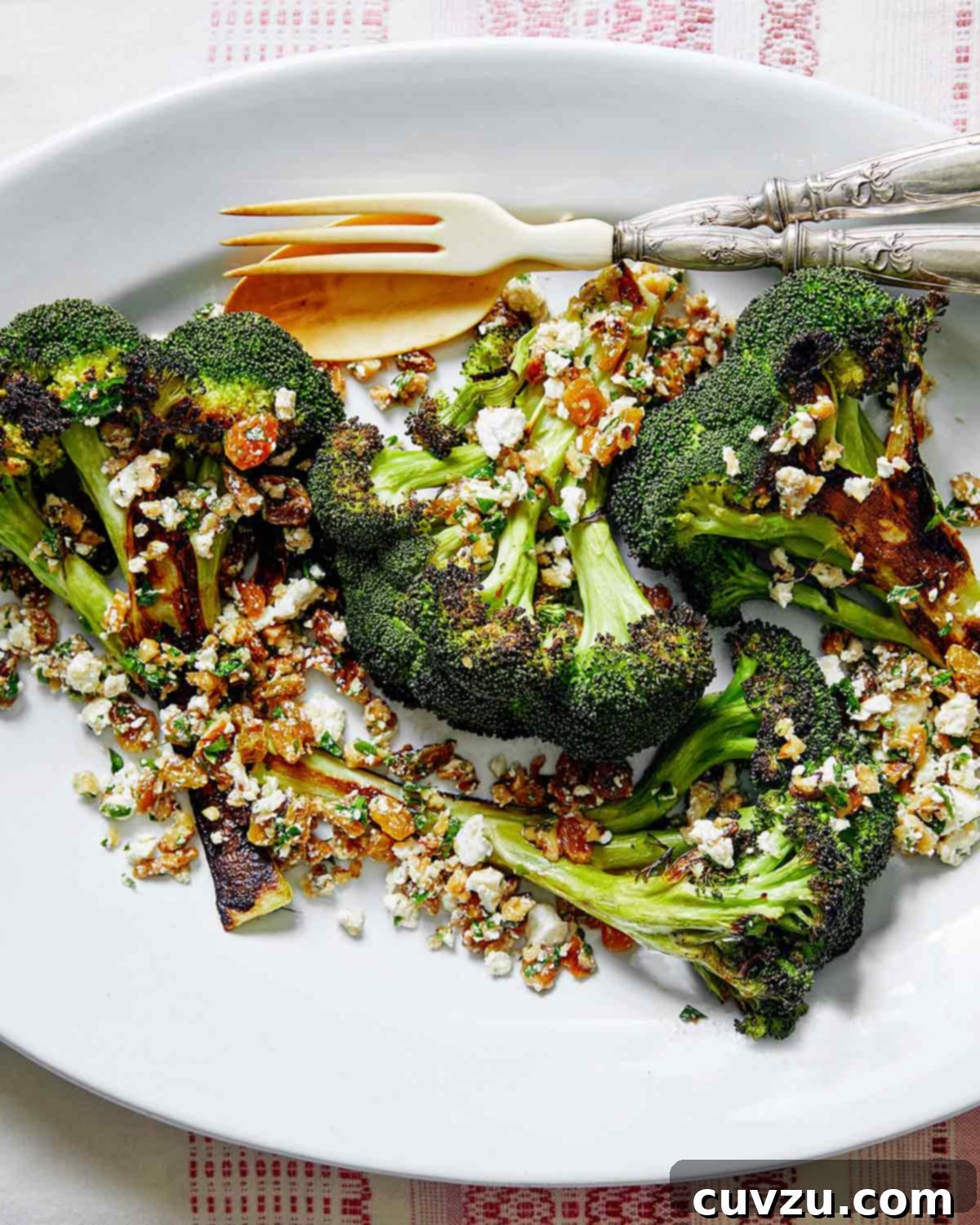
Prepare for a culinary revelation that will undoubtedly command attention at your next dinner gathering. This magnificent dish of roasted broccoli with walnuts, raisins, and ricotta salata is so remarkably flavorful and satisfying that it effortlessly claims the spotlight. While it shines brightly as a standalone main course, its versatility also allows it to serve as an exceptionally sophisticated and hearty side dish, elevating any meal it accompanies.
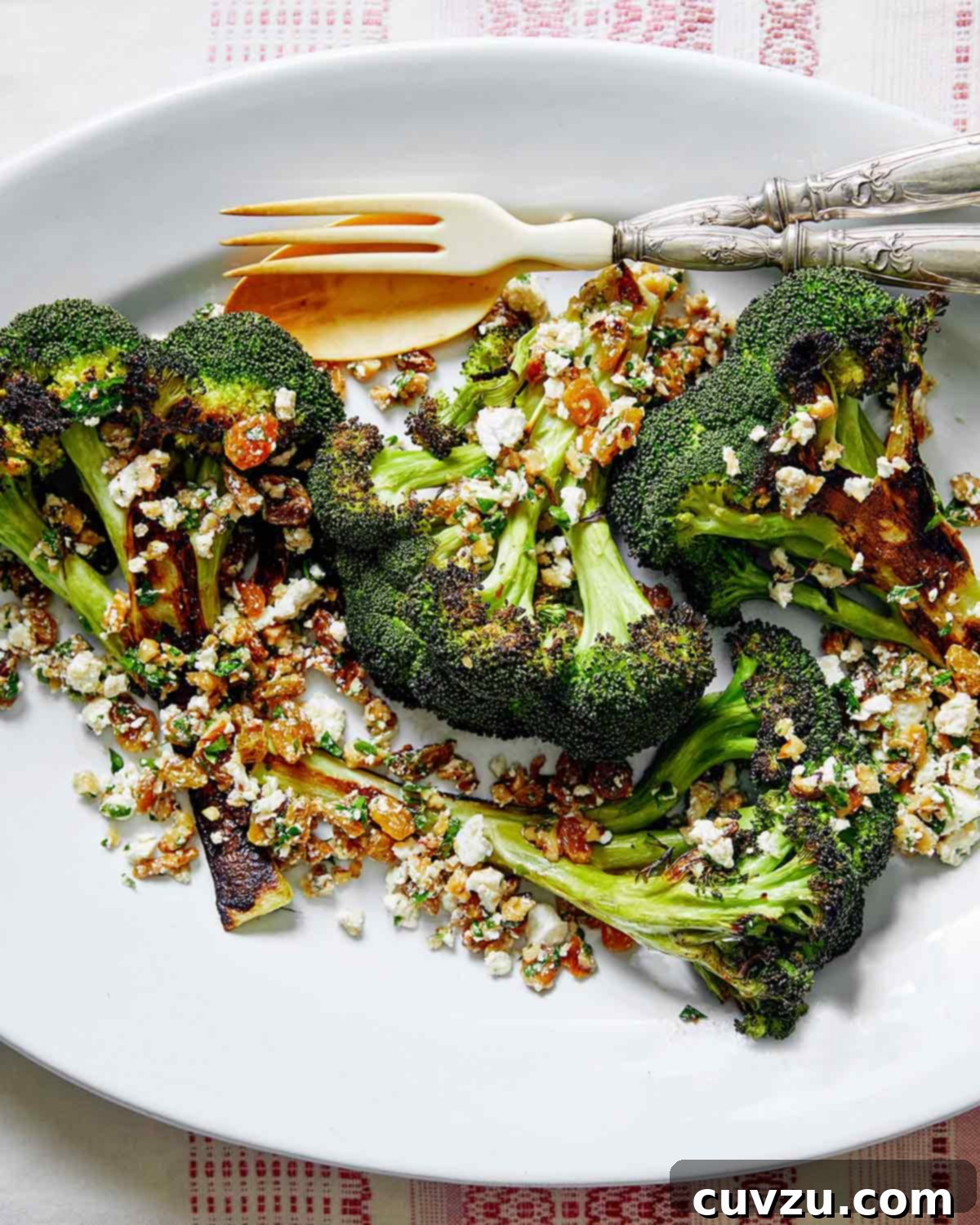
Broccoli, often relegated to the role of a humble side, possesses an inherent heartiness that makes it perfectly suited for a starring role. It simply requires a touch of thoughtful embellishment to transform it from a supporting player into the main event. In this recipe, that “something extra” comes in the form of a vibrant, textural “salsa” that provides an explosion of flavors and textures, making plain roasted broccoli anything but ordinary. It’s an undeniable truth that a touch of cheese almost always enhances a dish, and here, the presence of crumbly ricotta salata is absolutely transformative.
This Mediterranean-inspired creation features thick, substantial cuts of broccoli, roasted to perfection until tender-crisp with beautifully caramelized edges. These “broccoli steaks” provide a robust foundation for the sensational topping. The ingenious salsa begins with the salty, mildly creamy base of ricotta salata, which is then generously combined with an array of complementary ingredients: sherry vinegar-soaked golden raisins that burst with sweet and tangy notes, crunchy toasted walnuts, fragrant fresh herbs, pungent garlic, and a subtle hint of heat from red pepper flakes. The resulting interplay of flavors—salty, tangy, sweet, savory, and spicy—creates a dynamic culinary experience that will keep your taste buds delightfully engaged with every single bite.
This dish doesn’t just taste incredible; it’s also packed with nutritional benefits. Broccoli is a powerhouse of vitamins C and K, fiber, and antioxidants, while walnuts contribute healthy fats and omega-3s. Olive oil, a staple of the Mediterranean diet, adds monounsaturated fats, and raisins offer a natural source of energy. It’s a dish that feels indulgent while being genuinely good for you, striking a perfect balance between health and deliciousness.
Understanding Ricotta Salata: The Mediterranean Gem
Imagine the fresh, milky mildness of traditional ricotta cheese, but then envision it pressed, salted, and dried until it reaches a firm, crumbly, and wonderfully grate-able consistency. This is the essence of ricotta salata – an incredible culinary ingredient that adds a unique dimension to countless dishes. Its name literally translates to “salted ricotta,” accurately describing its production process and defining characteristic. Unlike its fresh counterpart, ricotta salata is aged, allowing it to develop a distinct texture and a pleasantly salty, slightly tangy flavor profile.
Ricotta salata distinguishes itself from other common cheeses. It is notably milder than a sharp feta, offering a more delicate salty bite without the intense brininess. Its texture and ability to crumble make it akin to cotija cheese from Mexico or the Indian paneer, though its flavor remains distinctly Italian. This cheese brings both a salty kick and a creamy undertone (despite its firm texture) wherever it is used. It’s a game-changer in salads, lending a sophisticated saltiness and creamy texture to fresh greens and vegetables. Crumble it over tacos for an authentic touch, stir it into scrambled eggs for an elevated breakfast, or sprinkle it over roasted vegetables, pasta dishes, or pizzas for an instant flavor upgrade. Its versatility is truly remarkable, making it a must-have for any home cook looking to explore Mediterranean flavors.
If ricotta salata is unavailable, don’t despair! While it offers a unique flavor, you can find suitable substitutes. Crumbled feta cheese is often the closest in terms of saltiness and crumbly texture, though it will impart a tangier, more robust flavor. Cotija cheese is another excellent option for its similar texture and savory notes. For a milder alternative, a firm, fresh goat cheese or even a good quality paneer, if crumbled, could work, though you might need to adjust the seasoning with a little extra salt.
Roasted Broccoli With Walnuts, Raisins, and Ricotta Salata
David Leite
Ingredients
- 2 heads (1 lb) broccoli
- 4 tablespoons olive oil
- Kosher salt, to taste
- Freshly ground black pepper, to taste
- 2 tablespoons sherry vinegar
- 1/4 cup golden raisins
- 1/2 cup walnuts, toasted and chopped
- 3 ounces ricotta salata or feta cheese, crumbled (about 3/4 cup)
- 2 tablespoons chopped fresh parsley
- 1 small garlic clove, grated or minced
- Pinch red pepper flakes, or more to taste
Instructions
-
Step 1: Prepare the Oven and Baking Sheet. Position an oven rack in the middle of your oven. Preheat the oven to a hot 450°F (230°C) to ensure optimal caramelization. Line a large, rimmed baking sheet with parchment paper or aluminum foil. This prevents sticking and makes cleanup a breeze.
-
Step 2: Prepare the Broccoli. Begin by trimming and discarding approximately 1/4 inch (6 mm) from the very bottom of the broccoli stems. This removes any dry or tough ends. Next, use a vegetable peeler to carefully peel away the tough, fibrous outer skin on the thicker parts of the stems. This reveals the tender, pale green flesh underneath and ensures the entire stalk is palatable. Once peeled, halve each broccoli head lengthwise through the stem. This technique yields four substantial, steak-like pieces, which are perfect for roasting evenly and holding their shape.
-
Step 3: Season the Broccoli. Arrange the halved broccoli pieces on the prepared baking sheet. Drizzle them generously with 2 tablespoons of olive oil. Gently toss and rub the oil onto the broccoli, ensuring all surfaces, especially the exposed stems, are well coated. Lightly season all over with kosher salt and freshly ground black pepper. Don’t be shy with the seasoning, as it enhances the natural flavors during roasting.
-
Step 4: Roast the Broccoli to Perfection. Place the broccoli halves cut-side down on the baking sheet. Roast for 15 to 18 minutes, or until the cut-sides are beautifully browned, deeply caramelized, and slightly crispy. The high heat is key to developing these delicious flavors. Carefully flip the broccoli pieces and continue to roast for another 5 to 15 minutes, or until the florets are tender when pierced with a fork but still retain a slight bite. Cooking times may vary depending on the size and density of your broccoli.
-
Step 5: Prepare the Raisin Mixture. While the broccoli is roasting, prepare the flavorful walnut-raisin topping. In a medium bowl, combine the sherry vinegar and golden raisins. Allow them to rest for about 5 minutes. This brief soak allows the raisins to plump up and soften, absorbing the tangy vinegar and adding a wonderful juiciness to the mixture.
-
Step 6: Finish the Walnut-Raisin Salsa. To the plumped raisins and vinegar, add the remaining 2 tablespoons of olive oil, the toasted and chopped walnuts, crumbled ricotta salata (or feta), chopped fresh parsley, grated or minced garlic, and a pinch of red pepper flakes. Mix all the ingredients thoroughly until well combined. This creates a vibrant, multi-textured salsa that is the heart of this dish.
-
Step 7: Assemble and Serve. Once roasted, arrange the tender, caramelized broccoli pieces on a large platter or individual serving plates. Spoon the prepared walnut-raisin mixture generously over the top of the warm broccoli. Serve immediately and prepare for rave reviews! The contrast between the warm, tender broccoli and the vibrant, flavorful salsa is truly irresistible.
☞ TESTER TIP: It’s possible you might not use all of the walnut-raisin mixture, and that’s perfectly fine! Any leftover salsa is a delicious bonus. It will keep well in an airtight container in the fridge for a few days. Don’t let it go to waste! Stir it into freshly cooked pasta for a quick meal, spoon it over grilled chicken or steak for an instant flavor boost, serve it as a dip with pita chips or crusty bread, or sprinkle it over other roasted vegetables or fresh salads to add a burst of flavor and texture.
Adapted From
Mediterranean Every Day
Buy On Amazon
Nutrition Information
Calories: 306 kcal
Carbohydrates: 11 g
Protein: 6 g
Fat: 28 g
Saturated Fat: 6 g
Monounsaturated Fat: 13 g
Cholesterol: 19 mg
Sodium: 241 mg
Fiber: 1 g
Sugar: 7 g
Nutrition information is automatically calculated and should be used as an approximation. Individual dietary needs may vary.
Tried this recipe?
Mention @leitesculinaria or tag #leitesculinaria! We love to see your creations!
Insights from Our Recipe Testers: What They Loved and Learned
Our team of dedicated recipe testers put this Roasted Broccoli with Walnuts, Raisins, and Ricotta Salata through its paces, and the verdict is overwhelmingly positive! They unanimously praised its unique flavor profile, versatility, and the surprising depth it brings to a humble vegetable.
Laura Hudeck
Laura Hudeck found this dish wonderfully adaptable, noting it could easily serve as either a main course or a delightful side. She lauded the salsa’s flavorful, salty, and savory qualities, appreciating the subtle sweetness from the raisins. Laura even suggested that the versatile salsa could be used with other vegetables, chicken, fish, or even simply on crackers. While her family prefers vegetables as a side, she served it with grilled salmon, finding the combination delicious. She did note that the salsa was a little dry for her taste and suggested increasing the vinegar and oil slightly to moisten the ingredients, which could also help the salsa better adhere to the broccoli. She recommended cutting the broccoli into bite-sized pieces before roasting for easier eating and better salsa distribution. The leftover salsa, when paired with salmon, was a hit, ensuring she’ll be making this dish again soon.
Johnisha L.
Johnisha L. was reminded of a memorable roasted cauliflower dish she once enjoyed at an Italian restaurant, thanks to the harmonious blend of vinegar and sweet currants. She found this broccoli dish equally memorable due to the interplay of tangy vinegar, sweet raisins, and varied textures. She highlighted the recipe’s simplicity and ease of preparation, making it a fuss-free accompaniment to a variety of entrées. Johnisha served it with pasta but could easily envision it alongside fish, chicken, or steak. She agreed that there might be extra salsa mix, but like Laura, she didn’t see this as a problem, appreciating its versatility for other uses.
Marcia L.
Marcia L. declared that while roasted broccoli is inherently delicious, this dish’s true brilliance lies in its salsa. She enthusiastically described the salsa as a “salty, sweet, crunchy, creamy mixture that makes the roasted broccoli sing! I’m talking an aria.” She emphasized how the complex and delicious salsa brought the dish to life, making it “dance around your palate.” Marcia confirmed that the recipe serves four as a side dish, though for a main course, it might be more suited for two, or even just one in her enthusiastic opinion! She followed the recipe precisely, recommending lining the baking sheet with foil for easier cleanup. Having very large raisins, she coarsely chopped them before soaking them in vinegar. Marcia even mused about the potential for blue cheese as an alternative, but ultimately found the original salsa so delicious it was “eat-with-a-spoon-right-out-of-the-bowl” good, vowing to make it at least once a week.
Tricia M.
Tricia M. served this dish for lunch to three people with no leftovers, highlighting its appeal. She found it a tasty, healthy option, particularly enjoying the combination of broccoli, raisins, walnuts, ricotta salata, and the subtle hint of vinegar. She appreciated its ease of preparation and how it offered a refreshing change from typical broccoli preparations. Tricia noted that roasting imparts a wonderful depth of flavor, especially with the caramelized bottoms and browned edges, and the salsa truly elevates it, making it feel more substantial. She envisioned it as a dinner dish when served with rice. Her cooking times were slightly faster due to inadvertently separating the broccoli into more pieces than suggested, demonstrating the importance of visual and tactile cues in roasting. She prepared the salsa while the broccoli cooked, allowing the flavors to meld. Tricia, however, advised caution with the ricotta salata quantity. She felt that using only about 1/2 to 2/3 of the suggested amount was perfect, as too much cheese could overpower the delicate balance of broccoli and raisins. While she preferred less cheese on her serving, others in her family enjoyed adding the full amount, underscoring personal taste preferences. Tricia strongly recommended using all of the raisin salsa, finding the plump, tender raisins, infused with sherry vinegar, garlic, parsley, and a touch of spice, to be a perfect complement to the caramelized broccoli and crunchy walnuts. She even plans to try this raisin salsa on roasted cauliflower, potentially substituting pine nuts for walnuts, as the mixture “transports me to Southern Italy.”
Irene Seales
Irene Seales praised the dish for skillfully transforming broccoli into a savory warm salad, with the combination of deep roasted flavors and the vibrant salsa hitting “spot on for a satisfying meal.” She noted that walnuts provide not just health benefits but also a varied texture that harmonizes beautifully with the sweet and sour notes of the soaked raisins. The ricotta salata, in her view, elegantly ties all the individual elements together. Irene found the walnut choice superior to pine nuts or almonds for this recipe, though she believed good quality pecans would also work well. She advised toasting walnuts beforehand if needed, closely monitoring them at high heat. For Irene, this dish made a “perfect meatless feast for carnivores and vegetarians alike,” with the caramelized edges being just right. She found it perfect for two as a main course, though it could serve more as a side, and it was so delicious that she and her dining companion left no leftovers, making it their entire meal. Irene particularly appreciated the firmness of ricotta salata, which maintained its structure in the salsa, unlike creamier cheeses that might dissolve into a dressing. She suggested queso fresco as a suitable crumbly alternative in a pinch. Ultimately, Irene found the recipe appealing because it stood on its own merit as a delicious and healthy dish, not merely as a meat-free substitute, highlighting its inherent quality and appeal.
Overall, our testers consistently highlighted the unexpected complexity and satisfaction derived from this seemingly simple dish. The “salsa” was universally loved for its ability to transform roasted broccoli into something truly special. Key takeaways include the versatility of the dish as a main or side, the potential for using leftover salsa in other culinary applications, and the importance of ingredient quality. While some slight adjustments to salsa moisture or cheese quantity might be made to suit individual preferences, the core combination of flavors and textures remains a resounding success.