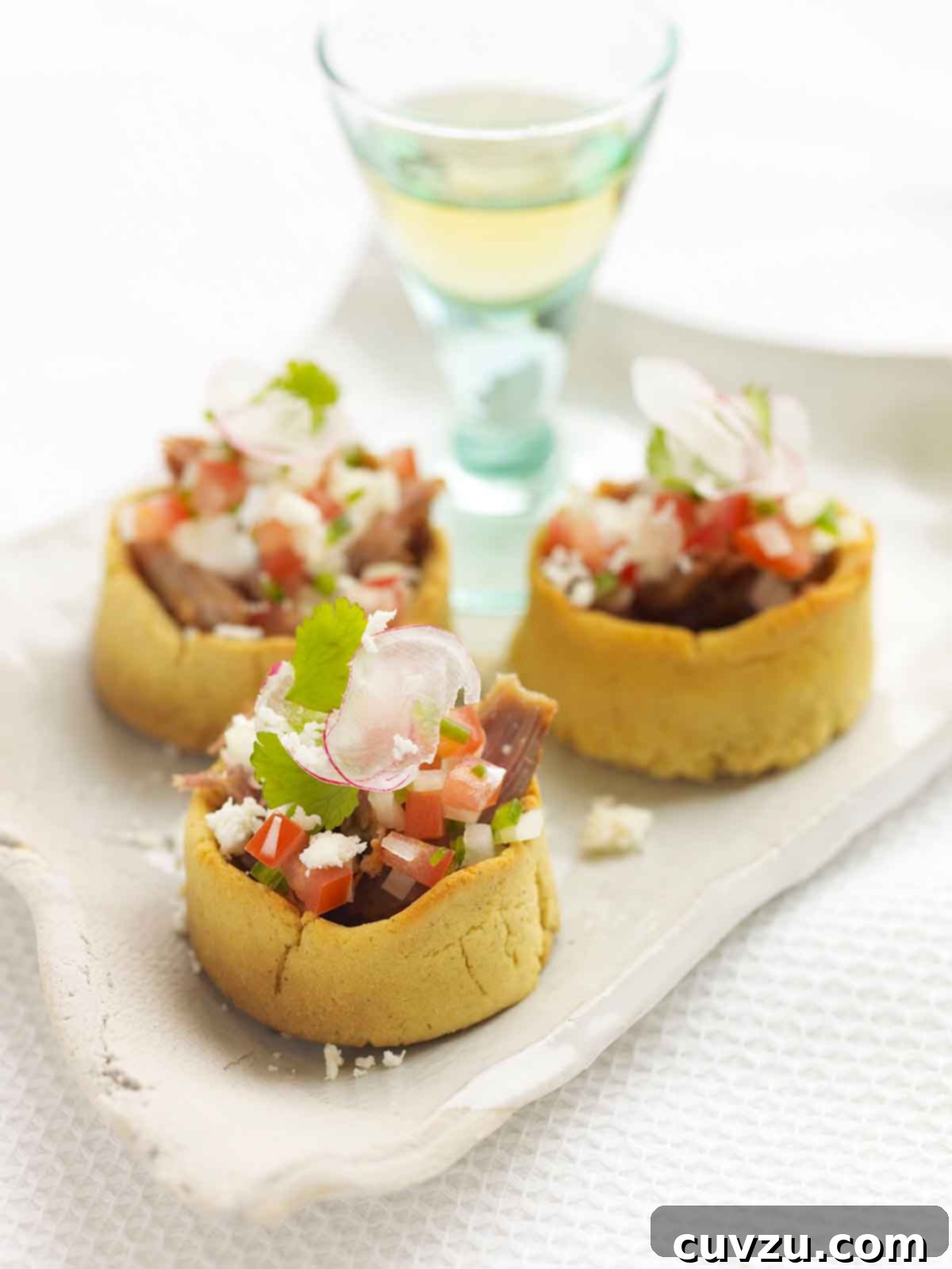
Dive into the vibrant world of Mexican cuisine with Mexican Sopes, a truly delightful and versatile dish that effortlessly transitions from a tantalizing appetizer to a satisfying meal. These charming, boat-shaped masa cups offer a perfect canvas for an explosion of fresh, savory, and mildly spiced flavors. Imagine sinking your teeth into tender, slow-cooked pork, creamy queso, and bright pico de gallo, all nestled within a warm, crispy masa shell. It’s an experience that captivates the senses and transports you straight to the heart of Mexico.
Sopes are a beloved classic among traditional Mexican *antojitos* (literally “little cravings”). Crafted from fresh masa or masa harina, the same fundamental corn dough used for iconic tortillas, sopes are artfully shaped into small, thick disks with pinched edges, forming a shallow cup. This unique form makes them ideal for holding a variety of delicious fillings, from succulent meats and crumbled cheeses to vibrant salsas and fresh vegetables. They are often hailed as the perfect culinary companion to a fine añejo tequila, completing an authentic Mexican gastronomic experience.
What Exactly Are Mexican Sopes?
At their core, sopes are thick corn tortillas, but with a distinctive twist. Unlike their flat counterparts, sopes are given a raised edge, creating a shallow “bowl” or “cup.” This ingenious design is what allows them to cradle a bounty of toppings without spilling. Originating from central and southern Mexico, sopes have become a staple across the country, enjoyed in bustling markets, street food stalls, and family kitchens alike. Their rustic charm and incredible flavor profile make them a celebrated part of Mexico’s rich culinary heritage.
The magic of a sope begins with masa. Masa harina, a finely ground corn flour that has been cooked and steeped in a lime solution (nixtamalized), is mixed with water to form a pliable dough. This nixtamalization process is crucial, not only for flavor and texture but also for making the corn’s nutrients more bioavailable. Once the dough is prepared, small balls are formed, flattened slightly, and then cooked on a comal or griddle. The defining step is pinching the edges of the partially cooked disk to create that characteristic raised rim, giving the sope its signature shape and functionality.
While often served as an appetizer, a plate of two or three generously filled sopes can easily constitute a light lunch or a satisfying dinner. Their versatility is boundless, making them a favorite for casual gatherings, festive celebrations, or simply a comforting meal at home. The contrast in textures – the slightly crisp exterior of the masa, the soft interior, and the diverse toppings – is what makes sopes so incredibly appealing.
The Heart of the Sope: Mastering Masa
The foundation of any great sope lies in its masa. Understanding masa harina is key to achieving the right texture and flavor. Masa harina, unlike regular cornmeal, is specially prepared for making traditional Mexican corn products. When mixed with warm water, and often a touch of baking powder and shortening or lard, it transforms into a soft, supple dough that is both robust enough to hold its shape and delicate enough to be enjoyable.
Creating the perfect masa dough is a simple yet crucial step. The goal is a dough that is soft, moist, and pliable, without being sticky or crumbly. The addition of a small amount of fat, like non-hydrogenated vegetable shortening or lard, contributes to a tender interior and a slightly richer flavor. Kneading the dough for a minute or two develops its texture, ensuring it will hold together as you shape the sopes. Don’t be afraid to adjust the water content slightly; humidity and masa brands can vary, so trust your instincts to achieve a consistency similar to playdough.
Shaping the sopes is a tactile experience. After forming small balls of masa, they are gently flattened into thick disks. The magic happens next: carefully pinch the edges all around, using your thumb and forefinger, to create that distinctive rim. This rim prevents the delicious fillings from spilling out and adds to the sope’s structural integrity. While the process may seem intimidating at first, it quickly becomes intuitive, and even imperfectly shaped sopes are perfectly delicious. Once shaped, they are typically baked or lightly fried to set their form and develop a subtle crispness.
Beyond the Basics: Classic Sope Fillings and Flavors
What truly elevates a sope is its filling. While the possibilities are endless, traditional Mexican sopes often feature a harmonious blend of tender meats, fresh salsas, and creamy cheeses. Our featured recipe showcases a truly spectacular combination that highlights the best of Mexican flavors, offering both richness and vibrant freshness in every bite.
Pulled Pork Perfection with Tequila and Lime
The star of this sope recipe is undoubtedly the slow-cooked pork shoulder, infused with a lively marinade of blanco tequila, zesty lime, and a hint of chile. Pork shoulder, known for its marbling and ability to become incredibly tender when slow-cooked, is the ideal cut for this preparation. The tequila adds a unique depth and subtle sweetness, while the lime juice and zest provide a bright, acidic counterpoint that cuts through the richness of the pork. A medley of spices, including powdered chile and bay leaf, along with aromatic garlic, further enriches the flavor profile. The lengthy baking process ensures the pork becomes melt-in-your-mouth tender, easily shredded into succulent chunks that soak up all the delicious marinade. This creates a flavorful, juicy filling that is both comforting and exciting.
Freshness with Pico de Gallo
To balance the richness of the pork, a generous dollop of fresh pico de gallo salsa is essential. Pico de gallo, a classic Mexican condiment, is a simple yet powerfully flavorful mix of finely diced fresh tomatoes, onions, cilantro, and jalapeños, brightened with a squeeze of lime juice. Its vibrant colors and fresh, zesty taste provide a wonderful contrast to the cooked pork, adding a crucial element of freshness and a mild, pleasant kick. It’s the perfect textural and flavor counterpoint, ensuring each sope is a multi-layered sensory delight.
Creamy Cheeses and Savory Garnishes
No Mexican antojito would be complete without cheese. Crumbled queso fresco, a fresh, mild, and slightly salty Mexican cheese, is the traditional choice for sopes. Its soft, crumbly texture and delicate flavor complement the other ingredients without overpowering them. If queso fresco is unavailable, feta cheese can serve as an excellent substitute, offering a similar salty tang and crumbly texture. To finish, a drizzle of cool sour cream adds a creamy richness, while thinly sliced red radishes provide a refreshing crunch and a beautiful pop of color, completing the visual and textual harmony of the sope. These garnishes are not just for show; they add essential layers of flavor and texture that make each bite memorable.
Mexican Sopes
Sopes are one of the most popular Mexican antojitos (literally, little cravings) to serve as an appetizer. Made with a masa harina base, they get filled with juicy tequila-lime pulled pork shoulder, pico de gallo, and queso cheese. I bet you can’t stop at just one.
David Leite
Saved
- PIN
Appetizers
Mexican
12
servings
100
kcal
35
minutes
11
hours
25
minutes
12
hours
Ingredients
For the Sopes
- 1 1/2 cups masa harina
- 1/8 teaspoon baking powder
- 1/8 teaspoon salt
- 1/3 cup nonhydrogenated vegetable shortening or lard
- About 3/4 cup warm water
For the Slow-Cooked Pork with Lime, Tequila, and Chile
- 1 cup blanco tequila
- 1/4 cup distilled white vinegar
- 2 teaspoons grated lime zest
- Juice of 2 limes
- 1 1/2 tablespoons kosher salt
- 2 tablespoons powdered chile
- 1 bay leaf
- 3 cloves garlic, coarsely chopped
- One 3-pound boneless pork shoulder
For the Fillings and Garnishes
- 1 cup slow-cooked pork with lime, tequila, and chile
- 1/2 cup pico de gallo salsa
- 1/2 cup crumbled queso fresco or feta cheese
- Sour cream, as needed
- 1 large red radish, thinly sliced
Instructions
Make the Sopes
-
Preheat your oven to 375°F (190°C). Prepare a baking sheet by lining it with parchment paper for easy cleanup.
-
In a large mixing bowl, combine the masa harina, baking powder, and salt. Stir these dry ingredients thoroughly until well mixed. Add the vegetable shortening or lard and blend it into the dry mixture using a pastry blender or your fingertips until the texture resembles coarse crumbs. Gradually incorporate the warm water, mixing until the dough comes together and achieves a soft, pliable consistency. It should not be sticky or too dry.
-
Lightly knead the dough for about a minute to ensure it’s smooth. Then, divide the dough into small balls, each approximately the size of a small walnut (about 1 1/2 tablespoons). Gently flatten each ball into a thick disk, then carefully pinch the edges all around to form small cup shapes. Aim for thinner walls and bases for a more delicate final sope, ensuring there are no holes in the cups.
-
Arrange the shaped masa cups on the prepared baking sheet. Bake for 30 minutes, or until the edges begin to turn a light golden brown. This baking step helps set their shape and creates a slightly crisp texture.
Prepare the Flavorful Tequila-Lime Pulled Pork
-
In a large glass or other nonreactive bowl (such as ceramic or stainless steel), whisk together the blanco tequila, distilled white vinegar, grated lime zest, fresh lime juice, kosher salt, powdered chile, bay leaf, and coarsely chopped garlic. Stir until the salt dissolves completely. Add the boneless pork shoulder to this marinade, turning to ensure it’s fully coated. Cover the bowl and refrigerate for a minimum of 3 hours, turning the pork occasionally to allow the flavors to penetrate evenly.
-
Preheat your oven to a low 225°F (107°C). Position an oven rack in the center. Line a baking sheet with parchment paper, which will help with cleanup and prevent sticking.
-
Remove the pork from the marinade and discard the used marinade. Pat the pork thoroughly dry with paper towels to ensure a better outer texture. Place the dried pork on the prepared baking pan. Bake for approximately 8 hours, or until the meat is incredibly tender and can be easily shredded with a fork. The slow cooking process will yield exceptionally juicy and flavorful pork. Remove from the oven and let it cool for about 20 minutes; you’ll notice the pork will have shrunk considerably.
-
To serve, simply use two forks to pull the tender pork apart and chop it into smaller chunks as desired. Any leftover pork should be allowed to cool completely before being covered and refrigerated. It will keep well for up to 5 days, making it perfect for meal prep or quick future meals.
Assemble Your Delicious Sopes
-
Fill the warm masa cups with a generous spoonful of the slow-cooked tequila-lime pulled pork. Top with fresh pico de gallo, crumbled queso fresco (or feta cheese), and a dollop of sour cream. Garnish with thinly sliced red radishes for added crunch and visual appeal. Serve immediately and enjoy these authentic Mexican delights!
Adapted From
Tequila: Myth, Magic & Spirited Recipes
Buy On Amazon
Explore More Culinary Insights
Ingredient Substitutions
Recipe Scaling
Summarize
Nutrition
Serving:
1
serving
Calories:
100
kcal
Carbohydrates:
11
g
Protein:
1
g
Fat:
1
g
Saturated Fat:
1
g
Monounsaturated Fat:
1
g
Sodium:
899
mg
Fiber:
1
g
Sugar:
1
g
Nutrition information is automatically calculated and should only be used as an approximation. Individual results may vary.
Tried this recipe?
Mention @leitesculinaria or tag #leitesculinaria!
Expert Tips for Perfect Mexican Sopes
- Masa Dough Consistency: The key to great sopes is the dough. It should be firm enough to hold its shape but soft enough to mold easily. If it’s too dry, add a tiny bit more warm water; if too sticky, a little more masa harina.
- Even Pinching: Take your time when pinching the edges of the sopes. Uniform edges ensure they cook evenly and create a perfect cup for fillings. Don’t worry if they aren’t perfectly symmetrical; homemade charm is part of their appeal.
- Baking vs. Frying: While this recipe bakes the sopes for a slightly healthier and less greasy option, traditionally, sopes are often lightly fried after shaping to achieve a crispier exterior. If you prefer a more traditional finish, you can lightly pan-fry them in a small amount of oil until golden and slightly puffed before filling.
- Make-Ahead Options: Both the masa cups and the pulled pork can be prepared in advance. Cooked sopes can be stored in an airtight container at room temperature for a day or refrigerated for up to 3 days, then reheated briefly before filling. The pulled pork is excellent for meal prep and can be made up to 5 days ahead.
- Serving Suggestions: Sopes are fantastic as an appetizer for a Mexican-themed dinner party, but they also make a wonderful light meal when served with a fresh salad or a side of refried beans. Pair them with a refreshing horchata or, as suggested, a crisp tequila for a complete culinary experience.
Sopes: A Distinctive Delight Among Mexican Antojitos
Mexico’s street food scene is rich with masa-based delights, and sopes stand out with their unique characteristics. While often compared to other popular *antojitos* like gorditas, chalupas, and huaraches, sopes offer a distinct experience. Gorditas are similar in thickness but are typically split and stuffed like a pita, while chalupas are thinner, fried corn tortillas topped with various ingredients. Huaraches, named for their sandal-like shape, are larger, elongated masa bases. Sopes, with their signature pinched rim, provide the perfect vessel for an open-faced explosion of flavors, making them a wonderfully interactive and satisfying dish that holds its own in the vast tapestry of Mexican comfort food.
Why You’ll Love Making These Mexican Sopes
This recipe for Mexican Sopes is more than just a dish; it’s an invitation to explore the authentic flavors and heartwarming traditions of Mexican home cooking. The combination of the tender, tequila-lime infused pulled pork, the vibrant freshness of pico de gallo, and the creamy richness of cheese, all cradled in a perfectly textured masa cup, creates an unforgettable culinary experience. Whether you’re an experienced cook or new to Mexican cuisine, the clear instructions and robust flavors of this recipe will guide you to a delicious outcome. Impress your friends and family, or simply treat yourself to an incredibly satisfying meal that promises to transport your taste buds south of the border. Prepare to discover your new favorite *antojito*!