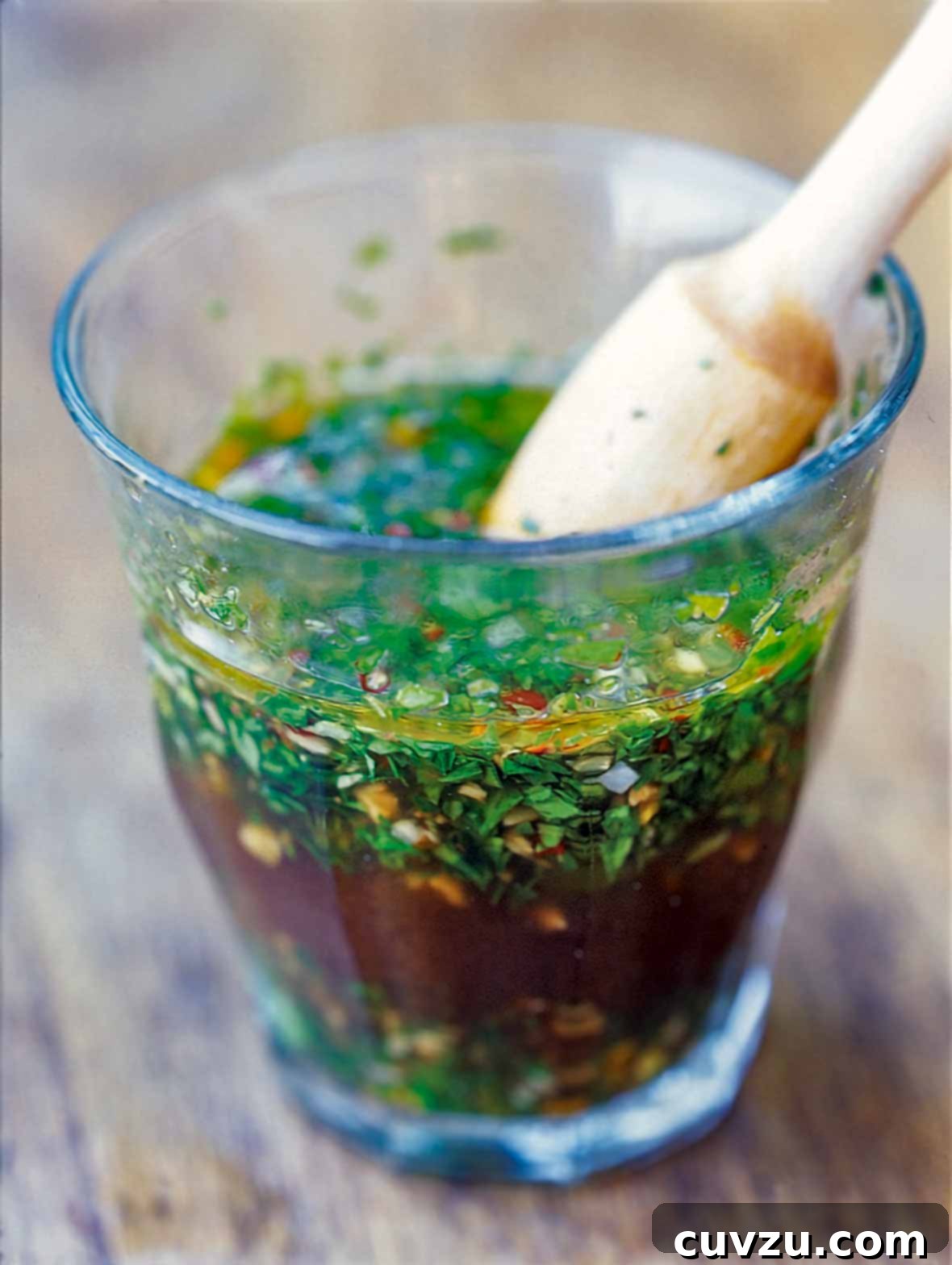
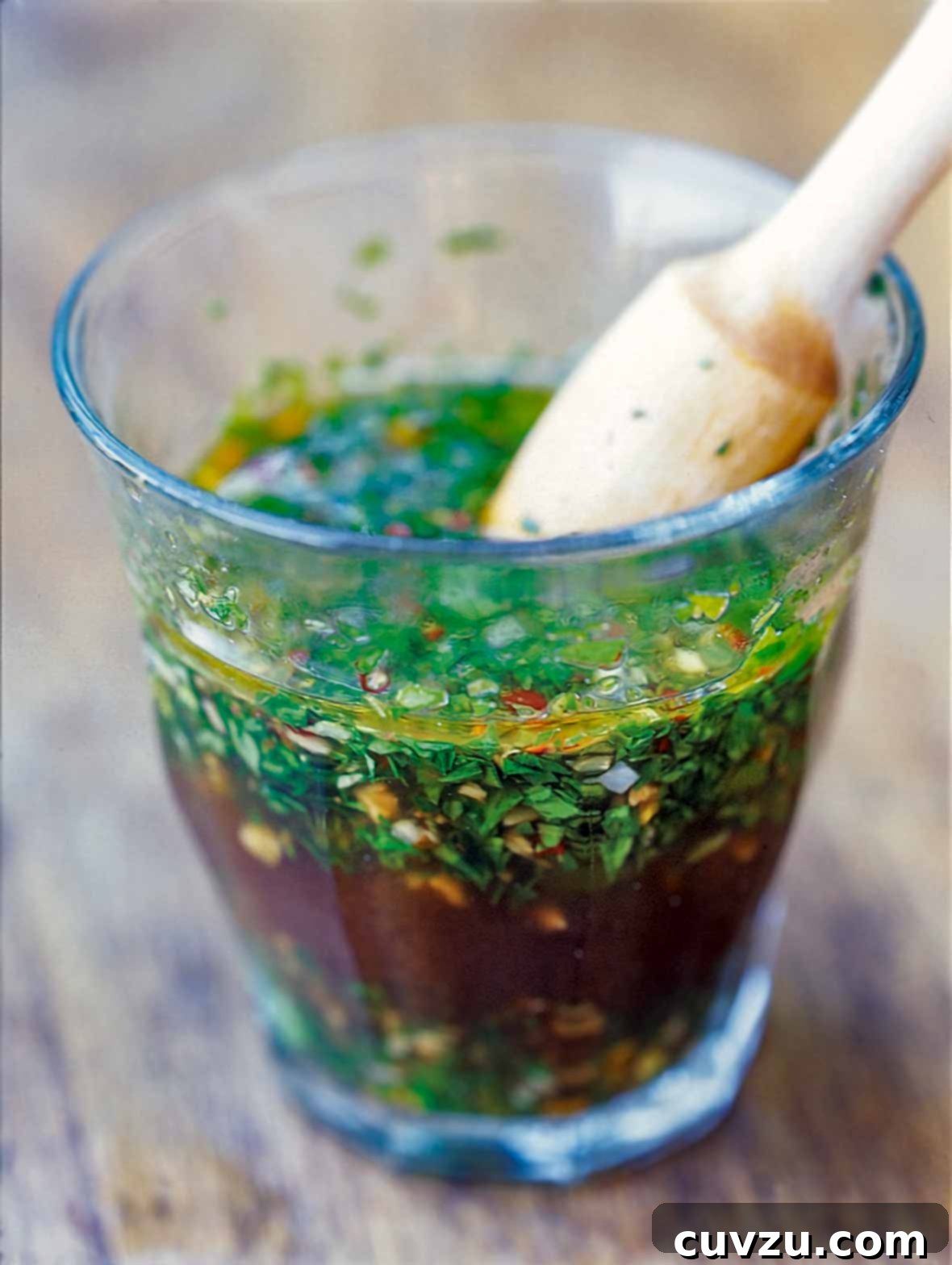
Prepare to elevate your culinary experience with this vibrant, herbaceous, and intensely flavorful chimichurri sauce. Rooted in the rich culinary traditions of Argentina, this classic sauce is a revelation, especially when paired with grilled meats. Our particular rendition, while honoring its authentic heritage, introduces a delightful acidic swing with the thoughtful inclusion of sherry vinegar, setting it apart from more common iterations. A simple yet powerful concoction of fresh parsley, aromatic oregano, pungent garlic, a touch of red pepper flakes, quality olive oil, and the aforementioned sherry vinegar, it comes together in mere minutes. A quick whisk, a moment to meld, and it’s ready to transform any dish. While it’s particularly renowned as the perfect partner for steak, its versatility knows no bounds.
Featured Review: A Culinary Revelation
“Chim, chim, chimiriyummy! It’s always the simplest ingredients that come together and create such beautiful eats. I did add some cilantro with the parsley and oregano and opted for red wine vinegar, which worked wonderfully. It’s a bright, garlicky kiss to whatever you drizzle it on. I initially made it to accompany oven-roasted chicken seasoned with garam masala, alongside roasted broccoli with soy sauce and a crisp Caesar salad. Maybe tomorrow, some roasted potatoes will get the rest of this magnificent chimichurri! Definitely no vampires around here tonight! This sauce is truly magnificent.”
BBQGODDESS
My partner and I are utterly captivated by this emerald elixir. We find ourselves constantly reaching for it, keen on dousing, drizzling, and otherwise acquainting everything from succulent grilled steak to tender chicken, juicy chops, fresh seafood, or honestly, just about anything that graces our plate. Its invigorating flavor profile elevates even the simplest meals into something truly extraordinary.
Crafting the Perfect Balance: The Art of Chimichurri’s Acidity
While many traditional chimichurri recipes advocate for a balanced 1:1 ratio of vinegar to oil, our version deliberately leans towards a more acidic profile. This slight tilt creates a tang that masterfully cuts through the richness of grilled meats, offering a refreshing counterpoint. However, the precise amount of vinegar you choose to incorporate is a personal journey, guided by your palate’s preference for tang and your intended use for the sauce. If you plan to use it primarily as a vibrant marinade, a higher vinegar content will tenderize and infuse flavor more deeply. For a delicate drizzling sauce, you might prefer a slightly mellower approach with less vinegar.
We encourage you to embark on this culinary adventure by trying the recipe as written. Experience its bold, zesty character first. Then, if your taste buds desire, feel free to fine-tune it with minor adjustments—a splash more oil for richness, a touch more vinegar for an extra zing, or a pinch more salt to brighten the flavors. This iterative process ensures you achieve your perfect chimichurri. From extensive testing, we’ve found this foundational recipe to be remarkably versatile, serving as an ideal base for a myriad of culinary applications.
My confidence in this recipe was truly put to the test when I prepared it for a discerning friend who divides her year between her home and Uruguay, a country where chimichurri is practically a way of life, and she is utterly devoted to it. The verdict? She adored it, confirming its authentic appeal even to the most seasoned chimichurri connoisseur.
As highlighted, this particular iteration is celebrated for its distinctive tanginess, a direct result of its vinegar-forward composition. It’s also intentionally thin, allowing it to penetrate ingredients beautifully. If you prefer a slightly thicker consistency or a more rounded flavor profile, simply increase the olive oil. During one memorable meal, after adding an additional 1/2 cup of olive oil, the sauce achieved a perfect balance, becoming a bit more viscous and wonderfully emulsified. By the meal’s end, we found ourselves dipping everything imaginable into it—crusty bread, roasted potatoes, and even our fingers, unable to resist its captivating taste. It’s a testament to a sauce so good, it inspires a complete lack of table manners!
Frequently Asked Questions About Chimichurri
Absolutely—in fact, we highly recommend it! Allowing the ingredients to mingle and their flavors to marry is key to a truly exceptional chimichurri. Ideally, let it rest for at least 2 hours before serving, though an overnight stay in the fridge yields an even deeper, more harmonious flavor. Just be aware that olive oil may naturally solidify when chilled, which is completely normal. Simply bring the sauce to room temperature about 30 minutes before serving and give it a good whisk to restore its smooth consistency. Fresh chimichurri retains its optimal flavor and vibrant color for about 3-4 days and can be stored in an airtight container in the refrigerator for up to a week. Beyond that, the fresh herbs may lose some of their bright green swagger, though the flavor will still be delicious.
You technically *could*, but we strongly advise against it for achieving the authentic chimichurri experience. The charm of a truly great chimichurri lies in its rustic texture—those beautifully distinct, finely chopped bits of herbs and garlic. Hand-chopping ensures this delightful texture, providing bursts of fresh flavor with every bite. A food processor, while convenient, tends to over-process the delicate herbs and garlic, transforming your vibrant green sauce into a sad, bruised, and somewhat paste-like consistency, detracting from its characteristic bite and visual appeal. Plus, there’s a certain meditative, Zen-like quality to the methodical rhythm of chopping fresh herbs and garlic by hand—it’s part of the authentic culinary process. Embrace the chop!
While red wine vinegar is indeed the traditional Argentine choice for chimichurri, our recipe specifically calls for sherry vinegar. We believe sherry vinegar offers a more complex, nuanced, and rounded character. It brings a subtle nuttiness and a deeper flavor profile that harmonizes exceptionally well with rich, well-aged steaks and other grilled meats. If sherry vinegar isn’t readily available, red wine vinegar remains an excellent, traditional alternative. White wine vinegar can also work in a pinch, though it typically lacks the deeper, more intricate notes found in its red cousin. For those seeking a lighter, brighter touch, champagne vinegar is another delightful option that imparts a delicate acidity. Ultimately, the “best” vinegar is the one that best suits your personal taste and the ingredients you have on hand.

Why This Chimichurri Recipe Stands Out
This chimichurri isn’t just a sauce; it’s a statement. It’s bold, traditional, and unapologetically flavorful, eschewing newfangled additions or overly cheffy twists. The carefully calibrated proportions, with a higher vinegar-to-oil ratio, deliver a punchy acidity that brilliantly cuts through the richness of any grilled meat, ensuring each bite is fresh and exciting. A generous six whole cloves of garlic signal that this sauce means serious business, while the balanced blend of fresh flat-leaf parsley and earthy oregano provides those essential, classic green-herb bass notes that define authentic chimichurri. Best of all, there are no complicated techniques or specialized equipment like food processors required—just simple, honest ingredients and a bit of hand-chopping.
What truly makes this recipe exceptional is its inherent adaptability. You can effortlessly adjust it ever so slightly to match your personal taste—a splash more olive oil for a richer mouthfeel, a touch more vinegar for an extra layer of tang, or an extra pinch of chili flakes for more heat—all without compromising its gutsy, traditional character. It’s the kind of irresistible sauce that will make you wonder how you ever enjoyed a perfectly cooked steak, or any grilled delicacy, without its vibrant presence. Prepare for a new culinary staple!
Explore More Zippy Sauce Recipes
Sport Pepper Sauce
15 mins
Momofuku’s Octo Vinaigrette
10 mins
Schug
25 mins
Paprika Mayonnaise
5 mins
Share Your Chimichurri Experience!
We love hearing from our community! If you make this cherished chimichurri recipe, or any other delightful dish from Leite’s Culinaria, please consider leaving a review, a star rating, and your best photo in the comments below. Your feedback and culinary creations truly inspire us. –David

Classic Chimichurri Sauce
This chimichurri, a classic Argentine sauce, is based on the authentic and traditional recipe. Sherry vinegar, olive oil, fresh parsley, oregano, garlic, and red pepper flakes are whisked together in minutes, offering a bright, tangy counterpoint to grilled meats. Easily tweak it to your taste, then bring on the steak!
David Leite
Print Recipe
Condiments
Argentine
8 servings | 1 cup
134 kcal
5 minutes
5 minutes
Ingredients
- 3/4 cup sherry vinegar
- 1/2 cup olive oil
- 3/4 cup chopped flat-leaf parsley leaves
- 3 tablespoons chopped oregano leaves
- 6 large cloves garlic, finely chopped
- 1/2 teaspoon red pepper flakes
- 3/4 teaspoon salt
Instructions
-
In a large nonreactive bowl or a glass jar, combine the 3/4 cup sherry vinegar, 1/2 cup olive oil, 3/4 cup chopped flat-leaf parsley leaves, 3 tablespoons chopped oregano leaves, 6 large cloves garlic, 1/2 teaspoon red pepper flakes, and 3/4 teaspoon salt. Whisk all ingredients thoroughly to combine. Taste the mixture and, if desired, gently adjust the amount of vinegar, oil, and salt according to your preference.
-
Serve the chimichurri immediately to enjoy its freshest flavors, or for an even richer depth of taste, refrigerate it in a covered container for at least 2 hours, or ideally, overnight. If chilled, allow the sauce to return to room temperature for about 30 minutes before serving, and give it a good whisk. This vibrant sauce can be kept in the fridge for about a week, though its irresistible flavor often means it won’t last that long!
Recipe Notes for Perfect Chimichurri
- Achieving Your Ideal Balance: This recipe intentionally features a tangier, vinegar-forward chimichurri. If you prefer a milder, more balanced sauce, or one with a richer mouthfeel, simply add more olive oil; up to an additional 1/2 cup is a good starting point. Adjust gradually to reach your desired flavor.
- Versatile Applications: This chimichurri is incredibly versatile and can be used both as a marinade and a drizzling sauce. For a more intense marinade that tenderizes and infuses meat deeply, lean towards the higher vinegar content as written. For a lighter, brighter drizzling or finishing sauce, consider adding a little more olive oil to soften the acidity and create a slightly more viscous texture.
- Herb Power: The freshness of the herbs is paramount. Use fresh, flat-leaf parsley and oregano, finely chopped by hand for the best texture and vibrant flavor.
- Garlic Impact: Six cloves of garlic may seem like a lot, but they are essential for the bold, characteristic flavor of authentic chimichurri. If you are sensitive to raw garlic, you can briefly blanch the chopped garlic in hot water for a minute before adding it, or reduce the quantity slightly.
- Spice Level: The 1/2 teaspoon of red pepper flakes provides a subtle warmth. If you enjoy more heat, feel free to increase the amount to 1 teaspoon or more.

Inspired By
Williams-Sonoma Essentials of Grilling
Buy On Amazon
Explore More with AI (External Tools)
Substitutions
Scale Recipe
Summarize
Nutrition Information
Serving: 2 tablespoons
Calories: 134 kcal
Carbohydrates: 3 g
Protein: 1 g
Fat: 14 g
Saturated Fat: 2 g
Monounsaturated Fat: 10 g
Sodium: 226 mg
Fiber: 1 g
Sugar: 0.2 g
Nutrition information is automatically calculated, so should only be used as an approximation.
Tried this recipe?
Mention @leitesculinaria or tag #leitesculinaria!
Insights from Our Recipe Testers’ Kitchens
Our dedicated team of recipe testers put this chimichurri through its paces, offering valuable feedback and insights. Their experiences highlight the sauce’s versatility and how easily it can be adapted to individual preferences.
Leanne Abe’s Take
I believe chimichurri is one of those wonderfully adaptable sauces where personal preferences for garlic, pepper, thickness, or looseness truly shine. This particular recipe yields a looser sauce, with a delightful emphasis on the vinegar, which I found to work exceptionally well when used as a marinade for steak. It also produces a generous quantity, making it ideal for both marinating and serving. The preparation is remarkably quick—I even suspect you could use a food processor for a couple of quick pulses if you’re short on time, though hand-chopping gives a superior texture. This chimichurri infused my steak with a bright, incredibly fresh flavor.
A personal tip: I’d recommend reserving more than just the suggested 1/3 cup for drizzling, as you’ll want to put it on everything! We found ourselves dipping crusty bread into it, drizzling it over grilled corn, and surprisingly, even spooning it onto eggs the next morning. Its versatility is truly impressive.
Tamiko Lagerwaard’s Review
I thoroughly enjoyed this recipe exactly as it was written. I maintained the specified ratio of oil to vinegar, and surprisingly, I didn’t find it overly vinegary, although it’s worth noting that I typically prefer my vinaigrettes at a near half-and-half ratio, which some might consider quite tart. The vibrant, herbaceous, and garlicky notes of this marinade and sauce perfectly complemented the charred smokiness of the steak I prepared. I wouldn’t change a single thing about it. It’s an incredibly easy and straightforward recipe that delivers exceptional results, pairing flawlessly with beef.
Brenda Carleton’s Observations
Sherry vinegar holds a special place among my favorite vinegars, and I seize every opportunity to incorporate its distinct flavor. In this chimichurri, its nuanced character truly shone through—in the most delightful way. While some chimichurri (and other marinades and sauces) can be aggressively vinegary, this particular combination achieved a truly harmonious ratio. The recipe called for 2/3 cup, but I personally used 3/4 cup, and I also increased the olive oil from 1/4 cup to a full 1/2 cup for a slightly richer consistency. Perhaps next time, driven by curiosity, I’ll experiment with cider vinegar to see how it compares.
Recipes that rely on fresh herbs always appeal to me, especially since I cultivate many of my own. Fresh oregano can sometimes have a subtle earthiness, but when combined with the other ingredients in this recipe, it contributed a nuanced flavor that was both traditional and perfectly balanced. And let me tell you, the red pepper flakes and generous garlic truly make this sauce sing! It tasted absolutely delicious even before adding the flank steak to the equation, which is always a promising sign. The equation is simple: Chimichurri + Flank Steak = Pure Deliciousness.