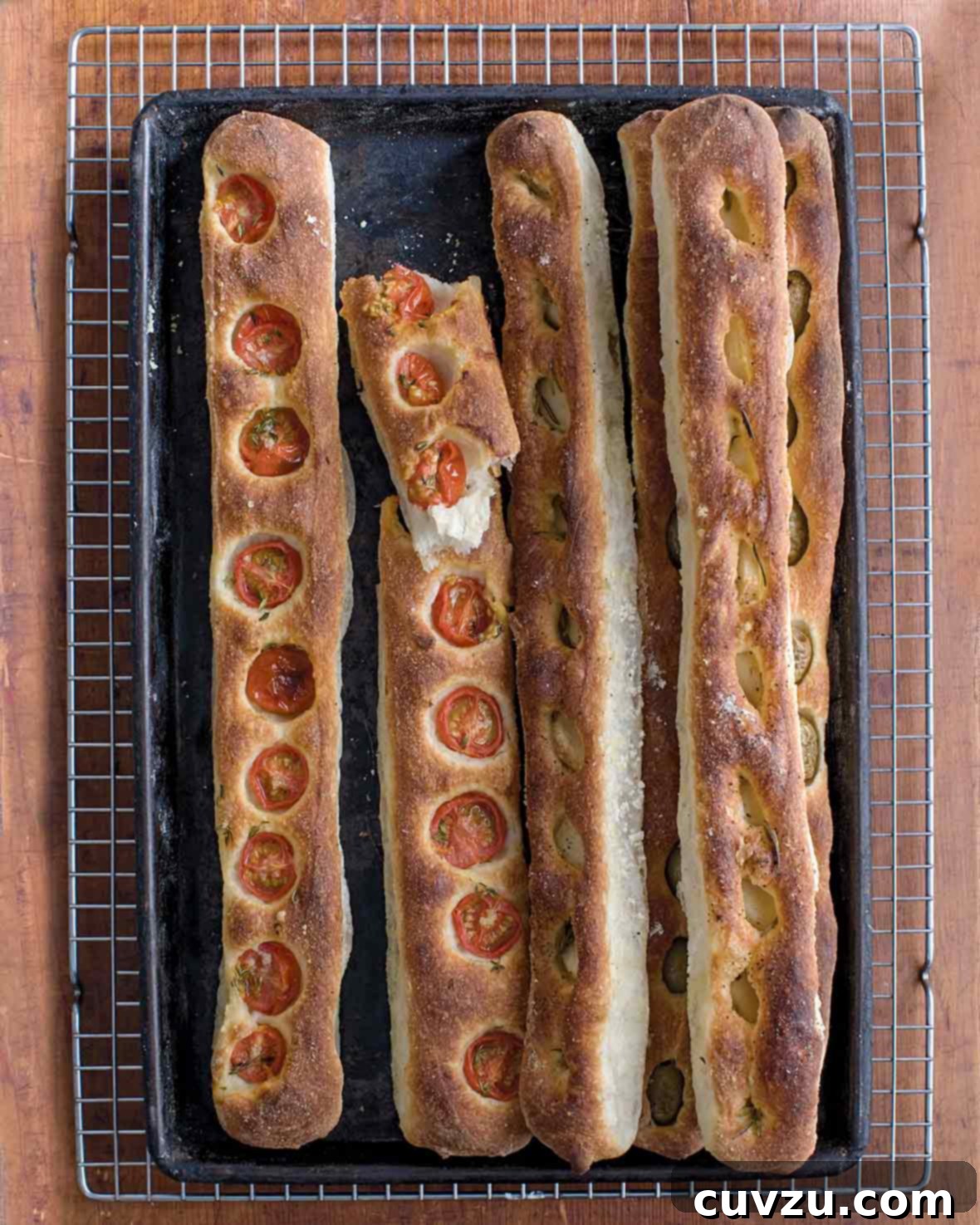
Jim Lahey’s No-Knead Stecca Bread: Effortless Artisan Italian Stick Loaves
Discover the magic of homemade bread with Jim Lahey’s innovative no-knead Stecca recipe. Inspired by the light, airy texture of pizza bianca, this “stick” bread offers a delightful brittle crust and a tender crumb, making it perfect for sandwiches or simply savoring on its own. Experience the joy of baking artisanal bread with minimal effort and maximum flavor.
Jim Lahey’s No-Knead Small Baguette With Tomatoes, Olives, Garlic
The name of this bread—stecca, or “stick” in Italian—is a descriptive term coined to reflect its narrow, elongated shape. This unique recipe is derived from the faster-rising pizza bianca dough, a staple found in many pizza recipes. It’s carefully stretched into a thin rope, allowing for quick baking on a baking sheet, rather than in a traditional pot. The result is a wonderfully brittle crust, lighter and thinner than many other artisan breads. Designed specifically for sandwiches, this loaf aims for a subtle flavor profile and a lighter color, ensuring it complements your fillings without overpowering them. However, a generous olive oil glaze and a sprinkle of coarse salt elevate its inherent flavor, making it equally delightful on its own.
David Leite
The Art of No-Knead Stecca Bread: A Baker’s Dream
Jim Lahey’s no-knead technique has revolutionized home baking, making artisanal bread accessible to everyone. This Stecca bread recipe is a shining example, leveraging a high-hydration dough and a long, slow fermentation to develop complex flavors and a perfect texture without any laborious kneading. The beauty of this method lies in its simplicity: a few minutes of mixing, a long rest, and a quick bake result in a professional-quality loaf.
Unlike traditional baguettes that demand specific shaping and high-heat steam environments, Stecca bread is designed for the home kitchen. Its “stick” form ensures rapid baking and a delicate crust, while the olive oil and coarse salt add an irresistible aroma and taste. Whether you’re a seasoned baker or just starting your bread-making journey, this recipe promises a rewarding experience and an incredibly delicious outcome.
Ingredients
-
3 cups bread flour, plus more for dusting the work surface.
Bread flour, with its higher protein content, is crucial for developing the gluten structure that gives this no-knead bread its characteristic chew and open crumb. A little extra is needed for handling the sticky dough.
-
1/2 teaspoon table salt.
Salt is essential for flavor and also plays a vital role in controlling yeast activity and strengthening gluten. This refers to fine table salt for the dough itself.
-
3/4 teaspoon sugar.
A small amount of sugar provides initial food for the yeast, helping to kickstart fermentation and contributes to browning of the crust during baking.
-
1/4 teaspoon instant or other active dry yeast.
This minimal amount of yeast is key to the long, slow fermentation process, which builds flavor and texture without the need for kneading. Instant yeast can be mixed directly with dry ingredients, while active dry might benefit from a quick bloom in a bit of the cool water.
-
1 1/2 cups cool (55 to 65°F | 13 to 18°C) water.
Cool water is vital for slowing down the yeast’s activity, allowing for the extended fermentation period that develops deep flavors and a desirable open crumb structure. Avoid warm water, which would accelerate proofing too much.
-
1/4 cup extra-virgin olive oil.
Used for glazing the dough before baking, this adds rich flavor, promotes a beautiful golden crust, and keeps the dough from sticking. Choose a good quality olive oil for the best results.
-
3/4 teaspoon coarse sea salt.
Sprinkled on top before baking, coarse sea salt provides a delightful textural crunch and bursts of savory flavor. It’s distinct from the table salt used in the dough.
-
10 halved cherry tomatoes, pitted black olives, or lightly crushed garlic cloves (for topping variations).
These are your primary flavor additions, offering distinct profiles. Cherry tomatoes add sweetness and acidity, olives provide a briny depth, and crushed garlic offers a pungent, aromatic kick. Choose your favorite or mix and match!
-
1 clove garlic, very thinly sliced (optional, for tomato variation).
If you opt for the tomato variation, a thin slice of fresh garlic atop each tomato half will infuse the bread with a subtle, aromatic layer.
-
Fresh thyme leaves (optional, for tomato variation).
Thyme complements tomatoes beautifully, adding an earthy, herbaceous note to your Stecca bread.
-
Freshly ground black pepper (optional, for garlic variation).
A sprinkle of black pepper enhances the robust flavor of the garlic variation, providing a touch of warmth and spice.
Instructions
-
1. Prepare the Dough (Long Fermentation): In a medium bowl, combine the bread flour, table salt, sugar, and yeast. Add the cool water (ensure it’s between 55 to 65°F or 13 to 18°C) and mix thoroughly with a wooden spoon or your hand until all the flour is incorporated and you have a very wet, sticky dough. This usually takes about 30 seconds of mixing. Cover the bowl tightly with plastic wrap or a damp tea towel and let it sit at room temperature for an extended period, typically 12 to 18 hours. During this time, the surface of the dough should become dotted with small bubbles, and the dough itself should more than double in size, indicating a successful and flavorful fermentation. The longer fermentation is key to the no-knead method, developing gluten and complex flavors.
-
2. First Shaping and Seasoning: Once the first rise is complete, generously dust your work surface with additional flour. Use a bowl scraper or a flexible rubber spatula to carefully dislodge the dough from the bowl, trying to keep it in one cohesive piece. Gently fold the dough over itself two or three times. This action helps to build some structure without deflating the precious air bubbles. Carefully shape the dough into a somewhat flattened ball. Using a pastry brush, lightly coat the entire surface of the dough with some of the extra-virgin olive oil. Then, evenly sprinkle approximately 1/4 teaspoon of the coarse sea salt over the oiled surface. The salt will gradually dissolve, infusing the crust with flavor.
-
3. Second Rise (Proofing): Prepare for the second rise by placing a clean tea towel on your work surface. Generously dust the tea towel with wheat bran, cornmeal, or flour—this prevents sticking. Carefully transfer the shaped dough onto the prepared towel, ensuring the seam side is facing down. If the dough still feels quite tacky, lightly dust the top with a little more wheat bran, cornmeal, or flour. Gently fold the ends of the tea towel loosely over the dough to cover it completely. Place the covered dough in a warm, draft-free spot (such as a turned-off oven or microwave) to rise for another 1 to 2 hours. The dough is fully proofed and ready when it has almost doubled in size and feels light and airy. To test for readiness, gently poke the dough with a floured finger; if the indentation holds, it’s ready. If it springs back quickly, give it another 15 minutes to proof further.
-
4. Preheat Oven and Prepare Baking Sheet: Approximately half an hour before the end of the second rise (about 30-45 minutes before you expect the dough to be ready), preheat your oven to a high temperature of 500°F (260°C). Position an oven rack in the center of the oven. While the oven preheats, lightly oil a 13-by-18-by-1-inch baking sheet. This high initial heat is essential for achieving a crisp crust and a good oven spring.
-
5. Final Shaping and Topping Application: Once the dough has completed its second rise, gently cut it into four equal quarters using a dough scraper or sharp knife. Working with one piece at a time, gently stretch each quarter evenly into a long, thin stick shape, aiming for a length approximately matching that of your baking pan (about 18 inches). Be delicate to avoid deflating the dough too much. Carefully place the shaped loaves onto the prepared oiled baking sheet, ensuring you leave at least 1 inch of space between each loaf to allow for expansion. Evenly space your chosen toppings (halved cherry tomatoes, pitted black olives, or lightly crushed garlic cloves) along the length of each dough stick and gently press them into the surface to secure them. Finally, brush each baguette with a thin, even layer of the remaining extra-virgin olive oil. This adds flavor and promotes a golden-brown crust.
-
6. Customize and Season (Optional): Depending on your chosen topping:
If making the tomato version: Enhance the flavor by topping each tomato half with a very thinly sliced piece of garlic and a few fresh thyme leaves. Finish with a light sprinkle of additional coarse salt over the tomatoes and herbs.
If making the garlic version: Season the baguettes generously with coarse salt and freshly ground black pepper to complement the robust garlic flavor.
If making the olive version: The olives provide enough saltiness, so you can proceed directly to the baking step without adding any further salt or seasonings.
-
7. Bake and Cool: Transfer the baking sheet to your preheated 500°F (260°C) oven. Bake the Stecca baguettes for approximately 15 to 25 minutes. Keep a close eye on them, especially towards the end of the baking time, as they can brown quickly. The baguettes are ready when their crusts are beautifully golden brown and crisp. Once baked, remove the pan from the oven and let the loaves cool on the baking sheet for about 5 minutes. Then, using a spatula, carefully transfer the stecca to a wire rack to cool thoroughly. Cooling on a rack ensures air circulation, preventing the bottom crust from becoming soggy and maintaining its crispness. Enjoy warm or at room temperature!
Expert Tips for Baking Your Best Stecca Bread
Achieving the perfect Stecca bread is simple with a few insider tricks:
- Dough Hydration is Key: Don’t be alarmed by the wet and sticky consistency of the dough after the initial mix. This high hydration is fundamental to the no-knead method, contributing to the open, airy crumb and crispy crust. Resist the urge to add extra flour during the initial mixing stage.
- Gentle Handling: After the long fermentation, the dough is filled with precious air bubbles that contribute to its texture. Handle the dough with extreme gentleness during the folding and shaping stages to preserve these bubbles and avoid a dense loaf.
- Oven Temperature Matters: A properly preheated oven at 500°F (260°C) is crucial. The initial blast of high heat helps the dough rise rapidly (oven spring) and develops a fantastic crust. Give your oven ample time to reach and stabilize at this temperature.
- The “Stick” Shape: The narrow, elongated shape of the Stecca bread isn’t just for aesthetics; it also ensures rapid and even baking, contributing to its signature brittle crust. Try to keep the thickness consistent along the entire length.
- Versatile Toppings: While the recipe suggests classic Italian-inspired toppings, don’t hesitate to experiment! Flaky sea salt with a sprig of fresh rosemary, thinly sliced red onion, or even a sprinkle of Parmesan cheese can create exciting new variations.
- Serving Fresh: Stecca bread is best enjoyed on the day it’s baked, especially while still slightly warm. Its delicate crust is at its peak of crispness shortly after cooling.
Notes from the Baker
Keep Your Crust Crispy Note
Due to the salt sprinkled on the surface, these baguettes may become a bit softer or “soggy” after a few hours, especially in humid environments. If this happens and you want to restore their original crispness, simply reheat the loaves in a hot oven (around 375-400°F or 190-200°C) for 5-10 minutes until they are firm and crisp once more. This simple trick brings them back to life!
Serving Suggestions: Elevate Your Meal with Stecca Bread
Jim Lahey’s Stecca bread is incredibly versatile and can be enjoyed in numerous ways. Its light, airy texture and delicate flavor make it a wonderful addition to almost any meal.
- The Ultimate Sandwich Bread: As intended, its less assertive flavor profile makes it perfect for a wide range of sandwich fillings, from classic Italian deli meats and cheeses to fresh vegetables and spreads. Its shape is ideal for subs or paninis.
- Appetizer Perfection: Slice the Stecca bread thinly and serve it alongside olive oil for dipping, or with a robust balsamic vinegar. It’s also fantastic with a savory tapenade, hummus, or a flavorful bruschetta topping.
- Accompaniment to Soups and Salads: The crisp crust and soft interior make it an excellent companion for hearty soups, stews, or a fresh, vibrant salad. Use it to sop up delicious broths or dressings.
- Breakfast or Brunch Delight: Lightly toast slices and serve with butter and jam for a simple yet elegant breakfast, or alongside eggs and avocado for a more substantial brunch.
- With Cheese and Charcuterie: The subtle flavor of Stecca bread allows the complexity of various cheeses and cured meats to shine, making it an ideal choice for a sophisticated cheese board.
Adapted From
This exceptional no-knead Stecca bread recipe is adapted from “My Bread: The Revolutionary No-Work, No-Knead Way to Make Perfect Loaves and Crusty Pizza” by Jim Lahey, a groundbreaking cookbook that introduced the world to the simplicity and genius of minimal-effort baking. Lahey’s techniques have transformed the way home cooks approach bread, proving that artisan quality is within everyone’s reach.
Buy On Amazon
Nutrition Information
Serving: 1 portion
Calories: 236 kcal
Carbohydrates: 36 g
Protein: 6 g
Fat: 8 g
Saturated Fat: 1 g
Monounsaturated Fat: 5 g
Sodium: 369 mg
Fiber: 1 g
Sugar: 1 g
Nutrition information is automatically calculated, so it should only be used as an approximation. Individual results may vary based on exact ingredient measurements and brands used.
Tried this delicious recipe?
We’d love to see your creations! Mention @leitesculinaria or tag #leitesculinaria on Instagram. Share your baking success with our community!
What Our Recipe Testers Loved About Jim Lahey’s Stecca Bread
Our dedicated team of recipe testers put Jim Lahey’s No-Knead Small Baguette to the test, and the reviews are in! Discover their firsthand experiences, valuable insights, and enthusiastic endorsements for this unique bread.

Megan Salazar-Walsh
Megan couldn’t stop raving about these baguettes! She was particularly impressed by how they perfectly combine the rich, savory flavor of a focaccia with the satisfying, chewy texture of a traditional baguette. The recipe’s ease of preparation was another major highlight, making it “dangerously easy to make.” Most of her batch was devoured plain, without any additional toppings or fillings, which speaks volumes about the bread’s incredible stand-alone flavor. While the tomato variation was noted for its “cute looking” presentation, Megan personally found that the simple combination of olive oil and rock salt yielded the best taste. A practical piece of advice from Megan: keep a very close eye on the loaves during the last few minutes of baking, as the narrow tips can get quite burnt very quickly due to the high oven temperature.

Abigail Corn
Abigail’s reaction was an enthusiastic “Wow! What a baguette.” She sampled the bread both plain and brushed with olive oil and coarse salt, thoroughly enjoying both preparations. She praised the recipe for being incredibly easy to follow, making it accessible even for novice bakers who wish to experience the immense satisfaction of baking a real, fresh baguette at home. Abigail did highlight two minor points for future bakers: Firstly, due to the required long fermentation, a significant lead time is necessary, with preparation needing to begin approximately 20 hours before you plan to serve. Secondly, she strongly recommends doubling the recipe if you anticipate serving six or more people. Her own experience saw much of the bread “eaten in the kitchen before dinner,” with even a guest on a low-carb diet unable to resist its appeal. This underscores just how irresistible and delicious these homemade Stecca loaves truly are!
The overwhelming positive feedback from our recipe testers confirms that Jim Lahey’s No-Knead Stecca Bread is not just a recipe, but an experience. Its ease, incredible flavor, and versatile nature make it a must-try for anyone looking to bake impressive artisan bread at home. Get ready to delight your senses and impress your guests with these magnificent stick loaves!