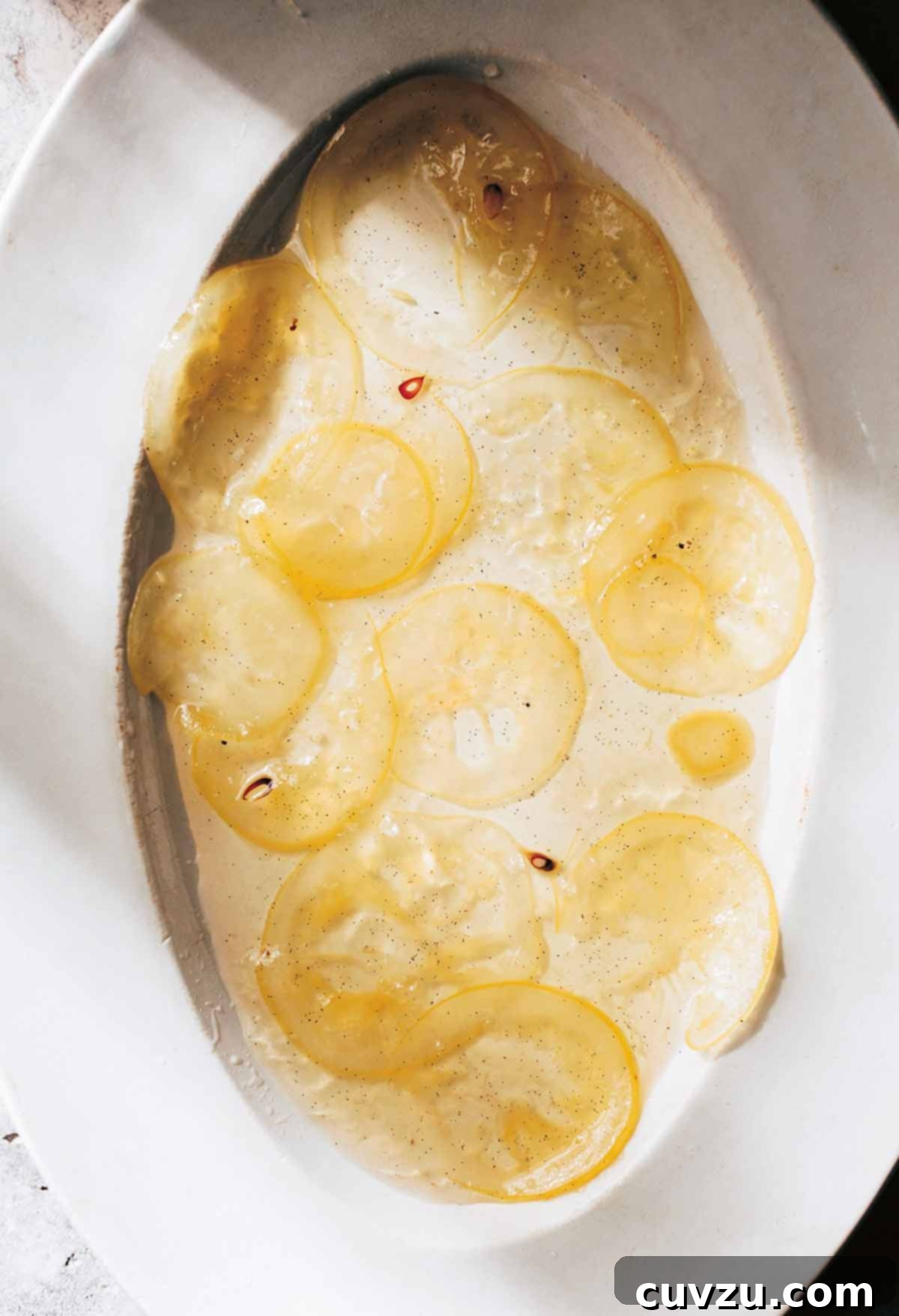
Exquisite Lemon Confit: A Versatile Citrus Delicacy for Desserts & Drinks
Unveil the culinary magic of lemon confit, a deceptively simple yet profoundly impactful creation. These delicate, translucent lemon slices, gently simmered in a luscious sugar and vanilla syrup, possess an extraordinary ability to transform ordinary desserts and beverages into something truly special. Far from being an understated ingredient, lemon confit adds a sophisticated touch of brightness and sweetness that will captivate your palate and impress your guests.
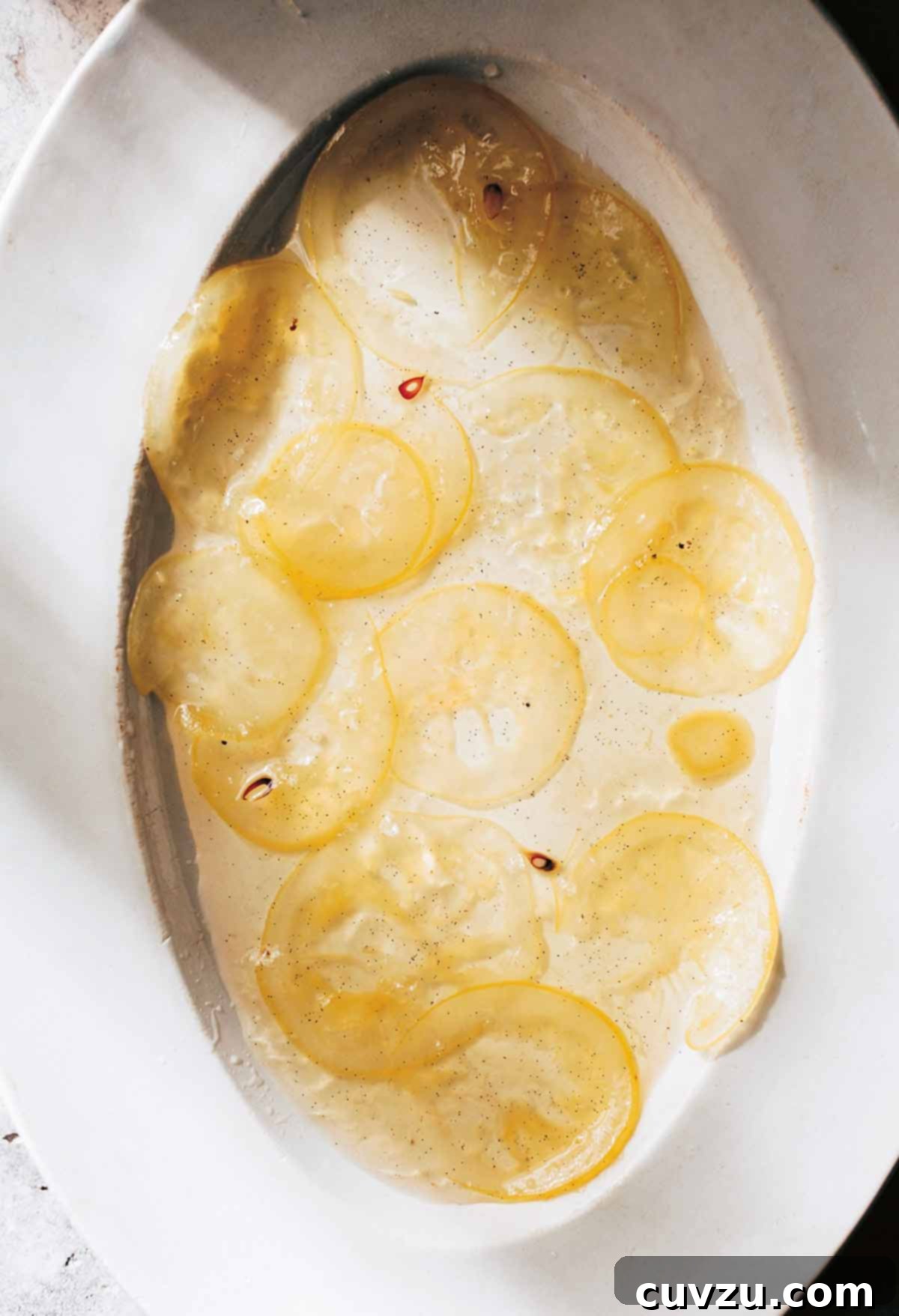
Lemon confit, or indeed any citrus confit, is your secret weapon when you desire to infuse a touch of sophisticated citrus glamour into your cakes, bakes, and beyond. It offers a unique balance of sweetness and tenderness, achieved without becoming overly candied or chewy. The secret lies in a pre-softening soak in cold water, which prepares the white pith, allowing it to cook down beautifully and become wonderfully translucent. This meticulous process, as acclaimed pastry chef Natalie Paull highlights, is key to achieving its delicate texture and appearance.
Unlocking the Potential: How to Use Lemon Confit
These exquisite, glistening slices of citrus are incredibly versatile, offering a myriad of delightful applications in both sweet and savory realms. Explore some of our favorite ways to incorporate lemon confit into your dishes, or inspire us with your own creative uses in the comments below:
- Elevate Desserts: Gracefully drape these shimmering slices atop a rich New York-style cheesecake, a moist lemon pound cake, or delicate cupcakes for an elegant finish. The vibrant color and gentle tang provide a stunning contrast to creamy or buttery textures.
- Enhance Breakfast & Snacks: Finely chop the confit and stir it into creamy Greek yogurt, oatmeal, or even cottage cheese for a burst of refreshing flavor. It’s a simple way to add gourmet flair to your morning routine.
- Craft Signature Cocktails: Muddle a few slices into your favorite cocktail, such as a gin fizz or a whiskey sour, to impart a complex sweet-tart note. The infused syrup can also be used as a unique sweetener.
- Brighten Beverages: Float whole or halved slices in a pitcher of freshly brewed iced tea or homemade lemonade. Beyond adding a subtle flavor, they lend an irresistible visual appeal, perfect for entertaining.
- Adorn Charcuterie Boards: Introduce a surprising element of sweetness and acidity to your savory spread. Lemon confit beautifully complements a selection of cheeses, cured meats, and crusty bread, cutting through richness and adding a gourmet touch.
- Flavor Baked Goods: Incorporate chopped confit into scone dough, muffin batter, or even bread puddings for pockets of tender, aromatic citrus.
- Glaze and Sauce Enhancer: The leftover confit syrup is a treasure! Use it to glaze cakes, sweeten whipped cream, or whisk into salad dressings for a unique citrus twist.
With its striking appearance and nuanced flavor profile, lemon confit is more than just a garnish; it’s an ingredient that encourages culinary creativity and elevates every dish it touches.
Lemon Confit: A Culinary Gem
This exquisite lemon confit transforms thin lemon slices into a sweet, tender, and beautifully translucent delicacy through a slow cooking process in a rich sugar and vanilla syrup. Its sophisticated flavor and elegant appearance make it an indispensable ingredient for elevating a wide array of desserts and beverages.
By David Leite
Ingredients
- 2 lemons, preferably organic (or substitute Meyer lemon, orange, tangelo, or mandarin)
- Pinch of salt
- 1 1/4 cups cold water, plus more for the initial soak
- 7 ounces superfine sugar (or simply pulse granulated sugar in a food processor until finely ground but not powdery)
- 1/2 vanilla bean, split lengthwise (optional, but highly recommended for enhanced flavor)
Instructions
-
Prepare the Lemons: Using a mandoline for precision or a very sharp serrated knife, slice the citrus as thinly as possible—aim for approximately 1/32 inch (1 mm) thick. The goal is to achieve intact, uniform cross-sections. Place these delicate slices in a container, cover them completely with cold water, and add a pinch of salt. Cover the container and refrigerate overnight. This crucial step helps to soften the white pith, reducing bitterness and promoting translucency during cooking.
-
Preheat Oven: Preheat your oven to 300°F (150°C).
-
Prepare the Syrup: In a flameproof casserole dish or an oven-safe saucepan, combine 1 1/4 cups of cold water, the superfine sugar, and the split vanilla bean (if using). Place the dish over medium-high heat and bring the mixture to a gentle boil. Once boiling, reduce the heat to a simmer and allow it to bubble for 5 minutes, ensuring the sugar fully dissolves and the vanilla infuses the syrup. While the syrup simmers, cut a piece of parchment paper to fit snugly just inside the perimeter of your cooking pan.
-
Confit the Lemons: Carefully drain the water from the soaked lemon slices. Arrange the lemon slices, one at a time, in a single layer within the simmering sugar syrup. Gently press the cut parchment paper directly onto the surface of the lemons. Cover the dish with its lid and then transfer it to the preheated oven. Cook until the white pith between the rind and the flesh becomes beautifully translucent, a process that typically takes 40 to 60 minutes. Keep a close eye on them to prevent over-caramelization.
☞ TESTER TIP: Should some of your citrus slices begin to turn a deeper golden hue and caramelize slightly, don’t discard them! These can be carefully removed, set aside, and then chopped. They make an excellent, flavorful substitute for traditional citrus peel in various recipes, adding a delightful caramelized note.
-
Cool and Store: Allow the lemon slices to cool completely in their syrup within the pan. Once cool, they are ready to be used immediately. For longer storage, cover the dish tightly and refrigerate for up to 1 week. The flavors will continue to meld and deepen over time.
☞ TESTER TIP: Do not underestimate the value of the leftover, slightly sweetened citrus syrup! This fragrant elixir can be salvaged and repurposed in numerous ways: stir it into cocktails, iced tea, or sparkling water, fold it into buttercream or yogurt, or whip it into fresh cream for a subtly flavored topping.
Recipe Notes & Variations
Spice It Up: Creative Flavor Pairings
While classic lemon confit is delightful on its own, don’t hesitate to experiment with aromatic spices to create unique flavor profiles. Consider pairing star anise with tangelo slices for an exquisite combination. Orange confit can be beautifully enhanced with a cinnamon stick or a few crushed cardamom pods. For a more adventurous twist, try grapefruit with a hint of ginger or lime with fresh mint. The slow simmering process allows the spices to gently infuse the syrup and the fruit, creating a wonderfully complex end product.
Citrus Diversity
This confit technique is not limited to lemons! Explore a vibrant array of citrus fruits to create different confit varieties. Meyer lemons offer a sweeter, less acidic profile, while blood oranges provide stunning color and a unique berry-like undertone. Mandarins, tangelos, and even grapefruit can be used, each offering its distinct flavor and visual appeal. When experimenting with larger or thicker-skinned citrus, you may need to adjust cooking times slightly to achieve perfect translucency.
Serving Suggestions Beyond the Obvious
Beyond traditional desserts and drinks, consider lemon confit as a gourmet addition to savory dishes. Finely minced confit can be incorporated into glazes for roasted chicken or duck, providing a subtle sweet and tangy contrast. It can also be added to vinaigrettes for salads, or even used to brighten up marinades for seafood. For a sophisticated appetizer, serve confit slices with soft goat cheese, crusty bread, and a drizzle of olive oil.

Adapted From
Beatrix Bakes: a collection of delectable recipes and baking wisdom.
Buy On Amazon
Nutrition Information
Calories: 70 kcal
Carbohydrates: 18 g
Protein: 1 g
Fat: 1 g
Saturated Fat: 1 g
Monounsaturated Fat: 1 g
Sodium: 2 mg
Fiber: 1 g
Sugar: 17 g
Nutrition information is an approximation calculated automatically and should be used as a general guide. Individual results may vary based on ingredients and preparation.
Tried this exquisite recipe? We’d love to see your creations! Mention @leitesculinaria or tag #leitesculinaria on Instagram to share your results with our community!
Insights from Our Recipe Testers
Our dedicated team of recipe testers brings a wealth of experience and practical tips to the kitchen. Read their valuable feedback and discover how they successfully created and enjoyed this lemon confit, along with their innovative suggestions for variations and serving ideas.
Paul N.
Paul found this lemon confit to be a refreshing alternative to the much sweeter candied citrus recipes he typically uses for desserts. He appreciated its ease of preparation and the resulting mild, yet distinctly citrusy flavor, noting it wasn’t nearly as sweet or chewy as fully candied versions. This makes it an ideal choice for those who prefer a less intensely sugary treat.
The primary challenge Paul encountered was achieving the super-thin, intact slices. Opting for Meyer lemons, he used a mandoline set to 1.3mm, slightly thicker than the recommended 1mm. Despite finding it difficult to get perfectly intact slices, he was very satisfied with the “rustic look” this imparted when garnishing his cheesecake. This feedback is reassuring for home cooks who might not have professional slicing tools or perfect technique, showing that minor imperfections don’t detract from the delicious outcome.
Paul also confirmed that a 1-quart saucepan provided ample space for the liquid and fruit, and using regular granulated sugar instead of superfine sugar posed no issues, resulting in a smooth, grain-free confit. This provides a practical tip for those who don’t have superfine sugar readily available, simplifying the ingredient list.
Ashley Adams
Ashley raved about the incredible flexibility of this recipe, highlighting its “infinite applications” across various citrus types she had on hand, from limes and pomelos to grapefruits and oranges. She emphasized that this recipe is so straightforward, even without a mandoline, that she plans to make it a regular part of her culinary repertoire year-round. Imagine delicate lemon poppy tea cakes and shortcakes in spring, refreshing limeades and cocktails in summer, and aromatic orange clove tea cakes in winter – all enhanced by this versatile confit.
A key takeaway from Ashley’s experience is the dual benefit of the confit: not only do you get delicious citrus slices, but also invaluable leftover liquid and syrup. She even innovated by adding ice and cucumber to the first pour-off water for a “refreshing wake-me-up morning flavored water.” If the seal on the citrus in the oven is “super tight,” she noted, the syrup yield will be generous, perfect for experimental cocktails, as a sophisticated glaze on a layer cake, or for creating a luscious whipped cream to accompany pound cake or lemonade.
Ashley views the base recipe more as a “keeper technique than gospel,” encouraging personalization with various spices. Her future plans include trying grapefruit and cardamom or orange and clove combinations. Her immediate reaction upon completing the recipe—eating some directly from the pot, stirring slices into apricot tea, and planning a classic lemon pound cake to “gild the lily”—speaks volumes about the irresistible appeal and instant gratification of this confit.
Elsa M. Jacobson
As someone who isn’t a big sweets person, Elsa made this confit with a clear vision: to add “a bit of glitz” to a variety of dairy options such as yogurt, cheese boards, labneh, cream cheese spreads, compound butter, and even atop ice cream. Her intended savory and semi-savory applications highlight the confit’s versatility beyond traditional desserts. She particularly appreciated the note about how overcooked (caramelized) confit can be chopped and used as a citrus peel substitute, even musing about intentionally overcooking half a batch in the future for this specific purpose.
Elsa also saw immense value in the leftover syrup, planning to use it in identical ways: stirred into yogurt, drizzled over cheese, mixed into spreads, or spooned onto ice cream. She envisions jars of this beautiful citrus confit in syrup as thoughtful holiday gifts, perfect for bringing a “wonderfully uplifting” touch during cold, dark months.
Her interest was further piqued by the recipe’s sustainable aspect, utilizing the whole fruit, including the peels. She referenced a relevant article from The New Yorker on “All the Ways to Not Waste Your Citrus Peels,” underscoring the broader appeal of this recipe for those mindful of food waste and sustainability.
Regarding serving sizes, Elsa astutely pointed out the “conundrum” of a condiment. While one could easily consume the entire batch (equivalent to two citrus fruits, albeit with significant sugar), it could also be sparingly portioned over many servings. She used a large navel orange and a small lemon, which led her to consider expanding the citrus repertoire to include tarter, more colorful varieties like grapefruit, ugli fruit, pomelo, and blood orange, specifically to explore the interplay of tartness with the sweet syrup.
A practical tip from Elsa: for larger citrus or batches, increasing the syrup quantity might be necessary to ensure all fruit is “snugly submerged.” This also yields more valuable leftover syrup for hot tea, seltzer, or drizzling over French toast. Importantly, after a “mandoline incident,” Elsa successfully used a sharp serrated knife, achieving “nearly perfect” thin, intact slices, offering a reassuring alternative for those without a mandoline. Her cooking time was slightly longer—60 minutes for lemon and 1 hour 15 minutes for orange—suggesting that cooking times can vary. She even preferred the color of her confit, noting her oranges lent a beautiful hue to the lemons, making it “prettier than that accompanying photo.”
Samantha Fisher
Samantha described the recipe as “simple,” with the main challenge being the temptation to eat all the slices straight from the oven! She immediately started brainstorming creative uses, such as elegantly arranging the confit on a plain cheesecake or incorporating the flavorful syrup into buttercream to decorate a cake with the beautiful slices. This highlights the immediate appeal and decorative potential of lemon confit.
Her experience of adding a couple of star anise to the confit was a “real win for flavor,” demonstrating how simple spice additions can significantly enhance the end product. She confirmed that none of the infused syrup would go to waste, anticipating its excellent use in cocktails or soda water, further reinforcing the versatility and value of every component of this recipe.