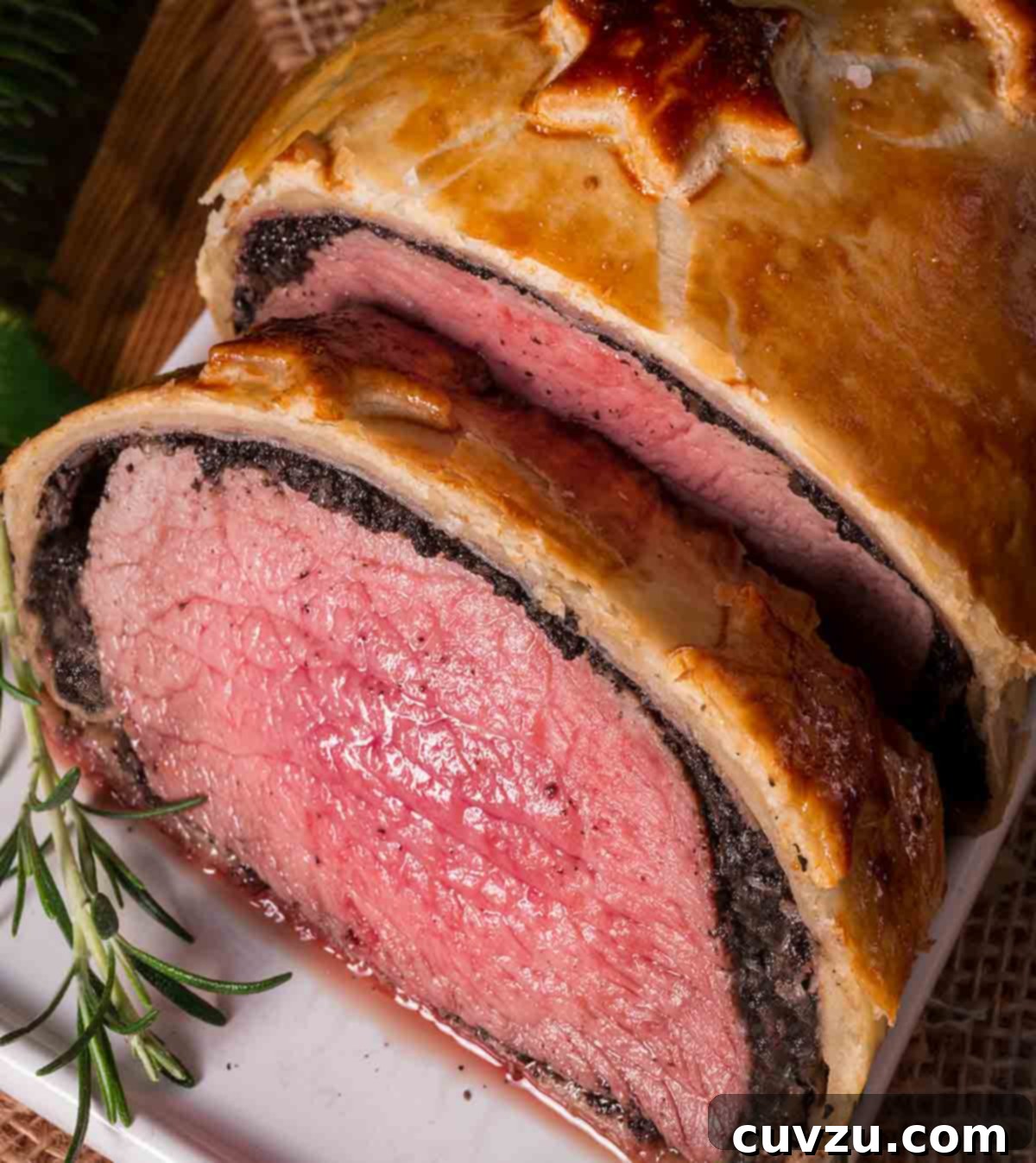
The Ultimate Guide to Crafting a Perfect Beef Wellington: A Luxurious Masterpiece
For centuries, Beef Wellington has graced tables as the ultimate show-stopping main course, a symbol of culinary elegance and celebration. Its reputation for complexity often deters home cooks, yet this exquisite dish—featuring tender beef fillet encased in a delicate layer of pâté, a rich mushroom duxelles, and perfectly golden puff pastry—is surprisingly approachable. Imagine the awe of your guests as you present this magnificent roast, its flaky crust giving way to a succulent, perfectly cooked center. Fear not the ambition; with our comprehensive guide, you’ll discover that preparing this luxurious party centerpiece is not only achievable but also a deeply rewarding experience. We won’t tell your guests how straightforward it really is, if you don’t!
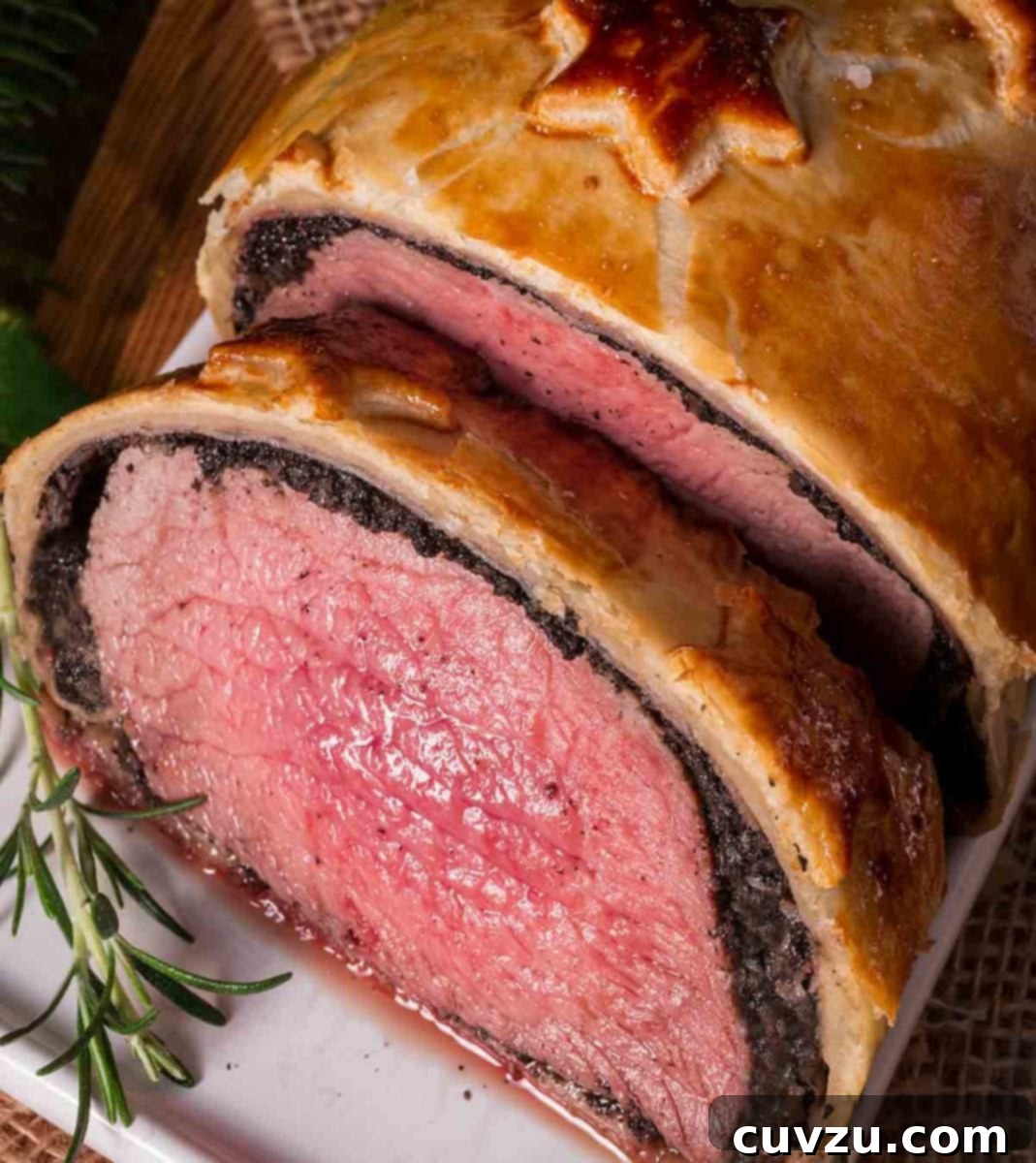
The enduring popularity of Beef Wellington is legendary. This magnificent dish—a fillet of beef tenderloin coated with a savory pâté and a duxelles of finely chopped mushrooms, all meticulously wrapped in golden puff pastry—has captivated diners for over a century. Its origins are often attributed to Arthur Wellesley, the first Duke of Wellington, a celebrated hero of the Napoleonic Wars. While the exact culinary lineage remains debated, the dish quickly became synonymous with British grandeur and celebratory dining, transcending borders to become a cherished favorite in the U.S. and around the globe. It’s a dish that speaks volumes, promising a memorable feast for holidays and special gatherings. This recipe, adapted from the esteemed Gourmet Cookbook, brings that classic elegance directly to your kitchen.
The Anatomy of a Perfect Beef Wellington
Creating a truly magnificent Beef Wellington involves understanding and appreciating each of its distinct components, which together form a symphony of flavors and textures. From the choice of beef to the final golden crust, every element plays a crucial role in achieving culinary perfection. Mastering these individual parts ensures a harmonious and unforgettable culinary experience.
1. The Star: Premium Beef Tenderloin
At the heart of Beef Wellington lies a prime cut of beef tenderloin, specifically the center-cut. This particular cut is revered for its exceptional tenderness, buttery texture, and mild, delicate flavor, making it the ideal canvas for the rich components that will envelop it. The tenderloin is typically seared to a beautiful brown crust before being wrapped, a crucial step that not only locks in precious juices but also adds a layer of rich, caramelized flavor that contrasts beautifully with the other elements. When selecting your beef, opt for a high-quality, well-marbled piece to ensure an even cook and an impressive presentation. Bringing the beef to room temperature before searing and its initial roast is paramount for achieving uniform cooking from edge to center and an ultimately tender result.
2. The Flavor Foundation: Rich Duxelles
The duxelles is a finely chopped mushroom mixture that forms a savory and aromatic layer between the beef and the pastry. Its role extends beyond flavor; the duxelles acts as a critical moisture barrier, safeguarding the delicate puff pastry from becoming soggy as the beef cooks. The secret to a perfect duxelles lies in cooking the mushrooms thoroughly until all their natural liquid has evaporated. This process concentrates their earthy, umami-rich flavor. For optimal depth and complexity, consider using a blend of mushrooms. Cremini (baby bellas), white button mushrooms, shiitake, or even more adventurous wild varieties like chanterelles or oyster mushrooms can add nuanced flavors and varied textures, making your duxelles truly exceptional. Seasoning liberally is also key to drawing out their full potential.
3. The Indulgent Touch: Pâté de Foie Gras
Traditionally, Beef Wellington includes a luscious layer of pâté de foie gras, which contributes an unparalleled richness, a silky texture, and a profound depth of flavor. Its unctuous, luxurious taste complements the tender beef beautifully, adding a layer of sophisticated indulgence. Should authentic foie gras be unavailable or not to your preference, a high-quality liver pâté can serve as an excellent alternative, offering a similar creamy consistency and savory profile. For those seeking a non-liver option, a gourmet mushroom pâté or a blend of finely puréed roasted vegetables can be considered. This layer is vital not only for its distinctive flavor but also because it creates a smooth surface for the puff pastry, further preventing direct contact with any moisture that might escape from the beef and duxelles.
4. The Golden Embrace: Flaky Puff Pastry
The entire magnificent creation is enveloped in a blanket of crisp, golden, and impossibly buttery puff pastry. This elegant casing is what gives Beef Wellington its iconic appearance and provides a delightful textural contrast—a light, flaky exterior giving way to a rich, succulent interior. Utilizing good quality, store-bought thawed puff pastry simplifies this step considerably, allowing home cooks to focus on the artistry of assembly rather than the arduous task of making pastry from scratch. The pastry must be rolled out generously, ensuring it is large enough to completely encase the beef fillet with sufficient overlap to create a secure seal. Brushing the pastry with an egg wash is not merely for aesthetics; it provides that signature golden sheen upon baking and aids in forming a strong, sealed package, contributing to a beautifully crisp and protective finish.
Mastering the Technique: Step-by-Step Perfection
While the selection and preparation of each component are crucial, the true magic of Beef Wellington culminates in its meticulous assembly and precise cooking. Achieving that coveted perfect medium-rare beef, nestled within a crispy, golden crust, demands attention to detail. However, it’s a culinary process that is profoundly satisfying and remarkably straightforward once broken down.
- Initial Roast and Cooling: The beef is first seared and then partially roasted to an internal temperature of around 120°F (50°C). This crucial initial cooking helps to render some fat and begin the cooking process. Following this, the beef must be allowed to cool completely, ideally for 45 minutes to an hour. This step is vital as it prevents the pastry from cooking too quickly or becoming soggy, ensuring the beef finishes cooking to perfection within its pastry shell. Proper cooling also firms up the beef, making it significantly easier to handle and wrap without tearing the delicate layers.
- Searing for Flavor: Before the initial roast, take the time to thoroughly sear the beef tenderloin on all sides in a hot pan. This rapid high-heat treatment creates a delicious, caramelized crust, locking in moisture and adding an invaluable layer of deep, savory flavor that is essential for the overall taste profile of the final dish.
- Duxelles Preparation: When preparing your finely chopped mushrooms for the duxelles, the golden rule is to cook them until they are absolutely dry. This might take longer than anticipated—around 20 minutes—as all the moisture needs to evaporate to concentrate their flavor and prevent the puff pastry from turning soggy. Season the duxelles generously with salt and pepper to truly bring out their earthy, umami notes. Once cooked, spread them out to cool completely before assembly.
- Layering with Care: Once the beef and duxelles are cooled, the layering begins. Evenly spread the pâté de foie gras over the entire surface of the cooled beef, followed by a uniform layer of the mushroom duxelles. These distinct layers are not just for their individual flavors; they collectively create a vital moisture barrier, protecting the delicate puff pastry from the beef’s juices during baking.
- Puff Pastry Wrap: On a lightly floured surface, carefully roll out your thawed puff pastry to an ample size, roughly 20 by 12 inches, ensuring it is large enough to fully encase your beef fillet. Gently place the prepared beef in the center. The wrapping technique is critical for a tight, securely sealed package. Use the beaten egg white to “glue” the pastry seams together, pressing gently but firmly to ensure a complete seal. Any decorative elements, such as lattice work or leaves, can be added at this stage, and brushed with the egg yolk wash for extra shine and a beautiful golden finish.
- Chilling is Key: After meticulously wrapping the Beef Wellington, it must be chilled in the refrigerator for at least 1 hour, but no more than 2 hours. This crucial chilling period allows the puff pastry to firm up, preventing it from shrinking, tearing, or losing its shape during baking. It also helps all the internal layers set, ensuring a clean slice later.
- Baking to Perfection: Baking begins at an initial high temperature (400°F/200°C) to encourage the pastry to puff up beautifully and achieve a rapid golden crust. The temperature is then reduced (to 350°F/180°C) to allow the beef to cook gently to your desired doneness without overcooking the pastry. A reliable meat thermometer is your most valuable tool here; aim for an internal temperature of 130°F (55°C) for a perfect medium-rare.
- Resting Period: Once out of the oven, the Beef Wellington must be allowed to rest for a minimum of 15 minutes before carving. This indispensable step allows the internal juices to redistribute evenly throughout the meat, ensuring every slice is incredibly tender, moist, and flavorful. Skipping this step risks losing precious juices, resulting in a drier roast.
Beef Wellington Recipe
Beef Wellington
5 / 3 votes
David Leite
Ingredients
- One (3 1/2-pound) fillet of beef, tied with thin sheets of larding fat at room temperature
- 3/4 pound mushrooms, finely chopped (a blend of cremini, white, shiitake, chanterelles, or oyster is recommended)
- 3 tablespoons unsalted butter
- Salt and pepper, to taste
- 1/2 pound pâté de foie gras, (available at specialty food shops), room temperature (or a high-quality liver pâté)
- 1 pound thawed puff pastry, plus additional for garnish (ensure it’s a 16-ounce package)
- 1 large egg white, beaten
- 1 large egg yolk, beaten with 1 teaspoon of water for egg wash
- 1/2 cup Madeira wine
- 2 teaspoons arrowroot, dissolved in 1 teaspoon cold water
- 1/2 cup beef broth
- 2 tablespoons finely chopped black truffles, (optional, but highly recommended for an authentic touch), available at specialty food shops
- 1 bunch watercress
Instructions
-
Preheat the oven to 400°F (200°C).
-
Place the fillet in a roasting pan and roast until a thermometer registers 120°F (50°C), 25 to 30 minutes. Let the fillet cool completely, about 45 minutes to 1 hour. Discard the larding fat and strings. Skim the fat from the pan juices and reserve the pan juices for the sauce.
-
In a heavy skillet, cook the finely chopped mushrooms in the butter over medium-low heat, stirring until all the liquid has evaporated, about 20 minutes. Season generously with salt and pepper. Transfer them to a bowl or spread them on a rimmed baking sheet and let cool completely, about 20 minutes.
-
Spread the cooled beef fillet evenly with the pâté de foie gras, covering the top and sides. Then, spread the cooled mushroom duxelles evenly over the pâté de foie gras.
-
On a lightly floured surface, roll 1 pound of the puff pastry into a rectangle about 20 by 12 inches that’s large enough to completely enclose the fillet.
-
Carefully invert the coated fillet onto the middle of the rolled-out dough. Fold up the long sides of the dough to enclose the fillet. Brush the overlapping edges of the dough with the beaten egg white and gently press them to seal securely. Repeat this process with the ends of the dough to completely conceal the roast within the pastry.
-
Move the wrapped fillet, seam side down, to a shallow roasting pan or jelly roll pan lined with parchment paper, and brush evenly with some of the egg yolk wash. If desired, roll out any additional dough and cut decorative shapes (e.g., leaves, lattice strips) with decorative cutters. Arrange these cutouts on top of the Beef Wellington and brush with the remaining egg wash for a beautiful golden finish. Cover the pan loosely and refrigerate for at least 1 hour but no more than 2 hours to allow the pastry to firm up.
-
Preheat the oven to 400°F (200°C) again.
-
Roast the Beef Wellington for 30 minutes. Then, reduce the oven heat to 350°F (180°C) and continue to roast for an additional 5 to 10 minutes, or until a meat thermometer inserted into the center of the beef registers 130°F (55°C) for medium-rare doneness. (Adjust cooking time for your preferred doneness: 125°F for rare, 135°F for medium). Remove from the oven and let stand for at least 15 minutes before carving.
-
In a small saucepan, combine the reserved pan juices and the 1/2 cup of Madeira wine. Bring the mixture to a boil over medium-high heat and continue to boil until the mixture is reduced by about one-fourth, concentrating its flavors. Add the arrowroot mixture (dissolved in cold water), beef broth, finely chopped truffles (if using), and salt and pepper to taste. Cook over moderate heat, stirring constantly (being careful not to boil vigorously) until the sauce has thickened to your desired consistency, typically 3 to 5 minutes.
-
Carefully loosen the rested Beef Wellington from the jelly roll pan, using two spatulas to transfer it to a warmed serving platter. Garnish the platter with fresh watercress. To serve, cut the fillet into elegant 3/4-inch-thick slices with a sharp knife, and dress each slice generously with the prepared Madeira truffle sauce. Serve immediately.
Adapted From
The Gourmet Cookbook
Buy On Amazon
Nutrition Information (Approximate per serving)
Nutrition information is automatically calculated and should be used as an approximation only. Actual values may vary based on ingredients and preparation methods.
Frequently Asked Questions About Beef Wellington
While you should certainly use mushrooms whose taste you enjoy, we highly recommend using a blend for the duxelles. A mixture of cremini (baby bellas), white button mushrooms, shiitake, chanterelles, or oyster mushrooms will introduce subtle variations in flavor and texture, elevating the overall complexity of the dish. This blend adds an umami depth that a single type of mushroom might not achieve, making your Beef Wellington even more exquisite. Ensure they are finely chopped and cooked until completely dry to prevent a soggy pastry, which is crucial for the dish’s success.
Absolutely, yes, you do! A 16-ounce (1 lb) package of puff pastry is essential for this recipe. This amount provides ample dough to fully encase your substantial beef fillet and allows for a little extra for decorative garnishes, should you choose to add them for an even more impressive presentation. It’s important to note this because some brands only offer 12-ounce packages, which will not be enough to properly seal and wrap a 3 1/2-pound beef tenderloin. To avoid disappointment and ensure your Beef Wellington is perfectly sealed and beautifully presented, it’s better to purchase two 12-ounce packages if a 16-ounce option isn’t readily available. Trust us, darling, you don’t want to run short on pastry when assembling this masterpiece!
Yes, Beef Wellington can be partially prepared in advance, making it an excellent and stress-reducing choice for entertaining. You can complete steps 1 through 6 of the instructions (roasting and cooling the beef, preparing the duxelles, spreading the pâté and mushrooms, and meticulously wrapping it in puff pastry) up to 24 hours ahead of time. After wrapping, ensure it’s tightly covered with plastic wrap and refrigerated to maintain its freshness and shape. When you’re ready to bake, remove it from the refrigerator about 30 minutes before baking to allow it to come slightly closer to room temperature, then proceed with the egg wash and baking instructions. This advance preparation significantly reduces stress on the day of your event, allowing you more time with your guests.
Beef Wellington is a rich and decadent dish, so it’s best complemented with side dishes that offer balance and contrast without overwhelming its main flavors. Classic pairings that work wonderfully include creamy mashed potatoes, crispy roasted potatoes (like garlic herb roasted potatoes or pommes Anna), or a delicate potato gratin. For vegetables, consider crisp green beans with toasted almonds, tender asparagus spears drizzled with lemon butter, glazed carrots, or a simple mixed green salad with a light vinaigrette. These sides will not overpower the main course but will instead enhance the overall dining experience, providing freshness, varied textures, and vibrant colors to your plate.
Absolutely. While pâté de foie gras adds a unique richness, a silken texture, and a profound depth of flavor, it can be difficult to source in some areas or may not align with everyone’s dietary preferences or ethical considerations. Excellent alternatives include a high-quality chicken liver pâté, which offers a similar creamy texture and savory depth that complements the beef beautifully. For those looking for a non-liver option that still provides a creamy, flavorful barrier, a gourmet mushroom pâté or even a thin layer of mushroom duxelles blended with a touch of cream cheese or mascarpone can work remarkably well. The primary goal of this layer is to provide a rich, flavorful, and moisture-absorbing element between the beef and the pastry, regardless of the specific pâté used.
Recipe Testers’ Insights and Reviews
Our dedicated team of recipe testers rigorously evaluates every dish, ensuring clarity, accuracy, and, most importantly, delicious results. Their invaluable feedback helps us refine recipes to perfection. Here’s what they had to say about their experience crafting this magnificent Beef Wellington:
Angie Zoobkoff
I have always had a serious weakness for Beef Wellington, and this recipe certainly didn’t disappoint. The instructions were clear, and the cook times were perfect for achieving a medium-rare roast that would make a stunning main course at any dinner party. It’s a bit of a splurge, but absolutely worth every penny for such an impressive meal.
The initial roast of the meat was accurate; 25 minutes resulted in an internal temperature of 110°F. (We opted for a slightly lower initial temperature than suggested as we prefer a rarer final roast, which ultimately gave us a perfectly medium-rare result.) The meat took approximately 45 minutes to cool completely, and I collected about 3 tablespoons of rich pan juices for the sauce. I served this magnificent dish with roasted potatoes and fresh green beans, creating a truly memorable feast!
Camilla Maybee
I feel like Beef Wellington is one of those classic dishes that we all know and admire but rarely, if ever, attempt to make ourselves. At least, that was certainly the case for me! So, what better time to try it out than for Christmas dinner? Overall, there isn’t much that can go wrong here—the combination of tender beef with the decadent foie gras, buttery mushrooms, and crisp puff pastry makes for an incredibly rich and lovely bite, truly fit for a festive holiday table.
It took me a little longer to achieve the desired initial cook on the beef, probably because I roasted it straight out of the fridge rather than letting it come to room temperature first; it took about 35 minutes or so. The only small change I was absolutely dying to make was to incorporate some garlic into any stage of this recipe. Even if it was just a touch in the Madeira sauce, I think it would add another fantastic layer of flavor!
Beef Wellington is more than just a meal; it’s an experience, a statement, and a testament to the joy of cooking. While it may appear daunting, our detailed guide and the robust flavors of this classic dish prove that with a little care and attention, anyone can create this masterpiece. Whether you’re celebrating a holiday, hosting a special dinner, or simply looking to impress, this recipe for Beef Wellington promises to deliver an unforgettable dining event. Embrace the challenge, savor the process, and delight in the unparalleled luxury of this truly iconic dish. Share your culinary triumph with us!