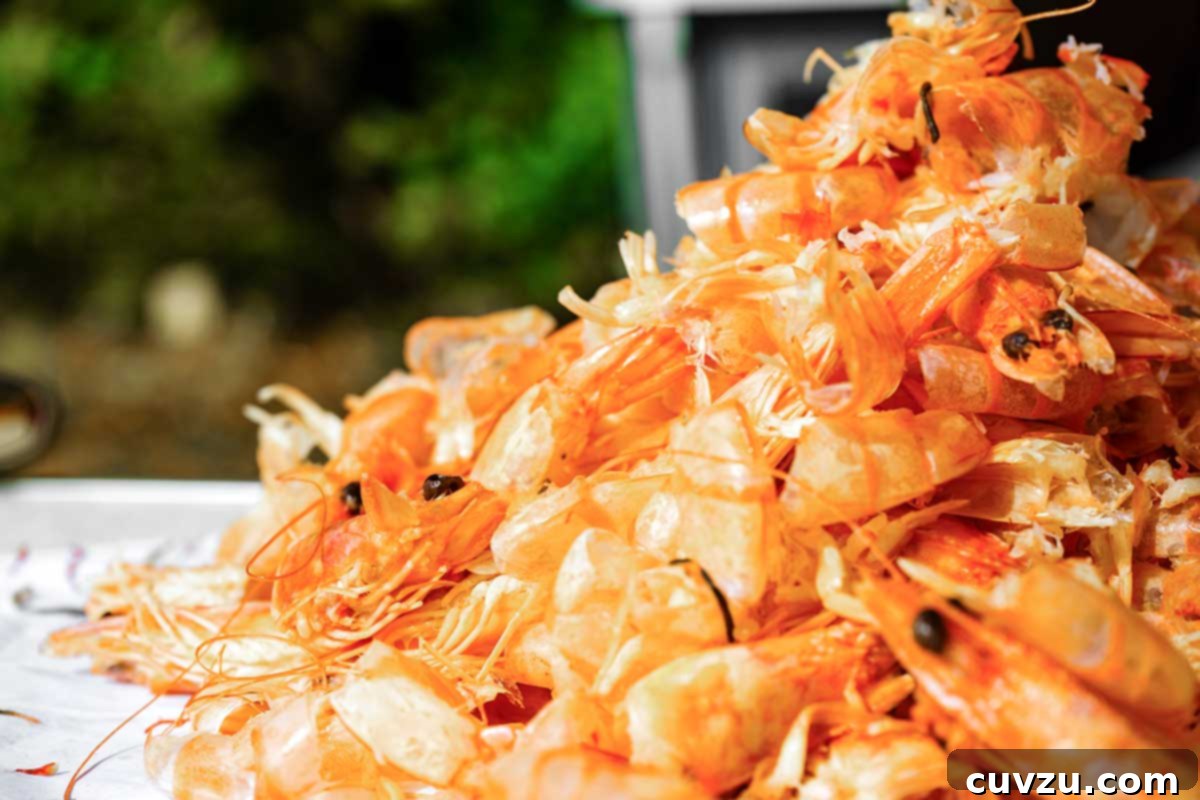
The age-old culinary conundrum: what to do with a mountain of empty shrimp shells? For home cooks navigating the delicious aftermath of a shrimp feast, this question often sparks a debate. Should they be transformed into a flavorful stock, or are they destined for the garbage? Bruce Weinstein and Mark Scarbrough—our witty columnists from Never Cook Naked—are here to peel back the layers of this persistent kitchen dilemma and offer some truly practical, if sometimes unconventional, advice.
Deciding the Fate of Shrimp Shells: Save or Toss?
Dear Never Cook Naked Guys: After thoroughly enjoying every succulent morsel of shrimp and every drop of their flavorful juice, what’s the recommended course of action for the leftover heads and shells? Is composting a viable option? Should they be sent down the garbage disposal? Or perhaps, should they be salvaged for a future stock?—Shell-Shocked
Dear Shell-Shocked: We truly empathize with your predicament, as this is a quandary faced by many aspiring chefs and conscientious home cooks. Let’s start with a foundational principle that guides our kitchen philosophy—one you might find liberating: Once a piece of food has touched a mouth, its culinary journey with us is typically complete. It’s moved from ingredient to delightful memory, and now, to waste. Feel absolutely free to adopt this rule within your own culinary domain; it simplifies many decisions.
The Misconception of Table Scrap Stock
Building on that, here’s a crucial off-the-cuff corollary that often goes unsaid but is vital for truly flavorful cooking: You simply cannot make a genuinely good, clean stock from table scraps. Think about it: those shrimp shells, delightful as their contents once were, have likely been immersed in a vibrant medley of herbs, an array of spices, perhaps some rich oils, a tangy sauce, and yes, even a bit of enthusiastic spittle. While Martha Stewart herself possesses many incredible talents, even she would struggle to conjure a pristine stock suitable for a delicate shrimp and grits dish from such a mélange. The flavors are simply too compromised and intermingled to produce a pure, concentrated base.
The Art of Proper Shrimp Stock Making
Now, this isn’t to say shrimp stock is out of the question. Quite the contrary! A truly fantastic shrimp stock is an invaluable asset in any kitchen, elevating countless seafood dishes, bisques, paellas, and sauces. However, the secret lies in using fresh shells, ideally from shrimp you’ve just peeled before cooking. These shells haven’t been seasoned or consumed; they’re clean and packed with pure, unadulterated shrimp flavor. To make an excellent stock, simply sauté these fresh shells lightly in a bit of olive oil or butter until they turn pink and fragrant, then add aromatics like chopped onion, celery, and carrots, a bay leaf, and perhaps some peppercorns. Cover with cold water, simmer gently for about 20-30 minutes (don’t overcook, or it can become bitter), then strain. This yields a golden, deeply flavored liquid that will transform your cooking—a stark contrast to the muddy, muddled flavors you’d get from post-consumption shells.
Can I Compost Shrimp Shells? Exploring Disposal Methods
Composting Shrimp Shells: The Pros and Cons
To directly address your question about composting, yes, you absolutely can compost shrimp shells. Many dedicated home gardeners swear by the benefits of incorporating shellfish waste into their compost piles. These shells are a fantastic source of calcium, chitin, and other trace minerals that enrich the soil, promoting healthier plant growth and even helping to deter certain pests. Chitin, in particular, stimulates the growth of beneficial microorganisms in the soil that suppress nematode populations and fungal diseases.
However, there are significant caveats to consider. Firstly, while individual efforts are often welcomed, some public or community composting facilities might not accept shells. This is often due to a preference for maintaining a “pristine” vegan mulch or to avoid potential issues with smell and pests on a larger scale. Always check your local guidelines before contributing.
Secondly, and perhaps most importantly for your home setup, shrimp shells do indeed emit a rather potent stench, especially when exposed to the sun and heat. This isn’t just an unpleasant aroma for you; it’s a gourmet beacon for a variety of furry “well-wishers.” In areas like ours, the concern quickly escalates to bears. Depending on your locale, you might have to contend with anything from tenacious raccoons and clever possums to persistent chipmunks and scavenging coyotes. These creatures are not only attracted to the smell but are also remarkably adept at disturbing compost piles in their quest for a quick meal. Consider yourself thoroughly warned: the more appealing (and odiferous) items you add to your compost, the more you risk attracting unwanted wildlife visitors to your backyard.
The Dangers of the Garbage Disposal
As for the tempting, yet ill-advised, notion of sending shrimp shells down the kitchen drain: please, resist the urge. Shrimp shells, particularly the harder pieces and the heads, are notoriously fibrous and tough. They can—and most certainly will—clog your garbage disposal, leading to costly plumbing issues and significant inconvenience. Beyond the mechanical problems, they contribute to an overwhelmingly odiferous trash can or drain. The lingering smell of decomposing seafood is potent and pervasive, quickly tainting your kitchen air and attracting fruit flies and other pests. This is a battle you definitely don’t want to fight in your own home.
The Best Practice for Shrimp Shell Disposal
Given these considerations, our best and most practical advice for disposing of shrimp shells responsibly is straightforward and effective. After peeling your shrimp, immediately gather all the shells and heads. Place them into a zip-closed bag—a heavy-duty freezer bag works best to contain odors. Seal it tightly, ensuring no air escapes, and then stash this bag in your freezer. Freezing the shells immediately stops decomposition, thereby eliminating any unpleasant smells and preventing pest attraction within your home.
On trash day, just before your garbage is collected, simply take the frozen bag of shells out of the freezer and deposit it into your outdoor trash bin. This method ensures that the shells remain odorless until they are hauled away from your property, along with any other kitchen refuse. This strategy also works wonderfully for other potent food scraps, such as fish bones, onion skins, or spoiled dairy, providing a clean and convenient solution for managing food waste in your kitchen.
Embracing Sustainable Kitchen Practices
The dilemma of shrimp shells is a microcosm of a larger movement towards more sustainable and mindful kitchen practices. While it’s tempting to seek a “perfect” solution for every scrap, the most effective approach often balances practicality with environmental consciousness. By understanding the true potential of food waste—whether as compost, stock, or simply through proper disposal—we empower ourselves to make better choices that benefit our homes, our communities, and the planet. Always remember, a well-run kitchen is not just about delicious food, but also about intelligent waste management.
Our very clever, very clothed Never Cook Naked columnists are always at your disposal, ready to troubleshoot everything from the stickiest cooking techniques to the most perplexing table etiquette questions (as well as, naturally, offering advice on appropriate cooking attire). We thrive on your culinary conundrums! Please don’t hesitate to ask us your most pressing questions in a comment below. We’re eager to help you navigate your kitchen adventures!
Originally published August 9, 2021, and refreshed for today’s sustainable kitchen.