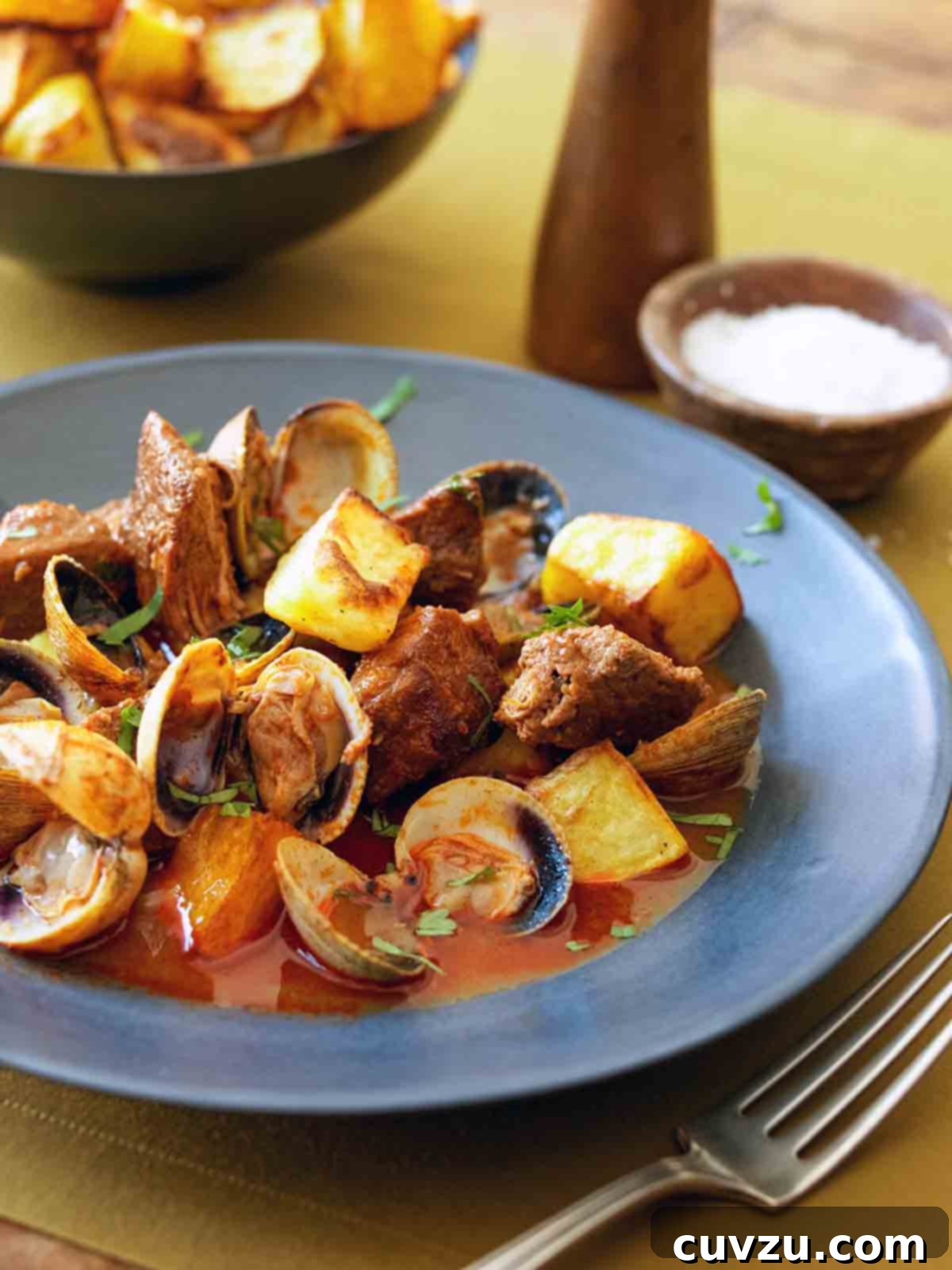
Prepare to embark on a delightful culinary journey with Portuguese Pork and Clams, an iconic dish known locally as Porco à Alentejana. This superb surf-and-turf combination offers a deeply comforting and immensely satisfying experience, featuring succulent marinated pork shoulder and fresh, briny clams bathed in a rich white wine and red pepper sauce. It’s a testament to Portugal’s vibrant culinary heritage, bringing together the best of land and sea in a single, unforgettable pot.
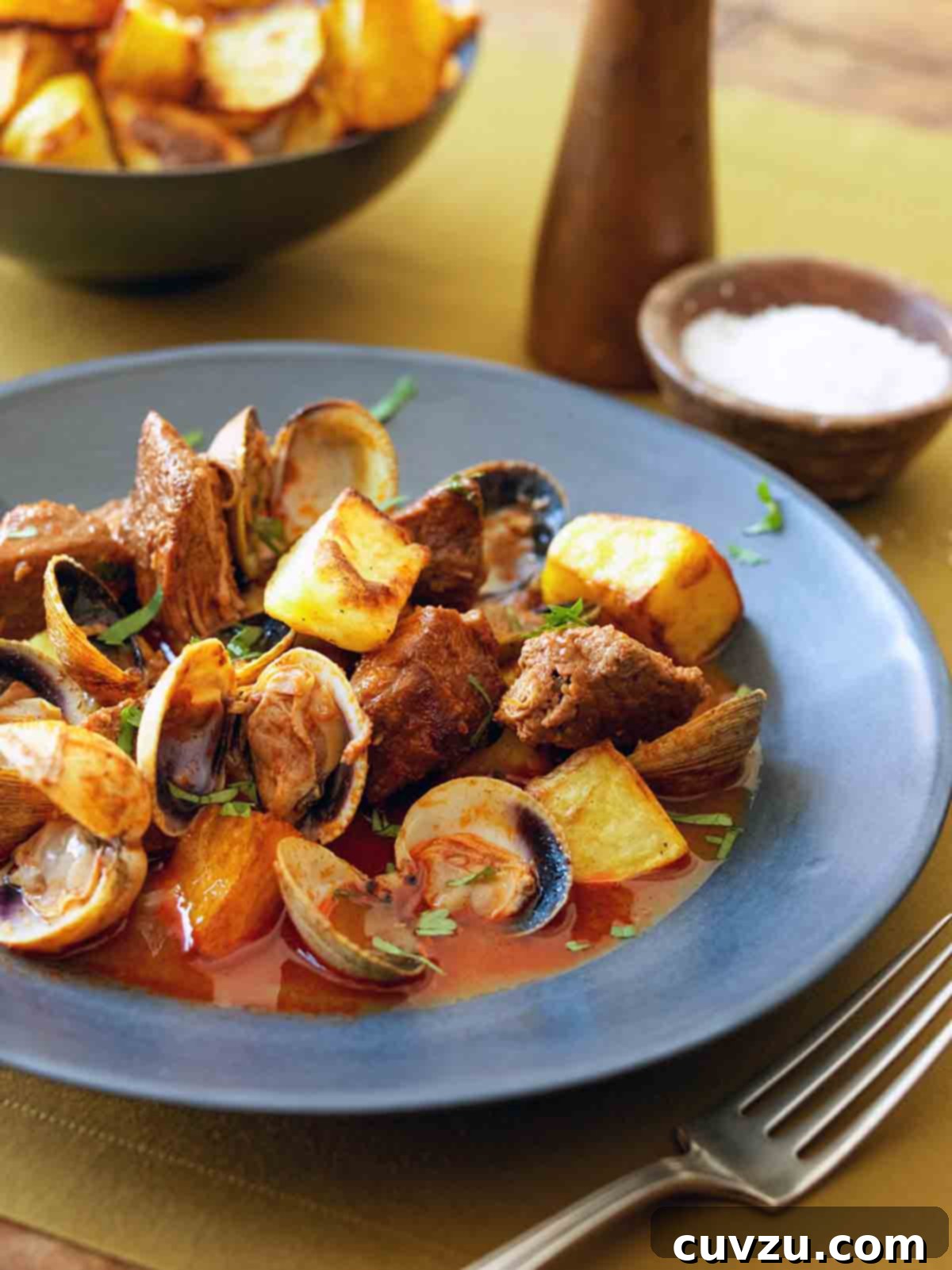
Porco à Alentejana, translating to “Alentejo-style pork,” is much more than just a recipe; it’s a celebration of regional Portuguese ingredients and traditions. Despite its name, which points to the inland Alentejo region famous for its prized black Iberian pigs (porco preto), culinary historians suggest the dish likely found its roots in the sun-drenched coastal region of the Algarve, where seafood reigns supreme. This geographical “misnomer” is a charming nod to the exceptional quality of the Alentejo pork, renowned globally for its intense flavor and beautiful marbling, a direct result of the pigs feasting on a diet of acorns.
In Portugal, the traditional preparation of Porco à Alentejana often involves generous chunks of pork fried in lard until golden and tender, then combined with fresh clams, crispy deep-fried potatoes, and a garnish of pickled vegetables. The result is a profoundly savory, rustic, and utterly perfect meal, especially when enjoyed in its native land, where the local ingredients and cooking methods are steeped in centuries of tradition. This authentic approach creates a robust dish that speaks volumes of Portugal’s hearty cuisine and its passion for simple yet exquisite flavors.
Adapting Porco à Alentejana for the Modern Kitchen
While the traditional Portuguese recipe for Porco à Alentejana is undoubtedly magnificent, recreating it outside of Portugal, particularly in places like the United States, often requires thoughtful adjustments. American pork, a product of decades of breeding focused on leanness (famously marketed as “The Other White Meat”), presents a different challenge compared to the richer, more marbled pork cuts found in Portugal. Using leaner cuts can result in a less forgiving dish, prone to dryness if not handled with care.
To capture the same desired richness and melt-in-your-mouth tenderness of the authentic version, a strategic swap in ingredients is essential. Instead of a lean pork loin, we opt for pork shoulder (also known as pork butt). This cut, with its higher fat content and ample marbling, holds up beautifully to slower cooking methods, transforming into incredibly juicy and flavorful pieces. Furthermore, instead of a quick fry in lard, our adaptation involves marinating the pork overnight and then braising it gently. This two-step process ensures the pork is deeply infused with flavor and becomes exceptionally tender, mirroring the succulence of its Iberian counterpart.
Another common hurdle for modern home cooks is the traditional deep-frying of potatoes. While crispy fried potatoes are a staple accompaniment in Portugal, many find deep-frying at home cumbersome or simply prefer healthier alternatives. To address this, we’ve refined the potato preparation: oven-roasting. This method achieves that coveted golden, crispy exterior without the added fuss and oil of deep-frying, making the dish more accessible and enjoyable for everyday cooking. The convenience of oven-roasting seamlessly integrates into a busy schedule while still delivering on texture and taste.
The outcome of these careful adaptations is a Portuguese Pork and Clams dish that retains all the bold, familiar, and comforting flavors of the classic, yet is perfectly suited for contemporary cooking practices. It’s a recipe that respects its heritage while embracing modern sensibilities, proving that you don’t have to sacrifice authenticity for convenience. Every bite offers a taste of Portugal, prepared with the ease and practicality demanded by today’s kitchens.
Key Ingredients for an Authentic Flavor Profile
The success of Porco à Alentejana hinges on a few crucial ingredients that contribute to its distinctive taste. Understanding their role can elevate your dish from good to truly exceptional.
- Pork Shoulder (or Butt): As mentioned, this cut is paramount. Its marbling ensures the pork remains tender and juicy throughout the slow cooking process, absorbing the rich flavors of the marinade and sauce. Cutting it into uniform 1-inch chunks helps it cook evenly and absorb flavor consistently.
- Red Pepper Paste: This vibrant ingredient is a cornerstone of Portuguese cooking. It provides a sweet, smoky, and slightly tangy depth that is irreplaceable. Authentic Portuguese red pepper paste is ideal, but a high-quality roasted red pepper paste can be a suitable substitute if you can’t find the traditional variety. It’s more than just a seasoning; it’s a flavor foundation.
- Dry White Wine: A good quality dry white wine (such as a crisp Pinot Grigio or a Portuguese Vinho Verde) is essential for both the marinade and the braising liquid. It tenderizes the pork, adds acidity, and creates a complex, aromatic broth that perfectly complements the clams.
- Fresh Clams: The “surf” in this surf-and-turf. Small, tender clams like cockles, Manila, butter, or littlenecks are ideal. Their briny liquid contributes significantly to the sauce, marrying the flavors of the land and sea. Freshness is key here, so choose wisely.
- Yukon Gold Potatoes: These potatoes are chosen for their creamy texture and ability to get wonderfully crispy when roasted. Their slightly waxy nature holds up well, and their mild flavor provides a perfect canvas for the rich sauce.
- Garlic and Onions: The aromatic backbone of almost any great savory dish. They provide a sweet, pungent base for the sauce, slowly caramelizing to deepen the overall flavor.
Expert Tips for a Perfect Porco à Alentejana
Achieving a truly outstanding Porco à Alentejana requires a few key techniques and considerations. Follow these tips to ensure your dish is as flavorful and tender as possible:
- Marination is Non-Negotiable: The 24-36 hour marination period for the pork is crucial. It allows the red pepper paste and white wine to deeply penetrate the meat, infusing it with flavor and tenderizing it before cooking. Don’t rush this step; patience will be rewarded with incredibly succulent pork.
- Thorough Browning: Before braising, take the time to properly brown the pork chunks in batches. This step, known as the Maillard reaction, creates rich, savory crusts and develops deep flavors that will enhance the entire dish. Don’t overcrowd the pot, or the pork will steam instead of brown.
- Deglazing for Depth: As you brown the pork, a flavorful fond (dark coating) will form at the bottom of the pot. Deglazing with a splash of water or the reserved marinade between batches, and especially before adding the onions, helps scrape up these flavorful bits, integrating them into your sauce for maximum depth.
- The Right Clam Choice and Preparation: Always select the freshest clams from a reputable source. Before cooking, discard any clams that feel heavy (indicating they might be full of sand), have broken shells, or don’t close when gently tapped. A good scrub and rinse are essential to remove any external grit.
- Don’t Overcook the Clams: Clams cook very quickly. Once added to the hot sauce, cover the pot and cook only until they just open, typically 7-10 minutes. Overcooked clams become tough and rubbery. Discard any clams that remain stubbornly closed after cooking.
- Seasoning in Layers: Season the pork during marination, the potatoes before roasting, and finally, taste and adjust the seasoning of the broth after the clams have opened. This layering of salt and pepper ensures a balanced flavor throughout the dish.
- Serving Presentation: For a truly authentic experience, serve Porco à Alentejana family-style or in individual bowls with the roasted potatoes forming a base, topped with the rich pork and clam stew, and a generous sprinkle of fresh cilantro. Have an empty bowl ready for discarded clam shells.
Pork and Clams FAQs
I strongly advise against using leaner cuts like pork loin for this recipe. Lean pork has less fat, which means it can become tough and chewy during the braising process. For the best results and the desired rich tenderness, stick with pork shoulder or pork butt. Their marbling is essential for the succulence of the dish.
Selecting fresh clams is crucial for both taste and safety. Always look for live clams with tightly closed shells. If a clam is open, tap it gently; it should close within a few seconds. If it doesn’t, discard it. Purchase clams from a licensed and reputable supplier. In the USA, fresh shellfish should have a “Harvested in the USA” label, and your fishmonger should be able to provide details on when and where they were harvested. Don’t worry if there’s a bit of dirt or sand on the shells; this actually helps keep them moist. Simply soak them in cool water for about 20-30 minutes and give them a good scrub with a brush just before cooking.
Generally, a clam that doesn’t open during cooking is likely dead. While some might suggest they are still edible, it’s safest to discard any unopened clams as you cannot know the reason for their demise before cooking. The same rule applies to clams that are open before cooking and don’t close when tapped on the counter. Occasionally, some clams are alive but have such a tight adductor muscle that they simply refuse to open. Even if they are alive, they tend to be very tough, so it’s best to discard them for a better eating experience.
Portuguese Pork and Clams | Porco à Alentejana
This cherished Portuguese dish, Porco à Alentejana, flawlessly combines marinated pork shoulder with succulent clams in a savory white wine and red pepper sauce. It’s a comforting classic, perfected for home kitchens.
David Leite
Ingredients
- 3 pounds boneless pork shoulder or butt, cut into 1-inch (2.5-cm) chunks
- 1/4 cup red pepper paste
- 1 3/4 cups dry white wine
- 6 tablespoons olive oil, plus more if needed
- 2 medium yellow onions, coarsely chopped
- 3 cloves garlic, minced
- 2 pounds Yukon gold potatoes, peeled and cut into 1-inch (2.5-cm) cubes
- Kosher salt and freshly ground black pepper
- 3 1/4 pounds small clams, such as cockles, Manila, butter, or littlenecks, scrubbed and rinsed
- 1/4 cup chopped fresh cilantro leaves
Instructions
- In a medium bowl, combine the pork chunks with the red pepper paste. Add the wine and toss everything together until the pork is well coated. Cover the bowl with plastic wrap and refrigerate for at least 24 hours, or up to 36 hours, to allow the flavors to meld and tenderize the meat.
- Position an oven rack in the middle of your oven and preheat the oven to 400°F (200°C). This ensures it’s ready for the potatoes when needed.
- Set a colander over a large bowl and drain the marinated pork, making sure to reserve all of the marinade. Pat the pork chunks thoroughly dry with paper towels; this step is crucial for achieving a good sear.
- In a large, heavy-bottomed pot or Dutch oven, warm 3 tablespoons of olive oil over medium-high heat. Working in batches to avoid overcrowding, add the pork and cook, stirring occasionally, until it is beautifully browned on all sides, which should take about 5 to 7 minutes per batch. Add more olive oil between batches if necessary. Once browned, transfer the pork pieces to a clean plate using a slotted spoon. If a dark, flavorful crust forms on the bottom of the pot, add a splash of water and scrape it up to deglaze the pot and capture those rich flavors.
- Reduce the heat to medium. Add the remaining 3 tablespoons of olive oil (if needed) and the chopped onion to the pot. Cook the onion until it softens and becomes translucent, which usually takes about 5 minutes. Stir in the minced garlic and cook for an additional minute until fragrant.
- Pour the reserved marinade into the pot, scraping up any remaining bits from the bottom. Return the browned pork to the pot. Bring the liquid to a gentle simmer, then reduce the heat to low, cover the pot, and let it braise until the pork is wonderfully tender. This will take approximately 1 to 1 1/2 hours. Check occasionally and spoon in a bit of water if the liquid appears to be reducing too quickly.
- Meanwhile, prepare the potatoes. In a large bowl, toss the 1-inch potato cubes with the remaining 3 tablespoons of olive oil. Season them lightly with kosher salt and generously with freshly ground black pepper. Spread the seasoned potatoes in a single layer on a rimmed baking sheet lined with foil for easy cleanup. Roast the potatoes in the preheated oven, flipping them once or twice, until they are golden brown and crispy, about 45 minutes.
- While the pork finishes braising and the potatoes roast, prepare the clams. Inspect them carefully: discard any clams that feel unusually heavy (a sign they might be filled with sand), have broken shells, or do not close when gently tapped.
- Once the pork is tender, raise the heat under the pot to high. Stir in the scrubbed and rinsed clams. Cover the pot tightly and cook until all the clams have opened, typically 7 to 10 minutes. Immediately discard any clams that refuse to pop open. Taste the rich broth and adjust the seasoning with additional salt and pepper if needed.
- To serve this magnificent dish, you can remove half of the opened clams from their shells and return the shelled clam meat to the pot; discard the empty shells. Arrange a generous layer of the golden oven-roasted potato cubes at the bottom of serving bowls. Spoon the tender pork and clams, along with plenty of the flavorful broth, over the potatoes. Finish with a liberal sprinkling of fresh chopped cilantro leaves. Remember to have a large empty bowl readily available for the discarded clam shells.

Adapted From
The New Portuguese Table
Buy On Amazon
Nutrition
Calories: 670 kcal
Carbohydrates: 28 g
Protein: 39 g
Fat: 41 g
Saturated Fat: 12 g
Monounsaturated Fat: 21 g
Trans Fat: 1 g
Cholesterol: 129 mg
Sodium: 289 mg
Fiber: 3 g
Sugar: 3 g
Nutrition information is automatically calculated and should only be used as an approximation.
Tried this recipe?
Mention @leitesculinaria or tag #leitesculinaria!
Recipe Testers’ Reviews
Angie Zoobkoff
This hearty meal was so satisfying and comforting, and our whole family loved it. The pork was meltingly tender, and the clams gave a pleasant brininess to the spicy broth. Even my kids were fighting over the last clam in the pot. It was an enjoyable weekend project and well worth the effort.
I used inexpensive Pinot Grigio and Manila clams. I didn’t need to add any additional oil between batches of meat or any water while searing or braising the meat.
We hope this detailed guide inspires you to create your own unforgettable Porco à Alentejana. This dish is not just a meal; it’s a taste of Portugal’s soul, brought right into your kitchen. Enjoy the rich flavors and the warmth of this incredible surf-and-turf classic!