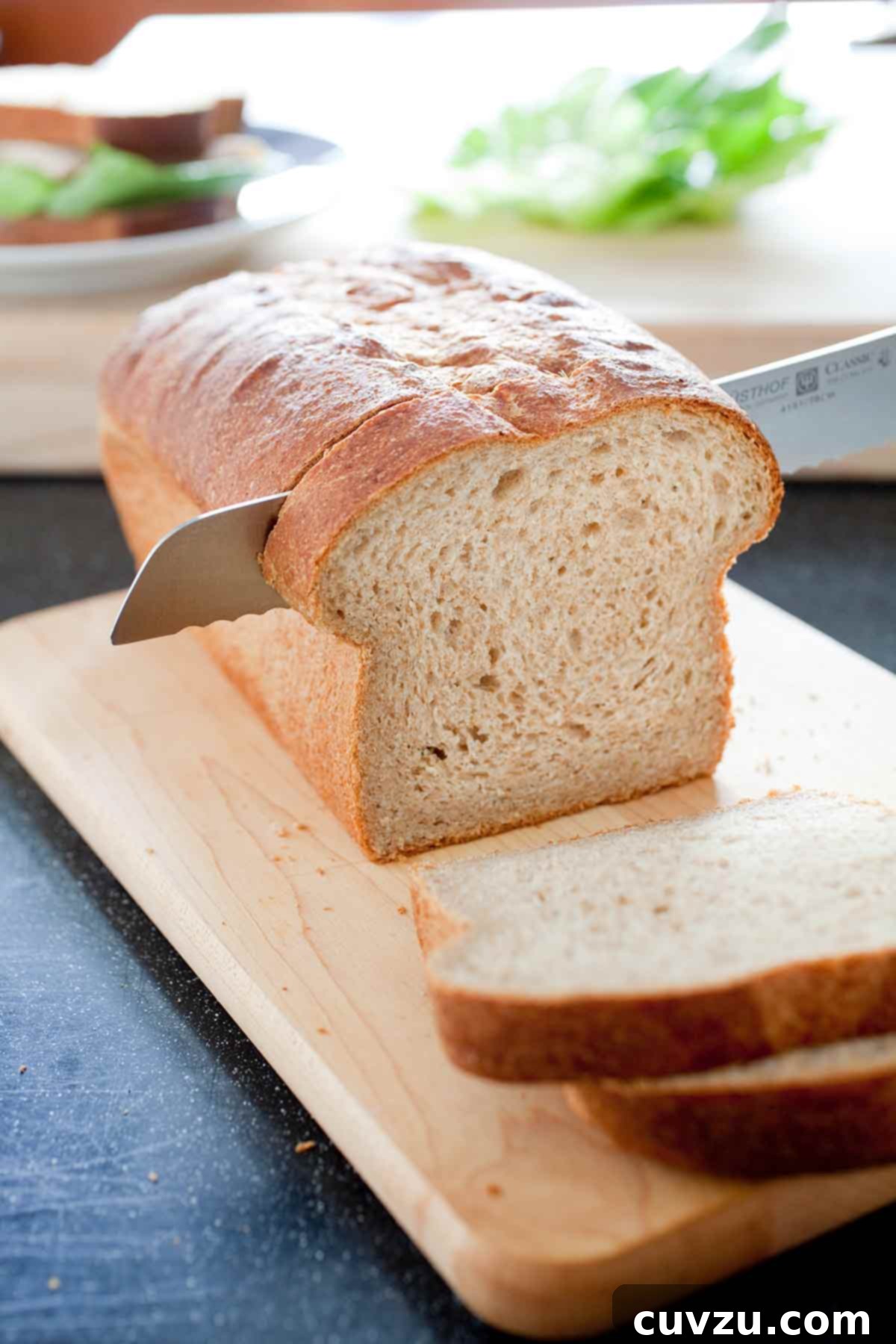
There’s nothing quite like the aroma of freshly baked bread filling your home, and an exceptional loaf of whole-wheat sandwich bread is a true kitchen masterpiece. Achieving that perfect balance of a rich, wholesome flavor, a light, tender crumb, and a beautifully soft crust can often feel like a culinary challenge. Many homemade whole-wheat bread recipes fall short, producing loaves that are either too dense and brick-like or so refined they lose the distinctive, nutty character of true whole wheat. But what if you could bake a whole-wheat sandwich bread that truly satisfies, offering a hearty, light-textured experience that tastes authentically of wheat?
Enter the meticulous approach of America’s Test Kitchen, a team renowned for demystifying complex recipes and perfecting culinary techniques. Their acclaimed recipe for whole-wheat sandwich bread stands out by artfully combining a “sponge” and a “soaker” – two traditional bread-making methods that work synergistically to infuse the dough with unparalleled moisture and a subtle sweetness. This innovative approach ensures that every slice is not only delightful to eat but also boasts a complexity of flavor rarely found in typical whole-wheat varieties. Further enhancing its unique profile are key ingredients like wheat germ, which contributes a delicate nuttiness and a boost of nutrients, and honey, which adds a nuanced sweetness and depth. The result is a truly remarkable loaf that redefines expectations for homemade whole-wheat bread, making it a favorite even among the pickiest eaters.
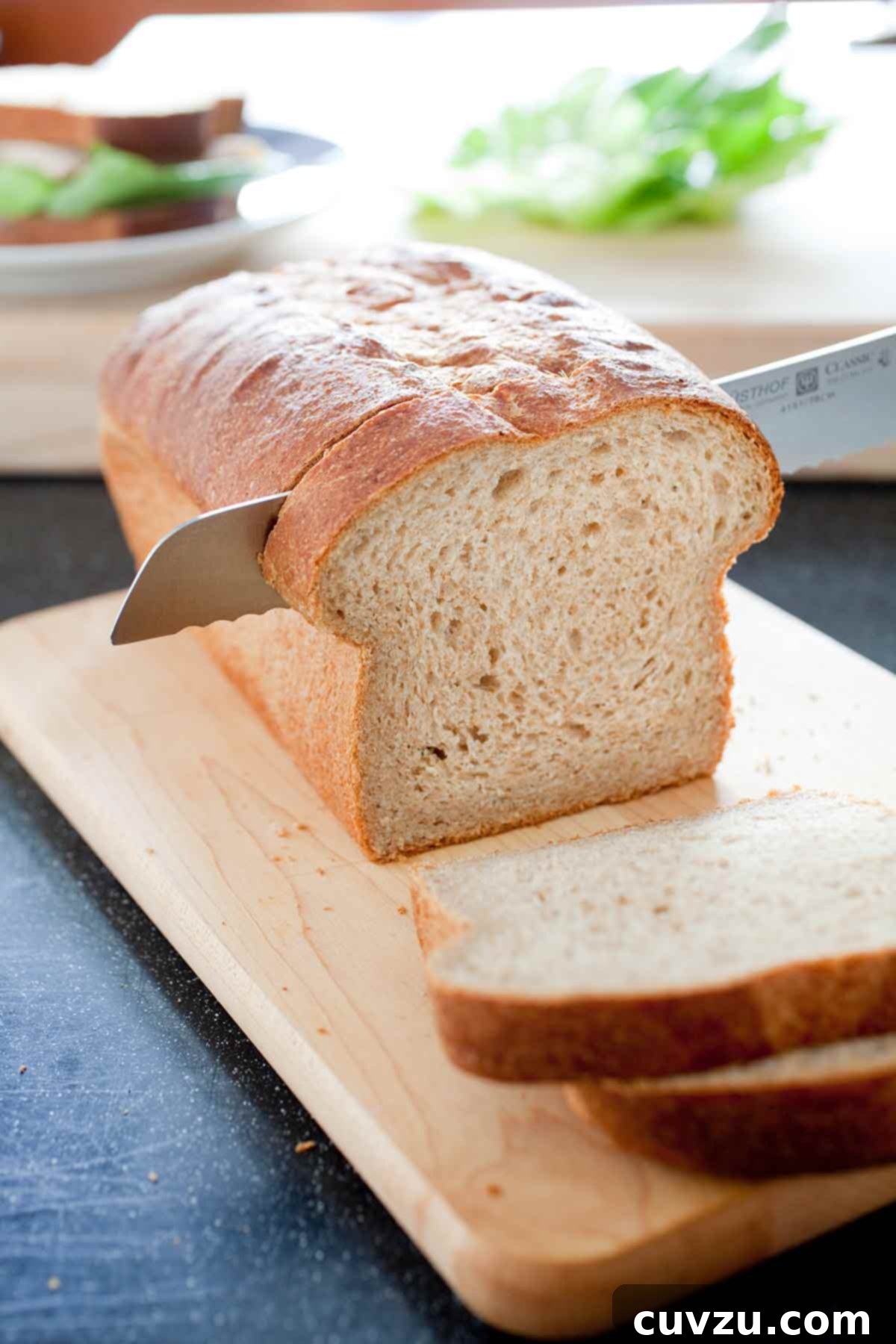
The Science Behind the Perfect Whole-Wheat Loaf: An America’s Test Kitchen Approach
The journey to perfecting this whole-wheat sandwich bread began with a common frustration: most whole-wheat recipes either yield disappointingly heavy, dense “bricks” or bread so bland it could pass for white bread. The goal was clear: create a genuinely nutty, hearty loaf with a light, airy texture that truly celebrates the robust flavor of wheat. To achieve this, the culinary experts at America’s Test Kitchen employed a reverse-engineering approach, starting with a proven white-flour recipe and systematically “unrefining” it.
Balancing Flavor and Texture: The Flour Combination
The first critical step involved experimenting with the ratio of whole-wheat flour to all-purpose flour. Through a meticulous series of tests, different percentages of whole-wheat flour were incorporated until the optimal balance was found. The sweet spot landed at 60 percent whole-wheat flour, a precise ratio that maximizes the distinctive flavor and nutritional benefits of whole grains without compromising the desired light and tender texture. To further enhance the whole-wheat content and ensure structural integrity, protein-rich bread flour was strategically substituted for the remaining all-purpose flour. This substitution provides the necessary gluten strength for a higher rise and a more satisfying chew, a crucial element in preventing the dense consistency often associated with whole-wheat baking.
Mastering Moisture and Sweetness: The Soaker Method
One of the true game-changers in this recipe is the “soaker” method. This involves soaking a significant portion of the whole-wheat flour overnight in milk, along with a touch of wheat germ. This seemingly simple step is a powerful technique rooted in bread-making science. The prolonged hydration softens the hard outer bran of the whole-wheat kernels, which is typically responsible for inhibiting gluten development and contributing to a dry, crumbly texture. By pre-soaking, the fiber becomes more pliable, allowing the flour to fully absorb moisture and develop its natural sweetness. The result is a dough that remains remarkably moist throughout the baking process, contributing to a softer crumb and a more pleasant mouthfeel, while the wheat germ adds an additional layer of nutty, toasted flavor.
Unlocking Flavor Depth: The Sponge Technique
Complementing the soaker is another essential technique: the “sponge.” This involves preparing a pre-ferment (a mixture of flour, water, and yeast) and allowing it to ferment overnight. This extended fermentation period is vital for developing a profound depth of flavor in the finished loaf. As the yeast slowly works, it breaks down complex carbohydrates, creating a wide spectrum of aromatic compounds that imbue the bread with a rich, nuanced taste not achievable with a quick mix. The sponge also contributes to a more active and vigorous yeast, leading to a superior rise and a more open, tender crumb structure.
Sweetness and Suppleness: The Role of Honey and Oil
To further refine the loaf’s complexity, honey is incorporated into the dough. Beyond its natural sweetness, honey acts as a humectant, drawing in and retaining moisture, which contributes to the bread’s extended freshness and tender texture. It also adds a unique floral note that beautifully complements the earthy flavor of whole wheat. In a conscious effort to balance richness without sacrificing moistness, a portion of the traditional butter in the dough is replaced with mild vegetable oil. This substitution helps to keep the bread light and tender, preventing it from becoming overly rich or heavy, while still providing the necessary fat for a supple crumb.
The combined effect of these carefully chosen ingredients and innovative techniques—the precise flour blend, the hydrating soaker, the flavor-enhancing sponge, and the thoughtful inclusion of honey and oil—culminates in a whole-wheat sandwich bread that defies expectations. It delivers a full-bodied, authentic wheat flavor alongside a wonderfully light, moist, and tender texture, proving that homemade whole-wheat bread can indeed be both wholesome and utterly delicious.
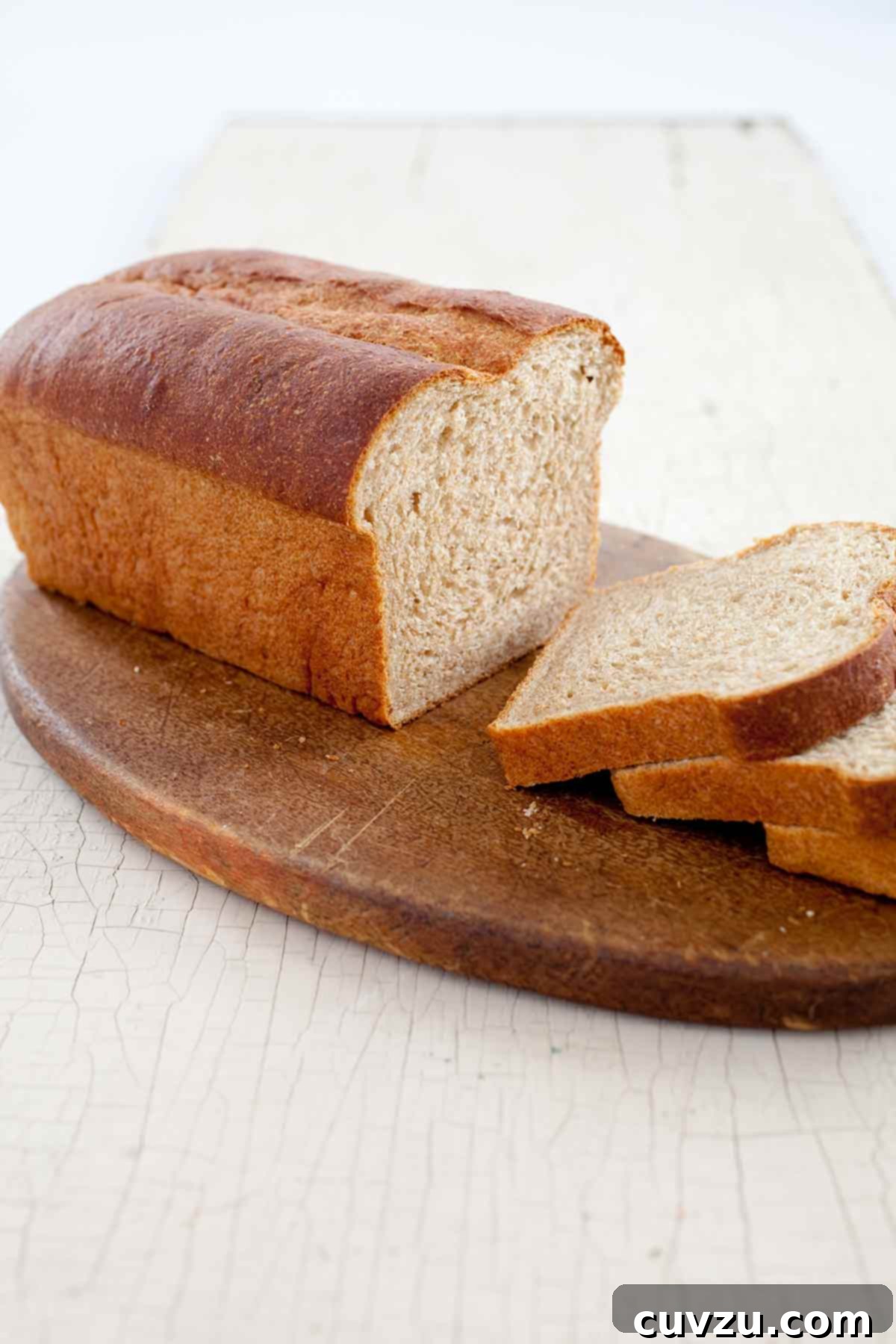
Tips for Success: Ensuring a Perfect Loaf Every Time
Baking homemade bread, especially a whole-wheat variety, can seem daunting, but with a few simple tips, you can ensure a successful and delicious outcome. This recipe is designed to be forgiving, but understanding these nuances will elevate your baking experience.
Equipment Alternatives: No Stand Mixer? No Problem!
While a stand mixer fitted with a dough hook makes kneading considerably easier, it’s by no means essential. If you don’t have one, you can absolutely mix and knead the dough by hand. Expect to spend a bit more time and effort, typically around 15-20 minutes of vigorous kneading, to achieve a smooth, elastic consistency. The key is to develop the gluten properly, which can be done manually by stretching and folding the dough until it becomes cohesive and passes the “windowpane test” (where a small piece can be stretched thin enough to see light through it without tearing).
Baking Surface: Beyond the Baking Stone
A preheated baking stone is often recommended for achieving a crisp crust and even heat distribution, mimicking a professional bakery oven. However, if you don’t own a baking stone, don’t let that deter you. An overturned, preheated rimmed baking sheet works as an excellent substitute. Simply place it on the lowest oven rack while your oven preheats. This provides a similar thermal mass, helping to create a robust crust on the bottom of your loaves. Alternatively, even a standard baking sheet will produce good results, though the crust might be slightly less crisp.
Storage and Freshness: Enjoying Your Bread Longer
One of the joys of homemade bread is its superior freshness. To keep your whole-wheat sandwich bread at its best, wrap the cooled loaves tightly in a double layer of plastic wrap and store them at room temperature for up to 3 days. For longer storage, this bread freezes beautifully. Once wrapped in plastic, add an additional layer of aluminum foil to prevent freezer burn, and your loaves can be frozen for up to 1 month. When you’re ready to enjoy, simply thaw at room temperature or gently reheat in a low oven for a few minutes to restore that freshly baked taste and texture. Always ensure the bread is completely cool before wrapping and freezing to prevent moisture buildup and sogginess.

Whole-Wheat Sandwich Bread
Sides
American
24 slices (2 loaves)
172 kcal
1 hour
50 minutes
15 hours (includes overnight rests)
Ingredients
For the Sponge
- 2 1/4 cups bread flour, plus more for the work surface
- 1 cup water, heated to 110°F (43°C)
- 1/2 teaspoon instant or rapid-rise yeast
For the Soaker
- 3 1/2 cups whole-wheat flour, plus more for the work surface and as needed*
- 1/2 cup wheat germ*
- 2 cups whole milk
For the Dough
- 6 tablespoons (3 oz) unsalted butter, room temperature, plus more for the loaf pans, if desired
- 1/4 cup honey
- 2 tablespoons instant or rapid-rise yeast
- 2 tablespoons mild vegetable oil, plus more for the bowl
- 4 teaspoons table salt
- Nonstick cooking spray
- 2 cups water
Instructions
Make the Sponge
-
In a large bowl, combine the bread flour, water, and yeast. Stir thoroughly with a wooden spoon or a Danish dough whisk until a uniform, shaggy mass forms and no dry pockets of flour remain. This should take about 1 minute. Ensure all ingredients are fully incorporated. Cover the bowl tightly with plastic wrap to prevent air exposure and allow it to sit at room temperature for a minimum of 8 hours, or up to 24 hours. This long, slow fermentation is crucial for developing deep flavors.
Make the Soaker
-
In a separate large bowl, combine the whole-wheat flour, wheat germ, and whole milk. Stir vigorously with a wooden spoon until the ingredients come together to form a rough, shaggy mass. This initial mixing should take about 1 minute. The mixture might feel slightly wet; if it appears excessively soft or soupy, add whole-wheat flour, one tablespoon at a time, until it reaches a consistency that is cohesive enough to handle, though still rustic.
☞ TESTER TIP: The soaker’s texture will be looser than the sponge, but it should still be manageable enough for hand kneading in the next step. It’s meant to be hydrated, not a liquid batter.
-
Transfer the soaker mixture to a lightly floured work surface. Knead the soaker by hand for 2 to 3 minutes until it becomes smooth and more uniform. This brief kneading helps to fully incorporate the ingredients and begin to develop some structure. If the dough feels too sticky during kneading, add a very small amount of additional flour, one tablespoon at a time, as needed, to achieve a smooth, pliable consistency.
-
Return the kneaded soaker to its bowl, cover it tightly with plastic wrap, and refrigerate for a minimum of 8 hours or up to 24 hours. This overnight soak allows the whole-wheat bran to fully hydrate and soften, contributing significantly to the final bread’s moistness and tenderness.
Make the Dough and Bake
-
In the bowl of a stand mixer equipped with the dough hook attachment, combine the fully fermented sponge, the room-temperature unsalted butter, honey, instant yeast, mild vegetable oil, and table salt.
-
Remove the soaker from the refrigerator and tear it into approximately 1-inch (25 mm) pieces. Add these pieces to the stand mixer bowl with the other ingredients. Begin mixing at a low speed until a cohesive mass starts to form and all ingredients are roughly combined, which should take about 2 minutes. Increase the mixer speed to medium and continue kneading. The dough will transform, becoming smooth, elastic, and pulling away cleanly from the sides of the bowl, typically within 8 to 10 minutes. The dough should feel lively and springy to the touch.
-
Carefully remove the dough from the mixer bowl and transfer it to a lightly floured work surface. Knead by hand for about 1 minute, gently shaping it into a smooth, round ball. This brief hand-kneading helps ensure an even texture and prepares the dough for its first rise.
-
Lightly oil a large, clean bowl. Place the dough ball inside, turning it once to coat all sides with oil. Lightly spray one side of a piece of plastic wrap with nonstick cooking spray. Cover the bowl tightly with the plastic wrap, ensuring the oiled side faces down directly onto the dough. Allow the dough to rise at room temperature for 45 minutes. During this initial rise, the dough may not appear to rise significantly, which is normal for this stage.
-
After the initial rise, gently press down on the center of the dough to deflate it. Using a rubber spatula or bowl scraper lightly coated with nonstick cooking spray, carefully fold the partially risen dough over itself. To do this, gently lift an edge of the dough and fold it towards the middle. Rotate the bowl 90 degrees and repeat the folding process. Continue turning and folding the dough for a total of 8 folds. This technique strengthens the gluten structure. Re-cover the bowl tightly with the sprayed plastic wrap and allow the dough to rise again at room temperature until it has visibly doubled in size. This secondary rise typically takes between 30 to 45 minutes.
☞ TESTER TIP: The ambient temperature of your kitchen significantly impacts rising times. Begin checking the dough after 30 minutes, especially if your kitchen is warm, to prevent over-proofing. This applies to subsequent rises as well.
-
Prepare two standard 9 by 5-inch (22 by 11-cm) loaf pans. Butter the insides thoroughly or coat them generously with nonstick cooking spray, ensuring all surfaces are covered to prevent sticking.
-
Carefully transfer the risen dough onto a well-floured work surface. Divide the dough evenly into two halves. Take one piece of dough and gently press and stretch it into a rectangle approximately 17 by 8 inches (43 by 20 cm), with the shorter side facing you. Starting from the side closest to you, tightly roll the dough away from you into a firm cylinder. As you roll, maintain tension by tucking the dough under itself, creating a taut log. Once rolled, turn the loaf seam side up and firmly pinch the seam closed along its entire length to seal it. Place the formed loaf, seam side down, into one of the prepared loaf pans, gently pressing it into the corners to ensure it fills the pan evenly. Repeat this shaping process with the second piece of dough.
-
Loosely cover the shaped loaves in their pans with plastic wrap that has been lightly coated with cooking spray. Allow them to rise at room temperature until they have nearly doubled in size, with the highest point of the loaves rising approximately 1 inch (25 mm) above the lip of the pan. This final rise typically takes between 30 minutes to 1 hour. It is crucial to monitor this rise closely and begin checking early to prevent the loaves from overflowing the pans.
-
At least 30 minutes before you plan to bake, adjust your oven racks. Position one rack in the middle of the oven and another on the lowest position. If using a baking stone, place it on the middle rack. Alternatively, place a large metal baking sheet, turned upside down, on the middle rack. On the bottom rack, place an empty loaf pan or any other heatproof pan. Preheat your oven to 400°F (204°C). This preheating time is essential for the stone or baking sheet to reach the correct temperature and for the empty pan to heat up, which will be used to create steam.
-
When the dough is fully risen and the oven is preheated, bring 2 cups of water to a rolling boil on your stovetop in a small saucepan. This boiling water will be used to create steam in the oven, which is vital for a thin, crisp crust and an excellent oven spring.
-
Using a very sharp serrated knife or a single-edge razor blade, carefully make one clean, lengthwise slash down the center of each loaf, about 1/4-inch deep (6 mm). This slash allows the bread to expand evenly in the oven, controlling where the crust breaks and promoting a beautiful rise.
-
Working quickly to minimize heat loss from the oven, carefully pour the boiling water into the empty, preheated loaf pan on the bottom rack. Immediately place your loaves directly onto the hot baking stone or overturned baking sheet on the middle rack. Close the oven door promptly and reduce the oven temperature to 350°F (177°C). Bake the loaves for 40 to 50 minutes. The bread is done when the crust achieves a deep, dark brown color, and an instant-read thermometer inserted into the center of a loaf registers an internal temperature of 200°F (93°C). To ensure even baking and browning, rotate the loaves front to back and side to side halfway through the baking time.
-
Once baked, carefully remove the loaf pans from the oven and transfer them to a wire rack. Allow the loaves to cool in their pans for 5 minutes. After this brief resting period, carefully remove the loaves from the pans and return them to the wire rack. Let them cool completely to room temperature, which typically takes about 2 hours, before slicing and serving. Cooling completely is essential for the crumb to set properly and for the flavors to fully develop.
Notes
*What is Wheat Germ and Why Use It?
Wheat germ is a small, nutrient-dense component of the wheat kernel, alongside the bran and endosperm. While bran is rich in fiber and the endosperm primarily provides complex carbohydrates, wheat germ stands out as the most nutrient-rich part. It’s packed with healthy fats, B vitamins, vitamin E, essential minerals like zinc, magnesium, and selenium, and antioxidants.
In baking, wheat germ is prized not only for its nutritional boost but also for its distinctive flavor and texture contribution. It imparts a delightful nutty, slightly toasted taste that enriches the overall flavor profile of the bread, adding a layer of complexity not always present in standard whole-wheat loaves. Additionally, its fine texture integrates well into the dough, enhancing the crumb and making the bread even more appealing. Incorporating wheat germ, as this recipe does, is a simple yet effective way to elevate both the health benefits and the sensory experience of your homemade bread.

Adapted From
Bread Illustrated
Buy On Amazon
Explore More with AI
Substitutions
Scale Recipe
Summarize Insights
Nutrition Information
Calories: 172 kcal
Carbohydrates: 26 g
Protein: 5 g
Fat: 6 g
Saturated Fat: 3 g
Trans Fat: 1 g
Cholesterol: 10 mg
Sodium: 399 mg
Fiber: 3 g
Sugar: 4 g
Nutrition information is automatically calculated and should be used as an approximation.
Tried this recipe? Mention @leitesculinaria or tag #leitesculinaria on social media!
Recipe Testers’ Reviews: Real Experiences, Real Results
Terri Lyons
Despite not being an experienced bread baker, Terri found this whole-wheat sandwich bread recipe to be a resounding success, stating it “turned out perfectly.” She noted the ease and speed with which the sponge and soaker came together, though she did need to add an extra 2 tablespoons of flour to the soaker to achieve a smooth dough consistency. Her pre-ferments rested for a substantial 19 hours, demonstrating the recipe’s flexibility with longer fermentation times. Terri observed that the initial dough was quite wet, which required attention during the mixing process in her stand mixer. She also offered valuable insights on rising times, explaining that while the first 45-minute rise produced only a slight puff, utilizing her oven’s proof setting was key for the second rise, which took 65 minutes to double. The final rise in the pan was quicker at 40 minutes. The finished loaves impressed her with their moistness, fine crumb, and surprisingly light texture, all while delivering a powerful, authentic whole-wheat flavor.

Daniela Trapani
Daniela candidly admitted that this recipe is “not the easiest loaf to make,” citing its hands-on nature, time commitment, and the potential for a sticky mess. However, she emphatically declared the delicious, soft, and nutty outcome to be “well worth it.” She advises that while newcomers to bread making might find it challenging, those with “a little experience” will certainly be able to manage it. Daniela emphasized the need for “a bit of advanced planning” due to the extended proofing times, but highlighted the immense reward of creating two beautiful sandwich loaves that can be sliced and frozen for enjoyment throughout the week. Demonstrating the recipe’s versatility, she used half of the dough for hamburger buns, which turned out “soft and wonderful,” confirming the recipe’s adaptability for various bread products. Her testers universally praised the loaf for its rich flavor and desirable soft texture, noting the buns were “perfect for turkey burgers.”
Lisa Amtower
Lisa described this whole-wheat sandwich bread as “delightful,” appreciating its “easy to work with” dough and forgiving nature. She shared an experience where her soaker sat on the counter for 3 1/2 hours longer than planned due to an unexpected delay, yet the dough still produced beautiful results, highlighting the recipe’s robustness. The baking process filled her home with an “enticing” aroma, and she found the bread to have a lovely nutty flavor and perfect sandwich texture. Lisa also provided excellent practical advice for home bakers without specialized equipment. She successfully baked the loaves without a baking stone, noting it “was not an issue.” Furthermore, after her Pyrex pie plate shattered when attempting the boiling water steam method, she opted to skip that step entirely and still achieved “perfect loaves,” emphasizing the recipe’s adaptability and the primary importance of the dough itself. She concluded that it’s a “tasty, easy, versatile bread” perfect for morning toast.
Amanda S.
Amanda, having encountered many whole-wheat bread recipes that resulted in dry or dense loaves, was particularly drawn to the unique process of this recipe, finding it “100% different.” She was impressed by the vitality of her dough, noting it was so “alive and active” that it overflowed its large rising bowl. She credited the “soaker” method as making “a huge difference” in the final product. Her bread turned out moist, light, and airy—achieving all the desired qualities for an ideal whole-wheat sandwich bread, a testament to the recipe’s innovative techniques.
Laura Tarlo
Laura declared this whole-wheat sandwich bread “delicious,” with her family especially appreciating the pronounced “wheaty” flavor imparted by the wheat germ. She highlighted its unexpectedly light and moist texture, a refreshing change from typical dense whole-wheat breads. While her family doesn’t frequently eat sandwiches, she confidently stated it would make a “very delicious sandwich” far superior to additive-laden store-bought options. She enjoyed it as toast with butter and strawberry jam for breakfast, confirming its versatility and appeal beyond sandwiches.
Debbie Gigliotti
Debbie concluded that the “end result justifies the time put into making this bread.” Upon cooling, she served it with soft butter and was astonished by its texture, describing it as “the lightest fluffiest whole-wheat sandwich bread I have ever had…it’s like Wonder Bread, whole-wheat Wonder bread.” Her enthusiasm for its tenderness and taste speaks volumes about the recipe’s ability to produce an exceptionally soft and flavorful whole-wheat loaf.
Stuart D.
Stuart experienced a slight challenge with his whole-wheat sandwich bread, noting it “rose and fell,” resulting in a somewhat sunken and uneven top crest. Despite this aesthetic imperfection, he enthusiastically praised its flavor, stating, “it tastes so darn good, and the crust color is perfect.” He also highlighted its “great smooth texture and grain flavor,” underscoring that even with a visual flaw, the loaf’s quality was exceptional. Stuart expressed his intention to make it again to achieve a better-shaped loaf, recommending others “overlook my baking appearance flaw, because the remaining loaf actually is worth hanging onto.” This review serves as a testament to the bread’s superior taste and texture, even when minor baking hiccups occur.
Christi B.
Christi, a seasoned bread maker, shared a personal triumph: this whole-wheat sandwich bread finally met her kids’ picky standards, ending her “bane of existence.” She pinpointed the soaking step as the critical differentiator, creating a “wonderfully textured sweet-but-not-too-sweet” whole-wheat bread. She lauded its “close-grained ‘spongy’ texture” reminiscent of store-bought sandwich bread, but made with wholesome ingredients, promptly adding it to her “to make frequently” list. Christi noted the recipe’s requirement for advanced preparation due to the 16-28 hour overnight soaker/sponge step, but clarified that the “hands-on time is really only about an hour.” She detailed her process, including grinding her own hard winter wheat berries and using instant yeast. She found the sponge came together as expected, but the soaker was wetter, likely due to her coarser home-ground wheat. After a 15-hour rest, both components were ready for mixing. Her KitchenAid mixer achieved a smooth, elastic dough in 10 minutes, passing the windowpane test. She provided insights on rising conditions, recommending an oven with the light on for better results in a cool house. Despite a slight issue with her scoring (which she plans to improve next time), her loaves baked to a beautiful golden color in 40 minutes, with a “wonderful taste.” She praised it as “a great recipe and definitely will be made again.”
Trisha T.
Trisha found the recipe for whole-wheat sandwich bread “easy to follow” and resulting in a “delicious finished product,” ranking it among the best bread recipes she’d tried during the pandemic. She highlighted its desirable texture—”soft, but with a bit of a nice textural bite”—and its “nice, but not overly aggressive, wheat flavor.” It quickly became a favorite for morning toast, with the bonus of a second loaf in the freezer. Trisha confirmed that an overturned baking sheet on the lowest rack effectively substituted for a baking stone, yielding pleasing results. While acknowledging the recipe’s “lengthy process,” she stressed that “none of the steps are particularly difficult” and found the baking experience enjoyable. She offered valuable reassurance to other bakers: initially concerned by the wet and gooey consistency of the dough when combining the sponge, soaker, and other ingredients, she advised patience, as it “came together into a perfectly lovely and elastic-y dough” with continued mixing.