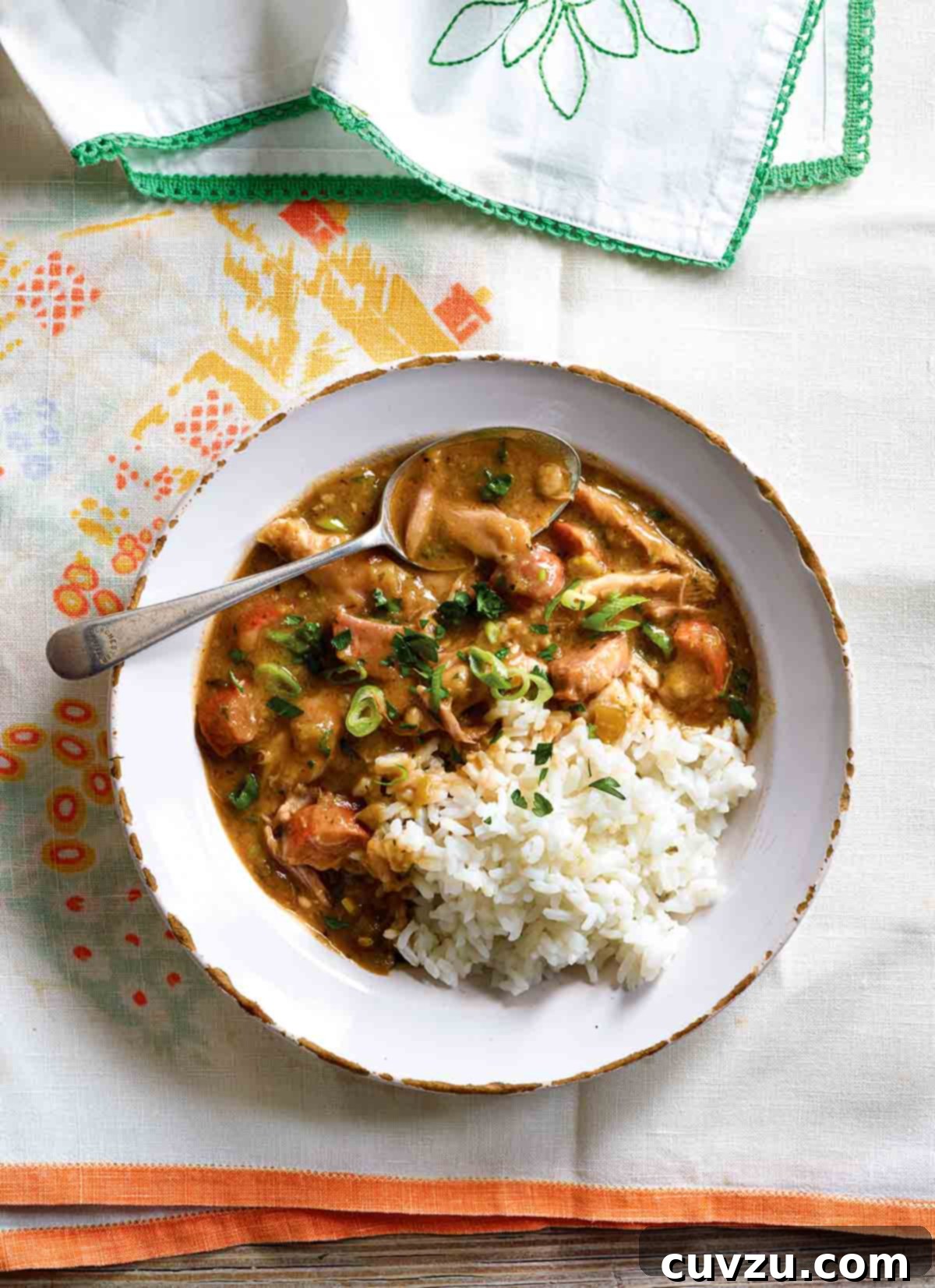
Welcome to the ultimate guide for crafting an authentic and incredibly delicious Cajun Chicken and Sausage Gumbo right in your own kitchen. This isn’t just a recipe; it’s an invitation to experience the soulful depths of Louisiana cuisine, a culinary journey that’s surprisingly approachable and deeply rewarding. Forget the myth that gumbo is overly complicated; our version simplifies the process without sacrificing any of the rich, nuanced flavors that define this iconic stew. With just a touch of spice and a wholesome foundation, this gumbo promises to warm you from the inside out. So, gather your ingredients, clear your schedule, and get ready to truly embrace the spirit of the Bayou: Laissez les bons temps rouler! (Let the good times roll!)
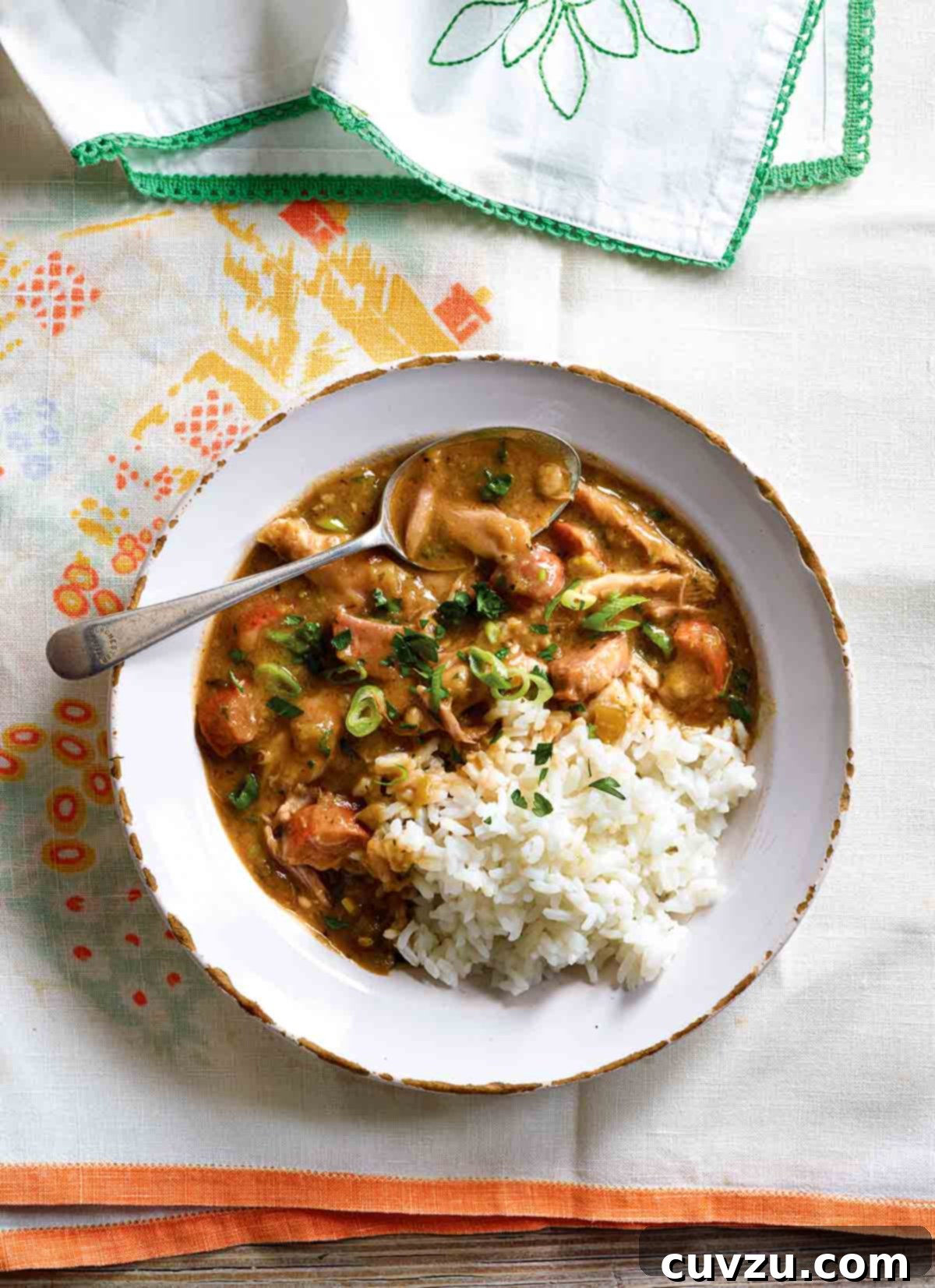
This isn’t just a claim; it’s a testament echoed by all who’ve savored this extraordinary dish. David Leite, the culinary maestro behind this recipe, proudly presents a Cajun chicken and sausage gumbo that truly lives up to its “real deal” reputation. As with many grand, slow-cooked creations, its true magic unfolds with time. While delicious immediately, a day or two of resting allows the flavors to deepen and intertwine, transforming it from merely “tasty to operatically magnificent,” a sentiment beautifully articulated by author Nancie McDermott. This resting period is not just a recommendation; it’s the secret to unlocking the gumbo’s fullest, most harmonious potential, making every spoonful an unforgettable experience.

Why Our Testers Adore This Gumbo
Our dedicated recipe testers couldn’t get enough of this Cajun chicken and sausage gumbo, showering it with praise for a multitude of reasons. They consistently highlighted its **impressive ease and straightforward preparation**, making it accessible even for those new to gumbo-making. Beyond its simplicity, the recipe proved to be **remarkably affordable**, utilizing readily available ingredients to create a hearty, satisfying meal. A key feature that garnered universal acclaim was the ability to **easily adapt the heat level**, allowing each cook to tailor the spice to their personal preference without compromising the authentic flavor. Whether you prefer a gentle warmth or a vibrant kick, this gumbo accommodates all palates.
Elie Nassar, one of our enthusiastic testers, perfectly encapsulated the collective sentiment, declaring, “This is a straightforward, real-deal Cajun gumbo that everyone loved.” His family even enjoyed the leftovers for days, noting how the flavors continually improved, a testament to the dish’s enduring appeal and depth. This gumbo is more than just a meal; it’s a comforting, flavor-packed experience designed to bring joy to any table.
Essential Ingredients for an Authentic Gumbo
Crafting a truly exceptional Cajun Chicken and Sausage Gumbo begins with understanding the role each ingredient plays in building its complex flavor profile. This dish thrives on quality components and specific techniques to achieve its signature taste and texture. Here’s a detailed look at the core ingredients and why they matter:
- Oil & Roux: The Foundation of Flavor – This recipe calls for a generous amount of oil, which is absolutely critical for creating the roux—the dark, rich, and nutty foundation that defines Cajun gumbo. A roux is a mixture of fat and flour cooked together, gradually darkening to develop immense depth of flavor. For the best results, choose an oil with a mild or neutral flavor and a high smoke point, such as vegetable oil, canola oil, or a light olive oil. The oil serves as the medium for browning the flour, imparting a unique character that cannot be replicated.
- All-Purpose Flour: The Roux’s Partner – Paired with the oil, all-purpose flour undergoes a transformative process to become the roux. As it cooks and darkens, the flour loses some of its thickening power but gains an incredible, toasty flavor, contributing significantly to the gumbo’s savory backbone.
- The Holy Trinity: Aromatics for Depth – A cornerstone of Cajun and Creole cooking, the “Holy Trinity” of **chopped onion, celery, and green bell pepper** forms the aromatic heart of this gumbo. These vegetables are sautéed in the rich roux, softening and releasing their sweet and savory essences, which meld seamlessly with the developing flavors of the stew.
- Garlic: Aromatic Essential – Finely chopped garlic adds another layer of pungent, savory aroma that complements the Holy Trinity and deepens the overall flavor profile of the gumbo.
- Paprika: The Spice of Choice – Our testers experienced fantastic results using both hot and sweet paprika. The choice is yours and depends entirely on your personal heat tolerance and desired flavor. Sweet paprika lends a mild, earthy warmth, while hot paprika provides a noticeable kick. Smoked paprika can also be a delightful addition for an extra layer of complexity, adding a smoky depth that enhances the overall experience.
- Chicken: Bone-in for Unrivaled Taste – We strongly recommend using skin-on, bone-in chicken legs and thighs for this gumbo. The bones and skin contribute a profound depth of flavor to the stock as the chicken simmers, enriching the entire stew in a way that boneless, skinless chicken simply cannot. This slow infusion of chicken essence is key to an authentic gumbo.
- Andouille Sausage: Smoky Heart of the Stew – Cajun-style andouille sausage is indispensable for its bold, smoky, and slightly spicy character. This robust sausage introduces a savory element that truly defines the gumbo. If authentic andouille is unavailable, smoked kielbasa or another high-quality smoked sausage can be used as a suitable alternative, offering a similar, albeit slightly different, smoky profile.
- Chicken Stock: The Liquid Gold – Whether you opt for homemade chicken stock or a good quality canned chicken broth, this liquid forms the body of your gumbo. Homemade stock will undoubtedly provide the richest flavor, but a flavorful store-bought option works well for convenience. Ensure it’s unsalted or low-sodium to control the overall seasoning of your dish.
- Key Seasonings: Salt, Pepper, Thyme, Cayenne – These spices are crucial for balancing and amplifying the gumbo’s flavors. Dried thyme adds an earthy, herbaceous note, while freshly ground black pepper and salt are fundamental for seasoning. Cayenne pepper provides the characteristic Cajun heat; adjust the amount to your preference.
- Fresh Garnishes: Scallions and Parsley – Freshly sliced scallions and finely chopped flat-leaf parsley added at the end brighten the dish with a burst of fresh flavor and vibrant color, offering a delightful contrast to the rich, dark stew.
Mastering Cajun Gumbo: A Step-by-Step Guide
Making a truly exceptional Cajun chicken and sausage gumbo is a culinary adventure, and with our detailed step-by-step instructions, you’ll navigate each stage with confidence. While patience is a virtue, especially with the roux, the process is straightforward and incredibly rewarding. Follow these steps to create a hearty, flavorful stew that will transport you straight to Louisiana.
- Crafting the Perfect Roux: Patience is Key. In a large, heavy-bottomed Dutch oven (cast iron or enameled cast iron is ideal), heat the vegetable oil over medium-high heat until it shimmers. Test by sprinkling a pinch of flour; if it immediately “blooms” and sizzles on the surface, the oil is ready. Scatter the full cup of all-purpose flour into the hot oil and immediately begin stirring briskly with a whisk or wooden spoon. Continuously stir the oil and flour mixture, creating a thick, smooth paste known as a roux. Reduce the heat to low and continue to cook, stirring frequently and scraping the bottom of the pot to prevent sticking or burning. The roux will slowly transition from pale yellow to a blonde, then peanut butter, and finally a rich, deep brown, akin to the color of coffee with a little cream. This crucial step can take anywhere from 20 to 60 minutes, depending on your stove and pot. Patience here is paramount; a perfectly dark roux imparts immense flavor, so do not rush it. If it burns, you must start over.
- Building the Flavor Base: Aromatics and Spices. Once your roux has reached that desirable deep brown hue, it’s time to build your flavor base. Add the chopped onion, celery, and green bell pepper (the “Holy Trinity”) to the hot roux. Stir well to ensure the vegetables are thoroughly coated. Cook these aromatics, stirring often, for 2 to 3 minutes until they become fragrant, softened, and slightly shiny, absorbing the richness of the roux. Next, incorporate the finely chopped garlic, dried thyme, salt, freshly ground black pepper, paprika (sweet or hot, to your preference), and cayenne pepper. Stir continuously for another 2 minutes, allowing the spices to toast lightly and release their aromatic oils, deepening the complexity of the gumbo.
- Infusing with Chicken Stock and Nestling the Chicken. Gradually pour in the 2 quarts of chicken stock, stirring vigorously as you add it. Continue to stir often, ensuring the thick roux fully dissolves into the stock, creating a smooth, rich base. Bring the mixture to a lively boil. Once boiling, carefully nestle the skin-on, bone-in chicken legs and thighs into the simmering liquid. Once the stock returns to a rolling boil, reduce the heat to maintain a lively simmer. Cook, stirring occasionally to prevent sticking and ensure even cooking, for 45 minutes to 1 hour, or until the chicken is cooked through and incredibly tender, almost falling off the bone.
- Preparing the Sausage and Shredding Chicken. While the chicken is simmering, prepare your andouille sausage. Halve each sausage link lengthwise, then cut them crosswise into half-moon slices, approximately 1/4 inch thick. Set aside. Once the chicken is tender, carefully remove it from the pot using tongs or a slotted spoon and transfer it to a platter to cool slightly. Once cool enough to handle, pull the succulent meat from the bones, discarding the skin and bones. Coarsely tear or chop the cooked chicken meat into bite-sized pieces. Return both the prepared chicken and the chopped andouille sausage to the pot with the simmering gumbo.
- Simmering to Perfection: Melding Flavors. Continue to simmer the gumbo, stirring occasionally, for another 30 minutes. During this stage, the flavors will deeply meld together, and the stew will thicken to its ideal rich, satisfying consistency. The sausage will soften further, releasing its smoky notes into the stew, creating a harmonious blend of tastes.
- The Grand Finale: Finishing Touches and Serving. Remove the pot from the heat. Now is a perfect time to allow the gumbo to rest if you’re preparing it in advance (see Pro Tips for making ahead). Just before serving, stir in the thinly sliced scallions and finely chopped flat-leaf parsley. Serve the hot gumbo generously in bowls, traditionally spooned over fluffy white rice or, for a true Louisiana experience, over a scoop of creamy potato salad. Offer additional sliced scallions and your favorite hot sauce on the side for guests to garnish and customize their bowls to taste.
Common Questions About Cajun Gumbo
At its core, a roux is a mixture of fat (oil, butter, or animal fat) and flour cooked together until it reaches a desired color and consistency. It serves as both a thickener and, more importantly for gumbo, a profound flavor base for sauces and stews. There are four main stages of roux, determined by cooking time and color: white, blonde, peanut butter (brown), and dark chocolate (deep brown). For Cajun gumbo, a darker roux, typically a peanut butter or dark chocolate color, is highly prized. Achieving this rich, deep brown roux is a labor of love, requiring patience and constant stirring, but it is absolutely worth the effort for the unparalleled depth of nutty, toasted flavor it brings to your gumbo. This dark roux is the very soul of the dish, providing a savory foundation that defines its character.
While both are iconic Louisiana dishes rich in flavor and often sharing similar ingredients like sausage, chicken, and vegetables, Jambalaya and gumbo are fundamentally distinct. Jambalaya is primarily a rice dish, where the rice is cooked directly in the pot with the meats, vegetables, and stock, absorbing all the flavors in a manner similar to Spanish paella. The end result is a drier, more cohesive dish where the rice is the star. Gumbo, on the other hand, is a hearty stew. Its defining characteristic is the use of a roux (a cooked mixture of fat and flour) and sometimes filé powder (ground sassafras leaves) to thicken it. Gumbo is typically served *over* steamed or boiled rice, with the rice acting as a bed for the rich, flavorful liquid stew. The cooking processes and final textures are completely different, though both offer an incredible taste of Southern comfort.
Traditionally, Cajun gumbo is served generously spooned over a bed of fluffy steamed or boiled white rice. The rice soaks up the rich gravy, making for a wonderfully satisfying meal. For a truly authentic and unexpected twist, especially popular in some Louisiana households, gumbo is occasionally served over creamy potato salad, offering a delightful textural and flavor contrast. Beyond the main serving, presentation and customization are key. Always offer thinly sliced scallions and a variety of hot sauces (like Tabasco, Crystal, or Louisiana Hot Sauce) on the side, allowing diners to garnish and adjust the spice level to their individual preference. A piece of crusty French bread or a side of cornbread also makes an excellent accompaniment, perfect for soaking up every last drop of the savory stew.
Absolutely! In fact, preparing this gumbo a day or two in advance is highly recommended. Like many slow-cooked stews, the flavor of gumbo deepens and harmonizes wonderfully as it rests. The ingredients have more time to meld, resulting in a richer, more complex taste. To make it ahead, simply follow the recipe through to completion, then allow the gumbo to cool completely at room temperature. Once cooled, transfer it to an airtight container and store it in the refrigerator overnight, or for up to 3 days. When ready to serve, gently rewarm the gumbo over medium-low heat on the stovetop, stirring occasionally until it is heated through. This advance preparation makes entertaining a breeze and ensures a more flavorful dining experience.
Pro Tips & Troubleshooting for Gumbo Success
Achieving gumbo perfection often comes down to a few insider tricks and mindful adjustments. These pro tips and troubleshooting notes, many gathered from our seasoned recipe testers, will help you master this comforting Cajun classic and ensure a consistently delicious result.
- Achieving Fall-Off-The-Bone Chicken: If you prefer your chicken to be exceptionally tender, almost falling apart, consider cooking it for an additional 15 minutes during the simmering stage. This extra time allows the connective tissues to break down further, yielding incredibly succulent results.
- Storage and Freezing for Future Enjoyment: Gumbo is an excellent make-ahead meal. Store cooked gumbo in a sealed, airtight container in the refrigerator for up to 3 days. Its flavors will deepen beautifully. For longer storage, gumbo freezes exceptionally well for up to 6 months. To enjoy, thaw it overnight in the refrigerator before gently reheating it on the stovetop over low to medium-low heat.
- Managing Spiciness to Your Liking: The heat level in this gumbo is adaptable. If you’re sensitive to spice, opt for sweet paprika and reduce the amount of cayenne pepper, or even omit it altogether. For those who crave more heat, don’t hesitate to use hot paprika and increase the cayenne. Remember, you can always add more hot sauce to individual servings, but you can’t easily take it away!
- Dealing with Excess Fat: A rich gumbo might sometimes appear a bit greasy on the surface. If you make it ahead and refrigerate it, any excess fat will solidify on top, making it easy to skim off and discard before reheating. This simple trick yields a lighter, yet equally flavorful, stew.
- Roux Shortcuts (Alton Brown’s Method): While traditional roux-making involves constant stirring, if you’re short on time or patience, consider Alton Brown’s oven method. Mix your oil and flour in an uncovered, oven-safe pot and bake at 350°F (175°C) for about 1.5 to 2 hours, stirring every 30 minutes. This method still produces a dark, flavorful roux without the constant stovetop attention.
- Dietary Considerations: This recipe is naturally suitable for dairy-free diets, making it an inclusive option for many. For gluten-free modifications, consider using a gluten-free all-purpose flour blend for the roux. While not tested by our team, many have success with such substitutions.
Explore More Gumbo Creations
Once you’ve mastered this fantastic chicken and sausage gumbo, you might find yourself eager to explore the diverse world of other gumbo varieties. The beauty of gumbo lies in its adaptability, allowing for a wide range of proteins and flavor profiles. Here are a couple of other popular gumbo recipes that are just as rewarding to make and enjoy, showcasing the versatility of this beloved Southern stew.
Whether you’re looking for a quick weeknight solution with the Instant Pot or yearning for the briny flavors of the coast, there’s a gumbo for every occasion. Seafood gumbos often feature shrimp, crab, and oysters, offering a lighter yet equally rich experience. Vegetarian gumbos, while less traditional, can be made with a hearty vegetable stock and an abundance of seasonal vegetables, showcasing the gumbo technique with a different twist.
Share Your Gumbo Experience: Write a Review!
We love hearing from you! If you try this recipe, or any dish from Leite’s Culinaria, we encourage you to share your experience. Please consider leaving a review, a star rating, and your best photo in the comments below. Your feedback inspires us and helps our community of home cooks. –David
Our enthusiasm for this dish was so profound that we prepared it twice within a span of just ten days, finding absolutely nothing we felt compelled to alter, save for perhaps indulging in a slightly more generous portion of sausage. This gumbo is more than a meal; it’s a soul-warming embrace that lingers in your thoughts, making you dream of it at night and ponder its acceptability for breakfast. It truly nourishes the heart, the soul, and the belly, delivering a comfort that resonates deeply. Thank you for sharing this remarkable recipe; you’ve gifted us with a new winter tradition we eagerly anticipate making again and again!
kate
Authentic Cajun Chicken and Sausage Gumbo
David Leite
Saved
Ingredients
- 1 cup vegetable oil or mild olive oil
- 1 cup all-purpose flour
- 1 cup chopped onion
- 1 cup finely chopped celery
- 1 cup finely chopped green bell pepper
- 2 tablespoons finely chopped garlic
- 2 teaspoons dried thyme, or 2 tablespoons finely chopped fresh thyme
- 1 teaspoon salt
- 1 teaspoon freshly ground black pepper
- 1 teaspoon sweet or hot paprika
- 1 teaspoon cayenne pepper
- 2 quarts homemade chicken stock or canned chicken broth
- 3 1/2 pounds skin-on, bone-in chicken legs and thighs
- 1 pound Cajun-style andouille sausage, smoked kielbasa, or other smoked sausage
- 1 cup thinly sliced scallions, plus more for garnish
- 1/2 cup finely chopped flat-leaf parsley leaves
- Cooked white rice, for serving
Instructions
-
In a large, heavy-bottomed Dutch oven, preferably cast-iron or enamel cast-iron, heat the oil over medium-high heat until shimmering. When a pinch of flour sprinkled on the oil immediately blooms on the surface, scatter in the rest of the flour and quickly stir, thoroughly combining the oil and flour into a thick, smooth roux.
-
Continue cooking the roux over low heat, stirring often, as it turns from pale yellow to a rich, deep brown, adjusting the heat as needed to keep the roux slowly darkening without bubbling or burning. This can take anywhere from 20 to 60 minutes, depending on your pot and stove. The finished roux should be darker than peanut butter and about the color of coffee with a little cream.
-
Add the onion, celery, and bell pepper to the roux and stir well to coat them. Let them cook, stirring often, until the vegetables are fragrant, softened, shiny, and evenly coated with the roux, 2 to 3 minutes. Add the garlic, thyme, salt, pepper, paprika, and cayenne, then stir well and cook for 2 minutes more.
-
Add the stock, stir well, and bring it to a lively boil, stirring often to dissolve the roux into the stock. When everything is boiling nicely, add the chicken. When the stock returns to a rolling boil, adjust the heat to maintain a lively simmer and cook, stirring now and then, until the chicken is cooked through and very tender, 45 minutes to 1 hour.
-
Meanwhile, chop the andouille into bite-size pieces, first halving each andouille link lengthwise and then cutting it crosswise into half-moon slices about 1/4 inch thick.
-
Using tongs or a slotted spoon, move the chicken from the pot to a platter and let it cool. When you can handle it, pull the meat from the bones, discarding the bones and skin. Coarsely tear or chop the chicken and then return it to the pot along with the andouille.
-
Cook the gumbo, stirring now and then, until the sausage has softened and everything has come together into a rich, flavorful, slightly thickened stew, about 30 minutes more.
-
Remove the pot from the heat. (You can cool, cover, and refrigerate the gumbo for up to 2 days to allow the flavors to meld. Skim any fat from the surface of the gumbo and discard before rewarming it over low heat.)
-
Stir in the scallions and parsley. Serve the gumbo in bowls over rice or with rice on the side, garnished with more scallions.
Chef’s Notes & Variations
- For shreddable chicken: If you prefer your chicken to be extra tender and easily fall off the bone for shredding, extend the simmering time during step 4 by an additional 15 minutes. This will ensure maximum tenderness.
- Storage and freezing: Cooked gumbo can be stored in an airtight container in the refrigerator for up to 3 days. For longer preservation, it freezes beautifully for up to 6 months. To serve, thaw it overnight in the refrigerator, then gently rewarm on the stovetop.
- Dietary considerations: This recipe is naturally dairy-free. For a gluten-free option, substitute the all-purpose flour with a high-quality gluten-free flour blend for the roux. While not officially tested, many cooks have success with this adaptation.
- Roux cooking time: The time it takes to achieve a dark roux can vary significantly based on your stovetop, pot, and heat management. Some testers achieved it in 15-20 minutes, while others took up to an hour. The key is consistent stirring over low heat to prevent burning and ensure even browning.
- Managing fat: If you find the gumbo to be a bit greasy, especially after resting, simply chill it in the refrigerator. The fat will solidify on top, making it easy to skim off and discard before reheating, resulting in a cleaner, equally flavorful stew.

Adapted From
This cherished recipe is proudly adapted from “Southern Soups & Stews” by Nancie McDermott, a culinary gem that celebrates the comforting traditions of Southern cooking. Her expertise in regional dishes shines through, inspiring this deeply flavorful gumbo.
Buy On Amazon
Explore More with AI
Substitutions
Scale
Summarize
Nutrition Information
Nutrition information is automatically calculated, so should only be used as an approximation.
Recipe Testers’ In-Depth Reviews & Insights
Our dedicated team of recipe testers enthusiastically embraced this Cajun Chicken and Sausage Gumbo, offering invaluable insights and glowing reviews. Their collective experiences highlight the recipe’s authenticity, adaptability, and undeniable deliciousness, solidifying its place as a kitchen favorite.
Roux Mastery: Patience, Color, and Shortcuts
The roux, the foundational element of any great gumbo, was a central point of discussion among testers. Elie Nassar emphasized that making the roux was the most time-consuming step, taking him about an hour to achieve a deep brown without burning. He wisely cautioned about handling hot roux due to its intense heat. For those seeking a less hands-on approach, Elie suggested Alton Brown’s oven method: mixing fat and flour in an uncovered pot and baking it at 350°F for approximately two hours, stirring every 30 minutes. This frees up the cook for other preparations – or to enjoy a couple of beers!
Sandy Owen, on the other hand, found her roux came together quickly, in about 15 minutes, but required frequent heat adjustment to prevent smoking while achieving that perfect “coffee with creamer” brown. Lou Ann Traster‘s roux took 30 minutes to reach a “café au lait” shade, noting that having a helper for stirring duty made the process more enjoyable. These varying times underscore the importance of paying close attention to your specific stove and pot, rather than adhering strictly to a timer.
Kim Venglar provided a crucial tip regarding roux color and thickness: “The lighter the roux, the thicker it will be. The darker the roux, the more flavorful it is, yet the flour will have lost a lot of its thickening power.” This insight helps home cooks understand the balance between flavor and consistency.
Customizing Spice Levels and Flavor Profiles
The adaptability of this gumbo’s heat level was a major plus for our testers. Elie Nassar tailored the recipe for his children by using sweet paprika and substituting hot paprika for cayenne, then adding Tabasco to his own bowl for a personalized kick. Sandy Owen used hot paprika and found the dish unbelievably great, while Lou Ann Traster opted for sweet paprika, noting that she still added hot sauce (Tabasco, Crystal, or any vinegar-and-cayenne style) for flavor depth.
Ralph Knauth, who had recently made roasted chicken stock, used chicken fat for his roux, which he found “worked very well.” He also incorporated smoked paprika and omitted cayenne, demonstrating how easily the spice profile can be adjusted. Kim Venglar, while loving the layers of flavor, decided she would opt for hot paprika next time for a bit more “kick” – enough to be noticeable, but not overwhelming.
Chicken Tenderness and Sausage Transformation
Several testers commented on the chicken’s texture and the impact of bone-in pieces. Sandy Owen, who prefers her chicken “fall-off-the-bone tender,” cooked hers for a little over an hour to achieve this. Ralph Knauth, aiming for chicken that was cooked through but not quite falling apart, found his ideal texture after an hour of simmering. Lou Ann Traster pondered if boneless, skinless thighs would affect the final product, but the consensus remained that bone-in chicken imparts superior flavor.
The addition of the andouille sausage was consistently lauded. Lou Ann Traster declared it “truly transformative—the entire pot is changed by the smoky, savory sausage,” making the dish even more compelling. This emphasizes the importance of selecting a high-quality, flavorful sausage.
The Magic of Resting and Strategic Serving
A recurring theme in the reviews was the remarkable improvement of the gumbo after resting. Both Elie Nassar and Sandy Owen noted how the leftovers kept getting better and better over two days. Ralph Knauth made his gumbo ahead of time, allowing the flavors to “mingle in the fridge,” and observed that while the fat separated, a rigorous short boil brought it back together perfectly.
When it came to serving, classic white rice was the go-to. However, Karen Depp offered a true “down-home” Louisiana suggestion: serving the gumbo over potato salad instead of rice. This provides a rich, creamy contrast to the stew. Testers also highlighted the importance of garnishes like chopped scallions and parsley for freshness and color, along with various hot sauces for a personalized touch. As Karen charmingly put it, gumbo pairs well with “everything from iced tea to longnecks to Prosecco to a good oaky Chardonnay,” reflecting the versatile and convivial nature of the dish.
Overall Sentiment and Final Thoughts
The overwhelming sentiment was one of profound satisfaction. Kate made it twice in ten days, stating it “warms the heart, the soul, and the belly.” Elie Nassar called it a “real-deal Cajun gumbo that everyone loved.” Ralph Knauth found it “very easy, straightforward, and affordable. A very satisfying dish.” Lou Ann Traster, hailing from Ohio, admitted she “doesn’t pretend to know gumbo,” but wholeheartedly endorsed this “spicy, richly flavored, meal-in-a-bowl.”
Karen Depp acknowledged it was “a rather more complicated recipe than I usually use, but the end result was perfect,” praising the way the flavors coalesced into an “outstanding full-bodied gumbo.” She also noted the flexible nature of gumbo recipes, suggesting measurements are often guides and encouraging cooks to “use what you have.”
This Cajun Chicken and Sausage Gumbo is truly a keeper—a comforting, flavor-packed stew that embodies the best of Southern culinary traditions, ready to be enjoyed and perhaps even improved with time. It’s a dish that promises to become a beloved staple in your home.