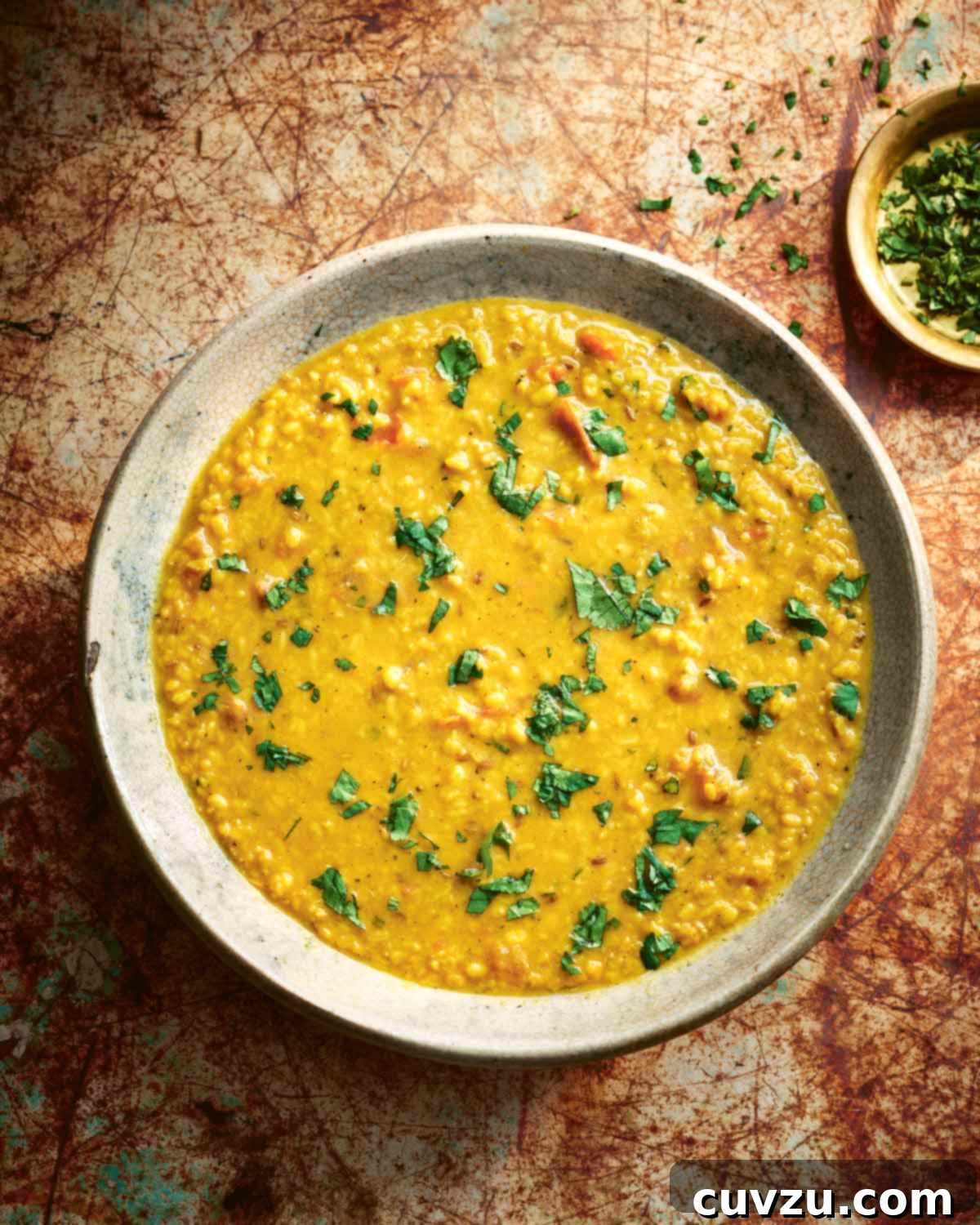
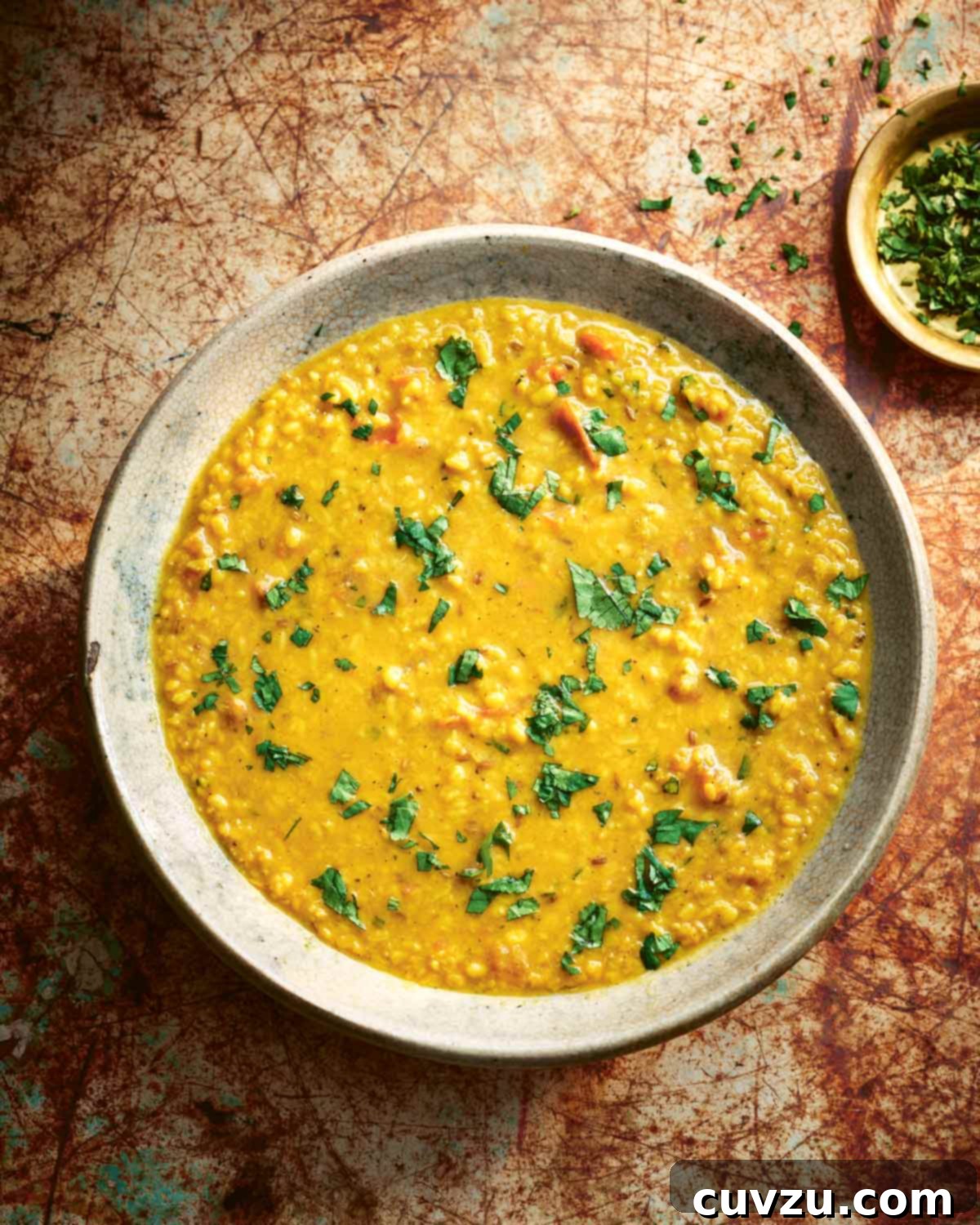
Discover the enchanting world of Tarka Dal, a staple of North Indian cuisine that transforms humble lentils into an extraordinary culinary experience. This wholesome dish, celebrated for its robust flavors and nutritional benefits, is surprisingly simple to prepare, making it a perfect choice for both weeknight dinners and special occasions. The secret to its captivating taste lies in a traditional Indian technique known as “tempering” or “tarka,” where aromatic spices are bloomed in hot oil, infusing the dish with an intoxicatingly complex and unforgettable aroma. Tarka Dal, often served as a comforting main course or a flavorful side, pairs exquisitely with fluffy rice or warm, freshly made roti, promising a delightful journey for your palate.
The Essence of Tarka Dal: A North Indian Delight
The term “Tarka Dal” literally translates to “spiced, flavored lentils,” highlighting the central role of spices in this beloved dish. While the basic concept remains consistent, countless regional variations exist across North India, each adding its unique touch through different lentils, spices, and tempering ingredients. This culinary diversity is a testament to the versatility and adaptability of dal as a foundation for flavor. Traditionally, Tarka Dal is prepared with easily digestible mung (moong) lentils, known for their quick cooking time and mild, earthy flavor that readily absorbs the vibrant spices.
Beyond its delicious taste, Tarka Dal offers a wealth of health benefits. Lentils are an excellent source of plant-based protein, dietary fiber, and essential minerals such as iron and folate. This makes Tarka Dal a remarkably nutritious and satisfying meal, suitable for vegetarian and vegan diets, contributing to sustained energy levels and digestive health. The addition of fresh tomatoes provides vitamins and antioxidants, while cilantro adds a burst of freshness and additional nutrients, making this dish a truly wholesome choice for any meal.
Unveiling the Magic of Tempering Indian Spices
At the heart of Tarka Dal, and indeed much of Indian cooking, lies the technique of tempering, known by various names such as “tarka,” “tadka,” “vaghaar,” or “phodni.” This ingenious method involves briefly cooking whole or ground spices and other aromatics in hot oil or ghee (clarified butter) to coax out and intensely develop their flavors and aromas. The heat of the oil causes the volatile oils within the spices to bloom, releasing their full fragrant potential in a matter of seconds, transforming a simple dish into something profoundly aromatic and complex.
The tempering process can be incorporated at different stages of cooking. Sometimes, spices and aromatics like onions, garlic, and ginger are tempered at the beginning, forming the flavorful foundation upon which the main ingredients are built. In other instances, a fresh “tarka” is prepared and poured over a dish just before serving, creating a vibrant burst of flavor and a beautiful aromatic finish. This final tempering adds a fresh layer of intensity, ensuring that the spices’ bright, pungent notes are at their peak. The infused oil itself becomes a carrier of these rich flavors, adding depth and richness to the entire dish. This ancient technique is not merely about adding spices; it’s about unlocking their essence and integrating them seamlessly into the culinary narrative, creating a truly magical transformation.
Tarka Dal ~ Lentils with Tomatoes and Cilantro
David Leite
Mains
Indian
4
servings
247
kcal
10
50
1
Ingredients
For the ginger-garlic paste
- 1/2 teaspoon grated or minced ginger
- 1 teaspoon grated or minced garlic
For the lentils
- 1 cup mung (moong) lentils
- 2 cups boiling water, plus more as needed
- 2 tablespoons mild vegetable oil
- 1 teaspoon cumin seeds
- 2 fresh green chile peppers, such as jalapeños, slit in half lengthwise and stalks left on
- 2 medium (10 oz) tomatoes, diced (seeds and all)
- 1 teaspoon ground turmeric
- 1 teaspoon garam masala
- A handful of fresh cilantro leaves, chopped
- Boiled rice or roti, for serving
Instructions
Make the ginger-garlic paste
-
In a small bowl, combine the grated ginger and minced garlic. Mash them thoroughly with the back of a spoon to create a fragrant paste.
☞ TESTER TIP: For a convenient batch of ginger-garlic paste, peel and chop ginger and garlic, then blend them with a touch of cold water until smooth. Store this paste in a clean jar in the refrigerator, covered with a thin layer of oil, for up to two weeks, replenishing the oil as needed to preserve freshness.
Make the lentils
-
Rinse the mung lentils thoroughly under cold running water in a fine-mesh strainer until the water runs clear. Transfer the washed lentils to a heavy saucepan. Pour 2 cups of boiling water over them. Remember not to salt the lentils at this stage, as it can significantly prolong their cooking time.
-
Place the saucepan over medium-high heat and bring the lentils to a rolling boil. Once boiling, reduce the heat to a gentle simmer. Cook the lentils until they are very soft, stirring occasionally. As the lentils absorb the water, add more boiling water as needed to ensure they remain submerged throughout the cooking process. This typically takes 30 to 45 minutes. When fully cooked, the lentils should have mostly disintegrated, achieving a creamy consistency reminiscent of oatmeal.
-
Meanwhile, in a separate saucepan, heat the mild vegetable oil over high heat. Add the cumin seeds and let them sizzle until they begin to crackle and change color, releasing their nutty aroma. Immediately add 1 teaspoon of the prepared ginger-garlic paste and cook for about 30 seconds until fragrant. Then, introduce the slit green chile peppers and cook for a few more seconds.
-
Add the diced tomatoes (with seeds) to the saucepan and cook until they soften and begin to break down, which should take 3 to 4 minutes. Stir in the ground turmeric and garam masala. Add about 1 tablespoon of cold water to prevent burning and help the spices bloom, then bring the mixture to a gentle boil. Reduce the heat and maintain a very gentle simmer until the tomatoes are thoroughly cooked and form a soft, integrated sauce.
-
Carefully pour the cooked lentils, along with all their cooking liquid, into the saucepan with the tempered spices and tomatoes. There is no need to drain the lentils. Season the mixture with salt to taste. Stir well to combine all the flavors. The finished lentil mixture should have a pouring consistency, allowing it to be easily served over rice or roti.
-
Just before serving, generously sprinkle the chopped fresh cilantro leaves over the Tarka Dal. Serve this flavorful dish hot, accompanied by plain boiled rice, fragrant basmati, or warm rotis for a complete and satisfying Indian meal.
Adapted From
Indian in 7
Buy On Amazon
Nutrition
Serving:
1 portion
Calories:
247 kcal
Carbohydrates:
32 g
Protein:
13 g
Fat:
8 g
Saturated Fat:
1 g
Monounsaturated Fat:
2 g
Trans Fat:
0.04 g
Sodium:
13 mg
Fiber:
15 g
Sugar:
2 g
Nutrition information is automatically calculated, so should only be used as an approximation.
Tried this recipe?
Mention @leitesculinaria or tag #leitesculinaria!
Recipe Testers’ Reviews
Pat Francis
Pat Francis found this Tarka Dal recipe to be a delightful and straightforward dish, made even better by having all the necessary ingredients readily available. She described it as hearty, healthy, and incredibly satisfying, noting that it brought a genuine smile to her face. Pat plans to make this recipe again, emphasizing its place as a new favorite.
However, she offered a valuable tip regarding the spice level. With two large, split jalapeños, the dish was quite spicy for her preference, dispersing a significant amount of heat throughout the lentils. For future preparations, Pat suggests using smaller green chile peppers or a reduced quantity to achieve a milder heat level. She enjoyed it served over plain brown rice, paired with crispy fried chicken thighs, and considered adding a dollop of cooling yogurt on the side to balance the spiciness next time.
Trisha T.
Trisha T. raved about how perfect this Tarka Dal recipe is for a weeknight meal, declaring it one of her favorite recipes tested recently. She highlighted its ease of following, cost-effectiveness, and utterly delicious outcome, noting that she and her companions repeatedly exclaimed how “soooooo gooooood” it was. Trisha enjoyed it as a main dish with store-bought naan but suggested it would also be excellent with basmati or jasmine rice, or traditional roti.
She advised preparing all ingredients beforehand, as the tempering process with oil, spices, and tomatoes moves quickly. Trisha also shared a helpful observation regarding the lentils’ hydration: she initially worried about adding too much water, but found that even after adding boiling water three times during cooking, the lentils absorbed it all perfectly, resulting in a creamy, non-watery finished product. She cautioned cooks to keep a close eye on the lentils towards the end, as they can start to stick as they fully disintegrate. Her final recommendation was to procure a large bag of mung lentils, as this recipe is sure to become a regular fixture in any kitchen.
Lisa Ward
Lisa Ward praised this Tarka Dal as an exceptional vegetarian main course, enjoying generous portions over rice for lunch. She found it to be a super tasty and satisfying meal on its own, though she noted it would also pair wonderfully with a fresh salad. The diced tomatoes cooked down beautifully, creating a rich sauce that seamlessly blended with the dal, forming the flavorful backbone of the entire dish.
Lisa, being a fan of garlic, mentioned that she would likely increase the amount of ginger-garlic paste slightly in her next preparation to enhance that hint of flavor she adored in every bite. While jalapeños worked fine as the chile component, she felt the flavor profile could be further elevated with a different type of pepper. For her next attempt, she plans to experiment with serrano or Thai bird chiles to explore a new dimension of spice and aroma in the dal.
Craig Relyea
Craig Relyea, recognizing lentils as a superb canvas for India’s diverse spice mixes, eagerly tried this Tarka Dal recipe. He found it to be very straightforward and easy to prepare, deciding it would be a perfect accompaniment to some halibut he had on hand. With pre-washed mung beans in his pantry and frozen ginger knobs readily available, preparing the garlic-ginger paste was a breeze, saving him valuable time in the kitchen.
Craig noted that the prep time was minimal, about 10 minutes, and the tomatoes cooked quickly. He didn’t find it necessary to add extra water to the lentils as suggested in the recipe, indicating that results can vary depending on cooking conditions. To synchronize his meal, he started a batch of jasmine rice alongside the lentils, knowing it would take about 25 minutes. To give his halibut an Indian flair, he created a custom spice mix—combining ground cumin, coriander, fennel, turmeric, curry powder, and cloves—to season the fish before sautéing it in ghee.
He assembled his meal by plating the rice, topping it with the Tarka Dal, and then adding the spiced halibut. The pairing was excellent, though his partner found it a bit spicy. Craig plans to reduce the chile quantity to one pepper in future preparations to suit her preference, highlighting the recipe’s adjustability to individual tastes.
Megan S.
Megan S. described this Tarka Dal recipe as wonderfully simple yet yielding results greater than the sum of its parts. She appreciated its quick preparation time, taking only about 30 minutes from start to finish. The finished dish made for a delightful vegetarian meal, which she served with warm naan bread and a fresh side salad, creating a balanced and satisfying dining experience.
Heidi V.
Heidi V., a connoisseur of spiced and spicy cuisine, noted that while this Tarka Dal offers good flavor, she plans to enhance its depth in future preparations. Her strategy involves first cooking down onions with the oil and spices, then doubling the ginger-garlic paste, and finally adding the tomatoes to cook down further. This incremental approach aims to build more profound and layered flavors in the dish. Additionally, she intends to add extra chiles next time, as the ones she used imparted only a very mild heat, and she prefers a more robust spice kick.
She suggested that the dal would likely pair exceptionally well with a cilantro-garlic naan, a complement she hopes to prepare in advance for her next meal. Heidi served her Tarka Dal with homemade soft sweet potato roti, which she made using just sweet potato and flour. She successfully yielded four decent servings and concluded that the recipe is generally easy to execute, tasty, and highly adaptable to personal preferences, allowing for customization to achieve the desired flavor and spice levels.