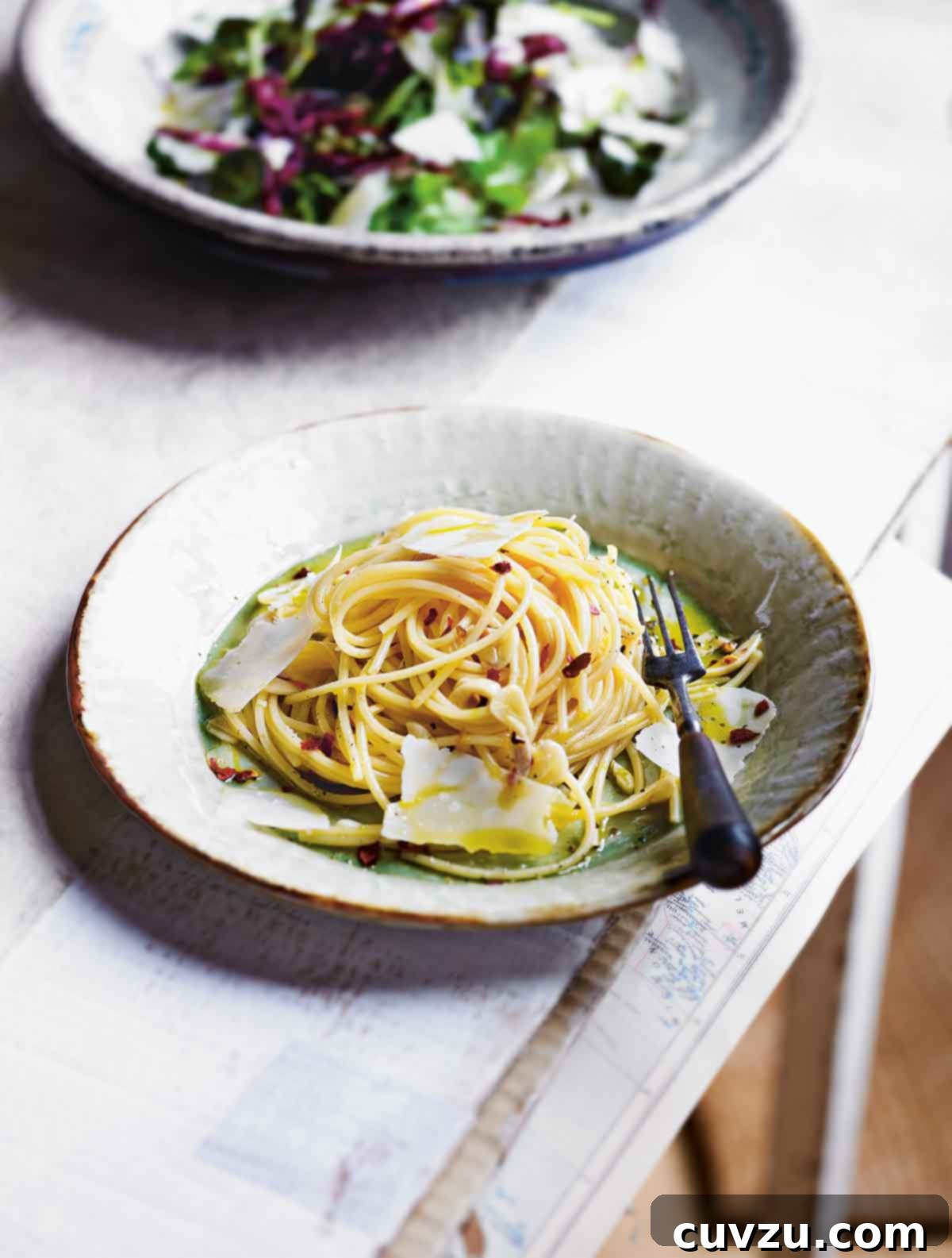
Authentic Spaghetti Aglio e Olio: The Quintessential Italian Weeknight Pasta
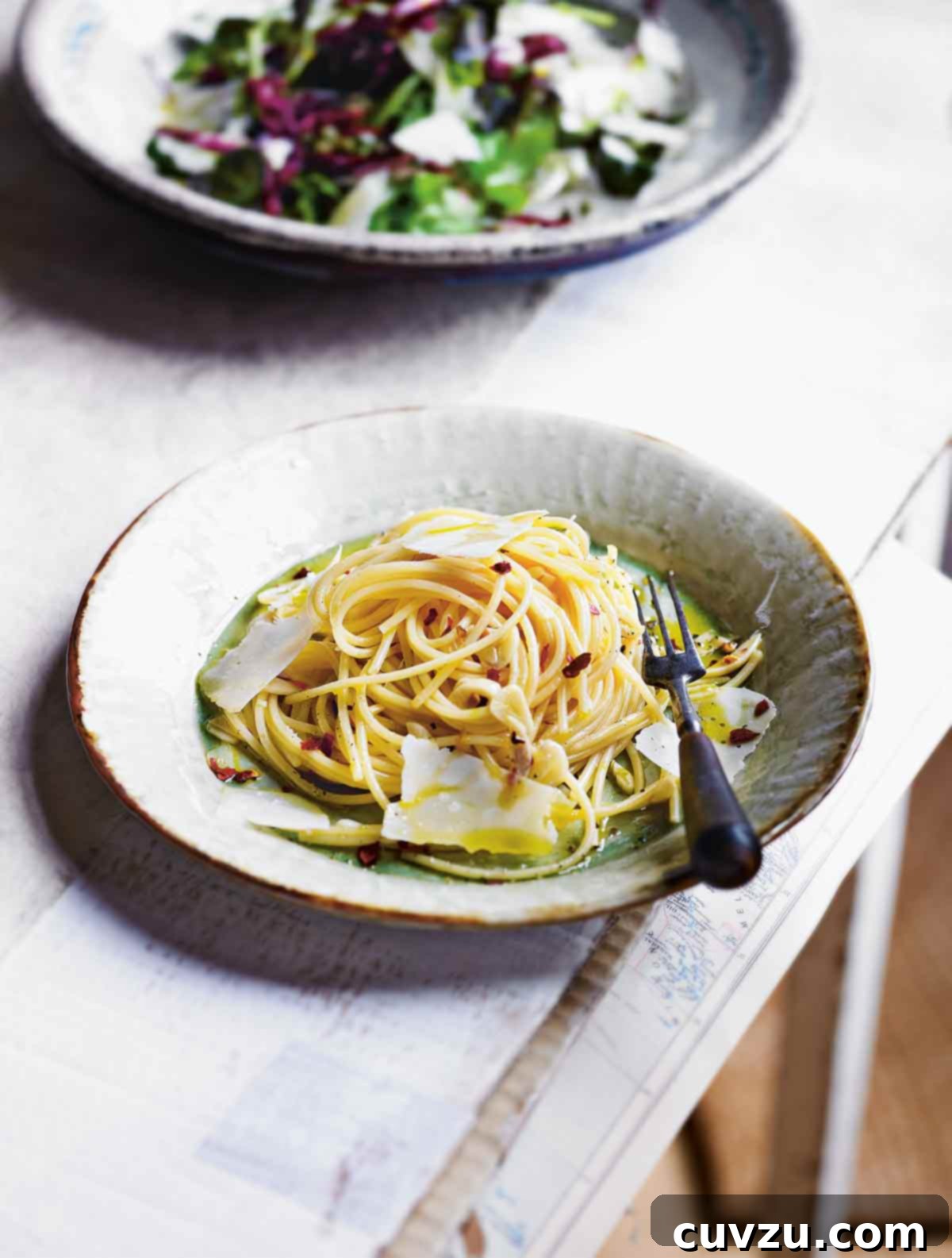
Spaghetti all’aglio e olio, which translates simply to spaghetti with garlic and oil, is more than just a dish; it’s a testament to the beauty of Italian culinary philosophy: simplicity, quality ingredients, and ingenious technique. This classic embodies the spirit of cucina povera – “poor cooking” – where humble pantry staples are transformed into something extraordinary. With garlic, olive oil, a hint of red pepper flakes, and a touch of cheese, this recipe creates an effortlessly authentic Italian experience, making it an ideal choice for a quick yet satisfying weeknight supper.
Its author rightly champions this spaghetti all’aglio e olio recipe for its classic Italian simplicity and frugality. The true genius lies in an often-overlooked ingredient: the pasta cooking water. Far from mere discarded liquid, this starchy, salty elixir is the secret to a silky, emulsified sauce that coats every strand of spaghetti. In perfect harmony with fragrant garlic, your finest extra virgin olive oil, and a sprinkle of Parmesan, the final dish is undeniably greater than the sum of its modest parts.
The Enduring Charm of Aglio e Olio
Spaghetti Aglio e Olio holds a revered place in Italian cuisine, particularly in Southern Italy, where olive oil and garlic are foundational elements. It’s a dish that celebrates the power of essential flavors, proving that you don’t need a long list of ingredients or complex techniques to create something truly memorable. Its humble origins mean it was historically accessible to everyone, and today, its universal appeal endures. It’s the perfect fallback recipe when your fridge is looking sparse, or when you crave a taste of Italy without the fuss.
The beauty of Aglio e Olio lies not just in its ingredients, but in the process. The gentle sautéing of garlic in olive oil, allowing its aromatic essence to infuse the oil without burning, is a delicate dance. The addition of red pepper flakes provides a subtle warmth, while the starchy pasta water binds everything together into a luscious, glossy sauce. This dish is a masterclass in flavor extraction and emulsion, demonstrating how a few quality components, handled correctly, can sing in unison.
Spaghetti all’Aglio e Olio Recipe
Recipe by David Leite
PIN
Print Recipe
Ingredients
- 1 pound spaghetti
- About 1/2 cup extra-virgin olive oil, or more to taste
- 6 to 8 garlic cloves, thinly sliced or finely chopped
- 1/2 to 1 1/2 teaspoons red pepper flakes (adjust to your heat preference)
- Salt and freshly ground black pepper, to taste, plus more for the pasta water
- Finely shaved or grated Parmesan cheese, for serving
Instructions
-
Bring a large pot of heavily salted water to a rolling boil. The water should taste like the sea, as this is your primary opportunity to season the pasta itself.
-
Add the spaghetti to the boiling water and cook according to package directions until it is al dente – slightly tender yet still firm to the bite, typically 8 to 10 minutes. Avoid overcooking.
-
Before draining, carefully scoop out and reserve about 1/2 cup of the starchy pasta cooking water. Then, drain the spaghetti thoroughly.
-
Return the now-empty pot to medium heat. Pour in the extra-virgin olive oil. Add the thinly sliced or chopped garlic and the red pepper flakes. Sauté gently for 1-2 minutes until the garlic is fragrant and lightly golden. Be careful not to burn the garlic, as it will turn bitter.
-
Immediately add the drained spaghetti and the reserved pasta cooking water to the pot with the garlic-infused oil. Using tongs, vigorously toss and stir the pasta for 1-2 minutes. This vigorous motion, combined with the hot oil and starchy water, will create a beautiful emulsion, forming a light, creamy sauce that clings to the spaghetti.
-
Season generously with salt and freshly ground black pepper to taste. Taste and adjust seasoning as needed.
-
Serve the spaghetti all’aglio e olio immediately, garnished with a generous sprinkle of finely shaved or grated Parmesan cheese. A drizzle of fresh olive oil just before serving can also enhance the flavors.

Adapted From
Share
Buy On Amazon
Nutrition Facts (Approximate Per Serving)
Serving: 1 portion
Calories: 668 kcal
Carbohydrates: 86 g
Protein: 15 g
Fat: 29 g
Saturated Fat: 4 g
Monounsaturated Fat: 20 g
Sodium: 16 mg
Fiber: 4 g
Sugar: 3 g
Nutrition information is automatically calculated and should only be used as an approximation. Individual results may vary based on ingredients and preparation methods.
Tried this recipe?
Mention @leitesculinaria or tag #leitesculinaria!
Expert Tips for Perfecting Your Aglio e Olio
While deceptively simple, achieving a truly outstanding Spaghetti Aglio e Olio involves a few key considerations that elevate it from good to spectacular. Drawing from culinary wisdom and insights from experienced recipe testers, here are our top tips:
- The Power of Pasta Water: This is unequivocally the “secret ingredient.” The starchy water is crucial for creating the emulsified, creamy sauce that coats the spaghetti beautifully. Don’t just reserve ¼ cup; aim for closer to ½ cup, as you can always add less but can’t add more if you run out. Adding it with the oil and vigorously tossing the pasta helps achieve that perfect consistency. As Suzanne Fortier wisely notes, “Creating the emulsion is the trick to the recipe, and that requires water.”
- Quality of Olive Oil is Key: With so few ingredients, each one truly shines. Invest in a high-quality extra virgin olive oil. Its flavor will be prominent. Ralph Knauth recommends a “buttery, not too bitter, olive oil,” and Kim Venglar stresses, “Use a high quality olive oil as this is where a lot of your flavor comes from.”
- Handle Garlic with Care: Garlic is the heart of this dish. Thinly slicing or finely chopping the cloves allows their flavor to infuse the oil without dominating. Be vigilant when sautéing; garlic can burn quickly and turn bitter. As Marilee Johnson warns, “it took no time to slightly scorch the garlic! My bad, so keep an eye on the heat.” Linda Pacchiano suggests “sweating” the garlic for a minute or two before adding the pasta, and notes that slicing rather than chopping can make it less likely to overcook.
- Control the Heat of Red Pepper Flakes: The red pepper flakes add a wonderful kick, but their potency can vary. Start with ½ teaspoon and add more to taste. Karen Depp humorously advises, “Depending on the heat in your red pepper flakes, you can either have a nice warm spicy experience or blow your hair off. We lost some hair. Next time I will adjust that 1 1/2 teaspoons to 1/2 teaspoons.” Taste and adjust!
- Season Generously: Don’t forget to heavily salt your pasta water. This is your main chance to season the pasta from within. Once drained, adjust the seasoning of the finished dish with additional salt and freshly ground black pepper.
- Embrace the Toss: Vigorously tossing the pasta with the oil and reserved water in the hot pan is essential. This action helps to create the emulsified sauce, ensuring every strand is perfectly coated. Rachel Feferman beautifully describes how this process “resulted in a much more complex dish. The ‘sauce’ was emulsified to the point of almost becoming creamy.”
Creative Variations & Serving Suggestions
While classic Aglio e Olio is perfect in its pure form, its simplicity also makes it a fantastic canvas for creative additions and pairings. Many of our recipe testers shared their favorite ways to customize this dish:
- Add Fresh Herbs: A sprinkle of fresh Italian parsley, as suggested by Beth Price, adds a lovely color and freshness, mirroring the Italian flag. Shannon Parrish also suggests fresh chopped Italian parsley for a “slightly bitter twist.” Fresh basil ribbons, as tried by Sue Davis and considered by Marilee Johnson, also make a fantastic fragrant addition.
- Boost with Protein: For a heartier meal, consider adding protein. Marilee Johnson contemplates adding “a few shrimp scampi,” which would transform it into a delicious seafood pasta. Grilled chicken or sautéed chickpeas would also complement the garlic and oil flavors beautifully.
- Different Pasta Shapes: While spaghetti is traditional, other long pasta shapes like linguine or bucatini would work wonderfully. For those with dietary restrictions, Joel Jenkins successfully used “quinoa pasta instead of regular pasta,” and Linda Pacchiano notes that “wheat-free pasta, such as quinoa or rice spaghetti, could be used for a healthier choice.”
- Citrus Zest: A little lemon zest grated over the top just before serving can add a bright, fresh note that cuts through the richness of the olive oil.
- Additional Vegetables: Sautéed cherry tomatoes, spinach, or finely chopped broccoli florets could be added to the oil along with the garlic for extra nutrients and flavor.
- Serve with Sides: Aglio e Olio pairs wonderfully with a fresh salad. Pat Francis suggests a simple salad and warm bread, noting that “garlic cheese bread with chives” was an excellent accompaniment. Jackie Gorman found a mixed green salad or Caprese salad to be beautiful pairings.
- Wine Pairing: Jackie Gorman highlights the magic of pairing this dish with a good Italian red wine, specifically a Lacrima di Morro d’Alba DOC. She notes, “the wine and the pasta made each other better than either was standing alone.”
Insights from Our Recipe Testers
Our community of passionate recipe testers put this Spaghetti Aglio e Olio recipe through its paces, offering valuable feedback and reaffirming its status as a timeless classic. Their experiences highlight the dish’s simplicity, adaptability, and undeniable appeal.
Rachel Feferman
Rachel was delightfully surprised by this dish. What might appear as a simple, potentially bland weeknight pasta, transforms into something far more complex through the magic of technique. Her key takeaway was the vigorous stirring of the pasta water with the warm garlic- and pepper-infused oil. This crucial step resulted in a sauce that emulsified to an almost creamy consistency, delivering a spicy kick without being overpowering. Rachel praised its rapid assembly, reliance on pantry staples, and absolute deliciousness, making it a truly rewarding culinary discovery.
Ralph Knauth
For Ralph, Aglio e Olio is an all-time favorite, cherished for both its flavor and incredible ease of preparation. He highlights the convenience of always having the necessary ingredients on hand and its quick turnaround time. Ralph offered a valuable tip regarding olive oil selection, preferring a “buttery, not too bitter” variety for the best results. He confirmed the suggested quantities worked well for him, using about 1/3 to 1/2 cup oil plus 1/4 cup cooking water, reinforcing the dish’s unfussy nature.
Sue Davis
Sue was instantly transported to her Italian travels by the wonderful flavors of this spaghetti. She emphasizes its versatility, noting it “pairs perfectly with just about anything edible.” Using 1/2 cup of olive oil and adding a dash of freshly ground black pepper, she also enhanced her dish with fresh basil for a vibrant touch. Sue confidently recommends serving it either as a main course or a side dish, promising a bounty of compliments from appreciative diners. Its simplicity and ability to impress make it an absolute hit in her kitchen.
Pat Francis
Pat appreciated how a few simple ingredients and minimal time could yield such a satisfying and spicy main dish. She found 1/2 cup of extra-virgin olive oil to be ample and confirmed that adding a shade more than 1/4 cup of pasta cooking water all at once worked perfectly. Pat beautifully articulated the crucial role of emulsion, observing how “The oil and water emulsified and coated the spaghetti.” To round out the meal, she suggested preparing a salad and warming some bread while the pasta cooks, specifically recommending garlic cheese bread with chives for fellow garlic lovers, making for an excellent pairing.
Larry Noak
Larry enthusiastically declared this a “GREAT recipe” for several compelling reasons. Its incredible ease – equating it to simply boiling water – and minimal cooking time with very little cleanup were major draws. As a devoted spaghetti lover, he found it to be “by far the easiest way to prepare it.” For a perfect dinner for two, he halved most ingredients but kept the full 1/4 cup of pasta water, noting that even 8 ounces of cooked spaghetti is substantial. His ideal romantic setup includes garlic bread, a good wine, a delightful dessert, and a touch of elegance with a linen tablecloth and a candle, ensuring the (small) effort leaves a lasting impression.
Jackie Gorman
Jackie Gorman’s review echoed the sentiment of ultimate simplicity: “If you have the time to boil water, you have enough time to make this recipe.” She appreciated its scalability, easily dividing ingredients in half for a dinner for two. Using 1/4 cup of olive oil for 1/2 pound of pasta proved very effective, and she advised adding pasta cooking water spoonful by spoonful to achieve desired consistency, ultimately using 3 to 4 tablespoons. Jackie also highlighted the impact of fresh ingredients, noting her “extremely fresh” red pepper flakes made the pasta “very spicy,” which she tempered with a generous sprinkling of Parmesan cheese. She found time to chop garlic, add pepper flakes, and prepare a salad (mixed green or Caprese) while waiting for the pasta, and raved about the perfect pairing with Italian red wine, emphasizing how the wine and pasta mutually enhanced each other.
Cindi Kruth
Cindi’s experience with this Aglio e Olio recipe served as a wonderful reminder of its core elements, being very similar to her routine garlic oil spaghetti. She noted her husband particularly enjoyed the “extra kick” from the red pepper flakes, admitting she might have been a bit heavy-handed. Following the suggestion to use less oil rather than more was beneficial, especially as her olive oil had a strong flavor. Cindi confirmed the magic of the starchy cooking liquid, noting it “did its trick of thickening and clinging. It really is the ‘secret.’” Her verdict: simple, quick, basic, and classic.
Joel Jenkins
Joel highlighted Aglio e Olio as one of his favorite ways to enjoy pasta, especially during warmer weather. Demonstrating the dish’s versatility and adaptability for dietary needs, he successfully used quinoa pasta instead of traditional wheat pasta. This simple substitution opens up the recipe to a wider audience, proving that the core flavors of garlic and oil transcend specific pasta types, allowing everyone to enjoy this delightful Italian classic.
Beth Price
Beth praised this recipe as “simple perfection” and a must-have in anyone’s easy meal repertoire. She perfectly articulated its efficiency: “In the time it takes to cook a package of pasta, the sauce is ready to be tossed into a dish that will transport you to Italy.” Beth also offered a practical tip for customization, noting that the heat of the dish is “easily controllable by adjusting the amount of red pepper flakes.” For an added visual appeal and touch of freshness, she likes to include chopped parsley, creating a vibrant red, green, and white palette, just like the Italian flag.
Marilee Johnson
Marilee absolutely loved this recipe, calling it a “great last-minute meal” with ingredients always on hand. She highlighted its speed, ease, and simplicity, reinforcing the idea that “sometimes it’s the marriage of just a few flavors that make a successful recipe.” The one-pot convenience was another bonus. Marilee found the olive oil quantity to be sufficient. She offered a crucial cooking warning: when she poured oil into a medium-high pan and added garlic and pepper flakes, the garlic “took no time to slightly scorch!” underscoring the need to keep a close eye on the heat. The red pepper flakes added a nice kick, and Parmesan completed the dish. For her next iteration, Marilee plans to add shrimp scampi and fresh basil ribbons, showcasing the recipe’s versatility.
Karen Depp
Karen found this spaghetti supper easy to assemble and appreciated its one-pot nature. She offered a very important caveat regarding the red pepper flakes: “Depending on the heat in your red pepper flakes, you can either have a nice warm spicy experience or blow your hair off. We lost some hair.” Living in “Tabasco country,” her flakes were particularly potent, leading her to plan on reducing the quantity from 1 1/2 teaspoons to 1/2 teaspoon next time. Despite the initial heat, she deemed it “a real winner” and intends to make it again, perhaps even with homemade pasta from a previous recipe on the site, demonstrating the dish’s enduring appeal and adaptability.
Suzanne Fortier
Suzanne and her 15-year-old taster enjoyed a “delicious and quick late-night supper,” on the table in just 15 minutes. For two servings, she halved the ingredients, finding 3/8 cup of oil to be the right amount. She humorously noted that three large garlic cloves mashed with salt would protect them from vampires for some time. Suzanne found the red pepper flakes provided “just the right amount of heat,” without being overpowering. Crucially, she emphasized the importance of reserving pasta cooking water, a habit she applies to all sauced pasta dishes, as it aids in thickening and adds “that something extra.” She strongly advised using the full 1/4 cup reserved water and adding it all at once for the emulsion, recalling a time the dish suffered when she forgot to reserve enough. This dish has earned a permanent spot in her dinner rotation.
Shannon Parrish
Shannon was thoroughly impressed by the simplicity and ease of preparation of this light, flavorful, and quick summer meal. She underscored a vital principle for simple dishes: “the best quality ingredients are a must.” She particularly highlighted that freshly grated Parmesan is “far superior to the pre-grated variety” and contributes both salty flavor and desirable texture. Shannon suggested a slight modification to the method, adding 2 tablespoons of water to the garlic and olive oil mixture *before* adding the pasta, believing it makes the emulsion process easier. For accompaniment, she recommended a bitter leaf salad, or if serving with another side, garnishing the pasta with fresh chopped Italian parsley for a “slightly bitter twist.”
Linda Pacchiano
Linda recognized this as “the most basic of Italian pasta recipes” and appreciated its versatility, noting that wheat-free pasta options like quinoa or rice spaghetti could be used for a healthier alternative. She provided valuable technical advice: she suggests “sweating” the garlic for a minute or two in the oil before adding the pasta. To prevent the garlic from browning too quickly, she would add 2 tablespoons of pasta water at this stage. Linda also recommended slicing the garlic instead of chopping it, which she believes makes it less prone to overcooking while still imparting the perfect amount of flavor. She found 1/2 cup of olive oil sufficient for coating a pound of spaghetti, but a final drizzle on the plated dish adds a nice finishing touch.
Kim Venglar
Kim found this recipe “very nice for a quick and easy lunch,” using angel hair pasta, her preferred type. Her batch yielded nine 1-cup servings. Starting with 1/2 cup olive oil and 7 cloves of garlic, she initially found the dish a little dry after adding all ingredients and the full 1/4 cup of pasta water. An additional 1/4 cup of olive oil brought it to the perfect consistency. Kim wisely commented on restaurant versions often using a full cup of olive oil, but felt it would be excessive, reinforcing the idea that “less is more” with good quality ingredients. She emphasized the importance of using high-quality olive oil for flavor and recommended using the full 8 cloves of garlic. For an even deeper flavor profile, she suggested incorporating roasted garlic cloves.