The Secret to Perfect Baking: Mastering Flour Measurement
Have you ever meticulously followed a recipe, only for your cake to turn out dense, your cookies to be dry, or your bread to be crumbly? The culprit might not be your oven, your ingredients, or even your technique, but a seemingly minor detail: how you measure flour. Achieving consistent and delicious baked goods hinges on precise ingredient measurement, and flour, in particular, is notorious for being mismeasured. A small difference in flour quantity can dramatically alter the texture and outcome of your culinary creations. This guide will reveal why accurate flour measurement is paramount and equip you with the best methods to ensure baking success every single time.
Whether you’re a novice baker or a seasoned pro, understanding the nuances of measuring dry ingredients, especially flour, is a game-changer. It can mean the difference between a triumphant, airy soufflé and a disappointing, collapsed one. Join us as we demystify the art of flour measurement and uncover the simple steps that will elevate your baking to professional levels.
The Common Pitfalls of Flour Measurement: Bulldozers vs. Butterflies
Many home bakers unknowingly fall into common traps when measuring flour, leading to inconsistent results. There are typically two prevailing methods people use, each with its own set of challenges, which we’ve playfully dubbed the “Bulldozer” and the “Butterfly” techniques. Understanding these methods and their inherent flaws is the first step towards achieving baking perfection.
The Bulldozer Method: The Dense Disaster
The “Bulldozer” method, often known as the “dip-and-sweep” technique, involves directly plunging your measuring cup into a bag or canister of flour, scooping it out, and then leveling off the top. While seemingly straightforward, this method is a primary cause of baking mishaps. When you forcefully dip the cup into the flour, you inadvertently compact it, compressing more flour into the cup than the recipe intends. This can add a significant amount of extra flour by weight, resulting in a heavier, denser product. Imagine trying to bake a light, fluffy cake with the consistency of a brick – that’s often the outcome of the bulldozer approach. This excess flour absorbs more liquid from your batter, leading to dry, tough, or crumbly textures that lack the desired moistness and tenderness.
The Butterfly Method: A Gentler Approach, But Still Imperfect
A slightly more refined technique, which we call the “Butterfly” method, involves using a spoon to gently aerate the flour before lightly spooning it into your measuring cup. Once the cup is overfilled, you then level it off with the back of a knife or a straight edge. This method is a significant improvement over the bulldozer because it minimizes compaction. By spooning the flour, you incorporate more air, making it lighter and closer to the intended volume. However, even with the butterfly method, there can still be variations. The consistency of “lightly spooning” can differ from person to person, and environmental factors like humidity can affect flour density. While it’s a step in the right direction, it still leaves room for discrepancies that can impact the delicate balance of your recipes.
To truly illustrate the impact of these methods, we conducted a simple experiment. We measured one cup of flour using the aggressive “Bulldozer” technique and another using the gentle “Butterfly” method. When weighed on a digital scale, the difference was astonishing. The bulldozer cup consistently held significantly more flour by weight, sometimes as much as 20-30% more, compared to the butterfly cup. This stark contrast highlights why perceived “one cup” can vary so dramatically, leading to unpredictable baking results.
: Marcus Nilsson
The Gold Standard: Why a Kitchen Scale is Your Baking Best Friend
So, what’s the definitive solution to these measurement woes? The answer is simple: a kitchen scale. Truly, weighing flour is the only way to achieve 100% reliable and consistent measurements every single time. This is why professional bakers and serious home cooks increasingly advocate for using scales, and why Leite’s Culinaria is committed to adding weight measurements to all of our baking, and even many of our cooking recipes.
Unlike volume measurements (cups), which can vary significantly due to how an ingredient is packed or aerated, weight measurements (grams or ounces) are absolute. One hundred grams of flour will always be one hundred grams of flour, regardless of how you scoop it. This eliminates guesswork and ensures that your ingredients are always in the precise proportions intended by the recipe developer.
Using a kitchen scale simplifies the baking process immensely. You simply place your mixing bowl on the scale, tare it to zero, and then add your flour until the display shows the desired weight. This method is not only more accurate but also often cleaner and faster, reducing the number of measuring cups you need to wash.

: Quentin Bacon
For most all-purpose flours, a general guideline is that 1 cup weighs approximately 120 to 125 grams (or 4.25 to 4.5 ounces). However, this can vary slightly depending on the type of flour (e.g., bread flour is denser than cake flour) and its moisture content. This is precisely why relying on a scale for the exact gram measurement specified in a recipe is far superior to relying on a volumetric cup measure.
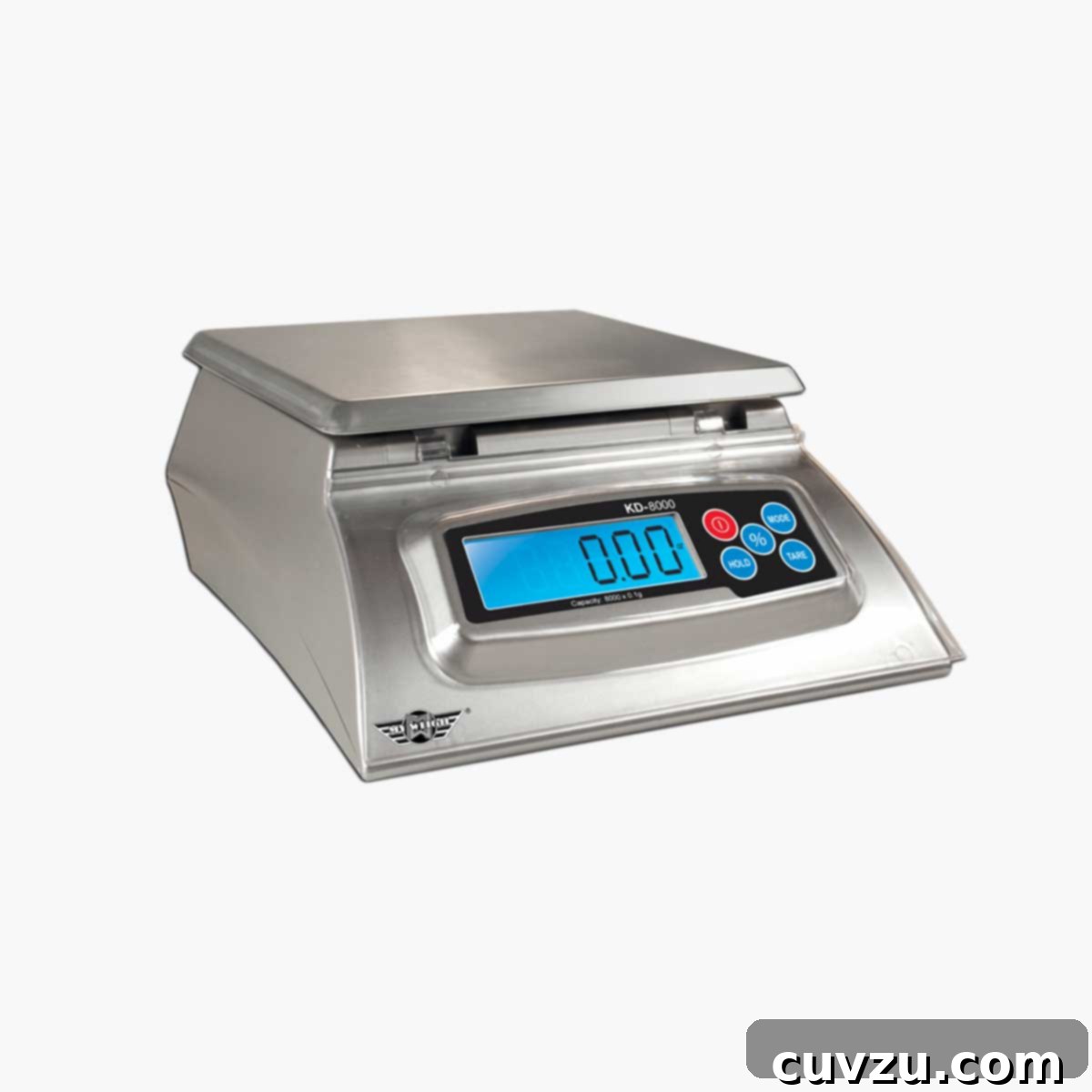
My Weigh KD-8000 Kitchen Scale, $49 on Amazon.com
No Scale? No Problem! Mastering the Modified Dip-and-Sweep
While a kitchen scale is undoubtedly the gold standard, we understand that not everyone has one immediately available. There’s no need to rush out and buy one if you’re not ready. You can still achieve significantly improved measurements using a modified version of the traditional dip-and-sweep technique. This approach focuses on preventing compaction and ensuring a lighter, more accurate cup of flour.
- First, Fully Aerate the Flour: This is the most crucial step. Before you even think about dipping your cup, take a spoon, whisk, or even your hands and thoroughly fluff up the flour in its container. Stir it gently but completely to introduce air and break up any clumps. This process eliminates any existing compaction, ensuring that the flour is light and loose, much like freshly sifted flour.
- Gently Dip Your Cup: After aeration, gently lower your measuring cup into the flour. Crucially, do not press or pack the flour down. Allow the flour to lightly fill the cup naturally. Avoid scraping the sides of the canister or bag with the cup, as this can still lead to compaction.
- Level Off with Precision: Once your cup is gently filled and slightly mounded, use the flat side of a knife or a straight edge to sweep across the top, leveling off any excess flour. Do this gently, without pressing down on the flour in the cup. The goal is a perfectly level, but uncompacted, cup of flour.
This modified technique is far superior to blindly dipping your cup and will yield much more consistent results for your baking. Remember, the key is to ensure the flour is as light and airy as possible before it enters the measuring cup. By taking these extra few seconds, you’re investing in the success of your baked goods.
The Impact on Your Recipes: From Delicate Cakes to Hearty Breads
The precise measurement of flour extends its impact across all categories of baking. For delicate items like sponge cakes, genoise, or angel food cakes, too much flour will make them heavy, rubbery, and unable to achieve their characteristic airy texture. For cookies, excess flour can lead to dry, crumbly, or overly stiff doughs that don’t spread properly, resulting in hard, unappetizing biscuits instead of soft, chewy treats. In bread making, an imbalance of flour can affect gluten development, leading to loaves that are either too dense and tough or too weak to hold their structure, lacking the perfect crumb and crust.
Even robust recipes like banana bread can suffer. While some variations are forgiving, consistently over-measuring flour will lead to a dry, unappealing loaf instead of the moist, tender crumb you crave. Mastering flour measurement is a foundational skill that unlocks the full potential of every recipe, allowing you to consistently produce baked goods that are light, moist, tender, and flavorful, exactly as intended.
Beyond Flour: The Universal Rule of Accurate Measurement
While our focus here is primarily on flour due to its particular challenges, the principle of accurate measurement extends to all dry ingredients in baking. Sugar, cocoa powder, oats, and even spices can benefit from precise weighing, especially in critical recipes. While the compaction effect might not be as pronounced as with flour, consistent measurement across all ingredients is the hallmark of a successful baker. Investing in a kitchen scale truly streamlines the entire baking process and eliminates many common points of error, fostering a greater sense of confidence and creativity in the kitchen.
Your Baking Success Story Starts Now
The journey to becoming a confident and consistent baker often comes down to mastering the fundamentals. Accurate flour measurement is arguably one of the most critical foundational skills you can develop. By understanding the pitfalls of traditional methods and embracing the precision of a kitchen scale, or at least adopting a refined volumetric technique, you’ll eliminate a major variable that often leads to disappointment.
No two cooks measure flour exactly the same way when relying solely on volume, which is why we at Leite’s Culinaria are champions of the kitchen scale. It’s a simple tool that delivers profound results, transforming your baking from hit-or-miss to consistently spectacular. Embrace the science behind baking, and watch your cakes rise higher, your cookies turn out chewier, and your breads become impeccably textured.
Chat With Us
Do you have a burning cooking question, a query about precise measurements, or a culinary quagmire you’d like us to help you solve? Click that big-mouth button to the right to leave us a recorded message. Simply enter your name and email address, press record, and share your thoughts or questions. We’re eager to hear from you and will definitely get back to you with insights and advice. Who knows? Your question might even be featured on an upcoming show or article, helping countless other home bakers!
Join the Flour Measurement Discussion!
Now that you’re armed with the knowledge to measure flour like a pro, we’d love to hear from you! How do you measure flour in your kitchen? Do you swear by your kitchen scale, or have you perfected a volumetric technique? Share your tips, tricks, and experiences in the comments below. Let the great flour measurement discussion continue, and together, let’s achieve baking excellence!