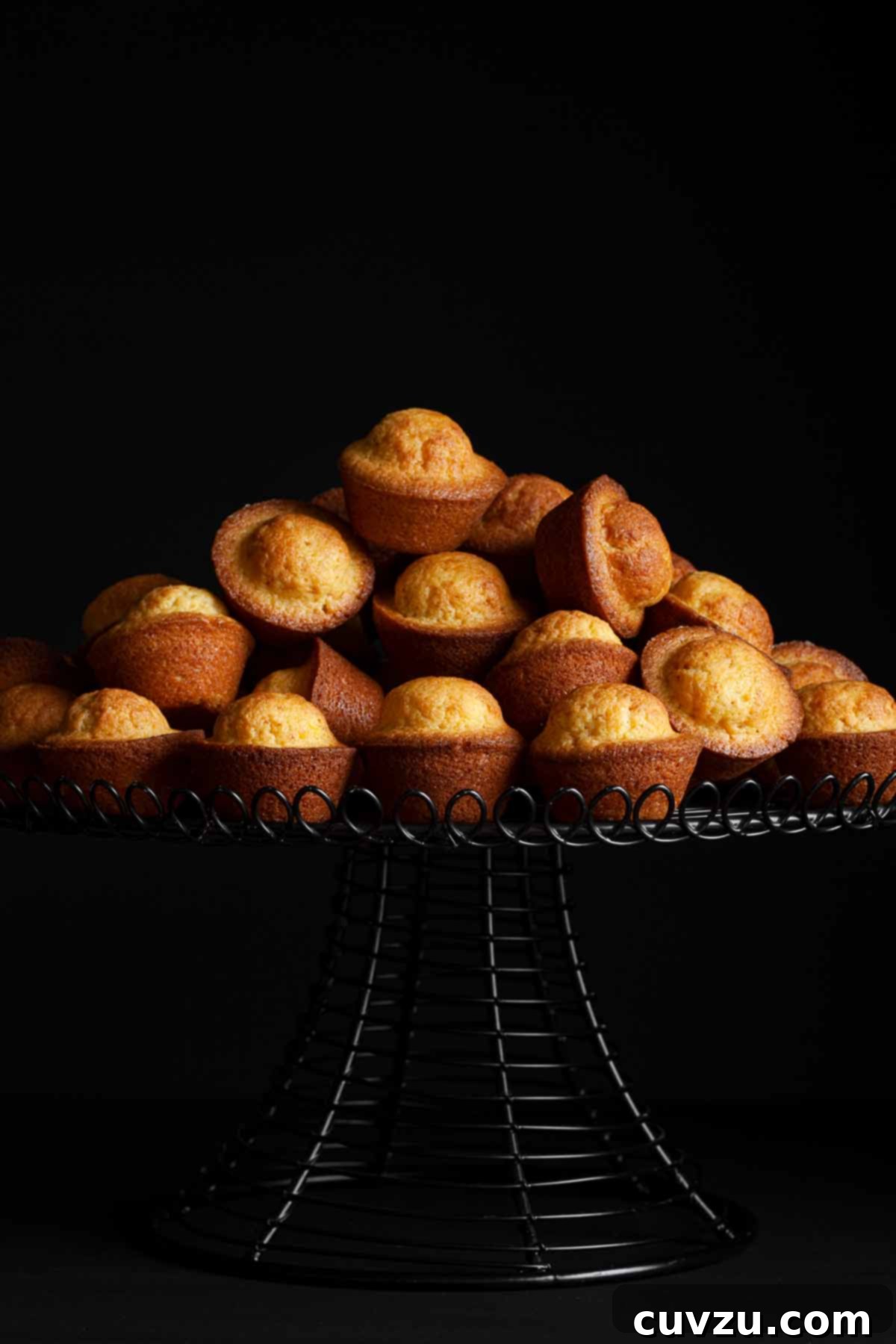
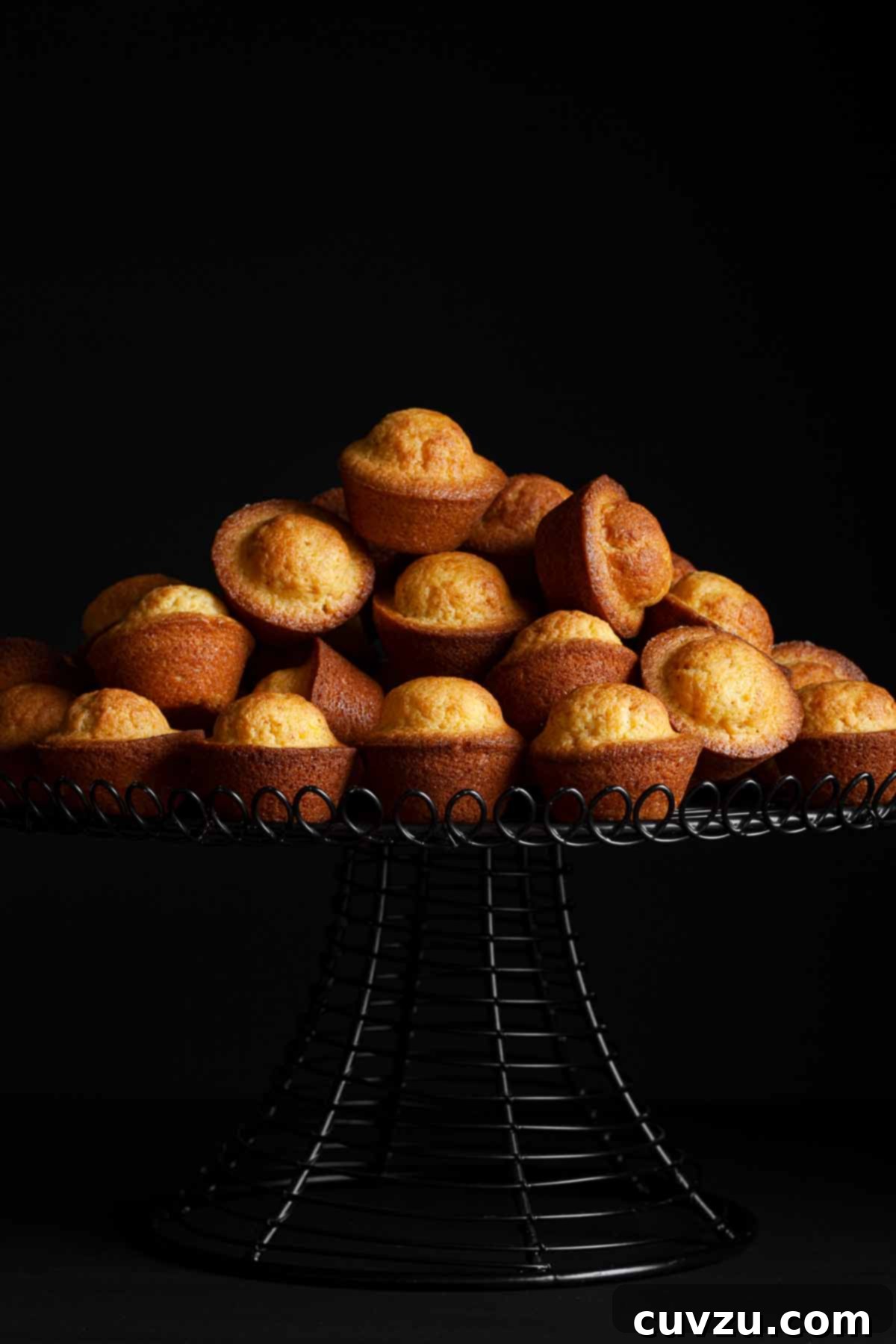
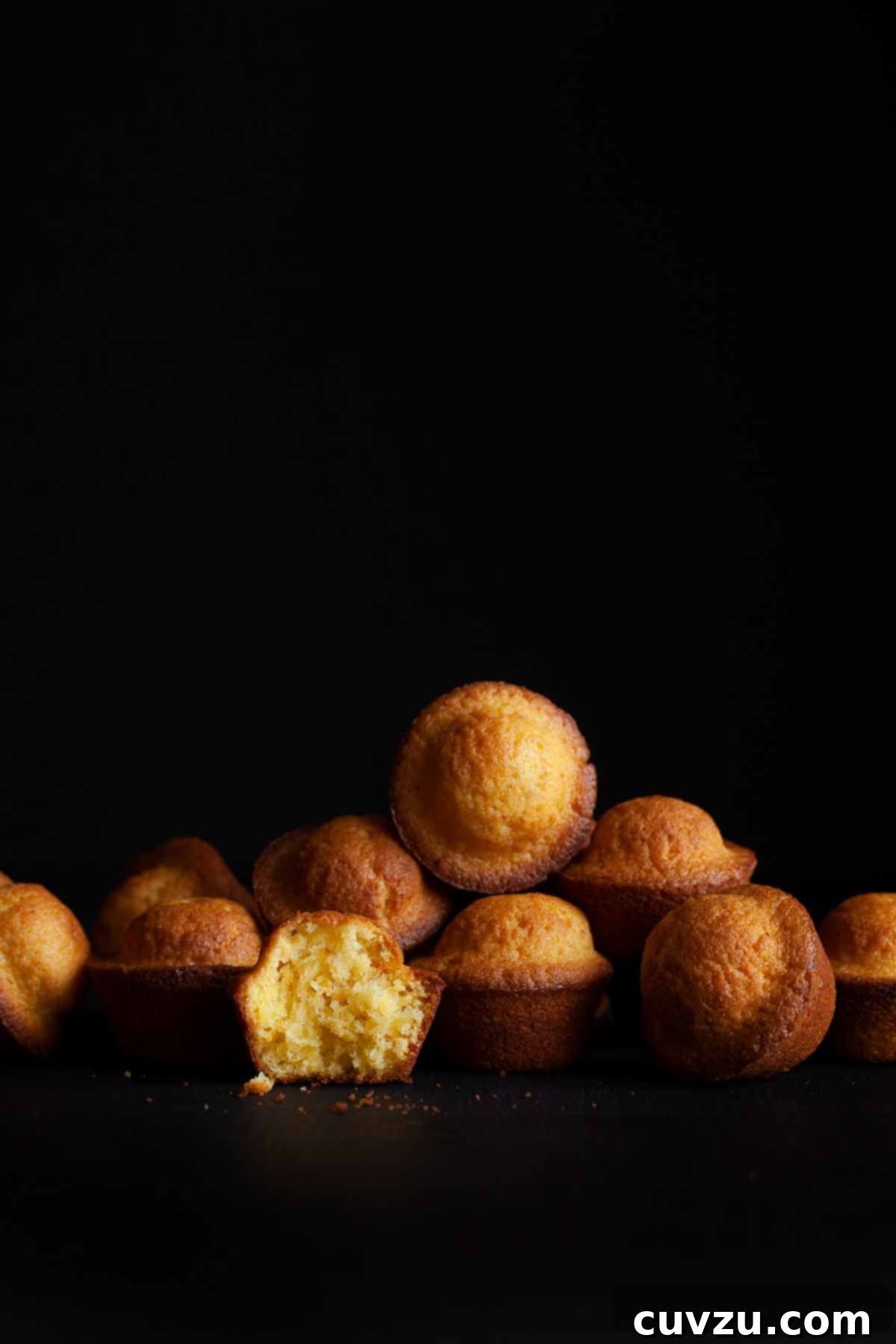
Delight in the sweet, buttery, and vibrantly citrus-infused flavors of these traditional Portuguese mini lemon-orange cakes, affectionately known as queques. Perfect as a quick breakfast treat, an elegant afternoon snack, or a delightful pick-me-up with your favorite coffee or tea, these small cakes offer a taste of authentic Portuguese baking that’s simply irresistible.
The Journey to the Perfect Queques
For years, my experience with queques, these charming mini Portuguese cakes, was less than stellar. Often, I found them to be either too dry, overly firm, or excessively sweet, lacking the delicate balance one hopes for in a baked good. Traditional queques can be surprisingly versatile, flavored with anything from classic vanilla, bright lemon, or zesty orange, to even savory inclusions like chouriço (a spiced sausage) or presunto (cured ham). While this adaptability is fascinating, it didn’t win me over until a memorable trip to Portugal.
During a stay in the historic, walled city of Évora, my perception of queques was completely transformed. The small hotel where my partner and I lodged served citrus-infused queques as part of their breakfast spread, and they were an absolute revelation. Each bite was perfectly buttery, boasting a wonderfully soft interior contrasted with delightfully crispy edges. They were so exquisite, in fact, that they rivaled even the iconic Portuguese custard tarts, a dessert I’ve always held in high regard.
Inspired by this culinary epiphany, I approached the chef, who graciously agreed to share his recipe. However, as is often the case with cherished family or regional recipes, some nuances proved difficult to translate perfectly into a home kitchen setting. Undeterred and determined to recreate that magical Évora experience, I embarked on a baking odyssey. Batch after batch, I meticulously adjusted ingredients and techniques, striving to capture the exact essence of what the chef served his adoring clientele. The result is the recipe you’ll find below—a true labor of love that brings the authentic taste of Portuguese sunshine to your table.
Baking Tips for Perfect Portuguese Mini Cakes
To fully appreciate the exquisite texture and flavor of these mini lemon-orange cakes, it is highly recommended to enjoy them warm, fresh from the oven. At this stage, their buttery interiors are at their softest, and their edges retain a delicate crispness that adds a delightful contrast. While they are perfect for dunking—especially into a warm cup of tea or a robust espresso—their appeal can diminish slightly overnight. Should you find yourself with any leftover queques, a quick refresh in a warm oven for about 10 minutes will bring them back to their initial glory, making them feel as though they’ve just been baked.

Portuguese Mini Lemon-Orange Cakes ~ Queques
David Leite
- PIN
Breakfast, Snack, Dessert
Portuguese
30 mini cakes
89 kcal
15
20
45
Ingredients
- 12 tablespoons (6 oz) unsalted butter, plus more for greasing the pans
- 2/3 cup milk
- 1 tablespoon grated lemon zest
- 1 tablespoon grated orange zest
- 3/4 cup granulated sugar
- 1 1/2 cups all-purpose flour
- 2 teaspoons baking powder
- 1/4 teaspoon kosher salt
- 1 large egg plus 1 large egg yolk, whisked
- 1/4 teaspoon pure vanilla extract
Instructions
-
Position an oven rack in the middle of your oven and preheat to 400°F (200°C). Generously brush two 12-well mini-muffin tins (approximately 1 3/4-by-7/8-inch cups) with butter, ensuring every crevice is coated to prevent sticking. Set the prepared pans aside.
-
In a small saucepan, combine the milk and the remaining butter. Heat over low heat, stirring occasionally, until the butter is completely melted and the mixture is warm but not hot. Remove the pan from the heat and allow the mixture to cool slightly until it’s comfortably warm to the touch.
-
In a large mixing bowl, add the grated lemon zest and orange zest to the granulated sugar. Using your fingertips, gently rub the citrus zests into the sugar. This crucial step helps to release the aromatic oils from the zests, infusing the sugar with intense citrus flavor and fragrance. Continue rubbing until the sugar is fragrant and slightly clumpy.
-
To the fragrant sugar mixture, add the all-purpose flour, baking powder, and kosher salt. Whisk these dry ingredients together thoroughly until they are well combined and uniformly distributed.
-
In a separate small bowl, whisk together the egg, egg yolk, and pure vanilla extract until just combined. Pour this egg mixture into the warm milk and butter mixture. Gradually add this liquid mixture to the flour and sugar mixture in several additions, stirring gently with a rubber spatula after each addition. Mix just until the ingredients are fully incorporated and the batter appears smooth. Be careful not to overmix, as this can lead to tough cakes.
-
Evenly spoon the batter into the prepared mini-muffin pans, filling each well approximately three-quarters full. Transfer the pans to the preheated oven and bake for 18 to 20 minutes, or until the mini cakes are beautifully risen, golden brown, and a toothpick inserted into the center of a cake comes out clean.
-
Once baked, carefully remove the pans from the oven and place them on a wire rack to cool for 5 minutes. This brief cooling period allows the cakes to set slightly, making them easier to remove. After 5 minutes, gently pop the mini cakes out of the tins. Serve these delectable treats warm, piled high in a napkin-lined basket or elegantly arranged on a large cake stand for an inviting presentation.



An LC Original
This recipe is a cherished original from Leite’s Culinaria, perfected through passion and dedication.
View More Original Recipes
Nutrition Facts
Serving: 1 cake
Calories: 89 kcal
Carbohydrates: 10 g
Protein: 1 g
Fat: 5 g
Saturated Fat: 3 g
Monounsaturated Fat: 1 g
Trans Fat: 0.2 g
Cholesterol: 25 mg
Sodium: 23 mg
Fiber: 0.2 g
Sugar: 5 g
Nutrition information is automatically calculated, so should only be used as an approximation.
Tried this recipe?
Share your creation! Mention @leitesculinaria or tag #leitesculinaria on Instagram!
Insights from Our Recipe Testers
Our dedicated team of recipe testers put these Portuguese Mini Lemon-Orange Cakes to the test, and their feedback highlights why this recipe is a true standout. From simplicity in preparation to unforgettable flavor, here’s what they had to say:
Chiyo Ueyama
Chiyo Ueyama praises these queques for their elegant simplicity. She notes their perfectly domed shape and tender crumb, balanced with buttery notes and a subtle hint of citrus and vanilla. According to Chiyo, they strike a perfect balance of being refined yet unpretentious. She emphasizes serving them warm, when their edges are slightly crispy, creating an addictive contrast with the soft interior. Chiyo playfully suggests that, like fresh popcorn, a basket of these would barely last through a movie night. She also highlights the ease of the recipe, with the batter coming together smoothly and lump-free in just minutes with a rubber spatula.

Kim Venglar
Kim Venglar describes these queques with one word: “yummy!” As a lover of citrus, she found the recipe incredibly satisfying. Kim appreciated how quick and easy the cakes were to make, requiring no unusual ingredients or specialized equipment. She used a 24-cup mini-muffin tin and a #70 cookie scoop to fill the cups, slightly mounding the dough for perfect results. Her cakes were perfectly done in 18 minutes and, after cooling for five minutes, released effortlessly from the pan. The crunchy edges and distinct, yet light, citrus flavor were spot on, making this a recipe she plans to make again.
Lisa S.
Lisa S. also found these Portuguese mini cakes to be absolutely delicious, quick, and easy to prepare, using common pantry ingredients. She highlights the recipe’s versatility, suggesting variations by experimenting with other citrus zests like grapefruit or lime, or swapping vanilla extract for coconut. For an even richer batter, Lisa considered adding a third of a cup of lemon yogurt or sour cream if she were to make them again, offering creative avenues for customization.
Patricia Scalione
Patricia Scalione describes these queques as a perfect, modest treat for afternoon coffee or tea—delicious, fragrant, and undeniably cute. She notes their light sweetness, making them an indulgence that feels guilt-free, more akin to a muffin than a heavy cake. Patricia halved the recipe, yielding 16 cakes, suggesting that mini muffin tin sizes can vary. Her key advice is to avoid overfilling the wells beyond three-quarters full and to monitor baking time carefully; hers were done at 17 minutes, golden brown with a clean toothpick test. She ingeniously solved the challenge of dividing a single egg by whisking a whole egg with a yolk, then weighing and halving the mixture. Patricia also reinforces the importance of serving them warm, as their quality diminishes overnight, and suggests making half a batch unless entertaining a large group. For an extra touch, she couldn’t resist serving them with a smear of tangy Meyer lemon marmalade. She estimates serving 3 to 4 per person due to their easy devourability.
Lisa Bennett
Lisa Bennett declares these queques “absolute perfection!” She finds them to be the ideal little snack for morning coffee, a light dessert with tea, or truly anytime because of their irresistible goodness. Her favorite way to enjoy them is warm, straight from the oven. Lisa highlights their balanced sweetness, perfect amount of citrus, and incredibly moist and tender texture, noting how perfectly they fit in hand. She praises the recipe for its forgiving nature and ease of assembly, producing perfectly browned, moist, and delicious cakes with a delightfully flaky texture. The directions are “fool-proof,” making this a highly recommended bake.
Trisha T.
Trisha T. describes these Portuguese mini lemon-orange cakes as “tiny, addicting bites of citrusy goodness.” She was impressed by how quickly they came together despite having so few ingredients, humorously noting that zesting the citrus was probably the most involved part of the process. Trisha used one large orange and two small lemons to get the required zest, and her cakes were perfectly baked in just 11 minutes. While they were best warm, she also enjoyed them at room temperature. With leftover batter, she made a giant cake in a 4 oz ramekin, which cooked in about 23 minutes. Trisha enjoyed them as a brunch component with tea, and as snacks and dessert, concluding that these little cakes are perfect any time of the day.
Patty Fabian
Patty Fabian found these cute little cakes moist, fluffy, and tender-crumbed, with a wonderful, not-too-sweet citrusy flavor. She warns that it’s hard to stop at just one! Interestingly, her cakes didn’t develop the classic domed tops shown in the photo; the sides rose tall initially while the middles appeared sunken, but eventually, the middles rose to meet the golden edges by 17 minutes, indicating they were done. She filled 30 mini-muffin wells with the batter and recommends checking for doneness with a toothpick. For her next attempt, Patty plans to try baking at 375°F to see if it yields more even baking and potentially domed tops, expecting a full 20 minutes cook time at that temperature. Regardless of the dome, she affirms their delicious taste and suggests they would be lovely book club treats, offering a creative solution of piping the tops with lemon and/or orange curd and garnishing with mint sprigs if the domes don’t appear. She concludes that this recipe is definitely “a keeper!”
Deb Lynch
Deb Lynch describes the mini cakes as tender, fragrant, and bursting with fresh citrus flavor. She particularly enjoyed learning a new technique: rubbing the lemon and orange zest with sugar to release its flavor and beautiful aroma, a method she intends to use in other recipes. She notes the ease of stirring the batter and how baking produced a nice crown on the cakes. Deb enhanced hers with a light glaze of powdered sugar, orange juice, and leftover citrus zest. She recommends them heartily for brunch, afternoon tea, or as a light dessert served with fresh fruit.
Jennifer Mallock
Jennifer Mallock warns not to be fooled by the simple appearance of these queques, as they are packed with citrus flavor and smell absolutely delightful. She highlights the recipe’s use of easy-to-find ingredients and its quick, straightforward assembly. Jennifer plans to make them again, but with two minor adjustments: first, flipping steps 1 and 2 to allow the milk/butter mixture to cool while preparing the pan, and second, checking the cakes at 17 minutes, as her batch was “just a touch over done” at 18 minutes. Her practical tip: butter your muffin tins thoroughly for easy removal, and she enjoyed leftovers with a pat of cold salted butter at room temperature—yum!
Kara Middleton
Kara Middleton simply “cannot get enough” of these Portuguese mini lemon-orange cakes, describing them as “mini, fluffy, clouds of deliciousness.” She adores their delicate crumb with visible specks of zest. The batter came together easily, and her kitchen filled with an amazing aroma while baking. Using a miniature cookie scoop, she yielded two and a half dozen cakes, noting a significant difference between baking in stainless steel versus darker, non-stick pans. The stainless steel pan produced perfectly golden brown, fluffy cakes with a beautiful rise in 19 minutes. In contrast, the darker non-stick pan yielded dark brown, slightly denser cakes with a crunchy outside and softer center in only 15 minutes. The stainless steel pan-baked cakes won her heart for their superior fluffiness and rise. She found them perfect shortly after baking and fantastic with a dollop of butter and coffee in the morning, as well as a midday treat, promising to enjoy them again and again!