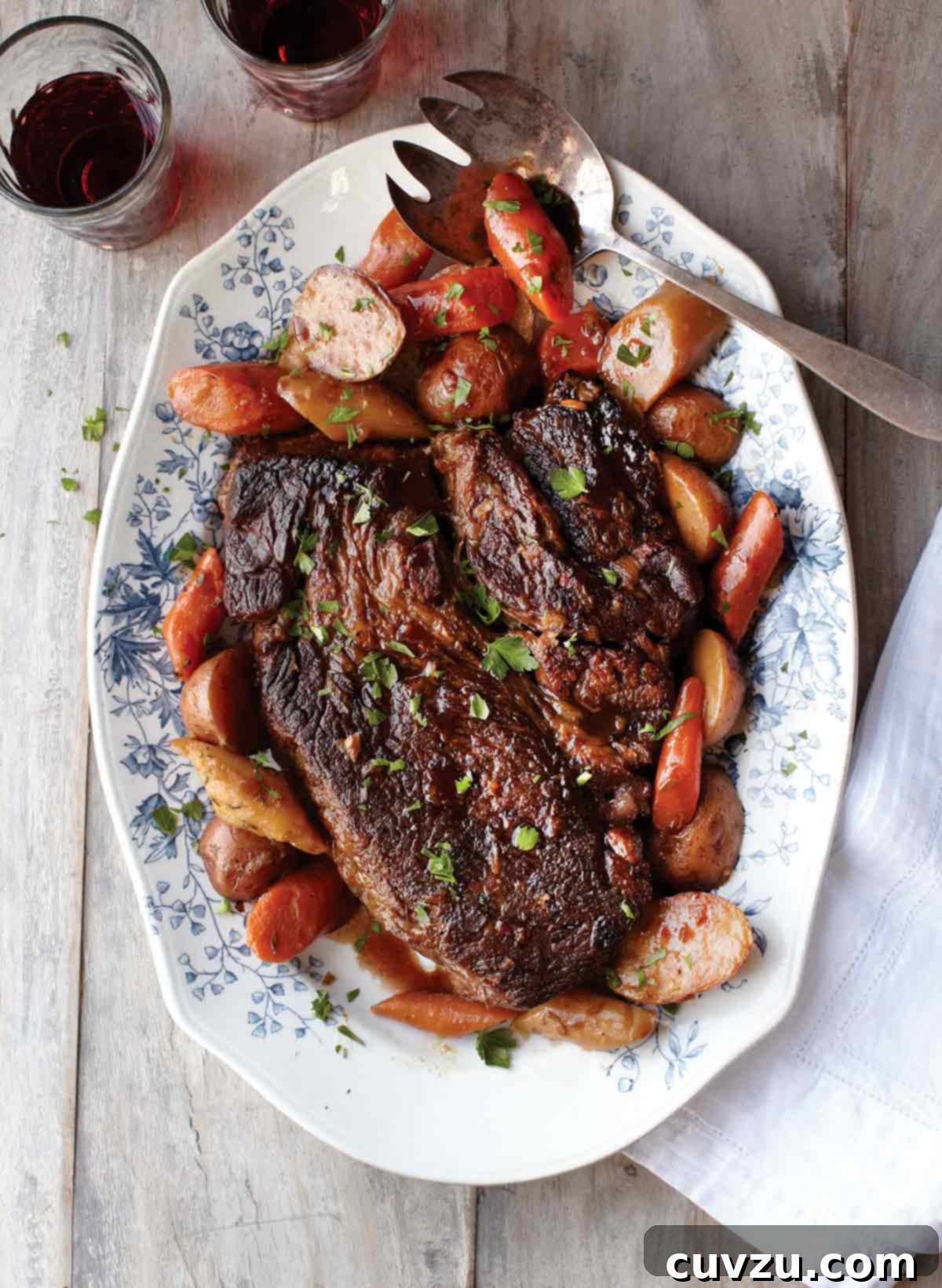
There are certain dishes that define comfort, warmth, and home. A perfectly cooked pot roast, brimming with tender beef, hearty potatoes, and wholesome vegetables, sits proudly at the top of that list. This easy pot roast with potatoes and vegetables recipe simplifies the process, allowing you to create a deeply flavorful and satisfying meal with minimal fuss. Whether you prefer the set-it-and-forget-it convenience of a slow cooker or the traditional depth achieved in the oven, this recipe delivers a classic Sunday supper experience that feels straight out of Grandma’s kitchen.
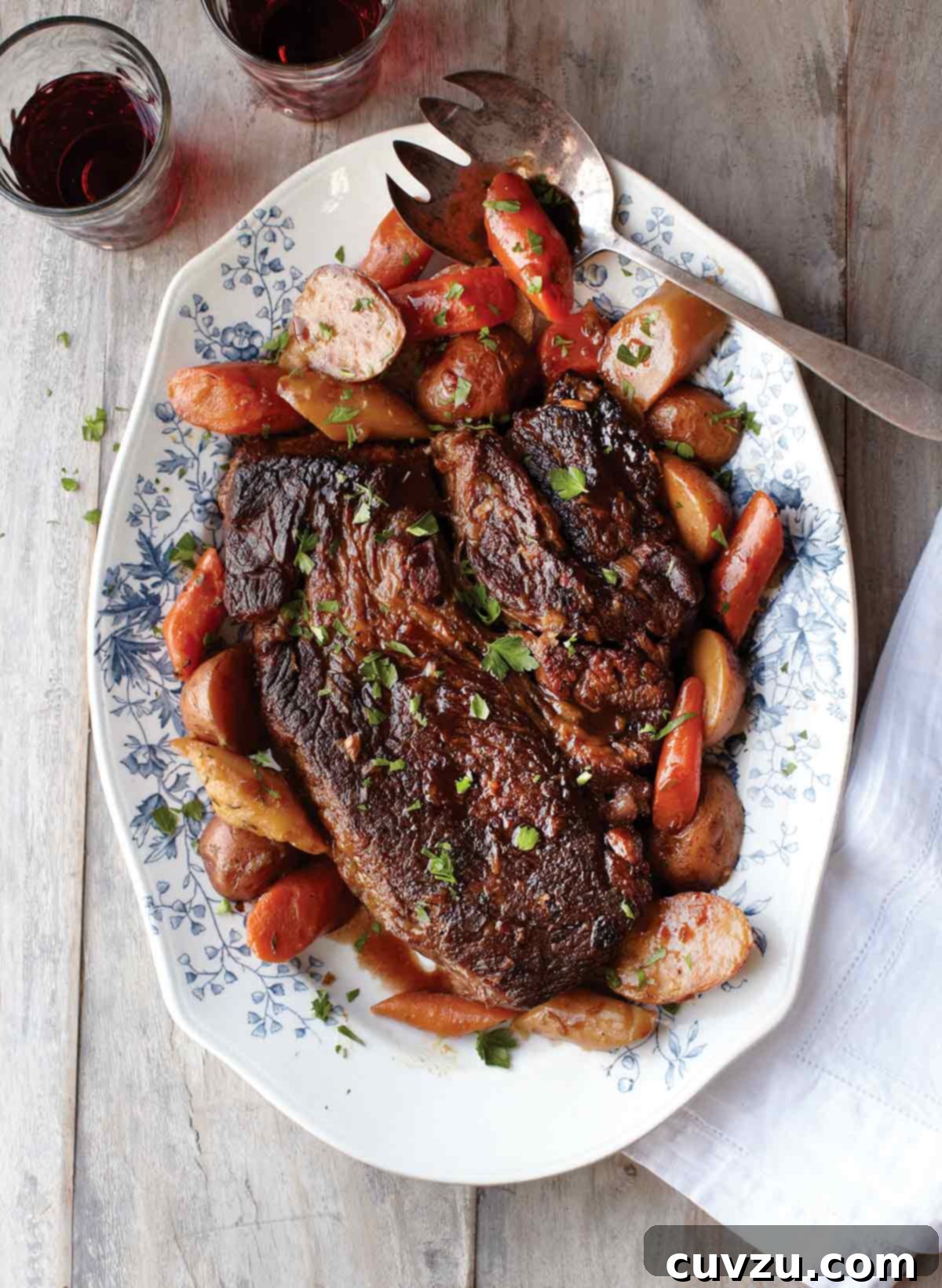
Creating a truly exceptional pot roast, the kind that melts in your mouth and fills your home with an irresistible aroma, requires a bit of culinary patience. An inexpensive chuck roast, the star of this dish, starts as a remarkably tough cut of meat. Its transformation into succulent, fork-tender perfection is a testament to the magic of low and slow cooking, whether in a slow cooker or the oven. While the waiting can feel long, especially as the enticing smells waft through your home, trust the process. Just when you might think it won’t ever surrender its tough exterior, it suddenly yields, becoming gloriously tender. This dedication to time is what truly elevates a good pot roast to an extraordinary one. As Renee Schettler Rossi wisely notes, “Patience, people.” The reward is a deeply comforting, rich, and utterly satisfying meal that’s worth every moment.
Easy Pot Roast, Potatoes, and Vegetables
By David Leite
PIN
Print Recipe
Equipment
- A 6-quart or larger slow cooker (if using the slow cooker method)
- A large Dutch oven (for oven method or searing with slow cooker method)
- Cutting board
- Sharp knife
- Slotted spoon
- Fine-mesh strainer (optional, for sauce)
Ingredients
- One (2 1/2-to 4-pound) boneless chuck roast
- Kosher salt and freshly ground black pepper, to taste
- 3 tablespoons vegetable oil
- 1 large yellow onion, chopped
- 1 1/2 pounds small red potatoes, halved or, if large, quartered
- 4 large carrots, cut into 1-inch (24-mm) pieces (about 1 1/2 cups)
- 3 parsnips, cut into 1-inch (24-mm) pieces (about 1 cup)
- 4 garlic cloves, minced
- 3 sprigs fresh thyme
- 1 cup dry red wine (such as Cabernet Sauvignon or Merlot)
- 2 1/2 cups low-sodium beef broth
- 2 tablespoons Worcestershire sauce
- 1 tablespoon chopped fresh flat-leaf parsley, for garnish
Instructions
-
Choose your cooking method:
- For slow cooker: Refer to the “Slow Cooker Variation” notes below for specific instructions.
- For oven: Preheat the oven to 350°F (177°C) and continue with the steps below.
-
Prepare the roast: Using paper towels, thoroughly pat the boneless chuck roast dry. This crucial step helps achieve a beautiful sear. Season the roast liberally on all sides with kosher salt and freshly ground black pepper. In a large Dutch oven (or a heavy-bottomed pot suitable for oven use) set over medium-high heat, heat 2 tablespoons of vegetable oil. Once the oil shimmers, carefully add the seasoned roast. Sear the roast on all sides until deep golden brown and caramelized, about 10 to 12 minutes in total. This browning develops rich flavor (fond) at the bottom of the pot, which will become the base of your delicious sauce.
-
Sauté the vegetables: Transfer the browned roast to a cutting board or a large plate and set aside. Add the remaining 1 tablespoon of oil to the same Dutch oven, which should still be over medium heat. Add the chopped yellow onion, halved or quartered red potatoes, 1-inch pieces of carrots and parsnips, minced garlic, and fresh thyme sprigs. Season the vegetables generously with salt and pepper. Stir to coat the vegetables evenly with the oil and cook, stirring occasionally, until they begin to soften and lightly brown, typically 5 to 10 minutes. This initial sautéing adds another layer of flavor and texture.
-
Deglaze the pot: Pour 1/2 cup of dry red wine into the pot with the vegetables. Using a wooden spoon or spatula, scrape up any browned bits (fond) from the bottom of the pot. Cook until the wine has reduced by half, which should take about 3 to 5 minutes. The wine adds a complex acidity that enhances the overall flavor profile of the dish.
-
Assemble and roast: Return the browned chuck roast to the Dutch oven, nestling it among the vegetables. Pour in the beef broth and Worcestershire sauce. Bring the liquid to a gentle simmer on the stovetop. Once simmering, cover the Dutch oven with a tight-fitting lid and carefully transfer the pot to the preheated oven. Roast the meat until it is incredibly fork-tender. The cooking time will vary depending on the size of your roast: approximately 2 1/2 hours total for a 2 1/2-pound roast and 3 1/2 hours total for a 4-pound roast. Remember to flip the roast once halfway through the cooking time to ensure even tenderness. Begin checking the meat and vegetables after 2 hours. If the vegetables become tender before the roast is fully cooked, use a slotted spoon to transfer them to a platter to prevent them from becoming mushy. This ensures both components are cooked to perfection.
-
Rest the meat and finish the sauce: Once the roast is done, transfer it to a clean cutting board, tent it loosely with foil, and let it rest for at least 15-20 minutes. This allows the juices to redistribute, resulting in a more tender and flavorful roast. If you haven’t already, use a slotted spoon to transfer the cooked vegetables to a serving platter alongside the resting roast. Place the Dutch oven back on the stovetop over medium-high heat. Add the remaining 1/2 cup of red wine to the pot. Bring the liquid to a simmer and cook, stirring occasionally, until it has reduced by half and slightly thickened, about 5 to 10 minutes. This creates a concentrated, flavorful pan sauce.
-
Serve: Strain the pan sauce through a fine-mesh sieve (optional, for a smoother sauce) and season it to taste with additional salt and pepper if needed. Shred or slice the tender pot roast into large, serving-sized chunks and arrange them on the platter with the vegetables. Reserve about 1 cup of the rich pan sauce to pass around at the table, allowing everyone to add more if desired. Pour the remaining sauce generously over the vegetables and pot roast. Finally, sprinkle the entire dish with fresh chopped flat-leaf parsley for a burst of color and herbaceous flavor. Serve immediately and enjoy your comforting, homemade pot roast!
Notes
Slow Cooker Variation
The slow cooker is your best friend for hands-off cooking, especially for a pot roast. You can leave the house and return to a delicious meal ready for supper!
- Using paper towels, pat the roast dry and season liberally with salt and pepper.
- In a large sauté pan or Dutch oven set over medium-high heat, heat 2 tablespoons of oil. Add the roast and brown it on all sides for 10 to 12 minutes. This searing step is essential for flavor development; do not skip it. Set the pan or Dutch oven aside for later.
- Carefully transfer the browned roast to a 6-quart or larger slow cooker. Add the chopped onion, potatoes, carrots, parsnips, minced garlic, thyme sprigs, salt, pepper, beef broth, Worcestershire sauce, and 1/2 cup of red wine to the slow cooker.
- Cover and cook on high until the roast is fork-tender, which typically takes about 6 hours.
- Once cooked, shred or slice the pot roast into big chunks and transfer them to a serving platter with the vegetables from the slow cooker.
- Return the pan or Dutch oven used for searing the pot roast to the stovetop over medium-high heat. Add the remaining 1/2 cup of red wine to the pan. Bring to a simmer and cook until reduced by half, 5 to 10 minutes, scraping up any fond.
- Pour the reduced wine into the cooking juices from the slow cooker. Strain the pan sauce (if desired) and season to taste with salt and pepper.
- Reserve 1 cup of the pan sauce for serving and pour the remainder over the vegetables and pot roast. Sprinkle with fresh parsley before serving.

Adapted From
Kitchen Confidence
Buy On Amazon
Nutrition
Calories: 923 kcal
Carbohydrates: 63 g
Protein: 63 g
Fat: 44 g
Saturated Fat: 16 g
Monounsaturated Fat: 19 g
Trans Fat: 2 g
Cholesterol: 196 mg
Sodium: 710 mg
Fiber: 11 g
Sugar: 14 g
Nutrition information is automatically calculated, so should only be used as an approximation.
Tried this recipe?
Mention @leitesculinaria or tag #leitesculinaria!
Insights from Our Recipe Testers
Our dedicated team of recipe testers put this pot roast recipe through its paces, offering valuable feedback and delightful anecdotes. Their experiences highlight the versatility and deliciousness of this classic dish.
Eydie Desser
This is a stellar one-pot meat. Make it! This easy pot roast recipe is so exceptional “you can’t eat just one serving”!
Make sure to mise en place your ingredients (preparing all ingredients before starting to cook). Also, using really good beef stock makes the sauce amazing. If you don’t want to make it yourself, just call a local restaurant and ask them for some beef stock. They usually will give it to you for free.
The cooking time of 3 1/2 hours was right on for a 4-pound roast. I cooked the meat in an enameled cast-iron pot. These types of pots really enhance pot roasting. After you remove the meat and vegetables and pour in the wine, it reduces very quickly, as the pot is super hot. At this point, I added about 1/2 cup more beef stock because there was very little sauce left, then added a bit more salt and pepper to taste and strained it. The sauce was divine, but that’s what good beef stock, decent wine, and delicious fond from the pot will give you.
Gene C.
This pot roast recipe caught my attention almost immediately, as I love a good pot roast and was planning on making one anyways, so I had most of the ingredients on hand. I found this recipe to be well-written and easy to follow.
The times are pretty close; however, the roasting time will vary by size of roast. Mine took only 2 1/2 hours. I did, however, brown the roast with a high temperature and a little longer than indicated because I like it with a little crust. Don’t use high heat if you don’t have an exhaust fan.
I think that the amount of vegetables could be increased; I used more than the recipe stated for a smaller roast and would let personal preference dictate that. When the roast is done, there will only be a scant amount of liquid left. The amount stated in the recipe is a good starting point, but again, it will depend on the size of the roast and the Dutch oven. My rule of thumb is to add enough liquid so it reaches 2/3 up the side of the roast.
I removed the vegetables with a slotted spoon and let the cooking liquid reduce a bit to produce a wonderfully syrupy sauce. The vegetables turned out perfectly tender and tasty. I used my favorite Cabernet Sauvignon for the wine.
The only drawback I can see with this recipe is you won’t have leftovers. We ate the whole thing. I’m committing this recipe to memory.
Helen Doberstein
Lazy Sunday afternoons with the house filling with the aroma of pot roast in the oven—this recipe is easy to make and tasty to eat with minimal fuss. I followed the recipe almost exactly, with the exception of the parsnips. The ones in the stores were looking a little worse for wear, and frankly, I don’t really like them all that much, so I omitted them. I did add 3 more carrots, as I like those. My new red potatoes were more of a medium size, so I quartered them.
Make sure you brown the roast well on all sides; don’t be tempted to skip this step, as this is what makes it really good. Reducing the 1/2 cup wine was closer to the 7 or 8 minute mark and my roast was done after 3 hours. The sauce had thickened nicely, but the potatoes and carrots were close to being mushy. The end result for the sauce was 3/4 cup sauce at the bottom of the pot when the meat and veg were removed. I added another 1/2 cup wine and 1 cup beef stock then simmered it down to get the pass-along gravy, as my family tends to be generous with their gravy. Seasoning seemed a little lost both in the meat and the sauce, even though I was quite aggressive in seasoning.
All in all, a very nice pot roast recipe that I’ll make again with a couple adjustments.
Anna Scott
This tasty pot roast recipe for a home-style pot roast with roasted root vegetables is perfect for a Sunday night supper with friends and family. A tender chuck roast flavored with fresh thyme, red wine, beef stock, and Worcestershire sauce and a lovely variety of perfectly cooked vegetables. I liked the addition of parsnips with the traditional carrots, onions, and potatoes. I could see rutabagas and mushrooms also being a good addition. I could only find a 3-pound roast, so the cooking time was only 2 hours and 15 minutes.
The only changes I’d make would be to add either a bit more Worcestershire sauce or maybe a bit of garlic salt or onion powder to the meat for a tad bit more flavor. Overall, this is a great classic pot roast recipe that I would highly recommend!
Elizabeth and Lena Alvarez
This is a basic pot roast recipe that’s excellent for a beginner—follow the timing as written in the recipe, and you will have dinner on the table in 4 hours—and the house will smell so good as everything roasts! We served a crowd, and the recipe was ample. The sauce was the star for us, though everyone asked for a second round of both meat and vegetables.
One taster who is a fine and experienced cook said she would add cloves and bay leaves. We had a small serving left over, so the next day we added 1 cup beef broth, 1/4 cup barley, and another splash of wine and let it simmer into a fine stew for two. We will make this recipe again.
Linda Pacchiano
This pot roast recipe makes a very flavorful pot roast. It’s also very easy to make since most of the time is spent roasting the meat and vegetables in the oven.
I halved the recipe and was able to serve two of us twice. Just like most other pot roast dishes, it was just as good, if not better, the second time around. I had a 2-pound roast which took just under 2 hours to be completely cooked and tender. We chose to slice the meat rather than shred it. The vegetables were quite well done. If I had used a larger roast and cooked it for 3 1/2 hours, I most likely would’ve removed the vegetables after about 2 hours to prevent them from being overcooked.
Kim Venglar
This simple recipe makes a very memorable meal. I don’t use parsnips very often, but I love the slight flavor difference they bring to this recipe. The meat is fall-apart tender, and the gravy gives it the perfect flavor along with the other root vegetables. Make sure you have some crusty bread to soak up the gravy.
The only problem I had was finding a single 4-pound chuck roast. I ended up having to use a couple pieces. In our area, I find you have to have meat specially cut if you want larger pieces.
Beth Price
A comment by one of our testers about “lazy Sunday afternoons with the house filling with delightful aromas of pot roast in the oven” made me want to try this recipe, too. Only my Sundays are far from lazy and usually encompass getting everything done that you can’t get done during the week before Monday arrives again. The solution? The slow cooker—that miraculous leave-it-and-forget-it kitchen device. I seasoned and seared the beef on all sides to get a nicely caramelized crust, set the pan aside, dumped everything in my CrockPot 6-quart slow cooker, and left for the day. My slow cooker has two settings: high (or fast) and low (or slow). I opted for fast, as I was already getting a little hungry from the aroma of seared beef and cooked my roast for 6 hours. When I returned from errands galore, I removed the pot roast, which was delightfully falling apart, finished the gravy in the waiting pan per the directions, and ate. Bliss!
Ralph Knauth
Super simple, easy, and absolutely yummy. I used a very nice cut of grass-fed chuck, which surely helped in the flavor compartment, but the key to this recipe is the Worcestershire sauce, in my opinion. I’d never tried that before, but I really liked the depth of flavor it added.
I will definitely make this again.
Why This Pot Roast Recipe is a Must-Try
This easy pot roast recipe isn’t just about cooking a meal; it’s about crafting an experience. Here’s why this particular approach stands out as a reliable and delicious choice for your next family dinner or special occasion:
- Unbeatable Flavor Development: The initial searing of the chuck roast creates a deeply caramelized crust, building a foundational layer of rich flavor (the “fond”) that infuses the entire dish. Deglazing the pot with red wine further unlocks these flavors, adding complexity and depth to the final sauce.
- Fork-Tender Perfection: Chuck roast, while affordable, benefits immensely from slow cooking. Whether in the oven or slow cooker, the prolonged gentle heat breaks down the tough connective tissues, transforming the meat into something incredibly tender and juicy that practically falls apart with a fork.
- One-Pot Convenience: Designed for efficiency, this recipe minimizes cleanup by utilizing a single pot (a Dutch oven or slow cooker) for both searing and cooking. All the components – meat, potatoes, and vegetables – cook together, allowing their flavors to meld beautifully.
- Nutritious and Wholesome: Packed with protein from the beef and a generous medley of root vegetables like potatoes, carrots, and parsnips, this meal is not only satisfying but also provides essential nutrients.
- Versatile Cooking Methods: We understand that different kitchens and lifestyles demand flexibility. This recipe offers clear instructions for both traditional oven roasting and the convenience of a slow cooker, ensuring you can enjoy this dish regardless of your preferred method.
- Comfort Food at its Best: There’s a reason pot roast is a timeless classic. It evokes feelings of nostalgia, warmth, and home-cooked goodness. This recipe delivers that comforting embrace with every spoonful, making it perfect for chilly evenings or cherished family gatherings.
- Adaptable to Preferences: As our recipe testers highlight, this recipe serves as an excellent base. Feel free to adjust the amount or type of vegetables, add different herbs, or experiment with other seasonings to truly make it your own.
From the initial sizzle of the sear to the final garnish of fresh parsley, every step in this recipe contributes to a harmonious and delicious outcome. It’s more than just a meal; it’s a culinary hug.
Mastering the Ingredients: Key to a Flawless Pot Roast
While the technique of slow cooking is vital, the quality and preparation of your ingredients play an equally important role in the success of your pot roast. Understanding each component helps you achieve optimal flavor and texture.
The Star: Boneless Chuck Roast
- Why Chuck Roast? This cut, typically from the shoulder, is renowned for its rich marbling and connective tissue. While tough raw, it’s ideal for slow cooking as the collagen breaks down into gelatin, creating incredibly moist, tender, and flavorful beef.
- Size Matters: A 2 1/2 to 4-pound roast is perfect for 4-6 servings. Adjust cooking times based on the weight of your roast.
- Pat Dry: Don’t skip patting the roast thoroughly dry with paper towels before searing. Excess moisture prevents proper browning, which is crucial for flavor development.
The Aromatics and Vegetables
- Onions and Garlic: These form the aromatic base, adding sweetness and pungency that mellow beautifully during the long cook. Chop them consistently for even cooking.
- Red Potatoes: Small red potatoes hold their shape well and absorb the rich flavors of the braising liquid. Halving or quartering them ensures they cook evenly with the other root vegetables.
- Carrots and Parsnips: These add natural sweetness, earthiness, and vibrant color. Cutting them into 1-inch pieces ensures they become tender but not mushy. Parsnips, in particular, offer a unique, slightly sweet and peppery note.
- Fresh Thyme: A classic herb pairing for beef, thyme imparts an earthy, savory aroma that complements the richness of the pot roast.
The Liquid Gold: Wine, Broth, and Worcestershire
- Dry Red Wine: A good dry red wine (like Cabernet Sauvignon, Merlot, or Pinot Noir) is indispensable. It deglazes the pot, lifting the flavorful fond, and adds a layer of acidity and complexity to the sauce. Choose a wine you’d enjoy drinking.
- Low-Sodium Beef Broth: This provides the primary braising liquid. Using low-sodium broth allows you to control the overall saltiness of the dish, seasoning to your preference.
- Worcestershire Sauce: This secret weapon adds a profound depth of umami and a subtle tang. Its fermented ingredients enhance the savory notes of the beef and vegetables, making the flavors pop.
Thoughtful selection and preparation of these core ingredients are the cornerstones of a truly memorable pot roast.
Pro Tips for a Perfect Pot Roast Every Time
Even with an easy recipe, a few expert tips can elevate your pot roast from good to extraordinary. Keep these in mind as you prepare this comforting classic:
- Don’t Rush the Sear: This is arguably the most critical step. A deep, dark brown crust on your chuck roast equals maximum flavor. Resist the urge to move the meat too soon; let it develop that rich color on each side.
- Season Generously: Chuck roast is a large cut of meat, and it needs a good amount of salt and pepper to be flavorful throughout. Don’t be shy with your initial seasoning.
- Check for Fork-Tenderness, Not Just Time: While the recipe provides approximate cooking times, meat doneness can vary. The true indicator is fork-tenderness. If a fork can easily slide into and twist in the meat, it’s ready. If not, keep cooking.
- Manage Your Vegetables: Root vegetables can cook faster than the roast. If your potatoes, carrots, or parsnips are tender before the meat, remove them from the pot with a slotted spoon and set them aside. Return them to the pot to warm through during the last few minutes or when serving. This prevents them from becoming mushy.
- Build Your Sauce: The fond (browned bits) at the bottom of the pot after searing the meat and sautéing the vegetables is pure gold. Deglaze thoroughly with wine to incorporate all those caramelized flavors into your sauce. Reducing the sauce at the end concentrates these flavors further.
- Rest the Meat: Just like any large cut of meat, the pot roast needs to rest after cooking. Tent it with foil for 15-20 minutes. This allows the juices to redistribute, ensuring a more tender and moist result.
- Taste and Adjust: Before serving, always taste your sauce and adjust seasonings (salt, pepper, maybe a splash more Worcestershire) as needed.
- Leftovers are Gold: Pot roast often tastes even better the next day! Leftovers can be repurposed into sandwiches, tacos, or a hearty stew (as one tester suggested).
With these tips, you’re well on your way to creating a pot roast that will impress and satisfy everyone at your table.
A Timeless Tradition for Modern Tables
This easy pot roast with potatoes and vegetables embodies the heart of comforting home cooking. It’s a dish that brings families together, fills homes with incredible aromas, and delivers deeply satisfying flavors. Whether you’re a seasoned chef or a novice in the kitchen, this recipe’s straightforward approach and delicious results make it a perfect choice for any Sunday supper or special gathering.
Embrace the patience, savor the process, and delight in the reward of a perfectly tender, richly flavored pot roast. It’s more than just a meal; it’s a tradition in the making. We hope this guide helps you create a truly memorable dish that will be cherished for years to come.