
The American Thanksgiving holiday is a time for gratitude, family, and, of course, an abundance of delicious food. Whether you’re hosting your very first Thanksgiving dinner or celebrating your sixty-first, the sheer volume of preparation can feel overwhelming. From perfecting the golden-brown turkey to orchestrating a symphony of side dishes and decadent desserts, questions naturally arise. Fear not, home cooks! We’ve meticulously compiled and answered nearly every Thanksgiving question you could possibly have – ninety-nine of them, in fact – to help you navigate the holiday season with confidence and culinary flair. Consider this your ultimate guide to a truly stress-free and spectacular Thanksgiving feast.

For many, Thanksgiving embodies cherished traditions. The vision is clear: a magnificent, juicy turkey, roasted to a deep, burnished perfection. Hearty stuffing, rich with herbs and savory flavors. Silky, buttery mashed potatoes. A classic green bean casserole, perhaps with a crispy onion topping. And, of course, a selection of pies, generously topped with whipped cream and redolent of cinnamon.
The reality, however, often involves last-minute rushes. Supermarkets become a battleground of “aisle rage,” ambitious recipes lead to kitchen panic (is Thanksgiving for twelve truly the moment to attempt a 42-step turducken?), and sometimes, the turkey only makes its grand exit from the freezer late on Wednesday night. Sound familiar? We understand completely.
The secret to a triumphant Thanksgiving lies in planning. This comprehensive list, born from over two decades of answering your most pressing holiday cooking questions, is designed to be your essential roadmap. As the revered culinary icon Julia Child famously advised, “No matter what happens in the kitchen, never apologize.” Just embrace the moment, add a little butter, and everything will undeniably work out. Let’s dive into making this your most delicious and effortless Thanksgiving yet!
Turkey: The Centerpiece of Your Thanksgiving Table
The turkey is undeniably the star of the Thanksgiving feast. Achieving a perfectly roasted, moist bird can feel like a high-stakes challenge, but with the right guidance, it’s entirely achievable. From selecting the right size to mastering thawing, cooking, and carving, these FAQs cover everything you need to know to present a show-stopping centerpiece.
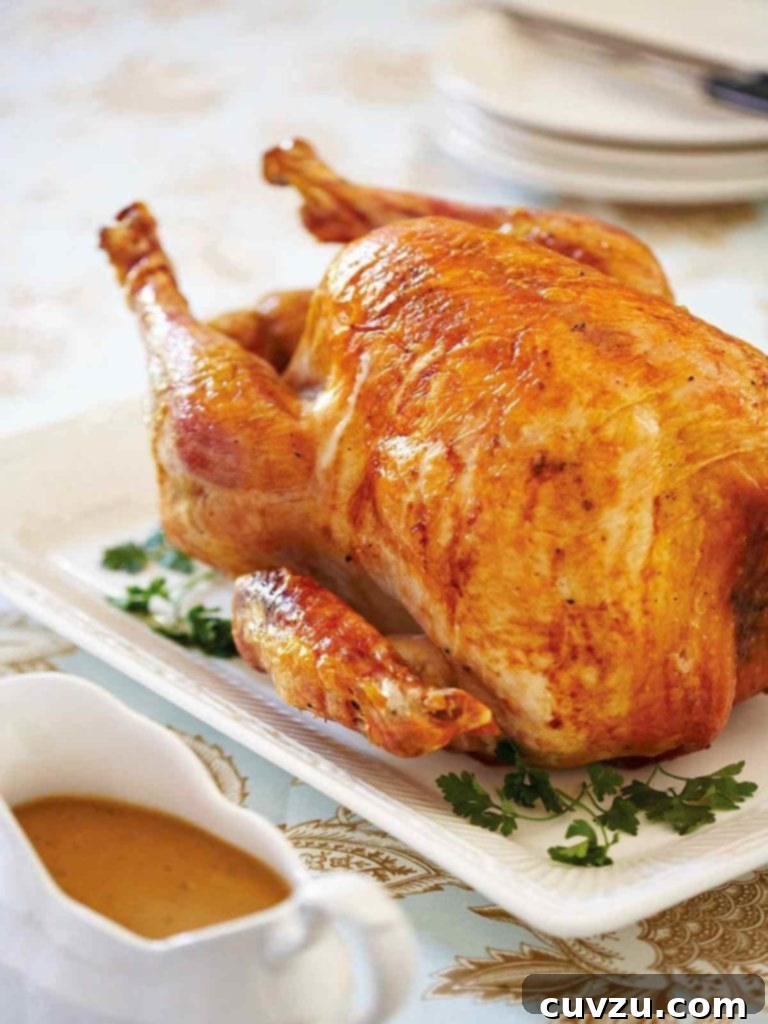
Planning the right amount of turkey is crucial for a successful Thanksgiving meal. For turkeys weighing less than 16 pounds, a good estimate is 1 pound per serving, which accounts for the bone weight. For larger birds, slightly less than a pound per person is usually sufficient, as they tend to have a higher meat-to-bone ratio. However, if your primary goal is to ensure abundant leftovers for delicious post-holiday meals, aim for 1 1/2 pounds per person, regardless of the turkey’s size. For example, if you’re hosting eight people, a 12-pound turkey should provide enough for the meal and some generous leftovers.
Pre-stuffed turkeys can be a convenient option, significantly reducing your prep time and effort. While you won’t be able to customize the stuffing ingredients, this minor trade-off can be well worth it if you’re feeling anxious about cooking a whole turkey from scratch. It’s imperative, however, to follow the cooking instructions precisely. DO NOT THAW a commercially pre-stuffed frozen turkey before cooking. Thawing creates an ideal environment for rapid bacterial growth within the porous stuffing and raw turkey combination, posing a significant food safety risk. If you thaw it, it must unfortunately be discarded. The oven’s heat might not be sufficient to safely cook thoroughly thawed stuffing. As long as there are still ice crystals in the turkey and the stuffing remains frozen, it is safe to proceed with cooking.
When choosing your Thanksgiving turkey, you’ll encounter a variety of options. Frozen turkeys are widely available and budget-friendly, requiring significant thawing time. Fresh turkeys offer convenience by eliminating the thawing step, but they are typically more expensive and require pre-ordering. Self-basting turkeys are injected with solutions of water, salt, and other flavorings to keep them moist during cooking. Organic turkeys are raised without antibiotics and fed organic feed, appealing to those seeking natural options. Understanding these labels will help you select the best turkey for your preferences and cooking style. 
For smaller, more intimate gatherings, or if you simply prefer not to deal with a whole bird, cooking individual turkey parts is an excellent alternative. A single (three-pound) half-breast can comfortably feed two to four people. A whole turkey breast, typically weighing six to seven pounds and with the two breasts still joined at the bone, will serve six to eight guests. These options cook faster and are easier to manage, making your Thanksgiving meal less daunting.
Even for the most basic Thanksgiving turkey, having the right tools makes all the difference. You’ll definitely need a sturdy, metal roasting pan (flimsy foil pans are prone to buckling and spills, so investing in a good one is a wise choice for future holiday meals). A reliable meat thermometer is absolutely non-negotiable for ensuring safe and perfectly cooked poultry. Don’t forget a whisk for gravy, a sharp carving knife for serving, plenty of heavy-duty aluminum foil for resting and covering, and a large platter or cutting board spacious enough to hold your magnificent roast turkey.
The safest and most recommended method for thawing a frozen turkey is in the refrigerator. To do this, simply place the entire unopened turkey, breast-side-up, on a pan or rimmed baking sheet. This catches any drips and prevents cross-contamination. Place it in the lowest part of your refrigerator to thaw slowly and evenly. This method requires significant advance planning but ensures optimal food safety.
Refrigerator thawing requires ample time. A general guideline is to allow 24 hours of fridge thawing for every 4 pounds of frozen turkey. For instance, a 20-pound turkey will require approximately 5 full days of thawing in the refrigerator. Keep the turkey wrapped in its original packaging and periodically check the baking sheet or roasting pan beneath it, draining any accumulated liquid to maintain hygiene and prevent spills.
If refrigerator thawing isn’t an option due to time constraints, you can use the cold water method. Place the frozen turkey, still in its unopened wrapper, breast-side-down in a clean sink or large container filled with cold tap water. The key is to change the water every 30 minutes to ensure the surface of the turkey remains cold and safe. A 10-pound turkey can typically be thawed using this method in about 2 hours, making it a much faster alternative. For even more thawing tricks and tips, you can consult our detailed guide from the Never Cook Naked Guys. Learn more about thawing tricks and tips here.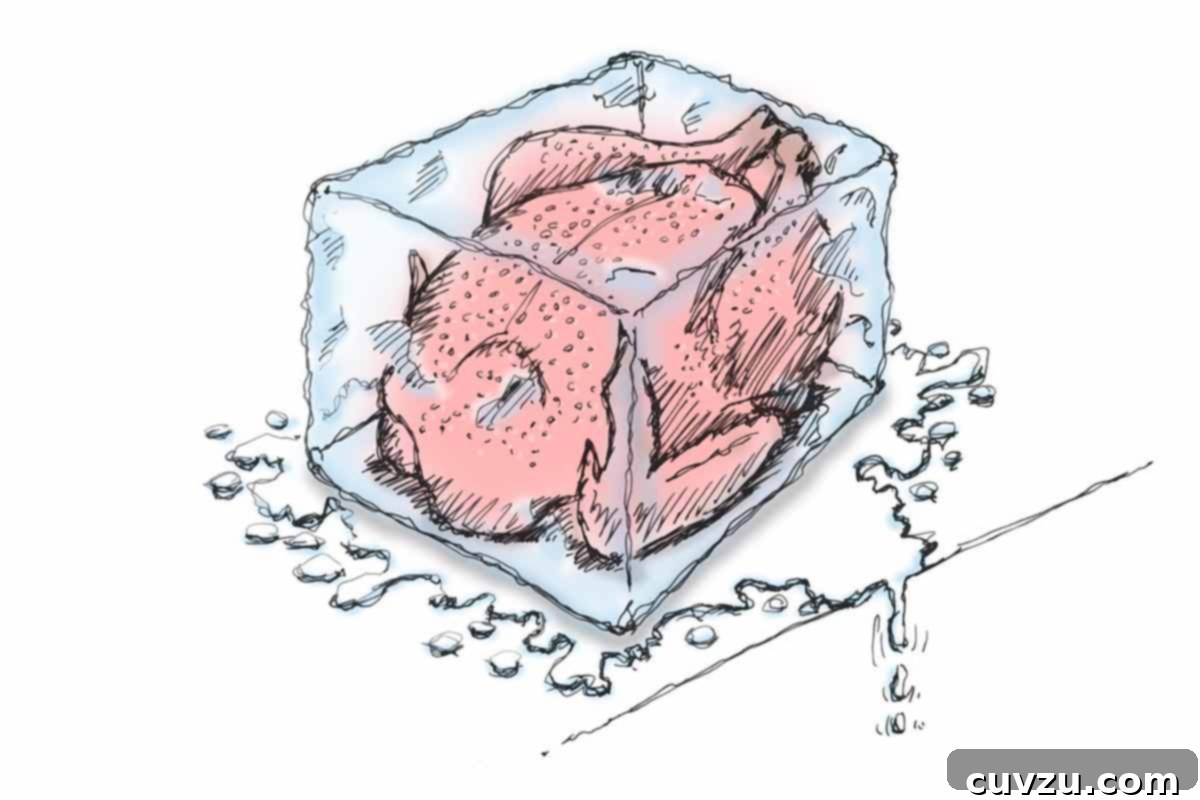
Yes, surprisingly, you can cook a turkey directly from its frozen state. While this method limits fancy preparations like brining or elaborate seasoning until it begins to cook, it’s a perfectly safe and USDA-approved approach. Be aware that cooking from frozen significantly increases the likelihood of dry white meat, as the breast cooks faster than the dark meat. To cook a frozen bird, place it in a sturdy roasting pan and roast it at 325℉ (160°C) until all parts, including the innermost thigh and breast, reach a safe internal temperature of 165℉ (74°C). Expect cooking time to increase by approximately 50% compared to a thawed bird. This method is strictly for oven cooking – DO NOT attempt to grill or deep-fry a frozen turkey, as it is extremely dangerous and poses serious risks. Also, never stuff a frozen turkey; prepare your dressing separately.
Brining aims to achieve a wonderfully moist turkey, a goal shared by all holiday cooks. Wet brining involves submerging the turkey in a saltwater solution, which helps the meat absorb water and prevents it from drying out during prolonged oven cooking. This process can, however, sometimes dilute the natural flavor of the turkey, making it slightly watery. If you opt for wet brining, enhance the flavor by adding plenty of aromatics to the brine (such as herbs, citrus, and spices) and use just enough water to fully cover the bird. For an adventurous twist, consider adding spirits to your brine, as demonstrated in this Brandy-Brined Turkey Breast recipe.
: Matthew Benson
The core difference lies in the use of water. A wet brine is essentially a solution of salty water (and often sugar and aromatics) in which the turkey is submerged. Its primary function is to plump the meat with moisture, preventing dryness, especially in the white meat. A dry brine, also known as pre-salting, involves rubbing a mixture of salt, seasonings, and sometimes sugar directly onto the turkey’s meat and skin. The turkey then rests in the refrigerator for a period, allowing the salt to draw out moisture, dissolve, and then be reabsorbed, leading to juicy meat and crispy skin without diluting the natural turkey flavor.
Now that you understand the benefits of dry-brining, let us guide you through the process step-by-step. It’s a remarkably effective technique for achieving both moist meat and wonderfully crisp skin. For a full tutorial, visit our detailed guide on how to dry-brine a turkey.
If wet or dry brining doesn’t fit your Thanksgiving schedule or preference, a simple seasoning blend can still yield delicious results. Consider using a classic poultry seasoning mix. For example, Bell’s Poultry Seasoning, ubiquitous in the Northeast US, is a beloved blend of ground rosemary, oregano, sage, ginger, marjoram, thyme, and black pepper. It’s notable for being salt-free, gluten-free, and containing no artificial ingredients or preservatives. Simply rub your turkey generously with a high-quality poultry seasoning for an aromatic and flavorful bird.
: David Leite
It sounds crazy, but it’s a common dilemma: more guests than oven space, making a 22-pound whole bird an impossible fit. Don’t despair, and certainly don’t buy a second oven! The solution doesn’t require drastic measures. Instead, you can spatchcock the turkey (remove the backbone and flatten it) to make it fit better, or even break it down into pieces (breasts, thighs, legs, wings) and roast them separately. This method not only solves your space issue but also allows for more even cooking of different parts, ensuring everything is perfectly done at the same time.
Spatchcocking is a technique where you remove the turkey’s backbone and flatten the bird, allowing it to cook more evenly and significantly faster. This method ensures that the white meat and dark meat finish cooking at roughly the same time, preventing the breast from drying out while the legs catch up. Additionally, a flattened bird has more surface area exposed to direct heat, leading to incredibly crisp skin. If you plan to make stock, the removed backbone is excellent for that purpose. The only “downside” is that a spatchcocked turkey won’t have the traditional Norman Rockwell aesthetic, but the superior taste and texture more than make up for it.
: Brett Hofacker
While spatchcocking is a great start for speeding up cook time, you can go even faster by butchering the turkey into individual pieces. If you or your butcher cut a spatchcocked turkey into its component parts – separating the breasts, removing the legs, and detaching the wings – you can roast them all on a single large baking sheet. This method drastically reduces cooking time, allowing you to have a fully cooked turkey in about an hour. Season each piece as usual and roast. This approach simplifies carving and serves a crowd much quicker, letting you enjoy your holiday meal sooner.
Grilling or smoking a turkey is a fantastic idea that offers several benefits. Not only does it impart incredible flavor, often a delicious smoky essence, but it also frees up valuable oven space – a major plus on Thanksgiving Day. If you’re comfortable with grilling, this method is something you should definitely consider. The cooking time is comparable to oven roasting, and the unique flavor profile is guaranteed to impress your guests, offering a memorable twist on the traditional turkey.
The most accurate and safest way to determine if your turkey is fully cooked is by using a reliable meat thermometer. Insert the thermometer into the thickest part of the thigh (without touching the bone), the thickest part of the breast, and the center of the stuffing (if applicable). The turkey is safely cooked when all these areas reach an internal temperature of 165°F (74°C). This ensures that any harmful bacteria have been eliminated.
Locating the thickest part of the thigh for an accurate temperature reading can be a bit tricky. Generally, it’s the area where the thigh meets the body of the turkey, on the inner side. You want to insert your meat thermometer deep into the muscle, parallel to the thigh bone, ensuring it doesn’t touch the bone itself as bones heat up faster and can give a false reading. For a detailed visual guide and more tips, David delves into this in detail for you here. 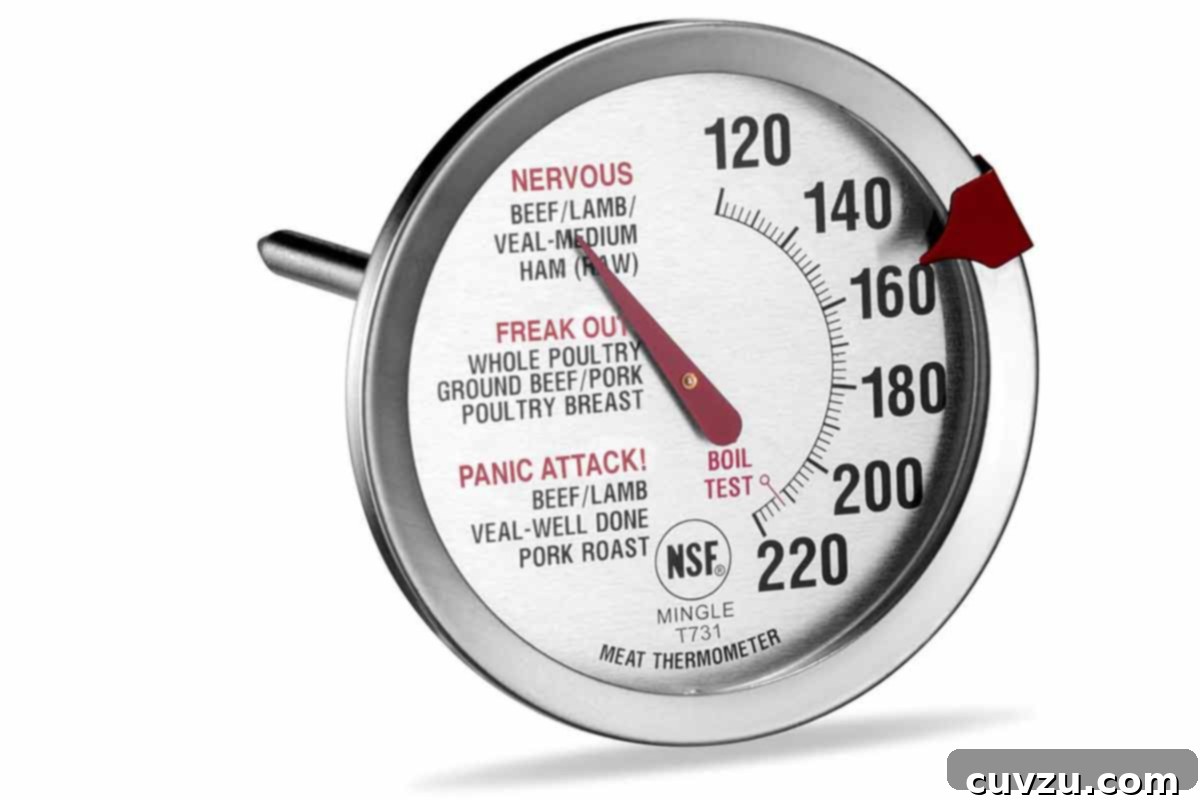
While a meat thermometer is highly recommended as an absolute necessity for cooking a large bird like a Thanksgiving turkey, there are traditional (though less precise) methods to check for doneness. Wiggle the drumstick: if it’s cooked through, the joint should be very loose and move easily. Another indicator is the color of the juices: when you wiggle the drumstick or prick the thickest part of the thigh, the juices that run out should be completely clear, not pink or reddish. These methods provide a good indication, but for ultimate safety and perfect doneness, a thermometer is always best.
An undercooked turkey doesn’t have to ruin your Thanksgiving. You have a couple of practical options. If time is of the essence and the turkey still needs a significant amount of cooking, your best bet is to carve it immediately. Cut the turkey into larger pieces (breasts, thighs, legs), spread them out on a baking sheet, cover them loosely with foil, and return them to the oven. The foil will prevent the edges from drying out while the interior cooks through faster. While this means you won’t be carving at the table, you’ll still have perfectly cooked meat. If you have a bit more time, the Never Cook Naked Guys offer additional strategies for bringing an undercooked bird up to temperature safely.
Cooking a turkey, especially on a busy Thanksgiving Day, can feel like an uphill battle, often resulting in dry breast meat while the dark meat struggles to cook through. If your bird ends up drier than intended, don’t despair—it can be salvaged! First, make extra gravy and encourage its liberal use; gravy adds much-needed moisture and flavor. Alternatively, before even bringing the turkey to the table, slice the meat and gently drizzle it with warm chicken or turkey stock mixed with a generous amount of unsalted butter. This infuses moisture and richness back into the meat, transforming a dry bird into something much more palatable.
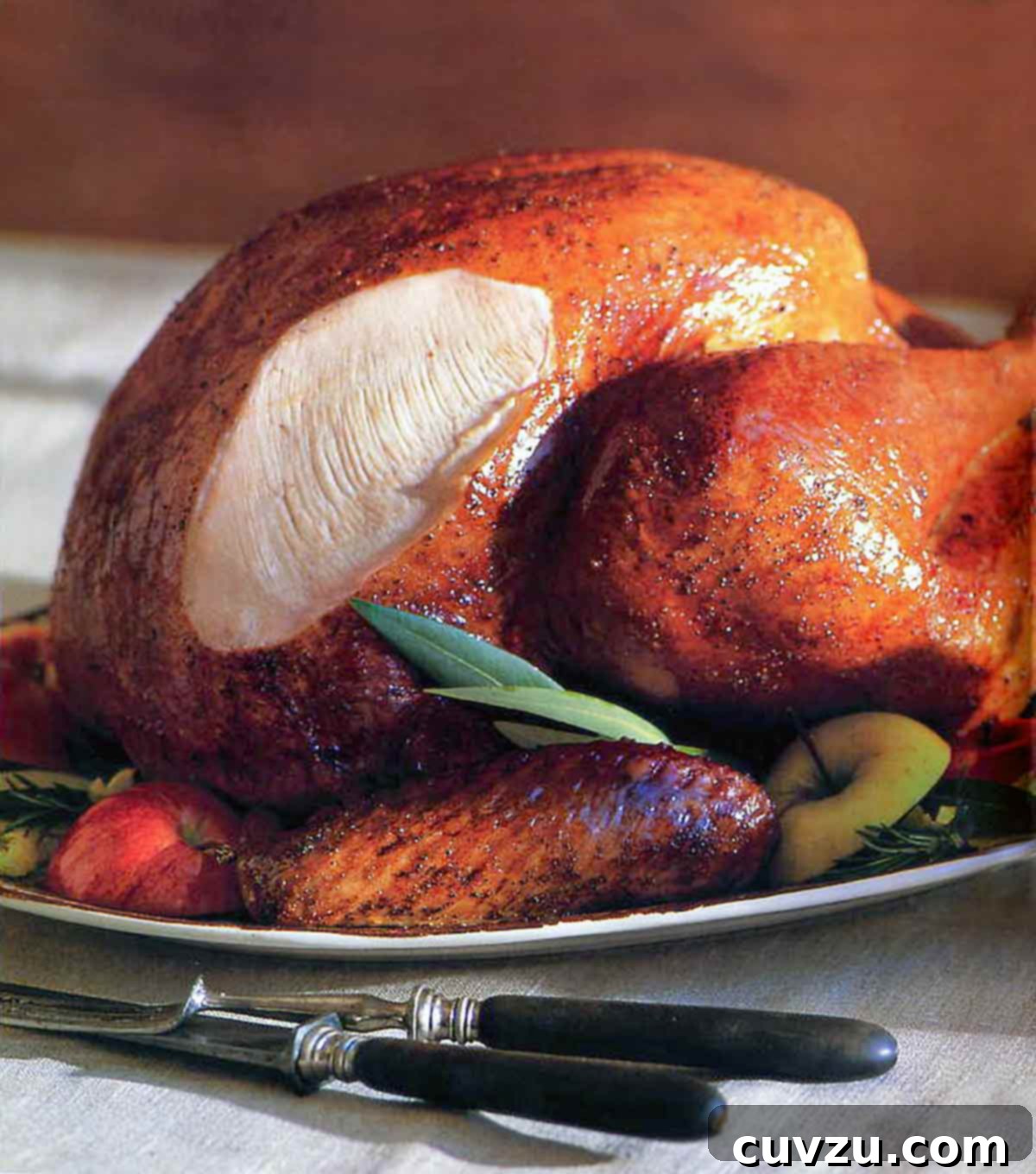
Achieving that coveted gorgeous, crispy, bronze skin on your turkey is simpler than you might think. The most effective old-school method is to baste the bird regularly while it’s roasting in the oven. Every 20 to 30 minutes, open the oven and generously drizzle the turkey with some of the flavorful drippings that have collected at the bottom of the pan. This continuous basting not only promotes even browning but also helps render the fat beneath the skin, resulting in a shatteringly crisp exterior. Your grandmother definitely knew best!
: Noel Barnhurst
If your turkey’s skin is browning excessively before the meat is fully cooked, don’t worry. First, confirm with your meat thermometer that the internal temperature is still below 165°F (74°C). If it is, loosely tent the turkey with a sheet of aluminum foil. This will shield the skin from direct heat, allowing the interior to continue cooking without further darkening the exterior. Remove the foil for the last 10 to 15 minutes of cooking to help re-crisp the skin slightly before resting.
Absolutely, letting your turkey rest is a crucial step that should never be skipped. After roasting, tent the turkey loosely with foil and allow it to rest for at least 30 to 40 minutes. This resting period allows the juices, which have migrated to the surface of the meat during cooking, to redistribute throughout the entire bird. The result is a significantly juicier and more flavorful turkey. As an added bonus, a rested bird is much easier and safer to carve, as it won’t be Hades-hot fresh out of the oven. This half-hour also provides valuable time to warm up side dishes and finalize your gravy.
You have more flexibility than you might think when it comes to resting your turkey. As long as you keep it whole and tented loosely with aluminum foil, a roasted turkey can safely rest for up to two hours. This extended resting time is a fantastic advantage, allowing you to focus on other last-minute preparations, enjoy a Thanksgiving cocktail, or chat with your guests without feeling rushed. It’s a party, and you’ve got this! Just ensure it’s kept warm and away from drafts.
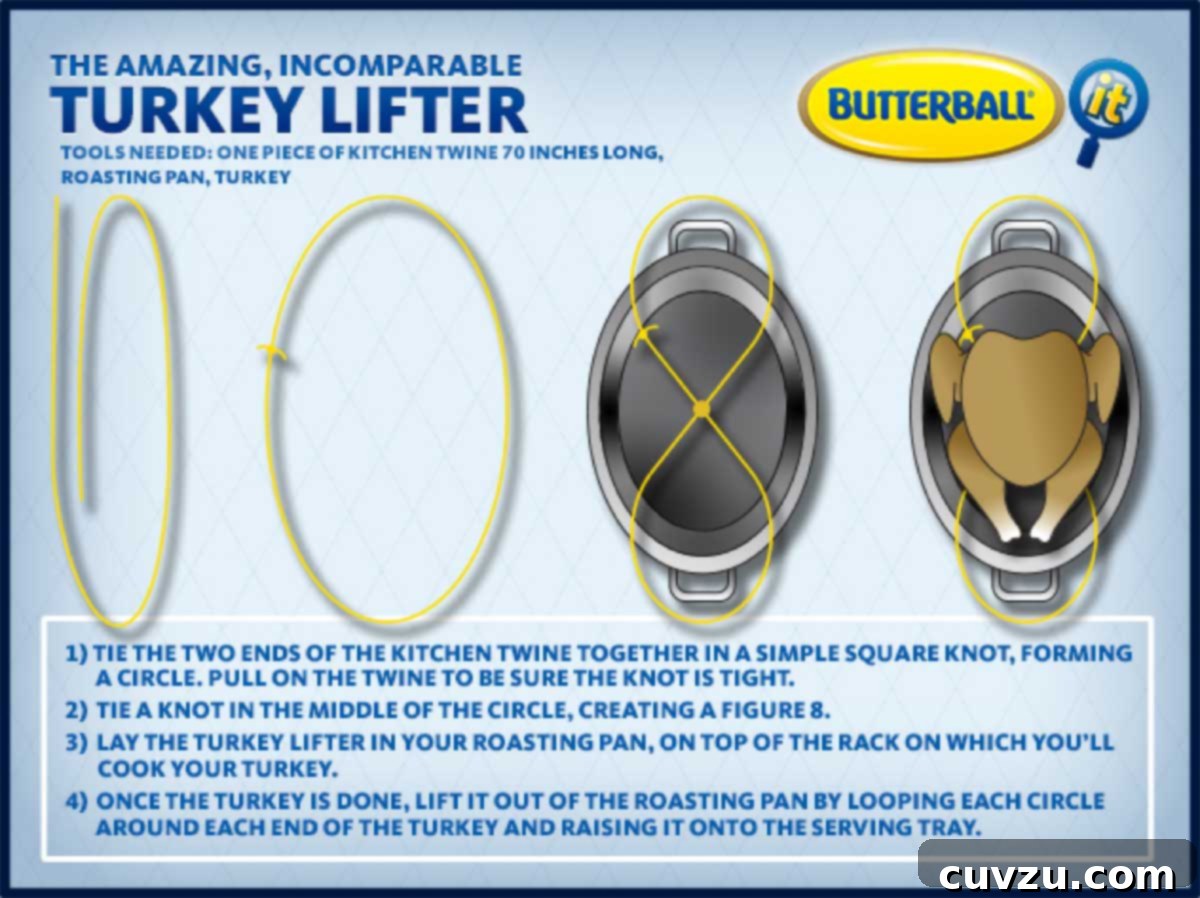
Moving a large, hot turkey from the roasting pan to a carving board can be one of the most challenging parts of Thanksgiving dinner. The best way to tackle this is with assistance – either from a trusted helper or a specialized lifting tool. Trying to manage a heavy, slippery bird alone with just forks can lead to accidents and frustration. Always ensure you have a clear path and a stable surface for the carving board before attempting the transfer. Read on for more specific helpful tips for making this process smoother.
If you don’t own a specialized turkey lifter (some roasting pans come with them, or they can be purchased separately), you can improvise effectively. A pair of sturdy, long-handled carving forks inserted into the cavity and beneath the wings can work, but a more secure option is to create a sling. The turkey experts at Butterball even show you how to make a homemade turkey lifter using aluminum foil. This simple DIY solution provides much-needed support and stability, making the transfer significantly easier and safer than struggling with just forks or tongs alone.
: Butterball
Whether you prefer to carve your turkey in the kitchen for a more controlled presentation (especially if it didn’t emerge “Insta-perfect”) or as a grand display at the Thanksgiving table, proper carving technique is essential. You’ll want a sharp carving knife and a sturdy carving fork. Begin by removing the legs and thighs, then separate the drumsticks from the thighs. Slice the breast meat against the grain for maximum tenderness. For comprehensive visual instructions and expert advice, here is all you need to know about carving a turkey. Alternatively, invite a seasoned carver to your dinner and delegate this important task!
We hear you! While turkey is traditional, it’s not everyone’s favorite, and that’s perfectly fine. Thanksgiving should be about enjoying what you love. There are many delicious alternatives that can serve as a stunning centerpiece. Consider a succulent roast beef, a flavorful pork loin porchetta, or even a vegetarian showstopper like a rich pumpkin lasagna. Other popular choices include roasted duck, Cornish game hens, or a hearty fish dish. Explore a variety of options from beef to pork to pumpkin lasagna here to find your perfect main course.
: Christina Holmes
Gravy: The Essential Accompaniment
No Thanksgiving plate is truly complete without a generous drizzle of rich, savory gravy. Often made from the turkey’s own pan drippings, gravy adds depth and moisture to every bite. But what if it’s too thick, too thin, or too salty? This section provides answers to all your gravy dilemmas, ensuring a smooth, flavorful addition to your holiday meal.

Making delicious gravy is surprisingly straightforward and incredibly rewarding. The key to the most flavorful gravy lies in utilizing the incredible pan drippings from your roasted turkey. These drippings are concentrated with rich, savory essence, providing a built-in flavor base. Simply skim off excess fat, deglaze the pan to loosen any caramelized bits, then whisk in a roux (made from flour and some of the skimmed fat or butter) and gradually add broth or stock. This basic pan gravy recipe made with drippings is one of our simplest and most gratifying, guaranteeing a rich and savory addition to your feast.
If you’ve brined your turkey, using the pan drippings directly for gravy will almost certainly result in an unpleasantly salty sauce. The brine draws a lot of salt into the pan. Instead, discard the brining drippings. You can still make an excellent gravy by starting with good quality, low-sodium chicken or turkey broth. You can also roast some turkey wings or necks alongside your brined bird (or even a day before) to create rich, unsalted drippings to form the base of your gravy. Enhance the flavor with sautéed aromatics like onions, carrots, and celery.
Separating fat from your pan drippings is essential for a smooth, non-greasy gravy. If a fat separator isn’t available, a heat-proof measuring cup or a clear glass pitcher makes an excellent substitute. Pour your hot pan drippings into the cup and allow them to sit for a few minutes. The fat will naturally rise to the top, forming a distinct layer. For faster separation, you can even pop the cup into the freezer for 10-15 minutes until the fat solidifies slightly. Once separated, simply skim the fat off the top with a spoon, leaving the flavorful broth (fond) at the bottom for your gravy base.
If your gravy has become too thick, the easiest way to thin it is by gradually whisking in a little more warm chicken or turkey stock. Add it slowly, a tablespoon at a time, continuously whisking until you reach your desired pourable consistency. Using stock will maintain and even enhance the flavor. While water can also be used in a pinch, it may dilute the richness of your gravy, so reserve it as a last resort.
If your gravy is too thin, you have a couple of effective thickening options. The simplest method is to increase the heat slightly and allow it to simmer gently, stirring occasionally, to reduce down further. As it reduces, moisture evaporates, and the gravy will naturally thicken. Alternatively, you can create a slurry: In a small bowl, whisk together a tablespoon of flour or cornstarch with an equal amount of cold water or gravy until smooth (never add dry thickener directly to hot liquid, or you’ll get lumps!). Slowly pour this slurry into the simmering gravy while whisking constantly. Continue stirring until it thickens to your desired consistency.
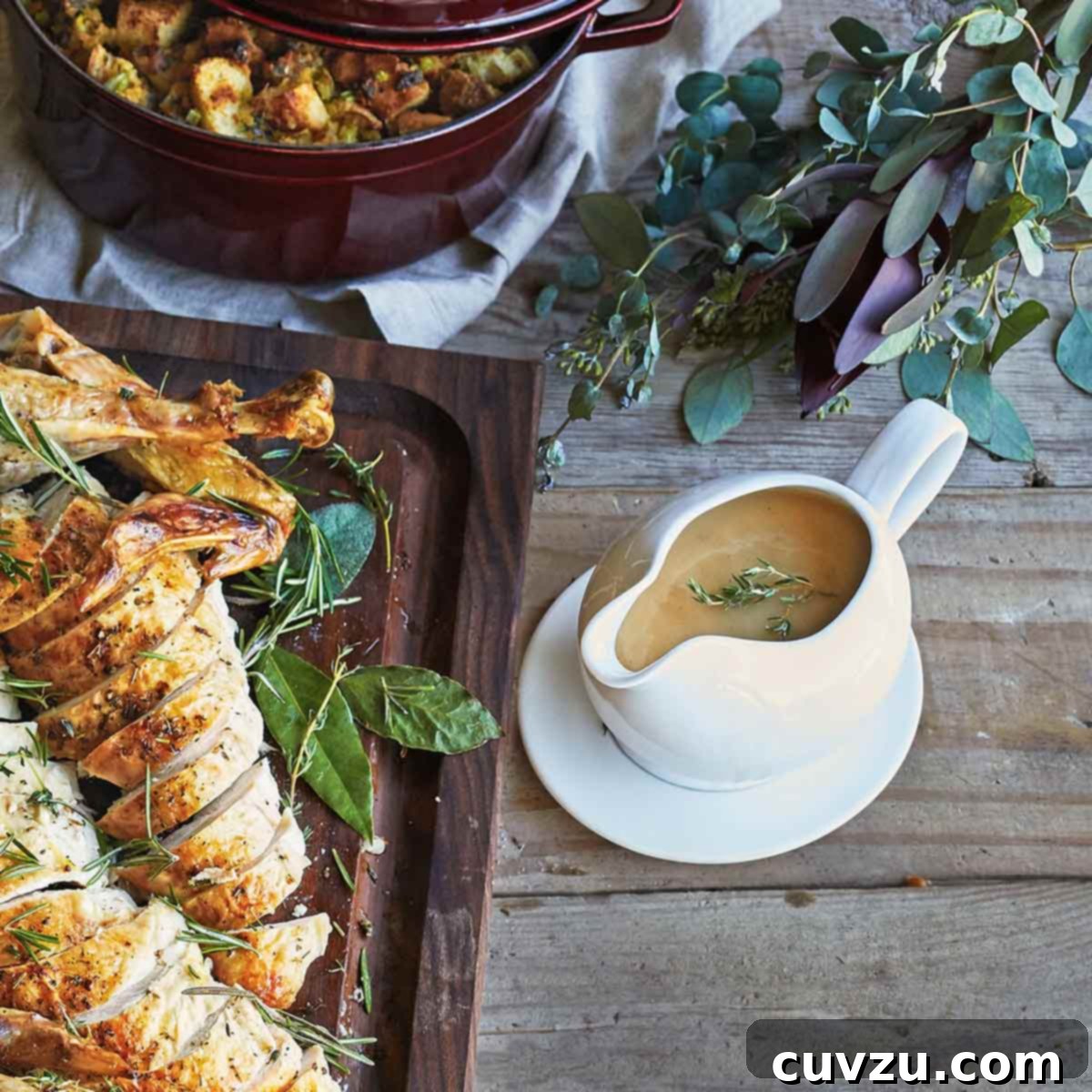
Lumpy gravy is a common kitchen mishap, but it’s easily remedied. The best and most effective tool for lump removal is a fine-mesh sieve. Simply place the sieve over a clean bowl, pour the lumpy gravy into it, and use the back of a spoon or a rubber spatula to press the gravy through. This will catch all the lumps, leaving you with a silky-smooth sauce. If you don’t have a sieve, an immersion blender can also work wonders. Just use it on a very low setting and pulse gently to avoid incorporating too much air or creating a gravy smoothie!
If your gravy is lacking in depth, there are several ways to boost its flavor. Start by adding a few more fresh or dried herbs like rosemary, sage, thyme, or bay leaves, then let the gravy simmer gently for a while longer to allow the flavors to meld. For an umami kick, stir in a splash of soy sauce, miso paste, or Worcestershire sauce; just enough to enhance the savory notes without changing the overall taste. A tablespoon of sodium-free broth concentrate (chicken or vegetable) can also go a long way in enriching the flavor without adding excessive salt. Taste and adjust as you go.
Salty gravy can be a real disappointment, but often, it can be salvaged. If you still have some unsalted pan drippings or plain turkey/chicken stock on hand, you can make a separate unsalted batch of gravy and then gradually mix it with the overly salty batch until the flavor balances out. Alternatively, you can add more low-sodium or sodium-free broth to dilute the saltiness. Simmer the gravy to reduce it slightly and then taste. A small amount of sugar or a touch of cream can also help balance the salt, though use these sparingly to avoid altering the gravy’s character too much.
Keeping gravy warm is crucial for a pleasant serving experience. The simplest method is to leave it in a saucepan over very low heat on the stovetop, stirring occasionally to prevent a skin from forming. If your stovetop is full, an insulated thermos or a slow cooker set to its “warm” setting can also keep gravy at an ideal temperature for an extended period. Just before serving, pour hot water into your gravy boat to pre-warm it, then empty it and fill it with the hot gravy. This ensures the gravy stays warm longer at the table.
Making gluten-free gravy is straightforward with the right thickener. While many recipes suggest cornstarch, which can sometimes result in a slightly gloopy texture, our preferred alternative is rice flour. Rice flour creates a beautifully smooth, silky, and naturally thickened gravy without any undesirable stickiness. You can create a slurry with rice flour and cold broth, then whisk it into your simmering pan drippings and broth, ensuring a perfectly thickened and deliciously gloop-free gluten-free gravy for your Thanksgiving table.
Stuffing and Dressing: The Savory Staples
Often the subject of friendly debate, stuffing and dressing are beloved components of any Thanksgiving spread. Whether baked inside the bird or in a separate casserole dish, these carb-loaded, herb-filled dishes are a must. Learn the key differences, how to get the perfect texture, and troubleshoot common issues to create a truly irresistible side.
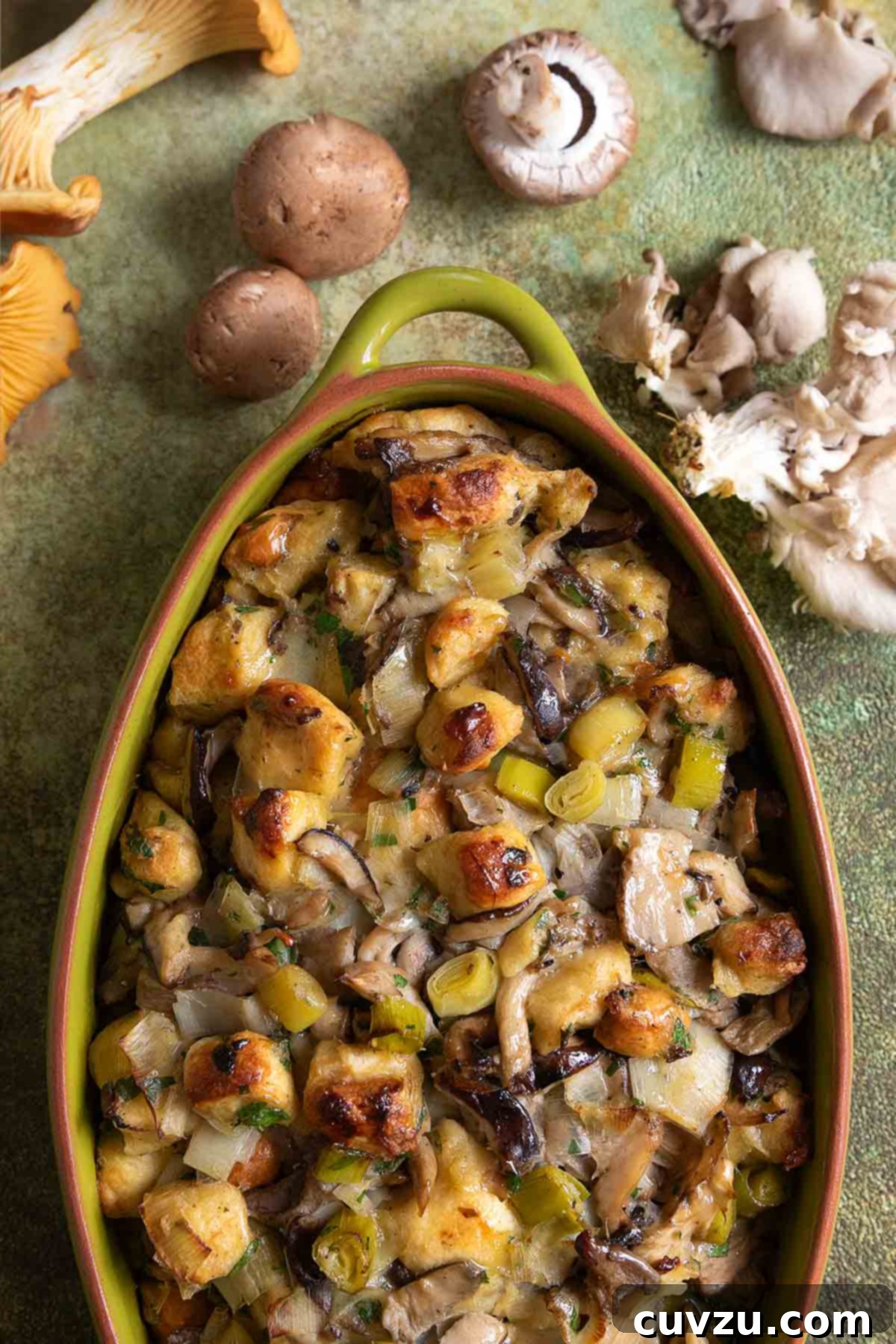
This is a classic Thanksgiving debate! The fundamental difference lies in where the dish is cooked. Stuffing, by definition, is cooked *inside* the cavity of the turkey, absorbing its juices and flavors. Dressing, on the other hand, is cooked *separately* in a baking dish or casserole. While the ingredients are often quite similar, the cooking method significantly impacts texture and moisture. For a detailed exploration of this oft-debated topic, including historical context and regional preferences, refer to our in-depth post on stuffing vs. dressing.
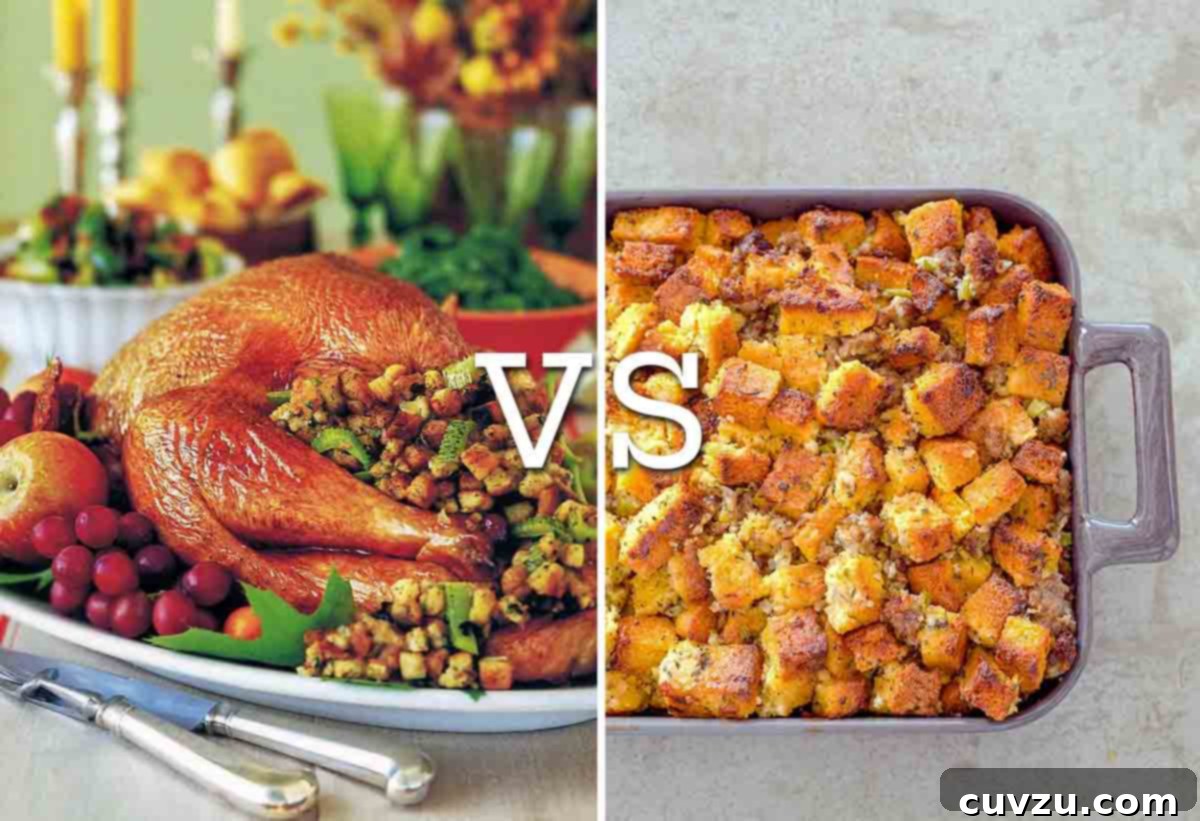
If you’re opting to make dressing separately in a pan (as per Q41), you can still infuse your turkey with incredible flavor by filling its cavity with aromatics. Simple, readily available ingredients work wonders. Quarter an onion, lemon, orange, or quince. Add a handful of fresh herbs like rosemary, bay leaves, or thyme sprigs, along with a couple of crushed garlic cloves. These ingredients will release their fragrances and moisture into the turkey as it roasts, contributing to a more flavorful bird without the food safety concerns associated with stuffing. Remember to remove them before carving.
Don’t underestimate the popularity of this savory, bread-based side! A good rule of thumb is to calculate based on bread volume. A 9- by 13-inch baking dish, typically holding about 10 cups of cubed bread, will generously feed 8 to 10 people. For a smaller crowd of 4 to 6 guests, an 8-inch by 8-inch baking dish filled with 5 cups of cubed bread should be sufficient. As a general ratio guide, aim for roughly 10 cups of bread cubes to 3 cups of chopped vegetables (like celery and onion), 3 cups of liquid (broth), and 2 eggs. You can then add mix-ins like meat, nuts, spices, or additional herbs on top of these base measures.
If your dressing has emerged from the oven a bit too dry and crumbly, there’s a simple and effective fix. Generously drizzle it with warm chicken or turkey stock, or melted butter. Cover the dish loosely with foil and return it to a warm oven (or even the microwave for a few minutes) just until it’s heated through and the liquid has been absorbed. This will rehydrate the dressing, making it moist and palatable again without overcooking.
Yes, soggy dressing can absolutely be corrected. This often happens if the dressing wasn’t baked long enough, or if too much liquid was added. If you have extra dry bread cubes on hand, gently fold them into the soggy dressing. Then, spread the entire mixture out onto a large baking sheet, ensuring it’s not too crowded. Pop it back into a hot oven (around 375-400°F or 190-200°C) for 10-15 minutes, stirring occasionally, until the excess moisture evaporates and the dressing crisps up nicely.
Dry bread cubes are essential for stuffing and dressing, as they absorb liquids without becoming mushy. Ideally, you should cube your bread at least a day in advance and let it air dry on a baking sheet, uncovered, at room temperature. This creates truly dry, not stale, bread. If you’re short on time, you can quickly dry your bread cubes in the oven: spread them in a single layer on a baking sheet and bake at a low temperature (around 250-300°F or 120-150°C) for 15-30 minutes, tossing occasionally, until they are dried out and lightly toasted.
: Elena Veselova
A bland dressing can be easily rescued! The first step is often to add more fat and aromatics. Drizzle the dressing with additional melted butter, which adds richness and carries flavor. Then, stir in more fresh or dried herbs like sage, thyme, rosemary, or parsley. Sautéed onions, celery, or mushrooms can also be quickly added for an extra layer of savory depth. Taste and adjust seasonings, perhaps adding a pinch more salt or pepper. A splash of chicken or vegetable broth can also help distribute flavors and add moisture.
Cranberry Sauce and Other Sauces: Tangy and Tempting
Bright, tart, and often a vibrant splash of color on the Thanksgiving plate, cranberry sauce is a non-negotiable for many. Whether you prefer homemade or canned, it offers a welcome contrast to the rich flavors of the meal. This section also explores other exciting sauce options to complement your turkey, ensuring every bite is perfectly balanced.
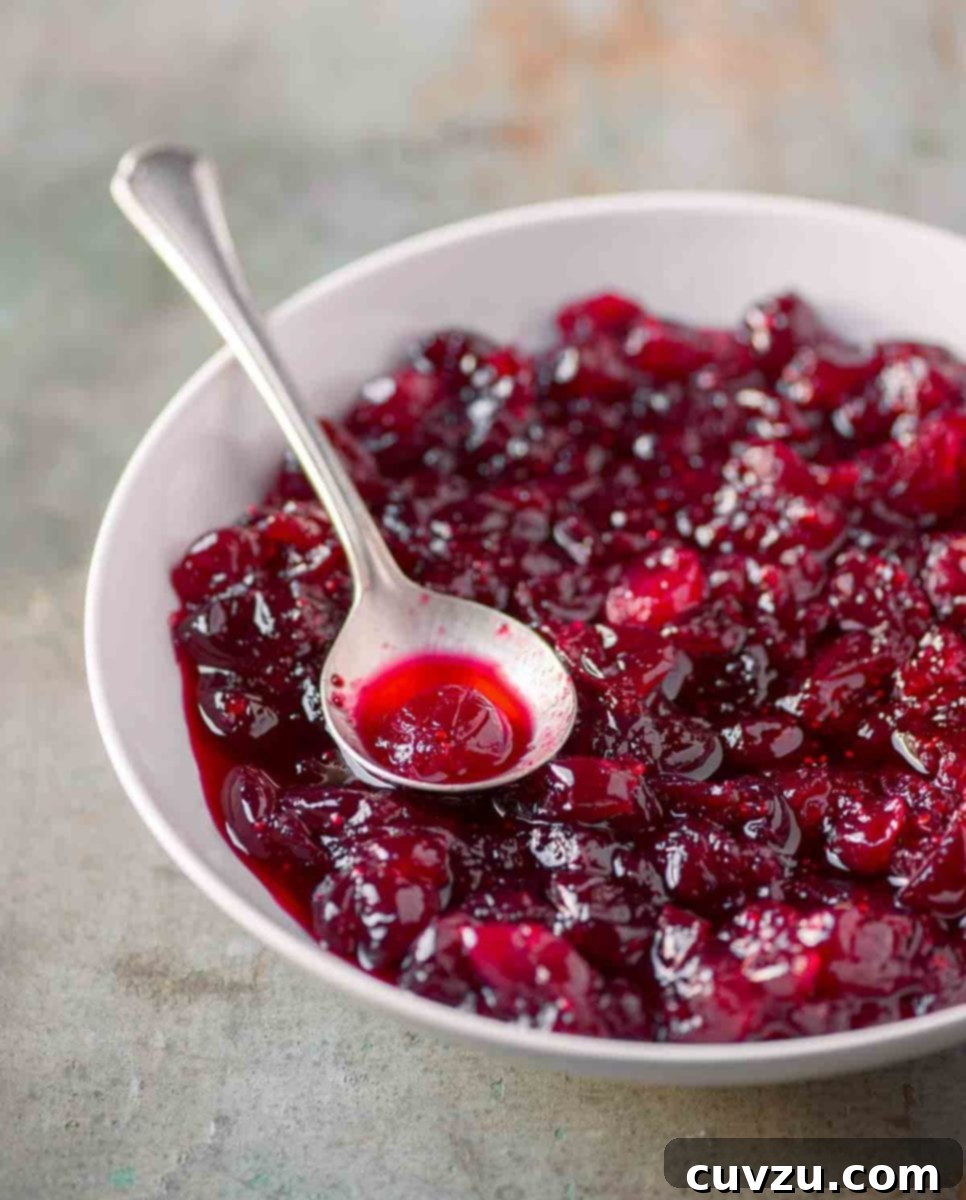
Ultimately, it truly comes down to personal preference and what you have time for. Many people have a deep nostalgic love for the familiar jiggly texture and sweet-tart taste of canned cranberry sauce, and there’s absolutely nothing wrong with that! If that’s what you and your guests prefer, embrace it. Homemade cranberry sauce is quite easy to make and offers a fresher, more customizable flavor and texture (typically more saucy than jelly-like), but if a can brings you joy and saves you stress, go for it!
This is possibly the easiest question on our list! Cranberry sauce is traditionally and best served at room temperature. Its bright, tangy flavors are most vibrant when not chilled or piping hot. You can prepare it well in advance, store it in the refrigerator, and then simply take it out an hour or two before dinner to allow it to come to room temperature. Cover the bowl and set it aside until it’s time to grace the Thanksgiving table.
If you’re looking for alternatives to traditional gravy or simply want to offer more variety, think about sauces that complement roast chicken, as turkey shares a similar flavor profile. Bright, herbal sauces like fresh chimichurri can add a lovely zest. A creamy and tangy mustard cream sauce offers a rich counterpoint. For those who enjoy a little kick, a spicy fruit chutney or a pepper jelly could be an exciting addition. Don’t be afraid to experiment with flavors that you and your guests enjoy!
: David Leite
Appetizers and Side Dishes: The Supporting Stars
While the turkey takes center stage, the array of appetizers and side dishes are the true unsung heroes of Thanksgiving, offering variety, texture, and flavor to round out the meal. Balancing tradition with new favorites and managing multiple dishes simultaneously is a skill. This section offers guidance on quantity, make-ahead strategies, and ensuring every side shines.
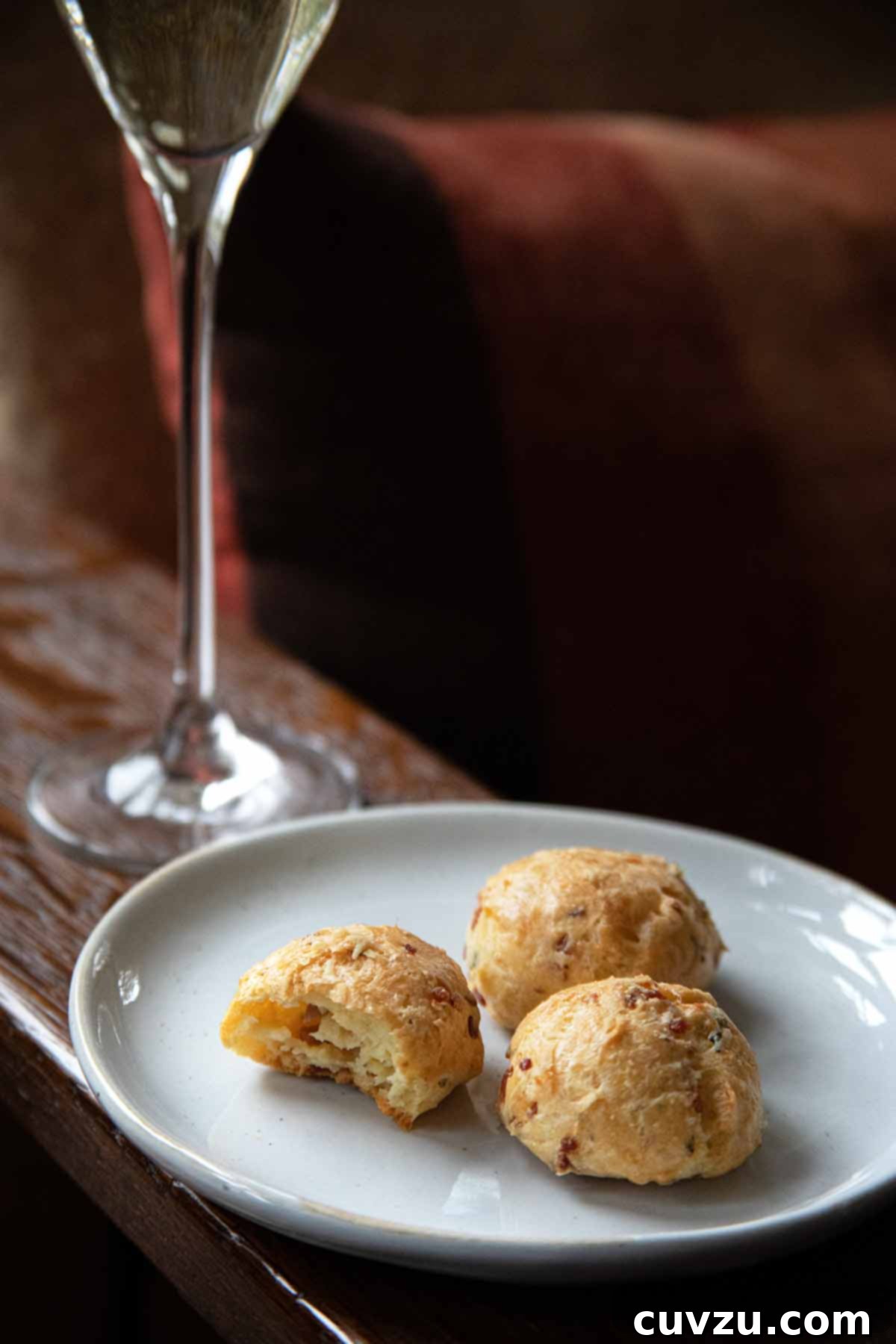
The goal of appetizers is to take the edge off hunger and whet appetites, not to serve a full pre-dinner buffet. A general rule of thumb is to aim for at least three “bites” of each appetizer per person. So, for a larger appetizer like crostini that takes a few bites, plan one per person. For smaller, bite-sized appetizers, prepare three of each per guest. Offering three to four different appetizer options (including some lighter choices like fresh vegetables with a green olive dip) usually works very well, providing variety without overfilling your guests before the main event.
To ensure a satisfying variety without overwhelming your guests (yes, too many sides is possible!), aim for a balanced selection. A good strategy is to include at least two starch-based dishes and at least two vegetable-focused dishes. Stick to beloved standards like creamy creamed spinach or savory Brussels sprouts with guanciale. Consider introducing one new, exciting dish, such as luscious aligot potatoes, to add a fresh twist while still honoring Thanksgiving’s traditional spirit. A vibrant salad can also count towards your vegetable offerings.
Maximizing make-ahead dishes is key to a stress-free Thanksgiving. Many popular sides can be prepared a day or even two in advance and simply reheated while the turkey rests. Excellent candidates include scalloped potatoes, mashed potatoes, all forms of dressing, and anything with “casserole” or “gratin” in its name—think green bean casserole, sweet potato puddings, or butternut squash gratin. Most dessert recipes also fall into this category. It’s best to avoid making fresh rolls, anything with delicate fresh greens, or the turkey itself until the day of your dinner to ensure optimal freshness and quality.
Coordinating multiple dishes for Thanksgiving requires smart planning and organization. Here are a few helpful tips from our Never Cook Naked Guys. First, vary the types of dishes you choose: incorporate a mix of hot and cold items, and prioritize dishes that can be made entirely ahead of time. Consider serving items that can be prepared days in advance, like pickled vegetables or certain relishes. Utilize different kitchen appliances (oven, stovetop, slow cooker) to prevent bottlenecks. Group similar tasks, such as all vegetable chopping, to streamline prep. Most importantly, create a detailed timeline for the entire day, from morning prep to final plating.
Mashed Potatoes: Creamy Perfection
Few dishes evoke comfort quite like a mound of perfectly mashed potatoes. A Thanksgiving classic, getting them just right—creamy, fluffy, and free of lumps—is an art. This section delves into potato varieties, avoiding common pitfalls like gluey textures, keeping them warm, and infusing them with extra flavor, ensuring your mashed potatoes are always a crowd-pleaser.
When it comes to mashed potatoes, it’s always better to err on the side of abundance, especially on Thanksgiving! Plan on at least 1/2 pound of raw potatoes per person. However, given their universal popularity and the likelihood of generous servings (and desire for leftovers), aiming for 3/4 to 1 pound per person is a safer bet. Who doesn’t love mashed potatoes? It’s a dish that consistently disappears quickly, so ensure you have plenty to go around and for delightful next-day servings.
The best potato for mashing largely depends on your desired texture. Russet potatoes are high in starch and low in moisture, resulting in a very creamy and fluffy mash that readily absorbs butter and cream. Yukon Gold potatoes, being waxy, have a lower starch content and absorb less water when boiled. This quality makes them less prone to gumminess and allows them to retain their natural buttery flavor, mashing up fluffy yet slightly denser. For the best of both worlds—creamy texture without being overly starchy or gluey—a 50/50 blend of Russets and Yukon Golds is often recommended, offering a balanced, flavorful, and incredibly satisfying mash.
: Artem Shadrin
Gluey mashed potatoes are typically the result of overworking the starches. Potatoes contain a lot of starch, and when those starch molecules are broken down too vigorously, they release a sticky, glue-like substance. This usually happens when using high-speed appliances like a food processor, blenders, or even an electric mixer on a high setting. To avoid gluey potatoes, always use a potato masher, a potato ricer, or a handheld mixer on a very low setting. These tools allow you to break down the potatoes gently, preserving their cell walls and resulting in a fluffy, creamy texture.
Keeping mashed potatoes warm and creamy until serving time is a common challenge. One excellent method is to transfer them to a pre-warmed serving bowl, cover it tightly with foil, and if your oven has space, place it on a very low setting (around 150-200°F or 65-95°C). If your oven is occupied, a slow cooker set to “warm” works perfectly for keeping them hot without drying out. Another option is a double boiler over very low heat; just ensure it’s covered. Stir them occasionally and add a splash of warm milk or cream if they seem to thicken too much while holding.
Avoiding lumpy mashed potatoes begins even before the mashing phase. The key is even cooking. Start by chopping your potatoes into uniform 1 1/2-inch chunks. Then, place these chunks in a pot and add cold water to cover them *before* bringing it to a boil. If you add potato chunks directly to boiling water, the outsides will cook faster than the insides, leading to a mix of overcooked and undercooked pieces that will inevitably result in lumps. Starting in cold water ensures even cooking throughout, making them perfectly tender for mashing.
If you’ve mashed your potatoes and still find them a bit lumpy, don’t fret; you have options. Lumps often indicate that some potato pieces were undercooked and simply won’t mash out easily. In this scenario, transfer the lumpy potatoes to a saucepan, add a splash of milk or cream and a knob of butter. Cook them over low heat, stirring frequently, until the lumps begin to soften. Then, continue mashing gently until you achieve a smoother consistency. If the lumps are particularly stubborn, an immersion blender on a very low setting can help, but be careful not to overmix and make them gluey.
If your mashed potatoes are simply too thick but haven’t turned gluey, it’s an easy fix. The solution is to add more liquid and fat. Gradually incorporate more warm milk, heavy cream, or even some chicken or vegetable stock, whisking gently until you reach your desired creamy consistency. A dollop of sour cream or cream cheese can also add tang and richness while thinning them out. While milk works, be mindful that using a large quantity might dilute the potato flavor, so rich dairy or stock is usually preferred.
Mashed potatoes are an incredibly versatile canvas for flavor additions! Beyond butter and cream, consider incorporating roasted garlic for a sweet, mellow depth, or sautéed and baked mushrooms for an earthy umami boost. A sprinkle of cheese also works wonders – sharp Cheddar, tangy goat cheese, or nutty Gruyère are excellent choices. For fresh herbal notes, finely chopped chives, parsley, or even a spoonful of prepared horseradish can add an unexpected zing. Feel free to experiment with a combination of these to create your signature mashed potato dish!
While mashed potatoes are undeniably a Thanksgiving staple, there’s a world of other delicious potato preparations to explore if you want to diversify your menu. Scalloped potatoes are a fantastic make-ahead option, rich and creamy. Roasted potatoes, whether simply tossed with herbs and olive oil or smashed and crisped, are easy to prepare and incredibly flavorful. For something truly unique and satisfying, have you ever tried Portuguese punched potatoes (batatas a murro)? They offer a rustic charm and tender texture that’s utterly delicious.
Vegetables: Freshness and Flavor on the Plate
Often overlooked in the shadow of the turkey, vegetables bring essential freshness, color, and nutritional balance to the rich Thanksgiving spread. From popular Brussels sprouts to misunderstood turnips, and ensuring perfect roasting, this section guides you through preparing vibrant and delicious vegetable dishes that will delight even the most discerning palates.
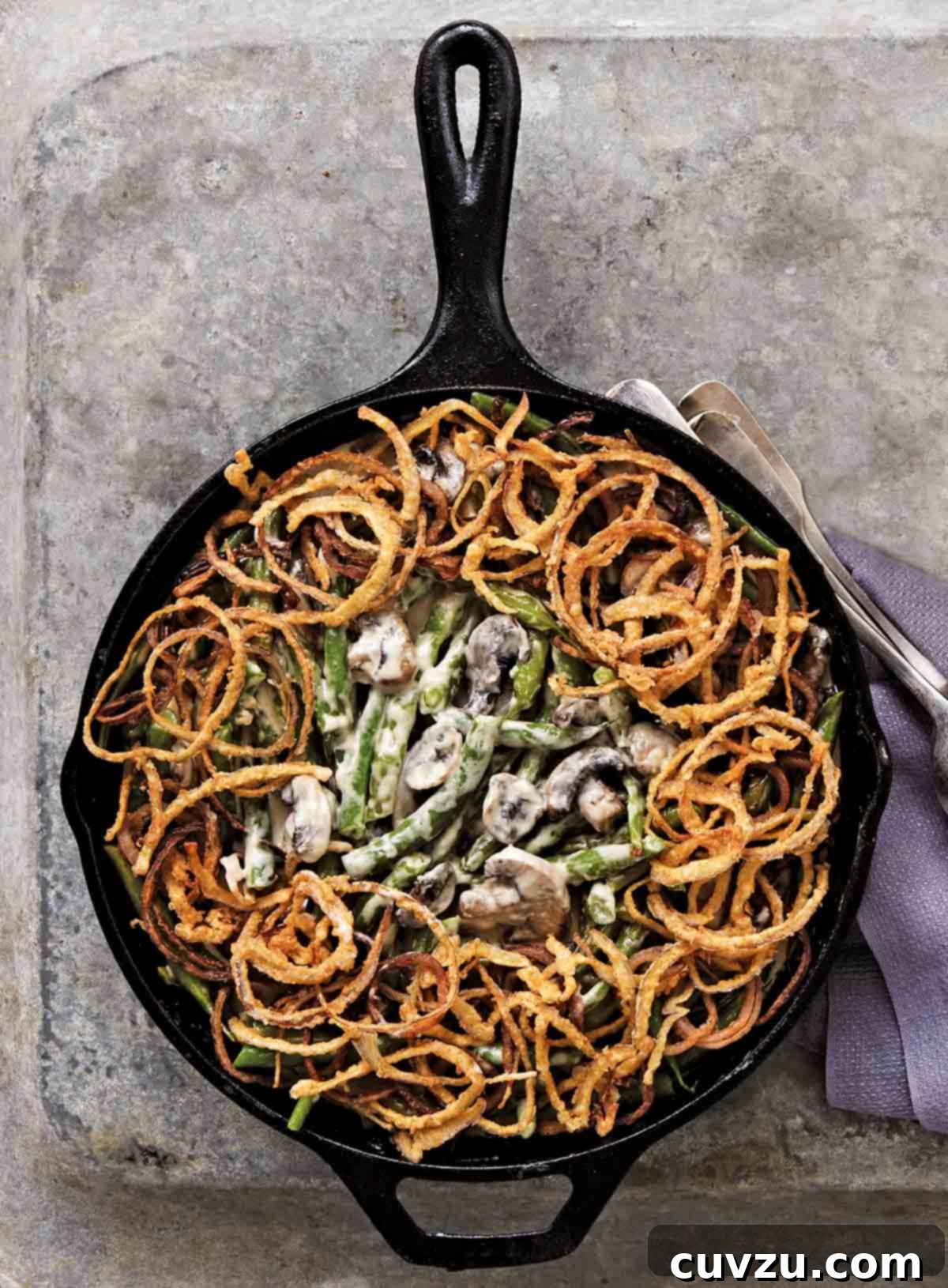
To ensure a balanced and appealing spread, we recommend offering at least two distinct vegetable side dishes. Depending on your menu and guests’ preferences, a fresh salad can count as one of these. However, if you have dedicated veggie lovers attending, or simply want to offer more variety and vibrant color, preparing two cooked vegetable dishes plus a fresh salad is an excellent strategy. Encourage everyone to “eat their veggies!” to balance out the richer elements of the meal.
Brussels sprouts often divide a room, but when prepared correctly, these tiny, cabbagey flavor bombs are incredibly delicious. Please, for the love of Thanksgiving, avoid simply boiling them into submission! Instead, try sautéing them with crispy bits of ham or bacon and pecans for a savory crunch. Roasting them with balsamic glaze until caramelized and tender brings out their natural sweetness. You can also cover them in a rich cheese sauce for a gratin-style dish. With a little creativity, Brussels sprouts can easily become a favorite side dish, far surpassing sad, boiled versions.
Turnips are indeed a misunderstood root vegetable, often resembling giant radishes and leaving many wondering about their taste and preparation. Related to arugula, they possess a peppery, slightly sweet flavor that can be surprisingly delightful. They are fantastic when thinly sliced and layered into a creamy root vegetable gratin, where their earthiness shines through. If you’re feeling a bit adventurous, try glazed turnips and apples; the sweetness of the apples beautifully complements the turnip’s subtle spice, creating an elegant and unexpected side. Don’t shy away from these versatile gems!
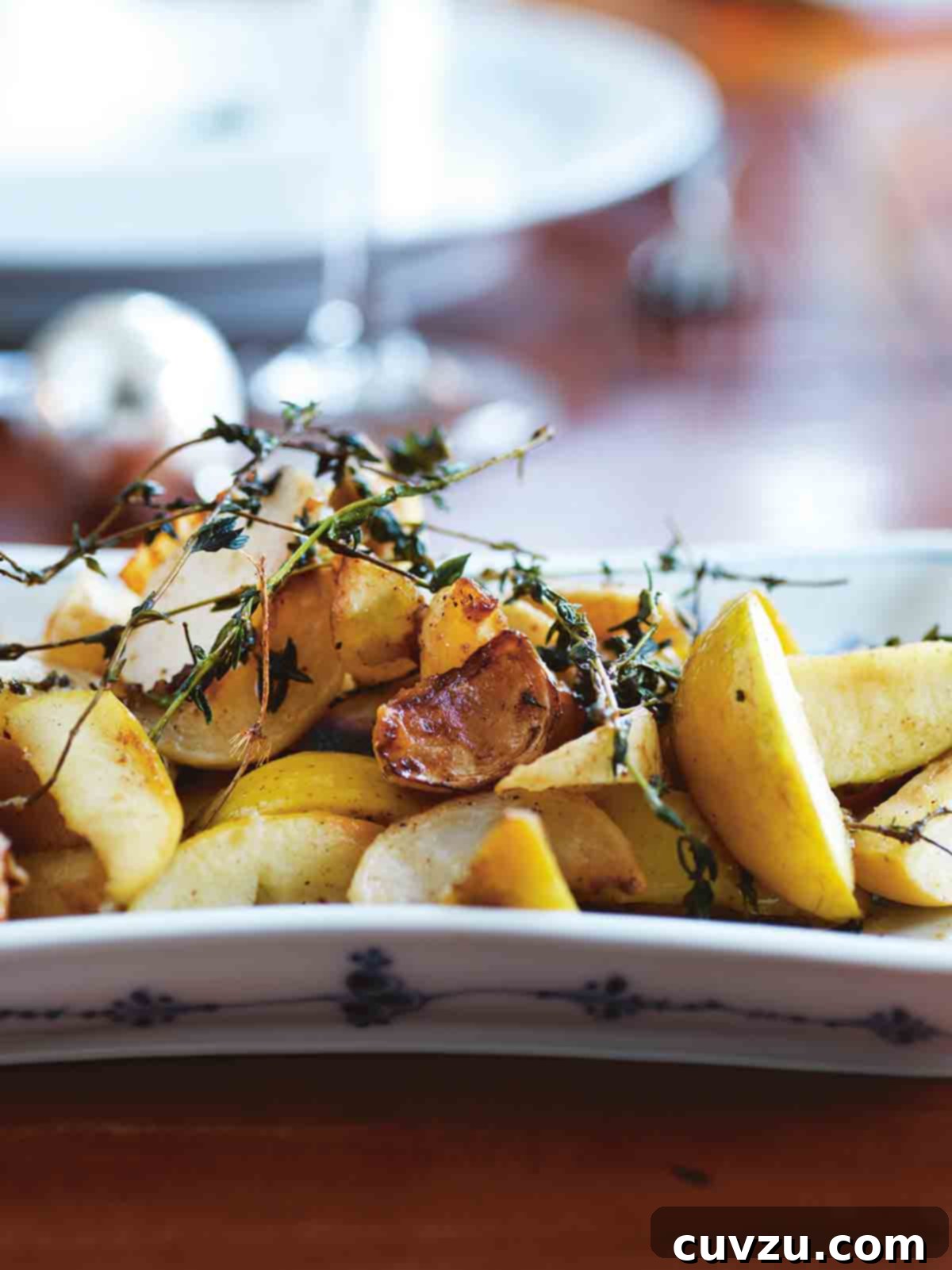 : Columbus Leth
Achieving perfectly roasted vegetables with crisp, caramelized edges requires a few key techniques. First, ensure all your vegetables are cut into uniform pieces. Even if you’re mixing different types, try to make them roughly the same size so they cook evenly. Second, and crucially, do not crowd your pan! Overcrowding traps steam, leading to soggy, steamed vegetables instead of roasted. Give them plenty of space to breathe. Finally, roast at a high temperature, typically between 400°F (200°C) and 425°F (220°C). This high heat is essential for developing those irresistible crispy textures and caramelized, deeply flavorful surfaces you’re looking for.
Don’t panic if your vegetables are overcooked; it happens to the best of us, especially during the holiday rush. If they are completely burned, unfortunately, there’s no salvaging them—discreetly discard and never mention it again! However, if they are merely overcooked and mushy, they can be transformed. Puree them with a touch of warm heavy cream, a little chicken or vegetable broth, and season to taste. Voila! You now have a creamy, savory soup course, adding an unexpected, yet delicious, element to your Thanksgiving menu. Sometimes, culinary mishaps lead to tasty innovations!
If your vegetables have become overly salty, there are a few rescue strategies depending on the dish. For cooked vegetables like roasted carrots or green beans that were boiled and then salted, a quick rinse under warm water can work wonders. After rinsing, pat them dry, re-season with herbs and pepper (but no salt!), and warm them gently in the oven or on the stovetop. For dishes where rinsing isn’t feasible, such as a sauté, you can often add more of the same vegetable (if you have it) or introduce a few handfuls of quick-cooking, neutral-flavored greens like baby spinach. These will absorb some of the excess salt and add bulk without drastically changing the dish’s character.
Dessert: The Sweet Grand Finale
Thanksgiving isn’t truly complete without a selection of decadent desserts, with pumpkin and apple pies reigning supreme. This section delves into achieving the perfect pie crust, troubleshooting common pie dilemmas like cracking pumpkin pies or soggy bottoms, choosing the best apple varieties, and even exploring delicious non-pie alternatives. Prepare to end your feast on a perfectly sweet note.
Understanding the distinctions between these canned pumpkin products is key to successful baking. Making pumpkin filling from scratch using a fresh sugar pumpkin is an option, but it’s time-consuming. Canned pumpkin puree (often simply labeled “canned pumpkin”) is just cooked, pureed pumpkin (or sometimes a blend of squash, which is perfectly fine for baking), with nothing else added. This is ideal when you want to control all the seasonings, as in our pumpkin cake with maple cream cheese frosting. Pumpkin pie filling, on the other hand, is pumpkin puree that already has all the spices (cinnamon, nutmeg, ginger, cloves) and often sugar added. It’s a convenient shortcut, cutting down significantly on your work and making pie assembly even quicker. Always check the label to ensure you’re using the correct product for your recipe.
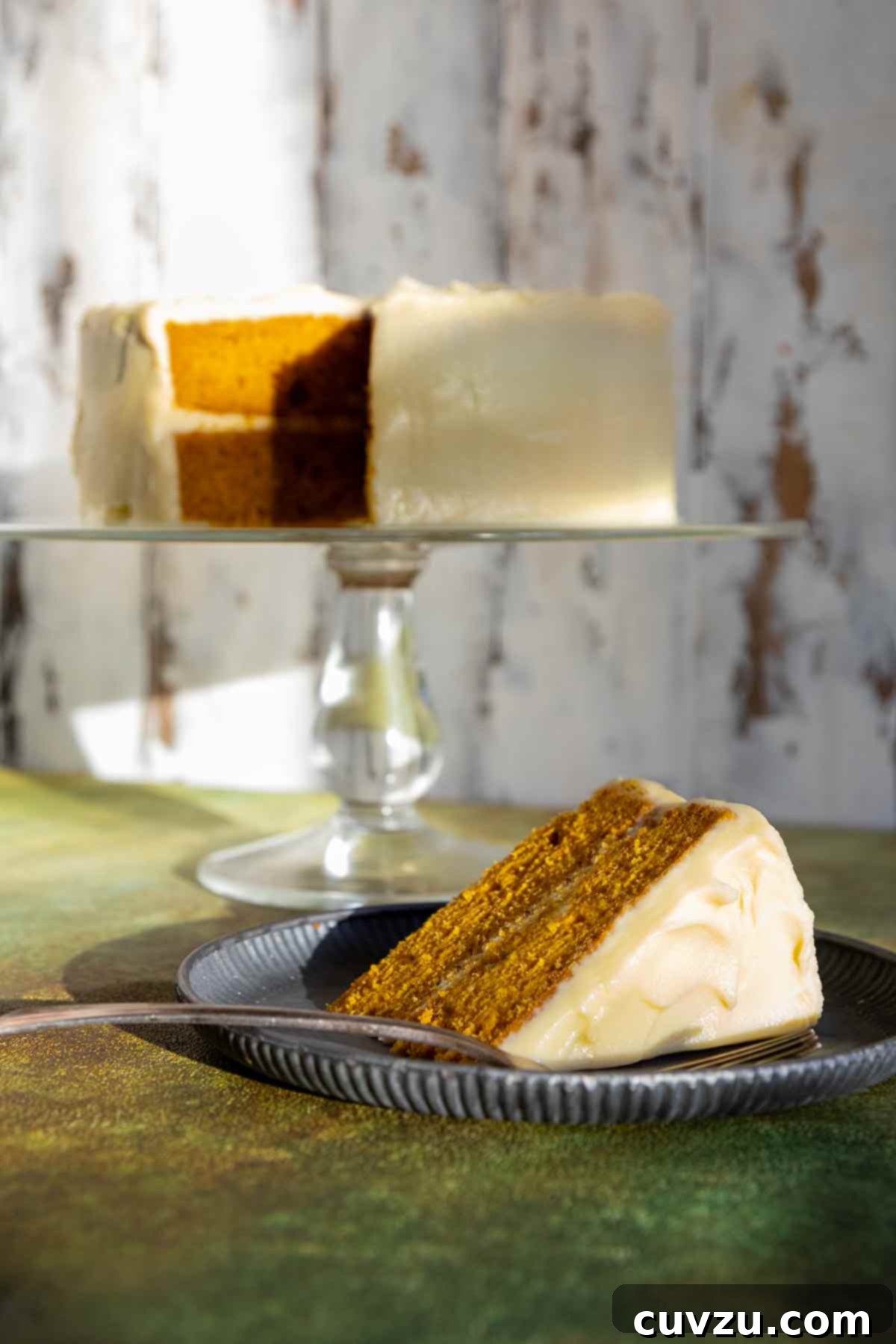 : David Leite
Crafting a flaky, tender pie crust from scratch is entirely within reach, even for novice bakers. The most crucial tips are to stay calm, ensure all your ingredients (especially butter, shortening, and water) are thoroughly chilled, and absolutely, positively do not overwork the dough. Overworking develops the gluten, leading to a tough, dry crust rather than a tender one. Handle the dough as little as possible. For a reliable and delicious result, try one of our best and easiest pie crust recipes that balances flakiness and flavor.
If your pie dough cracks and crumbles frustratingly as you try to roll it out, it’s most likely too dry. This is a common and relatively easy problem to fix. Gently sprinkle a very small amount of ice-cold water (about a teaspoon at a time) over the dry areas of the dough with your fingertips. Carefully and gently work the water in by folding and pressing the dough until it just comes together and is pliable. If the dough starts to become too warm during this process, simply pop it back into the refrigerator to chill for 10-15 minutes before attempting to roll again. Chilled, properly hydrated dough will roll out much more smoothly.
Beyond the basics, achieving a picture-perfect pie crust demands a gentle touch and a patient, cool hand. Always start your pie-making process earlier than you think you need to; rushing can lead to mistakes. Crimping your crust isn’t just for aesthetics; it also helps seal the edges and prevents the delicious filling from bubbling out during baking. For an impressive visual, consider a lattice crust on your apple pie. While it takes a bit more time and patience, a beautifully woven lattice top will undoubtedly impress all your guests and cement your status as a Thanksgiving master baker.
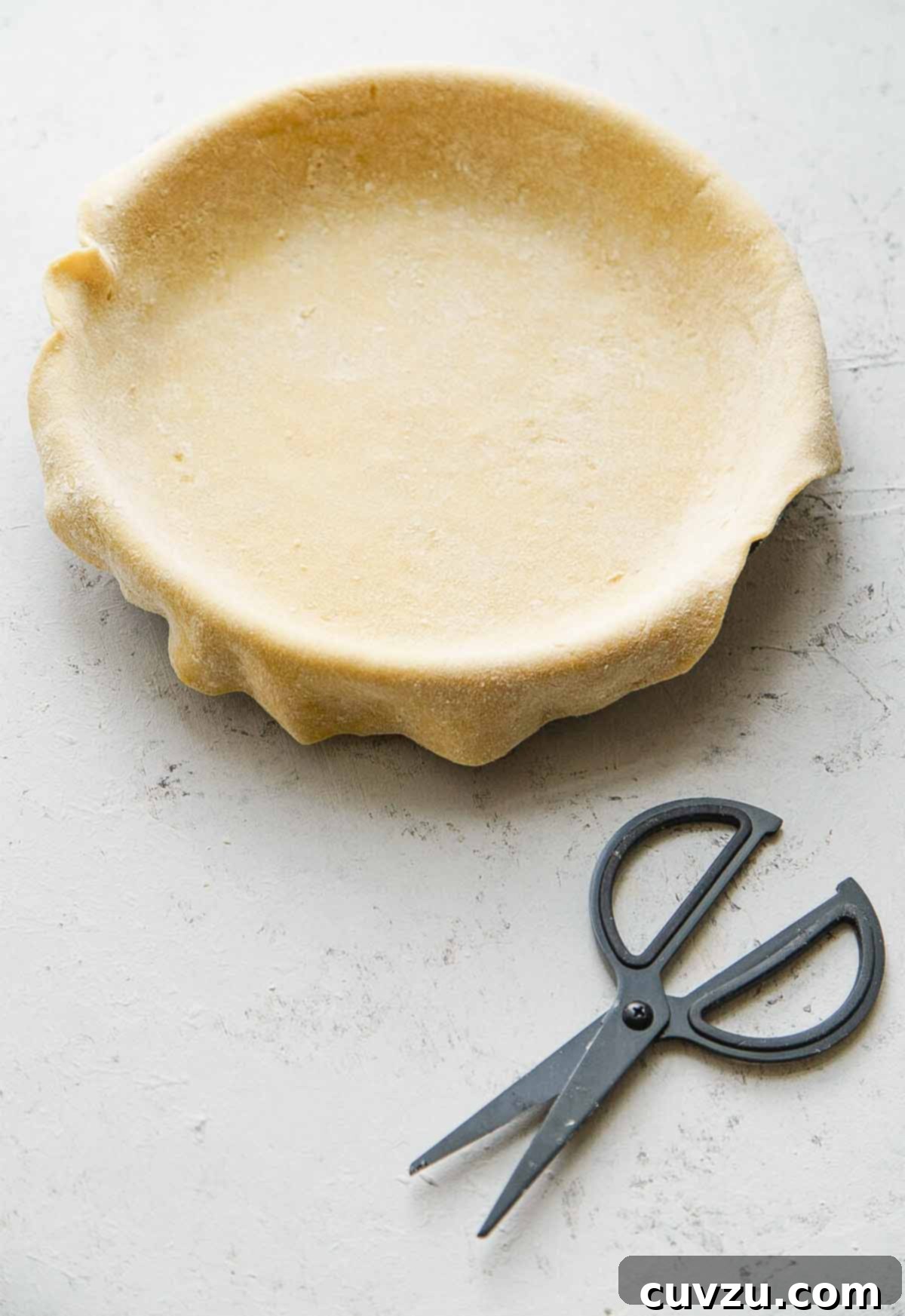
A beautifully bronzed top crust is incredibly appealing and signals deliciousness. If you pull your pie from the oven and find its crust looking a bit pale, you can easily add color and a lovely sheen with an egg wash. Beat one egg with a touch of water, cream, or milk until well combined. Brush this mixture lightly over the top crust of your pie. While it’s ideal to apply an egg wash before baking, you can always brush it on a pale, almost-done pie and pop it back into the oven for an additional 5-10 minutes (or until golden) to achieve that desired golden-brown, glossy finish. Keep a close eye on it to prevent burning.
Preventing those unsightly cracks in a pumpkin pie largely comes down to precise timing and understanding the science of baking. Eggs are the primary culprit, as they set from liquid to solid very quickly. Overcooking the eggs causes the custard to tighten too much, pulling apart and creating cracks. To prevent this, place your pie on a lower oven rack, which helps to cook the bottom crust and filling more evenly. The crucial step is to pull your pie from the oven when the edges are set, but there’s still a noticeable 3- to 4-inch spot in the very center that jiggles slightly when gently shaken. It might look undercooked, but the pie will continue to set as it cools completely (which takes several hours), resulting in a perfectly smooth, crack-free surface and a beautifully firm center.
The best apples for pie depend on your preference for sweetness and texture. For a tart pie with a firm bite, choose apples like Granny Smith, Cortland, or McIntosh. If you prefer a sweeter pie with a good balance of flavor and crispness that holds its shape beautifully, Honeycrisp, Gala, and Pink Lady are excellent choices, yielding a picture-perfect slice. Apples like Golden Delicious and Red Delicious tend to break down more easily, so if you use them, it’s best to mix them with firmer varieties to prevent the filling from becoming too mushy. A blend of different apple types often creates the most complex and satisfying flavor profile.
A soggy bottom crust is a common pie nemesis, especially with wet fillings. Our playful (and delicious) remedy is a swipe of melted chocolate on the bottom crust before baking, which creates a barrier! More traditionally and perhaps broadly helpful, the most effective method is “blind baking” or “par-baking” the crust. This involves partially baking the empty pie crust before adding the wet filling. This helps to set the crust and create a barrier against moisture. You can also brush the bottom of the par-baked crust with an egg wash before filling and finishing the bake; the egg creates an additional protective layer that helps prevent sogginess. Generally, blind baking alone is sufficient for a crisp bottom.
If your pie filling seems too liquidy even after baking, first assess if the pie is truly done. Even if the top crust looks perfectly golden, the filling might need a little more time to set. Try returning the pie to the oven for an additional 10-20 minutes. If your pie has a top crust, ensure there are sufficient vents (or cut a few more) to allow steam to escape, which helps evaporate excess moisture. Remember that most fruit pies and custard pies will continue to thicken significantly as they cool completely. A hot pie will always appear more liquidy than a cooled one, so give it ample time to set at room temperature.
For optimal freshness and crust quality, we recommend making pumpkin and apple pies no more than one day ahead of Thanksgiving. Baking them further in advance significantly increases the risk of a soggy crust, as the moisture from the filling will migrate into the pastry. While leftover pie is always a treat, if you’re presenting a gorgeous, fresh offering, you want it to taste its absolute best. If you need to budget your time, prepare the pie dough in advance and freeze it. Then, thaw the dough and assemble and bake the pie the day before Thanksgiving.
: Workman
That disappointing gap between the apple filling and the top crust often occurs because apples shrink considerably during baking as they release moisture. “Mile-high” apple pies require a substantial amount of apples. If you chop your apples too small, they’ll break down and settle excessively, creating that empty space. To minimize this, use firm apple varieties like Granny Smiths that hold their shape well. If you prefer softer apples that tend to shrink (like Red or Golden Delicious, or McIntosh), slice them thicker so they retain more structure. Additionally, a butter-based crust tends to shrink more than a shortening crust, helping it hug the filling as it bakes. Finally, ensure your top crust has adequate vents; this allows steam to escape, preventing the crust from puffing up and leaving a gap as the filling settles.
For the best texture and freshness, whipped cream is always superior when made just before serving. It truly takes only a few minutes – you can easily whip it up while your after-dinner coffee is brewing! However, if you absolutely need to prepare it in advance, you can make stabilized whipped cream. This version incorporates a stabilizer (like gelatin or cornstarch) that helps it hold its shape for decorating cakes and keeps it firm for a day or two without weeping. But trust us, if you have a stand mixer and a few spare moments, freshly whipped cream offers unmatched airy perfection for topping your Thanksgiving pies.
It happens – you get caught up in the Thanksgiving football game and suddenly your whipped cream has gone too far! If it hasn’t quite separated into buttery bits and still looks a little chunky, it can often be rescued. Return the cream to your mixer, set it to the lowest speed, and slowly drizzle in a tablespoon or two of additional cold heavy cream. Continue to mix gently until the over-whipped cream becomes fluffy and light again. This process helps reincorporate the fats and smooth out the texture. But this time, keep your eyes on the mixer to avoid over-whipping a second time!
If you’re looking to diversify your pumpkin offerings beyond traditional pie, there are many delicious alternatives that capture the festive flavors of fall. Consider a decadent pumpkin cake with maple cream cheese frosting, a rich and creamy option that’s always a hit. Another fantastic choice is individual pumpkin swirl cheesecake bars, perfect for portion control and easy serving. For even more inspiration, explore our roundup of 10 delicious pumpkin spice recipes, where you’re sure to find just the thing you’re craving to round out your Thanksgiving dessert table.
Apple pie is just one of many wonderful ways to enjoy apples during Thanksgiving! If you’re seeking alternatives, consider a warm and comforting apple cranberry crisp, topped with a buttery oat crumble. For an elegant French classic, Tarte Tatin, with its caramelized apples and flaky pastry, is always a showstopper. Other delightful options include a moist drunken apple cake infused with spirits, or the timeless simplicity and rich caramel glaze of Edna Lewis’s apple cake with caramel glaze. Each offers a unique texture and flavor profile that celebrates the versatility of apples.
: Cenk Sönmezsoy
Aluminum foil is your secret weapon when your pie crust is browning too quickly! If the entire top crust is getting too dark but the filling still needs time, simply pull the pie out of the oven and loosely cover the entire top with a sheet of foil. This creates a shield against direct heat, allowing the filling to cook through without further darkening the crust. If only the edges of the crust are burning, you can be more precise: cut a long piece of foil, fold it into strips, and carefully wrap just the edges of the crust, leaving the middle exposed. Pop it back into the oven to finish baking, checking frequently until the filling is perfectly set.
Wine and Drinks: Perfect Pairings
Beyond the food, the right selection of beverages elevates the entire Thanksgiving experience. From choosing wines that beautifully complement the diverse flavors of the holiday meal to preparing delightful non-alcoholic options, this section ensures your drink menu is as thoughtful and appealing as your feast. Learn about pairings, quantities, and quick chilling tips.

Thanksgiving dinner presents a wonderful challenge for wine pairing due to its rich and diverse flavors. Thankfully, turkey is versatile, pairing well with both red and white wines. For whites, bright and crisp options like Chardonnay (unoaked or lightly oaked), dry Riesling, or Sauvignon Blanc can beautifully cut through the richness of the meal. For reds, look for medium-bodied, fruit-forward varieties with good acidity, such as Pinot Noir, Gamay (often found in Beaujolais), or a mature Bordeaux or Rioja. Zinfandel, with its bold fruit and spice, is also a classic Thanksgiving choice. And don’t forget something bubbly like Prosecco or Champagne – it’s a celebration, after all!
Estimating wine quantities for a gathering can be tricky, but a reliable rule of thumb is to plan for one bottle of wine per two people every two hours. So, if you’re hosting a four-hour Thanksgiving dinner for ten people, you’ll need approximately two bottles of wine for every two guests, totaling about 10 bottles of wine. This ensures a comfortable supply throughout the meal and beyond. Remember to account separately for any wine you plan to use in your cooking. It’s always better to have a little extra than to run out during the festivities!
Warm bubbles or white wine can be a real party spoiler. Luckily, there are a couple of fast ways to chill a bottle in under 10 minutes. The first method is to wrap the bottle in a damp paper towel or dishcloth and place it in the freezer. The evaporation of moisture from the towel, combined with the freezer’s cold, rapidly chills the wine. Alternatively, fill a bucket or cooler with ice, add a generous amount of cold water, and then stir in a few tablespoons of salt. Submerge the bottle in this salted ice bath; the salt lowers the freezing point of the water, making the ice bath much colder and more efficient at chilling. Choose the method that best suits your available space and time.
It’s important to offer a thoughtful selection of non-alcoholic beverages for designated drivers, underage guests, and those who simply prefer not to drink alcohol. Festive and refreshing options include flavored sparkling water, a vibrant fruit punch, or homemade sparkling juice. These choices show consideration for all your guests and add to the celebratory atmosphere. For a more personalized touch, research and create your own signature Thanksgiving mocktail (a non-alcoholic cocktail) alongside a spirited version. For inspiration, take a look at David Leite’s very own namesake Fatty Daddy cocktail, which can easily be adapted!
 : Paul Sobota
Everything Else: Planning, Guests & Leftovers
Thanksgiving is more than just the food; it’s about the entire experience. This final section covers crucial aspects of holiday preparation beyond the kitchen, including essential make-ahead tasks, gracefully managing guest offers of help, clever ideas for delicious leftovers, and even tips for softening butter quickly. These practical insights will help you enjoy a seamless and memorable celebration.
Thanksgiving preparation extends far beyond the kitchen! To ease the day-of rush, focus on these non-food tasks in the days leading up to the holiday. Clear out closet space for guests’ coats and bags. Set your dining table the night before, including placemats, silverware, and glassware. Create a festive playlist to set the mood. Ensure you have plenty of ice; it’s often an overlooked necessity. Chill all white wines and sparkling beverages in advance. If you use cloth napkins, iron them. And a discreet but important tip: remove any overly personal items from your medicine cabinets – guests, however well-intentioned, often “peep”!
When guests offer to help, it’s a kind gesture, but managing it gracefully is key to maintaining your sanity and kitchen flow. Before the day, decide how much help you truly want and identify specific, manageable tasks you’d be comfortable delegating. This could be simple things like setting out appetizers, filling water glasses, or tending the bar. If you prefer to keep your kitchen clear, don’t hesitate to gently redirect them to socializing areas. You could even enlist a trusted family member or friend to act as a “social director,” keeping guests entertained and supplied with snacks and drinks in the living room.
While some hosts prefer to handle all the cooking, many guests genuinely want to contribute. There are plenty of helpful items they can bring without disrupting your carefully planned menu. Practical suggestions include bags of ice, extra dinner rolls, sparkling water, or non-alcoholic beverages. If you’re comfortable, you could ask for a specific dessert or a cheese board. For those who want to be truly useful, don’t shy away from asking if they have a specific kitchen tool you might need (like a turkey lifter or an extra carving knife). And who doesn’t love a bottle of Champagne? It’s always a welcome addition!
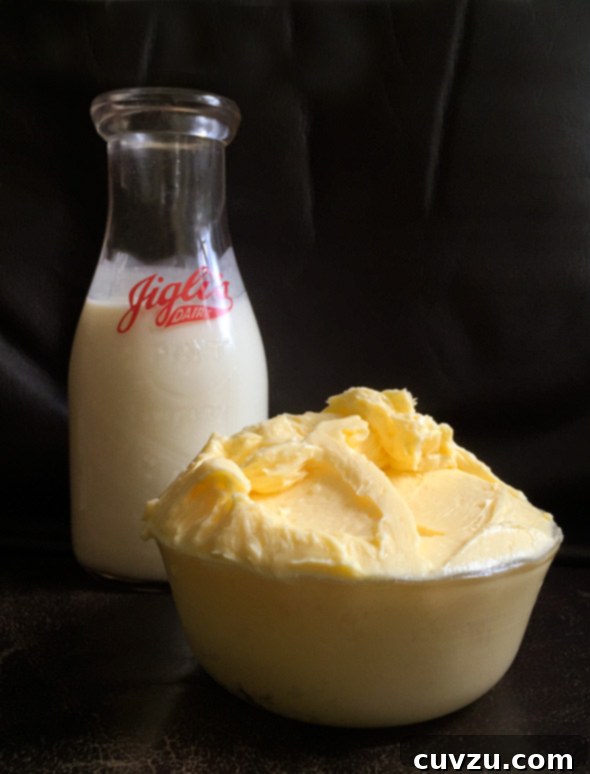
Warm, crusty bread is a simple joy, but wrestling with rock-hard butter can be frustrating. If your microwave is occupied or unavailable, there are easy ways to soften butter quickly. Cut the cold stick of butter into smaller pieces or thin slices; this increases its surface area, allowing it to soften faster. Place these pieces on a small plate next to a warm spot, such as the stovetop (if it’s in use) or even on top of a warming oven. Within a few minutes, the butter should become perfectly spreadable and lovely for your rolls, or ready to be incorporated into your baking.
 : David Leite
Food safety is paramount, especially with holiday leftovers. For cooked turkey and most other perishable Thanksgiving dishes (like stuffing, mashed potatoes, and gravy), the general rule of thumb is to consume them within three to four days when stored properly in airtight containers in the refrigerator. If you anticipate having too much turkey to eat within this timeframe, don’t waste it! Use the meat to make something that can be safely frozen for longer storage, such as turkey soup, hearty turkey shepherd’s pie, or flavorful enchiladas. Always refrigerate leftovers within two hours of serving.
Making stock from your leftover turkey carcass is one of the most rewarding post-Thanksgiving traditions, yielding deeply flavorful broth that far surpasses store-bought varieties. Once you’ve carved off all the meat, break down the carcass and place it in a large pot. Add aromatic vegetables like onions, carrots, and celery, along with a few bay leaves and peppercorns. Cover with cold water and simmer gently for several hours. This rich stock is perfect for making comforting turkey soup or enhancing future gravies and sauces. While we have excellent recipes for chicken stock, they can be easily adapted for turkey, whether you prefer a classic roast turkey stock or a convenient slow-cooker stock.
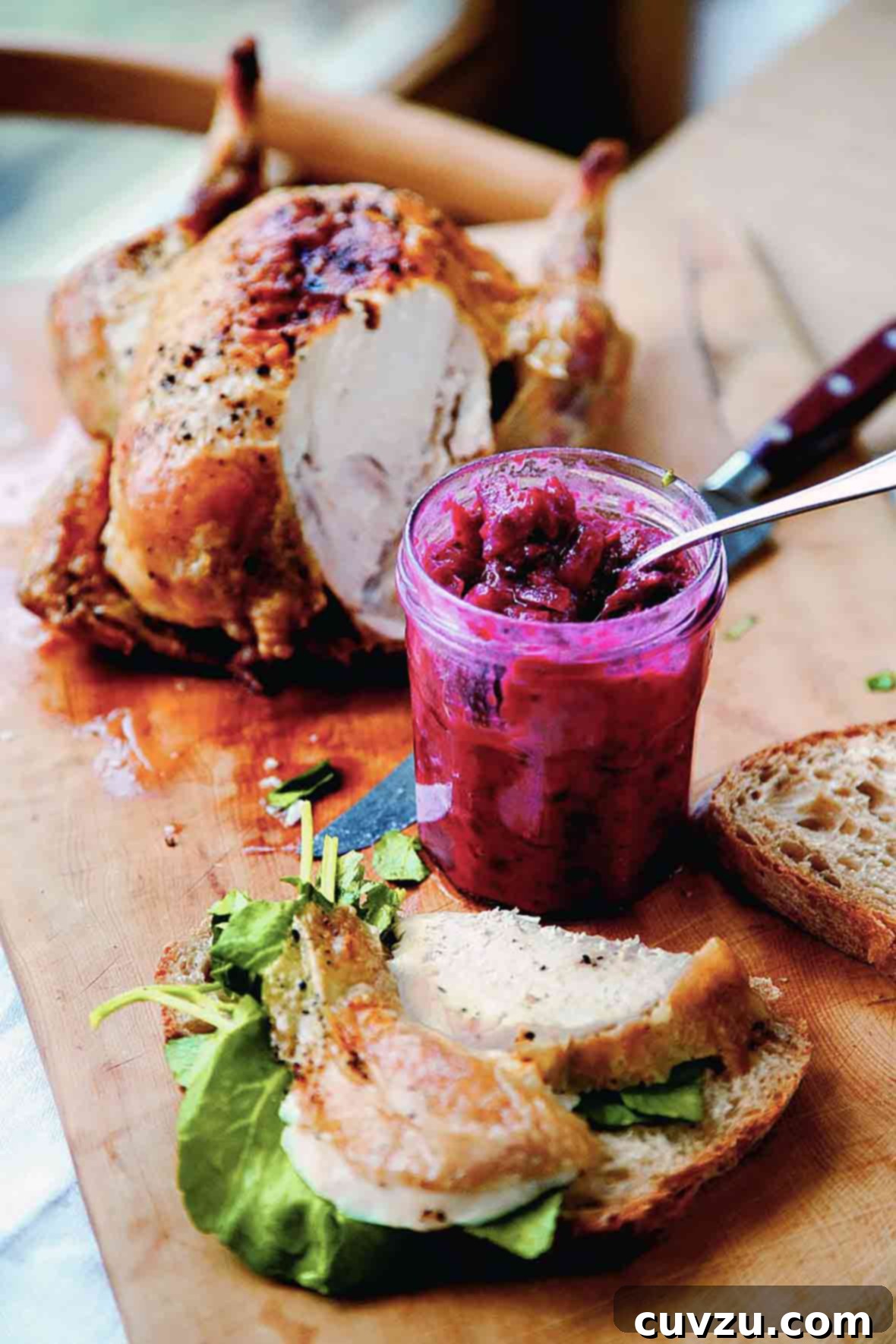
While a classic leftover turkey sandwich with cranberry sauce is a timeless delight, there are many other creative ways to use up any remaining sauce. For a sophisticated upgrade, transform it into a vibrant cranberry chutney by adding spices, citrus zest, and perhaps some chopped nuts or dried fruit; it’s so good, some people even serve it on Thanksgiving day! You can also swirl it into yogurt or oatmeal for breakfast, use it as a glaze for pork or chicken, mix it into a vinaigrette, or bake it into muffins or quick breads. Its bright acidity makes it incredibly versatile.
Thanksgiving leftovers are a gift that keeps on giving, and there are countless ways to transform them into exciting new meals. Imagine combining turkey, stuffing, gravy, and mashed potatoes into adorable, savory muffin-sized snacks. Or, repurpose them into flaky Thanksgiving leftover turnovers, perfect for a quick lunch. A grand Thanksgiving pot pie, brimming with turkey, stuffing, cranberry sauce, potatoes, assorted veggies, and gravy, is another fantastic option. David Leite, for instance, makes one every Black Friday – a true tradition! These ideas ensure that every delicious morsel from your feast finds a new, exciting life.
We sincerely hope this extensive guide has answered every question you’ve ever had about preparing Thanksgiving dinner, and perhaps even sparked a few new ideas. At Leite’s Culinaria, we are profoundly thankful for your unwavering support, your thoughtful questions, insightful comments, inspiring photos, and your cherished presence on our site. No matter how you choose to celebrate this year, we wish you a fantastic holiday season, filled with an abundance of love, joy, and, most importantly, superb eats that bring everyone together.