Demystifying Cocoa Powder: Natural vs. Dutch-Process in Baking
For any avid baker, cocoa powder is an indispensable ingredient, lending its rich, deep chocolate flavor to countless confections. Yet, walk down the baking aisle, and you’ll likely encounter two primary types: natural cocoa powder and Dutch-process cocoa powder. While they might look similar, their distinct characteristics and chemical properties play a crucial role in the success of your baked goods. Understanding the differences between these two cocoa powders isn’t just a matter of culinary curiosity; it’s essential for achieving the perfect taste, texture, and rise in your recipes. This comprehensive guide will explore the origins, characteristics, and optimal uses of both natural and Dutch-process cocoa powders, ensuring you choose the right one every time.
A Rich History: How Cocoa Powder Came to Be
The story of cocoa powder is as ancient and captivating as chocolate itself, tracing its roots back to the venerable Mayan civilization. Long before chocolate became the sweet treat we know today, the early Mayans revered cocoa, not just as a foodstuff but as a sacred commodity. They harvested beans from cacao trees, which then underwent a meticulous process of fermentation, drying, and roasting. After carefully removing their shells, the precious cocoa seeds were ground into a paste. This paste was typically mixed with water, cornmeal, chili peppers, and various spices to create a bitter, frothy beverage called xocolat. This potent concoction was exclusively consumed by Mayan royalty and priests, often in ceremonial rituals, highlighting its immense cultural and spiritual significance.
Centuries later, as cocoa made its way to Europe, it remained primarily a luxury beverage. However, the true revolution for cocoa in baking began in the 19th century. In 1828, a groundbreaking invention by Dutch chocolatier Coenraad Johannes van Houten transformed how cocoa was processed and utilized. His hydraulic press could separate most of the cocoa butter from the roasted cacao beans, leaving behind a dry cake that could then be pulverized into a fine powder. This innovation not only made cocoa powder more accessible and affordable but also paved the way for both natural and Dutch-process varieties, forever changing the landscape of baking and confectionery.

The Essence of Natural Cocoa Powder
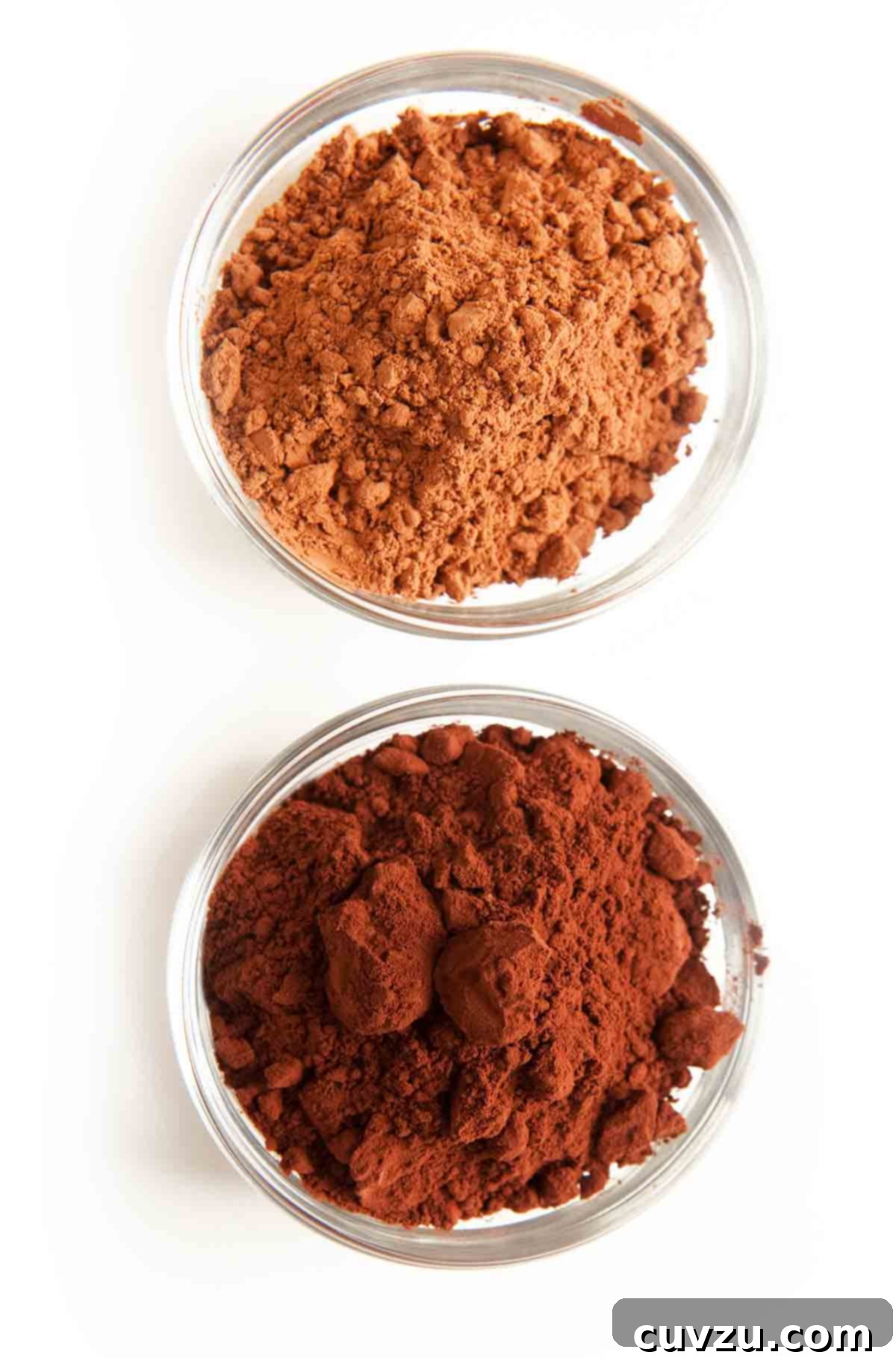
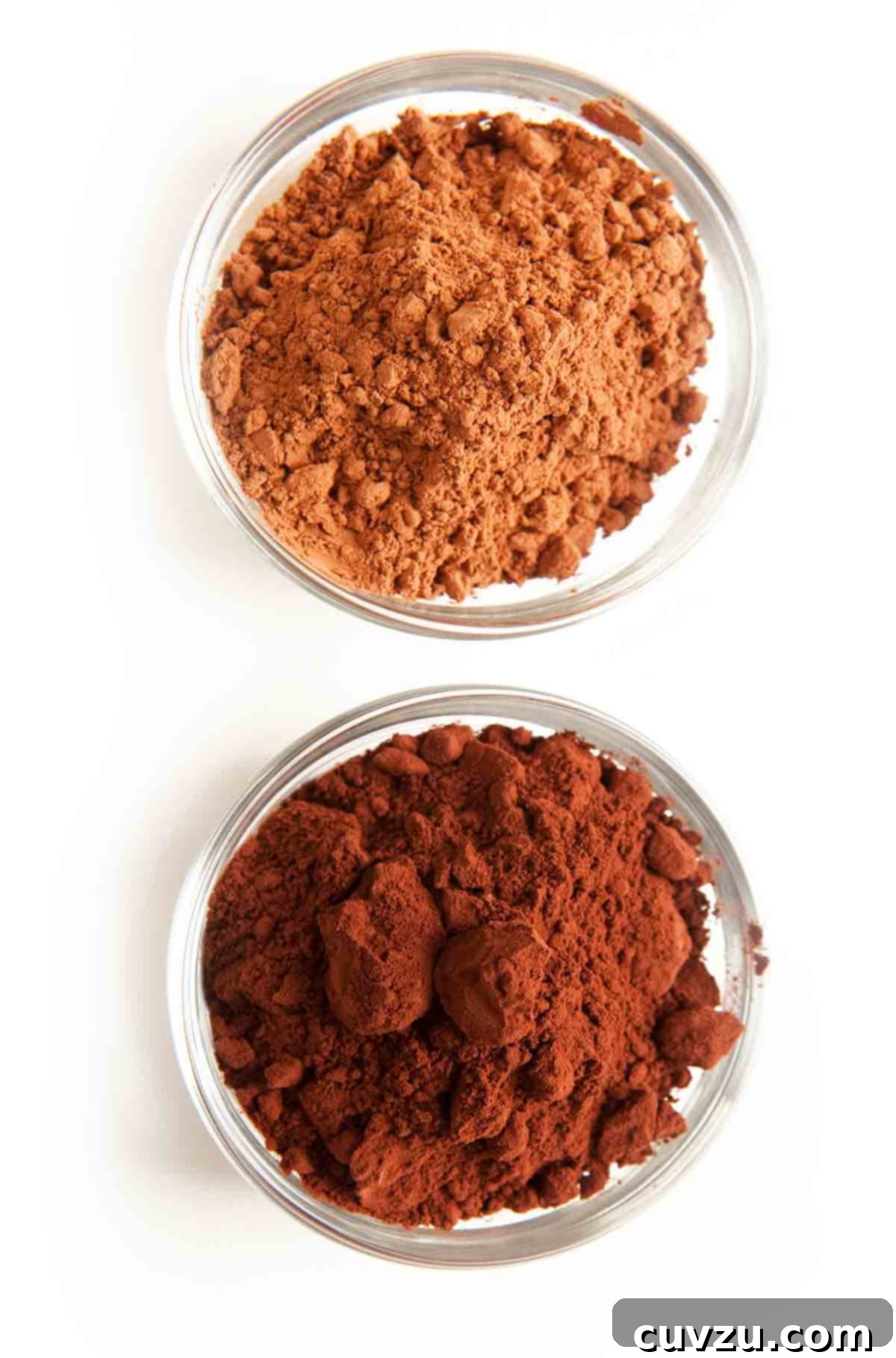
Natural cocoa powder stands as the closest modern descendant to the Mayans’ original preparation. After the cocoa beans are fermented, dried, roasted, and pressed to remove cocoa butter, the remaining solids are ground into a fine powder without any further processing to alter its pH. This results in a product that is naturally acidic, with a pH level typically ranging from 5.3 to 5.8. Its flavor profile is extraordinarily robust, concentrated, and distinctly bitter, often described as having fruity or even slightly astringent notes. The color of natural cocoa powder tends to be a lighter, reddish-brown hue.
This inherent acidity is not just a flavor characteristic; it’s a crucial component in many baking recipes. When natural cocoa powder is combined with baking soda (sodium bicarbonate), a chemical reaction occurs. Baking soda is an alkali (a base), and it requires an acid to activate and produce carbon dioxide gas. This gas creates bubbles, causing baked goods to rise and become light and airy. Therefore, natural cocoa powder is the preferred choice for recipes that call for baking soda as the primary leavening agent, such as many classic chocolate cakes, cookies, and brownies. Ignoring this scientific interaction can lead to dense, flat, or overly bitter results.
You might recall the widely shared video of a child’s humorous encounter with plain cocoa powder—the immediate, strong dose of disappointing reality that hits their taste buds. That viral moment perfectly encapsulates the intense, unadulterated flavor of natural cocoa powder when consumed directly. It’s that raw, powerful taste that bakers harness to create rich, complex chocolate experiences when paired correctly with other ingredients.

Understanding Dutch-Process Cocoa Powder
The innovation that gave us Dutch-process cocoa powder emerged from the vision of Coenraad Johannes van Houten in 1828. His pioneering method involved treating natural cocoa powder with an alkalizing agent, most commonly potassium carbonate (a type of salt often referred to as potash). This process, known as “Dutching” or alkalization, neutralizes the natural acidity of the cocoa powder, raising its pH level to between 6.8 and 8.0, making it more alkaline or neutral. It’s important to note that while potassium carbonate is a salt, it is distinctly different from table salt (sodium chloride) and they are not interchangeable in baking applications.
The alkalization process significantly alters both the flavor and appearance of the cocoa powder. Dutch-process cocoa is notably darker in color, often ranging from a deep reddish-brown to an almost black hue, contributing to the signature look of “blackout” cakes and cookies like Oreos. Flavor-wise, it is significantly milder, smoother, and less bitter than natural cocoa. Its mellow taste is often described as earthy or chocolaty without the sharp, fruity notes of its natural counterpart. Another practical advantage of Dutch-process cocoa is its improved solubility; it disperses more easily in liquids, making it ideal for beverages like hot chocolate and some sauces.
Due to its neutralized acidity, Dutch-process cocoa powder does not react with baking soda. Therefore, recipes calling for Dutch-process cocoa typically rely on baking powder, which is a complete leavening agent containing its own acid, to achieve lift. In essence, Dutch-process cocoa allows the pure chocolate flavor to shine through without the tangy edge or the leavening demands of natural cocoa. This makes it a favorite for recipes where a rich, dark color and a smooth, less acidic chocolate flavor are desired.

The Science of Leavening: Why It Matters in Cocoa Baking
The distinction between natural and Dutch-process cocoa powder becomes critically important when considering leavening agents in baking. Leavening is the process by which gas is incorporated into a dough or batter, causing it to rise and become light and airy. The two most common chemical leavening agents are baking soda and baking powder, and their interaction with cocoa powder is where the science truly comes into play.
Baking Soda and Natural Cocoa Powder: A Perfect Pairing
Baking soda (sodium bicarbonate) is a pure base. To produce carbon dioxide gas, which is responsible for leavening, it needs to react with an acid. Natural cocoa powder, with its inherent acidity, provides exactly the acidic environment baking soda requires. When these two ingredients meet in a moist batter, a vigorous acid-base reaction occurs, generating bubbles that lift and lighten your baked goods. Recipes that specify natural cocoa powder will almost invariably include baking soda. This combination is common in many classic American chocolate recipes, yielding a product with a distinctive reddish hue and a rich, slightly tangy chocolate flavor.
Baking Powder and Dutch-Process Cocoa Powder: The Independent Agents
Baking powder, on the other hand, is a complete leavening agent. It’s a mixture of a base (baking soda), an acid (like cream of tartar or sodium aluminum sulfate), and a starch (to absorb moisture and prevent premature reaction). Because it already contains its own acidic component, baking powder does not rely on the acidity of other ingredients like cocoa powder to activate. Therefore, Dutch-process cocoa powder, being neutral or alkaline, is typically paired with baking powder. The baking powder will activate independently when moistened and heated, providing the necessary lift. Using baking soda with Dutch-process cocoa in a recipe that relies on it for leavening would result in a flat, dense product, as there would be no acid to trigger the baking soda’s reaction.
Occasionally, you might find a recipe that calls for both baking soda and baking powder alongside either type of cocoa. This usually occurs when additional acids are present in the recipe (like buttermilk or sour cream) that need to be neutralized by baking soda, while baking powder provides consistent leavening regardless of other ingredients’ pH. Kitchen science is a delicate balance, and these combinations are designed to achieve specific textures and flavors.
Can I Substitute One Type of Cocoa Powder for the Other?
The question of interchangeability is perhaps the most common query among bakers. The short answer is: it depends entirely on your recipe and what you are hoping to achieve.
When Substitution is Generally Acceptable (and When it Changes Flavor/Color)
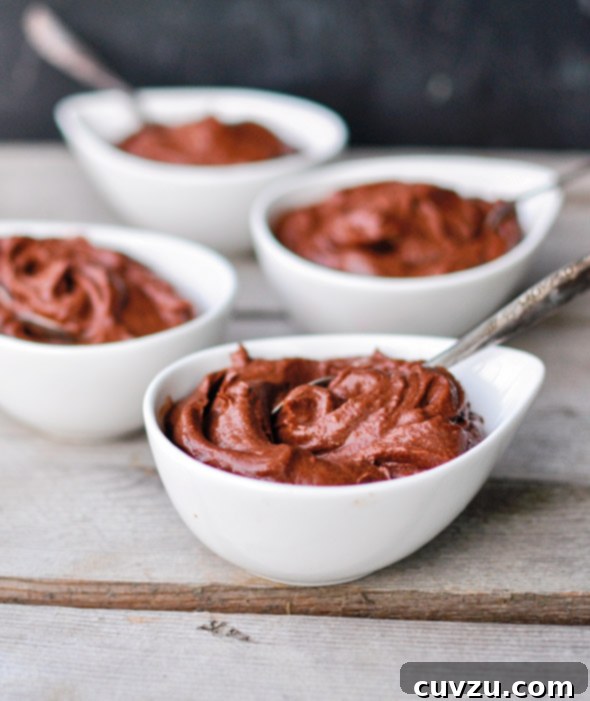
For recipes where leavening is not a critical factor, such as frostings, sauces, chocolate puddings, hot chocolate, or non-baked desserts, you can generally substitute one type of cocoa powder for the other based on your preference for flavor and color. For instance, if a recipe for avocado chocolate pudding or chocolate and cinnamon swirl meringues calls for natural cocoa, using Dutch-process cocoa will yield a darker, milder chocolate flavor, which might be a delightful variation. Similarly, making Mexican hot chocolate with either type of cocoa or traditional chocolate disks and a molinillo will primarily affect the depth of color and intensity of the chocolate taste, rather than the structure of the drink.
When Substitution is Not Recommended (and Why)
However, when your recipe relies on the interaction between cocoa powder and a leavening agent for rise, structure, and texture—for example, in a classic cake, muffin, or quick bread—it is crucial to use the type of cocoa powder specified. If a recipe for a grand, celebratory Hershey’s chocolate cake calls for natural cocoa and baking soda, substituting with Dutch-process cocoa will lead to a disastrously flat, dense cake because the baking soda will have no acid to react with. Conversely, if a recipe relies on baking powder with Dutch-process cocoa, using natural cocoa might result in an overly bitter flavor and an unpredictable rise if additional acids are not properly balanced.
To further simplify this vital concept for every home baker:
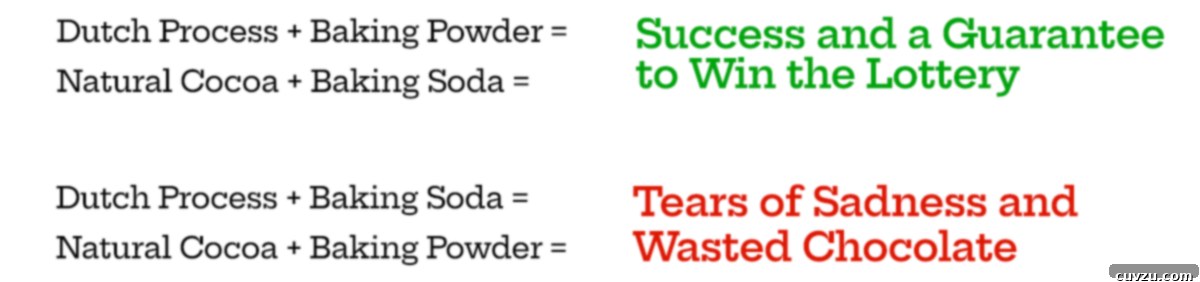
While the golden rule is always to adhere to the recipe’s specifications, we understand that sometimes you might find yourself in a bind. In a rare pinch, you can sometimes use natural cocoa powder in place of Dutch-process cocoa powder, particularly if the recipe also contains baking powder or has other acidic ingredients that can compensate. However, be prepared for a lighter color and a more intense, possibly tangier flavor. What you should never do, under any circumstances, is use Dutch-process cocoa powder instead of natural cocoa powder in recipes that call for natural cocoa and baking soda as the primary leavening. The lack of acidity will prevent the baking soda from activating, resulting in a flat, unappetizing product. And please, resist the urge to ‘out-science’ the recipe by attempting to add arbitrary amounts of salt or other ingredients to try and mimic the properties of the other cocoa type – it simply won’t yield the desired results and can ruin your bake.
Choosing the Right Cocoa Powder for Your Baking Success
Ultimately, the choice between natural and Dutch-process cocoa powder boils down to understanding your recipe’s needs and your desired outcome. For vibrant, slightly reddish-brown baked goods with a robust, tangy chocolate flavor that rely on baking soda for their lift, natural cocoa is your go-to. If you’re aiming for a deep, almost black hue, a milder, smoother chocolate taste, and your recipe uses baking powder (or no leavening), then Dutch-process cocoa is the correct choice. Paying attention to these subtle yet significant differences will elevate your baking from good to extraordinary, ensuring consistently delicious results every time you step into the kitchen. Embrace the science, savor the flavor, and bake with confidence!
Chat With Us: Your Baking Questions Answered!

Do you have a burning cooking question, a perplexing query, or a baking quagmire you’d love us to help solve? We’re here to assist! Click the “Chat with Us” button to the right to leave us a recorded message. Simply provide your name and email address, hit record, and share your thoughts or dilemmas. We’re dedicated to getting back to you with helpful insights and solutions. Who knows? Your question might even be featured right here on our pages, or perhaps even on our popular podcast, “Talking With My Mouth Full.” We look forward to hearing from you and helping you navigate the wonderful world of culinary creations!