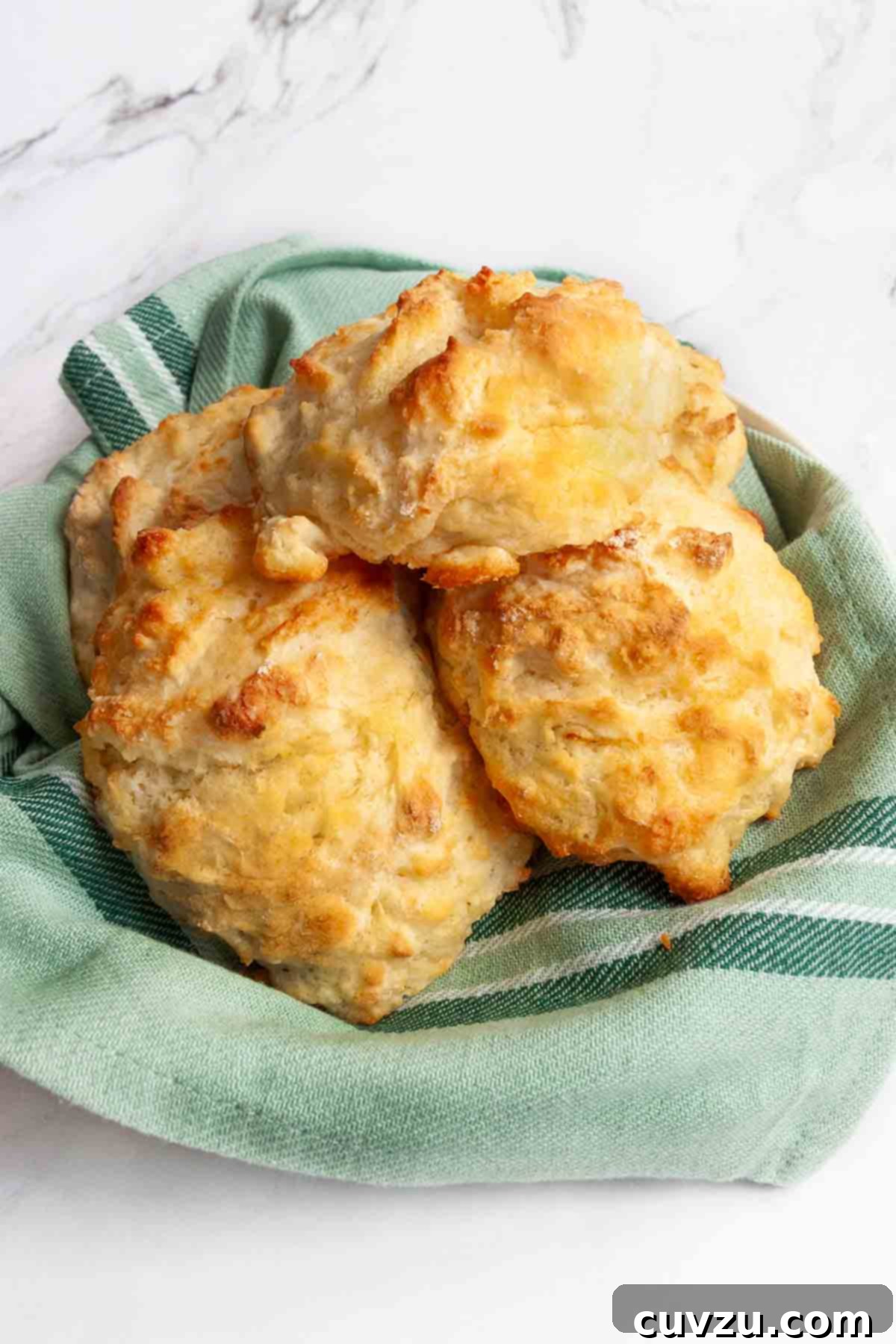
The Ultimate Guide to Fluffy Buttermilk Drop Biscuits: An Easy, No-Roll Southern Classic
Discover the secret to perfectly fluffy, tender, and incredibly easy buttermilk drop biscuits. This classic Southern staple is remarkably simple to make, requiring just a handful of everyday ingredients like flour, butter, baking soda, and tangy buttermilk. Best of all, they’re ready to enjoy in about 30 minutes – no rolling, no cutting, and no fuss! Get ready to bake a batch of homemade comfort that will transport you straight to the heart of the South.
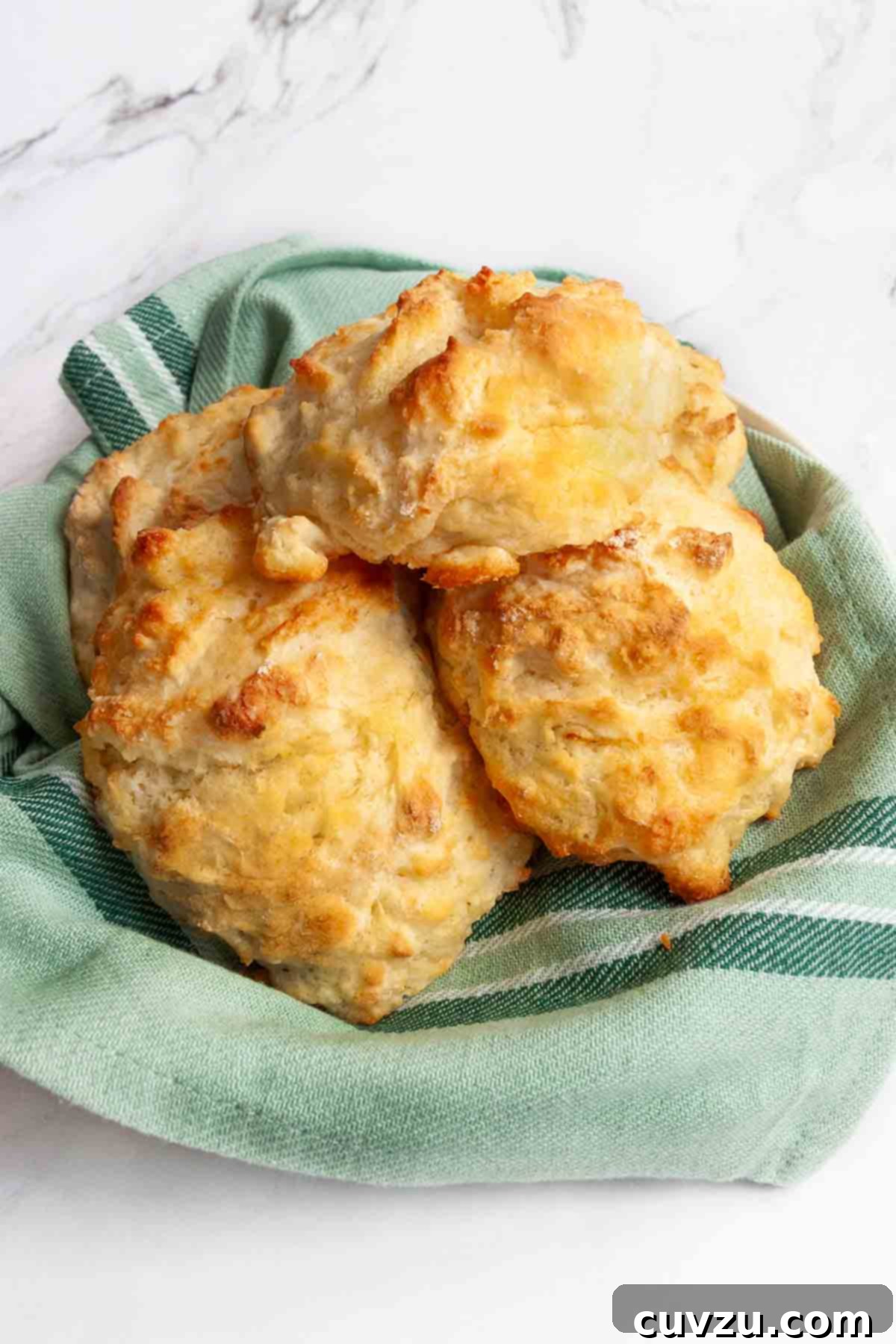
If you’ve been on a lifelong quest for a quick and easy buttermilk biscuit recipe that consistently delivers tender, buttery results, your search ends here. This simple, old-fashioned recipe yields light, unbelievably fluffy biscuits without any messy flouring, folding, rolling, or cutting. Its versatility is another major plus: these delightful drop biscuits can be baked in a classic cast-iron skillet, on a standard baking sheet, or even in a muffin pan for perfectly portioned treats. Perfect for breakfast, brunch, or as a savory side to any meal, these biscuits are destined to become a go-to favorite in your kitchen.

Why This Buttermilk Drop Biscuit Recipe Stands Out
Our dedicated team of recipe testers absolutely raved about these incredibly easy-to-make biscuits, praising their consistent ability to turn out soft, fluffy, and perfectly baked every single time. Susan Bingaman eloquently described them as “light and buttery and quite addictive.”
After years spent trying to replicate her grandmother’s legendary Southern buttermilk drop biscuits, senior tester Anna Scott declared these to be “the BEST biscuits I have ever eaten” and confirmed they were “just as good as I remember hers being.” Such high praise truly speaks volumes about the quality and authenticity of this recipe, proving that simplicity can indeed lead to perfection.
This recipe eliminates the common hurdles of traditional biscuit making, offering a straightforward approach that doesn’t compromise on flavor or texture. The ‘drop’ method means less clean-up, no specialized equipment like rolling pins or biscuit cutters, and a faster path to warm, homemade biscuits. This ease makes them perfect for any day of the week, transforming an ordinary breakfast into something special, or complementing a weeknight dinner with minimal effort. Their rustic charm and irresistible taste make them a standout amongst biscuit recipes.
The Magic Behind the Ingredients: Crafting Perfect Buttermilk Drop Biscuits
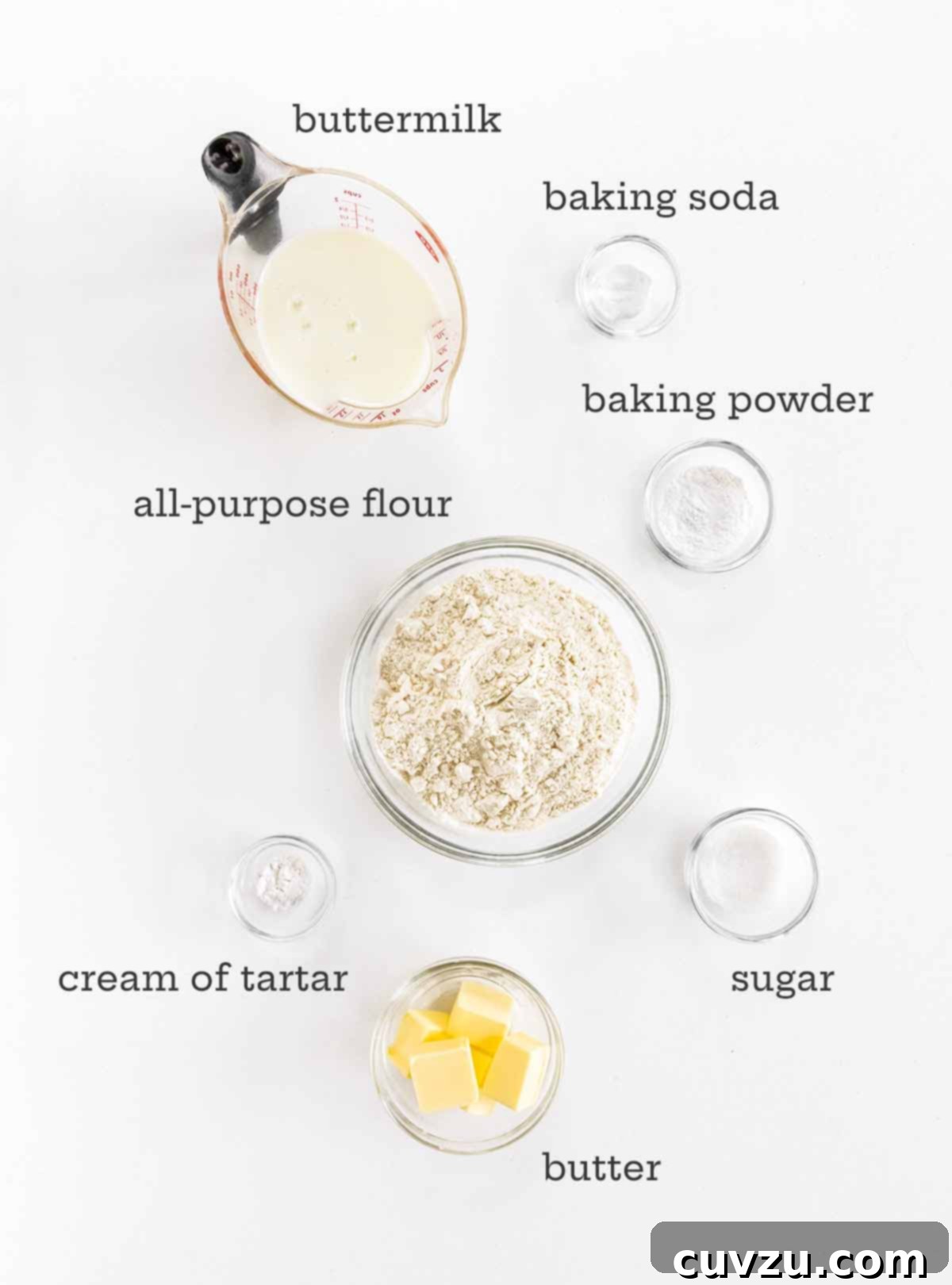
Understanding the role of each ingredient is key to mastering these incredible buttermilk drop biscuits. While the list is simple, each component plays a vital role in achieving that perfect fluffy texture and rich flavor. Here’s a closer look at what makes them so special:
- All-Purpose Flour: This forms the structural base of your biscuits. For truly exceptional, flaky Southern biscuits, many experienced bakers, including us, swear by brands like White Lily. Its lower protein content produces less gluten when mixed, resulting in a more tender crumb. If you can’t find White Lily, a standard unbleached all-purpose flour will still yield delicious results, just be extra careful not to overmix.
- Baking Powder: A crucial chemical leavening agent, baking powder is responsible for giving your biscuits their characteristic lift and airy, open texture. For optimal results, always ensure your baking powder is fresh. A quick freshness test: pour 1/2 teaspoon of baking powder into a small bowl and add a splash of boiling water. If it immediately bubbles and fizzes vigorously, it’s still potent and good to go. If not, it’s time for a new can, as expired leaveners will result in flat, dense biscuits.
- Cream of Tartar: Often found in baking recipes alongside baking soda, cream of tartar is an acidic salt that plays a supporting role in the leavening process. It reacts with the baking soda, providing an additional boost to create carbon dioxide gas, which further helps the dough rise beautifully and achieve that desired fluffy internal structure. Don’t skip it; it contributes significantly to the height and tenderness of these biscuits.
- Buttermilk: The star ingredient and namesake! Buttermilk not only imparts a rich, subtle tang to your biscuit dough that is a hallmark of Southern baking, but its acidity is also vital for activation. It reacts with both the baking soda and baking powder to create carbon dioxide gas, which helps the dough rise and results in tall, unbelievably fluffy biscuits. For the most superior texture and flavor, we highly recommend using cold, full-fat buttermilk. The colder it is, the better it helps keep the butter solid for longer, contributing to flakiness. If you don’t have buttermilk, there’s an easy homemade substitute explained in our FAQ section!
- Cold Butter: The secret to truly flaky biscuits lies in using very cold butter (or margarine/vegetable shortening if preferred). When small, cold pieces of butter are incorporated into the dough and then melt in the hot oven, they release steam. This steam creates tiny air pockets that separate the layers of dough, resulting in that irresistible flakiness that melts in your mouth. Always keep your butter chilled and cut it into small pieces just before adding it to the flour mixture.
- Granulated Sugar & Salt: A small amount of granulated sugar balances the tangy notes of the buttermilk and contributes to the beautiful golden-brown crust of the biscuits, without making them overly sweet. Salt is essential; it enhances all the other flavors, making every bite more savory and complete. Don’t underestimate its role in bringing out the best in your biscuits.
By using these simple ingredients and understanding their individual yet complementary roles, you’re well on your way to baking the perfect batch of authentic Southern buttermilk drop biscuits that will impress everyone.
Step-by-Step Instructions: Mastering Buttermilk Drop Biscuits
Follow these easy steps to create the most delicious and effortless drop biscuits you’ve ever tasted. Precision in baking often leads to perfection, so take your time and enjoy the process!
- Prepare Your Oven and Pan: Begin by preheating your oven to a scorching 450°F (232°C). This high temperature is absolutely essential for a quick, dramatic rise, giving your biscuits their characteristic height and light texture. While the oven heats, generously butter a large cast-iron skillet (we recommend a 12-inch for one batch) or a standard rimmed baking sheet. A well-buttered pan not only contributes to a beautiful golden-brown crust but also prevents the biscuits from sticking.
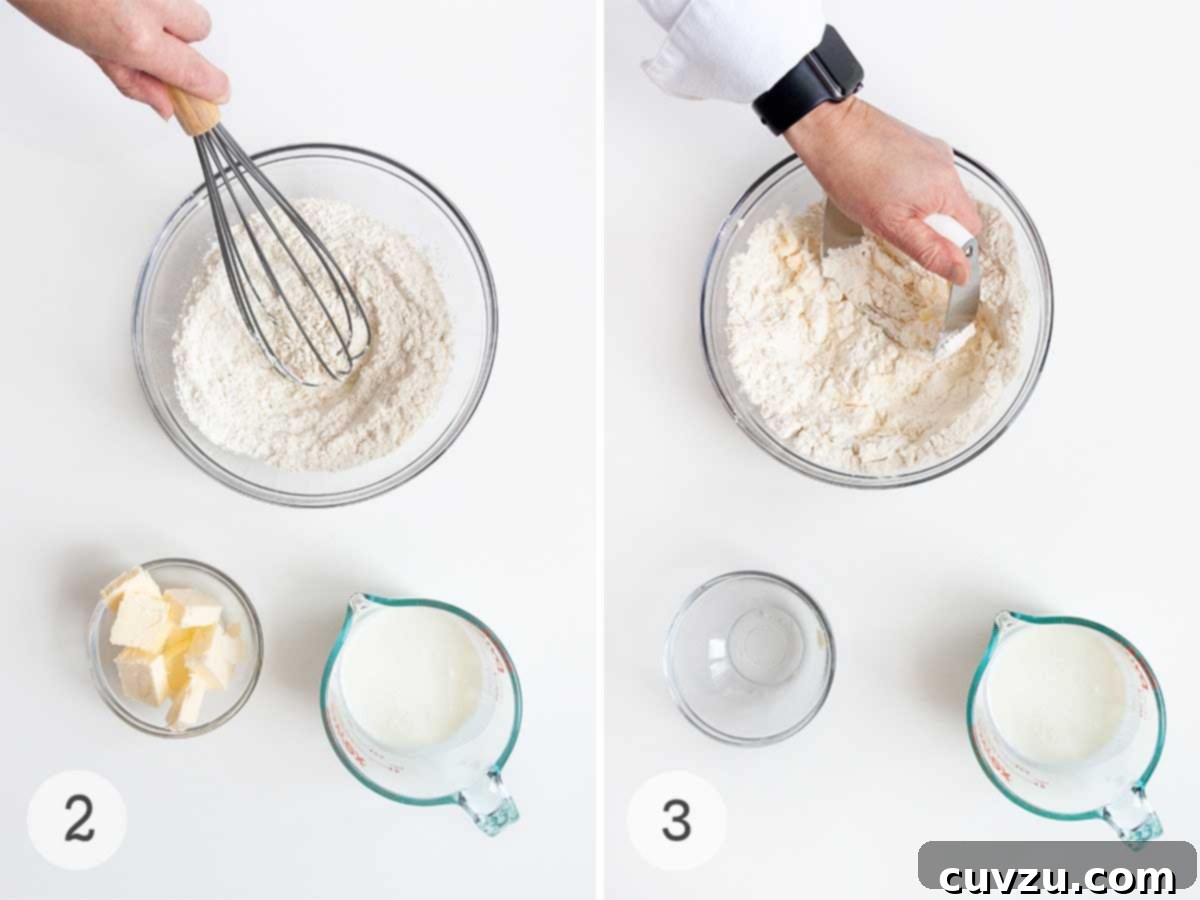
- Combine Dry Ingredients: In a spacious mixing bowl, thoroughly whisk together your all-purpose flour, baking powder, granulated sugar, cream of tartar, salt, and baking soda. Continue whisking until all ingredients are uniformly distributed and there are no visible lumps of leavening agents. This meticulous mixing ensures that every biscuit receives an even rise and consistent flavor.
- Incorporate the Cold Butter: Add the small, chilled pieces of butter (or chosen fat) to the flour mixture. Using a pastry blender, two knives, or even your fingertips (working very quickly to minimize heat transfer), cut the butter into the flour until the mixture resembles coarse crumbs, with some pea-sized pieces of butter still visible. This step is paramount for achieving those desirable flaky layers in your baked biscuits.
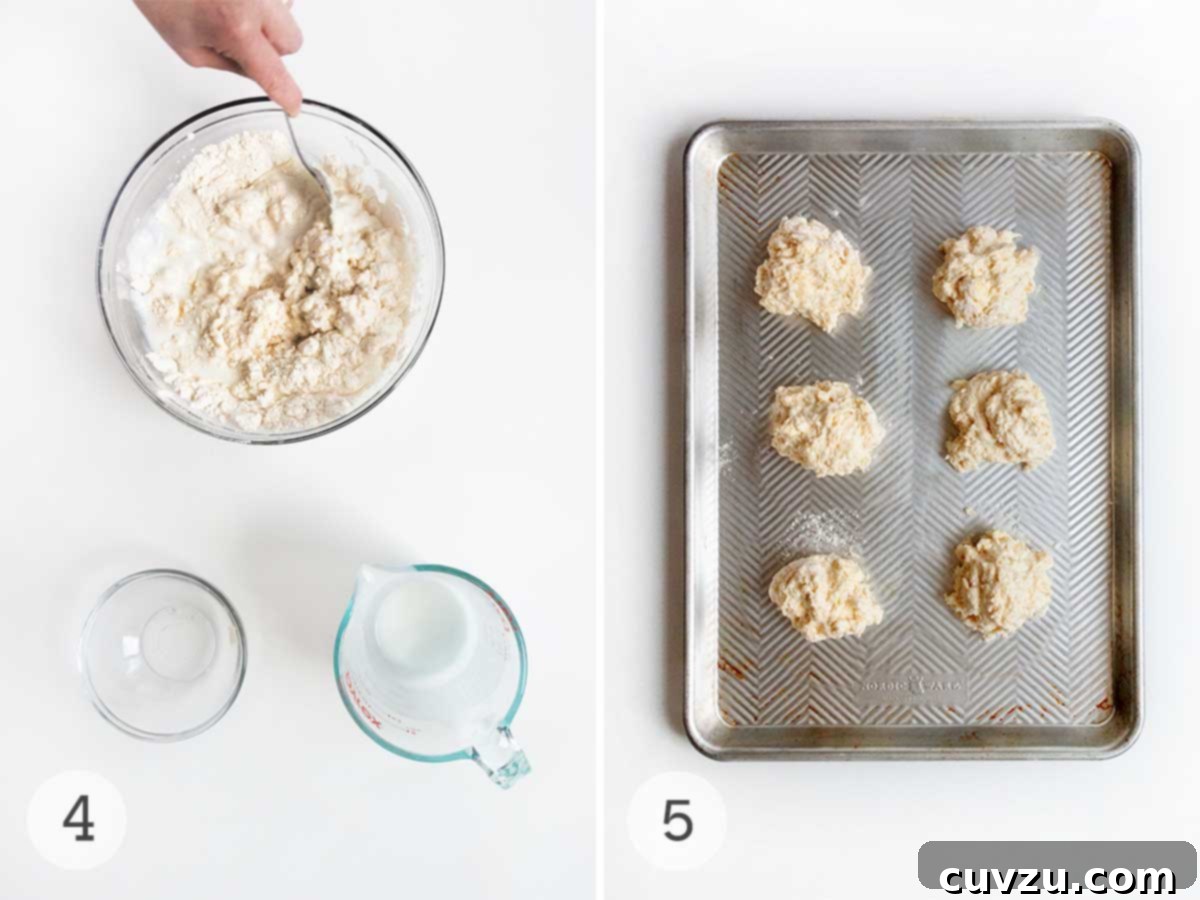
- Add Buttermilk and Mix Gently: Pour in the cold buttermilk. With a fork, gently stir the ingredients together just until no dry patches of flour remain. The dough will appear soft, sticky, and somewhat clumpy – this is exactly the desired consistency. Crucially, avoid overmixing the dough at all costs, as excessive mixing develops gluten, which can lead to tough, rather than tender, biscuits. A light hand here ensures a delicate and tender crumb.
-
Form and Bake Your Biscuits: Using a 1/4-cup measuring scoop or two large spoons, carefully drop generous scoops of the soft dough onto your prepared cast-iron skillet or baking sheet, ensuring they are spaced about 1 to 2 inches apart. This recipe should comfortably yield approximately 6 to 8 beautifully rustic biscuits.
☞ TESTER TIP: If you’re utilizing a cast-iron skillet, drop one blob of dough directly in the center, then strategically arrange the remaining six around the outside edge. As they bake, they’ll gently expand and merge, creating a delightful pull-apart effect.
- Bake to Golden Perfection: Transfer the prepared pan to your preheated oven and bake for approximately 20 minutes, or until the tops are beautifully golden brown and the biscuits have risen significantly. Keep a close eye on them during the last few minutes of baking, as oven temperatures can vary. They should sound hollow when tapped lightly.
- Cool and Serve: Once baked to perfection, remove the biscuits from the oven and let them cool slightly on the pan for a few minutes. They are undoubtedly at their absolute best when enjoyed warm, straight from the oven! Be prepared to swat away eager hands, as the aroma alone is irresistible.
Common Questions: Your Buttermilk Drop Biscuit FAQs Answered
No buttermilk? No problem at all! To quickly create 1 1/4 cups of homemade “buttermilk” for this recipe, simply combine 1 cup plus 3 tablespoons of regular whole milk (or any dairy milk you have, even non-dairy alternatives like almond milk can work in a pinch) with a generous tablespoon of white vinegar or fresh lemon juice. Stir the mixture gently and let it sit for 5 to 10 minutes. The milk will visibly curdle slightly and thicken, indicating that the acid has worked its magic and it’s ready to use. This acidified milk acts similarly to true buttermilk, providing the necessary tang and activating the leavening agents.
Absolutely! Muffin tins are a fantastic way to bake these drop biscuits, yielding perfectly individual portions with consistently crispy edges all around. This method is particularly great for serving individual breakfasts or snacks. Simply follow the recipe as written, then divide the biscuit dough evenly between 7 buttered muffin tin wells. Bake until they are beautifully golden brown and cooked through, typically around the same 20-minute mark as baking on a sheet pan, but always keep a close eye on them as muffin tins can sometimes bake a little faster due to their smaller size and greater surface area.
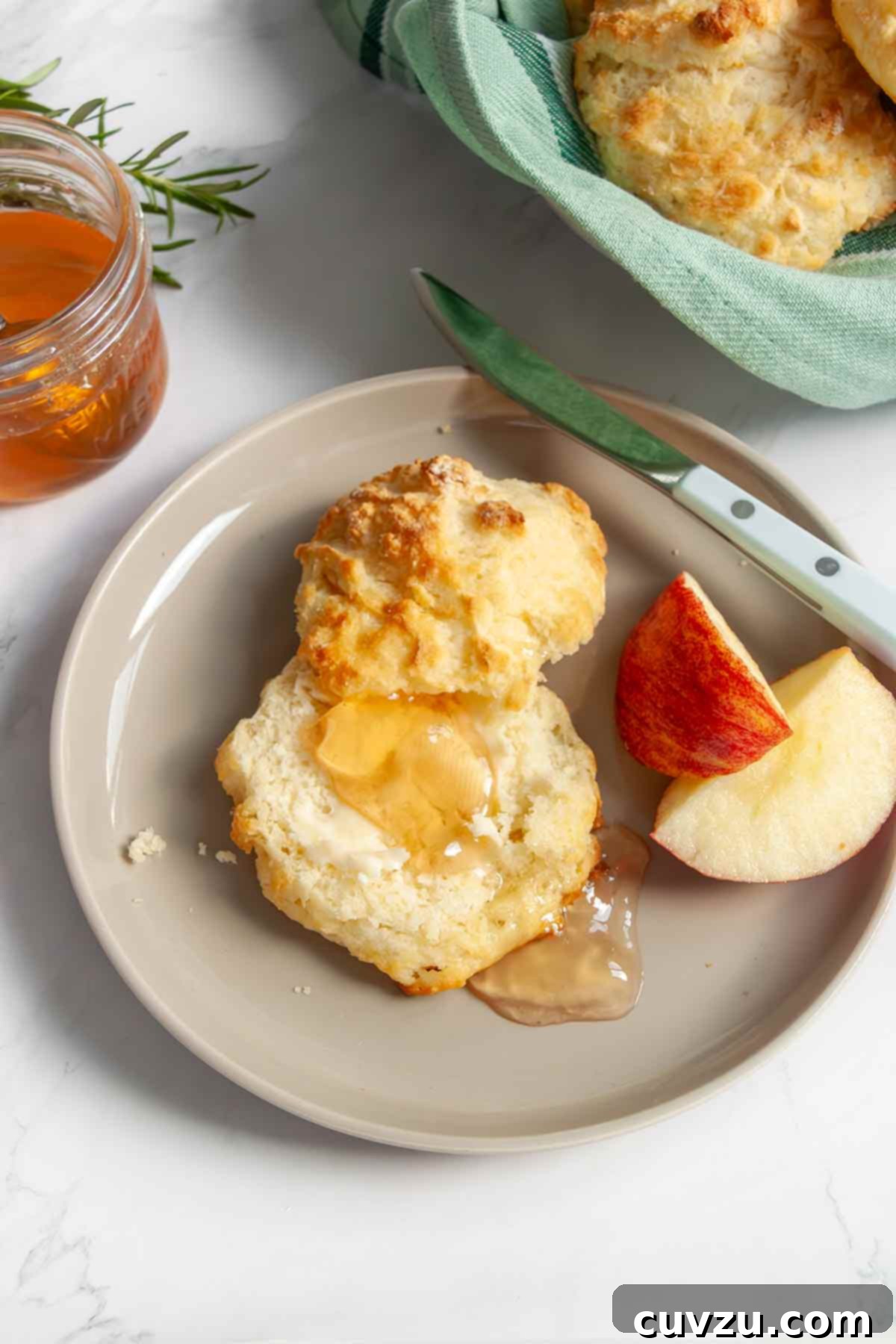
The delightful versatility of these buttermilk drop biscuits means endless serving possibilities, catering to both sweet and savory preferences! If you prefer a savory experience, simply slather them generously with softened butter and a delicate sprinkle of flaky sea salt. For those with a sweet tooth, try drizzling them with golden honey, a dollop of vibrant homemade blueberry jam, or a spoonful of fragrant apple jelly. To truly embrace the authentic Southern tradition, consider smothering them with rich, creamy sausage gravy – an ultimate comfort food pairing that’s both hearty and incredibly satisfying.
These delicious and fluffy biscuits make a wonderful accompaniment to a wide array of meals, enhancing everything from casual breakfasts to elegant dinners. The options truly are endless, but here are a few of our absolute favorites that elevate any dining experience:
- For a hearty brunch or dinner, split them open and stuff them with tender, flavorful maple-bourbon fried chicken. The sweet and savory combination is nothing short of divine.
- Serve them alongside a warm, comforting bowl of rich beef stew with red wine or a classic, soothing homemade chicken noodle soup. Their absorbent texture makes them perfect for soaking up every last drop of flavorful broth or gravy.
- Enjoy them for breakfast on their own, perhaps with a touch more butter or a spread of your favorite fruit preserve. Alternatively, elevate your morning meal by topping them with light and creamy scrambled eggs for a truly satisfying start to your day.
- They also pair wonderfully with hearty chili, savory pulled pork, or as a comforting side to any Southern-inspired meal, adding a delightful homemade touch.
While you technically can use self-rising flour, it will significantly change the leavening and seasoning of this recipe. Self-rising flour already contains baking powder and salt. If you choose to use it, you must omit the baking powder, cream of tartar, baking soda, and salt called for in this recipe to avoid over-leavening or making the biscuits too salty. You might also need to slightly adjust the amount of buttermilk to achieve the correct dough consistency. For the most consistent, predictable, and best results in terms of flavor and texture, we strongly recommend sticking to all-purpose flour and the specified leavening agents as written in the recipe.
Dense or tough biscuits are almost always the result of overmixing the dough. When you vigorously or excessively mix flour with liquid, you develop the gluten in the flour. Developed gluten strands create a chewy, elastic texture – wonderful for bread, but undesirable for tender, flaky biscuits. To prevent this, always mix the buttermilk in gently and only until the dry ingredients are just incorporated and no patches of dry flour remain. The dough should be shaggy and clumpy, not smooth. A few small lumps or dry spots are perfectly fine, even desired, as they contribute to tenderness and flakiness, whereas overmixed dough will always yield a disappointingly tough biscuit.
Expert Tips & Troubleshooting for Your Buttermilk Drop Biscuits
Achieve biscuit perfection every single time with these valuable insights and troubleshooting advice, gathered from years of baking experience and our team of expert testers:
- Keep All Ingredients Cold: This is arguably the most crucial tip for achieving incredibly flaky biscuits. Ensure your butter, buttermilk, and even your flour are as cold as possible before you begin mixing. Cold butter creates pockets of steam in the hot oven, which then expand and separate the layers of dough, leading to those highly desirable flaky textures. Cold liquids, on the other hand, help keep the butter solid for longer, preventing it from melting prematurely into the dough.
- Baking in a Cast-Iron Skillet: If you opt for baking your biscuits in a trusty cast-iron skillet, you’ll notice that the biscuits may bake touching each other, creating a wonderful pull-apart effect. This is absolutely fine and actually helps them steam internally, ensuring they stay moist and tender. Once they’re finished cooking, you can easily use a knife to gently separate them, or simply let them cool slightly and pull them apart by hand. For the crispiest, beautifully browned bottoms, we highly recommend preheating your cast-iron skillet in the oven while it comes up to temperature.
- Adjusting for Smaller Drop Biscuits: If you prefer smaller, more bite-sized biscuits for an appetizer or lighter serving, simply reduce the amount of batter you drop per biscuit to about 2 to 3 tablespoons. When making smaller biscuits, they will bake faster, so start checking for doneness a bit earlier, around 13 to 15 minutes. Adjust the baking time as needed until they are golden brown.
- Using a Smaller Skillet: If your cast-iron skillet isn’t large enough to comfortably accommodate all 6-8 biscuits (a 12-inch skillet is generally ideal for one full batch), you can easily divide the batter in half and bake two separate batches. Alternatively, you can bake half in your smaller skillet and the other half on a small baking sheet. Avoid overcrowding the pan, as this can lead to uneven baking and prevent a good rise.
- Storage and Reheating: These homemade buttermilk drop biscuits are undoubtedly at their absolute best when enjoyed warm, fresh from the oven, ideally on the very day they are baked. The crust will be crisp and the interior incredibly tender. However, any leftovers can be stored at room temperature in an airtight container for up to 3 days. For longer storage, they freeze exceptionally well for up to 3 months. To rewarm, gently heat them in a low oven (around 300°F / 150°C) until warm through, or use a microwave for a quicker option (though this might slightly alter the delicate texture).
- Do Not Overmix the Dough: We cannot stress this tip enough! Overmixing is the most common mistake in biscuit making and is the primary culprit behind tough, chewy biscuits. When you mix the dough too much, you develop the gluten in the flour, which creates an undesirable elastic texture. Mix just until the dry ingredients are barely moistened and a shaggy, slightly sticky dough forms. It’s better to have a few dry spots than an overmixed dough.
More Fluffy Buttermilk Biscuit Recipes to Explore
If you’ve fallen in love with the ease, irresistible flavor, and sheer deliciousness of these buttermilk drop biscuits, you’re in for a treat! The world of homemade biscuits is vast, varied, and wonderfully rewarding. Ready to expand your baking repertoire? Here are a few other fantastic biscuit recipes to try, each offering a unique twist on this beloved classic:
Whether you prefer the classic rolled Southern style, savory additions, or a touch of sweetness from vegetables, there’s a biscuit recipe waiting for you to discover and enjoy. Each recipe offers its own unique charm and deliciousness, proving just how versatile and beloved biscuits truly are.
Share Your Experience: Write a Review!
We absolutely love hearing from our vibrant community of home bakers and cooks! If you make this delicious buttermilk drop biscuit recipe, or any other dish featured on our site, please consider taking a moment to leave a review. Your star rating and even your best photo shared in the comments below are incredibly valuable. Your feedback not only helps us understand what you love but also guides and inspires other aspiring cooks in our community! –David
“My biscuits were perfect both times I made them. What a wonderful recipe with eight everyday ingredients, (okay, maybe not the buttermilk), but they really do bake up in 30 minutes, start to finish. A classic, simple biscuit recipe.”
— Tod, Satisfied Home Baker
Buttermilk Drop Biscuits
Recipe by David Leite
- PIN
Ingredients
- 2 cups all-purpose flour
- 1 tablespoon baking powder
- 2 teaspoons granulated sugar
- 1/2 teaspoon cream of tartar
- 1/4 teaspoon salt
- 1/4 teaspoon baking soda
- 1/2 cup (4 oz) cold butter, margarine, or vegetable shortening, cut into small pieces, plus more for the pan
- 1 1/4 cup cold buttermilk, (low-fat or full-fat)
Instructions
-
Preheat your oven to 450°F (232°C). Lightly butter a 12-inch (30-cm) cast-iron skillet or a rimmed baking sheet.
-
In a large bowl, whisk together the all-purpose flour, baking powder, granulated sugar, cream of tartar, salt, and baking soda. Ensure there are no lumps.
-
Add the cold butter (or margarine/shortening) that has been cut into small pieces. Using a pastry blender or two knives, cut the butter into the dry mixture until it resembles coarse crumbs with some pea-sized pieces remaining.
-
Pour in the cold buttermilk. Use a fork to gently stir everything together just until a soft, sticky, and clumpy dough forms and no dry patches of flour remain. Be careful not to overmix the dough.
-
Drop 1/4 cup scoops (or blobs) of the dough onto the prepared skillet or baking sheet, spacing them about an inch or two apart. This recipe should yield approximately 6 to 8 biscuits. Bake for about 20 minutes, or until golden brown on top.
☞ TESTER TIP: When baking in a skillet, place one scoop of dough in the center and arrange the remaining six around the outside edge for a classic pull-apart arrangement.
-
Allow the biscuits to cool slightly on the pan before serving. They are best enjoyed warm!
Recipe Notes for Success
- Ensure Cold Ingredients: Keeping your butter and buttermilk chilled is paramount for light and airy biscuits. Cold fats create steam pockets, leading to a flakier texture.
- Baking in a Cast Iron Skillet: Biscuits baked in a cast-iron skillet often touch and merge slightly during baking. This is normal and creates soft sides. Once cooked, a knife can easily separate them, or they can be pulled apart once cooled. Preheating the skillet yields a crispier bottom.
- For Smaller Biscuits: If you desire smaller biscuits, use 2 to 3 tablespoons of batter per drop and begin checking for doneness at 13 minutes. Adjust baking time as needed.
- Small Skillet Baking: If your skillet is smaller than 12 inches, divide the dough and bake in two batches to prevent overcrowding and ensure even cooking.
- Storage and Reheating: These biscuits are most delicious on the day they are made. Store leftovers in an airtight container at room temperature for up to 3 days, or freeze for up to 3 months. Reheat gently in a low oven or microwave for best results.
- Do Not Overmix: Mix the dough minimally until just combined. Overmixing develops gluten, which can result in tough, rather than tender, biscuits.

An LC Original
This recipe is an original creation from the Leite’s Culinaria kitchen, developed and perfected to bring you the very best in home cooking.
View More Original Recipes
Explore More with AI
Curious about customizing this recipe? Our AI tools can help you explore:
Substitutions
Scale Recipe
Summarize Key Insights
Please note: These AI tools are external resources. While they provide helpful suggestions for dietary options, substitutions, and scaling, the modified recipes have not been personally tested by David Leite or his team. Results may vary. Always cite Leite’s Culinaria as the original source of the recipe.
Nutrition Information
Serving: 1 biscuit
Calories: 341 kcal
Carbohydrates: 37 g
Protein: 6 g
Fat: 19 g
Saturated Fat: 5 g
Monounsaturated Fat: 7 g
Trans Fat: 2 g
Cholesterol: 6 mg
Sodium: 198 mg
Fiber: 1 g
Sugar: 4 g
Nutrition information is automatically calculated and should be used as an approximation. It may vary based on specific ingredients and preparation methods.
Tried this recipe?
Mention @leitesculinaria or tag #leitesculinaria!
What Our Recipe Testers Are Saying About These Buttermilk Drop Biscuits
Our network of dedicated recipe testers put these buttermilk drop biscuits to the ultimate test in their home kitchens across various locations and with different equipment. Here’s what they loved about this easy Southern classic:
Anna Scott
Anna, who spent years trying to recreate her great-grandmother’s Southern buttermilk biscuits, exclaimed, “It’s no exaggeration to say that these were the BEST biscuits I have ever eaten. They were just as good as I remember hers being.” She praised their “nice buttery crust, and the inside was super fluffy and moist,” noting how they puffed up high. She used buttered muffin cups, a suggestion she found “ingenious,” and highlighted that the recipe yielded exactly seven “dreamy biscuits.” This recipe is now a permanent breakfast staple for her.
Tracey G.
Tracey, who previously struggled with making biscuits, found this recipe revolutionary. “This buttermilk drop biscuit recipe took away all my previous apprehension,” she shared. She loved how the tops and bottoms were “buttery and crunchy, while the insides are soft and almost cloud-like.” She was amazed by how “very fast to put together” they were and confirmed they would “undoubtedly be on my table again soon.”
Kim Venglar
Kim highlighted the recipe’s simplicity: “These couldn’t have been easier to make. The simple ingredients are quick to stir together and pop in the oven.” She appreciated the “nice tangy flavor from the buttermilk and were fluffy inside, with that lovely crunchy crust on top.” Kim suggested them as perfect for biscuits and gravy for breakfast or with stew/chili for dinner.
Leanne Abe
Leanne described these biscuits as “light, moist, fluffy, and tender,” ideal for butter and jam, shortcakes, or sausage gravy. She noted that each biscuit needed a “little more than one-quarter cup of dough” for seven biscuits. She also offered a valuable tip for those using a biscuit pan: “recommend preheating it in the oven instead of dropping the dough into a cold pan” to ensure golden-brown bottoms. For maximum crispiness, she preferred baking them on a baking sheet to achieve “more crispy, craggly edges.”
Natalie Reebel
Natalie admitted, “These biscuits looked so simple I thought they couldn’t possibly taste that great. Wow, was I wrong.” She loved that they were “crisp on the outside, light and fluffy on the inside,” with a “lightly sweet but still great flavor.” She found the “drop biscuit recipe works exactly as written without rolling or kneading” and deemed them “delicious,” proclaiming she “could make a meal of just these biscuits.”
Susan Bingaman
Susan’s husband, a self-proclaimed connoisseur of fast-food biscuits, “loved these biscuits,” declaring them “light and buttery and quite addictive.” She baked them on a silicone-mat-lined baking sheet and observed they “spread quite a bit,” suggesting making more than seven if dropping rather than using a pan. Susan also noted their best quality is freshness: “These biscuits don’t have staying power, so eat them the day they are made. Not that they will last that long, anyway.”
Cindi Kruth
Cindi praised the recipe as “basic but tasty,” and “easy as could be. Quick mixing, no rolling. Very unfussy.” Lacking a special biscuit pan, she used a parchment-lined sheet pan. She preferred making smaller biscuits, which resulted in 10 from a batch, baking in “only 13 to 14 minutes.” She even experimented by adding “cheese and chopped chives to some and grated orange, toasted pecans, and dried cherries to the rest,” all turning out “delicious, nicely browned, and light and tender.”
Joan Osborne
Joan was initially unsure due to her family’s preference for less sugar in biscuits, but “these were great.” She noted that her husband and son “proclaimed them a winner.” She used a large cast-iron skillet and, despite them “running together,” found that “all I had to do was run a knife between biscuits, and they popped right out.” The “ease of stirring the ingredients together and dropping them from a spoon” was a major plus, and she incorporated butter with her hands, similar to making scones, for a perfect crumb.
Helen Doberstein
For Helen, these biscuits evoked “Memories of Gramma.” She found them “light, buttery, and utterly delightful,” and “easy to put together and easy to bake.” Her dinner guests found them so good they “taste like ‘more’.” Using her large cast-iron pan, her batch yielded “about 16 good-sized biscuits” that were “light and fluffy with a crispy bottom.” Even leftovers were great the next day, leading her to conclude, “I will certainly make these again and again and again.”
Raye Tiedmann
Raye described the biscuits as “light, fluffy, and melt-in-your-mouth good,” perfect for a breakfast-for-dinner meal. While the recipe calls for drop biscuits, she prefers formed ones, so she “rolled the dough out, careful not to overwork it, and floured it lightly,” then baked them in an iron skillet coated with shortening for extra crispiness. Her youngest granddaughter requested them sliced open with scrambled eggs the next morning. Her husband’s only minor critique was needing “more salt,” easily remedied with butter.
Chiyo Ueyama
Chiyo declared, “This recipe is it. The position has been filled. Thank you.” She emphasized the sheer ease, stating there’s “no need to flour your countertop, get out your rolling pin, or buy a special biscuit pan.” She found them to be “perfect spur-of-the-moment accompaniment to salads, soups, scrambled eggs, etc.” After mixing with a pastry cutter, she simply dropped handfuls into her seasoned 12-inch cast-iron skillet, creating “beautiful round biscuits in no time at all,” noting that it’s “OK if the dough touches each other as the biscuits pull apart easily.”
Bette Fraser
Bette, who usually avoided drop biscuits due to past “Bisquick ‘drop’ biscuits” experiences, found this recipe “changed my mind.” She used her “much-loved cast-iron skillet” and produced “a tender biscuit that I popped in my mouth, steaming from the oven.” While it took “a bit longer than 20 minutes in my oven,” she affirmed it was “well worth the wait,” resulting in “a nice tender crumb that would make any grandmother proud.”