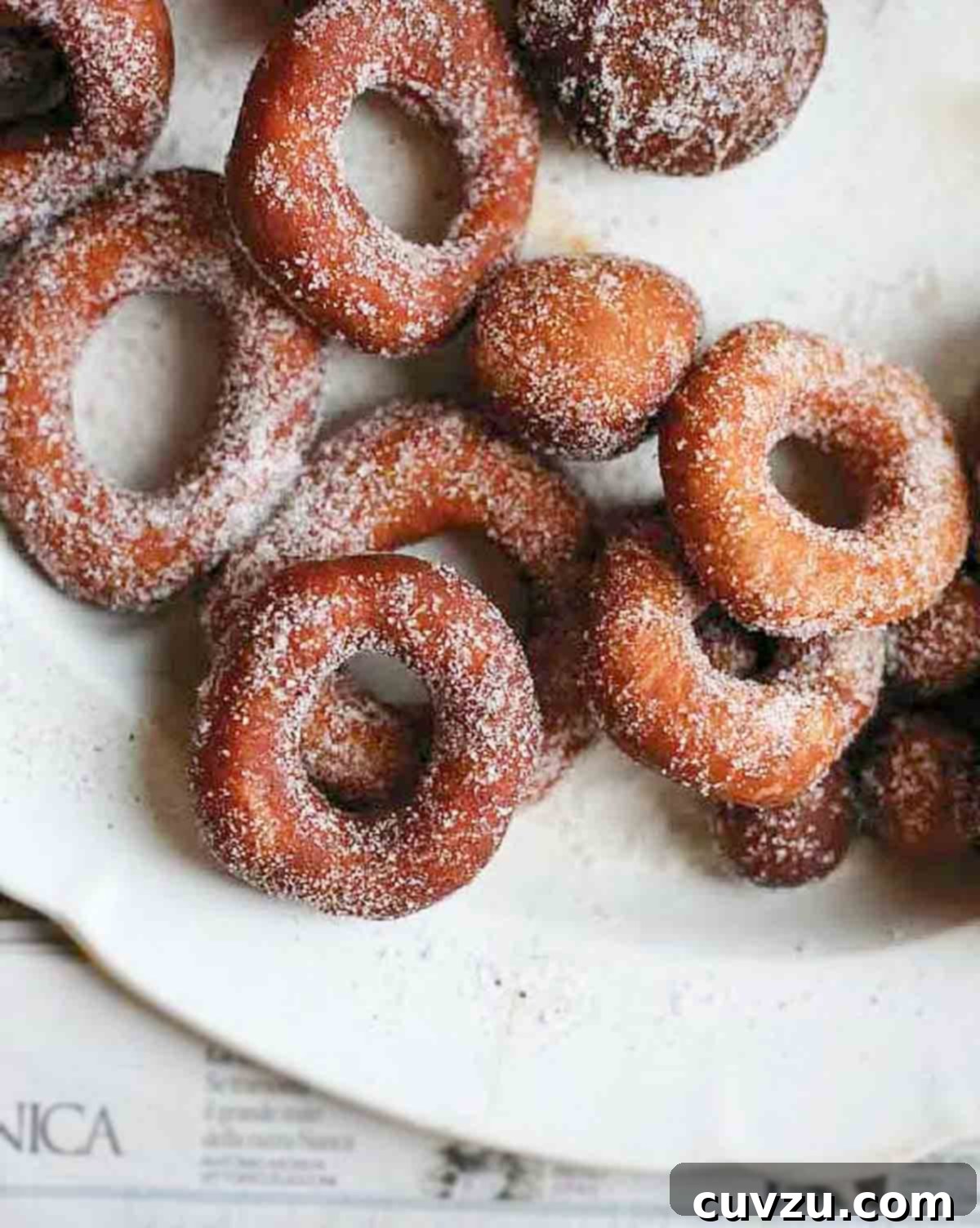
Easy Raised Doughnuts, known delightfully in Italian as Cuddureddi, are a quintessential deep-fried pastry, deeply rooted in Sicilian tradition and synonymous with moments of joy and celebration. These delectable treats transcend specific occasions, bringing a festive spirit to any gathering. While often compared to brioche due to their rich, tender crumb, cuddureddi stand apart with the distinctive use of lard instead of butter, yielding a subtly richer flavor profile that Sicilians hold dear.
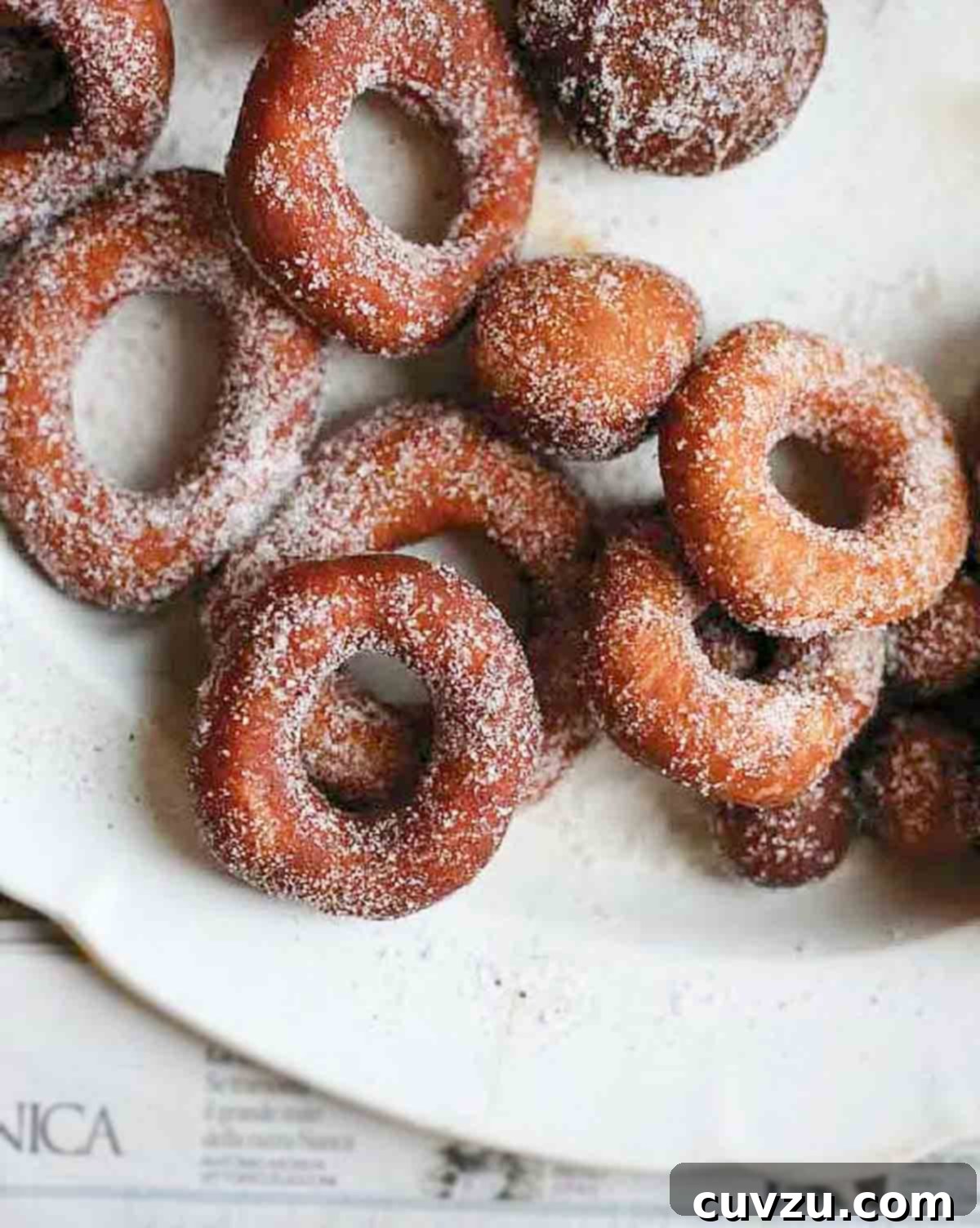
For many, cuddureddi evoke cherished memories, a taste of home, and the warmth of family. As Fabrizia Lanza beautifully recalls, these pastries harken back to crisp early mornings, shared with cousins and an uncle, savoring warm doughnuts dripping with marmalade. Such irresistible moments underscore the enduring appeal of this simple yet profound Sicilian delicacy.
What are Cuddureddi? A Taste of Sicilian Tradition
In the vibrant culinary landscape of Southern Italy, particularly Sicily, the mention of “Cuddureddi” signals not just a recipe, but the imminent arrival of holidays and festive gatherings. These aren’t just any doughnuts; they represent a beloved cultural cornerstone. Technically, cuddureddi refer to an easy, raised doughnut recipe that results in a pastry generally denser and less overtly sweet than the typical American glazed yeast doughnut. However, their charm lies in this very distinction.
Unlike their lighter, often sweeter American counterparts, Sicilian cuddureddi possess a satisfying chewiness and a subtle sweetness, making them incredibly versatile. Their texture is reminiscent of a rich, yeasted bread, achieving a perfect balance between airy and substantial after being lovingly deep-fried. This unique characteristic allows them to serve as an ideal canvas for various toppings, though a simple dusting of cinnamon sugar remains the classic and most celebrated presentation.
Historically, these doughnuts have been a staple during important celebrations like Christmas, Easter, and Carnival, signifying abundance and joy. The act of making them is often a communal affair, with families gathering to mix, knead, fry, and coat these golden rings. This tradition imbues cuddureddi with a meaning far beyond mere food—they are a symbol of togetherness, heritage, and the enduring spirit of Sicilian hospitality. So, whether you’re celebrating a special occasion or simply seeking to infuse your day with a touch of Italian charm, making these easy raised doughnuts is an invitation to partake in a truly delicious tradition. Go on, embrace the celebration!
Easy Raised Doughnuts ~ Cuddureddi
Recipe by David Leite, inspired by Sicilian family traditions.
Breakfast, Dessert, Snack
Italian, Sicilian
8 servings
273 kcal
45
15
1
Equipment
-
3-inch round doughnut or cookie cutter; smaller round cutter (e.g., bottle cap); deep-fry or candy thermometer; deep, heavy skillet (preferably cast-iron); rolling pin; slotted spoon or skimmer; parchment paper-lined baking sheet.
Ingredients
-
2 1/2 cups all-purpose flour, plus more for the work surface for kneading and rolling -
2 teaspoons active dry yeast or fresh compressed yeast -
1 1/4 cups whole milk, lukewarm (approximately 105-115°F or 40-46°C for active dry yeast) -
1 tablespoon lard (or butter, if preferred, for a slightly different flavor) -
Pinch fine sea salt -
mild vegetable oil, such as canola, grapeseed, or rice bran oil, for deep-frying -
1 cup granulated sugar (for coating) -
1 teaspoon ground cinnamon (for coating)
Instructions
-
To begin, create your dough: Mound the flour directly onto a clean work surface and form a large well in its center. Into this well, add the yeast, lukewarm milk, lard, and a pinch of fine sea salt. Start by gently stirring the ingredients in the well with your hands, gradually incorporating enough surrounding flour to form a thick paste. Continue to work in the remaining flour until a cohesive dough forms. Knead the dough vigorously until it becomes very smooth and elastic, approximately 10 to 15 minutes by hand. Initially, the dough will be quite sticky; resist the urge to add more flour too soon. It may take up to 30 kneads or more for the dough to lose some of its stickiness and develop a smooth, pliable texture. Patience is key here.
-
Prepare the doughnuts: Lightly flour your work surface once more. Using a rolling pin, carefully roll out the dough to an even 1-inch thickness. Using a 3-inch round doughnut or cookie cutter, cut out as many doughnut shapes as possible. For the characteristic hole in the center, use a smaller cutter (a clean bottle cap works perfectly in a pinch!) to punch out the middle of each round. Gather any dough scraps, gently re-knead them, and re-roll to cut out additional doughnuts until all dough is used.
-
Proof the doughnuts: Carefully transfer the cut doughnut pieces (and the smaller holes, if frying those too) onto a baking sheet that has been lined with parchment paper. Ensure there’s enough space between them to allow for expansion. Let the dough pieces rise in a warm, draft-free place for about 30 minutes, or until they appear noticeably puffed and lighter. This crucial step ensures a tender interior.
-
Fry the doughnuts: In a deep, heavy skillet, preferably cast-iron, pour in about 2 inches of mild vegetable oil. Heat the oil over medium-high heat until it reaches a temperature of approximately 350°F (175°C), as indicated by a deep-fry or candy thermometer. Maintaining this temperature is vital for perfectly cooked doughnuts – too low and they’ll be greasy, too high and they’ll burn outside before cooking inside. Gently slip a few pieces of risen dough into the hot oil, being careful not to overcrowd the pan. Fry until they turn a beautiful golden brown, which usually takes 1 to 2 minutes per side. Carefully flip each doughnut with a slotted spoon or tongs and fry the other side until evenly golden, another minute or so.
-
Drain and cool: Using a slotted spoon or skimmer, remove the fried doughnuts from the hot oil. Transfer them to a plate or baking sheet lined with several layers of paper towels to drain any excess oil. Repeat the frying process with the remaining dough pieces, ensuring the oil temperature remains consistent between batches.
-
Coat and serve: In a shallow bowl or, for less mess, in a brown paper bag, combine the granulated sugar and ground cinnamon. While the doughnuts are still warm (this helps the sugar adhere), gently dredge or shake the cuddureddi in the cinnamon-sugar mixture until evenly coated. Serve these delightful Italian doughnuts warm for the best flavor and texture experience. They are truly irresistible!

Adapted From
This traditional recipe finds its roots in the heartfelt pages of “Coming Home to Sicily,” a testament to authentic Italian culinary heritage. The flavors within these doughnuts carry the essence of true Sicilian kitchens.
Buy On Amazon
Nutrition Information
Serving:
1 portion
Calories:
273 kcal
Carbohydrates:
58 g
Protein:
7 g
Fat:
2 g
Saturated Fat:
1 g
Monounsaturated Fat:
1 g
Cholesterol:
4 mg
Sodium:
19 mg
Fiber:
2 g
Sugar:
27 g
Nutrition information is automatically calculated and should be used only as an approximation.
Tried this recipe?
Mention @leitesculinaria or tag #leitesculinaria! Share your delightful cuddureddi creations with our community!
Recipe Testers’ Reviews: Real Experiences with Cuddureddi
Larry Noak
I was genuinely impressed by the straightforwardness and versatility of this simple doughnut recipe. Despite not having all the exact ingredients on hand, I substituted heavy cream for whole milk and instant yeast for active dry yeast, and I’m happy to report that these adjustments worked out perfectly. For cutting the doughnuts, a three-inch biscuit cutter did the trick for the outer ring, and demonstrating true resourcefulness, I ingeniously used the lid from a soy sauce bottle to create the center holes. It truly goes to show that necessity is the mother of invention in the kitchen!
What sets these cuddureddi apart is their inherently simple and slightly less sweet flavor profile. This makes them an absolutely perfect foundation for culinary creativity. My mind immediately went to possibilities like infusing the batter with warm apple pie spices or comforting pumpkin pie spices. Of course, a luscious chocolate icing would be phenomenal, but the classic sugar and cinnamon coating, as suggested by the recipe, is undeniably a winner. With such an accommodating and easy-to-follow recipe, even novice bakers will feel like seasoned pros, producing impressive homemade doughnuts that are sure to delight everyone.
Linda Pacchiano
These cuddureddi delivered exactly what you’d hope for in a homemade doughnut: a wonderfully chewy exterior paired with a remarkably tender and soft interior. The recipe accurately notes that the dough can be quite sticky during preparation. However, I discovered that a light dusting of extra flour on my hands and work surface made it perfectly manageable to handle and knead. I found that half the amount of cinnamon sugar specified in the recipe was more than ample to generously coat all 17 doughnuts I made – a little goes a long way!
Unsurprisingly, these doughnuts were at their absolute peak deliciousness shortly after they emerged from the hot oil, still warm and fragrant. The fresh crunch and soft crumb were heavenly. What pleasantly surprised me, however, was how well they held up. Even after a couple of days, they remained very enjoyable, offering a satisfying texture and comforting flavor that continued to impress.
Dawn English
Homemade doughnuts? What’s not to adore about that! This particular recipe marked my very first foray into making doughnuts from scratch, and I can confidently say it certainly won’t be my last. Having never tried Cuddureddi before, I would describe their texture as a bit denser than the typical American glazed yeast doughnuts I usually pick up from my local shop. Despite this, they are wonderfully airy and exceptionally delicious, with a satisfying chew. In my opinion, they are absolutely best enjoyed warm, rather than at room temperature, for that ultimate fresh-from-the-fryer experience.
I really appreciated how straightforward this recipe is, especially its mercifully short and uncomplicated rising time. From the moment I started mixing to the final cinnamon sugar coating, the entire process took me a mere 45 minutes, making it incredibly accessible for a quick treat. The dough, as the recipe correctly warns, is quite sticky initially. My natural instinct was to add more flour while kneading, worried it wouldn’t come together. However, I persevered, and after about 30 solid kneads by hand, the dough transformed into a beautifully smooth and pliable consistency, just as promised. I didn’t have fresh yeast, so I easily substituted an equal amount of active dry yeast. To help it dissolve effectively, I warmed my milk to precisely 110°F (using the frothing function on my espresso machine and verifying with a thermometer) before adding the yeast directly into it.
These doughnuts fry up incredibly fast, typically requiring no more than 1 to 2 minutes per side. I used my trusty 10 1/2-inch cast-iron skillet and maintained a frying temperature of 350°F. For the oil, I opted for rice bran oil, which I happened to have in the cupboard. Its high smoke point and neutral flavor proved to be an excellent choice. I was particularly thrilled that these doughnuts were not greasy at all! After draining them on paper towels, I used a clever trick: I tossed them into a double-lined paper bag, added the cinnamon sugar, and gave the bag a gentle shake. This paper bag method was a fantastic way to coat the doughnuts thoroughly without creating a mess. I actually cut the recipe in half, yielding 10 perfectly sized doughnuts from a half batch. While I personally might have wished for a slightly airier or lighter texture, their current form is still quite enjoyable, and perhaps that’s exactly how authentic Cuddureddi are meant to be.
Lindsy G.
This recipe proved to be an unexpected culinary highlight during my family vacation. With a mother who is famously doughnut-obsessed (we’d often plunge a lit candle into a stacked dozen instead of a birthday cake!), I had high hopes for these to be a major crowd-pleaser. Much to my pleasant surprise, the recipe was remarkably simple to follow and incredibly forgiving, even when I made a few “MacGyver-esque” alterations—a rare and welcome trait in baking. My fellow testers unanimously gave these fried delights perfect 10s, specifically praising their delightful crisp exterior, light interior, and subtle sweetness. Personally, I tend to prefer a more overtly yeasty and doughy doughnut, and I found myself wondering if using butter instead of lard would have imparted a richer flavor. Nevertheless, I thoroughly enjoyed them.
For my own taste, I might recommend adding a touch more cinnamon to the coating and perhaps a hint of additional sweetener directly into the dough itself for those who prefer a sweeter treat. As for ingredients, I couldn’t find compressed yeast, so I opted for a packet of dry active yeast, which I dissolved in 1/2 cup of warm water. Consequently, I reduced the milk quantity by 1/2 cup. My milk was a bit cold and actually a mix of half-and-half and 1%, highlighting the recipe’s adaptability. The initial mixing process was quite messy, as the flour seemed insufficient to contain the 1 1/4 cups of liquid. However, by gradually adding the liquid and using my hands to manage the sticky situation, everything eventually came together. The formed dough was indeed very sticky, requiring a fair amount of extra flour to make it workable for kneading.
The instruction to knead until “smooth” was a little ambiguous for me. Instead of aiming for perfect smoothness, I ended up pushing the dough around for about 3 minutes until it was manageable and less bumpy. Given the relatively small amount of dough, it barely needed extensive rolling to achieve the 1-inch thickness. I managed to cut out about 5 doughnuts, each probably around 4 inches across, using a floured, upturned glass and a bottle cap for the holes. I then rerolled the excess dough to make 3 more, plus saved the punched-out holes for mini treats. To my astonishment, especially given my yeast adjustments and initial kneading struggles, they rose beautifully. The frying temperature was also somewhat ambiguous in the instructions; I heated the oil for approximately 15 minutes on medium-high heat until a test doughnut hole sizzled immediately upon being added, indicating the right temperature. The frying time of 2 to 3 minutes total was accurate, though I removed mine when they were lightly browned rather than a deep golden-brown. My key advice: coat them in the cinnamon-sugar mixture almost immediately after frying. The oil drains quickly, and the coating adheres far better when the doughnut is still hot. You can always re-dip or brush off sugar to suit individual preferences. One final warning: I don’t know about your family, but the stated yield of 8 servings was a gross underestimate for those with healthy sweet tooths (or should I say, sweet teeth?) eagerly awaiting these delightful treats!