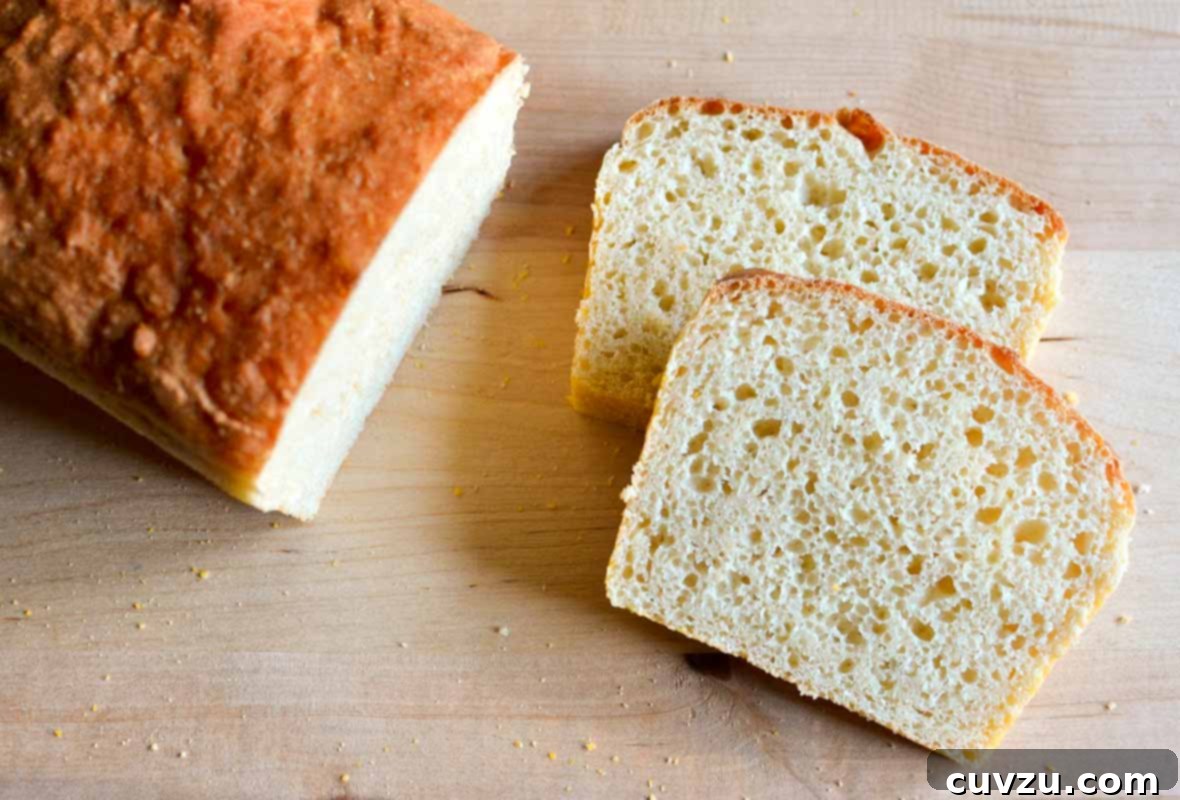
The Ultimate Easy English Muffin Bread Recipe from Cook’s Country
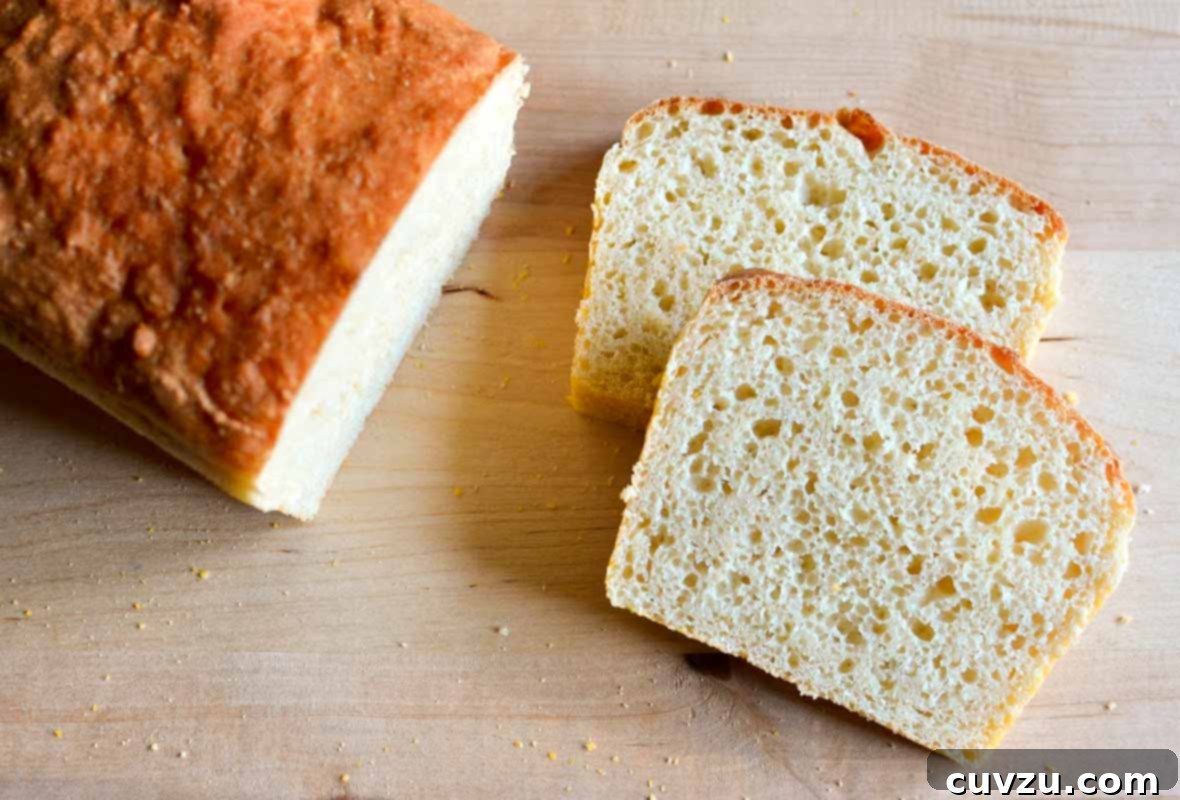
Craving the unique texture and incredible flavor of English muffins but dreading the intricate process of making them from scratch? Look no further! This spectacular English muffin bread recipe from the culinary experts at Cook’s Country and America’s Test Kitchen offers all the iconic qualities you adore in traditional English muffins, but in a remarkably simple, loaf-form package. Imagine slicing into a warm loaf, revealing those signature nooks and crannies, perfect for trapping generous pools of melting butter. This recipe delivers that exact perfection, requiring far less effort and time than individual muffins.
From its dense, chewy crumb to the irresistible pockets designed to hold your favorite spreads, this bread captures the essence of a classic English muffin. It’s a testament to ingenious baking, bringing the beloved breakfast staple to your table with unparalleled ease. Say goodbye to griddle flipping and hello to a fuss-free baking experience that promises a truly satisfying result, just as any English muffin enthusiast would wish.
Why This English Muffin Bread Recipe Stands Out
What makes this particular English muffin bread recipe a game-changer? It’s the unique combination of convenience and authentic flavor. Unlike traditional English muffins, which require shaping individual rounds, proofing, and pan-frying, this recipe simplifies the entire process into a single loaf. You get to enjoy that characteristic English muffin chewiness and those essential nooks and crannies—perfect for absorbing butter, jam, or even creating savory open-faced sandwiches—without the tedious steps. This bread is stirred, shaped, and baked, making it an ideal choice for busy mornings or when you want freshly baked bread with minimal fuss.
Bread Flour vs. All-Purpose Flour: The Crucial Difference
One of the most critical elements for achieving the authentic English muffin bread texture is the choice of flour. This recipe specifically calls for bread flour, and for good reason. It’s absolutely essential not to substitute all-purpose flour in its place, as doing so will significantly alter the outcome, potentially leading to a baking mishap of epic proportions!
The primary difference lies in their protein content. Bread flour contains a higher percentage of protein (typically 12-14%) compared to all-purpose flour (around 10-12%). This higher protein level translates to more gluten development when mixed with liquid. Gluten is the elastic network that gives bread its structure and chewiness. In the context of English muffin bread, this enhanced gluten is vital.
When you combine bread flour with water, it creates a much stronger, more elastic dough that can absorb more liquid. This results in a wet, sticky dough—almost like a thick pancake batter—which is exactly what you want for this recipe. This wet consistency is what ultimately contributes to the bread’s signature open crumb structure, characterized by those delightful nooks and crannies. All-purpose flour, with its lower protein content, would not be able to handle the same amount of hydration, leading to a much weaker dough, a denser crumb, and a distinct lack of those desired air pockets.
So, when following these instructions, embrace the wet, goopy nature of the dough. It might feel unconventional if you’re used to stiffer bread doughs, but trust the process. That seemingly unruly consistency is precisely what sets this English muffin bread apart and guarantees its perfect texture. Take a deep breath, follow the recipe diligently, and you’ll be rewarded with fantastic results.
English Muffin Bread
By David Leite
Breakfast
British
32
servings
91
kcal
15
minutes
1
hour
30
minutes
1
hour
45
minutes
Equipment
-
Two 9-by-5-by-3-inch (23-by-13-by-8-cm) loaf pans
-
Deep-fry, candy, or instant-read thermometer
Ingredients
- Butter, for the pans and plastic wrap
- Cornmeal, for the pans
- 5 cups bread flour*
- 4 1/2 teaspoons instant or rapid-rise yeast
- 1 tablespoon granulated sugar
- 2 teaspoons salt
- 1 teaspoon baking soda
- 3 cups whole milk, heated to 120°F (49°C)
Instructions
-
Butter two 9-by-5-by-3-inch loaf pans thoroughly and dust them generously with cornmeal, ensuring an even coating.
-
In a large mixing bowl, combine the bread flour, instant or rapid-rise yeast, granulated sugar, salt, and baking soda. Stir these dry ingredients together until well mixed. Then, gradually pour in the warm whole milk (heated to 120°F / 49°C) and stir for approximately 1 minute until all ingredients are combined. The mixture will be quite wet and sticky, more like a thick batter than a traditional dough.
-
Cover the bowl containing the dough with a piece of plastic wrap that has been generously buttered on the side facing the dough. Allow the dough to rise in a warm, draft-free place for 30 to 45 minutes, or until it becomes visibly bubbly and has doubled in volume. Do not be alarmed by its exceptionally sticky, airy, and moist consistency; this is perfectly normal for English muffin bread and crucial for its characteristic texture.
-
Once risen, gently stir the dough using a buttered rubber spatula. Carefully pour half of the dough into one of the prepared loaf pans. Use the spatula to hold back the remaining dough in the bowl, then scrape it into the second prepared loaf pan. Gently spread the dough into the corners of each pan with the spatula. Each pan should be approximately two-thirds full. If desired, lightly dust the tops of the loaves with additional cornmeal. Cover both pans again with buttered plastic wrap and let them rise in a warm place for about 30 minutes, or until the dough reaches the top edges of the pans.
-
While the loaves are on their second rise, preheat your oven to 375°F (190°C). Position an oven rack in the middle of the oven.
-
Once the loaves have risen sufficiently, remove and discard the plastic wrap. Carefully transfer the pans to the preheated oven. Bake for approximately 30 minutes, or until the bread is beautifully browned and an instant-read thermometer inserted into the center of a loaf registers 200°F (93°C). Be sure to gently rotate and switch the positions of the pans halfway through the baking time to ensure even cooking. Note: If you are using ceramic loaf pans instead of metal ones, the baking time may extend to 40 to 50 minutes. It’s common for the centers of the loaves to appear to deflate slightly, and for the tops to be flat rather than domed, as this is a soft-batter bread. This is normal and perfectly fine.
-
Once baked, immediately turn the loaves out onto a wire rack to cool completely. This cooling process takes about 1 hour and is crucial for the bread’s texture. Once cooled, slice the bread, toast it to perfection, and slather with your favorite butter, jam, or other toppings. Enjoy!
Adapted From
The Complete Cook’s Country TV Show Cookbook
Buy On Amazon
Nutrition
Serving:
1 slice
Calories:
91 kcal
Carbohydrates:
16 g
Protein:
4 g
Fat:
1 g
Saturated Fat:
1 g
Monounsaturated Fat:
1 g
Cholesterol:
2 mg
Sodium:
191 mg
Fiber:
1 g
Sugar:
2 g
Nutrition information is automatically calculated, so should only be used as an approximation.
Expert Tips for Perfect English Muffin Bread
Achieving the ideal English muffin bread is simpler than you might think, especially with a few insights from experienced bakers. Here are some key tips to ensure your loaves turn out perfectly:
- **Embrace the Stickiness:** As highlighted in the recipe, the dough for English muffin bread is exceptionally wet and sticky—more akin to a thick batter. Do not be tempted to add more flour to make it less sticky, as this will result in a denser, less airy loaf. The high hydration is crucial for developing those characteristic nooks and crannies.
- **Butter Your Tools Generously:** When working with such a sticky dough, buttering your spatula, hands, and even the plastic wrap used for proofing is your best friend. This prevents the dough from clinging excessively and makes handling much easier, especially during the crucial step of dividing it between the loaf pans.
- **Master the Pouring Technique:** Dividing the dough can be tricky. Instead of trying to cut or manipulate the sticky dough on a surface, use gravity to your advantage. As Jo Ann Brown, one of our recipe testers, advises: “Begin by “pouring” the dough into 1 loaf pan, and when you think you are coming close to half the amount, chop it off deftly at the bowl rim using your bench scraper. Move onto the second loaf pan and let the dough roll out of the bowl into the pan.” This minimizes mess and ensures an even distribution.
- **Weigh Your Dough for Consistency:** For bakers who prefer precision, weighing the dough as Karen Taylor suggests ensures uniform loaves. This helps both loaves bake evenly and prevents one from being over-baked while the other is still catching up. Aim for approximately 1100 grams of dough per pan (including the pan weight) for 9×5-inch pans.
- **Don’t Skimp on Cornmeal:** English muffins are known for their cornmeal coating, and this bread benefits from it too. Dusting the pans with cornmeal adds to the authentic texture and helps prevent sticking. Larry Noak recommends sprinkling the top of the loaves with a generous amount of cornmeal after placing them in the pans to prevent the plastic wrap from sticking and to enhance the signature crunch.
- **Monitor Baking Time, Especially with Ceramic Pans:** While the recipe provides a general baking time, oven temperatures can vary, and different pan materials conduct heat differently. Ceramic loaf pans, for instance, often require a longer baking time (an additional 10-20 minutes) compared to metal pans. Always use an instant-read thermometer to confirm the internal temperature reaches 200°F (93°C) for doneness.
- **Cool Completely for Best Texture:** Patience is key. Allow the loaves to cool completely on a wire rack for at least an hour before slicing. This allows the internal structure to set, resulting in the best possible texture and ease of slicing.
- **Toasting is Key:** As Tracey G. notes, “Just like regular English muffins, the true tastiness comes only when the bread is toasted.” Toasting transforms the spongy texture into a crunchy, deeply flavorful experience, perfect for pairing with butter and jam.
Recipe Testers’ Reviews and Insights
Sita Krishnaswamy
Sita Krishnaswamy enthusiastically declares this English muffin bread recipe a definitive winner. She highlights its remarkable resemblance to traditional English muffins, both in appearance and taste, complete with the essential nooks and crannies. Sita particularly praised the recipe’s straightforward nature, finding it a cinch to prepare. Her positive experience indicates the recipe’s reliability and ease, making it a regular fixture in her kitchen.
Jo Ann Brown
As a self-proclaimed English muffin expert with “10,000 hours eating these babies,” Jo Ann Brown provides a glowing review of this bread. She emphasizes what truly sets it apart: the distinct crannies, the spongy yet satisfyingly toothsome crumb, and the cornmeal-coated sides. Jo Ann perfectly describes the joy of salted butter pooling on the moist surface, a hallmark of English muffin enjoyment. She praises the recipe’s incredible ease, summarizing the process as “Measure, mix, proof, divide, proof, bake, cool, toast, and eat!” Her key advice for handling the sticky dough is to “pour” it into the pans, using a bench scraper at the bowl rim to divide it, rather than attempting to manipulate it on a board, preventing a messy experience. This technique, she stresses, is crucial for success.
Jo Ann also revels in the efficiency of the recipe, yielding two loaves in one baking session, with the added bonus of freezing one for later enjoyment. Her passion for English muffins shines through, and her practical tips are invaluable for anyone tackling this recipe.
Larry Noak
Larry Noak, a seasoned bread baker and English muffin aficionado, declares this recipe superior to his long-standing favorite. He wholeheartedly endorses the recipe, noting that “Very few things in this world are as satisfying as a toasted English muffin and pats of melting butter.” Larry’s primary recommendation is to generously sprinkle the top of the dough with cornmeal after it’s in the pans. This not only enhances the authentic English muffin aesthetic but also prevents the plastic wrap from sticking during the second rise, a practical tip for any baker.
Beyond making loaves, Larry shares an exciting alternative: transforming half the dough into traditional individual English muffins. He provides detailed instructions for this process, using a 10-inch cast iron skillet and English muffin rings. His method involves coating the rings with cornmeal, heating them in the skillet, filling them with dough, and cooking them on both sides until golden. This offers a fantastic way to enjoy both the convenience of the loaf and the classic individual muffins from a single batch of dough.
Renee H.
Renee H. was absolutely thrilled with this English muffin bread recipe, praising its abundant nooks and crannies, wonderful texture, and how beautifully it toasts. She found the dough incredibly easy to mix together, requiring very little hands-on time, making it a convenient option for busy schedules. The minimal rise time and the lovely golden bake further contributed to her positive experience. Her review highlights the recipe’s success in delivering authentic English muffin qualities with simplified steps.
Karen Taylor
Despite a decade of bread baking experience, Karen Taylor was surprised to discover the joy of English muffin bread with this recipe, which has earned a permanent spot in her baking rotation. Her enthusiasm stems from its incredible speed and simplicity, boasting a “less than 2 hours from start to finish” timeline and no kneading required. She recounts a productive Sunday morning: mixing the batter while coffee brewed, pouring it into pans during breakfast, and having fresh bread ready after tackling chores, all before 11 am. This story perfectly illustrates the recipe’s efficiency and convenience.
Karen also offers excellent serving suggestions beyond simple toast, recommending it for grilled cheese sandwiches, or grilled with Plugra butter and honey, and even BLTs. Her practical tips include generously buttering the spatula for stirring and dividing the extremely sticky batter, as well as the plastic wrap used for covering the pans. For consistent results, she advises weighing the dough in the pans to ensure equal loaf sizes, noting how even a small weight difference can affect baking time. Finally, she suggests using coarse cornmeal for a more pronounced crunch, enhancing one of the bread’s best features.
Suzanne Fortier
Suzanne Fortier highlights that this easy English muffin bread recipe produces a moist, subtly sweet loaf that is exceptionally delicious when toasted. She was pleased with the finished bread’s moist texture and abundance of holes, characteristic of English muffins. Being lactose-intolerant, Suzanne successfully used goat milk as a substitute, also suggesting soy milk as a viable alternative. She echoed the importance of buttering the spatula due to the dough’s very light, moist, and sticky consistency.
While her loaves had risen well initially, she observed some deflation in the center during baking, resulting in a flatter top, more reminiscent of a pain de mie. Despite this, she found the bread “quite good nonetheless,” and her 15-year-old taster enjoyed it thoroughly. Suzanne also creatively suggests that this bread would make “great French toast,” opening up more culinary possibilities.
Tracey G.
Tracey G. emphasizes the sheer simplicity of this bread, noting that there’s “no kneading to worry about here.” She makes a crucial point: the bread’s true flavor and texture shine through only after toasting. Untoasted, she describes it as spongy and lacking in taste, but once toasted, and slathered with butter and jam, it transforms into a “fantastic addition to your morning breakfast.” Her review underscores the core appeal of English muffin bread: effortless preparation leading to a delightful breakfast staple when properly served.
Elie Nassar
Elie Nassar confirms that the recipe precisely delivers on its promise: a loaf of bread that closely mimics the qualities of English muffins with minimal effort. He initially harbored skepticism about achieving significant flavor or air bubbles with such short fermentation times but was pleasantly surprised by the results, crediting the generous amounts of yeast and baking soda. Elie enjoyed his English muffin bread sliced, buttered, grilled on a griddle, and topped with two over-easy eggs for a tasty breakfast. He also provides a valuable note regarding baking time, mentioning that his ceramic bread loaf pan required about 20 minutes longer than the specified time for metal pans, a common variance bakers should be aware of.
M.K. Morgan
M.K. Morgan found the recipe quick and easy, opting to mix the sticky dough in a KitchenAid mixer due to its challenging consistency for hand mixing. The dough rose nicely within about 40 minutes, though she noted that dividing it evenly was a bit tricky, resulting in pans slightly more than two-thirds full. The second rise was notably fast, with the dough crowning over the pan edges in just 20 minutes. Her loaves were baked in approximately 27 minutes. While acknowledging that her bread didn’t have the “large nooks and crannies of the muffins, nor the tang,” she still found it “very good toasted, as it was meant to be,” emphasizing the crucial role of toasting for enjoyment.
Ellen Fuss
Ellen Fuss praises this recipe as a “simple and successful” one, particularly for its ability to be whipped up even amidst other daily tasks like making dinner and taking phone calls. She describes the dough as “beautiful as it rises” and confirms that the ingredients can be easily mixed with just a spoon and a rubber spatula, highlighting the minimal equipment needed. Ellen experienced a slight difference in baking between a ceramic and a metal pan of the same size, noting that the deeper ceramic pan yielded a slightly better rise and took about 10 minutes longer to reach the target internal temperature. This observation provides useful guidance for bakers using varied bakeware.
Adrienne Lee
Adrienne Lee found this bread both easy to make and delicious. While she wasn’t entirely convinced it replicated the “huge craggy holes” of a traditional English muffin, she thoroughly enjoyed it toasted and served with jam. Her review reiterates the simplicity of the recipe and its pleasant taste, especially when served in the classic English muffin style.
Serving Suggestions for Your English Muffin Bread
Once your homemade English Muffin Bread is cooled and ready, the possibilities for enjoyment are endless. Its unique texture makes it incredibly versatile:
- Classic Toast: The quintessential way to enjoy English muffin bread. Slice, toast until golden and crisp, then slather with butter and your favorite jam or marmalade. The nooks and crannies are designed to catch every delicious drop.
- Sweet Delights: Drizzle with honey, maple syrup, or a sprinkle of cinnamon sugar for a comforting sweet treat. It’s also excellent with cream cheese and fruit preserves.
- Savory Sandwiches: Its sturdy yet airy structure makes it perfect for sandwiches. Try it with melted cheese for a gourmet grilled cheese, or as the base for a hearty breakfast sandwich with eggs, bacon, or sausage. Karen Taylor even recommends it for BLTs!
- French Toast: As Suzanne Fortier ingeniously suggests, this bread makes “great French toast!” Its ability to absorb liquid without becoming soggy would be fantastic for a rich, custardy French toast.
- Open-Faced Toasts: Top toasted slices with avocado and a poached egg, or smoked salmon and cream cheese for a sophisticated brunch option.
Conclusion: Effortless English Muffin Perfection
This English muffin bread recipe from Cook’s Country is a revelation for anyone who loves the distinct qualities of English muffins but seeks a simpler, more accessible baking method. It brilliantly delivers on its promise of ease without compromising on the authentic taste and texture, notably those coveted nooks and crannies. By prioritizing bread flour and embracing the dough’s unique sticky consistency, you unlock the secret to its success. The glowing reviews from our diverse panel of recipe testers further solidify its status as a reliable and rewarding bake, offering practical tips from precise dough handling to creative serving ideas.
Whether you’re a seasoned baker or new to the craft, this recipe empowers you to create delicious, homemade English muffin bread with minimal fuss. Slice it, toast it, and prepare to be delighted by a breakfast staple that’s both deeply comforting and surprisingly simple to achieve. This recipe is more than just bread; it’s an invitation to savor the joy of baking and the sheer pleasure of a perfectly buttered, toasty slice.