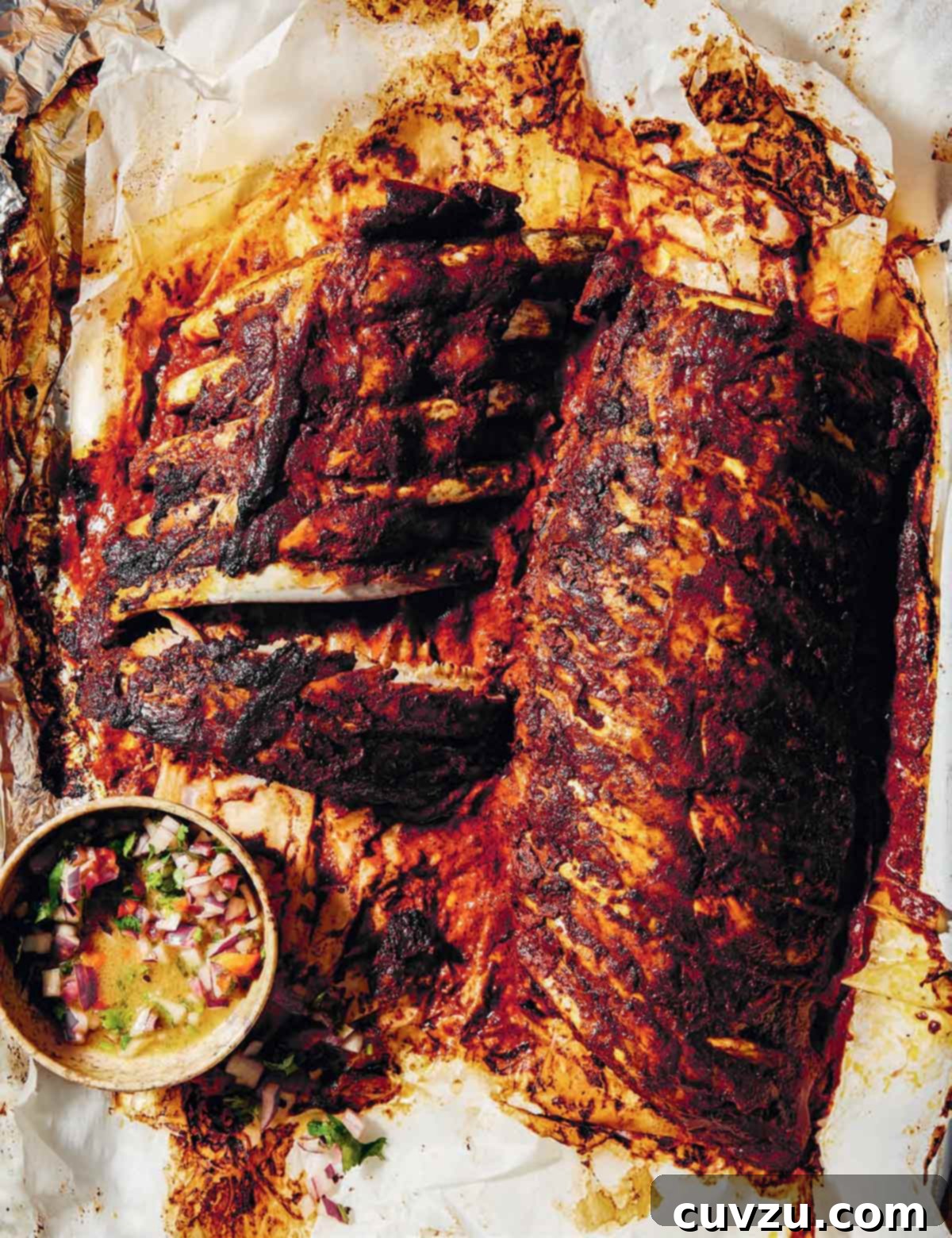
Pibil-Style Pork Ribs: A Taste of Yucatán at Home
Experience the vibrant and rich flavors of traditional Cochinita Pibil transformed into succulent, fall-off-the-bone pork ribs, perfect for your next culinary adventure.
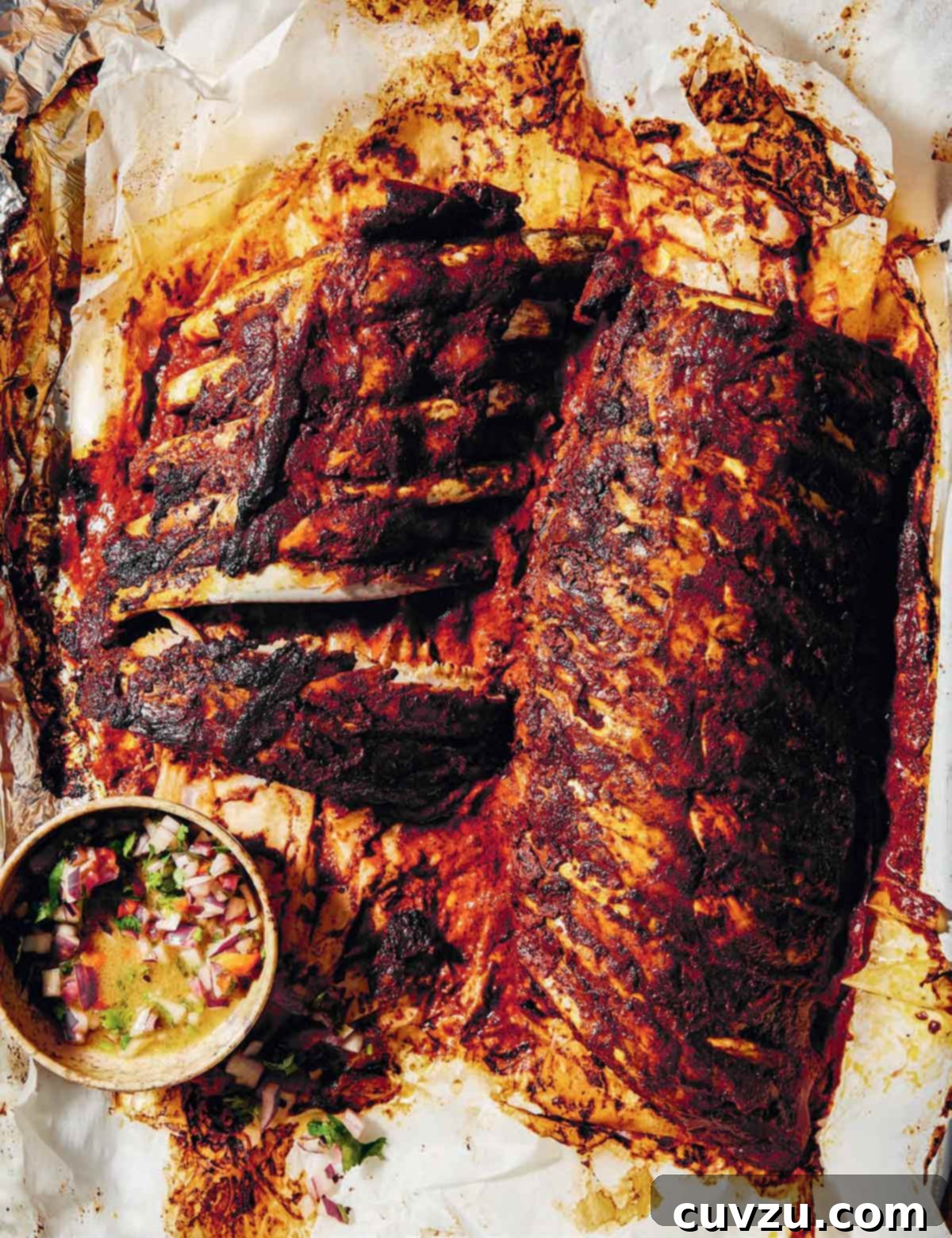
Pibil-style pork ribs bring the deep, complex flavors of Yucatán’s legendary dish, cochinita pibil, directly to your kitchen. Instead of a whole suckling pig slow-roasted in an underground oven, this recipe uses readily available pork ribs, making it an accessible culinary masterpiece for any home cook. Marinated overnight in a vibrant blend of fresh orange and lime juice, aromatic garlic, pungent Mexican oregano, and the distinctive achiote paste, these ribs are then slow-cooked to tender perfection in your oven. The experience is elevated further with a generous slathering of a spicy, citrusy habanero salsa, ensuring every bite is an explosion of authentic Mexican taste.
Cochinita Pibil: The Yucatecan Culinary Icon
To truly appreciate Pibil-style pork ribs, one must first understand its revered inspiration: Cochinita Pibil. This emblematic dish of the Yucatán Peninsula is a culinary cornerstone, deeply rooted in Mayan traditions. Historically, “cochinita” refers to a whole suckling pig, meticulously marinated in an achiote-based sauce. The pig is then wrapped in banana leaves and slow-roasted for many hours in a “pib,” a traditional underground oven that imparts a unique smoky flavor and incredible tenderness.
The beauty of cochinita pibil lies not just in its cooking method but in its distinctive flavor profile, a harmonious blend of earthy spices, bright citrus, and the subtle, peppery notes of achiote. While recreating the full traditional experience at home might be challenging without a pib, this Pibil-style ribs recipe captures the essence of that slow-cooked, deeply flavored pork, allowing you to savor a piece of Yucatán’s rich culinary heritage.
The Flavor Powerhouse: Achiote Paste
Central to the vibrant character of any pibil dish is achiote paste. Derived from annatto seeds, achiote is celebrated for both its striking deep, vibrant red color and its unique flavor. Annatto seeds themselves have a subtle peppery, slightly musky, and earthy taste. When ground and mixed with other spices, they form a paste that is indispensable in Yucatecan cuisine. Beyond its use as a natural food coloring in the broader food industry, achiote paste lends an unmistakable depth and aroma that pairs exquisitely with pork, creating a truly authentic taste experience.
For this recipe, selecting a good quality achiote paste is crucial. Many commercially available pastes combine crushed annatto seeds with garlic, cumin, Mexican oregano, and sometimes even a hint of habanero, simplifying the marinade preparation. If you find yourself with powdered achiote seasoning instead of paste, you can easily create your own by adding a small amount of water, spoonful by spoonful, until you achieve a smooth, workable paste. This ensures that your Pibil-style ribs will boast that iconic color and flavor.
A Word of Caution: The Habanero Kick
A true Pibil experience often comes with a distinctive heat, and this recipe is no exception. The habanero chiles, featured prominently in both the rich marinade and the lively salsa, give these spare ribs a delightful, fiery kick. Habaneros are known for their intense heat paired with a surprisingly fruity undertone, making them a perfect complement to the citrus and achiote. As Edson Diaz Fuentes wisely advises, be prepared for a good punch of spice. For those who prefer a milder heat, consider reducing the number of habaneros or deseeding them before blending. However, for the authentic taste adventurer, embrace the habanero’s vibrant heat!
Pibil-Style Pork Ribs
In Yucatán, sour oranges are traditionally used for the authentic pibil marinade. If you can find bitter Seville oranges, they are an excellent choice. Otherwise, a blend of fresh orange and lime juice works beautifully to achieve that signature tangy flavor. This marinade is particularly suited for tenderizing spare ribs. While traditional pibil uses banana leaves for an extra layer of flavor and moisture, you can achieve wonderfully succulent ribs by simply wrapping them tightly in baking parchment and aluminum foil before slow-cooking.
David Leite
Mains
Mexican
4 servings
717 kcal
30 minutes
2 hours 30 minutes
23 hours (includes marinating)
Ingredients
For the Pibil Marinade
- 5 ounces achiote paste*, crumbled
- Scant 1 cup fresh orange juice
- 3 tablespoons fresh lime juice
- 1 1/2 ounces (about 10 cloves) garlic cloves
- 1 habanero chile, trimmed
- 1 1/2 teaspoons dried Mexican oregano
- 3/4 teaspoon sea salt
For the Ribs
- Two racks (2 lbs 4 oz) pork spare ribs
- 1 scant cup water
- Mild vegetable oil, for brushing
For the Habanero Salsa
- 1 large (9 oz) red onion, finely chopped
- 2 to 4 habanero or Scotch bonnet chiles, finely chopped (adjust to your spice preference)
- 2 ounces store-bought or homemade pickled red onions, plus 2 tablespoons pickling juice
- Scant 1/2 cup fresh orange juice
- 3/4 teaspoon sea salt, plus more if needed
- 3 tablespoons extra virgin olive oil
- 3/4 ounce fresh cilantro, chopped
For Serving (Optional)
- Black beans
- Warm corn tortillas
- Fresh cilantro sprigs
Instructions
Make the Pibil Marinade
- Place all the ingredients for the marinade (achiote paste, orange juice, lime juice, garlic, habanero, Mexican oregano, and sea salt) into a blender. Blend thoroughly until the mixture is completely smooth and uniform.
Marinate the Ribs
- Place the pork spare ribs in a large, non-reactive container, such as a glass or porcelain baking dish. Pour the prepared pibil marinade evenly over the ribs, ensuring they are well coated. Cover the dish and refrigerate overnight (at least 8 hours, up to 24 hours) to allow the flavors to deeply penetrate the meat.
- About 1 hour before you plan to cook, remove the marinated ribs from the refrigerator to bring them closer to room temperature. Preheat your oven to 325°F (160°C). Line a large roasting pan with a generous piece of aluminum foil, ensuring it’s large enough to completely enclose the ribs later.
- Place a large sheet of baking parchment paper over the aluminum foil in the roasting pan. Carefully arrange the marinated ribs on top of the parchment. Scrape any remaining marinade from the dish and pour it over the ribs. Add the scant cup of water to the pan. Cover the ribs with a second piece of baking parchment, then wrap the entire parcel tightly with the aluminum foil, crimping the edges to create a secure seal.
- Place the wrapped ribs in the preheated oven and bake for 2 to 2 1/2 hours, or until the meat is incredibly tender and easily falling off the bone. The long, slow cooking process is key to achieving this succulence.
- Once the ribs are tender, increase the oven temperature to 350°F (180°C). Carefully unwrap the top of the foil and parchment, exposing the ribs. Lightly brush the ribs with mild vegetable oil. Return the uncovered ribs to the oven and continue baking for about 20 minutes, or until the surface of the meat begins to form a beautiful, appetizing crust.
Make the Habanero Salsa
- While the ribs are cooking, prepare the habanero salsa. In a medium bowl, combine the finely chopped red onion, finely chopped habanero or Scotch bonnet chiles (adjust quantity based on desired heat), pickled red onions, pickling juice, fresh orange juice, and 3/4 teaspoon sea salt. Mix everything thoroughly until the salt has dissolved.
- Whisk in the extra virgin olive oil. Allow the salsa to sit and infuse for at least 10 minutes; this helps the flavors meld beautifully. Taste the salsa and adjust the seasoning as needed with more juice, chiles, or salt to achieve your desired balance of spicy, fragrant, and citrusy flavors. Stir in the chopped fresh cilantro just before serving.
- Serve the Pibil-style pork ribs immediately after they come out of the oven, accompanied by the vibrant habanero salsa. For a complete meal, serve with a side of black beans and warm corn tortillas, if desired.
Notes
*What is Achiote Paste?
Achiote, also known as annatto, seeds are fundamental to cochinita pibil, providing its signature deep red-orange color. On their own, these seeds offer a subtle woody pepperiness. However, achiote paste typically combines these crushed seeds with a blend of other flavorful ingredients like garlic, orange zest, cumin, sea salt, and sometimes habanero peppers. This blend is available in powdered, paste, or oil forms. If you find only powdered achiote seasoning, you can easily create a paste by gradually adding small amounts of water until you reach the desired consistency.
The distinctive aroma of achiote is often likened to a mild, smoky paprika, contributing an earthy warmth to the dish. Its presence is key to achieving the authentic taste profile of Yucatecan cuisine. When purchasing, look for a paste that lists minimal additives to ensure the purest flavor.

Adapted From
Ciudad de Mexico
Buy On Amazon
Nutrition
Calories: 717 kcal
Carbohydrates: 22 g
Protein: 32 g
Fat: 55 g
Saturated Fat: 16 g
Monounsaturated Fat: 24 g
Trans Fat: 1 g
Cholesterol: 152 mg
Sodium: 1039 mg
Fiber: 2 g
Sugar: 12 g
Nutrition information is automatically calculated and should be used as an approximation only.
Recipe Testers’ Reviews: Real Feedback on Pibil-Style Pork Ribs
Our dedicated team of recipe testers put these Pibil-style pork ribs to the test, offering valuable insights into the preparation and final results. Their experiences highlight the successful adaptation of a classic Yucatecan dish into a home-friendly recipe.
Terri Lyons
Terri Lyons thoroughly enjoyed the Pibil-style pork ribs, noting the incredible aroma that filled her home during cooking. She particularly highlighted her positive first experience with achiote paste, describing its aroma as similar to a smoky, yet milder, paprika. She observed that her habaneros might have been too small, as the raw marinade was not noticeably spicy, suggesting that adjusting the chile quantity to your preference is key.
Using back ribs, Terri found them perfectly tender in 2.5 hours. She praised the mild yet distinctly present finished flavor of the ribs, emphasizing how perfectly it paired with the vibrant salsa. She appreciated the departure from the typical dry rub texture, finding these ribs to be wonderfully moist and flavorful.
Joel Jenkins
Joel Jenkins, a seasoned cook who often prepares cochinita pibil for large groups, was excited to try this Pibil-style pork ribs recipe. He praised the “really good flavor” of the ribs but felt the texture could be improved. He noted that the marinade was more liquid than expected, making it impossible to “scrape” excess marinade as suggested, as it simply poured off. Joel suggested that a better final result might be achieved by finishing the ribs on a grill or perhaps out of the marinade entirely for a crispier exterior.
However, Joel had nothing but praise for the habanero salsa, calling it “fantastic as it is.” He issued a strong warning about its heat level (“WARNING: It is HOT”), but quickly followed by commending its intense flavor. He particularly appreciated how the initial fruity notes of the habanero beautifully complemented the marinade on the ribs. Joel was so impressed with the salsa that he plans to use it on other dishes like chicken and pork chops, confirming its versatility and deliciousness.