Mastering Your Thanksgiving Turkey: A Comprehensive Guide to Perfect Doneness and Food Safety
Thanksgiving is a time for gratitude, family, and, of course, a show-stopping turkey. The anticipation builds as the aroma fills your home, promising a succulent centerpiece. But what happens when the moment of truth arrives, you proudly carve that magnificent bird, and are met with an unwelcome sight: a trickle of pink? That moment of culinary dread, where you question everything from your cooking skills to your choice of guests, is avoidable. An undercooked Thanksgiving turkey isn’t just a party foul; it’s a food safety concern that can quickly turn a joyous gathering into a health hazard. Ensuring your Thanksgiving turkey is perfectly cooked and safe to eat is paramount for a truly successful holiday.
Many home cooks fall prey to common pitfalls that lead to an underdone turkey. The pressure to deliver a flawless holiday meal can sometimes lead to relying on outdated or unreliable methods for checking doneness. Let’s explore the classic mistakes and, more importantly, how to confidently achieve a perfectly cooked turkey every single time, ensuring a safe, delicious, and memorable meal for all your loved ones.
Common Mistakes That Lead to Undercooked Turkey
That disheartening pink meat often stems from relying on inaccurate indicators. Understanding these common errors is the first step towards a perfectly cooked turkey. Here’s what typically goes wrong:
- Relying on the Pop-Up Timer: That small, often plastic, device that comes pre-inserted in many turkeys is notoriously unreliable. These timers are designed to pop at a specific temperature, usually around 175°F (80°C) or even higher in some cases. While this might sound safe, it often means the turkey’s breast meat, which cooks faster and is more prone to drying out, is already severely overcooked by the time the timer activates. Furthermore, they are often inconsistent, can fail entirely, or give a false sense of security. Trusting plastic over precise measurement is a recipe for disappointment and potential food safety issues.
- Going by Appearances Alone: A beautiful, burnished brown skin is undeniably appealing and signifies a turkey cooked to crispy perfection on the outside. However, external browning is not an indicator of internal doneness. The exterior of a turkey can brown quickly in the oven, especially at higher temperatures, long before the deepest parts of the thigh or breast reach a safe internal temperature. Judging a turkey solely by its outward appearance is akin to judging a book by its cover – it simply doesn’t tell the full story of whether the meat inside is thoroughly cooked and safe.
- Jiggling the Drumstick or Visualizing Clear Juices: While a loose drumstick can indicate tenderness in the connective tissues, it’s not a reliable gauge for food safety. It might suggest the meat is cooked through, but it offers no precise information about the internal temperature required to kill harmful bacteria. Similarly, the “clear juices” test can be misleading. While generally true that juices run clear when fully cooked, this visual cue can be subjective and may not indicate the exact safe temperature throughout the entire bird, particularly in thicker areas.
These methods are based on guesswork, and when it comes to poultry, guesswork can lead to serious health risks for your guests. The good news is that achieving perfect turkey doneness is simpler than you think, requiring just one crucial tool and a bit of culinary know-how.
The Indispensable Tool: Your Meat Thermometer
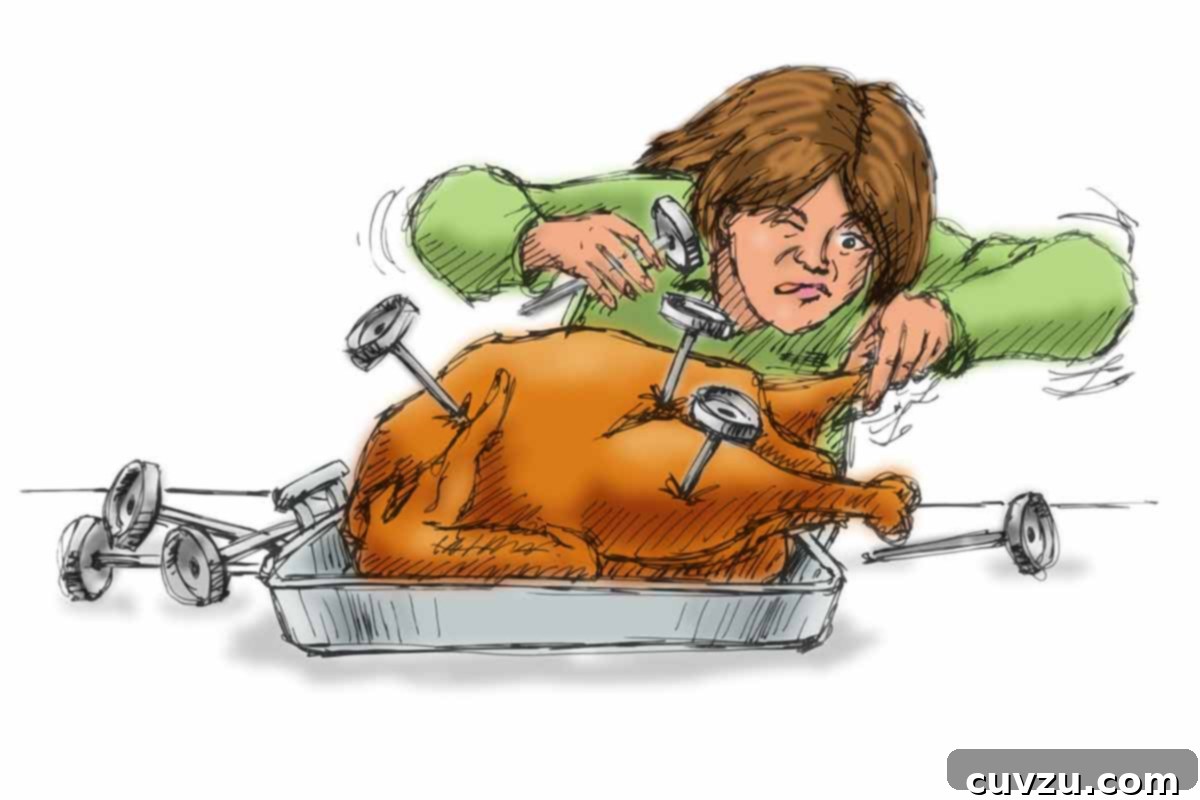
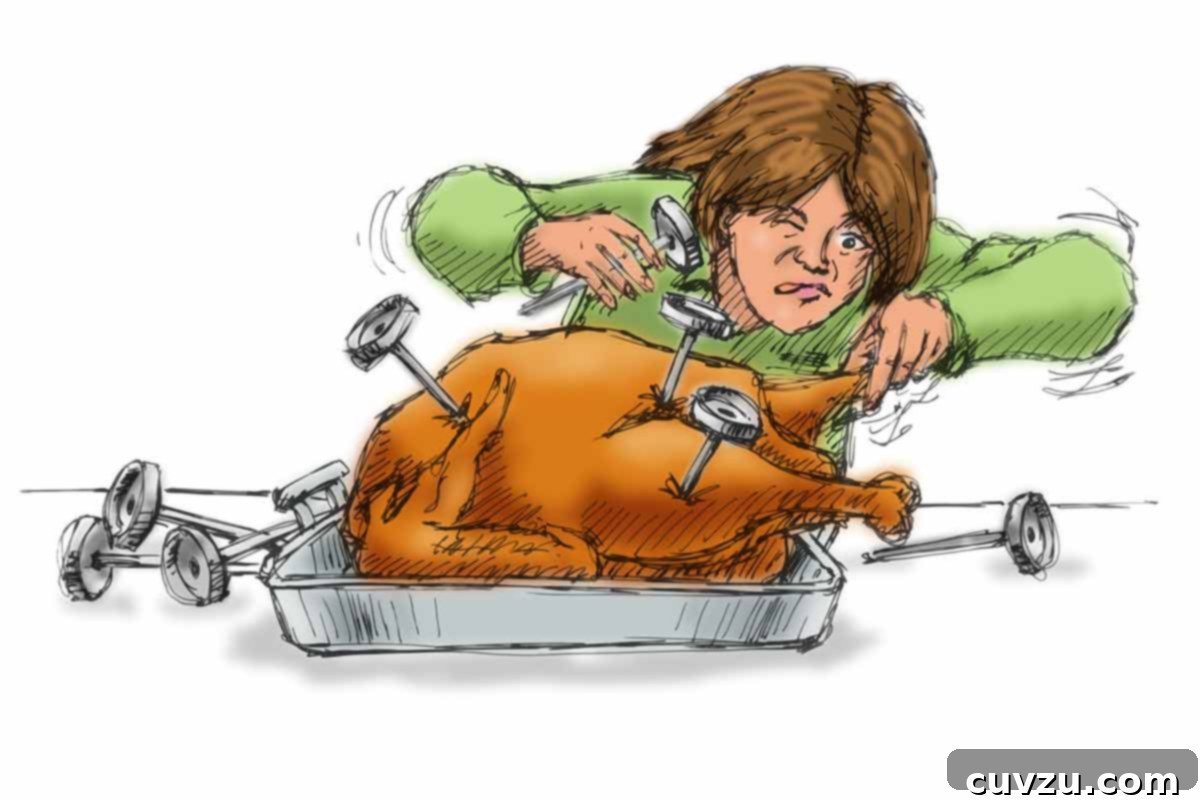
To eliminate all guesswork and ensure your Thanksgiving turkey is cooked to perfection and, most importantly, safe to eat, you need to invest in a reliable meat thermometer. We highly recommend an instant-read digital thermometer. These sophisticated devices provide accurate temperature readings within a few seconds, allowing you to quickly check multiple spots without letting too much heat escape from the oven. This precision instrument is your best friend for a stress-free holiday meal.
Why an Instant-Read Thermometer is Superior:
- Accuracy and Precision: Instant-read thermometers are engineered for precision, often providing readings to within a degree. This level of accuracy is crucial when dealing with food safety temperatures, ensuring you meet the USDA guidelines without overcooking.
- Unmatched Speed: As the name suggests, they give a temperature reading almost instantly (typically 2-5 seconds). This rapid feedback minimizes the time your oven door is open, helping to maintain a consistent oven temperature and prevent heat loss.
- Exceptional Versatility: Beyond turkey, an instant-read thermometer is an invaluable tool for all types of meats, from roasts and steaks to chicken and pork. It’s also incredibly useful for baking (checking bread internal temperature), candy making, or even verifying oil temperatures for deep frying.
- Hassle-Free Operation: Unlike some traditional probe thermometers that stay in the oven with a cord trailing out, instant-read models are used for quick spot checks. This means no cords to accidentally snag, no heat escaping through the oven door gaps, and no potentially misleading beeps if the probe isn’t perfectly placed within the deepest part of the meat.
How to Use Your Instant-Read Thermometer for Turkey:
The key to accurate temperature readings is proper placement. You’re looking for the coldest part of the meat, which is typically the thickest section, away from bones. The USDA recommends a safe internal temperature of 165°F (74°C) for all poultry, including turkey and any stuffing cooked inside it. Remember, always check in at least two, preferably three, different critical locations to ensure uniform doneness and complete food safety.
Where to Check Your Turkey’s Temperature for Perfect Doneness
Accurate temperature checking is critical to avoid an undercooked Thanksgiving turkey. Knowing precisely where to insert your thermometer probe ensures you get the most reliable reading. Here are the precise locations:
1. The Thigh: The Ultimate Indicator
The thigh is generally the thickest and juiciest part of the turkey, and crucially, it’s also one of the slowest areas to cook. If the thigh registers 165°F (74°C), there’s a very high probability that the rest of your turkey, including the breast, is also done and safe to eat. This makes the innermost thigh your primary target for temperature checks, offering the most reliable indicator of overall doneness.
- Preparation: Carefully remove the turkey from the oven and place it on your stovetop or a sturdy counter, still in its roasting rack. Positioning it so the drumsticks are pointing away from you will offer better access to the thickest part of the thighs.
- Locating the Thigh: On each side of the bird, identify the large, plump section of meat situated just beneath the drumsticks where they connect to the body. This is the thigh.
- Insertion Technique: Hold the probe end of your instant-read thermometer parallel to the drumstick. Insert it deeply into the center of the thigh meat, aiming for the thickest part of the muscle. It’s absolutely crucial to push the probe in until it reaches the deepest point of the meat without touching any bone.
- Avoiding Bone: If you feel significant resistance, you’ve likely hit bone. Immediately pull the probe out slightly and reinsert it a little differently. Bone conducts heat faster than meat, so a reading taken too close to the bone will be artificially high and inaccurate, giving you a false sense of security that the turkey is done when it might not be.
- Reading the Temperature: Hold the probe firmly in place until the temperature stabilizes, which typically takes a mere 5 to 10 seconds for an instant-read thermometer. You’re looking for a steady reading of 165°F (74°C).
- Double-Check: Even if one thigh reads correctly, it’s always a good practice to check the other thigh as well, just to be absolutely certain. Turkeys don’t always cook perfectly evenly due to variations in shape or oven hot spots.
2. The Breast: Essential for Larger Birds
While a proper thigh reading is often sufficient for smaller to medium-sized turkeys, if you’re roasting a larger turkey (typically over 15 pounds), it’s wise to also check the breast. Its substantial thickness might mean it cooks at a slightly different rate than the thighs, and monitoring it separately helps prevent both undercooking and over-drying. The breast meat cooks faster than the dark meat of the thighs and can quickly become dry and stringy if overcooked, making precise temperature monitoring vital.
- Locating the Thickest Part: The thickest part of the breast is usually easier to find than the innermost thigh. It’s the prominent, fleshy area located on the top of the bird, just in front of the legs and between the wings.
- Insertion Technique: Insert the thermometer probe about halfway between the center breastbone (keel bone) and the drumstick, directly into the deepest part of the breast meat. Again, ensure the probe does not touch the bone or extend into the cavity, as this will give an inaccurate reading.
- Desired Temperature: Aim for a stable reading of 165°F (74°C). Many experienced chefs prefer to pull the turkey from the oven when the breast reaches 160°F (71°C) because of carryover cooking (which we’ll discuss below). This allows the internal temperature to rise to a safe 165°F (74°C) while the turkey rests, resulting in a juicier breast. However, for maximum food safety assurance, especially for novice cooks, reaching 165°F (74°C) directly before removing it from the oven is recommended.
3. The Stuffing: A Critical Safety Check
If you’ve opted to cook stuffing inside the turkey cavity, it requires its own specific temperature check. The stuffing is bathed in raw turkey juices throughout the cooking process and often contains ingredients like eggs, making its internal temperature a critical food safety concern. Never assume the stuffing is done just because the bird is.
- Why it Needs Checking: For one, it needs to reach a safe temperature to eliminate any pathogens from the raw bird juices it absorbs. Secondly, if your stuffing contains eggs, they also need to be fully cooked to a safe temperature to prevent foodborne illness.
- Desired Temperature: Like the turkey meat, the stuffing must register a minimum of 165°F (74°C). This is a non-negotiable food safety standard for any food cooked inside poultry.
- Insertion Technique: Insert the thermometer probe deep into the thickest part of the stuffing, reaching as far into the bird’s large cavity opening as possible to get a true reading of its core temperature.
- Addressing Uneven Cooking: It’s quite common for the stuffing to take longer to reach the safe temperature than the turkey itself. If the turkey meat is done (165°F/74°C) but the stuffing is still below temperature, and the bird is browning too much on the outside, you have a couple of effective options:
- Tent with Foil: Loosely tent the entire turkey with aluminum foil. This prevents further browning of the turkey skin and helps to insulate the bird, allowing the stuffing to continue cooking and catch up to the safe temperature without drying out the meat.
- Scoop and Finish (Consider Alternatives): While possible, trying to scoop out undercooked stuffing into a separate baking dish to finish cooking while the bird rests is generally messy, risks tearing the turkey skin, and disrupts the turkey’s resting process. For a less stressful holiday, consider cooking your dressing or stuffing outside the bird in a separate pan from the start. This not only ensures faster, more even cooking of the stuffing but also yields delightful crispy edges and corners – a favorite for many and often easier to manage!
Debunking Turkey Doneness Myths
Don’t let old wives’ tales deter you from ensuring a safe and delicious bird. Poking your turkey multiple times for temperature checks is completely fine:
- Myth: “All the juices will run out if you poke it too much!” This is largely untrue and a common misconception. While a tiny bit of juice might escape with each precise puncture from a thin thermometer probe, it’s negligible – perhaps half a teaspoon per hole. If your turkey becomes dry from a few thermometer pokes, you have bigger issues at hand, likely related to overcooking the bird or starting with an inherently dry bird to begin with. The small, almost imperceptible loss of juice is a tiny price to pay for certainty and absolute food safety.
- Myth: “Puncture marks will ruin the presentation!” Most guests won’t even notice the small probe marks on a beautifully roasted turkey. If you’re genuinely concerned about aesthetics, simply carve the turkey in the kitchen before bringing it to the table. This approach also makes serving much easier, allows for more controlled portioning, and provides a stunning platter presentation rather than carving at the table.
The Importance of Resting Your Turkey and Carryover Cooking
Once your turkey has reached its target temperature of 165°F (74°C) in all critical areas, resist the urge to carve it immediately. Resting is a crucial, often overlooked, step that significantly impacts the final juiciness, tenderness, and flavor of your bird. Skipping this step is a common mistake that can lead to a dry turkey, even if it was cooked perfectly.
During this resting period, a phenomenon called carryover cooking occurs. When you remove meat from the oven, its internal temperature continues to rise for a period, as the exterior heat transfers to the cooler interior. For a large turkey, this can mean an increase of 5-10°F (3-5°C). Resting also allows the muscle fibers time to relax and, more importantly, reabsorb the juices that have migrated to the center during cooking. If you carve too soon, those precious, flavorful juices will simply run out onto your cutting board, leaving you with less flavorful and dry meat.
- How Long to Rest: A general rule of thumb is to rest your turkey for at least 20-30 minutes for smaller birds (under 12 lbs) and up to 45-60 minutes for larger birds (15 lbs+). Don’t worry, your turkey will stay plenty warm during this time.
- How to Rest: Transfer the cooked turkey to a large, sturdy cutting board. Loosely tent it with aluminum foil. Do not wrap it tightly, as this can trap too much heat and continue to cook the bird excessively (potentially overcooking it), and can also make the skin soggy. The loose tent allows steam to escape while keeping the turkey warm and the skin crisp.
- Temperature Maintenance: A rested turkey will stay warm for a surprising amount of time, typically an hour or more if loosely tented. You can use this valuable time to make gravy from the drippings, put finishing touches on your side dishes, or simply relax before the feast.
Safe Handling of Thanksgiving Leftovers
After the feast, ensuring the safe storage of leftovers is just as important as safe cooking. Foodborne illnesses can easily occur if perishable foods are left at unsafe temperatures for too long. Proper handling of your cooked turkey and accompanying dishes is vital to prevent waste and protect your family’s health.
- The “Danger Zone”: Bacteria multiply rapidly between 40°F (4°C) and 140°F (60°C). Perishable foods, including cooked turkey, stuffing, and gravy, should not remain in this “danger zone” for more than two hours. The longer food sits at these temperatures, the higher the risk of bacterial growth.
- Rapid Refrigeration: All turkey leftovers, including stuffing and gravy, should be refrigerated within one hour of serving dinner. To facilitate rapid cooling, carve the turkey and divide large quantities of food (like a whole turkey breast or a large batch of stuffing) into smaller, shallow containers. This allows them to cool down quickly and efficiently in the refrigerator. Avoid putting large, hot portions directly into the fridge, as this can raise the overall temperature of your refrigerator, endangering other foods and making your appliance work harder.
- Storage Time: Cooked turkey and stuffing can be safely stored in the refrigerator for 3 to 4 days. If you won’t consume them within this timeframe, freeze them immediately to extend their shelf life. Frozen cooked turkey is best consumed within 2 to 6 months for optimal quality and flavor, although it remains safe beyond that.
- Reheating Leftovers: Always reheat leftovers thoroughly to an internal temperature of 165°F (74°C) before serving. Use your instant-read thermometer to verify this, especially with denser items like stuffing or thick slices of turkey, to ensure all harmful bacteria are destroyed.
Conclusion: A Confident and Delicious Thanksgiving
Preparing a Thanksgiving turkey can feel daunting, but by arming yourself with the right knowledge and tools, you can transform potential stress into pure confidence. Ditching unreliable pop-up timers and visual cues in favor of an accurate instant-read meat thermometer is the single most important step you can take towards culinary success and food safety.
By consistently checking the thigh, breast, and stuffing for that crucial 165°F (74°C), understanding the importance of carryover cooking, and allowing your turkey to rest properly, you will ensure a perfectly cooked, succulent, and safe turkey for all your guests. This holiday season, embrace precision in your cooking. Focus on creating cherished memories around the table, knowing that your magnificent Thanksgiving turkey is not only delicious but also flawlessly prepared. Say goodbye to guesswork and hello to a truly stress-free and spectacular holiday feast!
Originally published November 19, 2011. Updated for clarity, comprehensive detail, and SEO optimization.