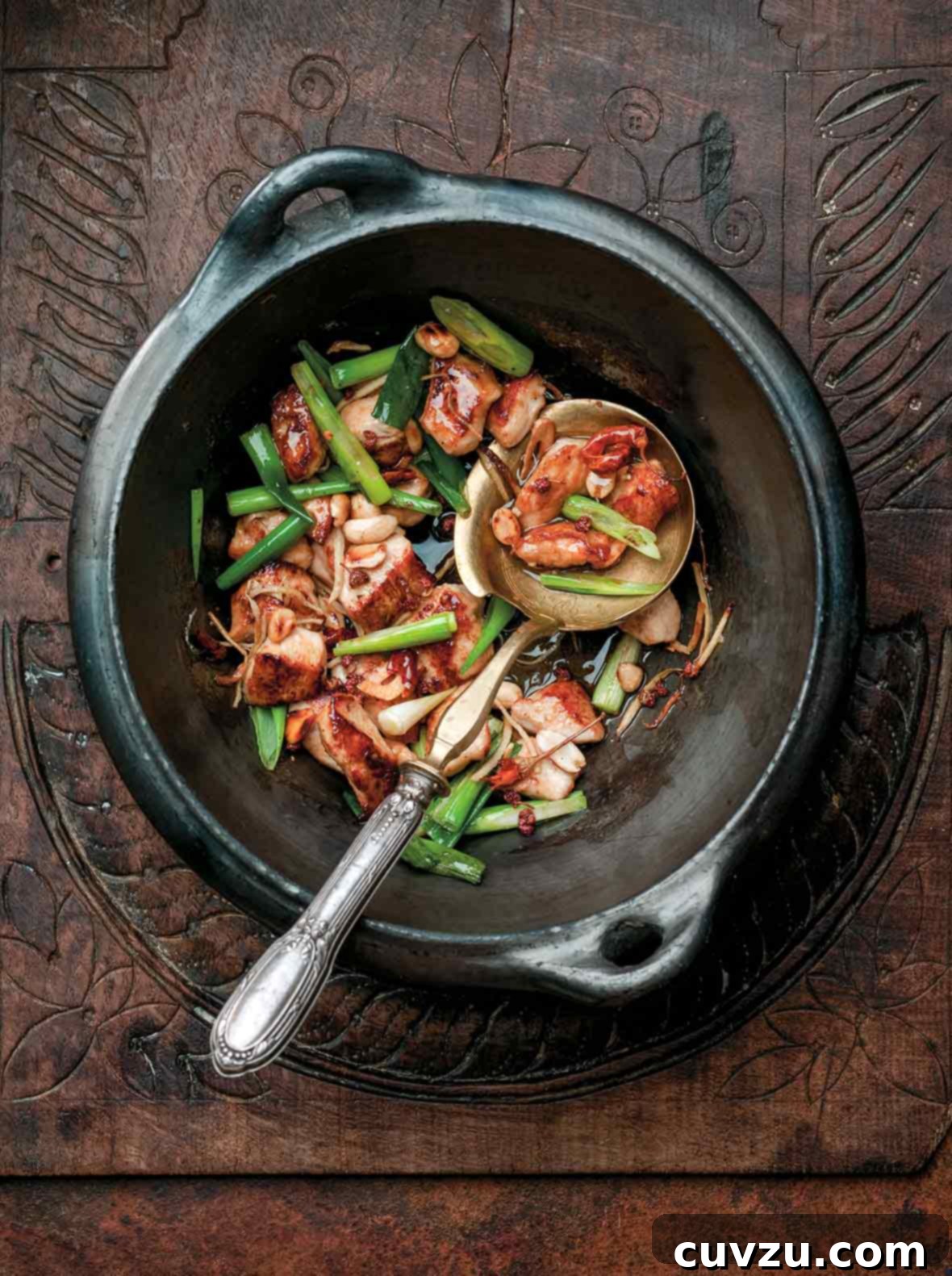
Authentic Gung Bao Chicken: A Szechuan Culinary Journey
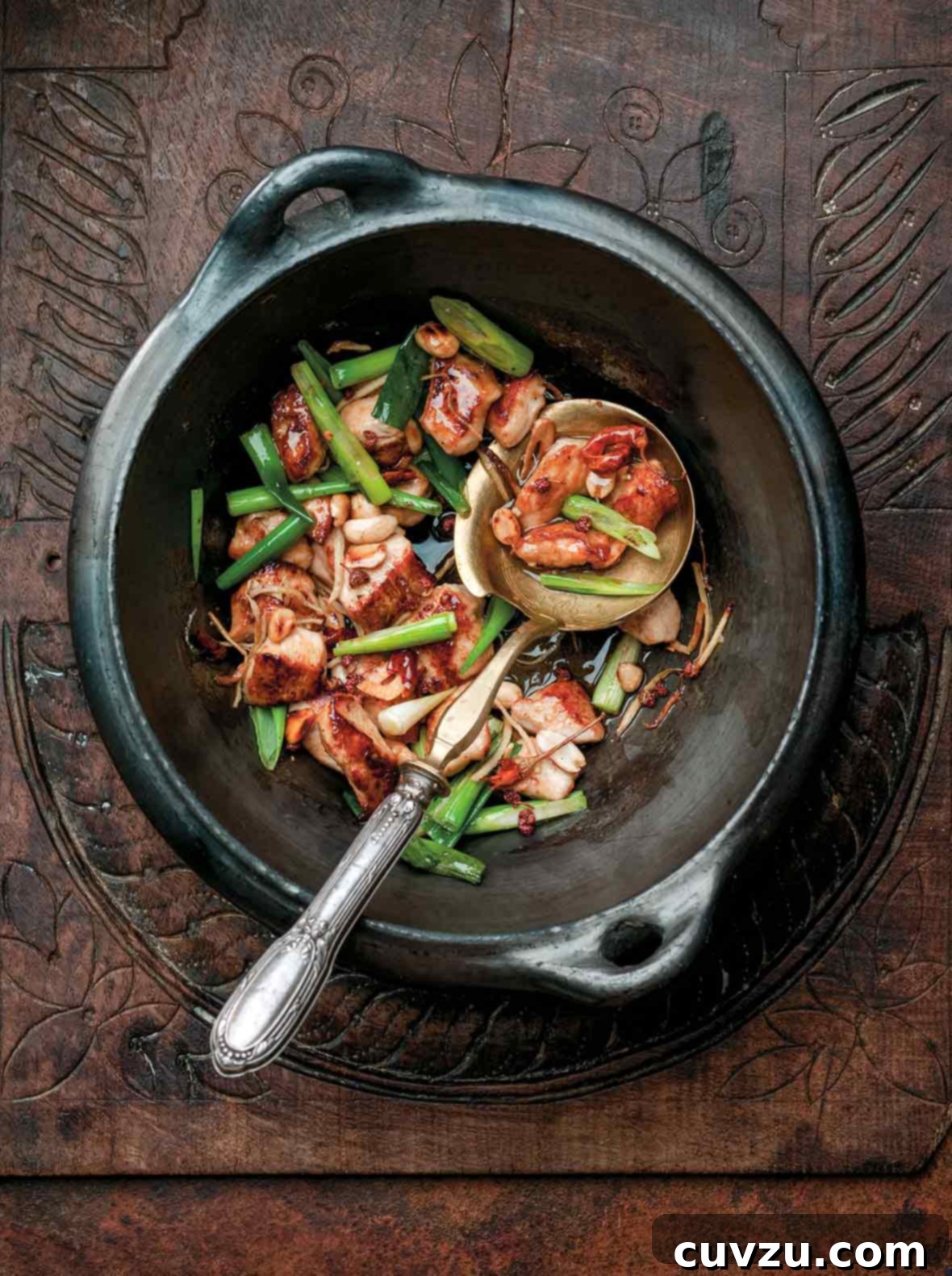
Unleash the bold flavors of Szechuan cuisine with this exquisite gung bao chicken recipe. Crafted with succulent boneless chicken breast, fiery chilies, aromatic Szechuan peppercorns, and crunchy peanuts, this dish promises an authentic taste of one of China’s most celebrated culinary regions. It’s not just a meal; it’s an immersive experience into the heart of Szechuan’s iconic “ma la” (numbing and spicy) profile, perfectly balanced with savory and subtly sweet notes.
A Culinary Memoir: Discovering Gung Bao in Beijing
My culinary journey led me to the bustling streets of Beijing, where I had the privilege of learning this classic Chinese dish firsthand. It was a crisp, snowy winter morning when I hailed a cab, destined for a traditional Chinese home nestled in the city’s northern district. The journey through narrow, winding streets felt like stepping into another era. Shivering slightly from the cold, I finally located the modest dwelling – a charming collection of tiny rooms encircling a tranquil courtyard, each brick and tile steeped in history.
Inside a wonderfully rustic, yet freezing, kitchen, I met my host and esteemed cooking teacher, Cheng Yi. With her expert guidance, we embarked on preparing a truly superb lunch, the centerpiece of which was this very fiery, warming chicken. The aroma of chilies and Szechuan peppercorns filled the air, a stark contrast to the wintry chill outside, promising comfort and excitement in every bite. After a satisfying meal, as is customary in China, we settled down for a soothing cup of hot tea. We watched the snow fall thickly, silently blanketing the ancient stone courtyard, creating a serene scene that beautifully echoed the meditative moments from the film Crouching Tiger, Hidden Dragon. That day cemented not just a recipe, but a profound appreciation for the depth and warmth of Chinese culinary traditions. –John Gregory-Smith
Gung Bao vs. Kung Pao: Understanding the Authentic Distinction
For many, the terms “Kung Pao” and “Gung Bao” chicken are used interchangeably, often referring to the popular Chinese-American takeout dish. However, there’s a crucial distinction, especially when seeking an authentic Szechuan experience. The former, “Kung Pao chicken,” has evolved significantly in Western kitchens, primarily in America, becoming a “bastardized,” or rather, Americanized rendition of its genuine counterpart. This adapted version typically features less spice, a sweeter sauce, and often includes a medley of vegetables such as bell peppers, carrots, and pineapple, ingredients not traditionally found in the original Szechuan preparation. It’s a beloved dish, certainly, but one that caters to a different palate.
Our recipe, however, is a proud representation of the latter: the true “Gung Bao chicken.” This is an authentic Szechuan stir-fry, a culinary masterpiece that focuses on the core elements of Szechuan cuisine. It’s a bold composition of tender chicken, vibrant red chilies, the signature numbing sensation of Szechuan peppercorns, and the satisfying crunch of peanuts. What defines this authentic version is its emphasis on the “ma la” flavor profile – the unique combination of spicy (là) from chilies and numbing (má) from Szechuan peppercorns, creating a complex and exhilarating taste sensation that tantalizes the senses. The simplicity of its ingredients belies the depth of its flavor, offering a profound taste that transport you directly to the heart of Chengdu. By embracing this traditional approach, we honor the rich culinary heritage of Szechuan and deliver a dish that is both exhilarating and deeply satisfying.
The Gung Bao Chicken Recipe: A Step-by-Step Guide
Gung Bao Chicken
By David Leite
- PIN
Print Recipe
Ingredients
- 1/3 cup unsalted peanuts
- 1 pound (or a little more) boneless, skinless chicken breasts, cut into 3/4-inch (18-mm) cubes
- 1 tablespoon cornstarch
- 4 tablespoon light soy sauce
- 2 tablespoons vegetable or unroasted peanut oil
- 1 teaspoon Szechuan peppercorns
- 2 dried red chilies, roughly chopped or crushed
- 2 garlic cloves, peeled and very thinly sliced
- One knob ginger, peeled and very thinly sliced
- 4 scallions, trimmed and chopped
Instructions
-
Heat a wok over medium heat. Add the peanuts and gently toast them, shaking the pan occasionally, until they’re a beautiful golden brown, typically 2 to 3 minutes. Immediately transfer the peanuts to a plate to cool, preventing them from overcooking.
-
Meanwhile, prepare the chicken. In a large bowl, combine the cubed chicken, cornstarch, and half of the light soy sauce. Toss gently but thoroughly until all pieces of chicken are well coated. Cover the bowl and set it aside to marinate for at least 10 minutes. This “velveting” step helps tenderize the chicken and keep it moist during stir-frying.
-
Return the wok to medium heat and add the vegetable or peanut oil. Once the oil is shimmering and hot, carefully remove the wok from the heat momentarily and add the Szechuan peppercorns and dried red chilies. Stir continuously for 20 to 30 seconds, allowing the chilies to deepen in color to a light brown and release their fragrant heat. This quick toast awakens their aromatic oils.
-
Place the wok back over medium-high heat. Add the marinated chicken to the hot wok. Fry for 2 to 3 minutes, stirring frequently, until the chicken pieces just begin to turn golden on the outside. Then, incorporate the thinly sliced garlic, ginger, chopped scallions, and the toasted peanuts. Continue to stir-fry constantly for another 1 to 2 minutes, ensuring the chicken is cooked through, tender, and beautifully caramelized. Finally, pour the remaining soy sauce over the chicken, toss everything together one last time to coat evenly, and serve immediately for the best flavor and texture.
Adapted From
Mighty Spice Cookbook
Buy On Amazon
Explore More with AI
Substitutions
Scale Recipe
Summarize Insights
Nutrition
Nutrition information is automatically calculated, so should only be used as an approximation.
Beyond the Wok: Expert Tips for Gung Bao Perfection
Mastering Gung Bao Chicken involves more than just following steps; it’s about understanding the synergy of its core ingredients and the dynamic technique of stir-frying. Here are some insights to elevate your dish:
Choosing Your Chicken
While boneless chicken breast is specified, many culinary enthusiasts, including some of our recipe testers, prefer boneless, skinless chicken thighs. Thighs offer a richer flavor and remain more succulent during high-heat cooking, making them a fantastic alternative for those who desire a juicier texture. Whichever cut you choose, ensure it’s cut into uniform 3/4-inch (18-mm) cubes for even cooking.
The Magic of Szechuan Peppercorns
Szechuan peppercorns are the soul of this dish, providing the distinctive “ma” or numbing sensation. To fully unleash their citrusy, floral, and tongue-tingling properties, toast them briefly in a dry wok before adding other ingredients. While the recipe suggests adding them whole, many testers recommend grinding them before adding to the wok. This enhances their flavor distribution and prevents an occasional intense bite into a whole peppercorn, creating a smoother, more uniform experience. A spice grinder or mortar and pestle works wonders.
Controlling the Heat with Chilies
Dried red chilies are responsible for the “la” or spicy element. The original recipe calls for two, roughly chopped or crushed. For those sensitive to heat, or if you prefer to build the spice gradually, a smart approach is to start with just one chili. Taste the dish after the chicken is fully cooked, and then add the second chili, or even a third, if you desire more fiery intensity. This allows for personalized heat control, ensuring the dish is perfectly spiced to your preference without overwhelming the other delicate flavors.
The Art of Velveting
The cornstarch and soy sauce marinade is crucial for velveting the chicken. This technique creates a protective coating that locks in moisture, resulting in incredibly tender and silky chicken pieces. Don’t skip the 10-minute marination; it makes a significant difference in the final texture of your Gung Bao chicken.
Wok Hei: The Breath of the Wok
Authentic stir-frying thrives on “wok hei,” or the “breath of the wok.” This refers to the complex smoky aroma and distinctive flavor imparted to food cooked in a properly seasoned wok over very high heat. Ensure your wok is scorching hot before adding oil and ingredients. Cook in batches if necessary to avoid overcrowding the pan, which can lower the temperature and lead to steaming rather than stir-frying.
Pairing Your Gung Bao Chicken
This vibrant dish pairs beautifully with simple sides that allow its complex flavors to shine. Steamed jasmine rice is a classic choice, soaking up the savory sauce. For a balanced meal, consider serving alongside plain stir-fried greens like bok choy or gai lan, or a refreshing cucumber salad. To complement the bold flavors, a light and crisp lager or a dry Riesling can cut through the spice and enhance the dining experience.
Recipe Testers’ Reviews
Our dedicated team of recipe testers put this Gung Bao Chicken through its paces, offering invaluable feedback and confirming its status as a must-try dish. Here’s what they had to say about this authentic Szechuan delight:
Lila Ferrari
This recipe exceeded all my expectations. I have been disappointed in the past with making Chinese food at home, because it doesn’t measure up to what I have had in a restaurant. This recipe had it all: a few simple ingredients that were quickly put together and a very tasty result. I was concerned that the thinly sliced ginger would be overwhelming (I usually grate it) but in combination with the Szechuan peppercorns, chilies and garlic, the flavor was a little hot, a little spicy, but blended wonderfully, so that each ingredient contributed flavor but didn’t overwhelm. The crunchiness of the peanuts was a perfect foil for the softer chicken, and the scallions added just a touch of onion flavor. My testers loved it, and I will definitely make it again.
Sue Epstein
I love Chinese food (used to teach it) and am always willing to try a new Chinese recipe. This dish was definitely a winner. I substituted boneless chicken thighs for the breasts, simply because I already had them in my freezer. The dish was easy to put together, and my only regret is that I didn’t double it. Everyone I served it to would have liked more. I would have liked a little more sauce, and next time I’ll double the sauce ingredients. Also, I would highly recommend putting the Szechuan peppercorns through a pepper grinder, because it can be annoying to bite into them when eating the dish. I would also recommend sautéing both chili peppers but add only one to begin with. Then, when tasting the dish, you can add another if you want more heat. If you add both peppers and it’s too hot for your taste, there’s little you can do about it. By the way, I recommend doing this with any dish calling for hot peppers.
Jo Ann Brown
I love how quick, easy and flavorful this dish is. It had just the right amount of heat and was on the table in a flash. One testing note: the recipe calls for one teaspoon of Szechuan peppercorns. I had to assume that the author want them added whole. I did. I recommend grinding the peppercorns to reduce the textural presence in the dish.
Melissa Maedgen
This is a solid version of Gung Bao Chicken, which is particularly easy to make, because this recipe does not have you partially cooking the meat first and then removing it from the wok. Because the garlic and ginger are added near the end of cooking, they stay “hot” — the flavor is not mellowed by longer cooking. So there is a definite bite to it. I used Tien Tsin chiles for this, crumbled along with their seeds. I used one extra chile, which made the dish spicy, but not overly so. In the future, I would choose to make this with chicken thighs instead of breasts — just a matter of personal preference.
Kim Graham
This stir-fry was a big hit in our house. Not only was it very quick and easy to make, it was also quite flavorful. Despite the chopped dried chiles and peppercorns, it was not very spicy. We served it with simple sides of steamed rice and steamed broccoli. I would definitely make this again, because it is so easy to make on a weeknight for dinner, and we usually have all the ingredients on hand.
Linda B.
Delicious, easy and fast. Great for a quick weeknight supper, since I always have boneless chicken breasts on hand. Next time I might add a vegetable like zucchini, but it’s great as is. This is a keeper!
Bette Fraser
This is a quick, easy and authentic Chinese recipe that everyone should have in their culinary repertoire. Oh, and I should mention that it is absolutely delicious too. With just a handful of ingredients that you may already have in your pantry, this may become a weeknight staple for your family.