Disclaimer: The insights shared in this article are solely based on my personal journey and experiences. They should not be interpreted as or replace professional medical advice. I am not a medical professional; my expertise lies in baking. This content is intended to share my learnings from countless conversations and extensive personal research, hoping it might resonate with or assist others navigating a similar path.
Navigating the Fertility Journey: Six Months of Acupuncture and Beyond
It’s truly hard to believe that six months have flown by since I last shared our decision to embark on the path of acupuncture for infertility. Time has a peculiar way of accelerating when you’re deeply immersed in a personal quest. Not only have I intended to provide an update much sooner, but the sheer duration of this commitment to weekly acupuncture sessions and daily herbal remedies still astounds me. This journey has been a profound learning experience, filled with unexpected insights and challenges, and I’m eager to share the intricate details of what I’ve discovered.
Acupuncture: My Weekly Ritual and Herbal Elixirs
My “acupuncturing” (as I’ve affectionately coined the term) continues steadfastly, a consistent anchor in my week. Every seven days, I find myself on the treatment table, anticipating the subtle sensations of the needles. Complementing this, I meticulously adhere to a regimen of traditional Chinese herbs, consumed three times daily, with at least four hours separating each dose and always before meals. This has led to some amusingly awkward moments, particularly when attending blogger retreats or conferences. Picture this: me, pulling out small baggies of murky brown liquid to consume discreetly before we all dive into delicious meals designed for social media. #awkward, indeed! Yet, these moments often spark curiosity, with several fellow bloggers even expressing a desire to sample my unique concoction, proving that even in vulnerability, connection can be found.
Beyond the logistical quirks, this process has been incredibly enlightening. I’ve gained an immense amount of knowledge, perhaps even an overwhelming amount at times. Fortunately, I’m not alone in this journey. I have a dear friend who is traversing a strikingly similar path. Both of us have endured the heartbreak of a miscarriage and subsequently struggled to conceive a second child. While I would never wish this struggle upon anyone, having her as a confidante and “infertility buddy” has been an invaluable blessing. We share a unique bond, exchanging countless texts and calls, comparing notes from our doctor’s appointments, and meticulously analyzing our Basal Body Temperature (BBT) charts. It’s incredibly comforting to have someone who understands the nuances of this often bewildering experience, someone who never tires of discussing the “never-ending non-sense” because she’s just as deeply invested in finding answers.
Addressing the Common Question: Does Acupuncture Hurt?
One of the most frequent questions I encounter is, “Does it hurt?” In my initial post, I vaguely recalled stating, “not really,” and for the most part, that sentiment still holds true. However, it’s not entirely without its moments of discomfort. There have been specific areas, particularly around my pelvis and hands, where the initial insertion of the needle can elicit a sharp, fleeting pain. This sensation usually subsides quite quickly but remains an unpleasant experience that always leaves me a little nervous when my practitioner approaches those spots. Just this past week, I experienced unexpected discomfort in a couple of points on my feet, resulting in matching bruises—a testament to the occasional tenderness of the treatment.
This leads me to another fascinating revelation about acupuncture for fertility. Contrary to what one might intuitively expect, the majority of the needles are strategically placed in my legs and feet, rather than exclusively in my pelvic or abdominal region. While some needles are indeed placed in my lower abdomen, the concentration in my lower extremities was quite surprising. Apparently, there’s a wealth of crucial fertility points located in the legs and feet, a fact that was entirely new to me until I began this journey. This broader application of points highlights the holistic approach of acupuncture, treating the body as an interconnected system rather than isolating specific areas.
Unlocking Fertility Secrets with Basal Body Temperature (BBT) Charting
Approximately three weeks into my acupuncture treatment, I was advised to begin daily BBT charting. I won’t sugarcoat it—it’s a commitment. This involves taking your temperature with a specialized basal thermometer every single morning, including weekends, at precisely the same time each day. For me, that alarm is set for 6 AM. The accuracy of your chart hinges entirely on this consistency; even a slight deviation in timing can render your temperature reading inaccurate and skew your data. This disciplined practice becomes a non-negotiable part of your daily routine, a constant reminder of the journey you’re on.
So, why is BBT charting such a cornerstone of fertility assessment, especially in conjunction with acupuncture? My acupuncturist relies on this data as a primary indicator of how my body is responding to the treatments and herbs. Alongside my self-reported physical changes, the BBT chart offers a visual roadmap of my hormonal fluctuations throughout my cycle. For those interested in leveraging technology for this, I’ve found the Fertility Friend app to be an incredibly helpful tool, simplifying the tracking and interpretation process.
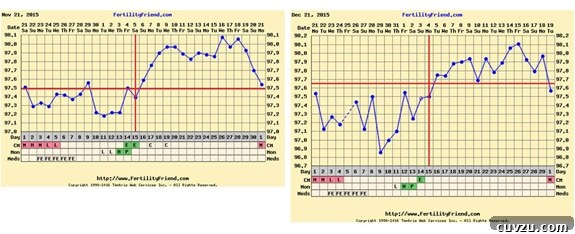
One of the most remarkable features of this app, and indeed of BBT charting itself, is its ability to pinpoint ovulation. A distinct red vertical line on the chart clearly indicates when ovulation has occurred. The first phase of your cycle, prior to ovulation, is typically characterized by lower basal body temperatures. This phase aligns with the production of estrogen, which plays a crucial role in preparing your egg for release. Following ovulation, you’ll observe a sustained spike in temperature. This second half of the cycle, marked by higher temperatures, is driven by the production of progesterone. This vital hormone supports the uterine lining, creating an optimal environment for a fertilized egg to implant and begin its nine-month journey of growth. The sustained temperature elevation is what signifies successful ovulation, as confirmed by the app’s algorithms. Conversely, when your cycle concludes and your temperature drops back down, it signals the arrival of your period. #buzzkill #notpregnant, as those in the fertility community often lament.
Beyond identifying ovulation, BBT charting offers another significant emotional advantage: it can subtly predict the onset of your period. For anyone who has experienced or is currently navigating the world of infertility, you understand the profound emotional weight that accompanies the arrival of menstruation. It’s often far from a happy moment, and for many, it can be utterly devastating. Observing that characteristic temperature drop just before your period allows for a moment of emotional preparation, helping to soften the blow and prevent that instantaneous, overwhelming emotional break.
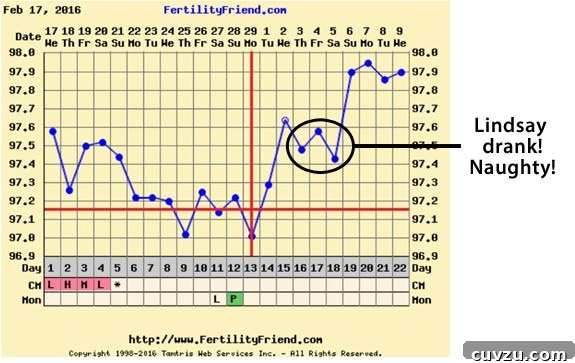
An intriguing discovery I made through charting is the undeniable impact of alcohol on BBT. While attending a recent blogger retreat, I indulged in wine during the evenings. As you can see from my chart above, my temperature was expected to spike post-ovulation but instead stalled midway. It wasn’t until the first day after I abstained from drinking that my temperature finally surged. This observation completely baffled my acupuncturist. Conventional wisdom suggests alcohol typically causes a temporary rise in body temperature, not a fall or stall. My chart presented a contradictory pattern, leaving both of us without a clear explanation. It simply highlighted another layer of complexity in understanding the body’s delicate systems.
There’s a vast ocean of information about BBT, hormones, and the intricate dance of the female reproductive system. If you’re seeking specific details, please feel free to reach out via email, and I’ll gladly share what I know from my own learning. Otherwise, a quick Google search can often provide a wealth of information, a resource I frequently utilize myself. For most, however, the insights shared here offer a foundational understanding of how this vital tracking method operates and its significance in a fertility journey.
Empowering Your Fertility Journey: Asking the Right Questions
One of the most profoundly empowering aspects of my acupuncture treatment has been the way it has prompted me to advocate for myself in the conventional medical system. My acupuncturist posed a myriad of questions that my OBGYN had never once considered asking. Simple inquiries like, “Have you undergone this specific test to assess your hormone levels?” These are fairly standard tests often recommended for individuals facing infertility challenges. Yet, for three agonizing years, my previous doctor never suggested it. It took my acupuncturist’s direct recommendation for me to even know I needed it, let alone approach my doctor to get it done. The frustration was immense. This experience, while enlightening, has left me feeling a bit wary of doctors, particularly OBGYNs. While I’m certain my previous doctor had no ill intentions, it felt as though they were so accustomed to treating pregnant patients that they struggled to effectively support someone navigating the complexities of conception difficulties. Fortunately, my friend’s doctor has proven to be much more proactive and responsive.
During the process of pursuing these crucial tests, my former doctor left the practice, and I was assigned a new physician. I genuinely like him. When I explained my situation, he was collaborative and supportive, working with me to arrange the necessary blood tests. These typically involve two distinct tests, performed on specific days of the menstrual cycle, designed to measure hormone levels relevant to different phases of the cycle, along with other key indicators. Thankfully, all my results returned within healthy parameters.
Exploring Medical Interventions: The Femara Experience
With a clear understanding of my hormone levels, my new doctor presented me with a choice: Femara or Clomid. Both are oral medications commonly prescribed to stimulate ovulation. Although I wasn’t experiencing an ovulation issue, these medications are also frequently used to enhance the chances of conception, even in ovulating women, by promoting stronger ovulation or multiple egg releases. My acupuncturist recommended Femara, and so I decided to proceed with that option. I began a three-month prescription around November, hoping for a positive outcome.
Spoiler alert: it didn’t work. This month marks my first cycle post-Femara, a quiet return to a natural rhythm after a period of medical intervention. The experience, while not yielding the desired result, was another chapter in understanding my body and the various avenues explored on this journey.
Embracing Lifestyle Shifts: Prioritizing Well-being
Beyond the medical and alternative treatments, a significant recent change in my life that warrants mentioning is my decision to transition to part-time work at my non-blogging job, beginning in February. Around October/November, I reached a critical point of overwhelming stress and exhaustion, realizing I simply couldn’t maintain my previous pace. After thoughtful discussions with my husband, our accountant, and my employer, we were able to arrange a truly wonderful part-time situation. This shift has been an immense blessing. While I wouldn’t necessarily say I’m “less busy,” I certainly feel a discernible increase in my sanity levels. Given my firm conviction that stress is a major contributing factor in this fertility journey, having the flexibility to work part-time and dedicate more focused time to finishing my cookbook has been incredibly empowering. It’s a testament to the importance of listening to your body and making necessary adjustments for overall well-being.
The Transformative Power of Mindset: A Shift in Perspective
Perhaps the most profound change I’ve experienced lately has been a complete shift in my mindset. Towards the end of December, amidst the reflective calm of the holiday season, I found myself with more time than usual for introspection. A stark realization hit me: an overwhelming majority of my conversations and internal thoughts revolved solely around “baby stuff.” While I completely understood the reasons behind this intense focus, I grew weary of hearing myself speak and think about it incessantly. I recognized that this singular preoccupation with the one aspect of my life that wasn’t progressing as desired was blinding me to an abundance of good things happening all around me. I was, quite simply, missing out on the joy of the present moment.
And while I believe I’ve had similar epiphanies before, this time it resonated with an undeniable force. I mean, I’m writing a cookbook—a cookbook! It’s a crazy, awful, yet strangely wonderful experience, and I needed to fully immerse myself in it, to truly enjoy the “torture.” Not to mention, life is incredibly rich and good in so many other ways. God’s goodness is undeniable! Why was I so fixated on this one elusive desire when I know, at my core, that God is ultimately in control of everything? I needed to consciously choose to embrace and enjoy all the blessings He has placed before me right now, rather than allowing that one unresolved desire to overshadow everything else. The truth is, even if things aren’t unfolding according to my timeline, God’s timing is always perfect, and I look forward to whatever that may bring.
So, I made a conscious decision to change my focus. This doesn’t mean that my actions have dramatically altered; I’m still diligently attending my acupuncture sessions. However, the internal landscape of my thoughts and feelings has undergone a significant transformation.
In our small group, we’re currently reading “A Praying Life,” and a particular sentence from this week’s chapters deeply resonated with me: “The more we look for joy, the less we’ll find it. But the more we look for God, the more joy we’ll be led to and find.” This sentiment speaks directly to my recent epiphany. I am now intentionally focusing on God and all that He has prepared for me in this very second. I am actively savoring these final, torturous weeks of completing my cookbook, finding joy even in the demanding creative process.
Looking Ahead: Embracing the Next Chapter with Hope and Resilience
And what comes after the cookbook is finally finished? My acupuncturist has already broached the subject. “Have you thought about what’s next?” he inquired, coincidentally on the very same day my husband and I had a similar conversation that nearly overwhelmed us. I explained to my husband that I wasn’t keen on immediately transitioning from the intense stress of finishing a book straight into a new barrage of appointments and obligations related to getting pregnant. I yearned for a month or two to simply “be me,” to focus on things outside of this all-consuming quest. It’s no exaggeration; countless people have jokingly asked what I’ll do with myself once the book is complete. My answer is always the same: I literally cannot wait to lay outside, feel the warmth of the sun on my face, and simply relax. Baking is an inherently indoor pursuit, and I am genuinely looking forward to spending quality time outdoors, unwinding, and recharging.
And who knows, perhaps during this period of intentional rest and refocus, God will decide it’s finally our time. Even if He doesn’t, our resolve remains strong. We will continue to move forward, steadfast in our journey, embracing each day with hope and resilience, trusting in a divine plan far greater than our own.
Disclaimer: The insights shared in this article are solely based on my personal journey and experiences. They should not be interpreted as or replace professional medical advice. I am not a medical professional; my expertise lies in baking. This content is intended to share my learnings from countless conversations and extensive personal research, hoping it might resonate with or assist others navigating a similar path.
Navigating the Fertility Journey: Six Months of Acupuncture and Beyond
It’s truly hard to believe that six months have flown by since I last shared our decision to embark on the path of acupuncture for infertility. Time has a peculiar way of accelerating when you’re deeply immersed in a personal quest. Not only have I intended to provide an update much sooner, but the sheer duration of this commitment to weekly acupuncture sessions and daily herbal remedies still astounds me. This journey has been a profound learning experience, filled with unexpected insights and challenges, and I’m eager to share the intricate details of what I’ve discovered.
Acupuncture: My Weekly Ritual and Herbal Elixirs
My “acupuncturing” (as I’ve affectionately coined the term) continues steadfastly, a consistent anchor in my week. Every seven days, I find myself on the treatment table, anticipating the subtle sensations of the needles. Complementing this, I meticulously adhere to a regimen of traditional Chinese herbs, consumed three times daily, with at least four hours separating each dose and always before meals. This has led to some amusingly awkward moments, particularly when attending blogger retreats or conferences. Picture this: me, pulling out small baggies of murky brown liquid to consume discreetly before we all dive into delicious meals designed for social media. #awkward, indeed! Yet, these moments often spark curiosity, with several fellow bloggers even expressing a desire to sample my unique concoction, proving that even in vulnerability, connection can be found.
Beyond the logistical quirks, this process has been incredibly enlightening. I’ve gained an immense amount of knowledge, perhaps even an overwhelming amount at times. Fortunately, I’m not alone in this journey. I have a dear friend who is traversing a strikingly similar path. Both of us have endured the heartbreak of a miscarriage and subsequently struggled to conceive a second child. While I would never wish this struggle upon anyone, having her as a confidante and “infertility buddy” has been an invaluable blessing. We share a unique bond, exchanging countless texts and calls, comparing notes from our doctor’s appointments, and meticulously analyzing our Basal Body Temperature (BBT) charts. It’s incredibly comforting to have someone who understands the nuances of this often bewildering experience, someone who never tires of discussing the “never-ending non-sense” because she’s just as deeply invested in finding answers.
Addressing the Common Question: Does Acupuncture Hurt?
One of the most frequent questions I encounter is, “Does it hurt?” In my initial post, I vaguely recalled stating, “not really,” and for the most part, that sentiment still holds true. However, it’s not entirely without its moments of discomfort. There have been specific areas, particularly around my pelvis and hands, where the initial insertion of the needle can elicit a sharp, fleeting pain. This sensation usually subsides quite quickly but remains an unpleasant experience that always leaves me a little nervous when my practitioner approaches those spots. Just this past week, I experienced unexpected discomfort in a couple of points on my feet, resulting in matching bruises—a testament to the occasional tenderness of the treatment.
This leads me to another fascinating revelation about acupuncture for fertility. Contrary to what one might intuitively expect, the majority of the needles are strategically placed in my legs and feet, rather than exclusively in my pelvic or abdominal region. While some needles are indeed placed in my lower abdomen, the concentration in my lower extremities was quite surprising. Apparently, there’s a wealth of crucial fertility points located in the legs and feet, a fact that was entirely new to me until I began this journey. This broader application of points highlights the holistic approach of acupuncture, treating the body as an interconnected system rather than isolating specific areas.
Unlocking Fertility Secrets with Basal Body Temperature (BBT) Charting
Approximately three weeks into my acupuncture treatment, I was advised to begin daily BBT charting. I won’t sugarcoat it—it’s a commitment. This involves taking your temperature with a specialized basal thermometer every single morning, including weekends, at precisely the same time each day. For me, that alarm is set for 6 AM. The accuracy of your chart hinges entirely on this consistency; even a slight deviation in timing can render your temperature reading inaccurate and skew your data. This disciplined practice becomes a non-negotiable part of your daily routine, a constant reminder of the journey you’re on.
So, why is BBT charting such a cornerstone of fertility assessment, especially in conjunction with acupuncture? My acupuncturist relies on this data as a primary indicator of how my body is responding to the treatments and herbs. Alongside my self-reported physical changes, the BBT chart offers a visual roadmap of my hormonal fluctuations throughout my cycle. For those interested in leveraging technology for this, I’ve found the Fertility Friend app to be an incredibly helpful tool, simplifying the tracking and interpretation process.
One of the most remarkable features of this app, and indeed of BBT charting itself, is its ability to pinpoint ovulation. A distinct red vertical line on the chart clearly indicates when ovulation has occurred. The first phase of your cycle, prior to ovulation, is typically characterized by lower basal body temperatures. This phase aligns with the production of estrogen, which plays a crucial role in preparing your egg for release. Following ovulation, you’ll observe a sustained spike in temperature. This second half of the cycle, marked by higher temperatures, is driven by the production of progesterone. This vital hormone supports the uterine lining, creating an optimal environment for a fertilized egg to implant and begin its nine-month journey of growth. The sustained temperature elevation is what signifies successful ovulation, as confirmed by the app’s algorithms. Conversely, when your cycle concludes and your temperature drops back down, it signals the arrival of your period. #buzzkill #notpregnant, as those in the fertility community often lament.
Beyond identifying ovulation, BBT charting offers another significant emotional advantage: it can subtly predict the onset of your period. For anyone who has experienced or is currently navigating the world of infertility, you understand the profound emotional weight that accompanies the arrival of menstruation. It’s often far from a happy moment, and for many, it can be utterly devastating. Observing that characteristic temperature drop just before your period allows for a moment of emotional preparation, helping to soften the blow and prevent that instantaneous, overwhelming emotional break.
An intriguing discovery I made through charting is the undeniable impact of alcohol on BBT. While attending a recent blogger retreat, I indulged in wine during the evenings. As you can see from my chart above, my temperature was expected to spike post-ovulation but instead stalled midway. It wasn’t until the first day after I abstained from drinking that my temperature finally surged. This observation completely baffled my acupuncturist. Conventional wisdom suggests alcohol typically causes a temporary rise in body temperature, not a fall or stall. My chart presented a contradictory pattern, leaving both of us without a clear explanation. It simply highlighted another layer of complexity in understanding the body’s delicate systems.
There’s a vast ocean of information about BBT, hormones, and the intricate dance of the female reproductive system. If you’re seeking specific details, please feel free to reach out via email, and I’ll gladly share what I know from my own learning. Otherwise, a quick Google search can often provide a wealth of information, a resource I frequently utilize myself. For most, however, the insights shared here offer a foundational understanding of how this vital tracking method operates and its significance in a fertility journey.
Empowering Your Fertility Journey: Asking the Right Questions
One of the most profoundly empowering aspects of my acupuncture treatment has been the way it has prompted me to advocate for myself in the conventional medical system. My acupuncturist posed a myriad of questions that my OBGYN had never once considered asking. Simple inquiries like, “Have you undergone this specific test to assess your hormone levels?” These are fairly standard tests often recommended for individuals facing infertility challenges. Yet, for three agonizing years, my previous doctor never suggested it. It took my acupuncturist’s direct recommendation for me to even know I needed it, let alone approach my doctor to get it done. The frustration was immense. This experience, while enlightening, has left me feeling a bit wary of doctors, particularly OBGYNs. While I’m certain my previous doctor had no ill intentions, it felt as though they were so accustomed to treating pregnant patients that they struggled to effectively support someone navigating the complexities of conception difficulties. Fortunately, my friend’s doctor has proven to be much more proactive and responsive.
During the process of pursuing these crucial tests, my former doctor left the practice, and I was assigned a new physician. I genuinely like him. When I explained my situation, he was collaborative and supportive, working with me to arrange the necessary blood tests. These typically involve two distinct tests, performed on specific days of the menstrual cycle, designed to measure hormone levels relevant to different phases of the cycle, along with other key indicators. Thankfully, all my results returned within healthy parameters.
Exploring Medical Interventions: The Femara Experience
With a clear understanding of my hormone levels, my new doctor presented me with a choice: Femara or Clomid. Both are oral medications commonly prescribed to stimulate ovulation. Although I wasn’t experiencing an ovulation issue, these medications are also frequently used to enhance the chances of conception, even in ovulating women, by promoting stronger ovulation or multiple egg releases. My acupuncturist recommended Femara, and so I decided to proceed with that option. I began a three-month prescription around November, hoping for a positive outcome.
Spoiler alert: it didn’t work. This month marks my first cycle post-Femara, a quiet return to a natural rhythm after a period of medical intervention. The experience, while not yielding the desired result, was another chapter in understanding my body and the various avenues explored on this journey.
Embracing Lifestyle Shifts: Prioritizing Well-being
Beyond the medical and alternative treatments, a significant recent change in my life that warrants mentioning is my decision to transition to part-time work at my non-blogging job, beginning in February. Around October/November, I reached a critical point of overwhelming stress and exhaustion, realizing I simply couldn’t maintain my previous pace. After thoughtful discussions with my husband, our accountant, and my employer, we were able to arrange a truly wonderful part-time situation. This shift has been an immense blessing. While I wouldn’t necessarily say I’m “less busy,” I certainly feel a discernible increase in my sanity levels. Given my firm conviction that stress is a major contributing factor in this fertility journey, having the flexibility to work part-time and dedicate more focused time to finishing my cookbook has been incredibly empowering. It’s a testament to the importance of listening to your body and making necessary adjustments for overall well-being.
The Transformative Power of Mindset: A Shift in Perspective
Perhaps the most profound change I’ve experienced lately has been a complete shift in my mindset. Towards the end of December, amidst the reflective calm of the holiday season, I found myself with more time than usual for introspection. A stark realization hit me: an overwhelming majority of my conversations and internal thoughts revolved solely around “baby stuff.” While I completely understood the reasons behind this intense focus, I grew weary of hearing myself speak and think about it incessantly. I recognized that this singular preoccupation with the one aspect of my life that wasn’t progressing as desired was blinding me to an abundance of good things happening all around me. I was, quite simply, missing out on the joy of the present moment.
And while I believe I’ve had similar epiphanies before, this time it resonated with an undeniable force. I mean, I’m writing a cookbook—a cookbook! It’s a crazy, awful, yet strangely wonderful experience, and I needed to fully immerse myself in it, to truly enjoy the “torture.” Not to mention, life is incredibly rich and good in so many other ways. God’s goodness is undeniable! Why was I so fixated on this one elusive desire when I know, at my core, that God is ultimately in control of everything? I needed to consciously choose to embrace and enjoy all the blessings He has placed before me right now, rather than allowing that one unresolved desire to overshadow everything else. The truth is, even if things aren’t unfolding according to my timeline, God’s timing is always perfect, and I look forward to whatever that may bring.
So, I made a conscious decision to change my focus. This doesn’t mean that my actions have dramatically altered; I’m still diligently attending my acupuncture sessions. However, the internal landscape of my thoughts and feelings has undergone a significant transformation.
In our small group, we’re currently reading “A Praying Life,” and a particular sentence from this week’s chapters deeply resonated with me: “The more we look for joy, the less we’ll find it. But the more we look for God, the more joy we’ll be led to and find.” This sentiment speaks directly to my recent epiphany. I am now intentionally focusing on God and all that He has prepared for me in this very second. I am actively savoring these final, torturous weeks of completing my cookbook, finding joy even in the demanding creative process.
Looking Ahead: Embracing the Next Chapter with Hope and Resilience
And what comes after the cookbook is finally finished? My acupuncturist has already broached the subject. “Have you thought about what’s next?” he inquired, coincidentally on the very same day my husband and I had a similar conversation that nearly overwhelmed us. I explained to my husband that I wasn’t keen on immediately transitioning from the intense stress of finishing a book straight into a new barrage of appointments and obligations related to getting pregnant. I yearned for a month or two to simply “be me,” to focus on things outside of this all-consuming quest. It’s no exaggeration; countless people have jokingly asked what I’ll do with myself once the book is complete. My answer is always the same: I literally cannot wait to lay outside, feel the warmth of the sun on my face, and simply relax. Baking is an inherently indoor pursuit, and I am genuinely looking forward to spending quality time outdoors, unwinding, and recharging.
And who knows, perhaps during this period of intentional rest and refocus, God will decide it’s finally our time. Even if He doesn’t, our resolve remains strong. We will continue to move forward, steadfast in our journey, embracing each day with hope and resilience, trusting in a divine plan far greater than our own.