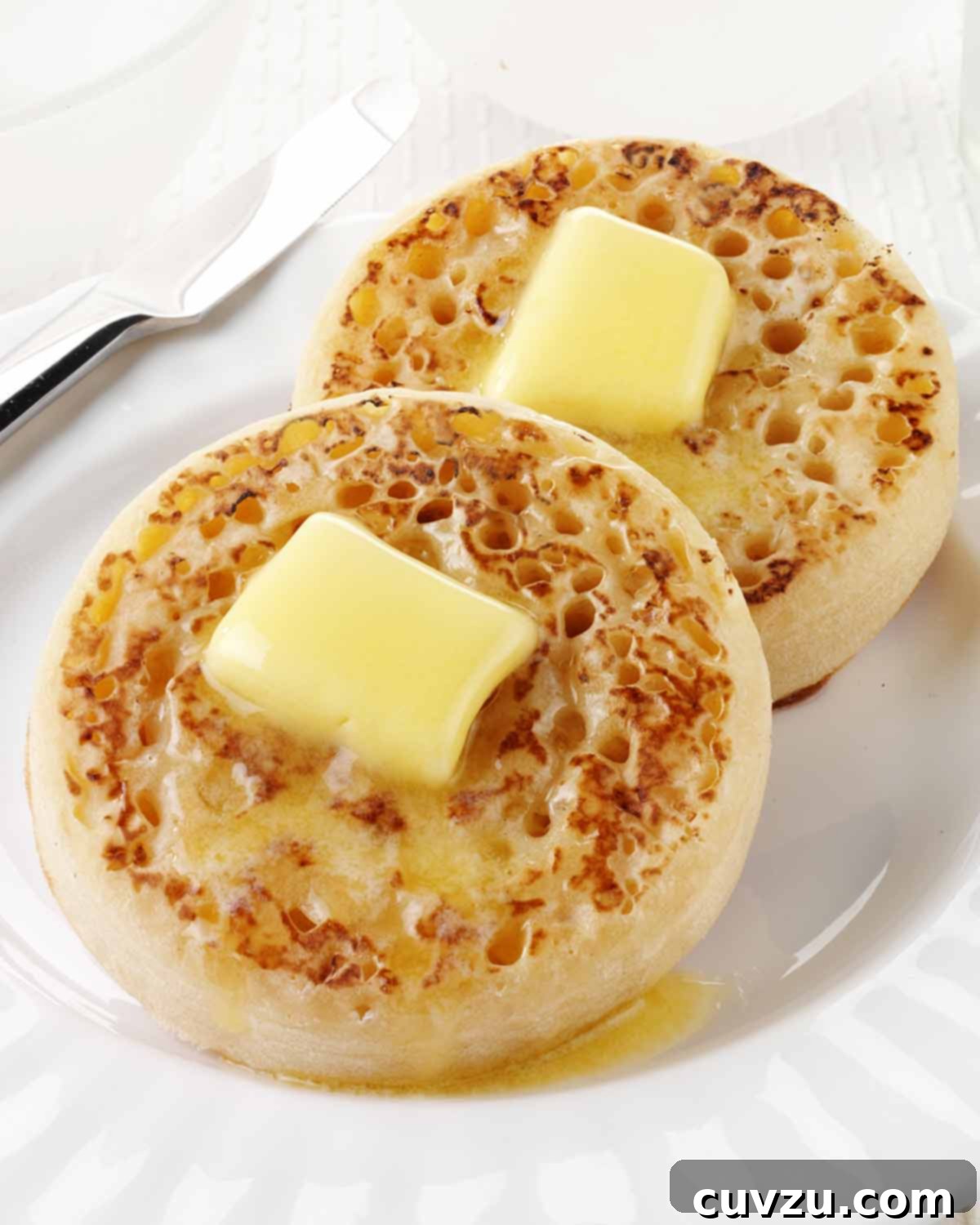
Step into the delightful world of British baking with a classic that’s as charming as it is delicious: the English crumpet. Often compared to English muffins, these griddle-cooked delights boast a unique texture and flavor that makes them a true breakfast icon. Perfect for a cozy morning or a sophisticated afternoon tea, homemade crumpets are surprisingly easy to master and deliver an unparalleled experience of buttery, jam-filled bliss. Forget store-bought versions; our comprehensive guide and authentic recipe will help you create these irresistible treats right in your own kitchen.
What Exactly Are English Crumpets? Unraveling Their Unique Charm
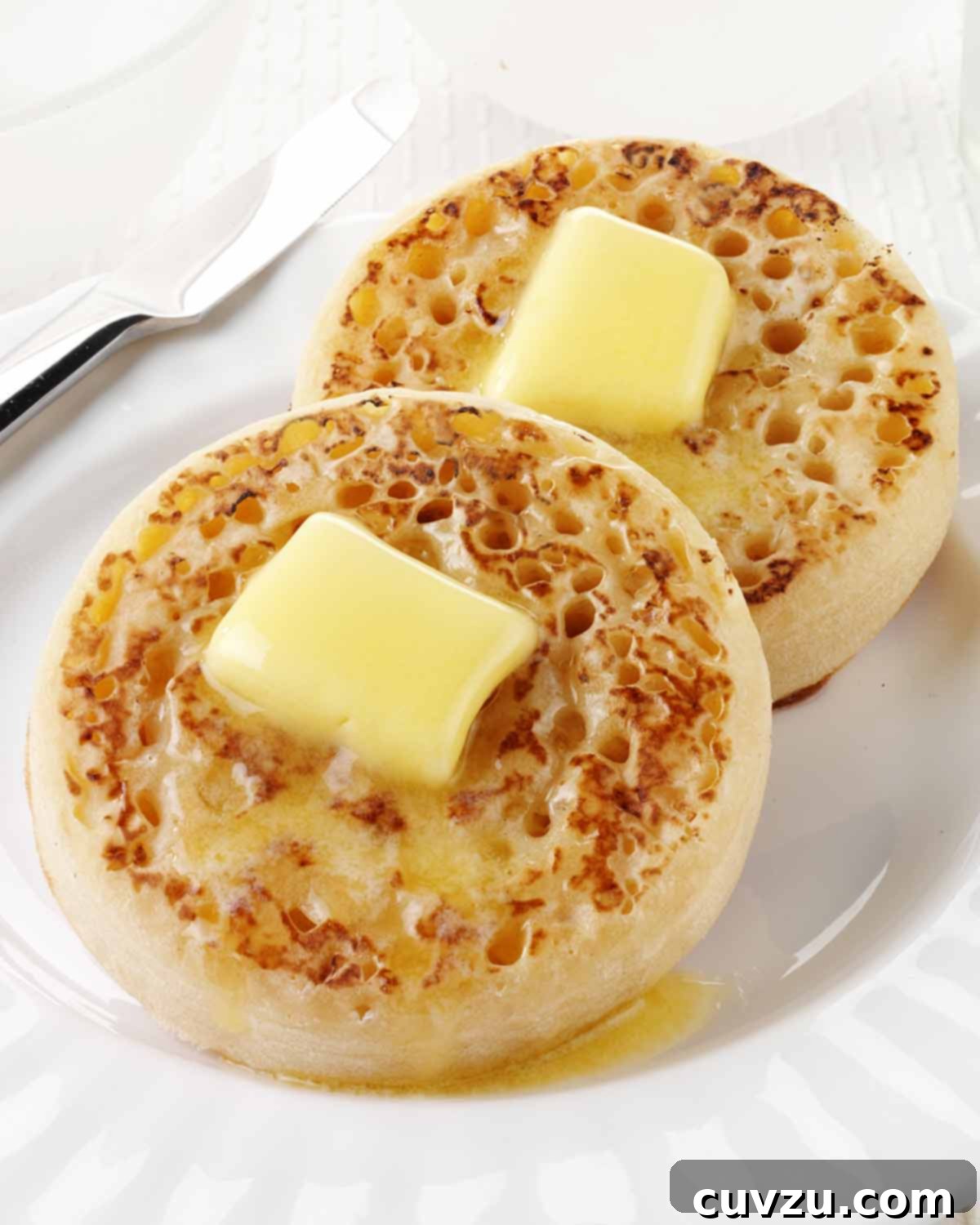
English crumpets are often confused with their American cousin, the English muffin, but they possess a distinct identity that sets them apart. While both feature those coveted “nooks and crannies” perfect for capturing melted butter, crumpets are characterized by their softer, chewier texture and a unique cooking method. Unlike muffins, which are typically sliced open horizontally, crumpets are cooked on one side only, developing a wonderfully craggy, porous top surface while remaining smooth and slightly sweet on the bottom.
This traditional British breakfast bread is typically cooked on a hot skillet or griddle, achieving its distinctive texture with minimal fuss. The magic happens thanks to a simple yeast-leavened batter and specific cooking conditions that encourage the formation of those signature holes – tiny tunnels that are pure joy for butter and jam enthusiasts. The result is a delightfully airy yet substantial bread, offering a subtle sweetness that pairs perfectly with both savory and sweet toppings.
Originating from the United Kingdom, crumpets have been a staple of British tea time and breakfast tables for centuries. Their history is intertwined with the evolution of simple griddle cakes, transforming over time into the beloved, porous rounds we enjoy today. They represent a comforting culinary tradition, evoking images of warm kitchens and leisurely mornings, often served alongside a steaming cup of tea.
As Renee Schettler Rossi once eloquently put it, “as with most things in life, it’s something that’s best experienced rather than read about. So go on. Try ’em.” We wholeheartedly agree. There’s truly nothing quite like tearing into a warm, butter-soaked crumpet. The way the butter melts and pools into every crevice, creating a decadent bite, is an experience not to be missed. Whether you’re a seasoned baker or a curious beginner, this recipe promises to bring the authentic taste of Britain to your home.
Authentic Homemade English Crumpets Recipe
Master the art of making traditional English crumpets at home with this easy-to-follow recipe. These fluffy, porous rounds are cousins to English muffins but offer a uniquely soft, chewy texture and an abundance of nooks and crannies, perfect for soaking up butter and jam. Cooked quickly in a hot skillet, they are an essential part of a classic British breakfast or a delightful afternoon tea treat. This recipe yields 12 perfectly golden crumpets that will transport your taste buds straight to the UK.
Recipe by David Leite
Breakfast, Brunch, Snack
British
12 crumpets
112 kcal
45
35
1 20
Equipment You’ll Need for Perfect Crumpets
-
12 crumpet rings or 2 1/2-inch biscuit rings
Crumpet rings are essential for achieving the classic round shape and height, allowing the batter to rise beautifully and maintain its structure. If you don’t have specialized crumpet rings, similarly sized biscuit cutters or even homemade rings from sturdy aluminum foil can work in a pinch, as some of our recipe testers found.
-
Large nonstick skillet or griddle
A good quality nonstick surface ensures your crumpets cook evenly without sticking, making them easy to flip and remove. A well-seasoned cast iron skillet can also work wonders.
-
Large mixing bowl
Crucial for allowing the yeast batter ample space to rise without overflowing. Choose a bowl with enough capacity for the batter to double in size.
-
Whisk or spatula
For combining your ingredients smoothly and ensuring a consistent batter texture.
Ingredients for Perfect Crumpets
-
1/2 cup water, heated to 110°F (43°C)
The precise water temperature is vital for activating the active dry yeast effectively. Water that is too hot will kill the yeast, while water that is too cold won’t activate it.
-
2 teaspoons granulated sugar
This provides essential food for the yeast, helping it to ferment and create the gases needed for the crumpets’ airy texture. It also adds a subtle sweetness.
-
1 envelope active dry yeast
The primary leavening agent that gives crumpets their signature rise and numerous small holes, which are crucial for soaking up butter.
-
2 1/2 cups all-purpose flour
The structural base for your crumpet batter. Using all-purpose flour provides the right balance of gluten for chewiness without being too dense.
-
1 teaspoon salt
Balances the sweetness and enhances the overall flavor of the crumpets, preventing them from tasting bland.
-
1/2 teaspoon baking soda
Works in conjunction with the yeast to create additional lift and contributes to the porous structure, helping to form more nooks and crannies.
-
1 1/2 cups milk, warmed
Adds richness and moisture to the batter. Warming the milk slightly helps to create a favorable environment for yeast activation and even rising.
-
Butter, at room temperature, for cooking and serving
Absolutely essential for greasing your rings and skillet, preventing sticking, and, of course, for generously slathering on the warm crumpets.
-
Strawberry or raspberry jam, for serving
A classic and beloved accompaniment that complements the crumpets’ flavor and texture beautifully. Feel free to experiment with other preserves like marmalade or honey.
Step-by-Step Instructions for Flawless Crumpets
-
Activate the Yeast: In a large mixing bowl, combine the warmed water (ensure it’s around 110°F/43°C), granulated sugar, and active dry yeast. Stir gently to dissolve the sugar and yeast. Let this mixture sit undisturbed for about 5 minutes, or until a visible foam forms on the surface. This indicates your yeast is active and ready to work its magic. If no foam appears, your yeast may be old or the water temperature incorrect, and you should start over with fresh yeast.
-
Prepare the Batter: Add the all-purpose flour, salt, baking soda, and warmed milk to the yeast mixture in the bowl. Stir until all ingredients are just combined and a smooth, thick but pourable batter forms. Be careful not to overmix, as this can develop the gluten too much, leading to tough crumpets. Cover the bowl loosely with plastic wrap or a clean kitchen towel and place it in a warm, draft-free spot in your kitchen. Allow the mixture to rise for approximately 30 minutes, or until it has noticeably increased in volume and become bubbly. This rising period is crucial for the texture.
-
Preheat Skillet and Rings: While the batter is rising, prepare your cooking surface. Generously butter a large nonstick skillet or griddle. Place it over low heat. The key here is low and consistent heat to allow the crumpets to cook through and form their characteristic holes without burning the bottom. Take your time preheating; an even temperature is your friend.
-
Cook the First Side: Liberally butter the inside of your crumpet rings or biscuit cutters. This step is absolutely crucial to prevent sticking and ensure easy removal. Place the buttered rings in the preheated skillet. Carefully pour the crumpet batter into each ring, filling it about halfway (don’t overfill, as they will rise). Cook over low heat for approximately 10 minutes. During this time, you should observe small holes appearing on the top surface of the crumpets, and the batter will begin to set and dry on top. Patience is key here; do not rush or try to flip them too early.
-
Finish Cooking: Once the tops appear mostly dry and porous, carefully remove the rings from around the crumpets. Gently flip the crumpets over using a spatula. Cook for another 1 to 2 minutes on the second side, just until they are lightly browned and cooked through. This second side cooks much faster. Repeat this process with the remaining batter, ensuring to re-butter your skillet and rings as needed for each batch to prevent sticking and maintain flavor.
-
Serve your freshly made crumpets warm, either straight from the pan for maximum freshness or lightly toasted to reheat. The traditional and arguably best way is with a generous slathering of room-temperature butter and your favorite jam, such as strawberry or raspberry. For an extra treat, try them with honey, marmalade, or even savory toppings like cheese or a fried egg for a delightful breakfast sandwich!
Expert Tips for the Best Homemade Crumpets
- Don’t Rush the Rise: The 30-minute rising time allows the yeast to work its magic and develop those essential air pockets. In a cooler kitchen, it might take a little longer. A well-risen, bubbly batter is key to those signature holes.
- Low and Slow is the Way to Go: Cooking crumpets over consistently low heat is crucial. Too high, and the bottom will burn before the top forms its characteristic holes and sets. Adjust your flame as needed – watch your first batch closely.
- Butter Those Rings Generously: This step cannot be stressed enough. Liberally buttering the inside of your crumpet rings prevents sticking and ensures a clean release, maintaining the crumpet’s perfect shape.
- Watch for Bubbles: The appearance of small, even bubbles on the surface of the batter is your primary indicator that the crumpets are developing properly and nearing readiness for the ring removal and flip.
- Serving Fresh: While delicious toasted the next day, crumpets are truly at their best when served warm, fresh from the skillet. The warmth allows the butter to melt and beautifully soak into every single crevice, creating an unmatched flavor and texture.
- Storage: Store cooled crumpets in an airtight container at room temperature for up to 2 days, or freeze for longer storage. Reheat by toasting.
Adapted From
This recipe is lovingly adapted from the culinary insights found in “Tea & Crumpets,” a wonderful book celebrating classic British traditions. It captures the essence of homemade crumpets, bringing a piece of British heritage and authentic flavor into your kitchen for you to enjoy.
Buy “Tea & Crumpets” On Amazon
Nutrition Information (per crumpet)
Calories: 112 kcal
Carbohydrates: 22 g
Protein: 4 g
Fat: 1 g
Saturated Fat: 1 g
Monounsaturated Fat: 1 g
Cholesterol: 1 mg
Sodium: 254 mg
Fiber: 1 g
Sugar: 2 g
Nutrition information is automatically calculated, so should only be used as an approximation. It’s provided for informational purposes and may vary based on specific ingredient brands and preparation methods.
Tried this recipe? Share your creation!
Mention @leitesculinaria or tag #leitesculinaria on Instagram to share your delicious crumpets with our community. We love seeing your culinary adventures!
What Our Recipe Testers Say: Unanimous Crumpet Love!
Our team of dedicated recipe testers put this English Crumpets recipe through its paces, and the verdict is in: these homemade crumpets are an absolute triumph! Consistently praised for their ease of preparation, delightful texture, and authentic flavor, these crumpets are a guaranteed crowd-pleaser for any breakfast or brunch table. Read on to hear what they loved most:
Easy to Make & Deliciously Rewarding
Victoria Filippi
Victoria Filippi raves about the simplicity and outcome: “This recipe was so easy and produced a delicious crumpet. I served them warm with butter and blackberry jam, and they were a big hit with my family. My 13-year-old daughter couldn’t get enough. I bake a lot of breads and scones, but have never tried English crumpets. Fabulous!”
Joan Osborne
Joan Osborne, a first-time crumpet maker, found the process incredibly approachable: “I’d never had English crumpets, but they’re such a fun-named bread. These were easy to make and a treat to eat. My family hopes I’ll be making these crumpets often.”
Kim Graham
Kim Graham reiterated the simplicity and immediate gratification: “These crumpets are fantastic hot out of the pan with a little bit of butter. They are very easy to make, too.”
The Perfect Texture: Nooks, Crannies, and Chewy Airiness
Brenda Carleton
Brenda Carleton loved the authentic feel, noting, “Yum. The crumpets turned out very well and reminded me of a traditional English tea. Love the texture. Such a lovely breakfast or brunch idea. I’m going to make these crumpets again this week for guests.”
Emily Fleak
Emily Fleak, though new to “REAL English crumpets,” found them “delicious and super easy to make. These crumpets were wonderful. They were beautiful inside—nice little air pockets—and are perfect split open and spread with butter and jam.” She was impressed by how quickly they came together, having the first batch on the table about an hour after starting.
Dawn English
Dawn English, who even improvised rings from tin foil, declared, “I just tasted one hot out of the pan with butter and raspberry jam, and these are AMAZING. They rose quite a bit, so I was able to split one open like an English muffin. It was crisp on the outside and soft, with little nooks and crannies, on the inside. This recipe is by far my favorite LC recipe I’ve made thus far. I have no reason to purchase crumpets or English muffins from a bakery or store ever again. These even beat the local bakery version…by a lot! I cannot wait to make a breakfast sandwich with sausage, egg, and cheese with one of these bad boys tomorrow morning!”
Versatile Serving & Great for Guests
Tammori Petty
Tammori Petty described them as a delightful “cross between pancakes and biscuits,” perfect for “comforting and filling” servings with butter and apricot-peach jam. She couldn’t “wait to serve them at my next breakfast engagement!” highlighting their suitability for entertaining.
TeAntae Turner
TeAntae Turner called it “a recipe worth raising a pinky over,” noting their ease and the simple joy of waiting for the bubbles to form in the batter. She happily confirmed, “They will be making regular appearances at weekend breakfasts.”
Adaptable and Forgiving
Jill Mulcahy
Jill Mulcahy found the recipe forgiving even at high altitude (6700 feet), confirming, “Although I initially worried if the altitude at which we live (6700 feet) would affect the outcome, the crumpet batter rose just perfectly and cooked per the recipe directions. The warm crumpets were tasty and the leftovers were toasted for the next day’s breakfast and were just as delicious—warm with butter or, of course, smothered with jam.”
Cindi Kruth
Cindi Kruth, who didn’t have traditional crumpet rings and improvised with mini tart pans, found the recipe forgiving. She noted, “The finished crumpet was delicious just split opened and buttered, even better when toasted. I found it easier to turn the crumpets before removing the rings, but maybe that’s because mine were a bit too large.”
Leanne Abe
Leanne Abe emphasized that the recipe works, specifically praising the accurate rising and cooking times. Her key advice for others: “‘Low’ heat is a little subjective—just watch your first batch and adjust the flame depending on how cooked the crumpets are after 10 minutes. And definitely butter those rings! Then, split with a fork, toast one up, and slather it generously with butter. So good!”
From beginners to experienced bakers, our testers consistently found this English Crumpets recipe to be straightforward, forgiving, and incredibly rewarding. The authentic texture, with its appealing nooks and crannies, truly captured the essence of traditional British baking, making these crumpets a new favorite for many households.