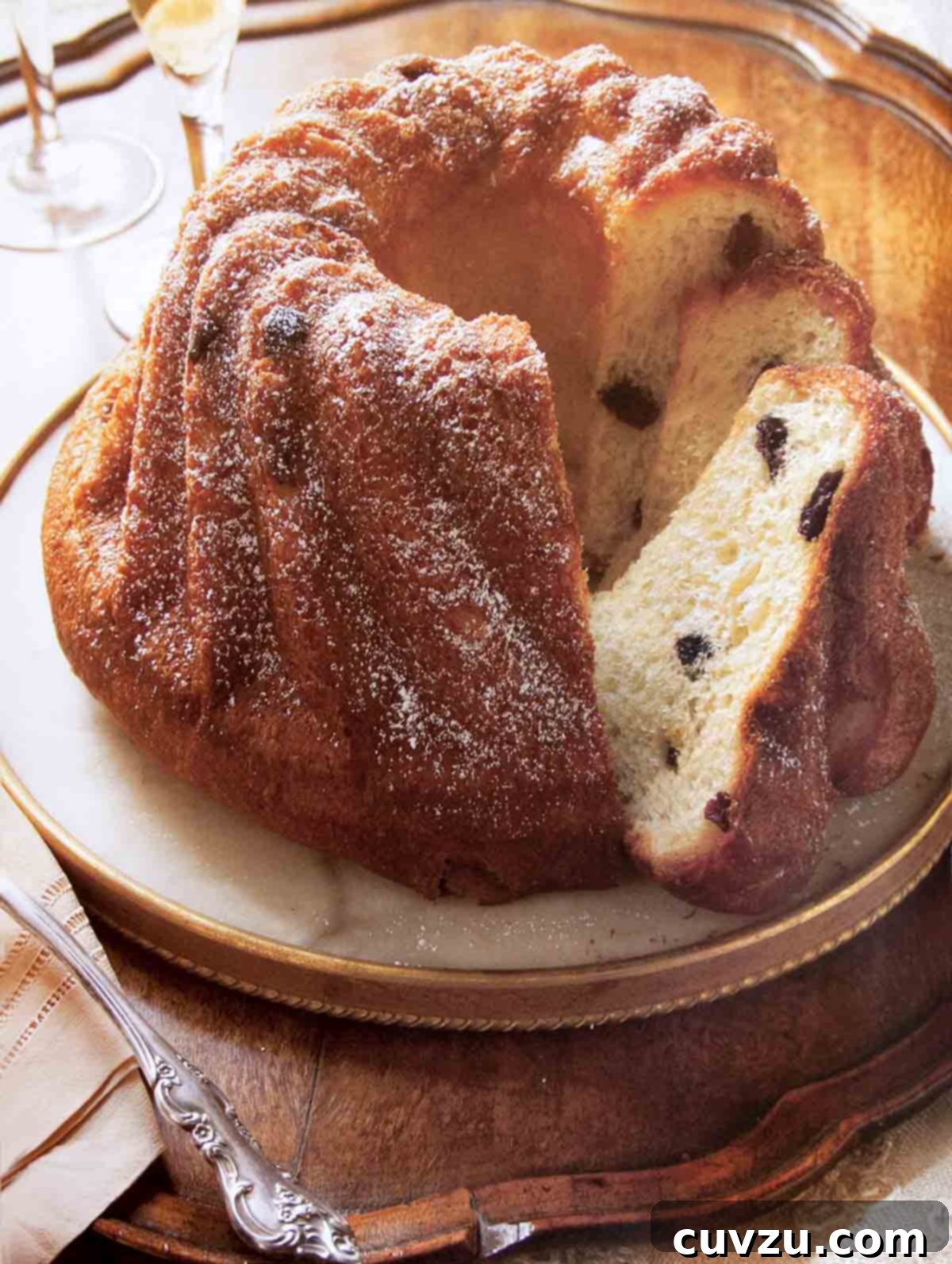
Kugelhopf: Dorie Greenspan’s Elegant Brioche-Like Cake
Embrace the sophisticated simplicity of Kugelhopf, a classic pastry reimagined by the esteemed Dorie Greenspan. This delightful creation masterfully balances the richness of cake with the comforting chew of bread, offering a truly unique culinary experience. Unlike a traditional brioche, Greenspan’s Kugelhopf is generously soaked in melted butter after baking and finished with a delicate dusting of sugar, culminating in a dessert that is both refined and deeply satisfying. It’s a testament to the enduring appeal of traditional European baking, brought to life with a modern sensibility.
The Allure of Kugelhopf: A Culinary Journey to Alsace
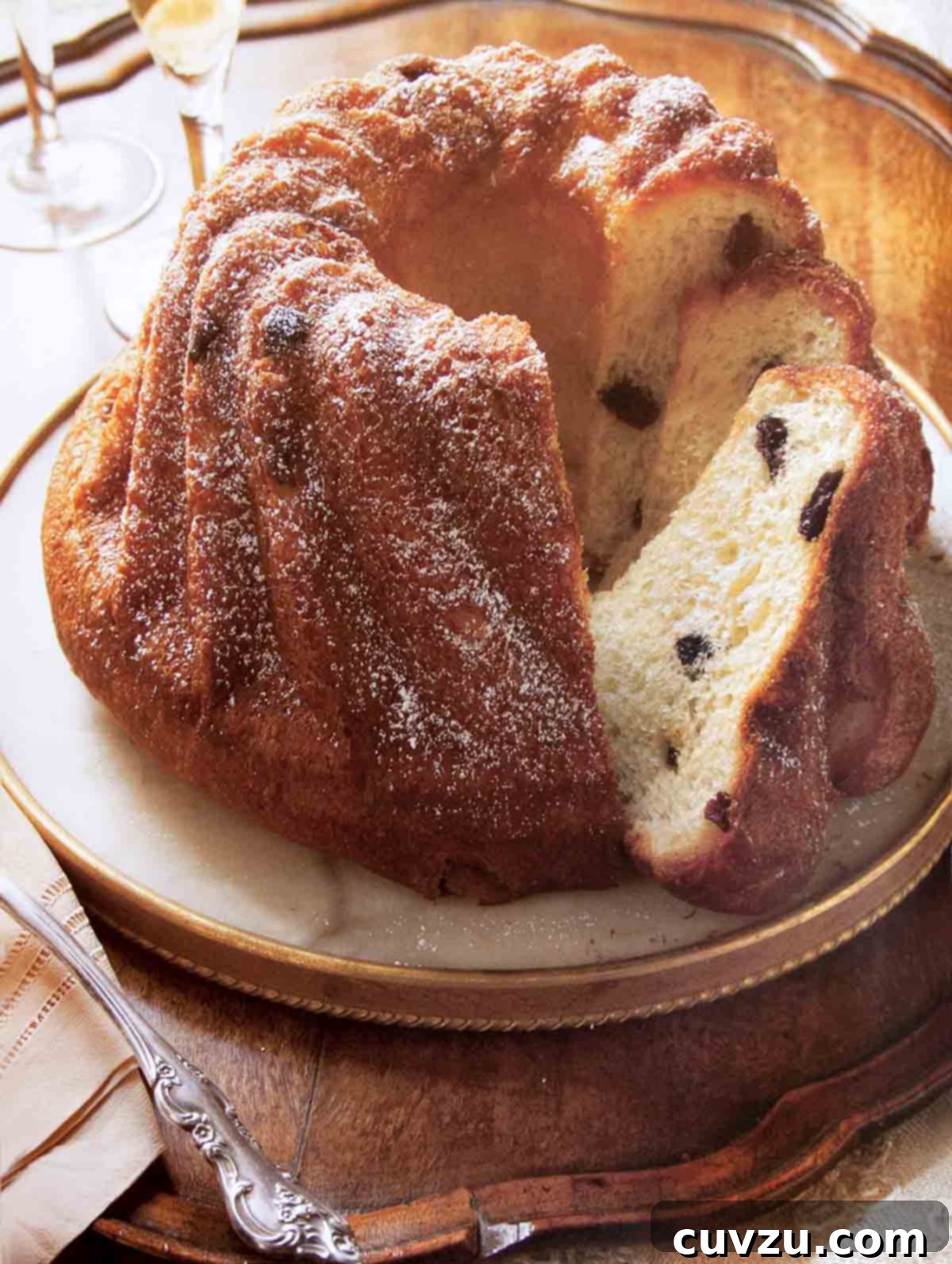
For those familiar with the charming northeastern region of France, Alsace, the mere mention of Kugelhopf evokes a sense of nostalgic culinary delight. This seemingly simple pastry holds a special place in the hearts and on the tables of Alsatians, celebrated as a dream food. Kugelhopf is a distinct hybrid, expertly crafted to be part bread and part cake. Its preparation closely mirrors that of brioche, sharing many characteristics with this famous French bread, though Kugelhopf tends to be less intensely rich in its initial dough. Any perceived deficit in butter within the dough is magnificently compensated for after baking. The cake emerges from the oven to be lovingly drenched in melted butter, followed by a generous sprinkling of sugar, which develops into a wonderfully fine and subtly crunchy crust.
While a standard Bundt pan can serve as a suitable substitute in a pinch, the authentic experience of baking a Kugelhopf truly shines when made in its dedicated mold. These specialized pans, sometimes affectionately referred to as a “Turk’s head” or “turban” pan due to their distinctive shape, are typically slender and boast graceful, fluted curves that indeed resemble the folds of a turban. For the ultimate in authenticity, one might seek out a heavy pottery Kugelhopf mold from Alsace itself, perhaps adorned with charming hand-painted flowers. Alternatively, for a more modern and practical approach, a silicone turban pan works beautifully, offering the satisfying blend of baking a centuries-old recipe with contemporary convenience, as Dorie Greenspan herself enjoys. Whether opting for tradition or innovation, the key to a perfect Kugelhopf lies in the careful preparation of its dough, which, much like brioche, benefits immensely from the use of a heavy-duty stand mixer. However, those without such equipment can still achieve remarkable results by mixing the dough diligently in a large bowl with a sturdy wooden spoon, emphasizing that passion and perseverance are as important as specialized tools in the art of baking.
Expert Tips for Storing Your Kugelhopf
Kugelhopf, with its delicate texture and subtle sweetness, is best enjoyed fresh. It tends to stale more quickly than other baked goods, so thoughtful storage is essential to preserve its quality. If you do not plan to serve the Kugelhopf immediately after it cools, it is advisable to wrap it tightly in plastic wrap before applying any confectioners’ sugar. This helps to lock in moisture and maintain its tender crumb. Just before serving, give it a beautiful dusting of confectioners’ sugar to achieve that iconic finish. Should you find yourself with leftover Kugelhopf, do not despair! Stale Kugelhopf transforms into a delightful treat when cut into thick slices, lightly toasted until golden, and generously spread with creamy butter and your favorite fruit marmalade. This simple repurposing ensures that every last crumb of this exquisite cake can be savored.
Kugelhopf Recipe by Dorie Greenspan
A modern interpretation of the classic Kugelhopf, Dorie Greenspan’s version perfectly marries the best qualities of cake and bread. It possesses a brioche-like softness, elevated by a luxurious butter soak and a delicate sugar crust, resulting in a dessert that is both sophisticated in flavor and deeply satisfying in texture.
Recipe by David Leite
Equipment
- 9-inch Kugelhopf mold (8- to 9-cup capacity)
- Stand mixer with dough hook (highly recommended)
- Large bowl and wooden spoon (alternative for mixing)
- Small saucepan
- Baking sheet with foil and wire rack
Ingredients
For the cake
- 1/3 cup moist, plump raisins
- Scant 1 1/2 teaspoons active dry yeast
- 1/3 cup just-warm-to-the-touch whole milk
- 1 2/3 cups all-purpose flour
- 1/4 teaspoon salt
- 2 large eggs
- 1 large egg yolk
- 3 tablespoons granulated sugar
- 1 stick (4 oz) unsalted butter, at room temperature
For the soak and dusting
- 4 tablespoons (2 oz) unsalted butter
- Granulated sugar, for dusting
- Confectioners’ sugar, for dusting
Instructions
Making the Kugelhopf Dough
- Prepare the Raisins: In a small saucepan, bring a little water to a gentle boil. Add the raisins and immediately turn off the heat, allowing them to steep for just 2 minutes. This brief soak plumps them up beautifully. Drain the raisins thoroughly and pat them completely dry to prevent excess moisture from interfering with the dough.
- Activate the Yeast: In the bowl of a stand mixer (or a large mixing bowl), combine the active dry yeast with the warm whole milk. Use a wooden spoon to gently stir the mixture until the yeast is fully dissolved. Introduce the all-purpose flour and salt, stirring just enough to moisten the flour. At this stage, the mixture will appear shaggy and may have some dry patches, which is entirely normal.
- Incorporate Eggs and Sugar: In a separate small bowl, lightly beat the two large eggs and the single egg yolk together with a fork. If using a stand mixer, attach the dough hook. With the mixer on low speed, gradually pour in the beaten eggs, allowing them to fully incorporate into the dough. Once the eggs are absorbed, add the granulated sugar. Increase the mixer speed to medium-high and continue to beat the dough for about 5 minutes, until it begins to come together and develop a smoother texture.
- Add the Butter: Reduce the mixer speed to medium. Begin adding the unsalted butter, one piece at a time (4 to 6 additions). For best results, gently squeeze each piece of butter to soften it slightly before adding it to the dough. Beat until each addition is almost fully incorporated before introducing the next. This step requires patience but is crucial for developing the Kugelhopf’s rich texture.
- Achieve Optimal Dough Consistency: After all the butter has been blended, the dough will be exceptionally soft. Increase the mixer speed to medium-high and continue beating for approximately 10 minutes. During this time, periodically scrape down the sides and bottom of the bowl to ensure even mixing. The dough is ready when it begins to pull away from the sides of the bowl and climbs up the dough hook. Once the dough reaches this stage, remove the bowl from the mixer and gently stir in the prepared raisins.
- First Rise: Transfer the dough into a clean bowl, cover it tightly with plastic wrap, and allow it to rise in a warm spot until it has nearly doubled in size. This typically takes about 2 hours, though the exact time can vary depending on the ambient temperature of your room.
- Chill the Dough: Gently deflate the risen dough by lifting it around the edges and allowing it to fall back into the bowl with a soft slap. Re-cover the bowl and place it in the refrigerator. Continue to gently deflate the dough every 30 minutes until it stops rising, which usually takes between 2 to 2 1/2 hours. For enhanced flavor and texture, it is highly recommended to let the dough rest in the refrigerator overnight. The dough can be tightly wrapped and refrigerated for up to 2 days, offering excellent flexibility in your baking schedule.
- Second Rise and Pan Preparation: Generously butter a 9-inch Kugelhopf mold (with an 8- to 9-cup capacity), ensuring all the intricate crevices are coated. Carefully transfer the chilled dough into the prepared pan. Lightly cover the pan with buttered parchment or wax paper. Allow the dough to undergo its second rise in a warm place until it almost reaches the very top of the mold. This final rise typically takes 3 to 4 hours.
- Preheat Oven: Approximately 15-20 minutes before the dough has fully risen, center an oven rack and preheat your oven to 375°F (190°C).
- Bake the Kugelhopf: Once the dough has nearly completed its rise, remove the covering paper from the pan. Bake the Kugelhopf for 10 minutes. After this initial baking period, loosely cover the pan with a foil tent to prevent the top from browning too quickly, and continue to bake for an additional 15 to 20 minutes. The Kugelhopf is ready when it achieves a rich golden-brown color and has risen beautifully, likely spilling slightly over the top of the pan. While it bakes, prepare a baking sheet by lining it with foil and placing a wire rack on top.
- Unmold and Prepare for Soaking: Carefully remove the Kugelhopf from the oven and immediately unmold it onto the prepared wire rack.
Soaking and Finishing the Kugelhopf
- Butter Soak: Melt the remaining 4 tablespoons (2 oz) of unsalted butter. While the Kugelhopf is still hot from the oven, gently brush it all over with the melted butter, allowing the rich liquid to slowly soak into the warm cake. This step is crucial for moisture and flavor.
- Sugar Dusting and Cooling: Lightly sprinkle the hot, butter-soaked cake with granulated sugar. Allow the Kugelhopf to cool completely to room temperature on the wire rack.
- Final Touch: Just before serving, give the Kugelhopf a final, delicate dusting of confectioners’ sugar for an elegant presentation and an extra touch of sweetness.

Adapted From
Baking: From My Home to Yours
Buy On Amazon
Nutrition Information (Approximate)
Serving: 1 portion
- Calories: 323 kcal
- Carbohydrates: 31 g
- Protein: 6 g
- Fat: 20 g
- Saturated Fat: 12 g
- Monounsaturated Fat: 5 g
- Trans Fat: 1 g
- Cholesterol: 117 mg
- Sodium: 102 mg
- Fiber: 2 g
- Sugar: 5 g
Nutrition information is automatically calculated and should only be used as an approximation. Variations in ingredients and preparation methods may alter actual nutritional values.
Insights from Our Recipe Testers
To ensure the perfection of Dorie Greenspan’s Kugelhopf recipe, our dedicated team of recipe testers meticulously followed each step, sharing their invaluable experiences and observations. Their detailed feedback provides a comprehensive guide for aspiring bakers.

Jessica Berndt’s Experience: A Yeast Baking Enthusiast’s Delight
Jessica, a self-professed lover of yeast baking, enriched doughs, and yeasted cakes, eagerly embarked on the Kugelhopf challenge. Having only encountered Kugelhopf on television, she approached the recipe with a sense of adventure and curiosity. Her experience was overwhelmingly positive. She noted that the instructions were exceptionally clear and straightforward, leading to a dough that behaved exactly as expected. While her house’s cooler temperature extended the rise times slightly, every other aspect of the recipe, including the overall timing, was perfectly accurate. Jessica followed the recommendation to rest the dough in the fridge overnight, a step that paid off with a beautifully risen and baked cake. She described the texture as “divine,” highlighting its flawless simplicity and moderate sweetness, concluding that this Kugelhopf is not an overly sweet dessert but rather a masterpiece of understated elegance. A fun revelation for Jessica was discovering that this exact recipe was from one of her own beloved Dorie Greenspan cookbooks, further solidifying her admiration for Greenspan’s culinary genius. Initially rating it a 9/10, she ultimately felt it deserved a perfect 10, enthusiastically stating her intention to make this recipe again and again.
Helena Pereira’s Perspective: A Light and Appreciated Classic
Helena Pereira approached the Kugelhopf as a very light, somewhat dry, and not overly sweet traditional cake, best savored on the day it is baked. She particularly appreciated how the post-baking addition of melted butter and sugar transforms the cake, imparting much-needed moisture and creating a delicate, sweet crust on its surface that significantly enhances its appeal. Helena also offered a practical tip for any leftovers: the Kugelhopf makes for a delicious toasted treat, especially when served warm with a dollop of jam. Despite the multiple steps and resting periods involved, she emphasized that the preparation is straightforward and simple, urging fellow bakers not to be deterred by the time commitment. In her view, the magnificent result—a traditional cake with delightful texture and flavor—makes every minute spent well worth it.

Darcy Buch’s Triumph: Overcoming Yeast Intimidation
Darcy began her review with a candid confession: her last experience with yeast or bread baking was so distant it was almost forgotten, having found bread-making intimidating. This Kugelhopf recipe, however, proved to be a powerful source of inspiration, pushing her to be more adventurous in the kitchen. She reveled in the immense sense of accomplishment she felt upon completing the bake, fulfilling her personal goal as a recipe tester to challenge herself and grow her culinary confidence. Darcy meticulously followed the recipe, resulting in a Kugelhopf that was stunningly beautiful, with a wonderfully soft, lightly sweet, and bread-like texture that seemed to melt in the mouth. Having borrowed an authentic Kugelhopf mold from a friend, her finished product boasted a lovely and intricate appearance.
She noted that while it was a time commitment, especially for a bread novice like herself who felt the need to focus intently on every step, the active hands-on time was minimal, roughly 60-75 minutes spread across 21 hours (including the overnight dough rest). Darcy also observed a slight variation in rise times; her dough continued to rise beyond the specified 2 hours after the first proof and refrigeration, requiring a few extra “punch downs” every 30 minutes. She eventually wrapped it and let it be, with no adverse effects on the outcome.
To assist with rising in her home, Darcy employed a clever trick from Cook’s Illustrated: placing a pan of boiling water in a turned-off oven with the dough. This method worked wonders, causing the dough to rise quickly, including the second rise before baking, which completed in 1 hour 45 minutes instead of the anticipated 2 hours. Furthermore, her Kugelhopf’s bake time was shorter, requiring only 20 minutes total, likely due to the mold already being warm from the oven. After 10 minutes, the crust was brown and at the top of the mold, and after another 10, it was perfectly cooked through. Darcy expressed profound enjoyment and learning from the testing opportunity, encouraging others to try this rewarding bake.