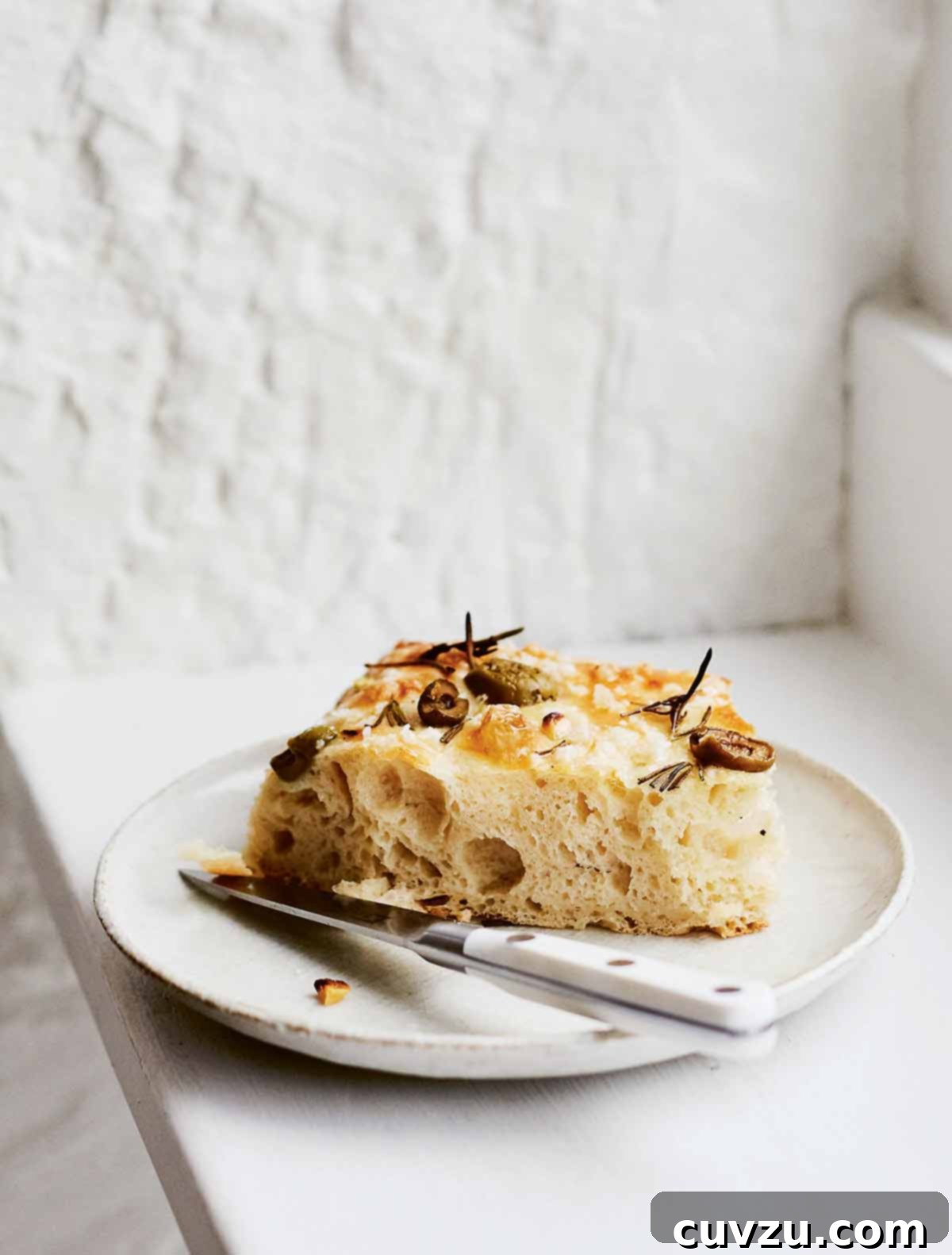
Step into the delightful world of Italian baking with our ultimate recipe for Focaccia with Olives and Rosemary. This isn’t just any bread; it’s a culinary masterpiece that marries a remarkably light, honeycombed interior with an exquisitely golden and audibly crunchy crust. Each bite offers a symphony of flavors, where the briny burst of olives, the aromatic essence of fresh rosemary, and the delicate crunch of coarse sea salt converge to create an utterly irresistible experience. Whether served as an elegant appetizer, a satisfying side to your favorite meal, or simply enjoyed on its own with a drizzle of fine olive oil, this focaccia promises to transport your taste buds straight to the sun-drenched heart of Italy.
The Secret to Unforgettable Focaccia: High Hydration and Gluten Development
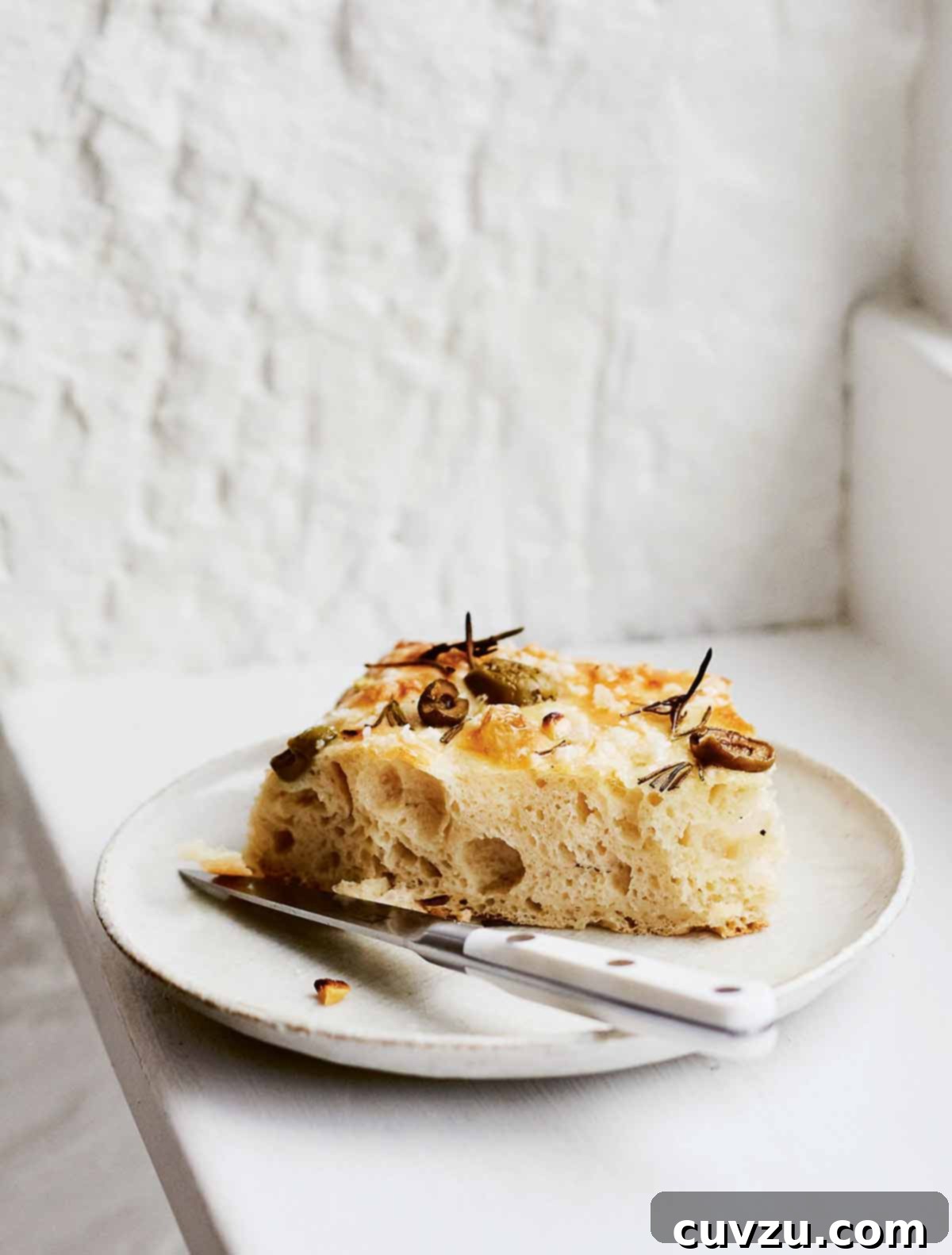
The journey to truly exceptional focaccia begins with its dough, specifically its remarkably high hydration level. Our recipe proudly features a 90% hydration dough, meaning it’s incredibly wet and almost liquid-like – a characteristic that might initially seem challenging but is absolutely key to its unique texture. As acclaimed baker Flora Shedden wisely notes, “Wetter is always better for focaccia.” This generous water content is precisely what contributes to that coveted damp, soft, and openly structured crumb that defines a superior focaccia, giving it an incredible bouncy and airy quality. It’s this very wetness that allows the gluten network to develop extensively, trapping air and creating those signature large, irregular airy pockets.
Taking your time during the kneading and stretching process is paramount for this particular dough. While this highly hydrated dough can feel “wild and wet” initially, persistent and careful manipulation is essential for building a robust gluten structure. This process is what transforms a simple mixture of flour and water into a brilliantly elastic dough, capable of holding its shape and trapping gases during fermentation and baking. The more effectively you develop this gluten, the chewier and more satisfying your focaccia will be. Think of it as meticulously developing the bread’s internal scaffolding, allowing it to rise magnificently and hold its airy form, rather than collapsing. This patience in dough development is a cornerstone of artisan bread making and will pay dividends in the final product.
Why Focaccia Has Dimples: The Art and Science Behind the Indentations
One of the most recognizable and beloved features of focaccia is its beautifully dimpled surface. This isn’t merely for aesthetic appeal; it’s a crucial technique deeply rooted in the tradition of focaccia making, serving several important purposes that contribute to its distinctive texture and flavor. The process of gently massaging, stretching, and finally dimpling the dough plays a vital role in perfecting its overall structure and appearance. This thoughtful manipulation, particularly the stretching and folding, further aids in developing the gluten, enhancing the dough’s inherent elasticity and contributing to that wonderfully chewy structure we all love.
Beyond gluten development, those characteristic dimples serve as strategic air vents and pockets for flavor. By gently pressing down into the proofed dough with oiled fingertips, you effectively release excess large air bubbles, preventing the dough from rising too rapidly or unevenly. This controlled rise helps to inhibit the dreaded “doming” effect, ensuring the focaccia bakes flatter and more consistently across the entire pan. Furthermore, dimpling plays a critical role in preventing the bread from collapsing in the oven, helping it to maintain its open, airy structure while developing a crisp crust. Perhaps most importantly for flavor, the dimples create more surface area – little depressions perfect for holding delectable toppings. Whether it’s the briny pop of olives, the sweet notes of caramelized onions, the tangy intensity of sun-dried tomatoes, the fragrant embrace of fresh herbs like rosemary, or simply a delicate shower of coarse sea salt, these indentations ensure your chosen additions stay nestled within the bread, infusing every part of the loaf with their delicious essence.
Mastering the Focaccia Dough: A Step-by-Step Recipe
Creating homemade focaccia is a rewarding experience, and with a few key techniques and a bit of patience, you can achieve bakery-quality results right in your own kitchen. This recipe, adapted from the acclaimed “Aran” cookbook by Flora Shedden, emphasizes precision and patience, promising a focaccia that’s both authentic and incredibly delicious. Prepare to be amazed by the transformation of simple ingredients into a truly spectacular bread.
Focaccia with Olives and Rosemary Recipe
An average rating of 4.67 out of 5 stars based on 3 reviews.
This recipe for focaccia with olives and rosemary combines a light, honeycombed crumb with a golden and crunchy crust. Repeatedly stretching the high-gluten dough helps to reinforce the structure, and the briny olives, herbaceous rosemary, and crunchy sprinkling of sea salt make this focaccia irresistible.
Recipe by David Leite
Watch How to Make Homemade Focaccia with Herbs
This video demonstrates the essential steps to creating a light, honeycombed focaccia with a perfectly golden and crunchy crust. From developing the high-hydration dough to the art of dimpling and adding savory toppings like olives and rosemary, you’ll gain valuable insights to perfect your homemade Italian bread.
Ingredients
- 4 cups white bread flour (approximately 500g)
- 1 7/8 cups water (divided; approximately 450g total)
- 2 teaspoons kosher salt
- 1 generous teaspoon instant yeast
- 1 1/2 tablespoons extra virgin olive oil, plus more for the pan and liberal drizzling
- Coarse sea salt, for generous sprinkling on top
- Finely chopped fresh rosemary, to taste
- Olives, sliced or halved (e.g., Kalamata, green, or a mixed medley), for topping
Note on Ingredients: Using high-quality ingredients, particularly your bread flour and extra virgin olive oil, can significantly impact the final flavor, aroma, and texture of your focaccia. Bread flour, with its higher protein content, is essential for developing the strong gluten network needed to achieve that desirable airy, chewy crumb. Instant yeast simplifies the process as it can be added directly to dry ingredients without prior activation.
Instructions
- In the spacious bowl of a stand mixer fitted with the dough hook attachment, combine the 4 cups of bread flour, 1 2/3 cups (400 g) of the water, the 2 teaspoons of kosher salt, the generous teaspoon of instant yeast, and the 1 1/2 tablespoons of extra virgin olive oil.
- Initiate mixing on a slow speed for approximately 4 minutes to ensure all ingredients are thoroughly incorporated and moistened. Following this, increase the mixer speed to high and continue mixing for an additional 6 minutes. The dough will be remarkably wet and sticky, which is perfectly normal for this high-hydration recipe. After this initial kneading phase, allow the dough to rest undisturbed in the mixer bowl for 15 minutes. This rest period, known as autolyse, allows the flour to fully hydrate and gluten development to begin naturally.
- Tester Tip: Given the exceptionally wet and sticky nature of this high-hydration dough, employing a stand mixer for the kneading process is highly recommended. It efficiently develops the crucial gluten structure without the mess and difficulty of hand-kneading such a loose dough.
- After the rest, restart the mixer on slow speed. Gradually add the remaining water (approximately 1/8 cup or 35g) to the dough and continue mixing for 4 minutes more. This technique, often called bassinage, allows for incremental hydration, ensuring the flour fully absorbs all the liquid and results in a more extensible and pliable dough.
- Carefully transfer the incredibly wet dough from the mixer bowl into a large, lightly oiled container, preferably plastic and equipped with a lid. Ensure the container is large enough to allow the dough to at least double in size. At warm room temperature, begin a series of gentle folds. Using a wet spatula or lightly oiled hands, gently fold the dough from each side towards the center (imagine folding a letter into thirds), then rotate the container a quarter turn. Repeat this folding process every 15 minutes for approximately 1 hour. This gentle manipulation, performed directly in the container to avoid unnecessary handling, helps build strength and structure in the dough without deflating the developing air pockets. After about an hour, the dough should have visibly doubled in size and exhibit increased elasticity.
- Once the folding process is complete and the dough has risen, cover the container tightly with its lid or plastic wrap and refrigerate overnight. This slow, cold fermentation (ideally for 12-18 hours, but up to 24 hours is also fine) is absolutely crucial. It significantly develops a rich, complex flavor profile in the focaccia, improves the dough’s texture, and makes it easier to handle the following day.
- Two hours before you plan to bake, gently tip the cold dough into a lightly oiled 8-by-12-inch or 9-by-13-inch (20- by 30-cm or 23- by 33-cm) baking or sheet pan. With lightly oiled hands, gently stretch the dough out to fit the pan. If the dough resists and shrinks back from the edges, let it rest for 10-15 minutes, allowing the gluten to relax, then continue stretching. Repeat this gentle stretching process every 30 minutes or so for the full 2 hours of room temperature proofing. This final proof, coupled with the intermittent stretching, allows the dough to relax into the pan, build its final volume, and develop a beautiful open crumb structure before baking.
- Thirty minutes prior to baking, preheat your oven to a hot 450ºF (230°C). A high initial oven temperature is key for achieving a rapid oven spring (the final burst of rising in the oven) and developing that characteristic golden, crispy crust.
- Once the dough has completed its final proof and the oven is fully preheated, it’s time to create those iconic dimples! Lightly oil your fingertips and gently press them into the dough, making indentations all over the surface. Be careful not to press all the way through to the bottom of the pan. Sprinkle the dimpled top generously with coarse sea salt, then artfully scatter with the finely chopped fresh rosemary and your prepared sliced or halved olives.
- Carefully transfer the pan to the preheated oven and bake for 17 to 20 minutes, or until the focaccia is beautifully golden brown on top and, when you gently lift a corner, it is cooked through and golden on the bottom. Keep a close eye on your focaccia during the final minutes, as oven temperatures can vary.
- Immediately upon removing the hot focaccia from the oven, generously drizzle the entire surface with additional extra virgin olive oil. This not only imparts a wonderful sheen and rich flavor but also helps to keep the crust delightfully tender. Serve warm and savor the incredible flavors and textures of your homemade Italian focaccia!
Adapted From

This exquisite focaccia recipe is thoughtfully inspired by the culinary wisdom found in Aran, a beautifully crafted cookbook by the talented Flora Shedden. Her profound insights into the delicate balance of high hydration and meticulous gluten development have been instrumental in perfecting this beloved Italian classic, ensuring a truly authentic and delicious result for home bakers.
Buy Aran on Amazon
Nutrition Facts
Serving: 1 portion
Calories: 253 kcal
Carbohydrates: 45 g
Protein: 8 g
Fat: 4 g
Saturated Fat: 1 g
Sodium: 624 mg
Fiber: 2 g
Sugar: 1 g
Disclaimer: Nutrition information provided is an automatically calculated approximation and should be used as a general guide only. Actual nutritional values may vary based on specific brands of ingredients, preparation methods, and exact serving sizes.
Why You’ll Love This Focaccia Recipe: Key Benefits and Versatile Flavor Profiles
This particular focaccia recipe stands out not just for its straightforward approach, but for the consistently incredible results it delivers. The high-hydration method ensures an exceptionally tender and moist crumb, providing a delightful textural contrast to the irresistibly crispy exterior. The slow, overnight fermentation is a crucial step that significantly deepens the flavor, imbuing the bread with a subtle tang and complexity that is often missing in quick-rise breads. This extended fermentation also improves the dough’s workability the next day and enhances its digestibility. The classic combination of briny olives and fragrant rosemary is a timeless pairing for a reason – their distinct flavors complement each other perfectly, enhanced by the satisfying crunch of coarse sea salt that makes every bite a textural and gustatory delight.
Beyond its delicious taste, making focaccia is a wonderfully therapeutic and engaging baking project. There’s immense satisfaction in witnessing the dough transform, stretch, and eventually puff up into a magnificent golden loaf under your care. Moreover, this focaccia is incredibly versatile, making it perfect for a multitude of culinary occasions. Serve it warm with a generous drizzle of the finest extra virgin olive oil for dipping, use it to accompany a robust pasta dish, slice it horizontally for gourmet sandwiches, or feature it as a sophisticated addition to a cheese and charcuterie board. Its sturdy yet airy structure can gracefully handle a wide array of toppings, inviting endless creativity in your kitchen.
Creative Topping Ideas & Flavor Variations for Your Homemade Focaccia
While the classic combination of olives and rosemary is undoubtedly timeless and delicious, focaccia is a wonderfully adaptable canvas for a myriad of toppings. Don’t hesitate to experiment and make this recipe truly your own! Here are some inspiring ideas to elevate your next batch of homemade focaccia:
- Caramelized Onion & Thyme: Slowly cook sliced yellow or red onions until they are deeply golden and exquisitely sweet. Spread these caramelized onions over the dimpled dough, then sprinkle with fresh thyme leaves for an earthy, savory-sweet profile.
- Sun-Dried Tomato & Parmesan: Finely chop sun-dried tomatoes (the oil-packed variety works exceptionally well for moisture and flavor) and scatter them generously over the dough, followed by a light dusting of grated Parmesan cheese before baking.
- Garlic & Mixed Herbs: Mince several cloves of fresh garlic and combine them with a fragrant blend of your favorite herbs such as oregano, basil, marjoram, or even a touch of red pepper flakes, all drizzled with olive oil. Press this aromatic mixture into the dimples.
- Cherry Tomato & Fresh Basil: Halve vibrant cherry tomatoes and gently press them into the dimples of the dough. After baking, once the focaccia is warm, scatter with fresh basil leaves for a burst of fresh flavor.
- Fig & Prosciutto with Balsamic Glaze: For a sophisticated sweet and savory option, arrange thinly sliced fresh figs and delicate strips of prosciutto over the dough (add the prosciutto during the last 10 minutes of baking to prevent it from becoming overly crisp). Drizzle with a balsamic glaze after baking.
- Potato & Rosemary with Flaky Salt: Thinly slice potatoes (a mandoline ensures evenness), par-boil them briefly until just tender, then arrange them attractively on the dough with fresh rosemary. A generous sprinkle of flaky sea salt will enhance the flavors.
- Sweet Focaccia (Focaccia Dolce): For a delightful dessert bread, omit the savory toppings. Instead, sprinkle the dough with granulated sugar, arrange thinly sliced seasonal fruits like grapes, berries, or apples, and perhaps a dusting of cinnamon or a drizzle of honey.
Remember, the golden rule for focaccia toppings is to not overload the bread. Allow the beautiful, airy structure of the focaccia itself to shine through, complementing rather than being overshadowed by your chosen additions. A final, generous drizzle of good quality extra virgin olive oil immediately after baking is always highly recommended, regardless of your chosen flavor profile, as it adds both moisture and an exquisite finish.
What Our Recipe Testers Are Saying About This Focaccia
Our dedicated team of recipe testers rigorously put this Focaccia with Olives and Rosemary recipe through its paces, and the verdict is in: it’s a resounding success! Their invaluable feedback consistently highlights the recipe’s reliability, ease of execution, and the delicious results it consistently delivers. Here’s a detailed look at their experiences and insights:
Jane Daniels
“The aroma of this focaccia baking is utterly intoxicating, truly transforming my home into a bustling bakery or pizzeria! The taste lives up to every promise, offering a perfect balance of a crunchy exterior and a soft, delightfully chewy interior. It’s simply perfect all around.” Jane found the recipe surprisingly easy and genuinely fun to make, particularly enjoying the stand mixer method for the high-hydration dough. She observed that while the dough was initially very moist, it visibly gained structure and dryness with each of the periodic folds. Despite having limited supplies, she innovatively used black olives and herbs de Provence for her topping, which added a “nice touch of saltiness” that she adored. Her enthusiasm was palpable as she concluded, “I’m anxious to try again when I have more toppings like anchovies! Yes, more saltiness.” She offered flexible serving suggestions, noting it could be two generous servings for her household, four as a delightful snack, or six when served with a meal, and highly recommended pairing it with a nice glass of wine.
Angie Zoobkoff
“This focaccia bread is nothing short of perfect – perfect crumb, perfect moisture, perfect flavor.” Angie readily confirmed the dough’s wet and sticky nature, noting that it was “not at all conducive to handling” by hand, but she was absolutely delighted by its beautiful rise and the abundant airy pockets that graced the finished loaf. She opted for a minimalist approach with her toppings, using just rosemary and coarse sea salt, and served it warm to rave reviews from her family. Her humorous testimony to its deliciousness? “I managed to get my kids out of bed before 11 the next day by threatening to eat all the leftovers myself!” She also shared a helpful observation regarding the final proof, noting that after the initial gentle stretch to fit the pan, her dough didn’t shrink back or require further stretching, simplifying that step for her.
Heidi Stafford
“Probably the most perfect focaccia I’ve ever made,” exclaimed Heidi, a testament to the recipe’s reliability. She particularly emphasized the importance of enjoying the focaccia straight out of the oven for the ultimate experience. Demonstrating the recipe’s impressive versatility, Heidi chose a creative array of alternative toppings: “I topped it with grilled artichoke hearts, sage, yellow peppers, and a sprinkle of Parmesan and sea salt instead of olives.” She served her customized focaccia with a final drizzle of high-quality olive oil and playfully confessed, “I must confess, I made it my main meal!”—highlighting its substantial and satisfying nature.
K. Zimmerman
“This is wonderful. A soft, chewy loaf with a golden, crispy crust. Perfect on its own but with lots of nooks that happily soak up any sauce or any topping you choose,” K. Zimmerman enthusiastically reported. She found that the dough came together exactly as directed, and it doubled beautifully overnight in the fridge, indicating the reliability of the cold fermentation process. Opting for a simple yet elegant topping, she “scattered some sea salt and fresh rosemary on top and it was exceptional.” She plans to definitely make this recipe again, eager to experiment with different toppings in the future, having successfully served it with pasta on the first night and then alongside a fresh dinner salad the following evening.
These glowing reviews from our diverse panel of recipe testers collectively underscore the exceptional reliability and deliciousness of this focaccia recipe. From its intoxicating aroma that fills the kitchen to its perfect balance of textures and flavors, it’s clear that this recipe is a consistent winner for home bakers looking to create an authentic and truly memorable Italian bread experience.
Tried this recipe? We’d love to see your culinary creations! Share your beautiful focaccia with us on Instagram. Mention @leitesculinaria or tag your post with #leitesculinaria!