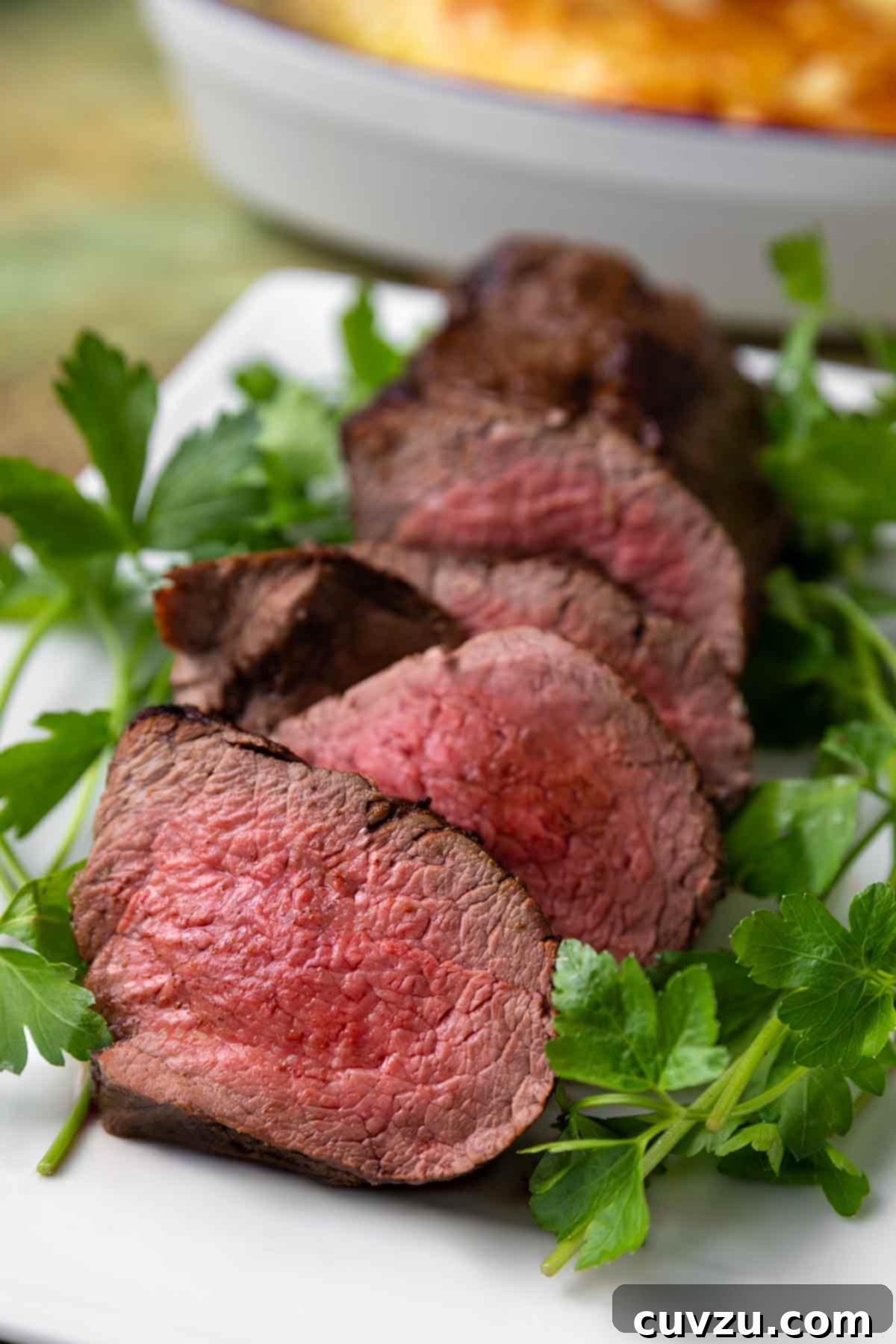
Prepare to elevate your holiday table with a truly remarkable dish that combines the luxurious richness of beef tenderloin with the exotic allure of shawarma-inspired spices. This recipe transforms a classic cut into an unforgettable culinary experience, requiring nothing more than a generous coating of fragrant spices—think aromatic coriander, warm cinnamon, earthy turmeric, pungent garlic, and more—and a swift journey under the broiler and in the oven. The result is a tender, juicy roast with a beautifully spiced crust that will have everyone reaching for another slice. Best of all, this showstopper takes surprisingly little hands-on time, making it an ideal choice for special occasions when you want maximum impact with minimal fuss.
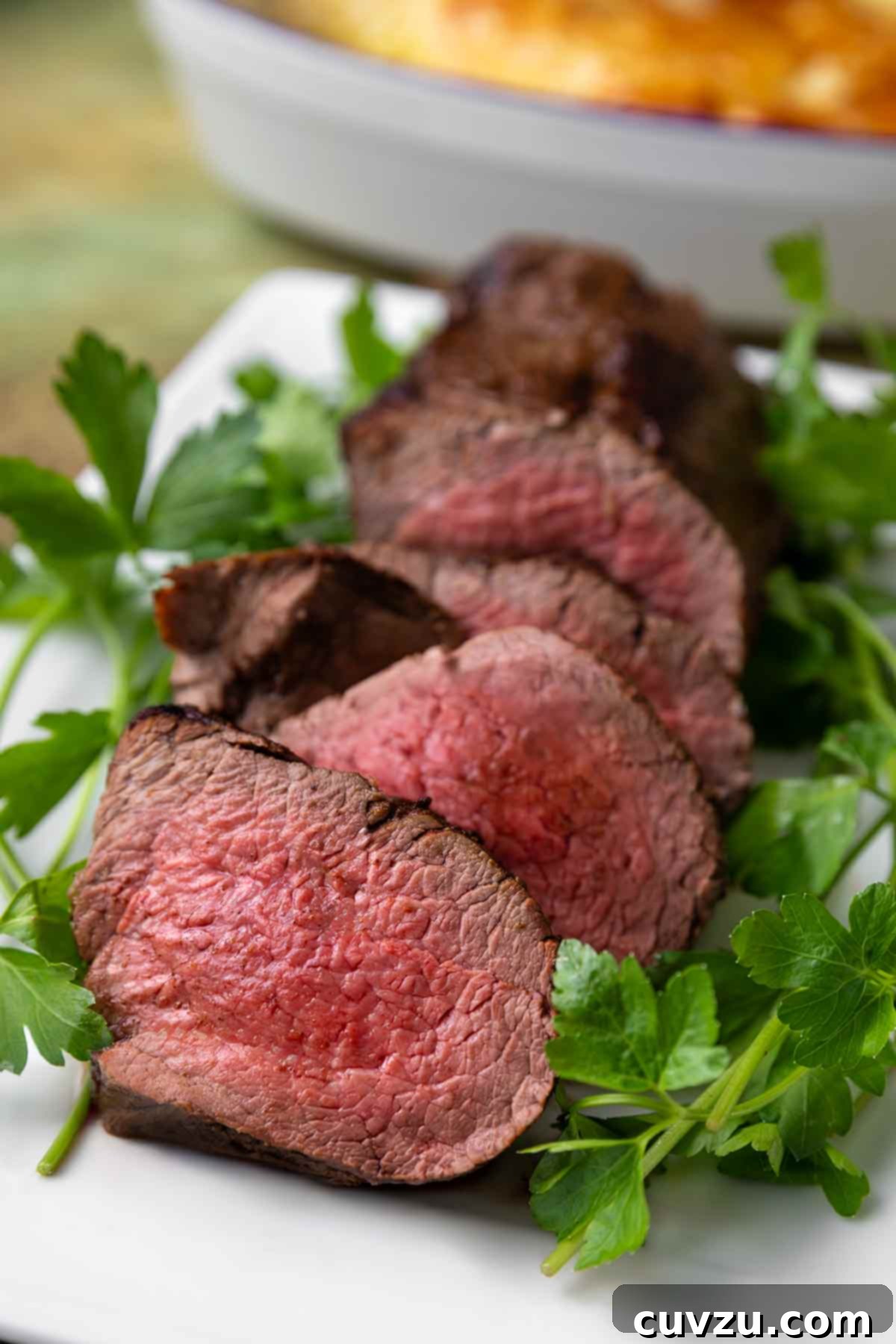
Having spent over three decades perfecting the art of roasting whole beef tenderloins, I’ve explored countless preparations. From the rustic charm of a salt-crusted roast to the sophisticated indulgence of a Madeira sauce, and even the grandeur of a Beef Wellington, I thought I had experienced every conceivable way to prepare this magnificent cut. Yet, it never occurred to me to embrace the vibrant, aromatic world of a shawarma spice blend until recently. As a self-proclaimed supertaster, my palate is highly sensitive to flavors, and I can confidently say that this revelation has left my taste buds eternally grateful. The complex layers of spices perfectly complement the tender beef, creating an explosion of flavor that is both familiar and excitingly new.
For many, a whole beef tenderloin is a once-a-year treat, often reserved for festive occasions and holiday gatherings. If you’re planning such a splurge this year, I wholeheartedly encourage you to make it this shawarma-spiced version. It is remarkably straightforward to prepare, allowing you more time to enjoy with loved ones. The succulent meat, encased in its flavorful, spiced crust, will undoubtedly spark a friendly competition at the dinner table over the last exquisite slices. Such delightful moments are what make the holidays truly special, and this roast is guaranteed to contribute to those cherished memories.

What Our Recipe Testers Raved About
Our testers consistently praised this “beef tenderloin recipe for its simplicity and straightforward approach,” highlighting its ease of execution. What truly set it apart, however, was its “unique flavor profile”—a refreshing departure from conventional spices that provided a welcome and exciting change for their palates.
Unlock the Flavor: Essential Ingredients for Your Shawarma Roast
Crafting an exceptional dish begins with understanding your ingredients. While the simplicity of this recipe is undeniable, selecting and preparing your beef tenderloin and spice blend with care will ensure a truly spectacular result.
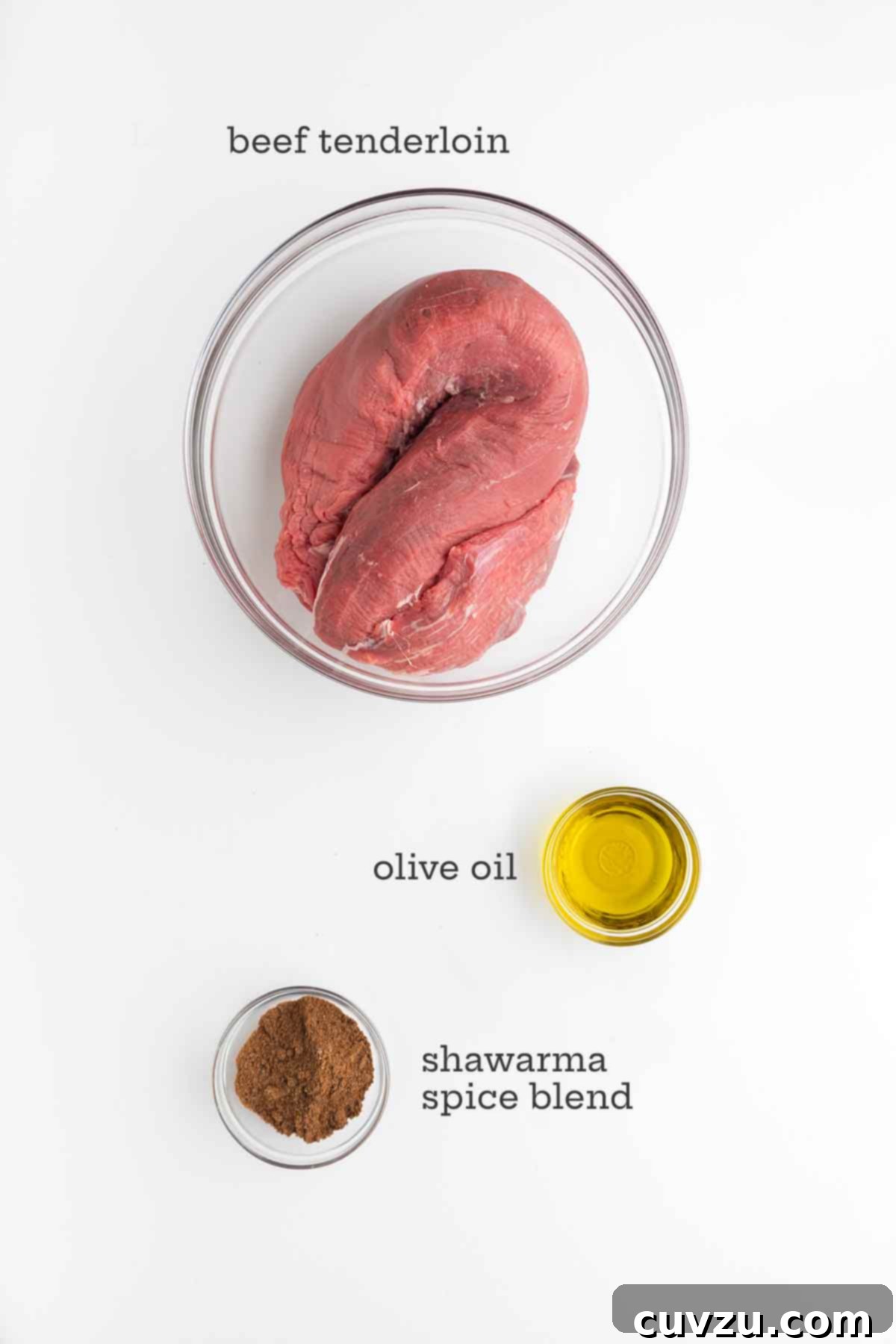
- Shawarma Spice Blend: This is the heart and soul of our dish. The blend typically features a warming mix of coriander, cumin, paprika, turmeric, cinnamon, nutmeg, ginger, and sometimes a hint of allspice or cloves, along with black pepper and garlic powder. The rich complexity of these spices penetrates the beef, creating a deeply aromatic and savory crust. While store-bought blends can work, a homemade spice blend offers unparalleled freshness and depth, and you can prepare it up to 6 months in advance, making meal prep a breeze.
- Beef Tenderloin: This premium cut, also known as filet mignon when sliced, is renowned for its incredible tenderness. To ensure even cooking and a uniform roast, it’s crucial to select a tenderloin that is as consistent in thickness as possible. If your roast has a thinner, tapered end, simply fold it underneath itself to match the thicker part and secure it with kitchen twine. This simple trick prevents the ends from overcooking while the center reaches your desired doneness. You’ll also need to address the “silver skin,” a silvery, fibrous membrane on the outside of the meat. Unlike fat, silver skin does not render during cooking; it becomes tough and chewy, causing the meat to curl. It’s essential to remove it for the best texture. If you’re not comfortable doing it yourself, don’t hesitate to ask your butcher to trim it for you. We provide detailed tips on how to remove silver skin in our FAQ section below.
- Extra-Virgin Olive Oil: Beyond just coating the meat, the olive oil plays a vital role. It acts as a binder, ensuring the spice blend adheres beautifully to the tenderloin. More importantly, it helps create that irresistible, deeply browned, and flavorful crust when the beef is seared, enhancing the overall sensory experience. Choose a good quality extra-virgin olive oil for the best results.
- Kosher Salt: Essential for seasoning, kosher salt enhances the natural flavors of the beef and interacts with the spices to create a more profound taste. Apply it generously before cooking.
Crafting Perfection: A Step-by-Step Guide to Your Shawarma Spiced Beef Tenderloin
This recipe might produce a gourmet result, but the process is surprisingly simple. Follow these straightforward steps to achieve a perfectly spiced and tender beef tenderloin roast that will impress everyone.
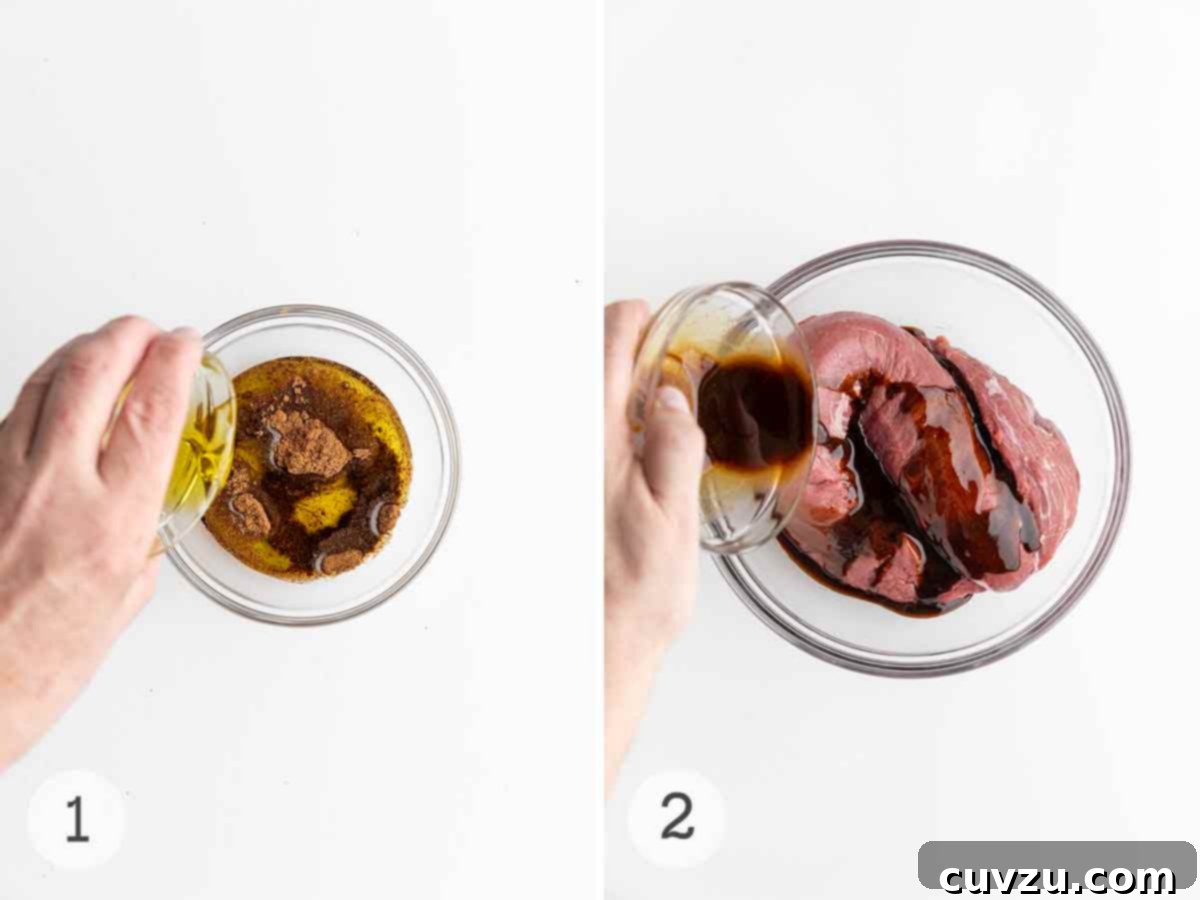
- Prepare the Spice Marinade: In a small bowl, whisk together the extra-virgin olive oil and your shawarma spice blend until they are thoroughly combined into a fragrant paste. The oil ensures the spices adhere beautifully to the meat and helps create a wonderful crust during cooking.
- Season the Beef: Place the trimmed beef tenderloin into a large bowl. Pour the prepared spiced oil mixture over the entire surface of the tenderloin.
- Massage and Marinate: Using your hands, generously massage the spiced oil into every crevice of the beef tenderloin, ensuring it is completely coated. This hands-on step is crucial for infusing maximum flavor. Once coated, cover the bowl tightly with plastic wrap and refrigerate for a minimum of 4 hours. For the deepest flavor penetration and most tender results, marinating overnight is highly recommended. This allows the robust spices to truly meld with the meat.
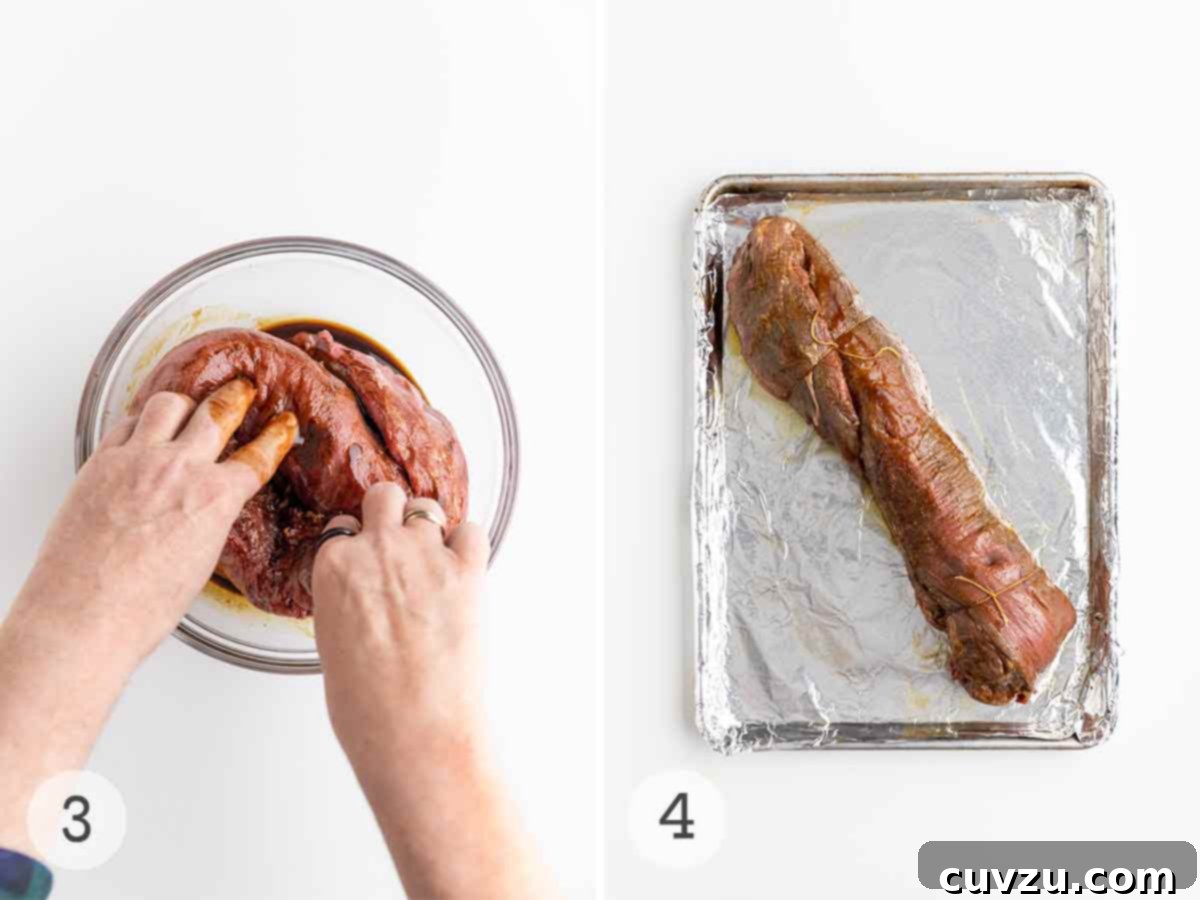
- Preheat and Sear: When you’re ready to cook, preheat your oven to the broil setting. Line a large, rimmed baking sheet with aluminum foil for easier cleanup, then lightly slick the foil with a bit more olive oil. Position the tenderloin diagonally on the prepared sheet, remembering to tuck the thinner end underneath and tie it with kitchen twine if you haven’t already. This ensures uniform thickness, critical for even cooking. Rub any leftover spiced oil from the marinating bowl onto the roast, then season it generously with kosher salt. Place the beef under the broiler and cook, turning it every few minutes, until it is beautifully browned and seared on all sides, typically 10 to 15 minutes. This searing step locks in moisture and develops a rich, flavorful crust.
- Roast to Perfection: Immediately after broiling, lower your oven temperature to 475°F (240°C). Continue to roast the beef until it reaches your desired internal temperature. For a perfect medium-rare, this usually takes an additional 15 to 20 minutes. Always use an instant-read thermometer inserted into the thickest part of the meat to accurately gauge doneness. Refer to our detailed internal temperature guide below for specific ranges.
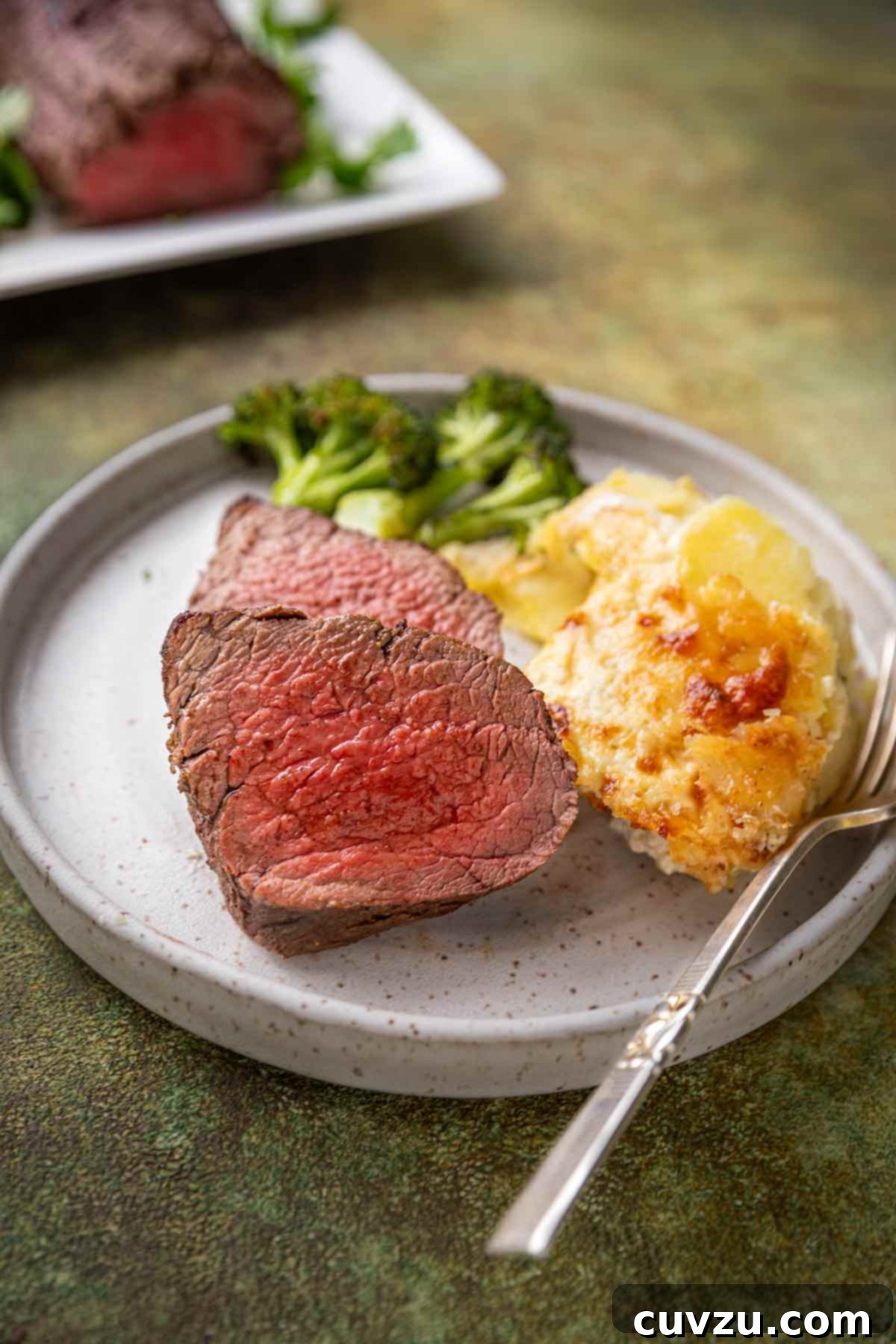
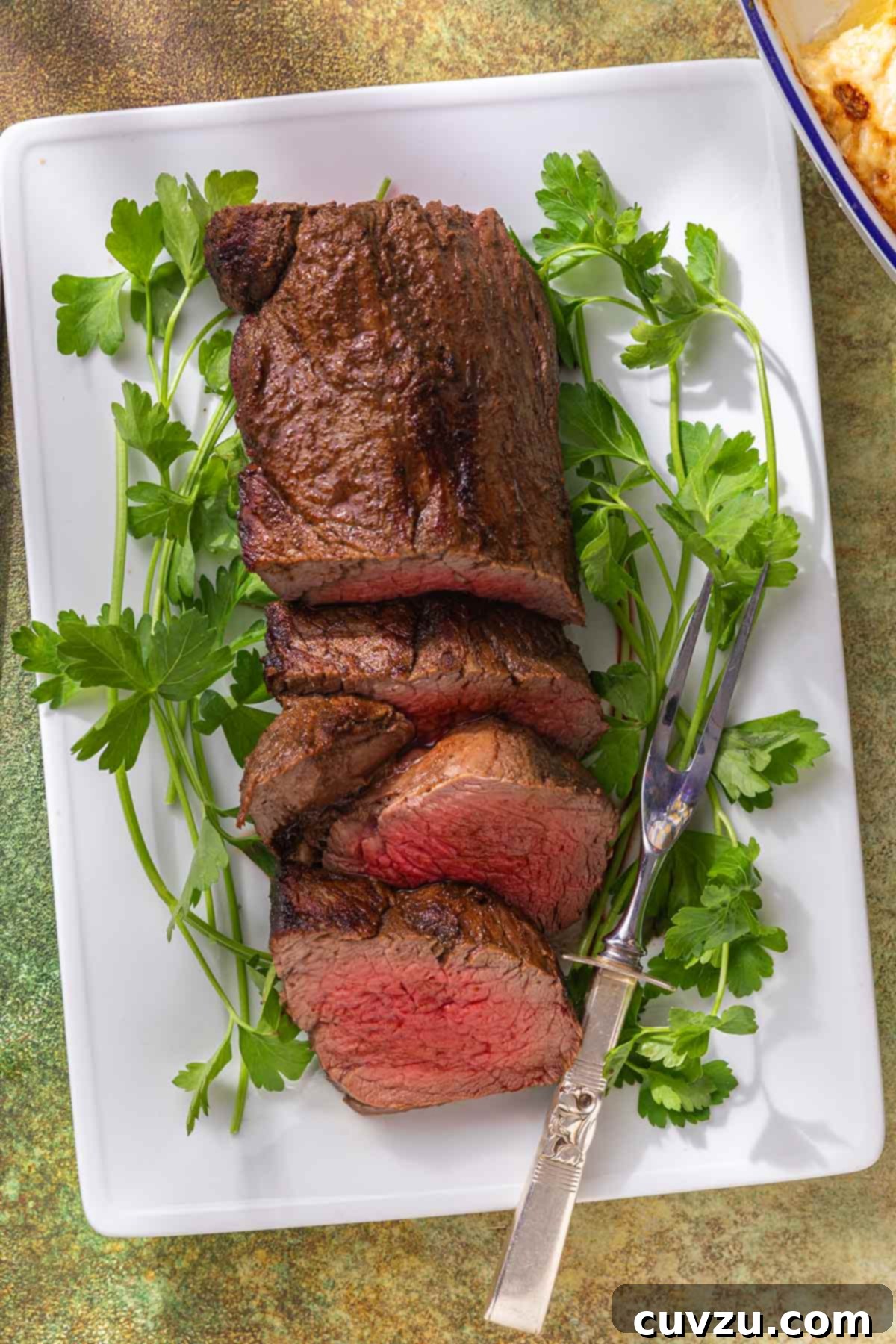
- Rest and Serve: Once the beef reaches the desired temperature, transfer the roast to a clean cutting board. Loosely tent it with aluminum foil and allow it to rest for at least 20 minutes. This resting period is crucial; it allows the juices to redistribute throughout the meat, resulting in a more tender and succulent roast. Without resting, the juices would simply escape when you slice, leaving the meat dry. After resting, slice against the grain into generous portions and serve immediately.
Mastering Doneness: Your Comprehensive Beef Tenderloin Internal Temperature Guide
Achieving the perfect doneness for beef tenderloin is key to enjoying this exquisite cut of meat. While personal preferences vary widely, from extremely rare to thoroughly cooked, I generally recommend aiming for rare or medium-rare to fully appreciate the tenderloin’s delicate texture and rich flavor. My personal preference leans towards a perfect medium-rare, while my partner, The One, is a devotee of rare, sometimes even preferring it bleu—extra rare, with a cool, red center.
The most reliable way to ensure your beef tenderloin is cooked precisely to your liking is by using an instant-read thermometer. Remember to insert the thermometer into the thickest part of the meat, avoiding any bones or fat pockets, for the most accurate reading. It’s also important to account for “carryover cooking”—the phenomenon where the internal temperature of the roast will continue to rise by 5° to 7°F (about 3-4°C) after it has been removed from the oven. Therefore, pull your roast a few degrees before your target temperature. Here’s a guide to help you achieve your preferred doneness:
- Rare: For those who enjoy a cool, deep red center, cook your beef to an internal temperature of 120°F to 130°F (49°C to 54°C). The meat will be very juicy and tender.
- Medium-Rare: This is often considered the ideal doneness for tenderloin, offering a warm, vibrant red center with exceptional juiciness and a soft, yielding texture. Aim for an internal temperature of 130°F to 135°F (54°C to 57°C).
- Medium: If you prefer a slightly pinker center and a firmer texture, cook the beef to an internal temperature of 135°F to 145°F (57°C to 63°C). The center will still be moist but less red.
- Medium-Well: For a roast that is mostly brown with just a hint of pink remaining in the center and a firm texture, target an internal temperature of 145°F to 155°F (63°C to 68°C).
- Well Done: Beef cooked to an internal temperature above 155°F (68°C) will be thoroughly brown throughout. While still edible, this doneness may result in a somewhat drier and very firm texture for tenderloin, as much of its natural moisture will have cooked out.
Your Beef Tenderloin Questions Answered: Expert Insights for Success
Even seasoned cooks have questions about preparing a perfect beef tenderloin. Here, we address some of the most common inquiries to ensure your roast turns out flawlessly.
The absolute best and most accurate way to determine the doneness of your beef tenderloin is by using an instant-read meat thermometer. Visual cues alone can be misleading, especially with a cut this valuable. Make sure to insert the thermometer into the exact center of the thickest part of the meat, avoiding any fat or bone, to get the most reliable reading. Always remember to factor in carryover cooking when removing it from the oven.
Silver skin is a tough, connective tissue, often appearing as a shiny, whitish lining on the outside of the meat, just beneath the layer of fat. Unlike fat, which renders and adds flavor, silver skin does not break down during cooking. If left on, it becomes incredibly chewy and can cause the tenderloin to tighten and curl as it cooks, distorting its shape. To remove it, start by sliding the tip of a very sharp, thin-bladed knife (like a fillet knife or boning knife) underneath one end of the silver skin. Angle the knife slightly upwards, keeping it as close to the silver skin as possible without cutting into the precious meat. Using the knife as a guide, gently pull the silver skin up and away from the meat with your free hand while carefully slicing it off. Work in long, smooth strokes, keeping the knife angled to prevent losing too much meat. It takes a little practice but is well worth the effort for a tender, perfectly cooked roast.
This luxurious cut of beef, with its unique shawarma flavor, deserves equally special accompaniments. For a truly indulgent experience, consider creamy, cheesy aligot potatoes—these are genuinely killer and provide a comforting contrast to the spiced beef. Another fantastic option is a rich broccoli and blue cheese gratin, adding a savory depth and vibrant color. My personal favorite, however, is the classic French potatoes dauphinoise, with its tender layers of potato bathed in creamy garlic sauce. If you find yourself with the delightful problem of leftover tenderloin, slice it thinly while cold and transform it into our popular beef and arugula salad with pesto vinaigrette or a hearty quinoa and beef salad for an exquisite next-day meal.
Pro Tips & Troubleshooting for a Flawless Roast
Even with a straightforward recipe, a few expert tips can make all the difference, ensuring your shawarma beef tenderloin roast is nothing short of perfect every time.
- Monitor Cooking Time Carefully: The precise cooking time for your tenderloin will significantly depend on its thickness and your oven’s calibration. Thicker roasts naturally take longer. Begin checking for doneness a few minutes before the estimated cook time to prevent overcooking, as beef tenderloin can quickly go from perfect to dry.
- Resting is Non-Negotiable: Do not skip the 20-minute resting period! This is a critical step that allows the muscle fibers to relax and reabsorb the juices, ensuring a uniformly moist and tender roast. Slicing too soon will cause the flavorful juices to run out, leaving you with dry meat.
- Storage and Reheating: Store any leftover beef tenderloin in an airtight container in the refrigerator for up to 3 days. To rewarm, gently heat it in a 300°F (150°C) oven until just warmed through, being careful not to overcook it. If you prefer to maintain its rare or medium-rare integrity, serving it cold or at room temperature in salads or sandwiches is an excellent option that prevents further cooking.
- Dietary Considerations: This flavorful roast beef tenderloin recipe is naturally suitable for both gluten-free and dairy-free diets, making it a versatile choice for entertaining guests with various dietary needs. Always double-check your spice blend to ensure it contains no hidden gluten or dairy ingredients if these are strict requirements.
- Achieving the Best Crust: The initial broiling step is essential for developing that beautiful, flavorful crust. Ensure your oven broiler is fully preheated and that the beef is relatively close to the heating element (but not so close it burns) for maximum searing effect. Rotate the roast frequently to achieve even browning on all sides.
Explore More Exceptional Beef Tenderloin Recipes
If you’ve enjoyed this shawarma-spiced tenderloin, you might be inspired to try other remarkable preparations for this versatile cut. Here are a couple of other celebrated beef tenderloin recipes that promise to impress.
Share Your Culinary Success! Write a Review
If you’ve made this incredibly flavorful shawarma beef tenderloin, or any other recipe from our collection, we’d love to hear from you! Please consider leaving a review, a star rating, and even sharing your best photo in the comments below. Your feedback and beautiful creations truly inspire us.—David
Beef Tenderloin Roast with Shawarma Spice Rub
David Leite
Print Recipe
Entree
Middle Eastern
10
servings
675
kcal
10 minutes
25 minutes
4 hours
35 minutes
Ingredients
-
1/4 cup extra-virgin olive oil, plus more for the pan -
2 tablespoons shawarma spice blend, or more, depending on your taste -
One 5-pound beef tenderloin, trimmed and silver skin removed (ask your butcher) -
Kosher salt
Instructions
-
Whisk the 1/4 cup olive oil and the shawarma spice mix in a small bowl until well blended. Place the beef tenderloin into a large bowl.
-
Rub the spiced oil generously over the entire beef tenderloin, coating it completely. Cover the bowl with plastic wrap and refrigerate for at least 4 hours, or ideally, overnight, to allow the flavors to meld.
-
When ready to cook, crank the oven to broil. Line a large, rimmed baking sheet with foil and slick it with a little extra olive oil.
-
Position the tenderloin diagonally on the baking sheet. If your roast has a thinner end, tuck it underneath itself to create a uniform thickness, ensuring it roasts evenly. Rub any spiced oil remaining in the marinating bowl onto the roast.
☞ TESTER TIP: If you have kitchen twine, use it to tie the folded section of the beef to help it hold its shape.
-
Season the roast generously all over with kosher salt.
-
Slide the prepared roast under the preheated broiler. Cook, turning the roast every few minutes, until it is beautifully browned and seared on all sides, which typically takes about 10 to 15 minutes. This step creates a delicious crust.
-
Immediately lower the oven temperature to 475°F (240°C). Continue roasting the beef until it reaches your desired doneness. For a medium-rare finish, the internal temperature should read 130°F to 135°F (54°C to 57°C) on an instant-read thermometer, usually after another 15 to 20 minutes of roasting.
-
Once cooked to your preference, transfer the roast to a clean cutting board. Loosely tent it with aluminum foil and let it rest for 20 minutes before slicing and serving. This allows the juices to redistribute, ensuring a tender and succulent roast.
Notes
- Extra Spice Blend Uses: You’ll likely have some shawarma spice blend leftover. Don’t let it go to waste! It’s fantastic for flavoring roast chicken, roasted potatoes, or as a vibrant seasoning for grilled flank steak.
- Accurate Doneness Check: The cooking time for your tenderloin filet is highly dependent on the roast’s thickness and your specific oven. Always start checking for doneness with an instant-read thermometer earlier than anticipated to prevent overcooking this premium cut.
- Storage and Reheating Advice: Store any leftover beef tenderloin in a sealed container in the refrigerator for up to 3 days. If you wish to rewarm it, do so gently in a 300°F (150°C) oven to avoid drying out the meat. For those who prefer to keep the meat rare, it’s excellent served cold or at room temperature in salads or sandwiches.
- Dietary Information: This robust roast beef tenderloin recipe is naturally suitable for both gluten-free and dairy-free diets, making it a wonderful option for guests with these dietary needs.
Adapted From
Flavors of the Sun
Buy On Amazon
Nutrition
Calories: 675 kcal
Carbohydrates: 1 g
Protein: 41 g
Fat: 55 g
Saturated Fat: 21 g
Monounsaturated Fat: 25 g
Cholesterol: 159 mg
Sodium: 113 mg
Fiber: 0.5 g
Sugar: 0.1 g
Nutrition information is automatically calculated, so should only be used as an approximation.
Tried this recipe?
Mention @leitesculinaria or tag #leitesculinaria!
Recipe Testers’ Reviews
Jenny Howard
We rarely eat tenderloin, often preferring the more robust, meatier flavor and texture of a New York strip or ribeye steak. Therefore, this recipe faced a significant challenge at our dinner table.
Happily, it passed with flying colors, primarily due to the brilliant use of shawarma spices. This blend offers such a delightful change of pace from more traditional seasonings, truly elevating the tenderloin. I can absolutely envision making this recipe again for a special-occasion dinner party, surprising guests with its uniquely vibrant and complex flavor profile.
The recipe itself is simple and straightforward, working perfectly as written. The incredible flavor of the dish truly develops from the creation of the spiced crust during the broiling and roasting process. The aromatic spices create a rich, savory exterior that contrasts beautifully with the tender interior.
We enjoyed our tenderloin warm, accompanied by roasted garlic mashed potatoes and a refreshing pile of lemony arugula. However, I believe it would also be absolutely fantastic served chilled and thinly sliced, perhaps as the star of a main-dish steak salad!