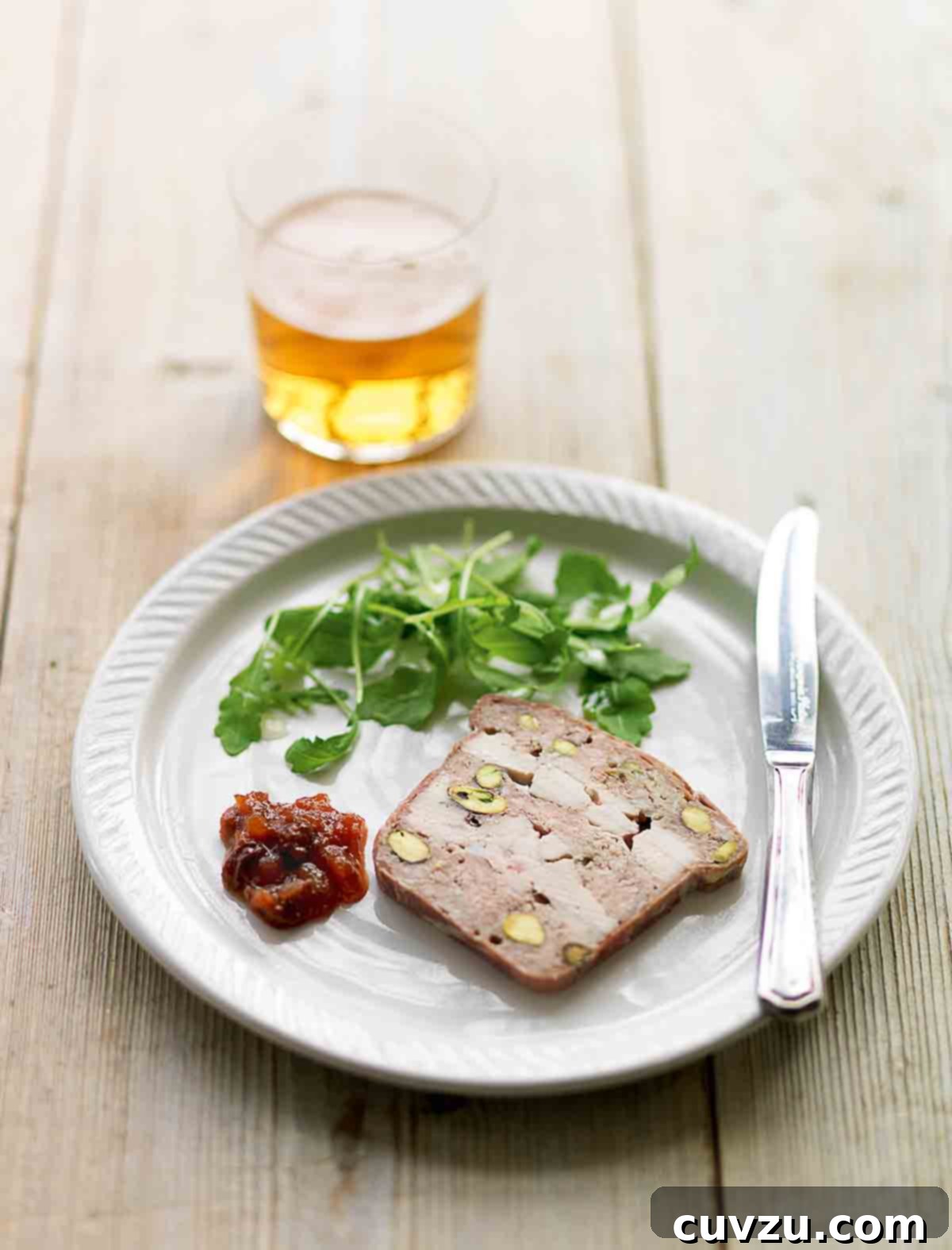
Embark on a culinary journey with this exquisite chicken, pork, and pistachio terrine. Often perceived as a complex dish reserved for professional chefs, this terrine is, in fact, an astoundingly straightforward yet undeniably elegant appetizer. Its sophisticated appearance belies a simple preparation process, making it an ideal choice for both seasoned cooks and curious beginners. Furthermore, its inherent ability to be prepared in advance positions it as the ultimate stress-free centerpiece for any gathering, from casual picnics to refined dinner parties. This delightful make-ahead dish promises to impress your guests with its rich flavors and appealing presentation, all while allowing you to enjoy your own event.
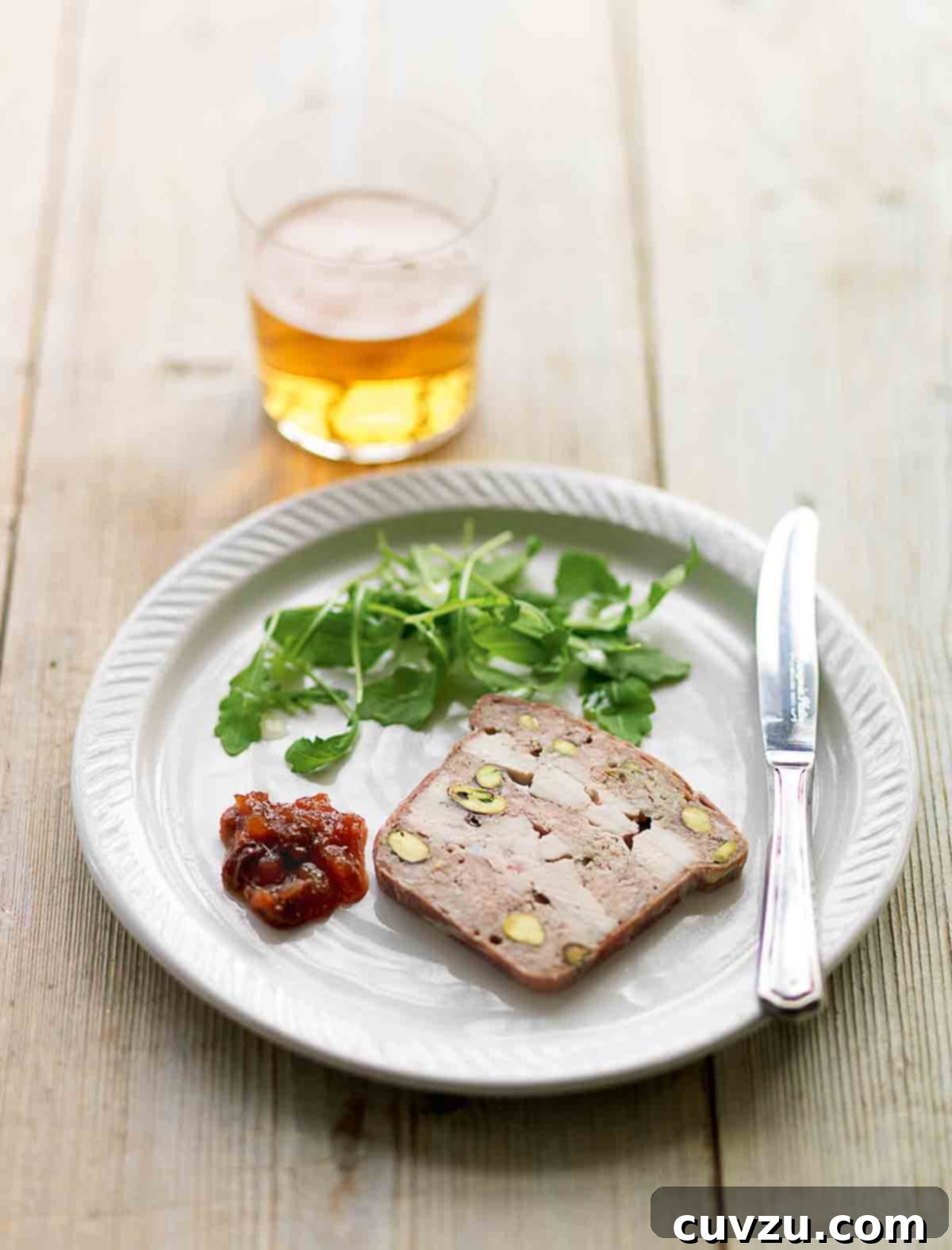
The most daunting aspect of preparing this spectacular chicken, pork, and pistachio terrine often comes down to two seemingly minor details: politely requesting your butcher to finely mince the pork belly and patiently shelling a few handfuls of pistachios. Beyond these trivial tasks, the recipe unfolds with remarkable simplicity, transforming everyday ingredients into a dish that exudes a fancy, French, and sophisticated charm. As Renee Schettler Rossi aptly puts it, its elegance is surprisingly accessible, proving that impressive culinary creations don’t always demand intricate techniques. This terrine is a testament to the fact that seemingly complex dishes can be entirely approachable, yielding results that are both visually stunning and deeply satisfying.
The Allure of Terrines: An Elegant History
Terrines hold a distinguished place in French culinary tradition, tracing their origins back centuries. Originally, a terrine referred to the earthenware vessel in which these meat, fish, or vegetable mixtures were cooked and served. Over time, the name became synonymous with the dish itself – a molded loaf of forcemeat, often layered with other ingredients, cooked slowly in a water bath, and then pressed and chilled until firm. Terrines were historically prized for their ability to preserve meats and were a staple in charcuteries. Today, they are celebrated as versatile appetizers, first courses, or components of a lavish buffet, known for their beautiful layered appearance, rich flavors, and inviting textures. The appeal lies in their rustic elegance and the delightful contrast of flavors and textures packed into each slice.
Mastering the Terrine: A Comprehensive FAQ
Making your own chicken, pork, and pistachio terrine is truly simpler than many imagine, yet certain questions commonly arise during the process. Here, we address some of the most frequently asked questions, drawing insights from culinary experts like Rosemary Shrager, to ensure your terrine-making experience is a success.
How does the terrine hold together?
The secret to a well-structured terrine lies in what culinary professionals call the “glue” – a finely minced or ground meat that binds all the components together. In this particular recipe, finely minced pork belly serves as this crucial binding agent. The natural fats and proteins in the pork belly, when cooked slowly, melt and then solidify upon chilling, creating a cohesive and sliceable texture. Once you’ve established this foundational binder, the possibilities for your main ingredients become virtually limitless, allowing for creative experimentation with various meats, vegetables, and flavorings.
What if I don’t care for ham, or want an alternative lining?
While Parma ham adds a wonderful layer of flavor and helps contain the terrine, it’s certainly not the only option. If you prefer not to use ham, or wish for a non-meat lining, simply line your loaf pan with three layers of good quality plastic wrap instead. Ensure the plastic wrap hangs generously over the edges of the dish, providing ample material to cover and compress the terrine later. This method offers a neutral casing that allows the internal flavors to shine purely. Alternatively, you could experiment with blanched large cabbage leaves or thin slices of smoked salmon for a different flavor profile and presentation.
Can I cut the recipe in half?
While it might seem tempting to reduce the recipe for a smaller batch, we generally advise against making less than a full loaf pan of terrine at a time. Terrines benefit from a certain mass for even cooking and proper compression, which is harder to achieve with smaller quantities. The good news is that this terrine is incredibly fridge-friendly, keeping well for several days, and it freezes exceptionally beautifully. If you don’t intend to consume the entire terrine at once, simply cut it into desired portions, wrap each tightly in multiple layers of plastic wrap, and store in the freezer for future enjoyment. This makes it perfect for having elegant appetizers ready at a moment’s notice.
Why is a water bath essential for terrines?
A water bath, or bain-marie, is a critical technique for cooking terrines. It provides a gentle, even heat source that surrounds the terrine pan, preventing the edges from overcooking or drying out while the center slowly reaches doneness. This uniform cooking environment ensures a smooth, consistent texture throughout the terrine, free from cracks or dryness, resulting in a perfectly succulent and tender product. Without a water bath, the terrine would likely cook too quickly, leading to a grainy texture and a less appealing finished product.
The Importance of Pressing the Terrine
After baking, pressing the terrine is a crucial step that contributes significantly to its final texture and appearance. Placing a weight on top of the foil-covered terrine as it cools and chills helps to compress the forcemeat, eliminate any air pockets, and consolidate the ingredients. This pressing action results in a denser, firmer, and more cohesive terrine that slices cleanly and holds its shape beautifully. It also aids in expressing any excess fat or juices, concentrating the flavors and ensuring a desirable mouthfeel.
Chicken, Pork and Pistachio Terrine Recipe
Chicken, Pork and Pistachio Terrine
This chicken, pork, and pistachio terrine is an easy, elegant appetizer that can be made in advance, making it perfect for entertaining or enjoying throughout the week. Rated 5 out of 5 stars by 1 voter.
Author: David Leite
- Course: Appetizers
- Cuisine: British
- Servings: 12 servings
- Calories: 394 kcal per serving
- Prep Time: 25 minutes
- Cook Time: 2 hours 5 minutes
- Total Time: 2 hours 30 minutes
Equipment
- 9-by-5-by-3-inch (23-by-13-by-8-cm) loaf pan
- Large mixing bowls
- Large roasting pan (for water bath)
- Meat thermometer (optional, but highly recommended)
- Aluminum foil
- Weights (such as cans or another loaf pan)
- Plastic wrap
- Very sharp, thin knife
Ingredients
For the Terrine:
- 3 large skinless, boneless chicken breasts, cut into long strips about 1/4 inch (6 mm) thick. Cutting the chicken thin ensures it cooks evenly and integrates beautifully into the terrine’s layers.
- Sea salt and freshly ground black pepper, to taste. Generous seasoning is key for flavor development in every component of the terrine.
- 15 very thin slices Parma ham. Parma ham not only adds a delicate saltiness but also helps hold the terrine together and keeps it moist.
- 1 3/4 pounds pork belly, finely minced. The pork belly is crucial for binding the terrine and providing the rich, unctuous texture. Ask your butcher to mince it for you to save time and effort.
- 3 garlic cloves, crushed to a paste. Fresh garlic brings an aromatic depth that complements the meats beautifully.
- 1 large egg. The egg acts as an additional binder, ensuring the terrine mixture stays cohesive.
- 1 teaspoon Chinese five-spice powder. This blend of star anise, cloves, Chinese cinnamon, Szechuan peppercorns, and fennel seeds adds an intriguing, warm, and subtly exotic flavor profile to the terrine.
- 2 1/2 tablespoons brandy. A splash of brandy enhances the overall flavor, adding a layer of sophisticated warmth and depth.
- 2 handfuls pistachios (approximately 1/2 cup or 2 ounces shelled). Pistachios provide a pleasant crunch and a vibrant color contrast, breaking up the richness of the meat.
Instructions
- Preheat your oven to 375°F (190°C). Accurate oven temperature is vital for the initial cooking phase of the terrine.
- Place the chicken strips in a medium bowl. Season them generously with sea salt and freshly ground black pepper. This initial seasoning ensures every layer of your terrine is flavorful.
- Carefully line a 9-by-5-by-3-inch loaf pan with most of the Parma ham slices. Ensure there are no gaps between the slices, and allow the ends of the ham to hang over the edges of the pan. This creates a protective and flavorful casing. Reserve 2 slices of ham to drape over the top later.
- In a large bowl, combine the finely minced pork belly, crushed garlic, large egg, Chinese five-spice powder, brandy, and shelled pistachios. Season the mixture very well with salt and pepper. Mix thoroughly until all ingredients are evenly distributed and the mixture is moist and cohesive. This moisture is essential for the terrine to hold together beautifully. To verify the seasoning, take a tiny amount of the mixture, form it into a small patty, and fry it in a skillet until cooked through. Taste it and adjust the seasoning (salt, pepper, or five-spice) of the remaining mixture as necessary before proceeding.
- Spread approximately one-third of the seasoned pork mixture evenly over the bottom of the ham-lined loaf pan. Arrange half of the seasoned chicken strips neatly on top of this pork layer. Repeat this layering process once more: another third of the pork mixture, followed by the remaining chicken strips. Finish by spreading the final layer of pork mixture evenly over the top, ensuring it covers the chicken completely. Fold the overhanging ends of the ham slices over the top of the terrine, and then drape the 2 reserved slices of ham over everything to fully encapsulate the mixture.
- Cover the loaf pan tightly with aluminum foil. Place this loaf pan into a larger roasting pan. Carefully pour enough cold water into the roasting pan to reach approximately three-quarters of the way up the sides of the loaf pan. This creates a gentle water bath. Bake in the preheated oven for 20 minutes.
- After the initial 20 minutes, reduce the oven temperature to 275°F (135°C) and continue baking for another 1 1/2 hours. To confirm doneness, insert a meat thermometer into the center of the terrine; it should register between 150°F to 160°F (65°C to 71°C). Alternatively, you can gently press the top surface of the terrine with your fingertip; the juices should run clear, and the terrine should feel fairly firm but still have a slight give.
- Remove the loaf pan from the oven and carefully lift it out of the roasting pan. Using the tip of a skewer or a thin knife, make several small, shallow holes in the surface of the terrine, piercing through the foil. This allows excess fat and juices to escape. Place a heavy weight on top of the foil-covered terrine (such as several food cans or another loaf pan filled with weights). Allow the terrine to cool completely at room temperature, with the weights still in place. Once cooled, transfer the entire loaf pan, still weighted, to the refrigerator and chill overnight. This pressing and chilling process is essential for achieving a firm, sliceable texture and allowing the flavors to meld.
-
To unmold the terrine, lay a long piece of plastic wrap on a clean cutting board, but do not cut it from the roll yet. Carefully invert the chilled terrine onto the plastic wrap. Gently remove and discard any excess solidified jelly or fat that may have accumulated around the terrine. Tightly wrap the terrine in layer after layer of plastic wrap, using the roll of wrap behind the board as leverage to maintain tension. Continue wrapping until the terrine is encased in 7 or 8 layers of plastic wrap, ensuring it is very compact. This tight wrapping helps preserve its shape and freshness. Refrigerate the terrine for up to 5 days, or freeze it for longer storage.
☞ TESTER TIP: If your terrine resists releasing from the pan, gently sit the base of the loaf pan in some warm water for about 10 seconds. This slight warmth can help loosen the edges without compromising the terrine’s structure. Then try to release it again.
- To serve, you can slice the terrine directly through the plastic wrap using a very sharp, thin knife and a gentle sawing motion. Leaving the plastic wrap on during slicing helps each delicate slice remain perfectly intact. Once sliced, peel off the plastic wrap from each portion and serve. Terrine is delicious served at room temperature or slightly chilled, often accompanied by crusty bread, crackers, cornichons, or a dollop of chutney.

Adapted From
Rosemary Shrager’s Absolutely Foolproof Classic Home Cooking
Buy On Amazon
Explore More with AI
Substitutions
Scale
Summarize
Nutrition
Calories: 394 kcal
Carbohydrates: 1 g
Protein: 13 g
Fat: 37 g
Saturated Fat: 13 g
Monounsaturated Fat: 17 g
Trans Fat: 1 g
Cholesterol: 82 mg
Sodium: 75 mg
Fiber: 1 g
Sugar: 1 g
Nutrition information is automatically calculated, so should only be used as an approximation.
Tried this recipe?
Mention @leitesculinaria or tag #leitesculinaria!
Expert Tips and Rave Reviews
Our recipe testers have thoroughly enjoyed and evaluated this chicken, pork, and pistachio terrine, providing invaluable insights and glowing endorsements. Their experiences confirm that this recipe is not just simple to follow but also yields truly impressive results, worthy of any culinary occasion.

Jo Ann Brown
Jo Ann Brown raves about this recipe, calling it “simply perfect.” She notes that the finished terrine strikes an ideal balance, being “dense enough to cut yet so tender and flavorful.” She particularly appreciates the modern twist brought by the Chinese five-spice and pork belly, observing a “magical” synergy when classic French technique meets contemporary ingredients. Jo Ann, with her fondness for entertaining and vintage cookbooks, finds terrines to be wonderfully “elegant yet casual enough for an afternoon picnic.” She even froze half her loaf for a future fête, highlighting its excellent make-ahead potential. Her experience underscores the recipe’s success in teaching a fundamental technique that opens doors to countless variations and interpretations, making it a valuable foundation for any home cook.

Dan Kraan
Dan Kraan, a self-proclaimed lover of terrines and pâtés, confirms the remarkable ease of assembling this chicken and pork terrine, especially if your butcher handles the pork belly grinding. He echoes the sentiment that shelling pistachios is indeed the “toughest thing.” Dan praises the harmonious blend of flavors, though he suggests a lighter hand with the five-spice powder depending on personal preference. Despite this minor note, he affirms that “everyone I’ve served this to has loved it.” He finds the slices “irresistible” when served with various crackers or bread, emphasizing how the pistachios, while primarily contributing textural contrast, also subtly define the other ingredients. Dan wisely offers an alternative for pistachios, suggesting pickled walnuts for a different taste experience. He also shares a valuable tip for unmolding: if the terrine is stubborn, letting the pan sit in warm water for about 10 seconds greatly aids in release. He further recommends placing the unmolded loaf on a rack over a tray to allow any excess fat to drip off, ensuring a cleaner presentation and texture.