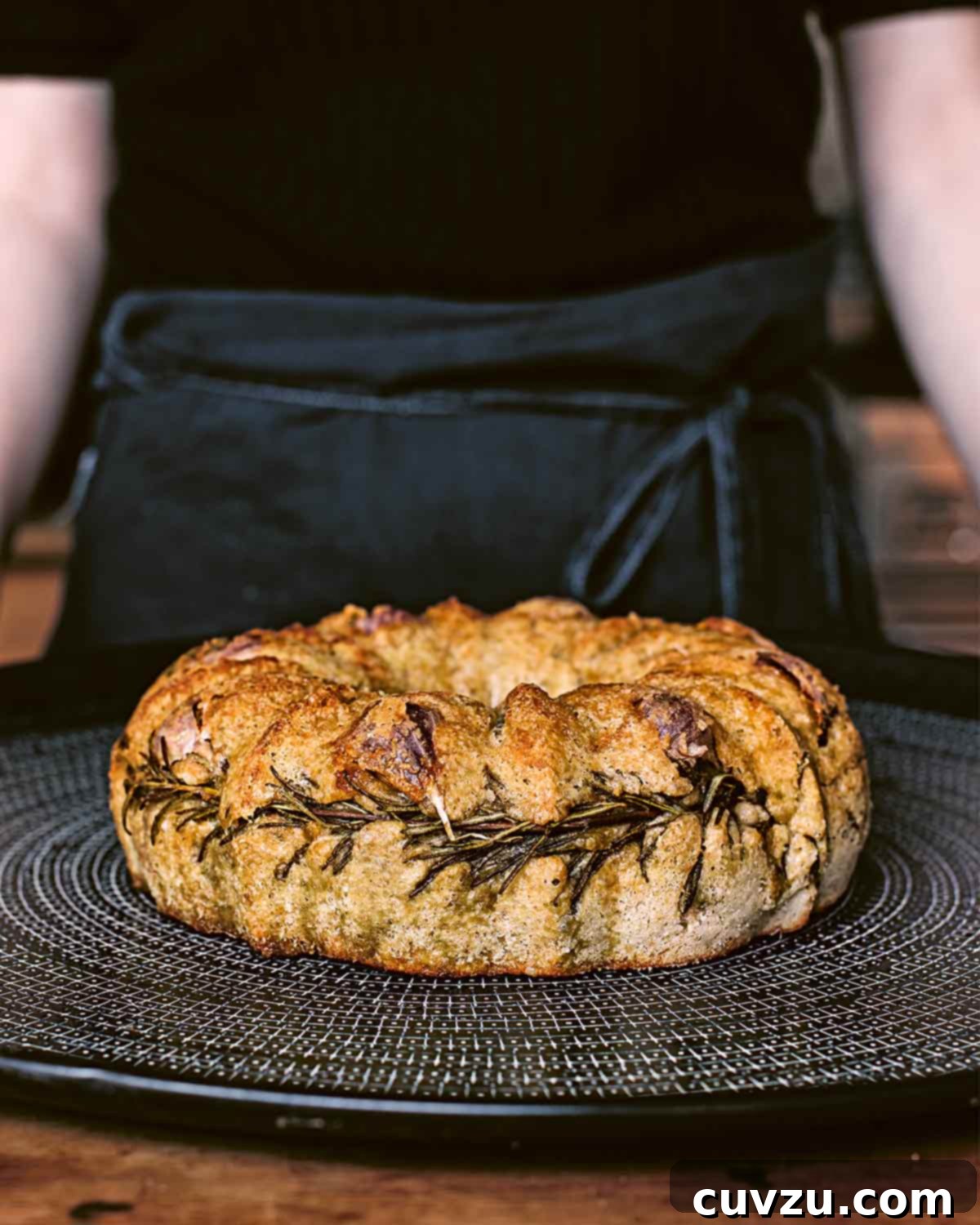
Indulge in the unparalleled delight of homemade Rosemary-Garlic Sourdough Bread, a culinary masterpiece that marries rustic charm with sophisticated flavors. This exceptional loaf is celebrated for its tender, airy interior, perfectly complemented by an irresistibly crisp, golden crust. What sets this recipe apart is its ingenious use of a Bundt pan, which dramatically increases the beloved crunchy surface area, yielding twice as much of that coveted, deeply burnished exterior. Each slice reveals a beautiful crumb studded with fragrant rosemary leaves and tender, sweet whole cloves of garlic, creating an aromatic symphony that will enchant your kitchen long before the first bite.
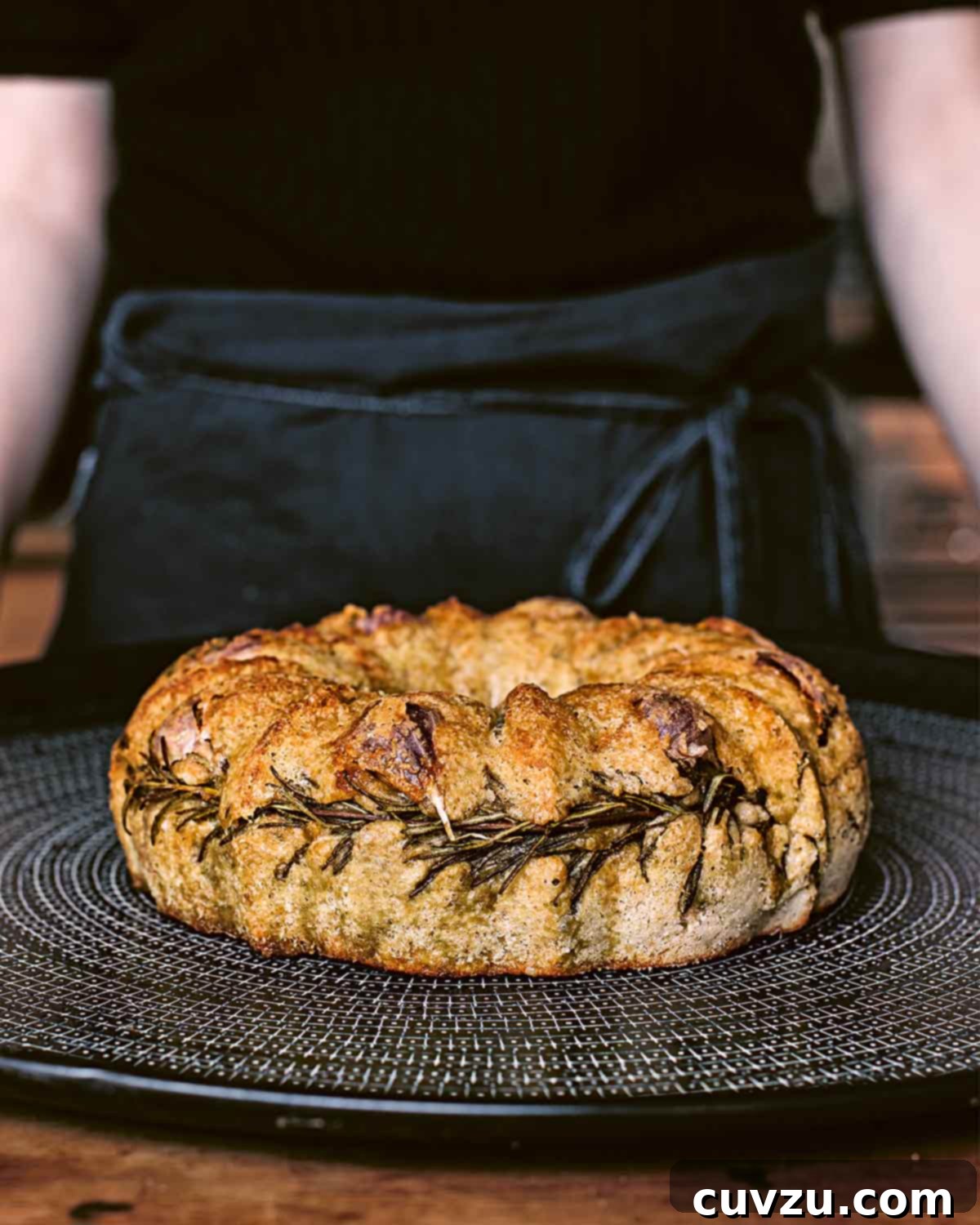
This stunning centerpiece loaf doesn’t just look magnificent; it promises to fill your home with an intoxicating, delightfully aromatic smell that hints at the savory goodness within. As Vanessa Kimbell aptly describes, it’s an experience for all senses.
The Ancient Art and Modern Appeal of Sourdough Baking
Sourdough baking is a timeless craft, revered for its robust flavors, unique textures, and remarkable nutritional benefits. Far more than just bread, a well-made sourdough loaf represents a connection to ancient culinary traditions and a testament to the power of natural fermentation. The process, while often perceived as daunting, is incredibly rewarding, offering a sense of accomplishment with every beautifully baked loaf. This Rosemary-Garlic Sourdough, baked in a Bundt pan, takes that experience to an even higher level, transforming a simple loaf into an edible work of art.
Beyond its incredible taste, sourdough is a healthier alternative to commercial yeasted breads. The long fermentation process breaks down complex carbohydrates and gluten, making it easier to digest for many. It also enhances the bioavailability of nutrients, providing a richer source of vitamins and minerals. The natural acids in sourdough act as a preservative, giving the bread a longer shelf life without the need for artificial additives. Embracing sourdough baking is not just about making bread; it’s about embracing a more wholesome and flavorful way of living.
WHAT IS A SOURDOUGH STARTER?
At the heart of every exquisite sourdough loaf lies a vibrant sourdough starter. This living culture is a magical concoction of wild yeast and beneficial bacteria, harvested directly from the air and flour present in your own kitchen – a truly remarkable natural phenomenon! Unlike commercial yeast, which provides a quick rise, a sourdough starter slowly ferments the dough, contributing to its distinctive tangy flavor, chewy texture, and superior digestibility. Creating and maintaining a starter is often considered the most crucial step in sourdough baking, a true culinary milestone that many bakers proudly master.
The beauty of this rosemary-garlic sourdough recipe is that it allows you to whip up a stunning loaf relatively quickly, provided you have a healthy, active starter ready to go. Don’t be intimidated if you’re new to the world of sourdough; starting your own can be an enjoyable and straightforward process, even for beginners. We provide plenty of resources to guide you, from initial creation to long-term care. You’ll find detailed guides on making a sourdough starter from scratch, including options like a classic sourdough starter or a rye-based version. We even cover how to dry your starter for storage, ensuring you’re well-equipped for your sourdough journey, darling.
☞ LEARN MORE, READ: HOW TO DRY SOURDOUGH STARTER
Rosemary-Garlic Sourdough Bread
David Leite
Ingredients
- 12.7 to 13 ounces water at 81°F (27.2°C)
- 3.5 ounces bubbly, lively sourdough starter
- 8.8 ounces organic stone-ground whole-wheat flour (11.5% protein)
- 8.8 ounces organic white flour (13% protein)
- 0.4 ounces fine sea salt (2 teaspoons)
- Butter, ghee or coconut oil, for the pan
- 8 garlic cloves, skin on
- 3 long sprigs fresh rosemary
- 1.4 ounces olive oil
- Olive oil spray
Instructions
-
Prepare the Starter Mixture: In a generously sized, wide bowl, combine 12.3 ounces (350 g) of the measured water with your active, bubbly sourdough starter. Whisk these two ingredients together thoroughly until well combined. Remember to refresh any remaining starter in your jar for future use.
-
Combine Dry Ingredients: Add both the organic whole-wheat flour and the organic white flour, along with 0.35 ounces (1 3/4 teaspoons or 10 g) of the fine sea salt, to the bowl with the starter mixture. Use a sturdy spatula to mix vigorously. Continue mixing and folding until the dough comes together and forms a stiff, cohesive ball, which typically takes about 2 minutes. This initial mixing helps to hydrate the flour and begin gluten development.
-
First Rest and Hydration: Allow the dough to rest, covered, for 30 minutes. This period, known as autolyse, allows the flour to fully hydrate and the gluten to naturally start developing without additional kneading. After this rest, incorporate the remaining 0.4 to 0.7 ounces (10 to 20 g) of water into the dough. Use your hands to gently fold the dough, working the water in until it is fully absorbed. This step should be quick, taking less than 1 minute. Re-cover the bowl and let the dough rest for an additional 30 minutes. These resting phases are crucial for a tender crumb.
-
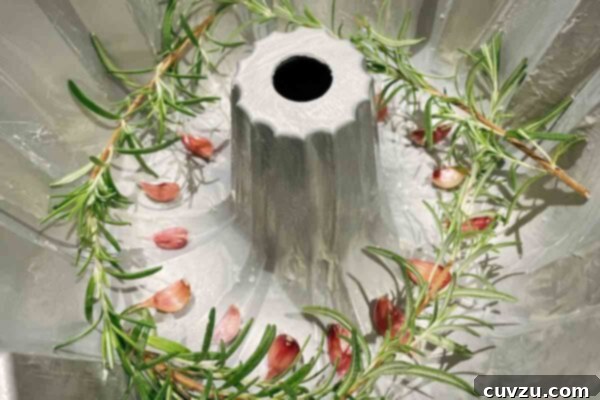
Prepare the Bundt Pan: Generously grease a 10-inch (25 cm) Bundt pan with butter, ghee, or coconut oil, ensuring every crevice is coated to prevent sticking. Carefully arrange the 8 garlic cloves, still in their skins, in the bottom of the pan, curving them side down for a beautiful presentation. Next, gently curve the three long sprigs of fresh rosemary around the inside circumference of the pan. Drizzle the 1.4 ounces of olive oil over the inside of the pan, making sure it coats all the rosemary and garlic. Finally, sprinkle the remaining salt (1/4 teaspoon or 2 g) evenly over the oil, herbs, and garlic.

-
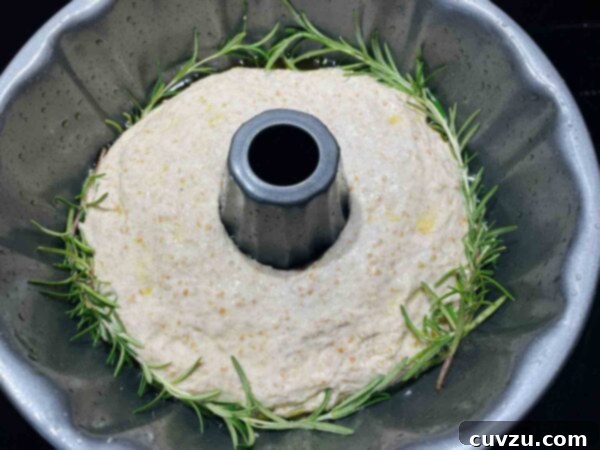
Shape and Transfer Dough: Gently remove the rested dough from the bowl. On a lightly floured surface, carefully form the dough into a rough doughnut shape, creating a hole in the center. This shape will perfectly fit the Bundt pan. Carefully transfer the shaped dough into the prepared Bundt pan, ensuring it settles evenly over the garlic and rosemary.
☞ TESTER TIP: If you happen to have a silicone Bundt pan, it is highly recommended for this recipe. Its flexible nature allows for significantly easier removal of the finished, delicate loaf, ensuring its beautiful shape remains intact.
-
Overnight Proofing: Cover the Bundt pan tightly with plastic wrap to prevent the dough from drying out. Leave the dough to prove (ferment) at room temperature overnight. This long, slow fermentation develops deep flavors and the characteristic sourdough tang. By the next morning, your loaf should have noticeably increased in size, typically at least 50 percent larger, indicating a healthy and active proof.
Bake
-
Preheat Oven and Prepare for Steam: The next morning, preheat your oven to 425°F (220°C) for a full 30 minutes. This ensures the oven is thoroughly hot and holds its temperature. Crucially, place a shallow baking pan on the very bottom rack of your oven during this preheating phase. This pan will be used to create steam, which is vital for achieving a beautifully crispy crust and promoting a good “oven spring” in your sourdough.
-
Steam and Bake Initiation: Lightly spray the top surface of your proofed loaf in the Bundt pan with olive oil. Carefully place the bread into the preheated oven. Immediately reduce the oven temperature to 350°F (175°C). At the same time, carefully pour a small amount of water or toss a few ice cubes into the hot shallow baking pan at the bottom of the oven. Close the oven door as quickly as possible to trap the steam generated. This burst of steam prevents the crust from setting too early, allowing the dough to expand and achieve maximum volume before forming a crisp, golden exterior.
-
Bake to Perfection: Continue baking the loaf for approximately 40 to 45 minutes. The bread is perfectly done when it boasts a gorgeous, burnished copper crust and reaches an internal temperature of 200°F (93°C). Use an instant-read thermometer inserted into the thickest part of the loaf to confirm doneness. This internal temperature indicates that the bread is thoroughly cooked through.
-
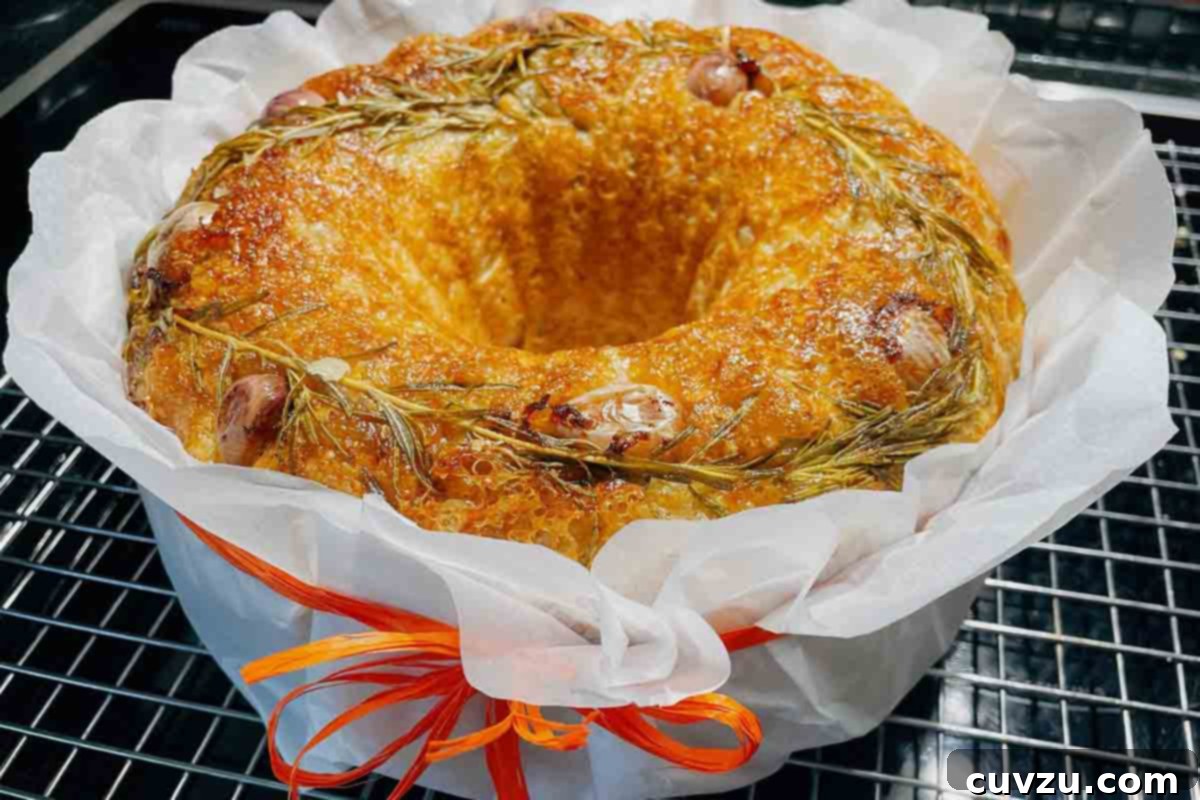
Cooling: Once baked, carefully remove the Bundt pan from the oven. Allow the bread to sit in the pan for about 5 minutes. This brief resting period helps the loaf to firm up slightly before you attempt to remove it. After 5 minutes, invert the pan onto a wire rack to release the loaf and allow it to cool completely. Cooling on a wire rack ensures air circulation around the entire loaf, preventing the bottom from becoming soggy and promoting an even texture.
☞ TESTER TIP: If your beautiful loaf seems reluctant to release from the Bundt pan, gently use a chopstick or a thin knife to carefully pry it away from the edges. Work slowly and methodically to avoid damaging the crust and preserve its stunning shape.
-
Storage: Once the bread has cooled completely to room temperature, wrap your loaf in a clean, dry dishtowel or a parchment bag. This method allows the crust to remain crisp while keeping the interior moist. The Rosemary-Garlic Sourdough Bread is best enjoyed within 2 to 3 days for optimal flavor and texture. For longer storage, you can freeze half of the loaf wrapped in parchment and then foil, as detailed in the tester tips below.
Adapted From
10-Minute Sourdough
Buy On Amazon
Nutrition
Nutrition information is automatically calculated, so should only be used as an approximation.
The Art of Baking Sourdough in a Bundt Pan
Using a Bundt pan for sourdough might seem unconventional, but it’s a brilliant technique that elevates this loaf from simply delicious to truly spectacular. The unique fluted design of the Bundt pan provides an expansive surface area, which means more of that coveted crispy, savory crust. This crust is where the magic of the roasted garlic and fragrant rosemary truly shines, caramelizing beautifully during baking and releasing their intoxicating aromas.
Beyond the texture, the Bundt shape transforms the bread into a magnificent centerpiece, perfect for special occasions or simply to impress your family and friends. It offers an elegant presentation that a traditional round or oval loaf can’t quite match. Moreover, the central hole in the Bundt design promotes more even baking, allowing heat to penetrate the dough from all sides, resulting in a consistently cooked interior with an exceptional tender crumb.
Perfect Pairings and Serving Suggestions
This Rosemary-Garlic Sourdough Bread is incredibly versatile and shines in many culinary applications. Its robust flavor profile makes it a fantastic accompaniment to a wide range of dishes.
- Soups and Stews: The hearty texture and savory notes make it an ideal companion for rich winter stews, creamy tomato soup, or a rustic lentil soup. The crust is perfect for dipping.
- Cheese Boards and Charcuterie: Serve thick slices alongside a selection of artisan cheeses, cured meats, and olives. The tang of the sourdough and the warmth of the garlic and rosemary beautifully cut through the richness of the dairy and meat.
- Simply with Butter: Sometimes, the simplest pairings are the best. A generous smear of good quality butter or a drizzle of your finest extra virgin olive oil is all this bread needs to be enjoyed in its pure, flavorful glory.
- Sandwiches: Elevate your sandwich game with this flavorful bread. It pairs wonderfully with roast chicken, fresh mozzarella and basil, or even a simple grilled cheese.
- Bruschetta or Crostini: Slice thinly, toast lightly, and top with fresh tomatoes, pesto, or a savory tapenade for an exquisite appetizer.
Don’t forget to appreciate the roasted garlic cloves that become sweet and spreadable once baked into the crust. They are a delightful bonus! The fragrant rosemary sprigs also offer a subtle, earthy perfume that enhances every bite.
Tips for Sourdough Success
Achieving a perfect sourdough loaf, especially one as ornate as this Bundt bread, comes down to a few key principles:
- Know Your Starter: A lively, active starter is non-negotiable. It should be fed regularly, show signs of vigorous bubbling, and double in size within a few hours of feeding. A weak starter will result in a dense, flat loaf.
- Temperature Control: Sourdough is sensitive to temperature. The water temperature for mixing and the room temperature for proofing significantly impact fermentation speed. Aim for consistency.
- Gentle Handling: Sourdough dough can be delicate. Use gentle folding techniques rather than aggressive kneading to develop gluten and maintain air pockets.
- Proper Proofing: Overnight proofing at room temperature allows for deep flavor development. Observe the dough; it should be noticeably larger but not over-proofed (which can lead to collapse in the oven).
- Steam is Key: The initial burst of steam in the oven is crucial for a beautiful, crispy crust and maximum oven spring. Don’t skip this step.
- Cool Completely: Resist the urge to slice into your warm bread immediately. Cooling allows the internal structure to set and prevents a gummy texture.
Recipe Testers’ Reviews
Ilda Costa-Sarnicki
Ilda Costa-Sarnicki, a discerning recipe tester, enthusiastically declared this Rosemary-Garlic Sourdough Bread a true showpiece! She noted that its visual stunning-ness was perfectly matched by an incredibly flavorful crust and an enticing, satisfying crumb chew. Her experience highlights the consistent quality and appeal of this recipe.
In her dedication to thorough testing, and admittedly, for an excellent excuse to bake more, Ilda replicated the loaf exactly as written. She then ventured to make a third loaf, experimenting with only 30 ml of olive oil over the rosemary sprigs, keen to observe any differences in flavor or texture. This shows the adaptability of the recipe to slight modifications based on personal preference or ingredient availability.
Ilda wisely reminds us that “sourdough is a finicky thing and has a mind of her own.” She experienced how sometimes even a perfectly poofy starter can yield a slightly heavier crumb than others, even when using the identical recipe. This natural variability is part of sourdough’s charm. In her second version, she still achieved the desired chew but observed a few more air pockets, demonstrating the subtle nuances that can occur batch-to-batch.
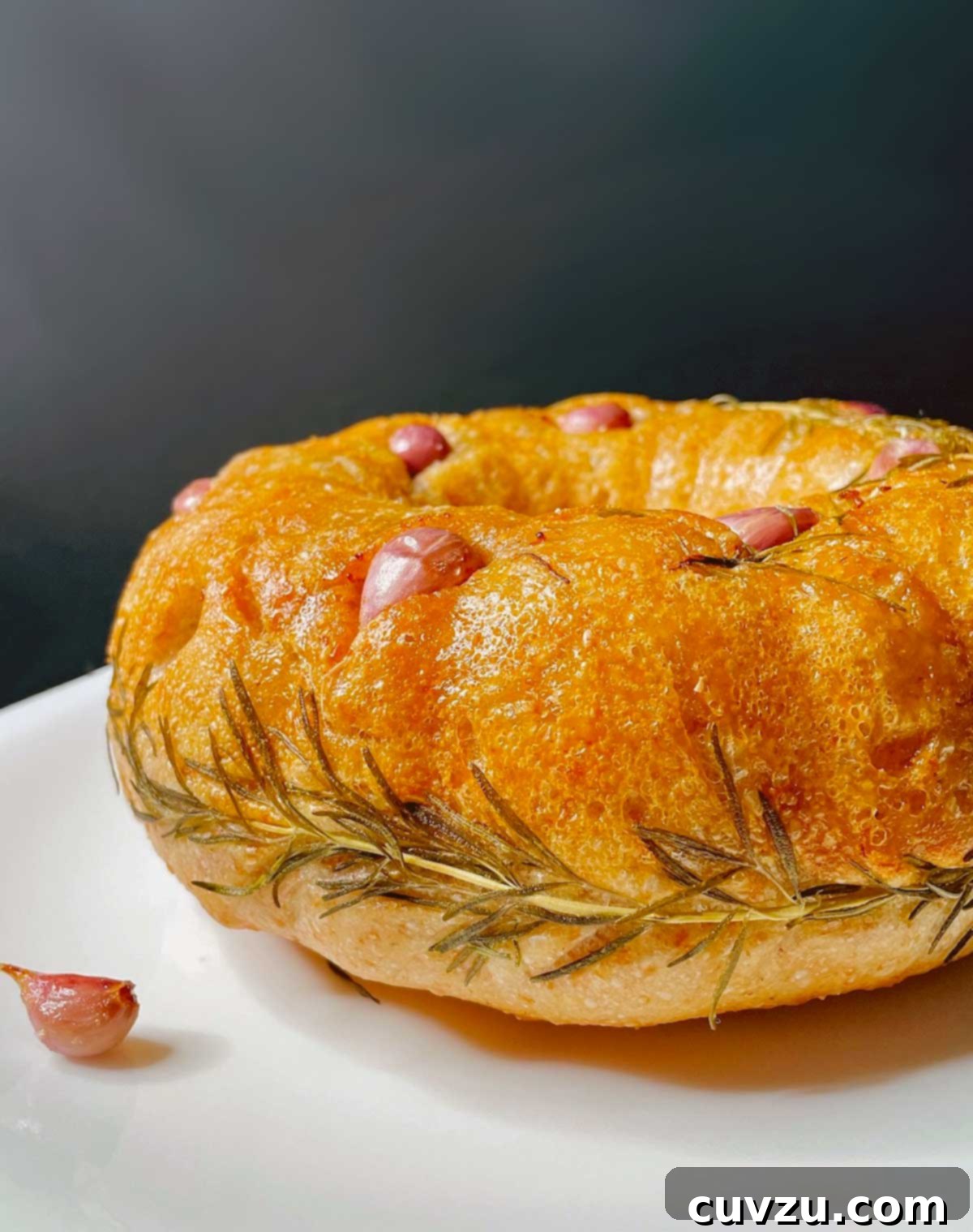
She strongly advises using a great-tasting olive oil, emphasizing that you’ll be tempted to lick your fingers from the delicious infused oil. For an extra touch of beauty, Ilda suggests using purple-skinned garlic cloves if available, noting that hers looked like edible jewels studding the Bundt crown – a fantastic tip for presentation!
For storage, Ilda found that wrapping her cooked Bundt bread in a parchment bag, rather than a towel, worked beautifully, helping to maintain its crispness. She even reused the parchment bag to freeze one-half of the loaf, wrapping it securely in foil. Upon thawing, she reheated it in a 375°F (190°C) oven for just over 20 minutes in its package, then for another 5 minutes in the open package to crisp up the exterior. The result? It looked and tasted like it was freshly baked – an invaluable tip for enjoying your sourdough longer!
Elie Nassar
Elie Nassar confirmed that this rosemary-garlic sourdough bread recipe perfectly delivers on its promise: a Bundt-shaped, incredibly flavorful bread, deeply imbued with the enticing aroma and taste of fresh herbs and garlic. His review underscores the recipe’s reliability in creating a wonderfully fragrant and savory loaf.
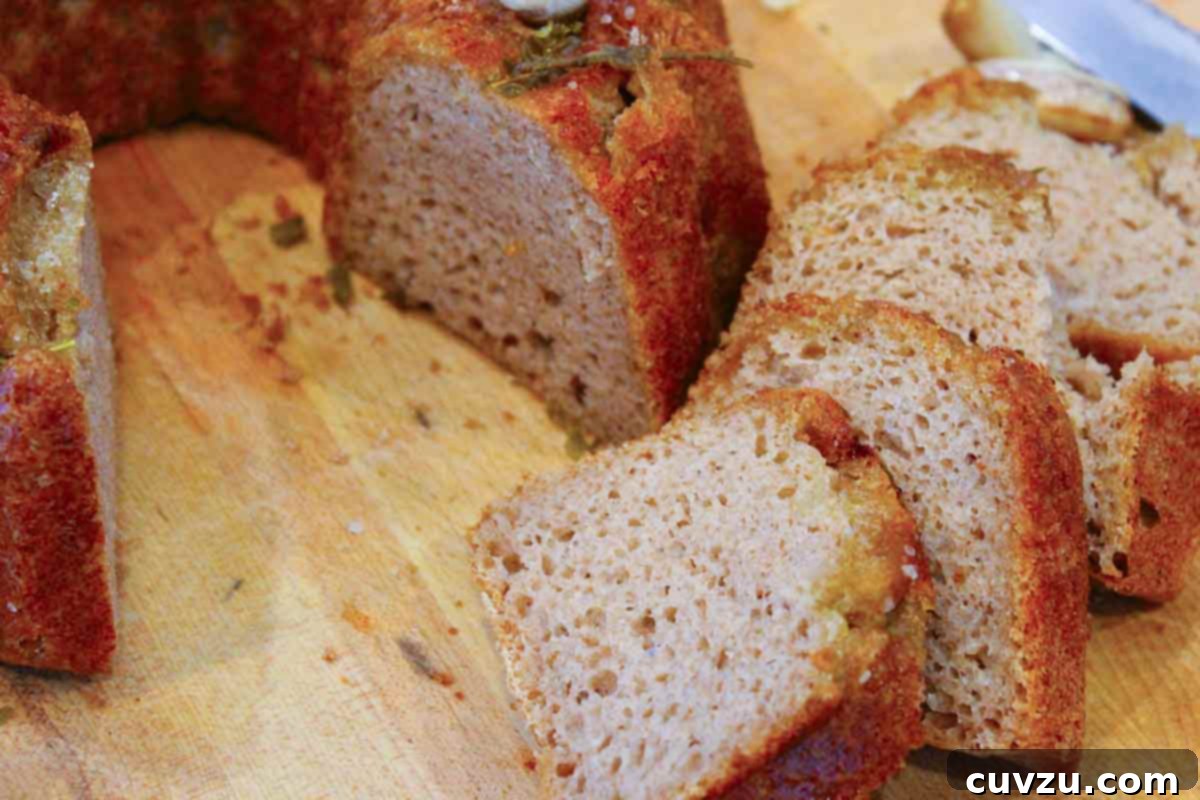
Elie also noted that if you are a baker who, like him, appreciates more crumb than crust in your bread, this recipe will squarely meet your expectations. While the Bundt pan does increase the crust-to-crumb ratio compared to a traditional boule, the interior remains wonderfully soft and airy, providing a delightful contrast to the crispy exterior. This insight is particularly helpful for those who prioritize a tender, open crumb in their sourdough creations.
Embrace the Joy of Sourdough
Baking this Rosemary-Garlic Sourdough Bread in a Bundt pan is more than just following a recipe; it’s an immersive experience that engages all your senses. From the earthy scent of the fresh rosemary and garlic infusing the olive oil, to the satisfying feel of the dough as it develops, and finally, to the breathtaking aroma that fills your kitchen as it bakes, every step is a delight. The end result is not just a loaf of bread, but a masterpiece that is visually stunning, incredibly flavorful, and deeply satisfying to create.
Whether you’re an experienced sourdough baker or embarking on your very first journey into the world of wild yeast, this recipe offers a fulfilling and delicious path. It’s an invitation to slow down, connect with your food, and share a truly special creation with those you love. So, gather your ingredients, awaken your starter, and prepare to bake a loaf that will undoubtedly become a treasured favorite.