

When I share my family’s heritage with others, the reactions I receive are always varied and often quite entertaining. One of the most memorable responses came from a young woman at a party, adorned in a flowing, tie-dyed dress, who was enthusiastically devouring an impressive amount of hummus. “Oh, your family is from the Azores?” she exclaimed, her eyes wide with wonder. “You know, they’re believed to be the remnants of the lost city of Atlantis. I’m quite certain I lived there in a past life.”
While such romantic notions are captivating, the reality is that most people, despite their vivid imaginations or intriguing theories, possess surprisingly little knowledge about my family’s ancestral homeland – the beautiful and enigmatic Azorean islands. Even less is typically known about the distinctive and hearty Azorean cuisine. And there are compelling historical and geographical reasons for this obscurity. These nine Portuguese islands—São Miguel, Faial, São Jorge, Pico, Terceira, Graciosa, Santa Maria, Corvo, and Flores—are scattered roughly 1,000 miles off the coast of mainland Portugal, happily marooned in the vast expanse of the Atlantic Ocean. Unfortunately, their unique gastronomic traditions have also remained largely isolated and undiscovered, much like the islands themselves.

Exploring the Essence of Azorean Cooking: A Culinary Journey
Geographic isolation is merely one of the many factors contributing to the relative invisibility of Azorean food on the global culinary stage. Like many peasant cuisines worldwide, Azorean cooking is fundamentally rooted in the home and characterized by its frugality. Historically, economic constraints meant that most families rarely had the means to frequent restaurants. This necessity shaped a cuisine where resourcefulness and making the most of available ingredients were paramount.
My ancestors, for instance, often faced such profound poverty that dishes like açordas—hearty, brothy soups generously filled with chunks of leftover homemade bread—were sometimes the sole sustenance available to fill hungry bellies. This humble yet nourishing dish perfectly encapsulates the resourceful spirit of Azorean gastronomy, transforming simple ingredients into satisfying meals.
Consequently, establishing a café or a pastelaria (pastry shop) held little commercial promise for Azorean immigrants. Unlike their Chinese and Italian counterparts, Azoreans who arrived in the United States during the significant waves of immigration in the early 20th century seldom ventured into opening their own eating establishments. This demographic and economic reality meant that Azorean cuisine remained largely confined within family homes and communities, largely undiscovered by the broader American public. Furthermore, the challenge of preserving family recipes was exacerbated by widespread illiteracy in the Old Country, where many women were not required to attend school. Without written records, countless cherished family favorites and traditional Azorean dishes vanished forever when their talented cooks passed away, a poignant loss for future generations.
Despite these considerable obstacles, Azorean food has not only managed to survive but has also steadfastly resisted being completely overshadowed by the more trendy Mediterranean-based cuisine of mainland Portugal. Its resilience and unique character stand as a testament to the enduring traditions and strong cultural identity of the Azorean people.
Mama Leite’s Carne Assada
Distinctive Influences Shaping Azorean Cuisine
The unique character of Azorean cuisine is deeply tied to its relative isolation from the European mainland, allowing it to develop distinct characteristics separate from broader Portuguese influences. Ana Taveira, a renowned cook on the island of São Miguel, proudly asserts, “Our food is more authentic Portuguese because we have fewer Spanish influences.” She elaborates on the island’s culinary identity, noting, “We don’t use much cilantro, curry, or cinnamon. We’re more heavy-handed with other spices, especially the hot ones.” This emphasis on specific spice profiles creates a palate that distinguishes Azorean dishes. Taveira’s description perfectly encapsulates the heart of the Azorean culinary philosophy: “Ours is a simple, hearty food.” It’s a cuisine built on foundational ingredients, robust flavors, and an honest approach to cooking that reflects the islanders’ resilient spirit and connection to the land and sea.

Ponta Delgada harbor
Gastronomic Diversity: Food Differences Among the Azorean Islands
Despite the relatively small size of the Azorean archipelago, the culinary landscape across the islands is remarkably regionalized. Foods can differ significantly not just by island, but also by town, and even by vizinhança, or neighborhood, reflecting deep-rooted traditions and local preferences. According to Deolinda Avila, author of the self-published “Foods of the Azores Islands,” São Miguel, the largest island, and certain towns on Pico are particularly known for their liberal use of hot peppers, infusing many dishes with a fiery kick that is less common elsewhere.
Manuel Azevedo, a native of São Jorge island and owner of LaSalette Restaurant in Sonoma, highlights other fascinating regional variations. He notes, “Polvo [octopus] wasn’t as popular in my family or on my island as it was in other places. We liked lamprey and limpets more.” This illustrates how even staple seafood preferences can vary dramatically across the islands. To further complicate and enrich this gastronomic diversity, some islands enthusiastically embrace aromatic spices such as cumin, allspice, and cloves, while others, following local custom and historical precedent, choose to dismiss them entirely from their culinary repertoire.
Nowhere is this Azorean individuality more evident than in sopa de couves, the islands’ unique interpretation of Portugal’s unofficial national dish, caldo verde. Avila explains, “Sopa de couves is made differently in the Azores than on the mainland. On Faial we use more potatoes and don’t mash them [to create a thickened base]. We also don’t cut the greens into thin strips. It’s a more country dish the way we make it.” These subtle yet significant differences highlight a preference for a more rustic texture and preparation. Further variations often include the addition of red beans, hearty ham hocks or beef shanks, and a sizable portion of chouriço—a far more generous serving than the miserly single slice or two often found in the mainland version and many chef-ified renditions. The debate over the ideal key ingredient for sopa de couves even ignites friendly rivalry among Azorean cooks. Faial cooks champion collard greens for their tender texture, while those from São Miguel staunchly insist that only the ruggedness of kale will do, each upholding their island’s proud culinary identity.
The Enduring Legacy of Salt Cod: Bacalhau in Azorean Cuisine
Regardless of their specific island or regional preferences, Azorean cooks universally agree on one crucial point: bacalhau (salt cod) and porco (pork) are absolute essentials in their cuisine. The prominence of cod among seafaring islanders was entirely natural. As João Encarnação, a mainland native and former chef de cuisine to the Portuguese ambassador in New York City, explains, “Fishing came naturally to us.”
However, it was the ingenious method of salting the cod for the arduous long journey home from the rich fishing grounds of the North Atlantic that truly transformed it into a fundamental staple of Portuguese life, including that of the Azores. Suddenly, an affordable and nutritious food source could be preserved almost indefinitely, providing sustenance through lean times and long winters. This remarkable preservation technique made bacalhau an invaluable commodity, allowing it to become deeply woven into the fabric of Azorean culinary traditions and daily life. The versatility of salt cod is legendary; it’s said that there are 365 recipes for bacalhau in Portuguese cuisine—one for each day of the year—a testament to its integral role and endless adaptability in creating delicious and satisfying meals.
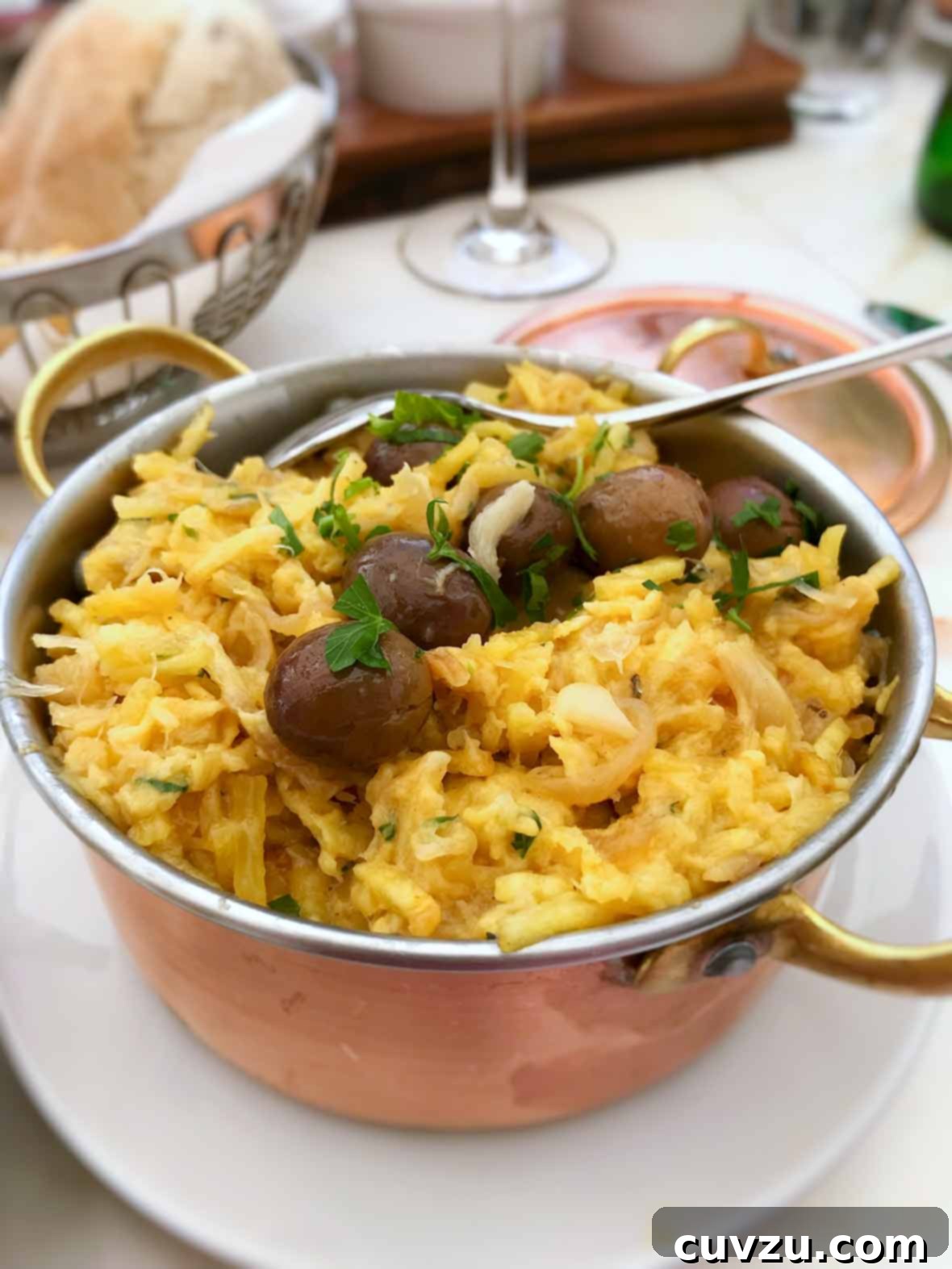
Bacalhau a Brás–scrambled eggs, salt cod, potatoes, onions, and olives
Salt cod plays such an important role in the lives of all Portuguese that it’s said we have 365 recipes for bacalhau—one for each day of the year.
The Revered Role of Pork in Azorean Gastronomy
While salt cod’s importance is easily understood for islanders, the prominence of pork may initially seem like an unusual staple on tranquil volcanic islands tucked away in the vastness of the sea. In the Azores, cattle were traditionally more valued for their dairy products—milk and cheese—than for their beef. This economic reality meant that milk and its myriad delicious derivatives served as an unending source of both sustenance and income for many families. Consequently, pork, quite literally “the other meat,” ascended to a position of preeminence in the Azorean diet and culture. Its versatility, ability to be preserved, and rich flavor made it an indispensable part of their culinary heritage.
Pork is so deeply prized that every year, around the Christmas season, families joyously partake in a two- to three-day celebration known as a matança de porco, or pig slaughter. This is more than just a culinary event; it’s a profound social and cultural ritual that reinforces community bonds and celebrates the bounty of the harvest. On the first day of the matança, the family pig is ceremoniously slaughtered and meticulously cleaned, then proudly hung from the ceiling of the home for all to admire. That evening, friends, neighbors, and extended family gather to witness what Deolinda Avila describes as “proof of [the family’s] accomplishments”—a symbol of their hard work and provision. This communal viewing is accompanied by a simple yet abundant spread of food and drink, all set to the joyful sounds of singing and dancing, creating an atmosphere of festive camaraderie.
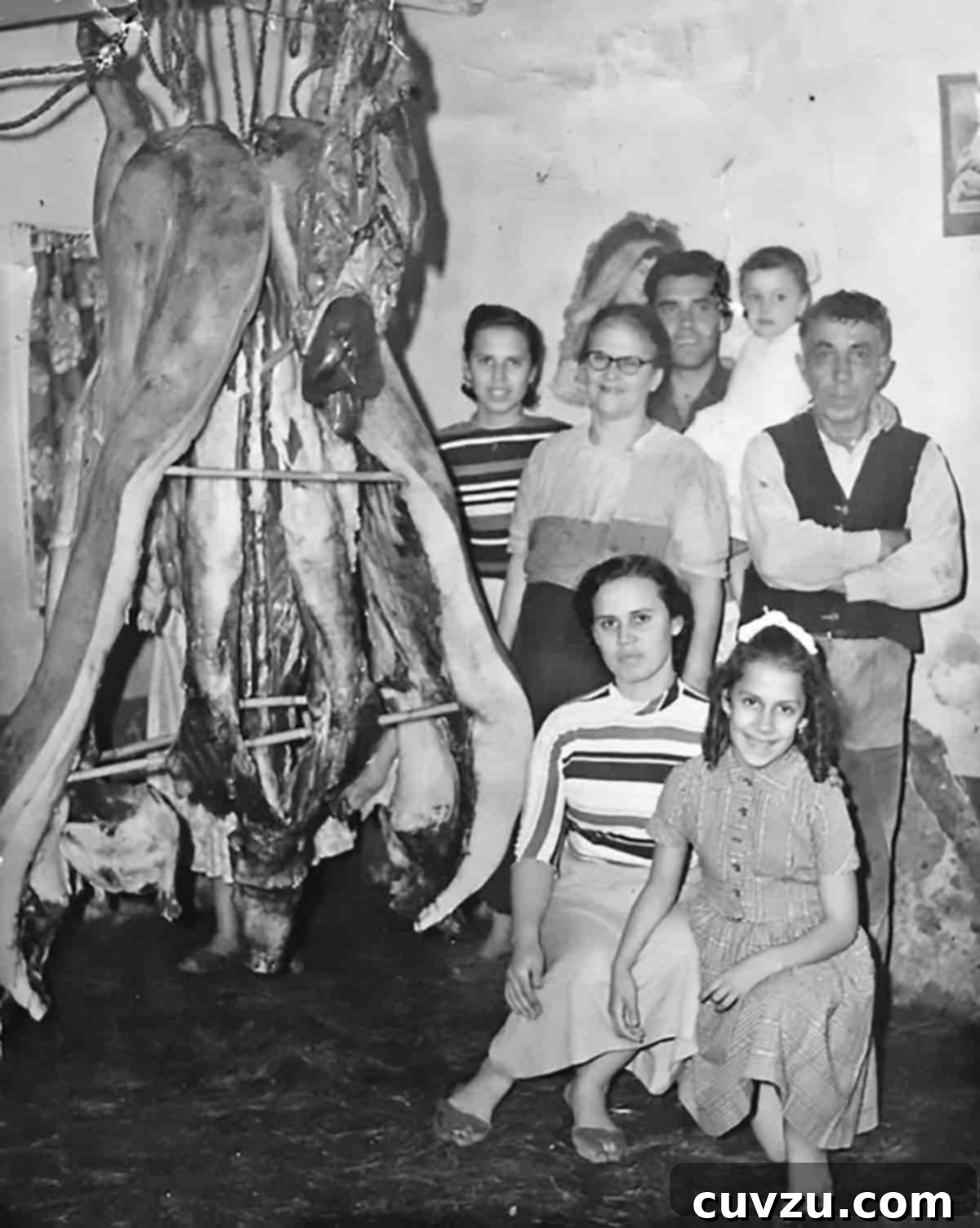
The subsequent days of the matança are diligently dedicated to butchering the pig with expert precision, transforming its various cuts into the famous linguiça and chouriço sausages, and carefully preparing other portions for winter meals. In keeping with the ingrained Azorean principle of frugality, absolutely no part of the pig is wasted. Even the organ meats, often overlooked in other cuisines, are pressed into resourceful service, becoming essential ingredients in hearty stews, traditional cozidos (boiled dinners), and comforting soups, ensuring that every morsel contributes to the family’s sustenance throughout the colder months.
The Sweet Indulgence of Azorean Desserts
While salt cod and pork are undeniably characteristic of Azorean cuisine, what truly defines its unique character for many are the desserts—often intensely eggy and wonderfully, almost toothachingly, sweet. This profound preference for rich, sugary, egg-based sweets is a lasting legacy of the Moors, who introduced these flavors to the Iberian Peninsula centuries ago. The Azoreans, with their inventive spirit, quickly adopted and perfected various ingenious ways to utilize both the whole egg, including the whites and the yolks, transforming them into an astonishing array of delectable treats.

Pastéis (queijadas) de coco | Coconut pastries
While the Moors may have introduced the concept of eggy sweets, the veritable addiction to these delightful treats in the Azores can be squarely attributed to the islands’ resourceful nuns. During the 17th and 18th centuries, these holy sisters, cloistered within their convent walls, dedicated their days to perfecting an exquisite range of confections. Their culinary efforts served a dual purpose: earning essential income for their convents, and inadvertently, enriching the Azorean dessert landscape with playfully named delights. Among these whimsical creations were olhos de sogra (mother-in-law’s eyes), airy suspiros (sighs), and the charmingly named barrigas de freiras (nuns’ bellies). Each dessert, crafted with precision and devotion, tells a story of ingenuity, tradition, and the sweet ingenuity of a people making the most of what was available.
Ultimately, every cuisine is a profound reflection of its physical and cultural environment. The hearty fare of the Azores, born from volcanic soil, salt-kissed air, peasant ingenuity, and ingrained thrift, may not always dazzle with extravagant presentation, but it deeply comforts with its authenticity and robust flavors. It is a cuisine that speaks of resilience, community, and the profound connection to home. Some believe that this unique Azorean comfort food even helps to assuage the powerful feeling of saudade, that distinct and often melancholic longing to belong or for something lost, which every Portuguese person is said to feel—regardless of whether they reside on a secluded, beautiful corner of the Azores or far across the globe, forever tied to the enigmatic charm of their ancestral islands.