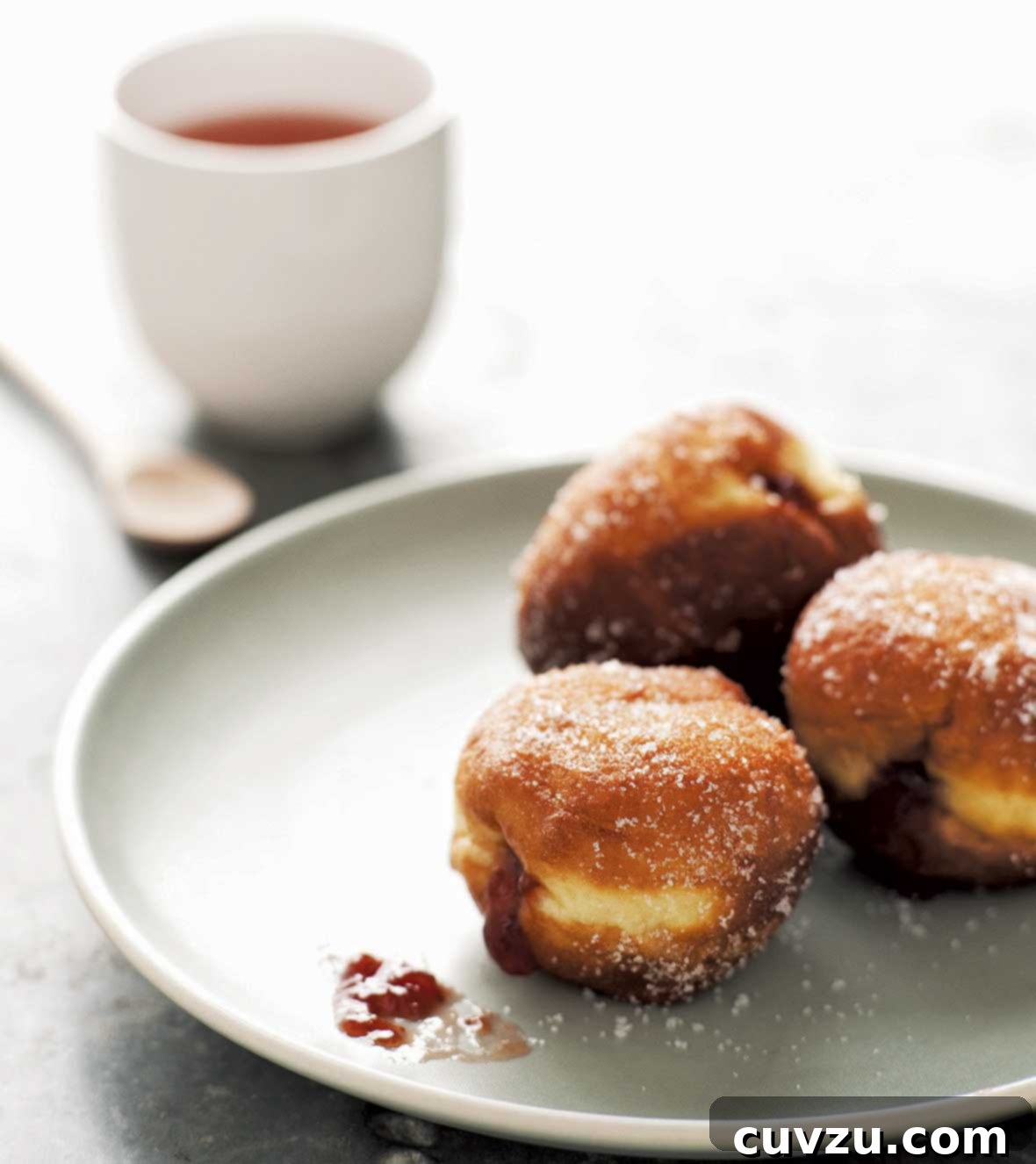
Berliners, also affectionately known as jelly doughnuts, are a beloved European classic, distinct from their American jelly-filled counterparts primarily by their delicate texture and a subtly less sweet dough. These irresistible fried pastries traditionally feature a vibrant raspberry jam filling and hail from Germany, where they are a staple in virtually every bakery. Best enjoyed hot and fresh from the fryer, Berliners offer a delightful blend of yeasty richness and fruity sweetness that captivates taste buds worldwide.
Delving into the world of German baking reveals the nuanced charm of the Berliner. As culinary expert Daniel Leader notes, these doughnuts are almost identical to American jelly doughnuts in concept but are crafted from a leaner and less sweet dough. This results in a cleaner, more pronounced flavor profile that allows the quality of the jam to truly shine through. When preparing these authentic Berliner doughnuts at home, Leader highly recommends using either your finest homemade preserves or the best-quality local jam available. For a seamless filling experience, especially with super chunky preserves, he suggests puréeing the jam in a food processor to ensure it passes effortlessly through a pastry bag tip and into the heart of the doughnut. This attention to detail ensures a gourmet experience with every bite.
The history of the Berliner is as rich and delightful as the pastry itself. Known by various names across Germany—such as “Pfannkuchen” in Berlin and the surrounding eastern regions, or “Krapfen” in southern Germany and Austria—these filled doughnuts have been a part of festive celebrations for centuries. Traditionally enjoyed during Carnival (Fasching) and New Year’s Eve, they symbolize good fortune and indulgence. The infamous “Ich bin ein Berliner” quote by John F. Kennedy, though a grammatical curiosity to Germans, further cemented the pastry’s place in popular culture. Unlike some heavier European fried dough varieties, the Berliner boasts a light, airy interior, making it a truly exceptional sweet treat.
Embrace Your Inner Pastry Chef: Filling Beyond Raspberry Jam
While raspberry jam stands as the quintessential filling for these fried masterpieces, the beauty of homemade Berliners lies in the freedom to experiment. We understand the allure of tradition, but we’re equally enthusiastic about exploring new flavor horizons. Imagine the tantalizing possibilities: our knee-wobblingly sweet-tart rhubarb jam could offer a delightful tang, or perhaps a seasonally summery apricot jam for a touch of sunshine. For those who crave a bolder taste, a puckery blood orange marmalade would add a sophisticated citrus note. Truly, the only requirement for a preserve to be deemed fit for these glorious Berliners is your personal desire to have that jelly in your belly!
Don’t stop at fruit preserves. Consider other delicious fillings to elevate your Berliner experience. A smooth lemon curd could add a bright, zesty contrast to the rich dough. Rich chocolate ganache or even a creamy vanilla pastry cream can transform these humble doughnuts into decadent desserts. For a unique twist, try fillings like apple butter, pumpkin butter, or even a spiced pear compote. The key is to ensure the filling is smooth enough to pipe easily and complements the delicate flavor of the dough.
The Craft of Berliner Making: A Step-by-Step Guide
Creating perfect Berliners at home is a rewarding culinary journey that combines simple ingredients with precise techniques. The foundation of an exceptional Berliner is its dough – light, pliable, and just sweet enough. The mixing process is crucial; a stand mixer fitted with a paddle attachment works wonders in bringing together the flour, sugar, yeast, salt, milk, butter, eggs, egg yolks, lemon zest, and vanilla. Mix on low speed for 8 to 10 minutes until the dough is smooth and elastic. This ensures proper gluten development, which is vital for that signature airy texture. Don’t be afraid to add a touch more flour if necessary to achieve a manageable, smooth dough. Remember, this dough is intentionally looser than typical bread doughs, contributing to its tender crumb.
Once mixed, transfer the dough to a lightly oiled bowl, cover it with plastic wrap, and let it proof at room temperature until it doubles in size, typically around 1 hour. This first rise allows the yeast to work its magic, developing flavor and volume. For shaping, line a rimmed baking sheet with parchment or waxed paper and lightly brush it with oil. Turn the risen dough onto a lightly floured countertop and divide it into 16 equal pieces. While it might be tempting to create larger doughnuts, resist this urge; smaller, uniform pieces (about 2 ounces each) fry more evenly, ensuring the inside cooks thoroughly without the outside becoming overdone. Shape each piece into a round, then gently flatten it between your palms. Place each round, seam side down, on the oiled paper. Allow them to undergo a second proof, uncovered, at room temperature until they double in size again, another hour or so. This second rise is paramount for achieving exceptionally light and fluffy doughnuts.
Frying for Perfection: Achieving the Golden Glow
Deep frying is where the magic truly happens, transforming proofed dough into golden-brown Berliners. Select a deep pot and pour in enough vegetable oil to reach a depth of 3 inches. A candy or deep-fry thermometer is your indispensable companion here, as maintaining a precise oil temperature of 350°F (177°C) is key to success. Too cool, and your doughnuts will absorb excessive oil, becoming greasy; too hot, and they’ll brown too quickly on the outside while remaining raw in the center. Line a large platter or baking sheet with several layers of paper towels to drain the fried pastries, and prepare a plate or a large brown paper bag with granulated sugar for coating.
Carefully place a few doughnuts into the hot oil, taking care not to overcrowd the pot. Frying in batches ensures the oil temperature doesn’t drop too drastically. Fry until golden brown on one side, typically about 1 minute, then carefully turn and continue frying until the other side is equally golden, usually 1 to 2 minutes more. A tell-tale sign of a perfectly fried Berliner is a distinct line of light-colored dough around its perimeter – this “soft spot” is precisely where you’ll insert your pastry bag tip for filling. As soon as the Berliners are cooked, drain them briefly on paper towels, then immediately roll them in the granulated sugar while they’re still hot. The heat helps the sugar adhere beautifully, creating a sparkling, sweet crust. Continue with the remaining dough, diligently monitoring and adjusting the oil temperature to maintain that steady 350°F (177°C).
More Amazing Breakfast Recipes
Homemade Pop Tarts
1 hr 35 mins
Griddle Cakes
45 mins
Homemade Muesli
10 mins
Akuri Masala ~ Parsi-Style Scrambled Eggs
30 mins
Berliners | Jelly Doughnuts
David Leite
Equipment
-
Candy or deep-fry thermometer (essential for precise oil temperature control), pastry bag fitted with a large plain tip (for easy jam filling)
Ingredients
- 4 cups unbleached all-purpose flour, plus more for the work surface (ensure flour is fresh for best results)
- 1/3 cup granulated sugar, plus more for coating the fried doughnuts
- 1 tablespoon plus 1 1/2 teaspoons instant yeast (ensure yeast is fresh and active for proper rising)
- 3/4 teaspoon fine sea salt or kosher salt (balances the sweetness and enhances flavor)
- 1 cup room-temperature milk , (70°F to 78°F/20°C to 26°C – ideal temperature for activating yeast)
- 5 tablespoons unsalted butter, at room temperature, beaten (contributes to the dough’s richness and texture)
- 2 large eggs (adds moisture and helps bind the dough)
- 2 large egg yolks (enriches the dough and contributes to a tender crumb)
- 1 teaspoon freshly grated lemon zest, preferably organic (adds a bright, traditional German flavor)
- 2 teaspoons vanilla extract (enhances the overall sweetness and aroma)
- Vegetable oil, for the bowl, the baking sheet, and for frying (use a neutral oil like canola or sunflower)
- 6 tablespoons raspberry jam (or your preferred jam, puréed if chunky)
Instructions
-
Combine the flour, sugar, yeast, salt, milk, butter, eggs, egg yolks, lemon zest, and vanilla in the bowl of a standing mixer fitted with the paddle attachment. (A paddle attachment is preferred for this looser batter over a dough hook). Mix on low speed until the ingredients are well combined and form a smooth, elastic dough, about 8 to 10 minutes. The dough should pull away from the sides of the bowl. If it seems too sticky, add a touch more flour, a teaspoon at a time, until the desired consistency is reached.
-
Carefully transfer the dough into a lightly oiled bowl. Cover the bowl securely with plastic wrap or a clean kitchen towel. Allow the dough to proof at room temperature until it has visibly doubled in size, which typically takes about 1 hour. This first rise is crucial for developing the dough’s flavor and texture.
-
Prepare for the second proof by lining a rimmed baking sheet with parchment paper or waxed paper, then lightly brush the paper with vegetable oil. Turn the risen dough onto a lightly floured countertop. Divide the dough into 16 equal pieces. To ensure even frying, resist the temptation to make larger doughnuts, as they can be tricky to cook through properly without over-browning the exterior. Shape each piece into a neat round, then gently flatten it slightly between the palms of your hands. Place each round, with the seam side facing down, onto the prepared oiled paper. Let these shaped doughnuts stand, uncovered, at room temperature until they have doubled in size again, approximately 1 hour. This second proof is essential for light, airy Berliners.
-
Prepare your frying station. Pour enough vegetable oil into a deep, heavy-bottomed pot to achieve a depth of 3 inches. Attach a candy or deep-fry thermometer to the side of the pot. Heat the oil over medium heat, monitoring the thermometer closely until it registers a consistent 350°F (177°C). While the oil heats, prepare a draining area by lining a large platter or baking sheet with several layers of paper towels. Additionally, pour a generous amount of granulated sugar onto a separate plate or into a large brown paper bag for coating the hot doughnuts.
-
Carefully place a few of the proofed doughnuts into the hot oil, ensuring not to overcrowd the pot. Frying in small batches helps maintain a consistent oil temperature. Fry each batch until the doughnuts are a beautiful golden brown on one side, which should take about 1 minute. Using tongs or a slotted spoon, gently turn them over and continue to fry until the other side is also golden, approximately 1 to 2 minutes more. Don’t be concerned if you notice a distinct line of light-colored dough around the perimeter of each Berliner; this is the characteristic “soft spot” where you will later insert the pastry bag tip to pipe in the jam. Once fried, immediately transfer the cooked Berliners to the prepared paper towels to drain excess oil. While still hot, roll the drained doughnuts generously in the granulated sugar, ensuring a thorough coating. Repeat this process with the remaining dough, constantly checking the thermometer and adjusting the heat as necessary to keep the oil temperature steadily at 350°F (177°C) for optimal results.
-
To fill the still-warm Berliners, transfer your chosen jam to a bowl and stir it thoroughly to ensure it is smooth and free of any lumps. If your jam is particularly chunky, puréeing it in a food processor will facilitate easier piping. Scrape the smooth jam into a pastry bag fitted with a large plain tip. Locate the “soft spot” on each Berliner and carefully insert the tip of the pastry bag. Gently squeeze to pipe about 1 teaspoon of jam into the center of each doughnut. The Berliner will subtly puff up as it fills. Serve these exquisite, jam-filled delights immediately to enjoy them at their absolute best. (As if you could resist them once they’re ready!)

Adapted From
Simply Great Breads
Buy On Amazon
Explore More with AI
Nutrition
Nutrition information is automatically calculated, so should only be used as an approximation.
Recipe Testers’ Reviews
Gene C.
Let me just say that I love jelly doughnuts. To have the ability to make them at home was just too good to pass up. Looking for a recipe that’s easy and not a lot of work? This is the one.
I followed it exactly and was able to make 14 of the best jelly doughnuts I’ve ever had. These are almost a cross between a bread and doughnut, with more texture and flavor with a lot less air. I found them to have a denser consistency than most American doughnuts but at the same time I found them very appealing. I can easily see how these could be stuffed with any jam as long as it’s smooth in texture.
I served these to friends at a meeting and everyone asked where I bought them, saying “these are incredible.” I sprinkled confectioners’ sugar on top, but would experiment a little with different toppings such as melted chocolate or a glaze. These are best if eaten when they’re made, but can be stored in a covered container and reheated in the oven for a few minutes to restore them. I found they lasted 3 days—but after that they were gone. The thief—my son and taster—said they were “awesome.”
Larry Noak
These truly are the perfect jelly doughnuts. This recipe is indeed The One, so if, like me, you adore fried dough, look no further. These Berliners are so perfect that I don’t need any other fried dough recipes as these also make great doughnut holes.
I used heavy cream instead of milk and I filled the doughnuts with homemade jam. I’ll eventually fill these outrageously wonderful jelly doughnuts with confectioners’ cream and maybe some chocolate pudding. My only suggestion is to resist the temptation to make these doughnuts too large or you’ll run the risk of not having them cooked through in the center. Finally, as you fill them, you’ll feel them puff up. Pull the tip out slowly while still pushing the jelly in.
Jo Ann Brown
I love jelly doughnuts. Yes, I do. It’s one of those food stuffs, like fried chicken, that’s defined by—and often defines—a region. I was drawn to this recipe because I needed to know what a German-style Berliner doughnut tasted like. I just had to. I realized Berliners must be the father of our American jelly doughnuts. These doughnuts are fluffy, not too sweet, and won-der-ful. The only difference I could detect in the German version was the wonderful permeation of the lemon zest, which is—holy Toledo—the bomb.
Some testing notes: Watch that oil temperature, ladies and gents. It will skyrocket if you don’t manage it carefully. Be patient and know when to wait for the oil to cool back to the proper temperature before continuing. I’d use a low flame to maintain the temperature while the doughnuts bob around. I’d also cook them a little darker then golden brown, just to make sure the center is cooked seeing as I got a raw one in my first batch. The size of the doughnut from this recipe is comparable to an American portion, more then three bites. Depending on your mood, you might want to increase the yield and make smaller ones. I personally like a two-big-biter. Enjoy!