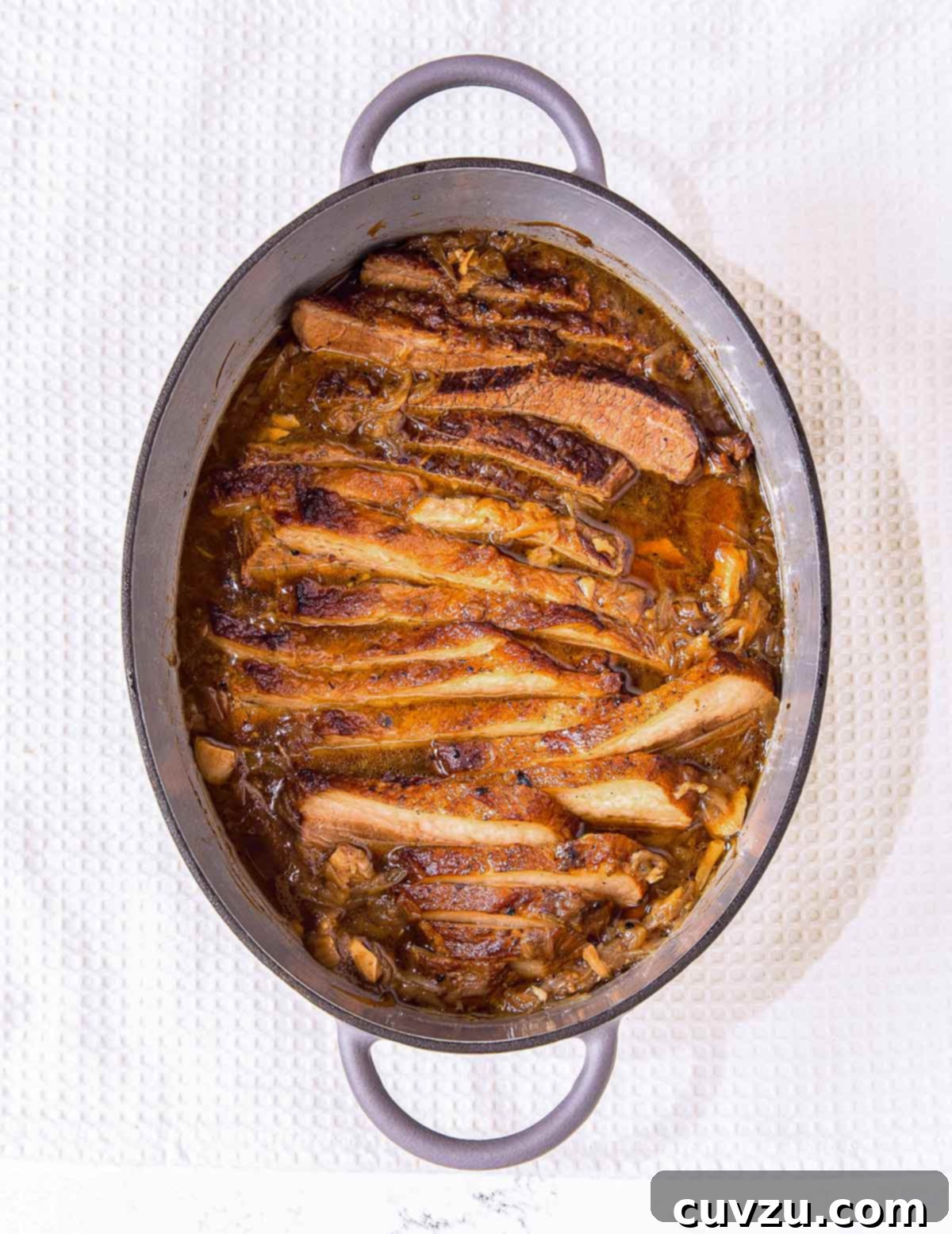
The Ultimate French Onion Brisket: A Rich & Tender Braise
Experience a culinary masterpiece with this French onion brisket recipe, where the deep, savory notes of perfectly caramelized onions and garlic meet the exquisite flavor of apple brandy. This magnificent dish is slowly braised to achieve unparalleled tenderness, creating a rich and unforgettable centerpiece for any special occasion or a comforting family meal.
Discovering the Magic of French Onion Brisket
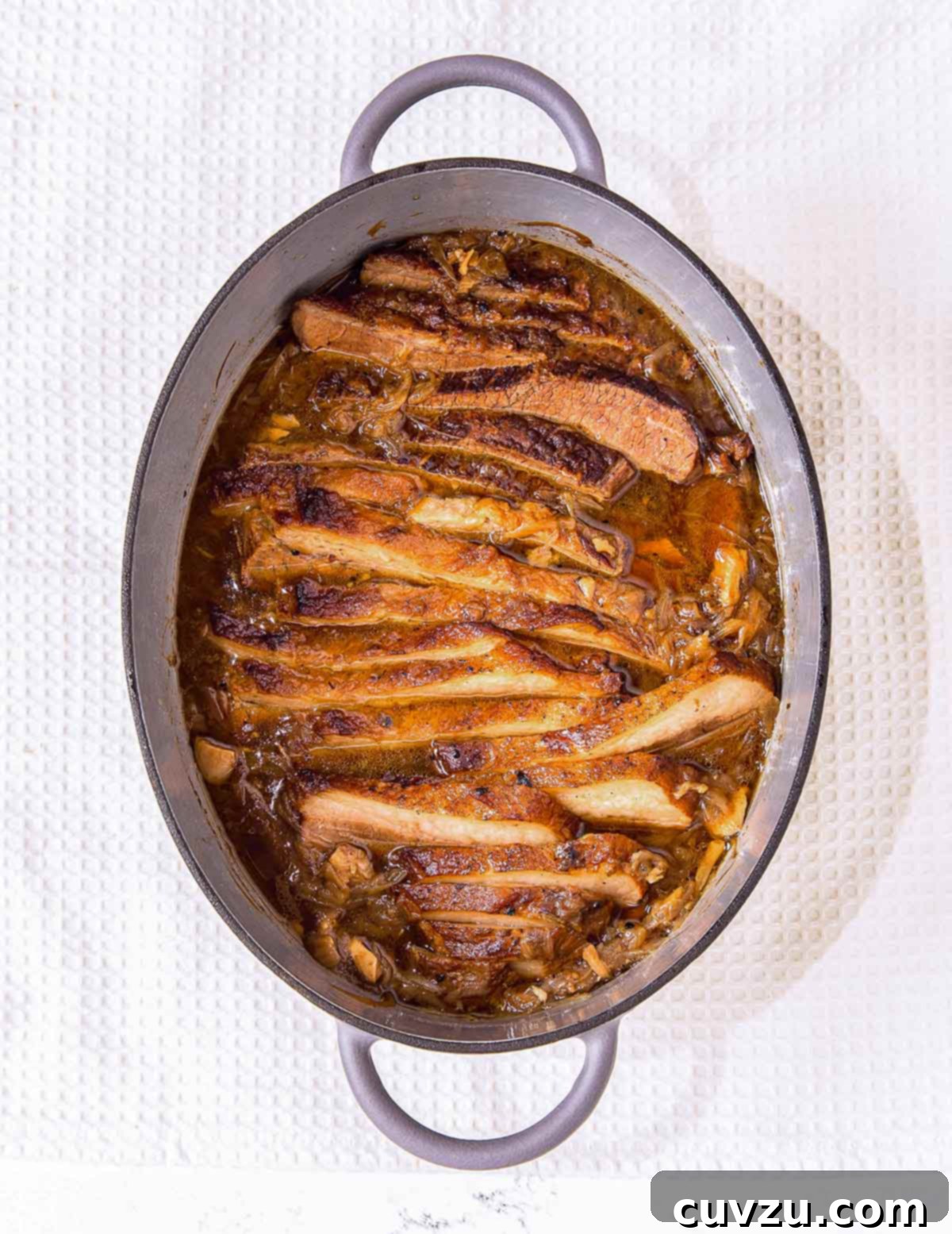
When you think of a classic braised brisket, many traditional recipes lean on a robust, tomato-based sauce, delivering a familiar tang and sweetness. However, this French onion brisket dares to defy tradition, offering an equally compelling, yet distinctly different, flavor profile. Inspired by the comforting depths of French onion soup, this recipe elevates the humble brisket to an extraordinary level through the power of caramelization and judicious use of spirits.
The magic begins with an abundance of sweet onions, slowly cooked until they transform into a jammy, golden-brown confit, releasing incredible natural sugars and complex savory notes. This lengthy caramelization process is the cornerstone of the dish, laying down a profound flavor base that forms the heart of the braising liquid. Coupled with aromatic garlic and a splash of apple brandy or dry sherry, the resulting sauce is a symphony of sweet, savory, and subtly acidic notes, perfectly balancing the richness of the beef.
From Tomato Traditionalist to Brisket Innovator: Jake Cohen’s Culinary Journey
For many, holiday feasts often revolve around time-honored family recipes passed down through generations. Culinary author Jake Cohen, accustomed to a household where tomato-braised dishes were practically sacred, embarked on a mission to reinterpret the classic brisket. He understood that while tomatoes offer a wonderful crimson depth, there was an entire spectrum of flavors waiting to be explored for this beloved cut of meat. His bold venture led to the creation of this groundbreaking French Onion Brisket.
Cohen realized that the inherent sweetness and umami developed from slow-cooked onions could provide a similar, if not more profound, sweetness than tomatoes. He piled in “tons and tons” of sweet onions, meticulously caramelizing them to draw out their deepest flavors. To cut through the opulent richness of the brisket, a generous “glug” of sherry wine was introduced, providing the essential acidity that brightens the entire dish and prevents it from becoming overly heavy. This ingenious combination proved to be a revelation, successfully converting even the most devout tomato purists in his family, solidifying its place as a new, cherished holiday centerpiece.
French Onion Brisket
Rated 4.67 out of 5 stars by 6 users
This recipe takes a creative approach to brisket, drawing inspiration from the classic French onion soup. It features a rich braising liquid of deeply caramelized onions and garlic, artfully deglazed with apple brandy or dry sherry, resulting in an exceptionally tender and flavorful dish.
Recipe by David Leite
Ingredients
- 1 (5 to 6 pound) beef brisket, fat cap intact
- Kosher salt and freshly ground black pepper
- 3 tablespoons mild vegetable oil
- 5 large (about 2 1/2 lbs) sweet onions, thinly sliced
- 12 garlic cloves, smashed and peeled
- 1 cup Calvados or dry sherry
- 3 cups canned chicken broth or homemade chicken stock
- 6 sprigs fresh thyme
- 4 sprigs fresh sage
Instructions
- Prepare Oven: Preheat your oven to 325°F (165°C).
- Sear Brisket: Generously season all sides of the beef brisket with two heavy pinches each of kosher salt and freshly ground black pepper. In a large, heavy Dutch oven or oven-safe pot, warm the vegetable oil over medium-high heat. Carefully add the seasoned brisket to the hot oil and sear until it achieves a beautiful golden-brown crust on all sides. This usually takes about 15 to 20 minutes, turning it occasionally. Once browned, transfer the brisket to a platter and set aside.
- Caramelize Onions & Garlic: Reduce the heat to medium. Add the thinly sliced sweet onions and smashed garlic cloves to the same Dutch oven, scraping up any browned bits from the bottom of the pot. Cook, stirring frequently, for 20 to 25 minutes, or until the onions are thoroughly softened and begin to caramelize, turning a light golden color.
- Deglaze the Pot: Pour in the Calvados or dry sherry. Using a wooden spoon, stir continuously for about 1 minute, ensuring you scrape up all the delicious browned bits (fond) stuck to the bottom of the pot. This step is crucial for building deep flavor.
- Add Liquid and Brisket: Stir in the chicken broth or stock, along with another two heavy pinches each of salt and pepper. Return the seared brisket to the Dutch oven, nestling it into the onion mixture.
- Introduce Herbs: Gather the fresh thyme and sage sprigs and tie them together with a small piece of butcher’s twine. This optional step makes removing the herbs after cooking much easier. Place the herb bundle directly into the braising liquid.
- Braise until Tender: Bring the liquid in the Dutch oven to a gentle simmer on the stovetop. Once simmering, cover the Dutch oven tightly with its lid and transfer it to the preheated oven. Cook until the brisket is incredibly tender and can be easily pierced with a fork, which typically takes approximately 3 1/2 hours.
- Cool & Refrigerate: Carefully remove the Dutch oven from the oven. Allow the brisket and its sauce to cool completely at room temperature. Once cooled, cover and refrigerate overnight. This step allows the flavors to meld and makes slicing the brisket much easier.
- Prepare for Serving: The next day, remove the Dutch oven from the refrigerator. If desired, skim off and discard any solidified fat that has risen to the surface. Discard the spent herb bundle. Transfer the chilled brisket to a clean cutting board. Using a sharp knife, slice the brisket thinly, about 1/4-inch (6-mm) thick, cutting against the grain (perpendicular to the muscle fibers).
- Reheat & Serve: Return the sliced meat to the rich onion sauce in the Dutch oven. Gently heat over medium heat on the stovetop, stirring occasionally, until the brisket and sauce are warmed through.
- Adjust Seasoning: Taste the sauce and adjust the seasoning with additional salt and pepper as needed. Serve hot and enjoy!
Pro Tip for Reheating: While warming the meat, make sure to gently nudge the brisket and stir the sauce occasionally. This prevents the onions from sticking and potentially burning on the bottom of your Dutch oven, ensuring a perfectly reheated meal.

Adapted From
Jew-ish by Jake Cohen
Buy On Amazon
Nutrition
Calories: 425 kcal
Carbohydrates: 11 g
Protein: 50 g
Fat: 17 g
Saturated Fat: 6 g
Monounsaturated Fat: 8 g
Cholesterol: 141 mg
Sodium: 211 mg
Fiber: 1 g
Sugar: 6 g
Nutrition information is automatically calculated and should be used as an approximation. Individual results may vary based on exact ingredients and preparation methods.
The Culinary Secret: What to Do with Leftover Brisket & Its Incredible Sauce
One of the hidden gems of this French onion brisket recipe isn’t just the tender meat, but the luscious braising liquid it creates. According to Jake Cohen himself, this flavorful elixir is far too precious to discard. He famously refers to it as the “king of pasta sauces,” claiming it’s superior to any ragù or Sunday gravy you could ever imagine. This rich, savory liquid, infused with the essence of caramelized onions, garlic, sherry, and beef, transforms humble pasta into an extraordinary meal.
To recreate Jake’s pasta masterpiece, simply save all the leftover braising liquid, including any small, fallen-apart bits of meat. When you’re ready to enjoy, cook your favorite pasta – rotini is Jake’s go-to for its ability to capture the sauce – until it’s just shy of al dente. Drain the pasta, then transfer it directly into a simmering pot containing a few cups of the leftover braising liquid. Allow the pasta to finish cooking in the sauce, stirring occasionally, until the liquid reduces down and perfectly coats each noodle. For an extra touch of indulgence, finish with a generous shower of freshly grated Parmesan cheese. This method ensures every strand of pasta is imbued with the incredible, complex flavors of the brisket sauce.
Beyond pasta, the leftover brisket itself is incredibly versatile. Thinly sliced, it makes for an exceptional sandwich filler, perhaps topped with some melted Gruyère cheese for a true French onion experience. You can also shred it for hearty tacos or burritos, chop it into a flavorful hash with roasted potatoes for breakfast, or even incorporate it into savory pies or empanadas. The rich, tender meat, combined with the concentrated flavors of the braising liquid, ensures that leftovers are just as exciting as the initial meal, if not more so.
Why You’ll Love This Braised Brisket: Insights from Recipe Testers
The true test of any recipe lies in the kitchen, and this French Onion Brisket has garnered enthusiastic praise from our recipe testers, highlighting its exceptional qualities as both a comforting and impressive dish.

Jack V.
Jack V. found that making this French Onion Brisket was a nostalgic journey, transporting him back to his grandmother’s house, where the seductive aroma of slow-cooked beef was a prelude to comforting family dinners. He emphasizes how this dish is a testament to the transformative power of braising: with simple ingredients (albeit many onions!) and a bit of time, something humble becomes truly memorable. The result was a “pot full of love and comfort,” featuring meltingly-tender beef and luscious, jammy onions, perfect for a cool evening. Served with buttermilk mashed potatoes and green beans, it was such a hit that even experienced brisket makers in his neighborhood requested the recipe to replace their own family favorites, a true endorsement of its exceptional quality.

April C.
April C., a first-time brisket preparer, embraced this recipe after acquiring a butchered cow. She notes that while it’s a two-day recipe due to the essential overnight refrigeration, it’s far from complicated. The delicious, savory aroma filling the kitchen on the first day serves as a tantalizing promise of the feast to come. April strongly recommends using real sherry over cooking sherry and opting for homemade or low-sodium store-bought broth, as the recipe is already seasoned well. She found that tying the herbs was optional, as their flavors were perfectly prevalent without being overpowering in the finished dish. April served her delicious brisket with bread and celery stuffing and green beans, confirming its delicious outcome and approachable nature even for novice brisket cooks.
Tips for Brisket Braising Success
Achieving a perfectly tender and flavorful French Onion Brisket requires a few key techniques. Follow these expert tips to ensure your braise is a resounding success every time:
- Choose the Right Cut: Start with a high-quality beef brisket, ideally with the fat cap intact. The fat renders slowly during braising, adding moisture and flavor to the meat and sauce.
- Don’t Rush the Sear: A deep, golden-brown crust on the brisket before braising is crucial. This step, known as the Maillard reaction, creates complex, savory flavors that form the foundation of your dish. Take your time to achieve a good sear on all sides.
- Perfect Caramelization: The onions are the star here. Don’t underestimate the time it takes to properly caramelize them. Cooking them slowly over medium heat until they are deeply golden and jammy will build incredible sweetness and depth in your braising liquid.
- Deglaze Thoroughly: After searing the brisket and caramelizing the onions, deglazing the pot with Calvados or sherry is vital. Use a wooden spoon to scrape up all the flavorful browned bits (fond) from the bottom. These bits are packed with concentrated flavor that will enrich your sauce.
- Low and Slow is Key: Brisket is a tough cut that requires long, slow cooking at a moderate temperature to break down its connective tissues and become fork-tender. Resist the urge to rush the braising process.
- Overnight Refrigeration: While it requires patience, refrigerating the brisket overnight after cooking is a game-changer. It allows the flavors to deepen and meld, and perhaps more importantly, makes slicing the brisket against the grain much easier and yields cleaner slices. Plus, any excess fat will solidify, making it simple to skim off if desired.
- Cutting Against the Grain: When slicing the cooked brisket, always cut against the grain. This shortens the muscle fibers, resulting in a significantly more tender bite. Look for the lines of the muscle fibers and slice perpendicular to them.
Share Your Culinary Creation!
We love seeing your kitchen triumphs! If you’ve tried this incredible French Onion Brisket recipe, share your photos and experiences with us on social media. Mention @leitesculinaria or use the hashtag #leitesculinaria. Your culinary adventures inspire us and the entire cooking community!