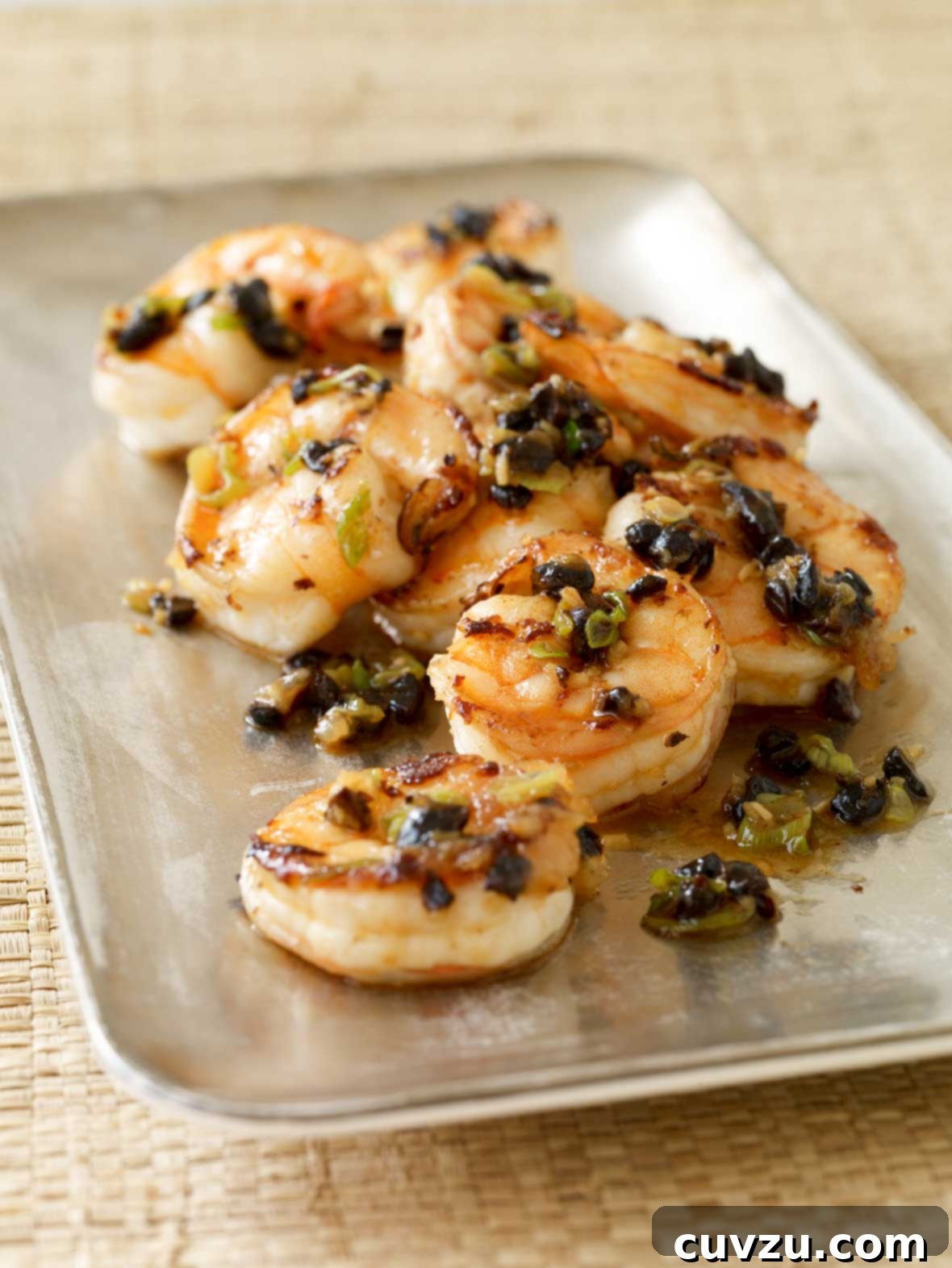
Embark on a culinary journey with this exceptional Shrimp with Black Beans dish. It’s not just a meal; it’s an experience—a vibrant fusion of flavors that comes together so swiftly, it’s perfect for any spontaneous craving. Imagine plump, succulent shrimp enveloped in a rich, aromatic sauce crafted from the timeless combination of scallions, pungent ginger, fragrant garlic, and the deep, savory complexity of fermented black beans. This is a dish that speaks volumes with its bold taste profile, promising to delight your palate with every tender bite.
This beloved creation, often considered a comfort food in Chinese households, carries a unique charm. As noted by culinary expert Helen Chen, “This family-style dish is not usually served at banquets. It is not considered elegant enough because the dark sauce covers the coral-colored shrimp. At home, it is enjoyed with great relish.” This sentiment perfectly captures the essence of the dish: unpretentious, deeply satisfying, and designed for the shared joy of a home-cooked meal. While its visual appeal might not grace grand banquet tables, its robust flavors certainly earn it a permanent spot in the hearts and kitchens of those who cherish authentic Chinese cuisine.
Shrimp with Black Beans: A Quick & Flavorful Stir-Fry
Recipe by David Leite
Print Recipe
Main Dish
Chinese
3
to 4 people
274
kcal
10 minutes
5 minutes
15 minutes
Ingredients
-
1 teaspoon Chinese rice wine or dry sherry -
1 teaspoon cornstarch -
1 pound large shrimp, shelled and deveined -
3 tablespoons canola oil -
1 tablespoon thinly sliced scallions -
1 tablespoon minced peeled ginger -
1 garlic clove, crushed with the side of a knife and peeled -
3 tablespoons fermented black beans, coarsely chopped
Instructions
-
Prepare the Shrimp: In a medium bowl, whisk together the Chinese rice wine (or dry sherry) and cornstarch until smooth. Add the raw, shelled, and deveined shrimp to this mixture, ensuring each piece is well coated. This quick marinade helps to tenderize the shrimp and create a silky texture, a technique known as “velvetizing.”
-
Heat the Wok and Sauté Aromatics: Place a wok or large stir-fry pan over high heat. Add the canola oil and heat until it’s very hot but not yet smoking. You can test the oil’s readiness by dipping a small piece of shrimp into it; it should sizzle immediately. Add the thinly sliced scallions, minced ginger, crushed garlic, and coarsely chopped fermented black beans to the hot oil. Stir-fry for a few seconds until fragrant, being careful not to burn the garlic. The high heat is crucial for a proper stir-fry, creating a smoky “wok hei” flavor.
-
Stir-Fry the Shrimp: Give the shrimp mixture another quick stir to ensure the cornstarch hasn’t settled. Add the shrimp to the hot pan, spreading them out in a single layer as much as possible for even cooking. Immediately add 2 tablespoons of water. Cook, stirring constantly and vigorously, for only 2 to 3 minutes. The shrimp will quickly turn opaque and pink when cooked through. Overcooking will make them rubbery, so keep a close eye on them. Taste the sauce and add salt only if needed, as fermented black beans are naturally salty. Serve this delicious dish immediately, ideally over steamed rice.
The Magic of Fermented Black Beans
At the core of this incredible dish lies the humble yet powerful ingredient: fermented black beans, also known as Douchi. These small, wrinkled black soybeans are salted and fermented, developing an intensely savory, umami-rich flavor with hints of bitterness and a complex aroma. They are a cornerstone of Cantonese cooking, bringing depth and character to stir-fries, steamed dishes, and sauces. When sautéed with aromatics like ginger and garlic, they release their full spectrum of flavors, creating a robust base that beautifully complements seafood. It’s this distinctive ingredient that elevates the simple shrimp into a dish of profound culinary richness.
Pro Tips for a Perfect Stir-Fry
Achieving a restaurant-quality stir-fry at home is easier than you think with a few expert tricks.
- Wok Heat is Key: Ensure your wok or stir-fry pan is screaming hot before adding oil. This creates a non-stick surface and imparts the coveted “wok hei” or smoky aroma.
- Don’t Crowd the Pan: When adding the shrimp, try to spread them in a single layer. Overcrowding lowers the pan temperature, steaming the ingredients instead of stir-frying them, leading to a less desirable texture.
- The Art of Velvetizing: Marinating the shrimp in rice wine and cornstarch is a classic Chinese technique that tenderizes the protein and gives it a silky, smooth texture. It also helps the sauce cling better to the shrimp.
- Quick Brine for Juicier Shrimp: Recipe tester Melissa Maedgen suggests a quick brine. Fill a bowl with water, add a generous amount of salt (like pasta water), and let the shrimp sit for about 5 minutes. This quick bath ensures the shrimp remain juicy and succulent under high heat. Remember to pat them dry before marinating.
- Cook Fast, Serve Faster: Stir-frying is a rapid cooking method. Have all your ingredients prepped and ready before you start cooking. The actual cooking time for the shrimp is very short—just until opaque—to prevent them from becoming tough.
Ingredient Insights and Substitutions
Understanding your ingredients is vital for culinary success and adaptability.
- Shrimp: Opt for large, fresh shrimp, ideally wild-caught, for the best flavor and texture. If using frozen, thaw them completely and pat dry before marinating.
- Fermented Black Beans: These are available in most Asian grocery stores. Look for them in dried form, often in small plastic bags or tubs. They need to be coarsely chopped to release their flavor. If whole fermented black beans are truly unavailable, recipe tester Jack V. successfully substituted black bean sauce (the kind used for stir-fries, not a sweet bean paste) in a 1:1 quantity. Be aware that black bean sauce will tint the entire dish a darker color, differing from the lighter sauce shown in some images.
- Chinese Rice Wine (Shaoxing wine): This is essential for authentic flavor. If you can’t find it, dry sherry is an acceptable substitute. Do not use rice vinegar, as it is too acidic.
- Canola Oil: A neutral-flavored oil with a high smoke point is ideal for stir-frying. Vegetable oil or peanut oil also work well.
Serving Suggestions and Variations
This Shrimp with Black Beans dish is incredibly versatile and pairs wonderfully with a variety of sides. Serve it immediately over a bed of fluffy steamed white rice to soak up all the delicious sauce. For a more complete meal, consider adding some stir-fried bok choy or blanched broccoli on the side.
Feeling adventurous? Try these variations:
- Protein Swap: While shrimp is traditional, this sauce base works beautifully with other proteins. Cubed chicken breast or thigh, thinly sliced pork, or even firm tofu can be substituted. Adjust cooking times accordingly.
- Add Vegetables: Incorporate your favorite stir-fry vegetables like bell peppers, snap peas, mushrooms, or bamboo shoots. Add them after the aromatics and stir-fry until tender-crisp before adding the shrimp.
- Spice It Up: For a kick, add a pinch of red pepper flakes or a few slices of fresh bird’s eye chili along with the garlic and ginger.
Why This Cantonese Classic is a Home Favorite
Helen Chen’s observation perfectly encapsulates why Shrimp with Black Beans is a beloved family dish. Its strong, dark sauce, while perhaps lacking the delicate presentation preferred for formal banquets, is precisely what makes it so appealing for everyday enjoyment. The sauce is packed with flavor, designed to be spooned generously over rice, providing a comforting and deeply satisfying experience. It’s a dish that prioritizes robust taste and ease of preparation over elaborate aesthetics, making it a staple in countless Chinese homes where flavor and comfort reign supreme. The interplay of sweet shrimp and savory, pungent black beans creates a harmonious balance that is truly addictive.
Adapted From
Easy Chinese Stir-Fries
Buy On Amazon
Explore More with AI
Dietary Options
Substitutions
Scale Recipe
Summarize
Nutrition
Calories: 274 kcal
Carbohydrates: 5 g
Protein: 25 g
Fat: 17 g
Saturated Fat: 1 g
Monounsaturated Fat: 9 g
Trans Fat: 1 g
Cholesterol: 191 mg
Sodium: 1459 mg
Fiber: 2 g
Sugar: 1 g
Nutrition information is automatically calculated and should be used as an approximation only.
Tried this recipe?
Mention @leitesculinaria or tag #leitesculinaria!
What Our Recipe Testers Loved
Melissa Maedgen
“This delicious stir-fry is also ridiculously fast and easy. The recipe works perfectly as written. One tip I have to get the very best results is when you add the shrimp to the wok, don’t just dump it all in. Scatter the shrimp about the wok in a single layer. Let them sit still for a few seconds, then start stir-frying. I also like to very briefly brine the shrimp before stir-frying them. This only takes about 5 minutes, so it isn’t a big deal. Just fill a bowl with water, add some salt (I don’t measure, I just salt it like it’s pasta water), and let sit for 5 minutes or so. The exact time isn’t critical, but you don’t want to leave them for a long time in the brine. This quick bath helps ensure that the shrimp stay juicy and succulent when exposed to the high heat of the wok.”
Jack V.
“Fermented black beans are one of my favorite flavors so I was eager to make this and it didn’t disappoint with flavors that are both aggressive and well-balanced. The whole dish comes together so fast, it will beat any rice you try to serve it with. Try as I might, I couldn’t find whole fermented black beans so I substituted black bean sauce in 1=1 quantities, which worked great. The only difference is black bean sauce will tinge the entire dish black, so don’t expect it to look as light as the picture if you make that swap. Absolutely will make it again.”