The Ultimate Guide to Egg in a Hole: A Beloved Breakfast Classic
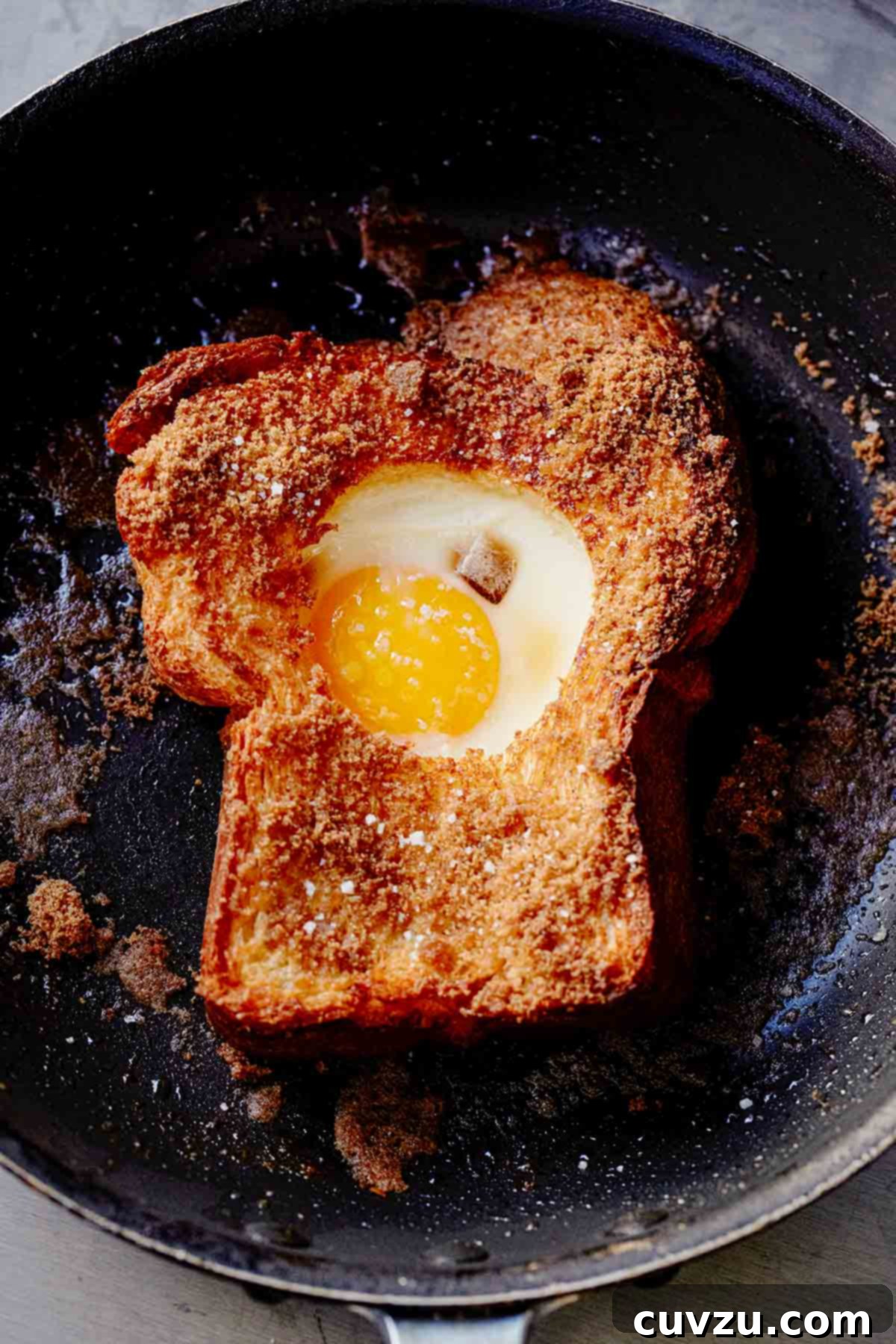
Sometimes, the simplest dishes are the most profound. Take the humble yet utterly satisfying Egg in a Hole. This iconic breakfast classic, known by many affectionate names, offers a perfect blend of a golden-toasted bread slice with a perfectly cooked egg nestled right in its center. A sprinkle of salt is customary, enhancing the egg’s natural flavor, but for a delightful surprise, a hint of brown sugar can elevate it to pure perfection. It’s more than just food; it’s a taste of nostalgia, a comforting start to any day, capable of bringing a smile to anyone’s face with its delightful simplicity and rich taste.
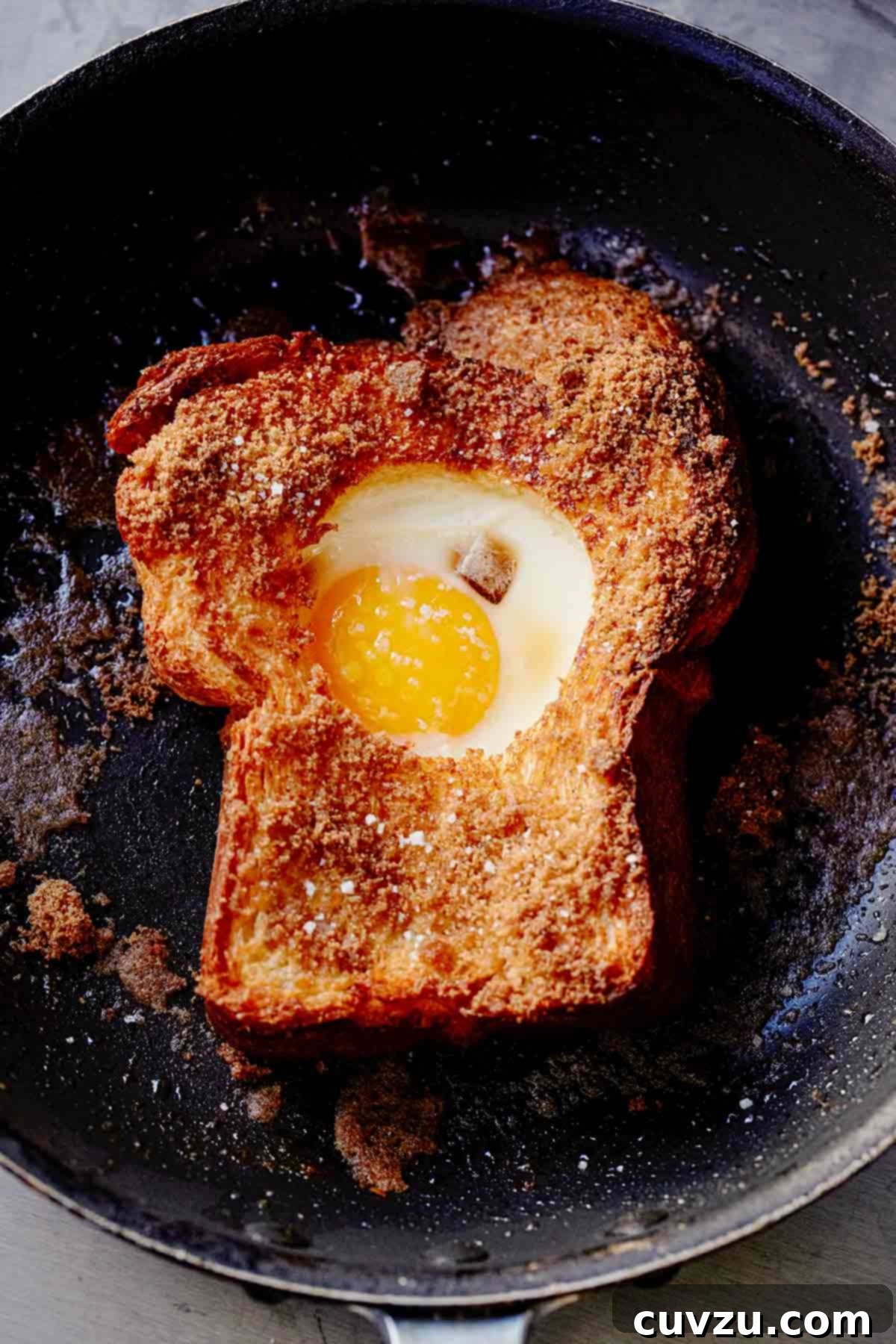
This particular recipe for Egg in a Hole holds a special place in my heart, prepared exactly the way my mom used to make it. It’s the same perfectly salty-sweet sandwich that nourished me through countless mornings, playing a significant role in shaping my palate and igniting my passion for food. There’s an undeniable magic in these basic ingredients – fresh bread, rich butter, a farm-fresh egg, and a touch of seasoning – that creates a truly soulful and memorable culinary experience. This isn’t just a recipe; it’s a legacy of warmth, comfort, and love passed down through generations, from my childhood kitchen to yours. –Zoe Nathan
The Many Names and Enduring Appeal of Egg in a Hole
You might be astonished at how deeply comforting and flavorful a simple combination of bread, butter, egg, and salt can be. If skepticism is your default setting when it comes to basic dishes, we strongly urge you to trust us on this one. Experiencing this quintessential childhood classic is truly believing. Its enduring popularity is not only evident in its universally appealing taste but also in the sheer number of unique names it has accumulated over generations across various cultures and households. What one family fondly calls “Egg in a Hole,” another might affectionately refer to as “Toad in a Hole,” evoking imagery of a small creature peeking out from its dwelling. Other popular monikers include “Birdie in a Basket,” “One-Eyed Jack,” “Gashouse Egg” (a term believed to originate from early 20th-century diners), “Egg Toast,” “Bull’s-Eye,” or even “Popeye Egg.”
It seems almost every household has its unique moniker for this beloved breakfast dish, a reflection of its widespread adoption and personal significance. This rich tapestry of names speaks volumes about the dish’s ability to transcend regional boundaries and culinary trends, becoming a deeply personal and cherished part of family breakfast traditions. We invite you to share in the comments below what you called this delightful meal growing up – a simple act that connects us all through shared culinary memories. Regardless of the specific name, the sentiment remains consistently heartwarming: whether it’s Mom, Dad, or a beloved grandparent, family cooks always seem to know best when it comes to crafting these comforting, timeless favorites.
Explore More Delicious Egg Recipes
If you’ve enjoyed the simplicity and deliciousness of Egg in a Hole, you’ll surely appreciate these other creative and flavorful egg-centric dishes from our collection. From hearty brunches to savory snacks, eggs offer endless culinary possibilities.
Eggs in Purgatory
40 mins
Coddled Eggs with Potato Puree
50 mins
Baked Eggs with Polenta and Mushrooms
50 mins
Cajun Pickled Eggs
14 d
Classic Egg in a Hole Recipe
Discover the ultimate comfort food with this incredibly quick and easy Egg in a Hole recipe. Perfect for breakfast, brunch, or a light meal any time of day, it promises a satisfying blend of crispy toast and a perfectly cooked egg.
Recipe by David Leite
Equipment Needed
- One 2- to 3-inch (5- to 8-cm) cookie or biscuit cutter (or a glass with a similar diameter)
- A large, ovenproof skillet
Ingredients
- 2 slices thickly cut white bread (or brioche for a richer flavor)
- 1 tablespoon unsalted butter, plus extra for buttering the bread cut-outs
- 2 large eggs
- 2 tablespoons brown sugar (optional, for a sweet version)
- Fleur de sel (coarse sea salt) or regular fine sea salt, for sprinkling
Step-by-Step Instructions
- Preheat your oven to 475°F (245°C). This ensures the oven is perfectly hot when the skillet goes in, helping to set the egg quickly while keeping the yolk runny.
- Using a 2- to 3-inch cookie or biscuit cutter, or the rim of an overturned glass, create a neat hole in the center of each slice of bread. Reserve the round bread cut-outs; they are a delicious bonus for dipping!
- Place a large ovenproof skillet over medium heat. Melt the unsalted butter until it’s bubbling and appears fragrant, but ensure it doesn’t brown too much. Add the prepared bread slices to the skillet and cook until the first side turns a beautiful golden brown, which typically takes about 1 to 2 minutes. While the bread toasts, don’t forget to also toss in the little round cut-outs to toast them alongside the main slices—they’re excellent for sopping up that irresistible runny yolk. Flip the main bread slices, then carefully crack one egg directly into the center of each hole. A slight overflow of egg white onto the surrounding bread is common and perfectly fine; it adds to the rustic charm. If you’re making the sweet version, quickly sprinkle each slice of bread with 1 tablespoon of brown sugar, taking care to avoid getting sugar directly on the egg yolk.
- Immediately transfer the skillet to your preheated oven. There is no need to flip the bread again. Bake for 6 to 8 minutes, or until the egg white is fully set but the yolk remains delightfully runny. If you prefer a very runny yolk, we recommend checking your eggs starting at the 4-minute mark, as an overly firm yolk can diminish the sheer pleasure of this simple yet elegant dish.
- Once your Egg in a Hole emerges from the oven, lightly sprinkle both the toasted bread and the perfectly cooked egg with fleur de sel. This final touch enhances all the flavors. Your Egg in a Hole is best enjoyed the moment it comes off the heat, while everything is warm and the yolk is at its peak runniness.
Notes & Delicious Variations for Your Egg in a Hole
Elevate Your Egg in a Hole Experience
Egg In A Brioche Hole: For a truly decadent and rich experience, consider substituting traditional white bread with slices of brioche or challah. The rich, buttery flavor and slightly sweeter profile of these specialty breads pair exquisitely with the egg and butter. Their typically thicker texture can also help to contain the egg more effectively within the hole, leading to a more substantial and luxurious bite. Karen Taylor, one of our testers, noted that extra-thick brioche might be ideal for containing the egg.
Savory Egg In A Hole: If your palate leans towards savory flavors, omit the brown sugar entirely. Instead, generously sprinkle 1 tablespoon of finely grated Parmesan cheese over the bread and egg before transferring the skillet to the oven. For an extra layer of flavor and a delightful kick, serve this savory version with a dollop of grainy mustard on the side or a dash of your favorite hot sauce. Jeanie McCallister and Denise Grace both praised the savory version, with Denise highlighting the Parmesan, fleur de sel, and grainy mustard combo.
Stovetop Egg In A Hole: For those who prefer to maintain a watchful eye on their egg’s precise doneness, this dish can be entirely cooked on the stovetop. After browning the first side of the bread and carefully adding the egg to the hole, simply cover the skillet with a lid and continue cooking over medium-low heat until the egg white is set to your desired consistency. This method offers unparalleled control over the yolk’s runniness, ensuring it’s exactly as you like it. Jo Ann Brown and Karen Taylor both mentioned the stovetop method as a viable alternative.
Herbs and Spices: Don’t hesitate to experiment with fresh herbs to add vibrant flavors. A sprinkle of finely chopped chives, fresh parsley, or a pinch of dried thyme over the egg before baking can introduce wonderful aromatic notes. For a hint of warmth and spice, a tiny dash of smoked paprika or freshly cracked black pepper works beautifully.
Cheese Please: Beyond Parmesan, explore other cheese options for a savory twist. A sprinkle of sharp cheddar, nutty Gruyere, or even a dollop of creamy goat cheese can create distinct and delicious flavor profiles, melting into the toast and egg during baking. Sue Davis experimented with a Parmesan and parsley mixture, plus truffle salt, for her savory creation.
Creative Dipping: Remember those delightful bread cut-outs? Toast them separately and use them as mini dippers for the luscious, runny yolk. Some testers even suggested other accompaniments like bruschetta for a more elaborate breakfast spread.
Recipe Adapted From
Huckleberry: Stories, Secrets, and Recipes from L.A.’s Favorite Bakery by Zoe Nathan, Josh Loeb, and Laurel Almerinda.
Buy On Amazon
Approximate Nutrition Information
Serving: 1 serving
Calories: 470 kcal
Carbohydrates: 49 g
Protein: 17 g
Fat: 23 g
Saturated Fat: 11 g
Monounsaturated Fat: 7 g
Trans Fat: 1 g
Cholesterol: 402 mg
Sodium: 389 mg
Fiber: 1 g
Sugar: 26 g
Please note: Nutrition information is automatically calculated and should be used as an approximation. Actual values may vary based on exact ingredient brands, quantities, and preparation methods.
Tried this delightful Egg in a Hole recipe? We’d absolutely love to see your culinary creations! Share your photos and experiences by mentioning @leitesculinaria or tagging #leitesculinaria on Instagram. Join our vibrant community and inspire other home cooks with your perfect breakfast masterpiece!
Insights and Experiences from Our Recipe Testers
Our dedicated team of recipe testers rigorously evaluated this Egg in a Hole recipe, providing invaluable feedback and sharing their personal experiences. Their diverse approaches highlight the versatility and customizable nature of this seemingly simple dish, offering practical tips and inspiring new variations for your own kitchen adventures.

Karen Taylor: A First-Timer’s Delight and Practical Tips
Karen, a newcomer to making Egg in a Hole, found the concept surprisingly intuitive and delightful. She noted that combining a sunny-side-up egg with toast felt “meant to be.” Using an All-Clad nonstick griddle, she managed to cook four slices of bread simultaneously. To achieve the perfect toast, she first browned butter and then added a teaspoon of canola oil to prevent burning. Karen opted for regular sandwich bread and a 3-inch fluted cookie cutter for the hole. Her key advice for neatness: crack the egg into a small bowl first to make sliding it into the bread hole much easier. Baking in a convection oven, her eggs took approximately 8 minutes to set. Karen wisely toasted the bread cut-outs separately, turning them into perfect dippers for the runny yolk. She also offers a valuable tip: while oven-finishing guarantees a picture-perfect presentation, experienced cooks skilled with a spatula can complete the dish entirely on the stovetop, potentially saving time without compromising quality, allowing for precise control over yolk doneness.

Denise Grace: The Savory Spin and Nostalgic Comfort
Denise took a savory route with the Egg in a Hole, which vividly transported her back to her middle school home economics class where she first learned the basic technique. She particularly lauded the recipe’s innovative additions, enjoying the elevated flavors brought by grated Parmesan, a sprinkle of fleur de sel, and the zesty kick of grainy mustard. Opting for brioche bread instead of standard white bread, Denise felt it lent an air of sophistication, transforming a simple comfort food into something “a lot fancier.” This savory variation proved to be true comfort food for her. Enthused by the savory success, Denise expressed keen interest in trying the sweet version with brown sugar in the near future, eager to explore the recipe’s full versatility.

Jo Ann Brown: Modern Oven Method vs. Traditional Stovetop
Jo Ann, like many, reflected on the myriad names for this dish—”Bird in a nest,” “One-eyed Jack,” “Eggy toast,” “Chicken in a basket”—and recounted her own childhood memories of her dad preparing it strictly on the stovetop. His method, which involved flipping the bread, often obscured the attractive yellow yolk. Jo Ann greatly appreciated this recipe’s oven-finishing technique because it not only preserves the egg’s pristine appearance but also enhances the overall flavor profile, whether through savory cheese or sweet brown sugar. As a declared “savory girl,” she opted for 1 tablespoon of Parmesan instead of sugar. Using a decadent 3/4-inch-thick slice of brioche, she kept the heat at medium, browning the first side of the bread for 4 minutes to a golden hue. This was followed by 5 to 6 minutes in the oven, resulting in a slightly runny yolk and perfectly dark brown, crispy toast, with the cheese achieving a beautiful golden-brown crispness. She concluded that this hot oven method significantly outperformed her dad’s traditional version, affirming her intention to adopt it as her new go-to preparation.

Jeanie McCallister: Achieving Parmesan Perfection
Jeanie, who previously prepared a simpler, sugar-free version of Egg in a Hole (which her kids called “bull’s-eyes”), found this particular recipe to be a substantial improvement. Lacking brioche, she successfully used whole-wheat bread and a 1 1/2-inch cookie cutter to create the central hole. She achieved beautifully browned and crisped bread in less than 5 minutes on medium to high heat. Opting for the savory variation, she used Parmesan cheese in place of brown sugar and baked the eggs in the oven for 7 minutes. This timing yielded perfectly cooked whites and delightfully slightly runny yolks. The final result was a harmonious blend of crispy and crunchy bread topped with an impeccably cooked egg, exquisitely melded with nutty Parmesan cheese. Jeanie enthusiastically declared the outcome “perfection!”

Sue Davis: Herb Garden Inspiration and Versatile Flavors
With her herb garden still flourishing, Sue embraced the savory route for her Egg in a Hole, leveraging fresh, aromatic ingredients. She prepared 1/2-inch thick slices of brioche, ingeniously replacing the brown sugar with a tablespoon of Parmesan cheese and a teaspoon of fresh parsley. For a gourmet touch, she finished the dish with truffle salt instead of fleur de sel. Using a 2-inch tomato paste can as her bread cutter, Sue added butter to a medium-high skillet, toasting the first side of the brioche for 2 minutes. After flipping the bread, she added the egg and generously sprinkled her Parmesan and parsley mixture over both the bread and the egg before transferring the skillet to the oven. She checked the eggs after 4 minutes, then turned off the oven and allowed them to set in the residual heat for another 2 minutes. Her final presentation was enhanced with a garnish of fresh rosemary, garlic chives, thyme, and basil chiffonade. Sue particularly favored this oven-finishing method over purely stovetop cooking, praising the recipe’s versatility for a myriad of herb combinations. She complemented her Egg in a Hole with a side of bruschetta, creating a truly delightful meal.

Lydia Brimage: Mastering the Brioche Variation
Lydia took on the challenge of the brioche variation for this Egg in a Hole recipe. She used a cookie cutter to create the hole in the bread, noting that the brioche browned quite rapidly—about 2 minutes on a high burner—and cautioned future cooks to be vigilant to prevent burning. She found that achieving the perfect balance of fully set egg whites with a gloriously runny yolk in the oven was a nuanced task, ultimately taking between 6 to 8 minutes. Lydia served her brioche Egg in a Hole alongside fresh watercress leaves and a sprinkle of Parmesan, which provided a lovely peppery contrast. Despite the slight challenge in timing the egg’s doneness precisely, Lydia affirmed her intention to try the recipe again, embracing the learning curve to perfect her technique for this delightful breakfast. Her experience highlights that practice can lead to consistently excellent results.