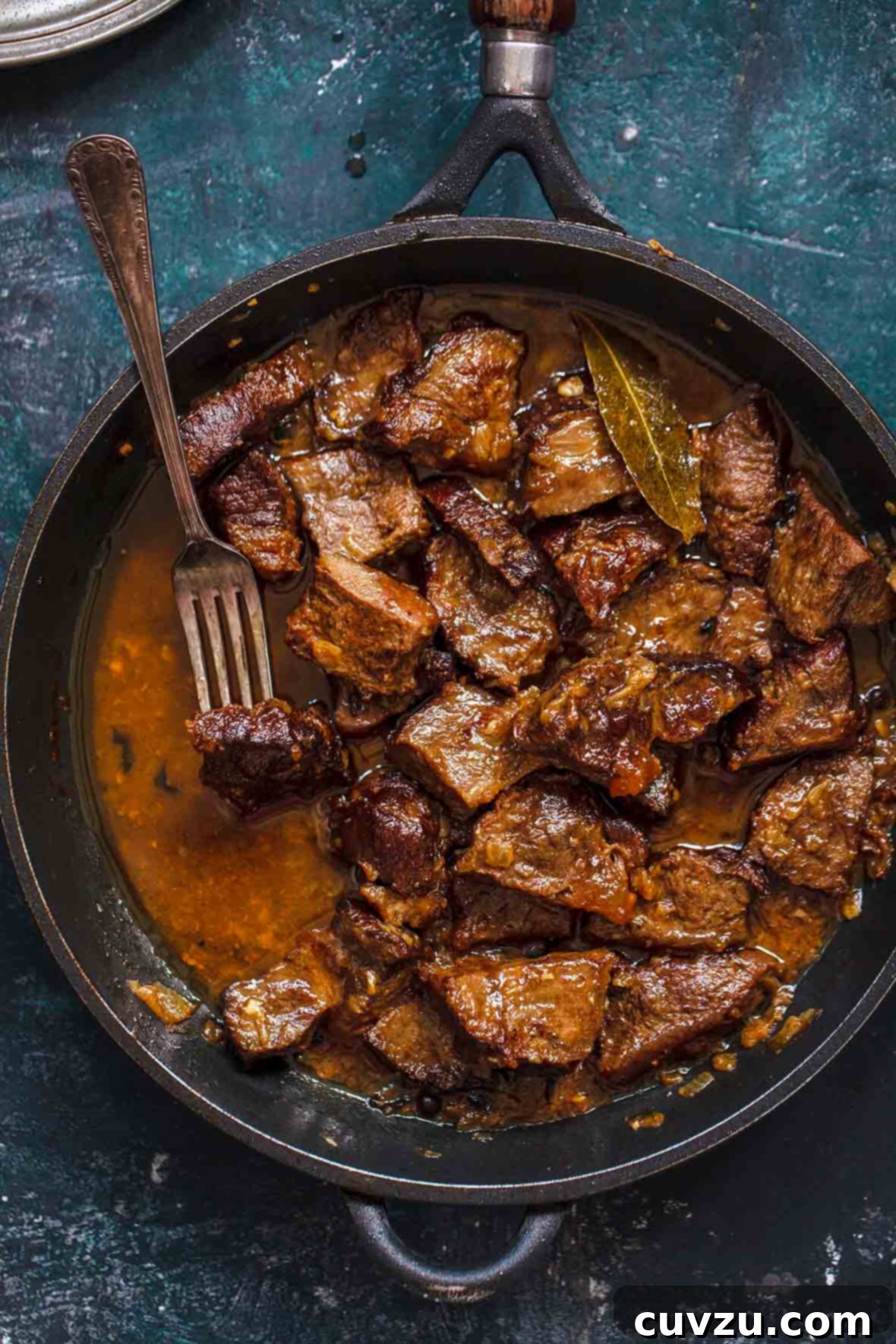
Caçoila, often hailed as the quintessential Portuguese stewed beef, is a deeply satisfying and aromatic braise featuring succulent beef, vibrant red peppers, and a rich medley of spices. Slowly simmered in a robust red wine, tomato, and butter sauce, this dish transforms humble ingredients into a culinary masterpiece, epitomizing comfort food at its finest. It’s a testament to the patient art of Portuguese cooking, where time and quality ingredients converge to create unforgettable flavors.
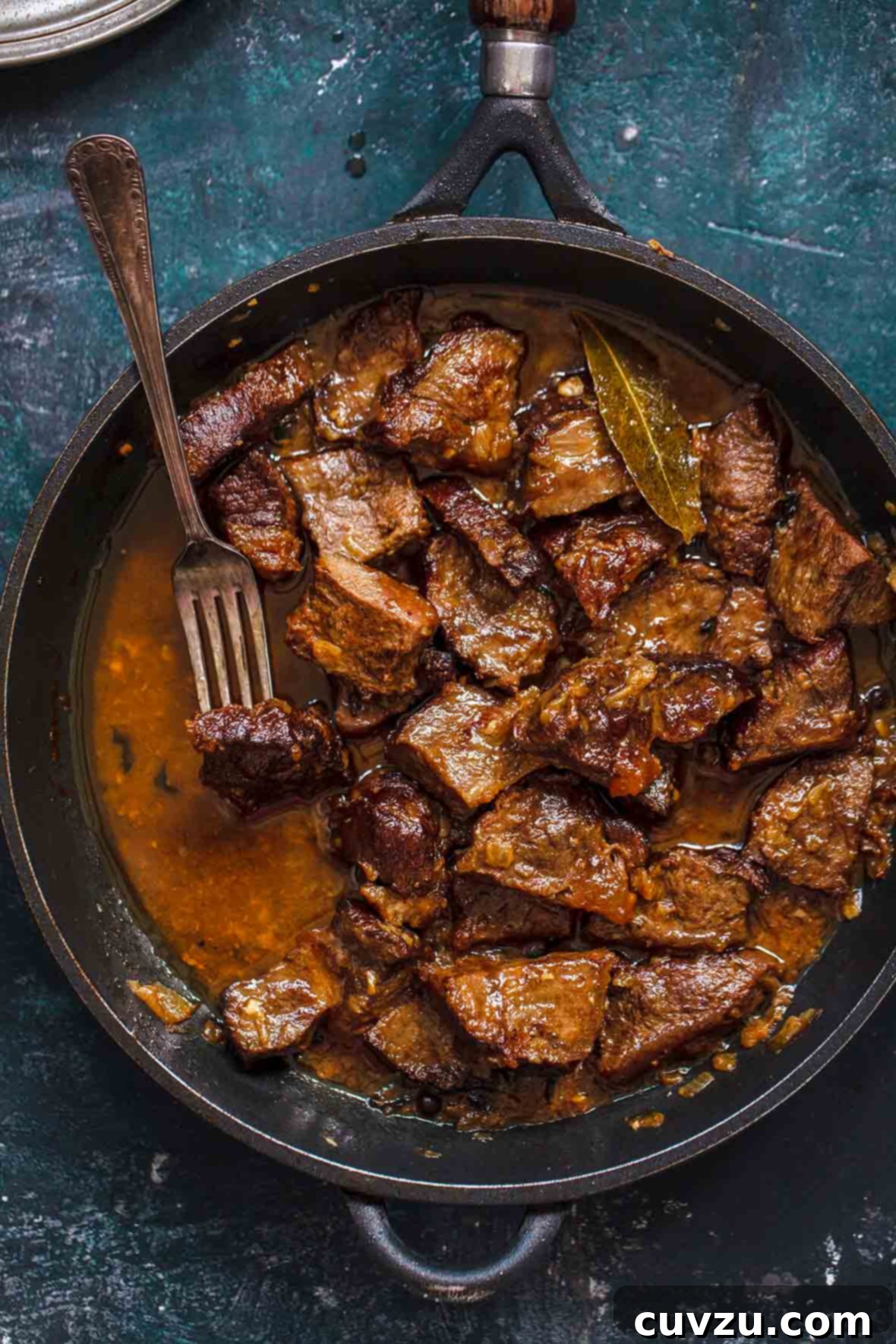
Sharing a recipe for Caçoila (pronounced ka-SOY-la, though some say ka-SIR-la) comes with a sense of reverence and a touch of trepidation. This beloved Portuguese stew boasts countless regional variations, each fiercely defended by its proponents. Traditionally, it might feature pork butt rather than a more economical cut of beef, and it could be served in a bowl with rice or even as a hearty sandwich filling. The sheer diversity of approaches means that presenting any single version invites spirited discussion, yet the profound deliciousness of this dish makes it impossible not to share.
The name “Caçoila” itself pays homage to the traditional large clay pot, known as a caçoila, in which this stew is historically prepared. In ancestral kitchens, the clay pot would be soaked overnight, then filled with ingredients and gently cooked in a very slow oven, typically around 250°F (120°C), until the meat reached an unparalleled tenderness. While this recipe offers a convenient stovetop adaptation, achieving the same soul-warming results, its origins trace back to a cherished family friend on the picturesque island of São Miguel, a fellow gem in the Azorean archipelago, distinct yet connected to the renowned Pico Island. This particular beef rendition has captivated our recipe testers, who quite literally devoured every last bite.
The Art of Caçoila: A Deep Dive into Portuguese Culinary Tradition
Caçoila is more than just a stew; it’s a celebration of Portuguese heritage and the country’s enduring love affair with slow-cooked, deeply flavored dishes. This braise embodies the essence of comfort, bringing together succulent chunks of beef, vibrant red peppers, and an aromatic blend of onions, garlic, and bay leaves, all enveloped in a luxurious sauce rich with red wine, tomato, and a hint of butter. The magic truly happens through its slow, gentle simmering, a process that allows the flavors to meld harmoniously and the beef to become incredibly tender, practically melting in your mouth. This dish is perfect for chilly evenings, family gatherings, or simply when you crave a meal that wraps you in warmth and culinary satisfaction.
While often associated with the Azorean islands, where variations abound, Caçoila’s appeal is universal. Its robust flavor profile, characterized by the subtle sweetness of red wine, the tang of tomato, and the gentle heat of crushed red peppers, makes it a standout. The choice of chuck roast is deliberate; this inexpensive cut, when subjected to a long, slow braise, breaks down beautifully, transforming into tender, flavorful morsels. The resulting sauce is not just a liquid accompaniment but an integral part of the experience—a rich, complex elixir that begs to be sopped up with crusty bread or spooned over starchy sides.
Crafting Your Own Crushed Red Peppers for Authentic Flavor
For an unparalleled depth of flavor in your Caçoila, consider making your own crushed red peppers. As the author, David Leite, points out, “Crushed red peppers are exactly that: red peppers that have been ground.” In many Portuguese households, these are traditionally brined or preserved with olive oil and salt. The homemade version offers a freshness and intensity that store-bought flakes often lack, allowing you to tailor the spice level precisely to your palate. To prepare your own: remove the stems from two or three large, medium-hot red peppers (keeping the seeds for extra heat). Place them in a food processor fitted with a metal blade. Add two tablespoons of olive oil and one tablespoon of salt. Process until a coarse, blended paste forms. This simple step can significantly elevate the authentic taste of your Caçoila, adding a layer of nuanced heat and vibrant pepper flavor that distinguishes it from a typical stew.
Caçoila | Portuguese Stewed Beef
David Leite
Ingredients
- One (4 1/2-pound) chuck roast, cut into 2- to 3-inch (5- to 8-cm) chunks
- 2 tablespoons crushed red peppers, (see note on making your own, or use 1/2 teaspoon crushed red pepper flakes for convenience)
- 1 large (9 oz) onion, cut into slices
- 1 bunch parsley, coarsely chopped
- 6 to 8 cloves garlic, smashed and peeled
- 2 bay leaf
- 1/2 teaspoon allspice berries
- 4 whole cloves
- Kosher salt, to taste (optional)
- 3 tablespoons (1 1/2 oz) unsalted butter or lard
- 2 cups hearty red table wine
- 2 tablespoons store-bought or homemade tomato paste
- 1/2 teaspoon ground cinnamon
For serving
- Boiled white potatoes, (optional)
- Roasted red peppers, (optional)
- Cooked greens, (optional)
Instructions
-
The day before you plan to cook, generously coat the beef chunks with the crushed red pepper in a large bowl. Cover the bowl and refrigerate the seasoned beef overnight to allow the flavors to penetrate deeply.
-
Approximately 4 hours before you intend to serve, prepare your Dutch oven. Scatter the sliced onion, chopped parsley, smashed garlic, and bay leaves evenly across the bottom. For the allspice and cloves, either tuck them into a small piece of cheesecloth tied with kitchen twine or place them in a tea ball, then add this aromatic sachet to the Dutch oven. If desired, season the beef with kosher salt at this stage. Place the seasoned beef directly on top of the aromatics, then dot the meat with the unsalted butter or lard.
-
In a separate measuring cup or small bowl, whisk together the red wine, tomato paste, and ground cinnamon until well combined. Pour this flavorful liquid mixture over the beef and other ingredients in the Dutch oven.
-
Bring the contents of the Dutch oven to a rolling boil over medium-high heat. Once boiling, reduce the heat to a very gentle simmer, ensuring the liquid is just barely bubbling. Cover the Dutch oven tightly and cook for 3 to 3 1/2 hours, or until the beef is exceptionally tender. Turn the beef chunks occasionally during cooking to ensure even braising. For a more traditional, stew-like consistency with ample sauce, keep the lid on for the entire cooking duration. If you prefer a thicker, more concentrated, glaze-like sauce, remove the lid about halfway through the cooking time to allow some liquid to evaporate, thereby intensifying the sauce’s flavor and texture.
-
Once the Caçoila is cooked, carefully remove and discard the bay leaves and the cheesecloth pouch (or tea ball) containing the allspice and cloves. Serve the tender Caçoila immediately, optionally accompanied by boiled white potatoes, roasted red peppers, and a side of cooked greens for a complete and satisfying meal.
Notes
PORTUGUESE STEWED PORK
For a traditional variation, this recipe works beautifully with pork butt. Simply use the same amount of pork butt, cut into similar chunks, and follow all the cooking instructions as written for the beef. The slow braising will yield equally tender and flavorful results with pork.

An LC Original
View More Original Recipes
Explore More with AI
Nutrition
Nutrition information is automatically calculated, so should only be used as an approximation.
Insights from Our Kitchen: Recipe Testers’ Reviews
Our dedicated team of recipe testers put this Caçoila recipe through its paces, offering valuable feedback and illuminating diverse experiences. Their collective insights highlight the dish’s incredible depth of flavor and tender texture, while also providing practical tips for customizing it to individual preferences. From spice adjustments to serving suggestions, these reviews underscore the versatility and comforting appeal of this Portuguese classic.
Erin Bloys
Erin Bloys found this Caçoila nothing short of divine, praising the beef’s silken and succulent texture. She noted that after 3 1/2 hours, the beef cubes retained their shape beautifully, yielding perfectly to fork pressure, much like a well-braised short rib. The sauce, a rich blend of onions, parsley, garlic, and spices in a wine braise, was described as redolent and deeply flavorful. Erin opted for lard but mused that butter might have added even more richness. Using crushed red pepper flakes instead of homemade peppers, she suggested increasing the quantity to 1 teaspoon and adding them directly to the sauce next time, finding the initial rub insufficient for her family’s spice preference. Her 6-quart Le Creuset Dutch oven provided an ideal cooking environment, with the stew simmering covered for 2 hours and uncovered for the final 1 1/2 hours, resulting in a beautifully reduced yet plentiful sauce. She discovered the importance of salt, adding 3 teaspoons of Morton’s kosher salt to bring the flavors to life. Serving it with mashed russet potatoes and escarole sautéed with lemon zest, garlic, and olive oil, Erin highlighted the lemon zest’s brightness as a perfect counterpoint to the rich sauce, culminating in an “explosion of flavor.”
Joe Pascoa
Joe Pascoa was thoroughly impressed by the ease of preparation and the tremendous results of this Caçoila recipe. He lauded the meat as “super tender and amazingly flavorful,” with the spice combination creating an unprecedented depth of flavor for a stew. Joe particularly felt a comforting “warmth” from the dish, wishing he had discovered it sooner. His only recommendation was to incorporate salt along with the pepper paste when marinating the meat. He observed that while the exterior of the beef cubes was very flavorful, the interior could be bland, suggesting that salt would help draw the sauce’s flavor further into the chunks. Despite this minor adjustment, Joe would have rated the recipe a perfect 10, underscoring its overall excellence.
Helen Doberstein
Helen Doberstein successfully adapted the Caçoila recipe, preparing it in a Crockpot and substituting pork for beef, to great acclaim. Cooking for a crowd, she doubled the recipe and trimmed the pork butt into 2-inch cubes. Due to a shortage of hot peppers, she used a mix of sweet and hot peppers, which resulted in a very flavorful pork that had a pleasant “slight bite” without being overly spicy. She maintained the original wine quantity of 2 cups, even for a doubled recipe. The pork and pepper mixture was marinated for approximately 12 hours before cooking for about 8 hours in an 8 1/2-quart crock pot. After skimming any fat, she served the dish with mashed potatoes. Helen found the sweet and hot pepper combination delightful and suggested decreasing the wine to just 1 cup if cooking in a smaller slow cooker, illustrating the adaptability of the recipe to different equipment and preferences.
Sofia Reino
Sofia Reino expressed surprise that this was her first Azorean recipe, but confirmed it wouldn’t be her last after experiencing this Caçoila. She highly recommended the dish for those who appreciate spicy, flavorful food. Her husband, their Thai exchange student daughter, and her teen all loved it, though it was “a tad too spicy” for her toddler. The final blend of tomato paste, wine, and garlic was deemed “absolutely perfect and tasted wonderful.” Sofia found the recipe easily serves 8 and could even stretch to 10. Serving it with white rice provided a perfect balance. She also discovered its versatility as an appetizer the next day, serving warmed Caçoila with toothpicks and bread to appreciative guests, showcasing its appeal beyond a main course.
Johnisha L.
Johnisha L. enjoyed this Caçoila as a tasty beef stew but wished for more heat, having used red pepper flakes. She questioned the efficacy of rubbing the flakes on the meat overnight when using flakes, suggesting it might be more impactful with crushed red pepper. The aromatic profile of allspice, cloves, and cinnamon in the broth was a highlight for her. She opted to cook the stew with the lid on for the entire duration and strongly recommended adding salt, finding it necessary to enhance the overall flavor. Johnisha served her Caçoila with diced roasted sweet potatoes, offering a delightful alternative to traditional white potatoes.
Merlyn Cafaro
Merlyn Cafaro was particularly drawn to the recipe by the inclusion of peppers, using Calabrese Peperoncino by Cento which closely matched the description for crushed red peppers. She began by sautéing the onions in olive oil before incorporating the remaining ingredients and following the recipe as directed. This Caçoila proved to be a fantastic winter Sunday dinner, served with boiled potatoes, green beans, and a fresh loaf of bread. Merlyn found the beef spicy yet not excessively hot, and appreciated how the cinnamon, cloves, and allspice contributed a very pleasant flavor to the stew. Using Malbec wine, she kept the lid on throughout the cooking process, preferring a generous amount of sauce. Even so, the sauce achieved a thick and very flavorful consistency, demonstrating the recipe’s ability to produce a rich and satisfying braise.