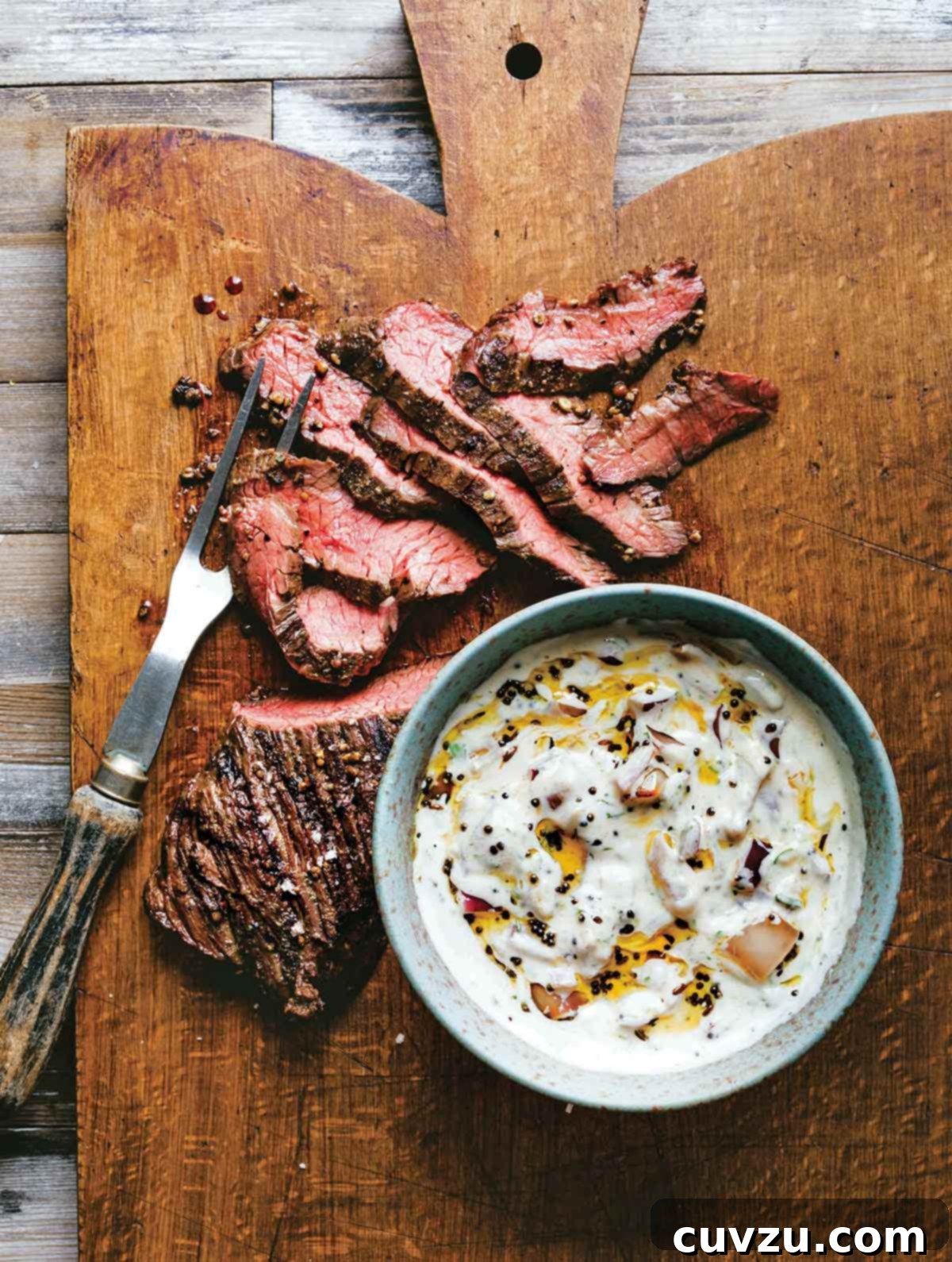
Grilled Hanger Steak with Smoky Red Onion Raita: A Culinary Delight
While a perfectly grilled hanger steak stands alone as a testament to simple culinary pleasure, its true potential unfolds when paired with a dollop of our distinctive smoky, slightly sweet, and incredibly versatile red onion raita. This combination isn’t just good; it’s spectacular. Prepare to elevate your grilling game and impress your guests with a dish that balances robust beefy flavors with the bright, complex notes of an Indian-inspired condiment.
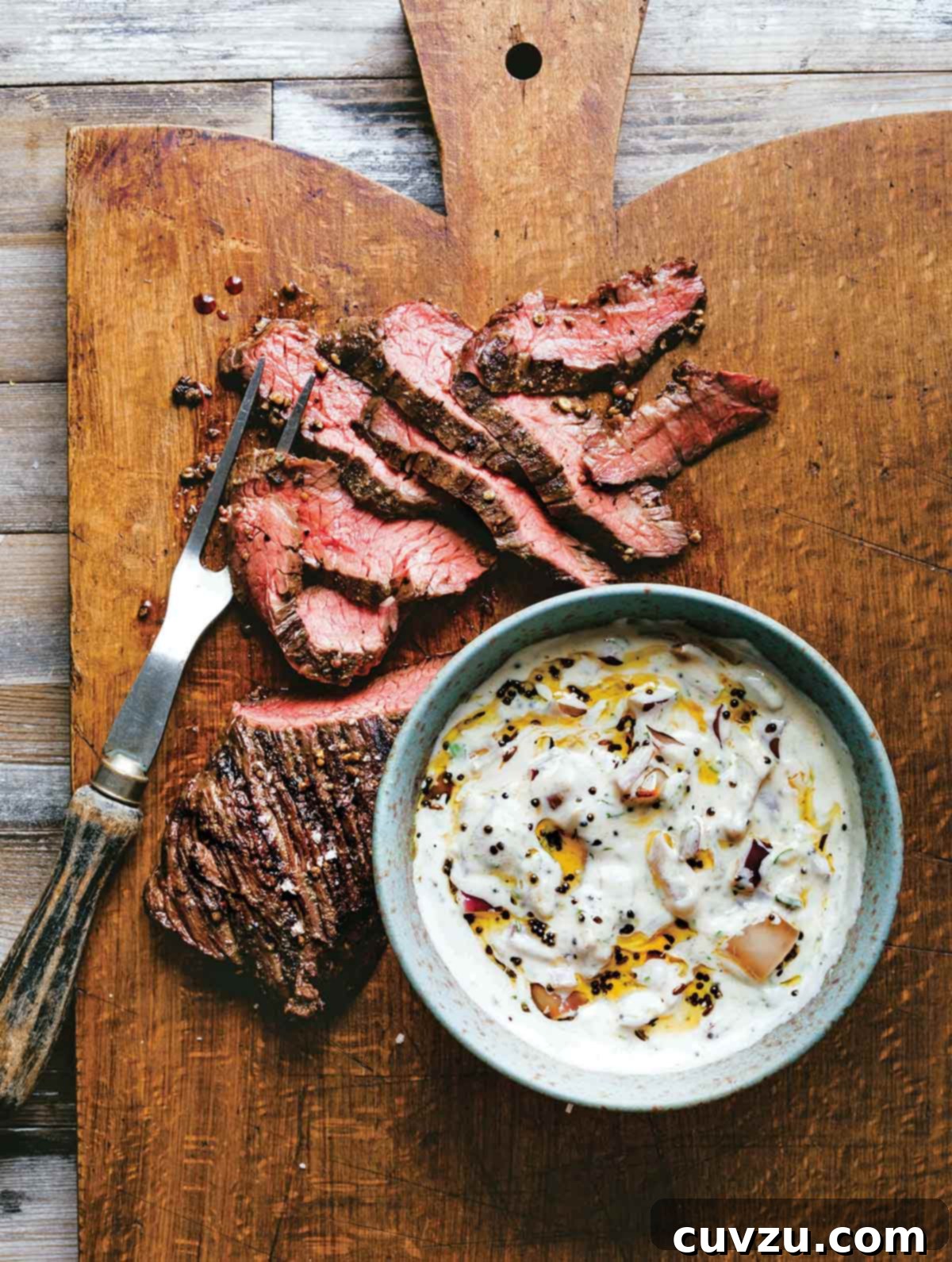
The beauty of this dish lies in its harmony. The rich, deep flavors of the hanger steak are perfectly complemented by the refreshing and aromatic raita. But don’t limit this extraordinary raita to just steak! Its smoky sweetness and tangy profile make it a fantastic accompaniment to countless other dishes, including warm pita bread, juicy lamb burgers, succulent chicken thighs, or even as a unique dip for vegetables. We invite you to explore its versatility and share your creative serving ideas with us. –Janet Fletcher
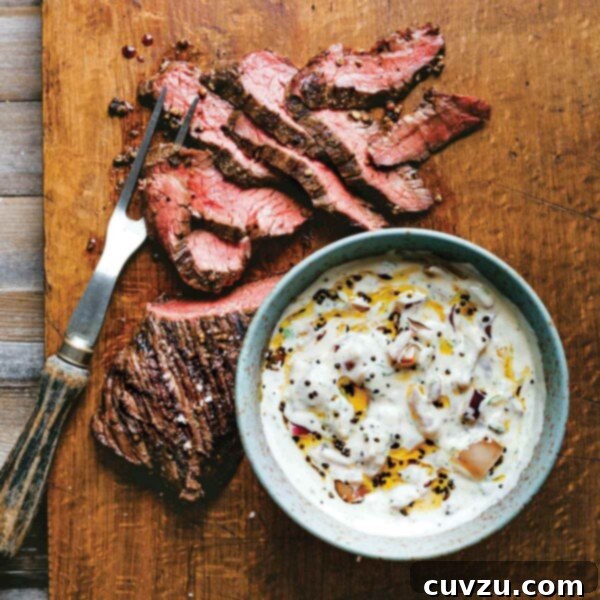
Grilled Hanger Steak with Red Onion Raita
Experience the magic of grilled hanger steak, made even more sensational with a generous dollop of our smoky, slightly sweet, and incredibly versatile red onion raita. This recipe promises a culinary adventure with minimal fuss and maximum flavor.
Recipe by David Leite
Equipment
- Skewers (if using bamboo, soak in water for at least 30 minutes to prevent burning)
- Grill (charcoal or gas)
- Wire rack and baking sheet
- Small bowl
- Skillet with a lid
- Sharp knife
Ingredients
For the Grilled Hanger Steak
- 1 1/3 to 1 1/2 pounds hanger steak (or substitute skirt steak or sirloin flap steak for similar results)
- 1 teaspoon kosher or sea salt
- 1 teaspoon coarsely crushed black or mixed peppercorns (white, black, green, pink varieties can add depth)
For the Red Onion Raita
- 1 large red onion
- Mild vegetable oil (such as canola or grapeseed)
- Kosher or sea salt and freshly ground black pepper, to taste
- 1 cup plain whole-milk yogurt (full-fat Greek yogurt can also be used for a thicker consistency)
- 1 clove garlic, grated or finely minced
- 1 tablespoon finely chopped fresh cilantro or 1 1/2 teaspoons finely chopped fresh mint, or a combination of both for a balanced herbaceous note
- 1/4 teaspoon toasted and ground cumin seeds
- 1/2 teaspoon mustard seeds (brown or black varieties are excellent)
Instructions
Preparing the Hanger Steak for Grilling
- Begin by combining the kosher or sea salt with the coarsely crushed peppercorns in a small bowl. This simple dry rub will enhance the steak’s natural flavors and help form a delicious crust.
- Generously season the hanger steak all over with the prepared salt and pepper mixture. Ensure even coverage for optimal flavor.
- Place a wire rack over a rimmed baking sheet. This setup allows air to circulate around the meat, promoting a drier surface which is crucial for a great sear. Place the seasoned steak on the rack.
- Refrigerate the steak, uncovered, for a minimum of 4 hours and up to 1 day. This dry brining process draws moisture from the surface, concentrating the beefy flavor and tenderizing the meat.
- Approximately 1 hour before you plan to grill, remove the steak from the refrigerator. Allowing it to come closer to room temperature ensures more even cooking.
Grilling the Hanger Steak and Preparing the Red Onion
-
For a charcoal grill: Prepare a moderate charcoal fire, arranging the coals in the center and leaving the outer rim free for indirect grilling.
For a gas grill: Preheat your grill to medium heat, ensuring one burner is left unlit to create an indirect grilling zone. - While the grill heats, prepare the red onion for grilling. Peel the onion and slice it neatly into rounds, approximately 1/2 inch (1 cm) thick.
- Carefully thread a skewer through each onion round. This technique helps keep the rings intact during grilling, making them easier to handle and ensuring they cook evenly.
- Brush both sides of the skewered onion slices generously with mild vegetable oil and season them lightly with salt and pepper.
- Grill the onions over indirect heat – away from direct flame or coals – turning them once or twice. Cook until the onions are beautifully soft and display slight charring, which typically takes between 25 to 40 minutes. Avoid rushing this step; slow cooking over indirect heat allows the onions to caramelize and develop a deep, smoky sweetness without burning. This slow grilling process is key to achieving that desirable “smoky campfire aroma” for the raita.
- Once cooked, transfer the grilled onions to a cutting board and carefully remove the skewers. If any outer rings are excessively dry or papery, discard them. Chop the grilled onion to your desired consistency; approximately 3/4 to 1 cup should be sufficient for the raita.
- Meanwhile, grill the hanger steak directly over the coals or gas flame. Turn the steak once, cooking until it reaches your preferred level of doneness. For medium-rare, which is highly recommended for hanger steak to maintain its tenderness and flavor, this usually takes about 10 minutes total. Hanger steak tends to lose its tenderness if cooked beyond medium-rare.
- Once grilled, remove the steak from the heat and let it rest on a clean cutting board for at least 5 minutes. If you tied the steak, remove and discard the twine during this resting period. Resting allows the juices to redistribute throughout the meat, ensuring a more tender and flavorful result.
Finishing Touches: The Raita and Serving the Steak
- While the steak is resting, prepare the raita. In a small bowl, whisk together the plain whole-milk yogurt, minced garlic, finely chopped cilantro or mint (or both), and ground cumin until well combined.
- In a small skillet, warm 2 teaspoons (10 ml) of mild vegetable oil over medium heat. Keep the skillet lid close by.
- When the oil is hot and shimmering, carefully add the mustard seeds. Immediately cover the skillet with its lid to protect yourself from any popping seeds. Cook until the mustard seeds begin to pop and become fragrant, usually within 1 minute or less. This tempering process, known as “tarka” or “chaunk,” infuses the oil with the rich, pungent flavor of the mustard seeds.
- Promptly pour the hot, infused oil and mustard seeds over the yogurt mixture in the bowl and stir to incorporate.
- Gently fold in the chopped grilled red onion. Season the raita with salt to taste.
- After the steak has rested sufficiently, thinly slice it against the grain. Slicing against the grain is crucial for tenderizing hanger steak and making it easier to chew.
- Serve the thinly sliced grilled hanger steak immediately, accompanied by generous dollops of the smoky red onion raita. This dish is best enjoyed fresh, allowing the warm steak and cool, flavorful raita to create a delightful contrast.
Chef’s Notes & Tips
What is Hanger Steak and Why We Love It
Hanger steak is a lesser-known but incredibly flavorful cut of beef, often referred to as “butcher’s steak” because butchers would traditionally keep it for themselves due to its deliciousness. It falls into the category of “flat steaks,” alongside flank and skirt steak, and is found hanging between the rib and the loin, where it supports the diaphragm. Its rich, beefy flavor is undeniably appealing, making it a favorite among steak connoisseurs.
One distinctive characteristic of hanger steak is a tough, silvery membrane that runs down its center. You have a couple of options for dealing with this membrane: you can leave it in place and trim it away as you eat the steak, or you can remove it before grilling. For the most refined presentation and eating experience, we recommend removing it beforehand. To do this, use a sharp, thin knife to carefully slice along either side of the membrane, lifting it out cleanly with minimal meat attached. This process will result in two distinct, disconnected strips of hanger steak. To maintain a more uniform shape for grilling, simply rearrange these strips side by side and tie them together in several places with butcher’s twine, effectively recreating a single, grill-ready steak. This step not only improves texture but also ensures a more even cook.
Achieving the Perfect Grill Marks and Tenderness
To achieve those coveted grill marks and a tender interior, ensure your grill is properly preheated. For direct grilling, aim for a high heat to sear the outside quickly. For indirect grilling, a moderate heat is ideal for slower cooking, such as with the onions. Always remember to rest your steak after grilling. This seemingly small step is vital; it allows the muscle fibers to relax and reabsorb the juices, resulting in a more succulent and tender steak. Skipping this can lead to dry, less enjoyable meat.
Raita Variations for Every Palate
While our red onion raita is a star, feel free to experiment with other additions. Cucumber raita is a classic cooling condiment, or try adding a touch of grated ginger for an extra zing. A pinch of black salt (kala namak) can also introduce a unique savory, sulfuric flavor that complements yogurt dishes beautifully. Don’t be afraid to adjust the spice levels of cumin and mustard seeds to match your preference – some prefer a bolder, more aromatic raita, while others might lean towards a milder flavor profile.

Adapted From
Yogurt
Buy On Amazon
Nutrition Information
Serving: 1 serving, with raita
Calories: 409 kcal
Carbohydrates: 7 g
Protein: 37 g
Fat: 26 g
Saturated Fat: 12 g
Cholesterol: 112 mg
Sodium: 700 mg
Fiber: 1 g
Sugar: 4 g
Nutrition information is automatically calculated and should only be used as an approximation. Actual values may vary based on ingredients and preparation methods.
Tried this recipe?
Mention @leitesculinaria or tag #leitesculinaria on social media! We love seeing your culinary creations.
Recipe Testers’ Reviews
Jeanelle Olson
My primary motivation for trying this recipe was the raita, a condiment I adore, and the innovative addition of grilled red onion was intriguing. The raita truly exceeded expectations, bursting with incredible flavor that makes me want to pair it with everything imaginable! The hanger steak was also excellent, a cut I’m already fond of, so it was an easy sell. Having grilled hanger steak many times before, I’ve never found it necessary to remove the central membrane. I followed the instruction this time, and it turned out fine, but for future preparations, I would likely skip that step to save time. Perhaps the author suggests caution due to variations in meat sourcing.
To further enhance the steak’s flavor and create a more cohesive dish, I would suggest incorporating a small amount of the same spices used in the raita into the steak’s dry rub. A touch of ground cumin and crushed mustard seed would beautifully marry the flavors of the steak and the raita. For the raita itself, I used a delightful combination of both cilantro and mint, about 1 tablespoon of each. The steak was refrigerated for a full 12 hours for optimal dry brining. The grilled onions were perfect in about 20 minutes, becoming wonderfully soft and sweet. We had plenty of raita leftover, which was a welcome bonus given how delicious it was!
Angie Zoobkoff
The steak, which I substituted with sirloin, turned out beautifully flavorful, boasting a magnificent salt and pepper crust. However, it was the raita that truly stole the show! Its exquisite taste means there’s no reason to limit its use to just meat. It was equally divine dolloped atop the warm homemade sourdough pita I served alongside the steak. I opted for cilantro in the raita, as I’m a big fan, but I can certainly envision mint being an equally delightful choice. This is simply an outstanding dish that delivers on all fronts! The leftover raita was absolutely fantastic for dipping the warm pita, making for a truly memorable meal.
Suzanne Fortier
Aside from the essential step of seasoning and drying the meat for several hours prior to cooking (I dry-brined mine in the fridge for about four hours), this recipe comes together remarkably quickly, in under an hour of active preparation. I used approximately 1 3/4 pounds of hanger steak, which my butcher graciously trimmed for me, removing both the membrane and silver skin. This left me with three strips, similar to sirloin tips, making it even easier to handle.
About an hour before I planned to serve dinner, I began preparing the onions. I grilled them indirectly at a consistent temperature of 450°F to 465°F for 35 minutes. They emerged perfectly soft with a lovely char, just the way I prefer them! For the raita, I chose full-fat goat milk yogurt from Redwood Hill Farm. This was a personal choice due to lactose intolerance, but it’s genuinely excellent yogurt that tends to be thinner than traditional cow’s milk yogurt, which I find preferable for raita compared to a thick Greek-style yogurt.
I incorporated fresh mint from my garden, along with ground cumin and black mustard seeds, which I tempered in olive oil. The resulting steak was wonderfully tender and packed with flavor. The raita served as a lovely accompaniment to the meat, though I felt it could have benefited from a more pronounced flavor. In the future, I wouldn’t hesitate to increase the quantities of cumin, mustard seeds, and even the fresh herbs to suit my taste preferences. Despite this minor observation, I consumed a considerable amount of it, so it was clearly quite good as is. Always experimenting, what can I say?