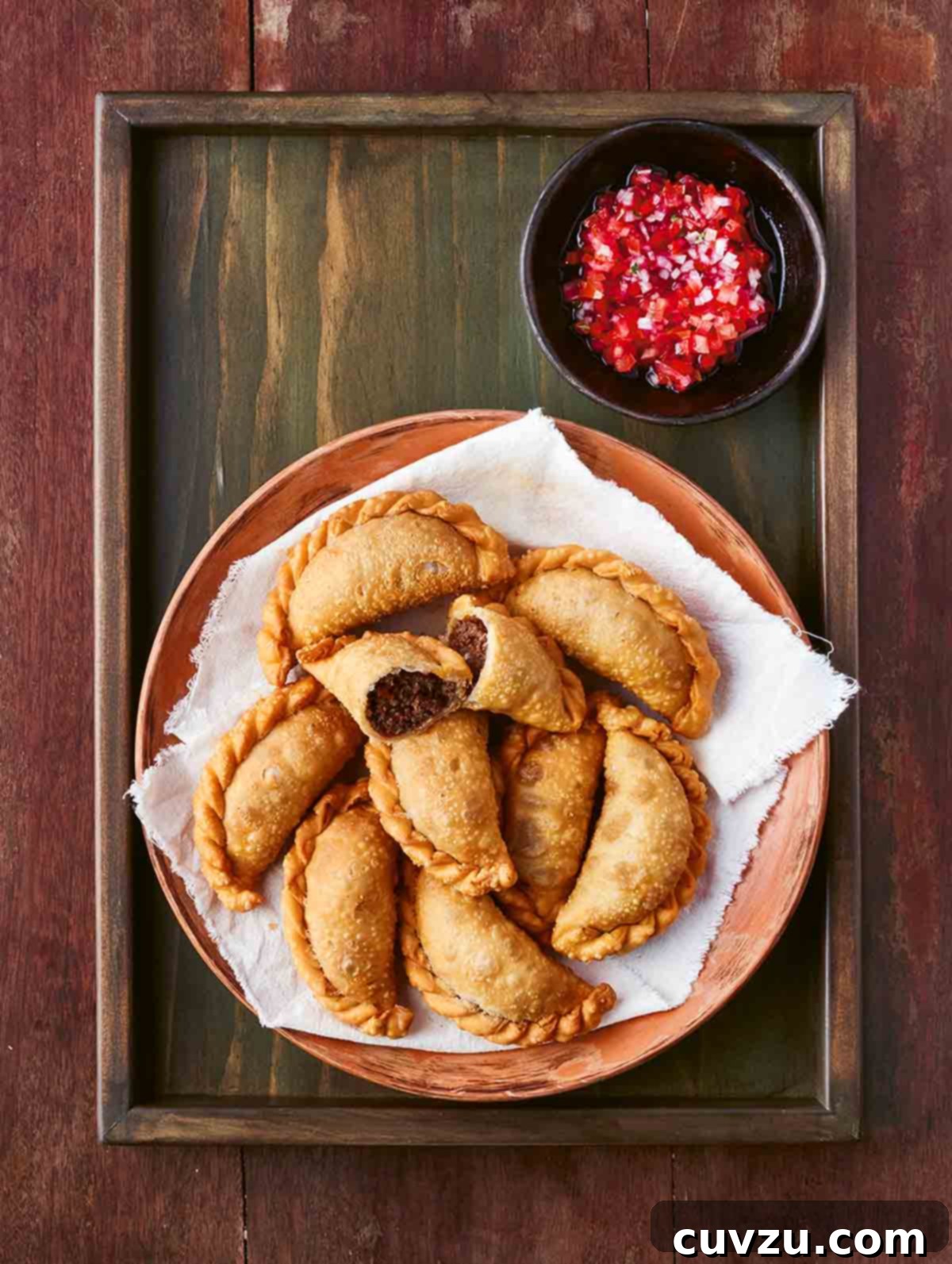
These exquisite Chilean meat empanadas offer a delightful journey for your palate, bringing the authentic taste of Chilean street food right to your kitchen. Each golden, buttery pastry pocket is generously filled with a savory blend of perfectly seasoned ground beef, finely chopped onions, sweet raisins, briny olives, and slices of hard-boiled egg. This classic combination creates a symphony of flavors and textures, making every bite an unforgettable experience. They are truly reminiscent of the cherished empanadas found at bustling street carts across Chile, embodying generations of culinary tradition.
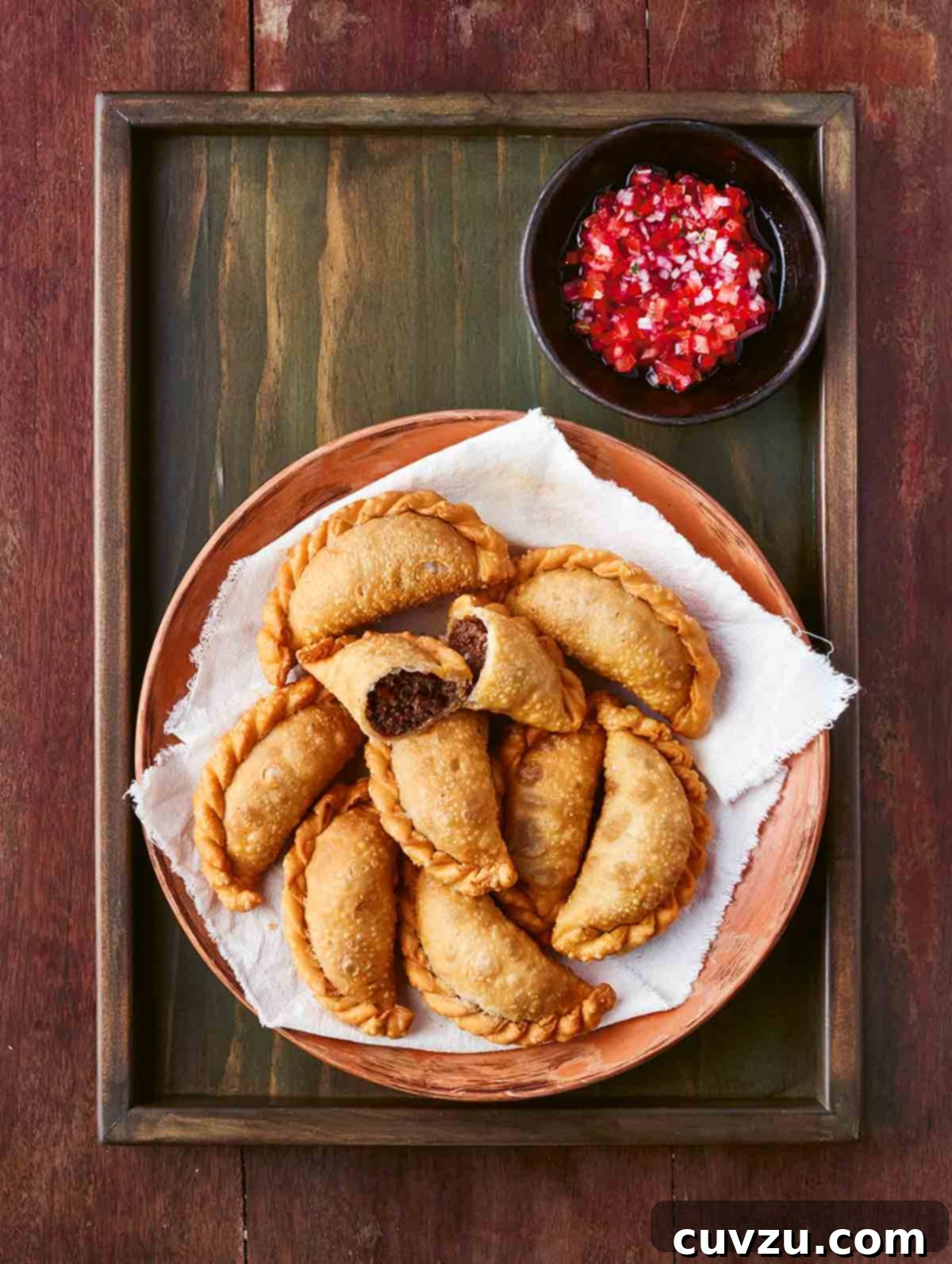
The Enduring Cultural Significance of Chilean Empanadas
In Chile, empanadas transcend being mere food; they are a deeply ingrained national pastime, a symbol of heritage and community. Their importance is so profound that in 1970, upon his election, President Salvador Allende famously spoke of a “revolution with the taste of red wine and empanadas,” highlighting their role in the country’s social fabric. Empanadas are ubiquitous throughout Chile, gracing everything from the offerings of roving street vendors and vibrant train station cafés to upscale ski resorts. They are a staple at family gatherings, national holidays, and everyday meals, representing comfort, tradition, and a shared culinary identity.
While empanadas can be found baked or fried, and come in an endless variety of shapes and fillings across Latin America, the Empanadas de Pino hold a special place in Chilean hearts. “De pino” is a term derived from the Mapuche word pinu, which translates to “cooked meat.” Over time, this term has evolved to specifically denote a rich and flavorful mixture of ground beef and sautéed onions, further enhanced by the essential additions of hard-boiled egg, briny olives, and sweet raisins. This distinctive combination is what defines the most widespread and beloved Chilean empanada, making it instantly recognizable and cherished. The meticulous balance of sweet, savory, and tangy elements within the pino filling is a hallmark of Chilean culinary artistry, as acclaimed chef Virgilio Martínez aptly points out, showcasing the country’s unique gastronomic identity.
Mastering the Perfect Empanada Dough
The secret to an exceptional Chilean empanada lies not just in its vibrant filling but equally in its remarkable pastry. This recipe calls for a specific combination of lard and unsalted butter, a time-honored technique that yields a dough that is both incredibly flaky and wonderfully sturdy. Lard contributes to a superior tenderness and a subtle richness, while butter adds its signature flavor and helps achieve that desirable golden-brown crust. This harmonious blend ensures that the dough is pliable enough to be easily worked and shaped, yet robust enough to perfectly encase the hearty pino filling without tearing during baking. The result is a pastry that is delicate and crisp on the outside, providing the ideal counterpoint to the succulent interior.
Achieving this perfect dough involves careful handling and proper chilling. The butter and lard are mashed into the dry ingredients, creating a crumbly mixture before the egg and water liquid is gradually incorporated. This method prevents overworking the gluten, which is crucial for a tender crust. A resting period in the refrigerator is essential, allowing the dough to relax and become easier to roll, ensuring a smooth, uniform texture for each empanada. This dedication to the dough sets Chilean empanadas apart, elevating them from simple savory pastries to a truly exquisite culinary delight.
Crafting the Irresistible Pino Filling
The heart of these Chilean empanadas is undoubtedly the “pino” filling, a complex and deeply flavorful mixture that truly distinguishes them. The foundation begins with a generous sauté of white onions and garlic, slowly softened to create a sweet and aromatic base. High-quality ground beef, preferably with an 85/15 lean-to-fat ratio, is then introduced, ensuring a moist and rich texture. This beef is seasoned generously with a trio of essential spices: earthy ground cumin, a hint of chile powder for subtle warmth, and a full tablespoon of paprika, which adds both vibrant color and a sweet, peppery depth.
A crucial element in balancing the savory beef and aromatic spices is the addition of beef broth, allowing the flavors to meld and deepen as the mixture simmers. A touch of flour helps to thicken the filling, ensuring it holds together beautifully within the pastry. Finally, the signature components that make pino so unique are folded in: plump raisins, offering pockets of sweetness that beautifully contrast the savory meat, and pitted, chopped black olives, which contribute a briny, tangy note. Slices of hard-boiled egg are a traditional and visually appealing inclusion, adding a creamy texture and a mild richness to each empanada. This intricate balance of sweet, savory, spicy, and tangy elements creates a filling that is undeniably robust and satisfying, embodying the rich culinary heritage of Chile.
Frequently Asked Questions About Empanadas
Empanadas are a culinary treasure enjoyed across Central and South America, as well as the Caribbean, making them far from exclusive to Chile. While the concept of a stuffed pastry is widespread, each region boasts its unique interpretations. They can be crafted with various doughs, including flour or cornmeal, and filled with an incredible array of sweet or savory ingredients – from bananas, plantains, and cheeses to seafood, chicken, potatoes, or even chocolate. However, Chile holds a special reputation for its distinctive and delicious traditional meat empanadas, particularly the beloved “de pino” variety, which has become a national culinary symbol.
The term “empanada” itself originates from the Spanish verb “empanar,” which literally translates to “to wrap something in bread.” This brilliant and straightforward concept is what defines the dish globally, yet it offers immense versatility. The word doesn’t dictate the specific filling or dough, allowing for countless regional variations based on local ingredients, seasonal availability of meats, fruits, or vegetables, and cultural preferences. This adaptability is precisely why empanadas have evolved into such a diverse and cherished food item across many different cultures.
For this authentic Chilean empanada recipe, sweet paprika is highly recommended. It imparts a beautiful, bold red color and a mellow, sweet peppery flavor without introducing any heat, allowing the other robust flavors of the pino filling to shine. If you prefer a little kick, you can certainly opt for hot paprika to add a pleasant spiciness. For those looking to introduce deeper, more complex, and smoky undertones to their empanadas, smoked paprika (pimentón ahumado) would be an excellent choice, adding another layer of traditional Spanish-influenced flavor to the dish. The choice depends on your desired flavor profile, but sweet paprika ensures a classic rendition.
Expert Tips for Empanada Success
Making empanadas can be a rewarding culinary adventure, and a few expert tips can ensure your homemade Chilean meat empanadas turn out perfectly every time. Firstly, the dough is key. Ensuring your butter and lard are thoroughly chilled before incorporating them into the flour will lead to a flakier crust. Don’t be afraid to work the fats into the flour until they resemble coarse meal; this creates pockets of fat that contribute to the signature flakiness. The resting time for the dough in the refrigerator is non-negotiable—it allows the gluten to relax, making the dough much easier to roll out evenly and preventing shrinkage.
For the filling, allow it to cool completely before assembling your empanadas. A hot filling can make the dough difficult to handle and may lead to a soggy crust. When assembling, be generous with the filling, but leave enough space around the edges to create a good seal. Brushing the edges with water acts as a glue, ensuring your empanadas remain sealed during baking. You can use the tines of a fork to create a decorative and secure crimped edge. If you find rolling the dough challenging, as one of our testers discovered, you can use plastic wrap over your work surface and dough, gently stretching and shaping by hand, which also aids in a cleaner cleanup. For future convenience, these empanadas freeze beautifully before baking; simply bake them from frozen, adding a few extra minutes to the cooking time, or freeze cooked leftovers for a quick meal, reheating them in a microwave or oven for best results. These simple tips will help you achieve authentic and delicious Chilean empanadas.
Chilean Meat Empanadas
David Leite
Ingredients
For the dough
- 4 cups all-purpose flour, plus extra for dusting
- 1 1/2 teaspoons kosher salt
- 3 tablespoons granulated sugar
- 2 tablespoons (1 oz) unsalted butter, chilled
- 12 tablespoons (6 oz) lard
- 2 large egg yolks, whisked with 3/4 cup (175 ml) water
For the beef filling
- 2 tablespoons mild vegetable oil
- 2 tablespoons (1 oz) unsalted butter
- 3 white onions, chopped
- 2 garlic cloves, minced
- 1 pound ground beef, preferably 85/15
- 2 teaspoons ground cumin
- 1 teaspoon chile powder
- 1 tablespoon paprika
- 1/2 cup canned beef broth or homemade beef stock
- 2 tablespoons all-purpose flour, plus more for the work surface
- 1/2 cup raisins
- 1/2 cup pitted and chopped black olives
- 2 hard-boiled eggs, sliced
- Kosher salt and freshly ground black pepper
To glaze
- 1 large egg yolk, beaten with 2 tablespoons whole milk
Instructions
Make the dough
-
Begin by combining the all-purpose flour for the dough in a large mixing bowl, then thoroughly whisk in the kosher salt and granulated sugar. In a separate small bowl, use a fork or your fingers to mash the chilled unsalted butter and lard together until well combined and pliable. Add this fat mixture to the dry ingredients. Using your hands, knead the mixture together until it resembles coarse crumbs and all the dry ingredients are moistened by the fats.
-
Gradually add the beaten egg yolk and water mixture to the flour and fat mixture, a little at a time, mixing until the dough comes together and begins to form a uniform, smooth ball. Be careful not to overmix; stop once it’s cohesive. Cover the dough with a clean tea towel or plastic wrap and refrigerate for at least 1 hour. This chilling time is crucial as it allows the gluten to relax and the fats to solidify, making the dough easier to roll out and contributing to a flakier crust.
Make the beef filling
-
In a medium skillet, warm the mild vegetable oil and unsalted butter over medium heat until the butter is melted. Add the chopped white onions and minced garlic to the skillet. Sauté, stirring occasionally, until the onions are soft and translucent, typically taking 5 to 7 minutes. Do not let them brown, as you want a sweet base for the filling.
-
Stir in the ground beef, breaking it up with a spoon, along with the ground cumin, chile powder, and paprika. Cook the beef, stirring continuously, for about 3 minutes, or until it is no longer pink and is well coated with the spices.
-
Pour in the canned beef broth or homemade beef stock. Season the mixture generously with kosher salt and freshly ground black pepper to taste. Bring to a simmer and cook for approximately 10 minutes, allowing the flavors to meld and the liquid to reduce slightly. Add the 2 tablespoons of all-purpose flour and cook for another 3 minutes, stirring constantly, until the filling thickens. Remove the skillet from the heat and stir in the raisins and pitted, chopped black olives. Allow the beef filling to cool completely before proceeding with assembly. This prevents the dough from becoming soggy.
-
While the filling cools, preheat your oven to 350°F (180°C). Line two large rimmed baking sheets with parchment paper to prevent sticking and ensure easy cleanup.
-
Once the dough is chilled, divide it into 10 equal pieces. Shape each piece into a smooth ball and let them rest on a lightly floured surface for about 10 minutes. This second brief rest helps the dough relax further, making it easier to roll. On a lightly floured surface, stretch or roll each ball into a 6-inch (15-cm) square, aiming for a thickness of about 1/4 inch (5 mm). Consistency in thickness is important for even baking.
-
Place 2 generous tablespoons of the cooled beef filling in the middle of each dough square. Top the filling with one slice of hard-boiled egg. Lightly brush the edges of the dough with water; this will help the dough seal securely. Fold the square in half diagonally to form a triangle, or straight over to form a rectangle, bringing the opposing edges together. Gently press down on the sealed edge with your fingers to ensure it is tightly closed, then use a fork to crimp the edges, creating a decorative seal and preventing any filling from escaping during baking. Transfer the assembled empanadas to the prepared baking sheets, leaving some space between each.
Bake the empanadas
-
Brush the tops of the empanadas with the egg yolk glaze (1 large egg yolk beaten with 2 tablespoons whole milk). This egg wash will give them a beautiful golden-brown, shiny finish. Bake the empanadas in the preheated oven for 35 to 40 minutes, or until they are richly golden brown and the crust appears crisp. Serve hot or at room temperature.

Adapted From
The Latin American Cookbook
Buy On Amazon
Nutrition
Nutrition information is automatically calculated, so should only be used as an approximation.
Recipe Testers’ Reviews
Angela Reynolds
Do not be intimidated by the prospect of making empanadas. This pastry recipe is truly wonderful and I found it to be foolproof! The masterful combination of lard and butter resulted in the flakiest, most flavorful, and incredibly sturdy dough I have ever encountered. Even after storing leftovers in Ziplock bags overnight, they were still delightfully crunchy and delicious when rewarmed in the microwave the next day, a testament to the dough’s quality.
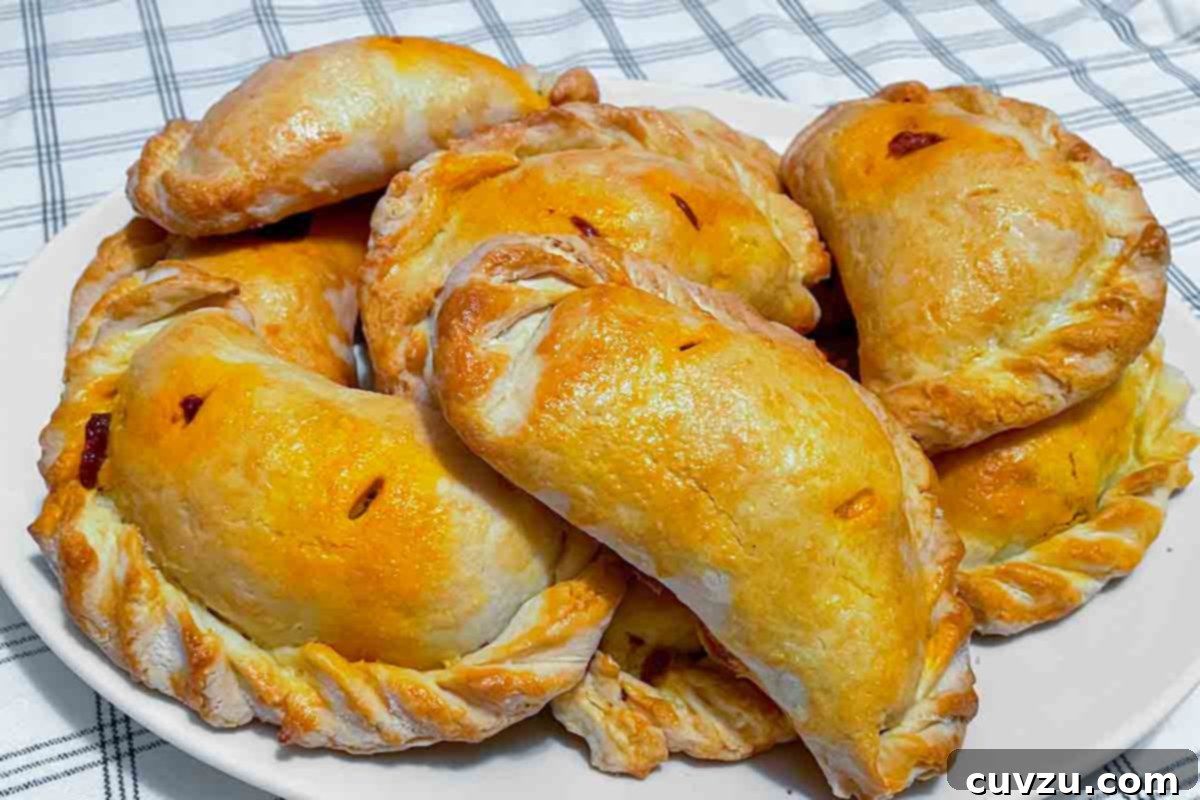
The recipe yields a generous amount of filling, which is fantastic. Any leftover filling would be excellent repurposed as a delicious taco or a flavorful topping for a taco salad. While the inclusion of boiled egg in the filling undeniably lends authenticity, I personally found it didn’t add a significant amount of flavor. Furthermore, you must genuinely enjoy olives to fully appreciate this recipe as written. That being said, the filling is remarkably adaptable and can be easily tailored to suit individual preferences. I’m already looking forward to experimenting with other variations, including using this incredible dough for sweet hand pies. An Argentinian coworker praised my efforts, which made me feel quite proud after this test! We enjoyed these empanadas as part of a grand feast, served alongside rice and black beans, a chunky pico de gallo, and a fresh salad featuring olives and grilled corn, all dressed with a delightful honey-chipotle vinaigrette.
Robin Currie
I am a huge fan of transportable hand pies; they are simply perfect for an on-the-fly lunch, and these Chilean meat empanadas absolutely delivered on that front. The pastry was nothing short of perfect. It proved to be sturdy enough to hold the generous filling securely, yet remained beautifully flaky and wonderfully tender with every bite. The pino filling itself was delightful. I particularly enjoyed the intriguing sweet and salty combination brought by the olives and raisins. However, for my next batch, I think I would opt for green olives to introduce a slightly different briny note. A clever trick I employed was using plastic wrap over my cutting board when forming the empanada dough, which meant I didn’t even need a rolling pin. This method worked great and resulted in no messy clean-up or excess flour, making the process even more enjoyable!
Amy Wilschut
As a first-time empanada maker, I can confidently say that this recipe was a great success – both in terms of effort and the delicious result. The most memorable part of preparing this recipe, which we enjoyed as a pre-Christmas dinner for our family of four, was the collaborative assembly process with my 14-year-old son. My son has developed into an adventurous eater, driven both by necessity (he’s growing rapidly!) and a keen interest in exploring new flavors. I initially thought he might balk at the unique additions of raisins, black olives, and hard-boiled eggs – it does sound like an unconventional combination – but working together to assemble the empanadas made him even more excited to finally eat dinner. (I should note, however, that my 11-year-old did meticulously pick out the raisins and olives from his empanada, which wasn’t entirely surprising!).
The dough was remarkably easy to make, incredibly pliable, and effectively contained all of the filling without any leaks or issues. As we savored this “new to us” dish, I read the description from the recipe to my family, and learning a bit of the history behind empanadas made the flavors make even more sense – truly a sweet and spicy pocket of deliciousness. One empanada proved to be plenty for one person, indicating that you may very well have some leftovers to freeze, ready for a future festive dinner or a quick, satisfying meal.
Tried this recipe?
Mention @leitesculinaria or tag #leitesculinaria!