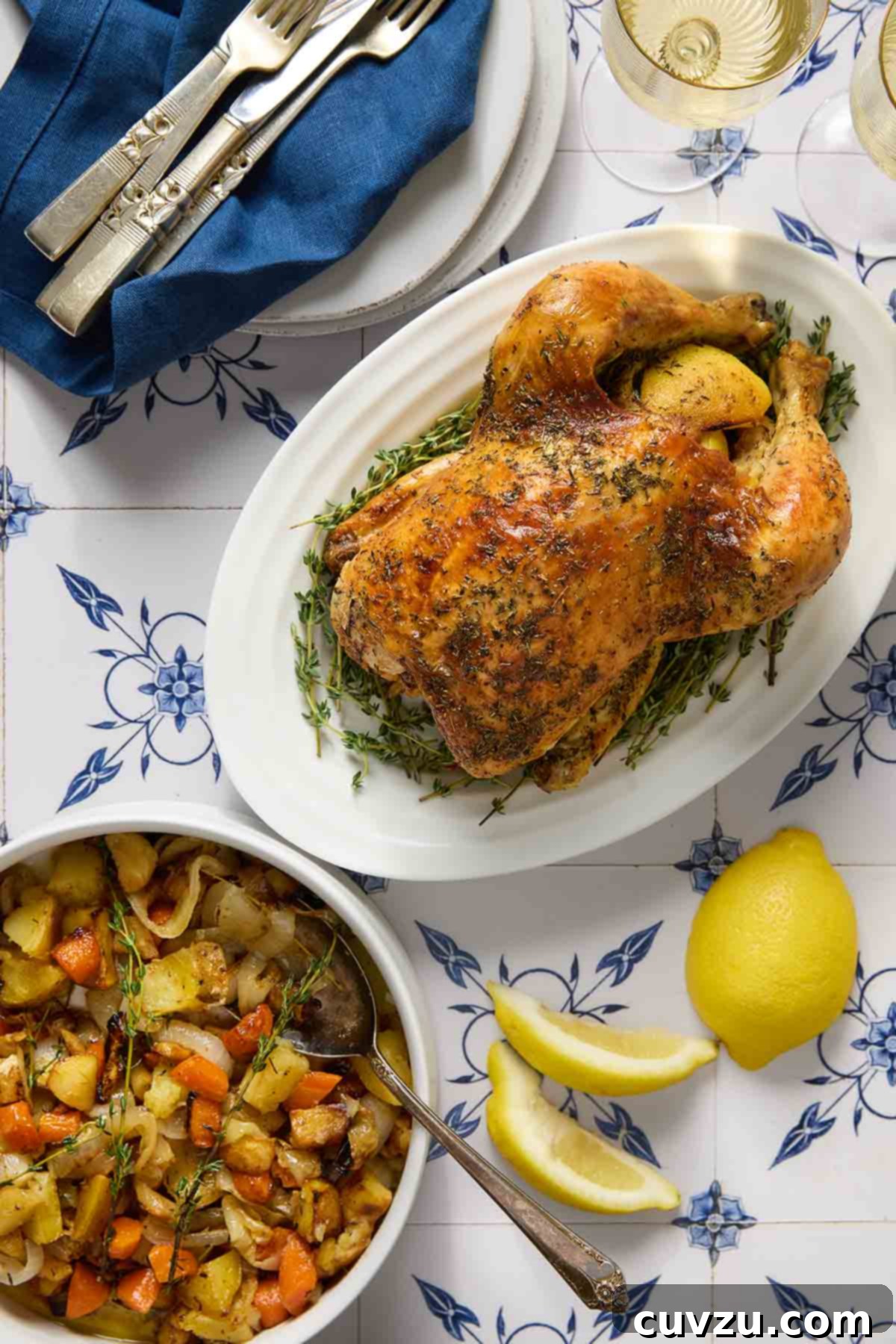
Poulet Rôti: The Epitome of Classic French Roast Chicken
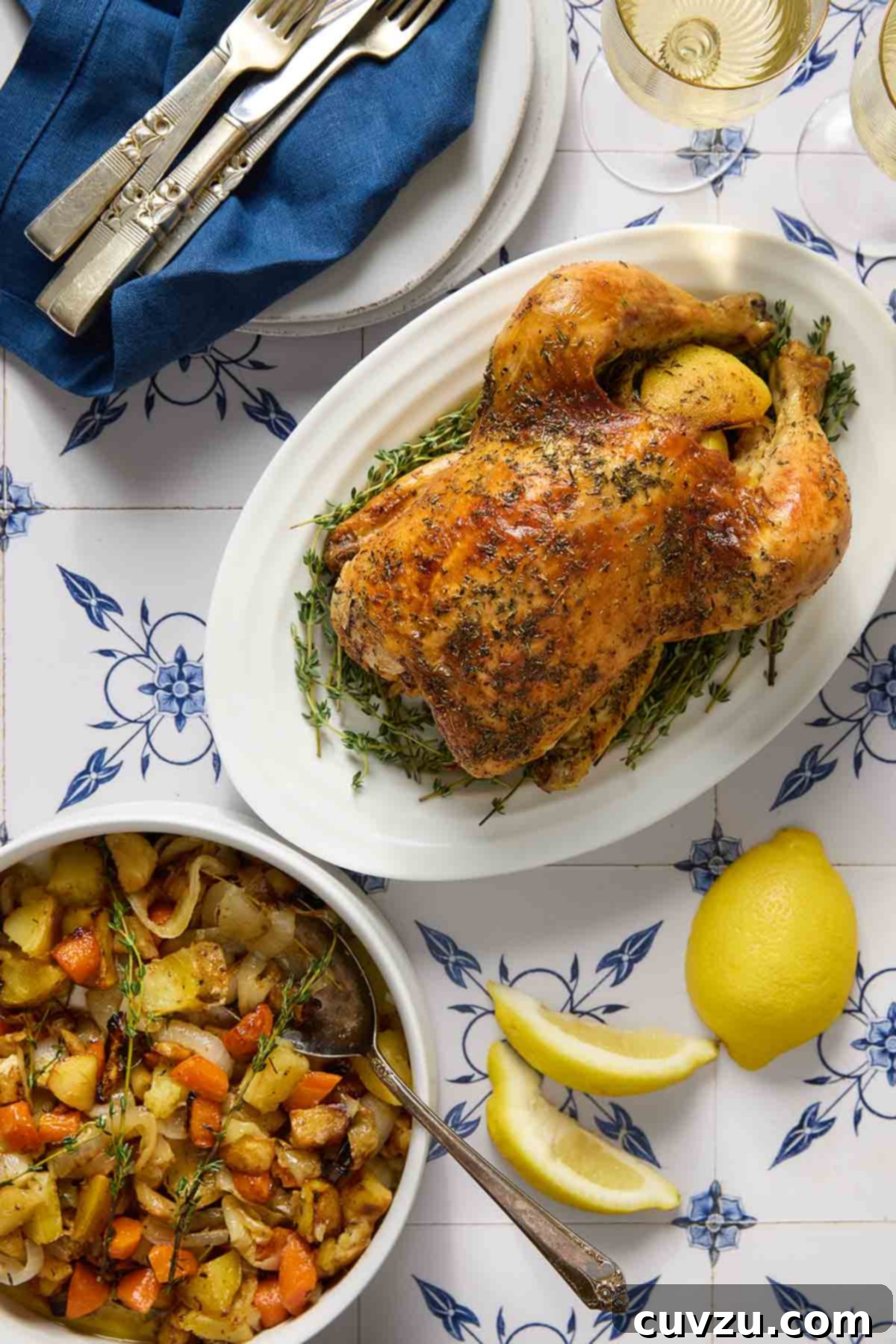
Few dishes embody the understated elegance and profound satisfaction of French cuisine quite like Poulet Rôti, or classic French roast chicken. This isn’t just any roast chicken; it’s a culinary masterpiece achieved through simplicity and meticulous technique. The essence lies in seasoning a succulent chicken with fragrant herbs, nestling it atop a bed of earthy root vegetables, and generously basting it with rich, flavorful butter. The result is nothing short of incredible – a truly remarkable meal that has been carefully refined, re-tested, and updated to ensure perfection on every plate.
This approach to preparing roast chicken mirrors the effortless grace of a French woman styling a scarf: with minimal fuss but impeccable technique, something inherently simple and familiar is transformed into an unexpectedly sophisticated creation. Imagine taking an ordinary hen and infusing it with the bright zest of lemon, the rustic charm of fresh herbs, and the sweet earthiness of root vegetables. Suddenly, you have a roast bird that looks, smells, and tastes more beautiful than you could have imagined, yet remains wonderfully approachable to make. And the best part? No one needs to know just how straightforward it truly is. Simply accept the inevitable compliments with a humble nod and a gracious smile.

Why This French Roast Chicken Recipe Earns Rave Reviews
Our team of dedicated recipe testers couldn’t stop raving about this simple yet extraordinary French roast chicken. They praised its ability to deliver “tender, juicy meat bursting with flavor, wonderfully crisp skin, and roasted vegetables luxuriating in rich, buttery, lemon-garlic-infused chicken juices!” Such an enthusiastic endorsement makes you eager to experience it for yourself, doesn’t it? This recipe consistently produces a dish that is both comforting and impressive, perfect for a casual family dinner or an elegant gathering.
Essential Ingredients for an Authentic Poulet Rôti
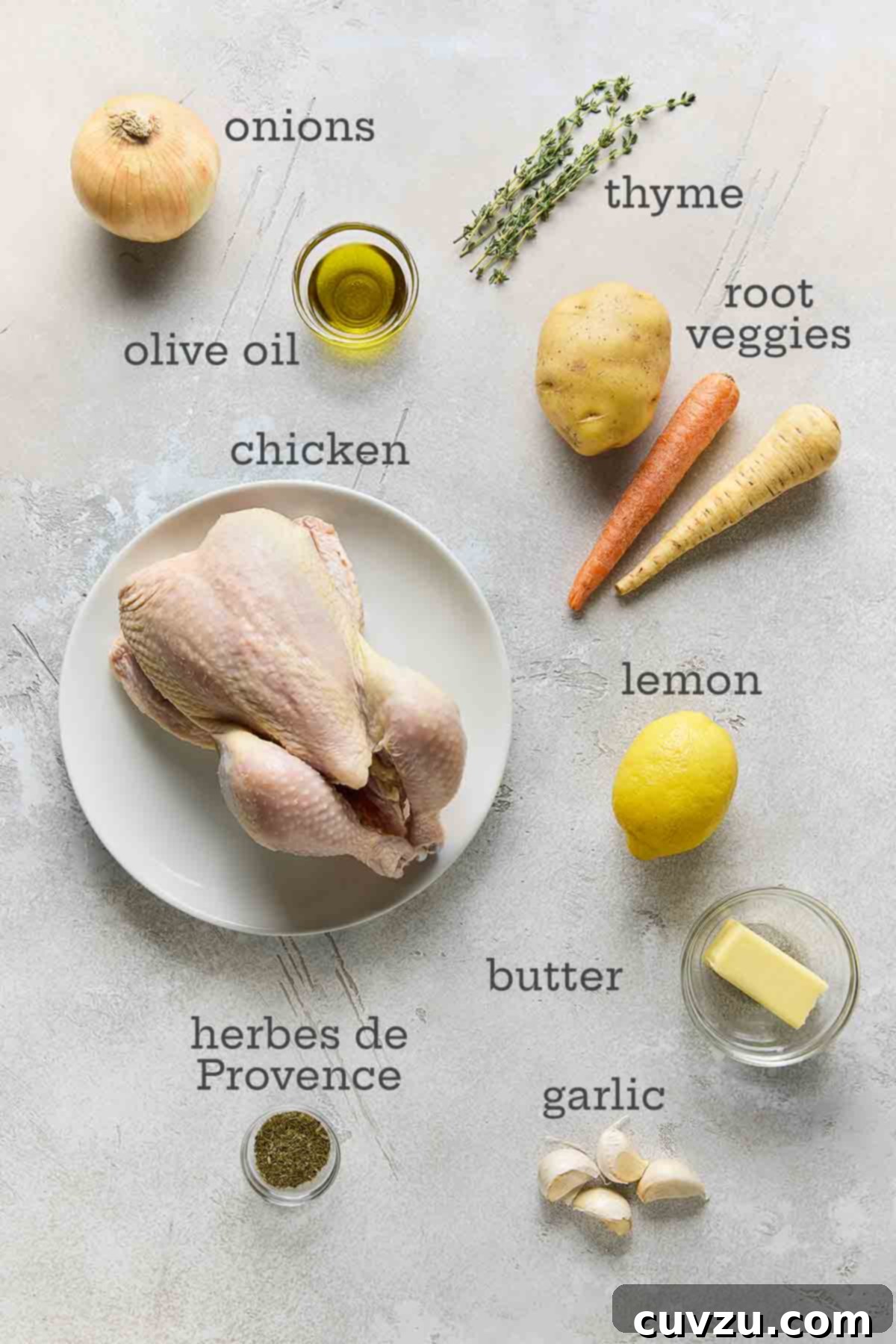
The success of any classic dish hinges on the quality and preparation of its ingredients. For our Poulet Rôti, each component plays a crucial role in developing the deep, layered flavors that define this French favorite. Here’s a closer look at what you’ll need and why:
- Root Vegetables: The Flavor Foundation
Embrace the versatility of root vegetables! A delightful medley of potatoes, carrots, parsnips, or turnips creates a sweet and savory bed for the chicken, absorbing all the delicious pan juices. The key is to cut them into similar-sized pieces – roughly 1 to 1.5 inches – ensuring they cook evenly and become beautifully tender and caramelized alongside the chicken. Feel free to use your absolute favorites or whatever is freshest at your local market. - Chicken: Choosing the Perfect Bird
For this recipe, we recommend a whole chicken weighing between 3 and 4 pounds, often labeled as a fryer chicken. This size is ideal for even cooking, resulting in succulent meat and wonderfully crisp skin. While larger roasting chickens offer more meat, they can take significantly longer to cook, sometimes leading to an overly crispy exterior or slightly dry meat. A smaller fryer chicken hits that sweet spot for balance and tenderness. - Lemons: A Zesty Brightness
Lemons are indispensable here, infusing the chicken with a delicate, bright flavor as it roasts. By leaving them in large wedges and placing them inside the cavity, the lemon essence permeates the bird without overpowering it. The gentle heat helps release their aromatic oils, contributing to the overall freshness of the dish. Don’t forget the zest for the vegetables – it amplifies their natural sweetness. - Salted Butter: The Golden Secret to Richness
Butter is a cornerstone of French cuisine, and in Poulet Rôti, it’s a non-negotiable hero. Using salted butter not only adds incredible richness and moisture but also simplifies the seasoning process. If you opt for unsalted butter, be sure to add a generous pinch of salt directly inside the chicken cavity and season the exterior well after applying the butter. The secret to effortless spreading and maximum flavor penetration is to use room-temperature butter; plan ahead and take it out of the fridge a couple of hours before you begin cooking. - Garlic: Aromatic Depth
The garlic in this recipe is used strategically to impart a subtle, aromatic depth rather than an intense garlic punch. By smashing the cloves lightly and keeping them in their skins, the garlic’s essence gently infuses the chicken and the basting butter. This method ensures that the garlic flavor is present and complementary, enriching the overall profile without becoming dominant. - Fresh Thyme & Herbes de Provence: Fragrant Herbs
Fresh thyme sprigs tucked into the cavity and scattered over the vegetables release their earthy, peppery notes, enhancing the chicken’s natural flavors. For the exterior, Herbes de Provence is a classic French blend that adds a fragrant, provincial aroma and taste. If unavailable, dried thyme is an excellent substitute, providing a similar warmth. These herbs are key to achieving that authentic French character. - Olive Oil: For Roasting and Browning
A good quality olive oil helps coat the root vegetables, encouraging them to brown beautifully and evenly in the oven. It also contributes a subtle fruity note that complements the other ingredients.
Mastering the Art of French Roasted Chicken: Step-by-Step Guide
Creating a magnificent Poulet Rôti is surprisingly simple, yet yields results that taste like they came from a gourmet kitchen. Follow these steps to achieve a perfectly golden, juicy, and flavorful French roast chicken every time.
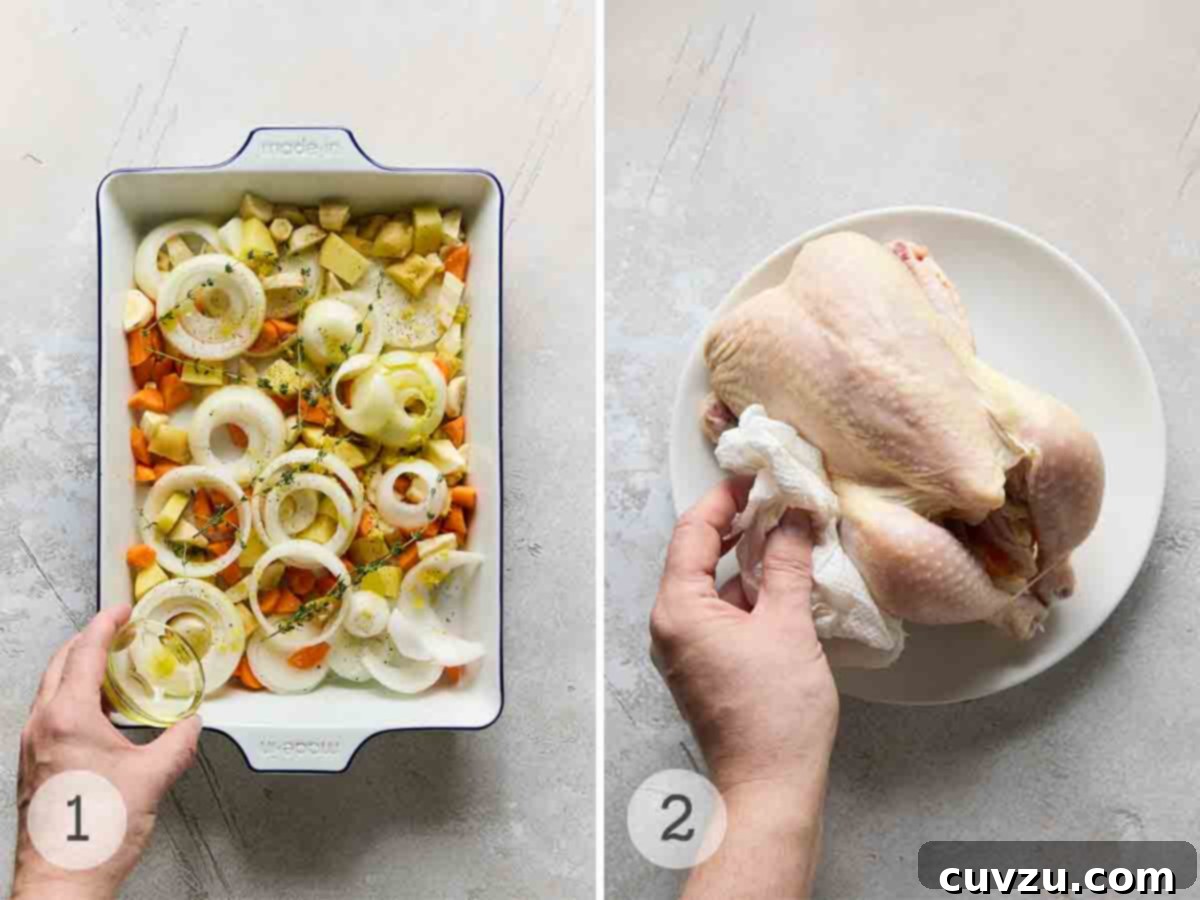
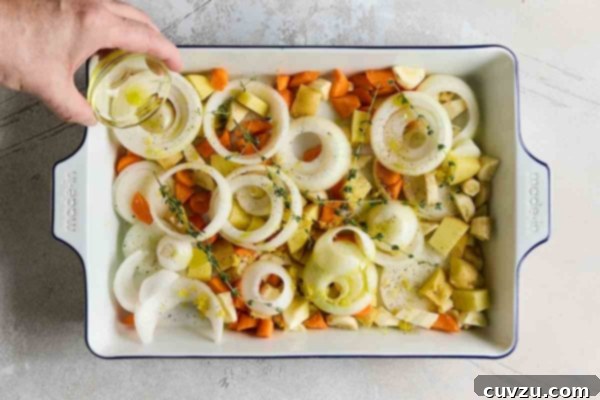
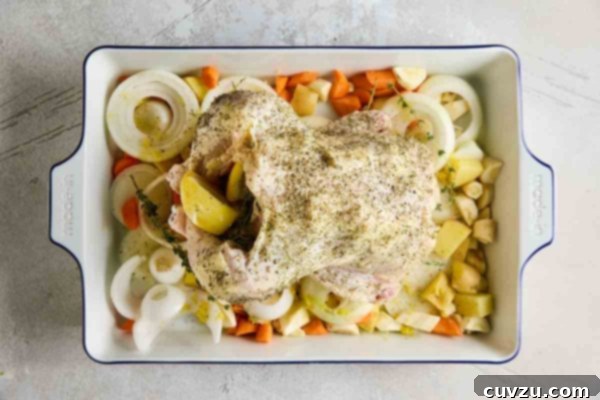
- Prepare the Roasting Pan and Vegetables: Begin by preheating your oven to a robust 425°F (220°C). This initial high heat is crucial for achieving that coveted crispy skin. In a large roasting pan, combine your roughly chopped root vegetables and thickly sliced yellow onions. Drizzle them generously with olive oil, then add the grated lemon zest, a few sprigs of fresh thyme, flaky sea salt, and freshly ground black pepper. Use your hands to thoroughly mix everything, ensuring all the vegetables are evenly coated with the oil and seasonings. Arrange them in a single, even layer at the bottom of the pan to promote uniform roasting and caramelization.
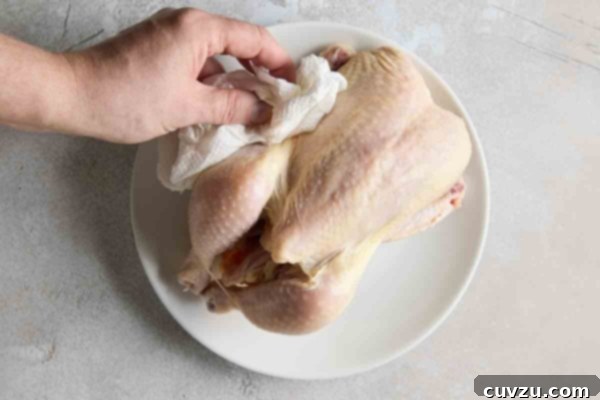
- Prepare the Chicken for Roasting: The secret to truly crispy chicken skin is dryness. Using paper towels, meticulously pat the entire chicken dry, both inside and out. Pay special attention to hidden crevices. Any moisture on the skin will steam rather than crisp, so this step is non-negotiable for that golden, crackling finish.
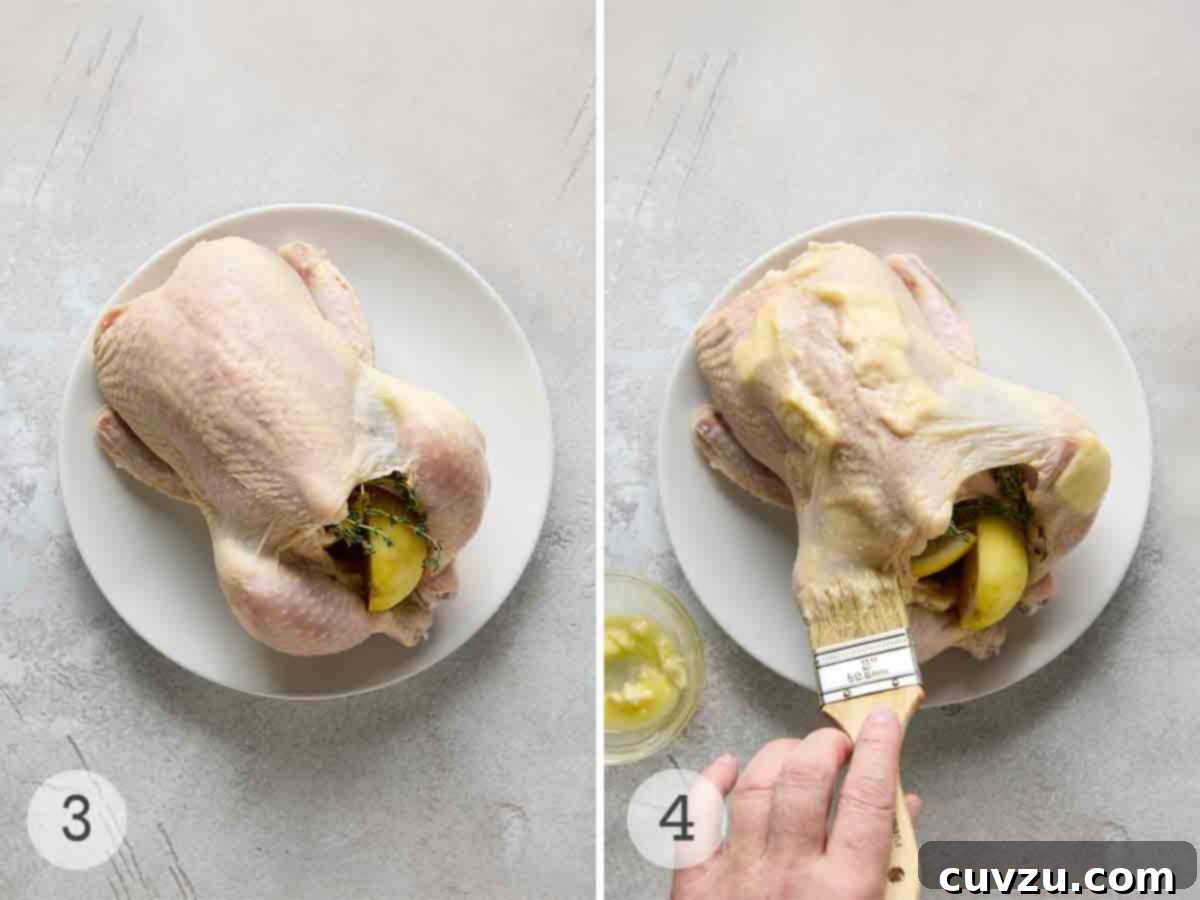
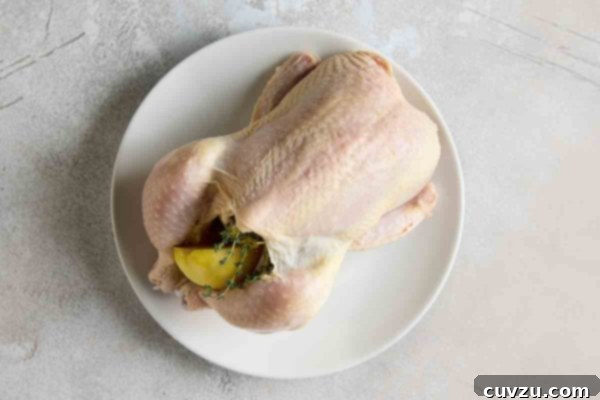
- Stuff the Chicken Cavity: Cut your small lemons into quarters. Gently tuck these lemon wedges, along with the smashed (but unpeeled) garlic cloves and a few additional sprigs of fresh thyme, inside the chicken’s cavity. These aromatics will infuse the meat with incredible flavor from the inside out. If all the lemon pieces don’t fit, you can simply add the remainder to the roasting pan with the vegetables.
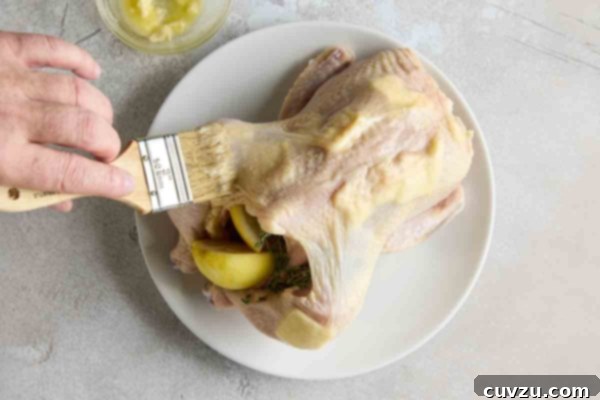
- Butter the Chicken: This step is vital for both flavor and that beautiful golden-brown skin. First, take about half of your room-temperature salted butter and cut it into small pieces. Carefully work your fingers under the chicken’s skin, starting from the cavity end, to create pockets over the breast and thigh meat. Distribute these small butter pieces evenly under the skin. This allows the butter to melt directly into the meat, ensuring maximum juiciness. Next, spread the remaining butter generously over the entire outside of the chicken skin. Your hands are the best tools for this! Finish by sprinkling the bird with Herbes de Provence (or dried thyme) and a touch more freshly ground black pepper.
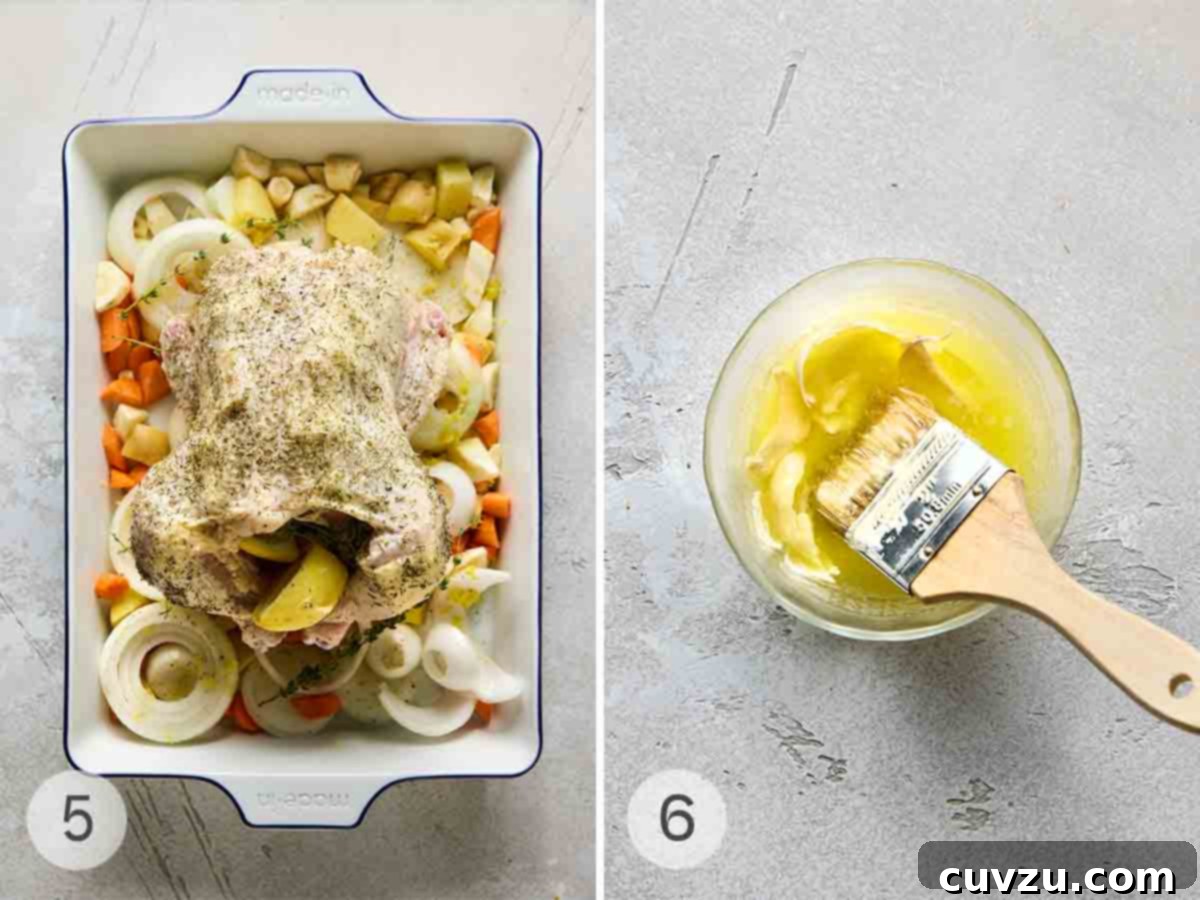
- Initial Roast with Vegetables: Carefully place the prepared chicken directly on top of the seasoned root vegetables in the roasting pan. Transfer the pan to the preheated 425°F (220°C) oven, ideally on the bottom rack, for an initial 20 minutes. This high-heat blast will kickstart the browning process, creating a beautifully crisp skin.
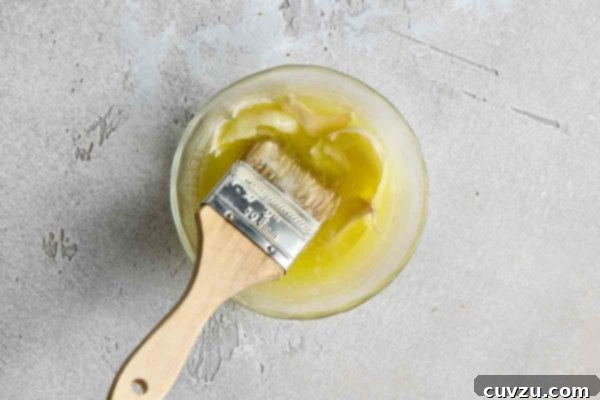
- Prepare the Basting Butter: While the chicken has its initial roast, prepare your basting mixture. In a small saucepan, melt the remaining 4 tablespoons (2 oz) of salted butter. Add the two smashed (unpeeled) garlic cloves. Keep this mixture warm over a very low heat. This aromatic garlic butter will be your secret weapon for continuously moisturizing and flavoring the chicken throughout the rest of the cooking time.
- Continue Roasting and Basting: After the initial 20 minutes, reduce the oven temperature to 400°F (200°C). Continue to roast the chicken for an additional 60 to 70 minutes, or until the internal temperature, measured in the thickest part of the thigh (avoiding the bone), reaches 165°F (74°C) on a meat thermometer. During this period, baste the chicken generously with your warm garlic butter every 20 minutes. Basting not only keeps the skin moist and flavorful but also adds layers of rich garlic and butter essence to the entire bird and the vegetables below. A good rule of thumb for roasting chicken is approximately 20 minutes per pound (454g), but always rely on a meat thermometer for absolute certainty.
- Rest and Serve: Once the chicken reaches 165°F (74°C), remove it from the oven and carefully transfer it to a carving board. It’s crucial to allow the chicken to rest, loosely tented with aluminum foil, for at least 10-15 minutes before carving. This resting period allows the juices to redistribute throughout the meat, ensuring every slice is incredibly tender and moist. While the chicken rests, give the roasted vegetables a good stir and pop them back into the oven to keep warm, or even under the broiler for 5 minutes if you desire extra crispness (watch them closely to prevent burning!).
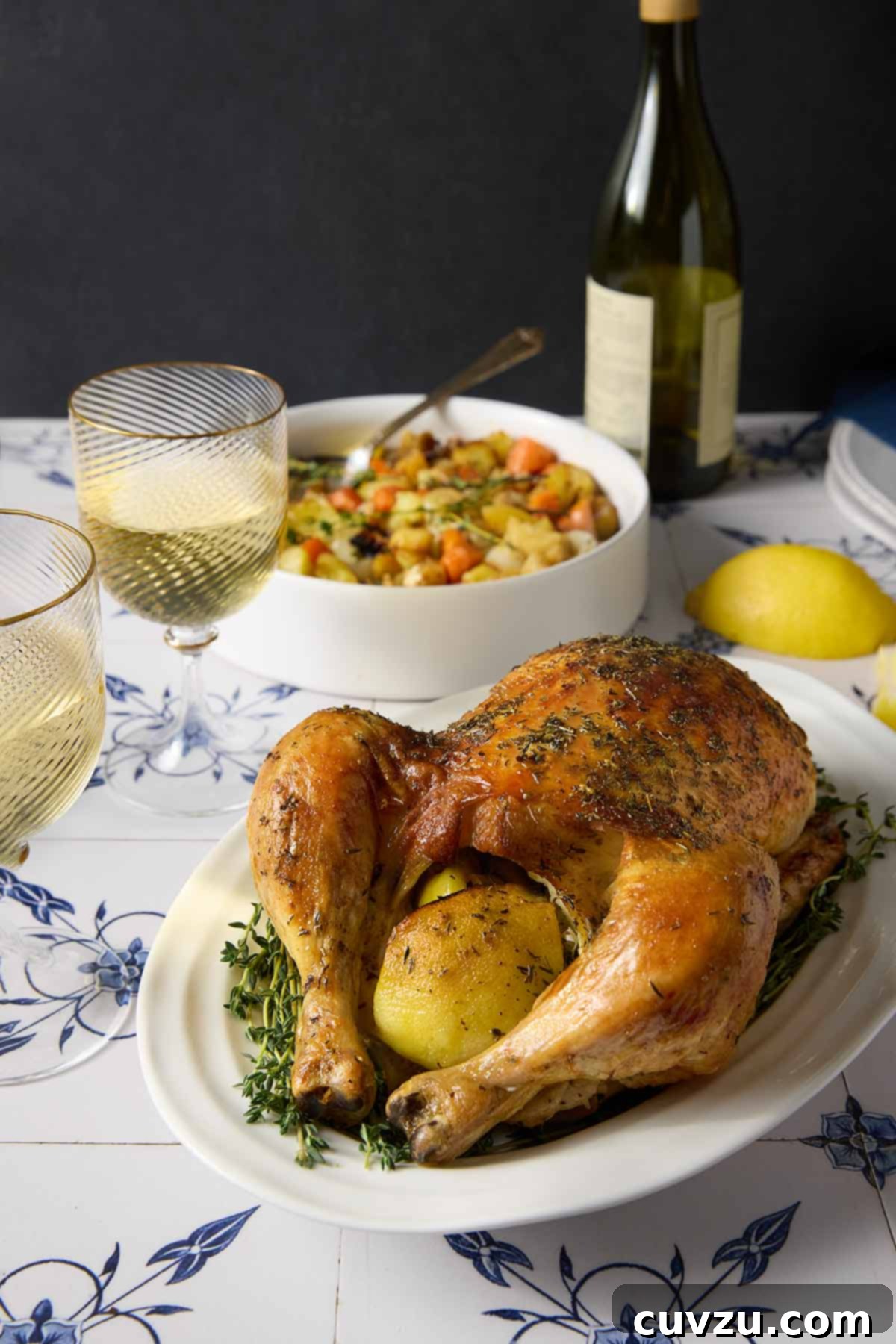
Common Questions About French Roast Chicken
The most accurate and reliable way to ensure your chicken is perfectly cooked without over-drying it is by using a meat thermometer. Insert the thermometer into the thickest part of the thigh, making sure it doesn’t touch any bone. When the thermometer registers an internal temperature of 165°F (74°C), your chicken is done. The juices should also run clear when you pierce the thigh with a knife. For consistent results and food safety, a thermometer is always recommended.
Carving a whole chicken might seem daunting, but it’s simple with a sharp knife and a bit of practice. Start by placing your cooked and rested chicken on a sturdy cutting board. To remove the legs, slice through the skin between the leg and the breast until you reach the hip joint. Press firmly with your knife to cut through the joint while gently pulling the leg away. Then, separate the drumstick from the thigh by cutting through the joint. Repeat this process for the other leg. For the breast, make an incision into the top of the breast, right alongside the breastbone. Guide your knife along the breastbone and ribs, gently pulling the breast meat away from the bone as you go. Continue until you reach the wing joint, then cut through it to separate the wing. Repeat for the other breast. You can then slice the breast meat into individual portions, if desired, and arrange everything artfully on a platter.
Trussing, or tying up, the chicken can help it cook more evenly by keeping the legs and wings tucked close to the body. This can also result in a neater presentation. However, for this particular Poulet Rôti recipe, trussing is not strictly required. The chicken will cook beautifully and develop delicious flavors even without it. It’s largely a matter of personal preference; if you’re comfortable trussing, go for it! If not, don’t worry, your roast chicken will still be fantastic.
Absolutely! While fresh thyme and Herbes de Provence are traditional choices that deliver an authentic French flavor profile, you can certainly experiment with other herbs. Rosemary, sage, or even a mix of fresh parsley and tarragon would offer delightful variations. The key is to choose herbs that complement chicken well and release their aromatics during roasting. Fresh herbs are always preferred for their vibrant flavor, but high-quality dried herbs can be used in a pinch, typically using a smaller quantity as their flavor is more concentrated.
Perfect Pairings: What to Serve with Poulet Rôti
Since this incredible French roast chicken and its caramelized root vegetables form a complete and satisfying meal on their own, finding accompaniments is delightfully simple. You already have juicy, tender chicken and richly flavored vegetables, bathed in those glorious pan juices. All that’s truly needed to round out the experience is a crisp, refreshing green salad. A simple dressing, like a tangy lemon vinaigrette, will provide a welcome contrast to the richness of the chicken and butter-laced vegetables, cleansing the palate with every bite. To truly elevate the French dining experience, consider adding a loaf of crusty artisan bread – it’s practically mandatory for sopping up every last drop of those savory, buttery pan juices. For those looking to add an extra touch of indulgence, serving classic Potatoes Dauphinoise on the side would create an unforgettable feast. This dish also makes a great Mother’s Day recipe, showing appreciation with a touch of culinary sophistication.
Pro Tips & Troubleshooting for the Perfect Roast
- Quality Matters: With a recipe this simple and focused on natural flavors, the quality of your ingredients truly shines through. Opt for the best quality chicken you can find – a free-range or organic bird will offer superior flavor and texture. Fresh, vibrant root vegetables and high-quality butter will make a noticeable difference in the final dish.
- Prevent Over-Browning: While a golden-brown, crispy skin is the goal, sometimes ovens can be uneven, or the chicken might start browning too quickly. If you notice your chicken skin getting excessively dark before the internal temperature is reached, simply cover it loosely with a piece of aluminum foil. This will protect the skin from further browning while allowing the chicken to continue cooking through.
- Utilize Leftovers: Don’t let anything go to waste! After you’ve enjoyed every tender morsel of your Poulet Rôti, save the chicken carcass and any leftover bones. These are invaluable for making a rich, flavorful slow cooker chicken stock. It’s an easy way to create a foundational ingredient for soups, sauces, and risottos, extending the life and flavor of your incredible meal.
- Achieving Crispier Skin: Beyond patting the chicken dry, ensure your roasting pan isn’t overcrowded with vegetables, as this can create steam and inhibit crisping. A little space around the chicken allows for better air circulation. Also, a high initial temperature helps kickstart the crisping process.
- Pan Juices Are Gold: The savory juices that accumulate at the bottom of the roasting pan, infused with chicken, garlic, lemon, and butter, are pure liquid gold. Don’t discard them! After removing the chicken and vegetables, scrape up these fond bits. They make an incredible sauce simply by deglazing the pan with a splash of white wine or chicken stock, reducing slightly, and seasoning to taste. Spoon them over your carved chicken and vegetables for an extra layer of flavor.
Storing and Reheating Your Poulet Rôti
Should you be fortunate enough to have leftovers from your exquisite Poulet Rôti, they can be a delightful treat for days to come. Store any leftover chicken, carved or whole, in a sealed, airtight container in the refrigerator for up to 4 days. When you’re ready to enjoy it again, the best way to reheat roast chicken is gently. Place the chicken pieces in an oven-safe dish, cover them loosely with foil to prevent drying out, and reheat in a preheated 300°F (150°C) oven until warmed through, typically 15-20 minutes depending on the size of the pieces. This method helps maintain the chicken’s tenderness and prevents it from becoming rubbery, unlike microwave reheating.
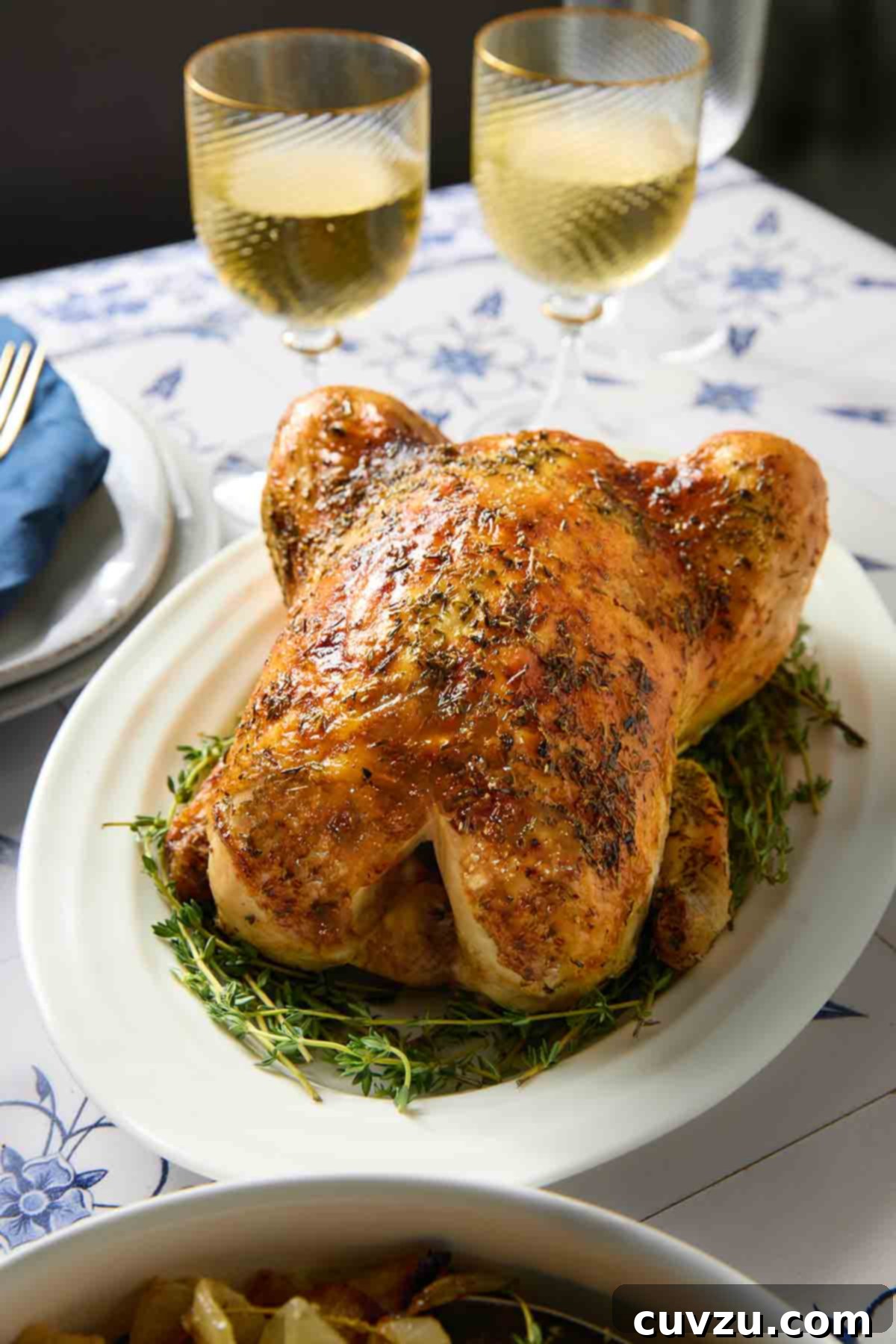
Explore More Superb Roast Chicken Creations
If you’ve fallen in love with the magic of roast chicken, there’s a whole world of delightful variations to discover. Each offers a unique twist on this comforting classic. Expand your culinary horizons with these other fantastic roast chicken recipes from our collection:
Share Your Culinary Journey: Write a Review!
We love to hear about your cooking triumphs! If you make this Poulet Rôti recipe, or any other dish from Leite’s Culinaria, please consider leaving a review, a star rating, and even sharing your best photo in the comments below. Your feedback truly inspires us! –David
This Poulet Rôti was absolutely amazing! It was so easy to make, and the roasted vegetables, steeped in those incredible juices, were truly out of this world. My family and I may never go back to grocery-store roast chicken again after experiencing this masterpiece.
Karen W.
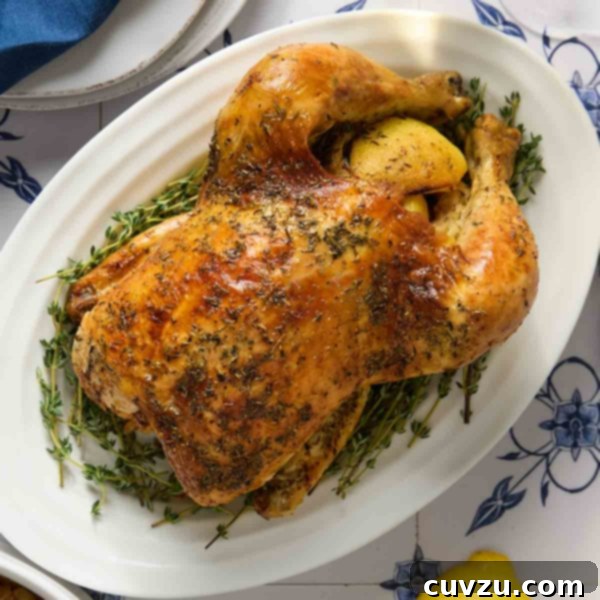
French Roast Chicken ~ Poulet Rôti
David Leite
Print Recipe
Mains
French
4
servings
585
kcal
30
minutes
1
hour
20
minutes
1
hour
50
minutes
Ingredients
US Units
Metric Units
Metric Units
For the Chicken
- 2 to 3 cups roughly chopped assorted root vegetables (carrots, parsnips, potatoes)
- 2 medium yellow onions, thickly sliced
- 2 tablespoons olive oil
- 2 small lemons, preferably organic, zest grated from 1
- 6 sprigs fresh thyme
- 2 teaspoons flaky sea salt
- 1 teaspoon freshly ground black pepper
- One (3-pound) chicken
- 2 garlic cloves, unpeeled but smashed
- A few sprigs fresh thyme
- 4 tablespoons (2 oz) salted butter, at room temperature
- 1 to 2 teaspoons dried herbes de Provence or dried thyme
- Freshly ground black pepper
For Basting
- 4 tablespoons (2 oz) salted butter
- 2 garlic cloves, unpeeled and smashed
Instructions
Show Media
Make the Chicken
-
Preheat the oven to 425°F (220°C).
-
Scatter the chopped vegetables and onions in a roasting pan and drizzle with the oil. Add the lemon zest, thyme, salt, and pepper to the vegetables and, using your hands, mix until all the vegetables are coated and then spread into a single layer.

-
Using paper towels, pat the chicken completely dry, inside and out.
-
Cut both lemons in quarters and tuck them in the cavity of the bird with the smashed garlic and a few sprigs of fresh thyme. If all the lemon quarters don’t fit, you can pop them in the pan with the vegetables—just don’t forget to take them out when you serve the chicken.
-
Cut about half the butter into small pieces and place the pieces under the skin of the bird. To do this, start at the cavity end of the chicken and slide one or two fingers between the meat and the skin. Work slowly, separating the skin from the meat as far as you can reach. Squish the butter pieces slightly and fit them under the skin as best you can.
-
Spread the remainder of the butter over the outside of the skin. The easiest way to do this is with your hands. Season the bird with the herbes de Provence or dried thyme and a touch of pepper.
-
Place the bird directly on the vegetables in the roasting pan and place in the oven on the bottom rack for 20 minutes, until the skin starts to brown nicely.
Make the Basting Mixture
-
In a small saucepan, melt the butter. Add the smashed garlic and place over very low heat. You will use this to baste the chicken while it’s roasting.
-
Turn down the oven to 400˚F (200˚C) and roast the chicken for 60 to 70 minutes more, or until a meat thermometer inserted into the high part of the thigh registers 165˚F (74˚C). Normally you can count on about 20 minutes’ cook time per pound (454 g) of chicken but to be absolutely sure, a meat thermometer is the way to go!
-
While the bird is cooking, baste it every 20 minutes or so with the melted butter and smashed garlic. This will season the bird even more.
To Serve
-
Once the chicken is cooked, remove it from the oven (leave the vegetables in the roasting pan), place it on a cutting board (preferably one that has a drain ridge to catch any juices), cover it loosely with aluminum foil and allow it to rest for about 10 minutes before you carve it.
-
Give the vegetables a good stir and place the roasting pan back in the oven until you are ready to serve the meal. If the vegetables are not crisp enough, you can set the broiler to high (around 400˚F/200˚C, if your broiler has a temperature display) and broil them for about 5 minutes, but do keep an eye on them as they might burn.
Notes
- Choosing your chicken: With so few ingredients, it’s important to find the best quality chicken you can. This will significantly impact the flavor and tenderness of your Poulet Rôti.
- Tenting the chicken: If your chicken is browning too quickly, especially on the breast, cover it loosely with aluminum foil. This helps prevent the skin from burning while the meat finishes cooking.
- Make stock: Don’t discard the carcass! Save your chicken carcass for making a rich, flavorful slow cooker chicken stock, an excellent base for future soups and sauces.
- Pan Juices: The accumulated pan juices are packed with flavor. After carving the chicken, you can spoon these juices over the meat and vegetables, or even deglaze the pan with a splash of white wine or chicken broth to create a simple, luscious sauce.

Adapted From
In the French Kitchen with Kids
Buy On Amazon
Explore More with AI
Substitutions
Scale Recipe
Summarize
Nutrition
Serving:
1 portion
Calories:
585 kcal
Carbohydrates:
22 g
Protein:
23 g
Fat:
47 g
Saturated Fat:
20 g
Monounsaturated Fat:
18 g
Trans Fat:
1 g
Cholesterol:
142 mg
Sodium:
1449 mg
Fiber:
6 g
Sugar:
6 g
Nutrition information is automatically calculated, so should only be used as an approximation.
Tried this recipe?
Mention @leitesculinaria or tag #leitesculinaria!
Hear From Our Recipe Testers: Unbiased Reviews
Our dedicated team of recipe testers puts every dish through its paces to ensure you get the best results. Read what they had to say about this exquisite French Roast Chicken:
Patty Fabian
This French roast chicken dish truly has it all—tender, juicy meat bursting with flavor, wonderfully crisp skin, and roasted veggies luxuriating in rich, buttery lemon-garlic chicken pan juices! I’m still savoring the memory of it.
The entire process, from start to finish, takes a bit of time, making it an ideal meal to prepare for guests when much of the work can be done in advance. Once your friends arrive, you simply need to periodically peek in the oven and baste, allowing you to relax and enjoy cocktails with them.
The only accompaniments needed for this magnificent dish are a crisp green salad, dressed with a bright, bracing vinaigrette to cut through the richness of the butter, and a really good, crusty baguette to sop up all those incredible juices.
Deborah Wallace
This French roast chicken recipe proved to be an absolute keeper, one I’ll undoubtedly reach for repeatedly. The outcome was a chicken brimming with flavor, boasting perfectly crisp skin and incredibly moist flesh—even the often-tricky white meat. However, for me, the true standout of the dish was the vegetables. The delightful combination of lemon zest with fresh herbs, salt, and pepper created such a delicious medley that I found myself wishing for even more morsels of carrot and potato to enjoy.
Sarah Kenney
What a classic and exceptionally well-written roast chicken recipe! It serves as a wonderful reminder that basic, high-quality ingredients, when cooked with care and proper technique, can truly transform into a fabulous main course. This recipe truly delivers on that promise.
Whatever you do, don’t skip the basting step with the garlic butter; it is absolutely essential for producing that beautiful golden brown, irresistibly crispy skin. And, as always, definitely use a meat thermometer to ensure you don’t overcook your bird – it’s the key to maintaining perfect juiciness! I prepared this on a Monday for lunch, and I’m already eagerly anticipating enjoying the delicious leftovers throughout the week—the possibilities are endless!
Carrie Gott
This Poulet Rôti is a truly wonderful dish, perfect for serving at dinner, and consistently a big hit with both adults and children alike. The chicken itself is incredibly moist, boasting a delicious, savory flavor that makes it incredibly satisfying. It’s a crowd-pleaser that brings smiles to everyone at the table.