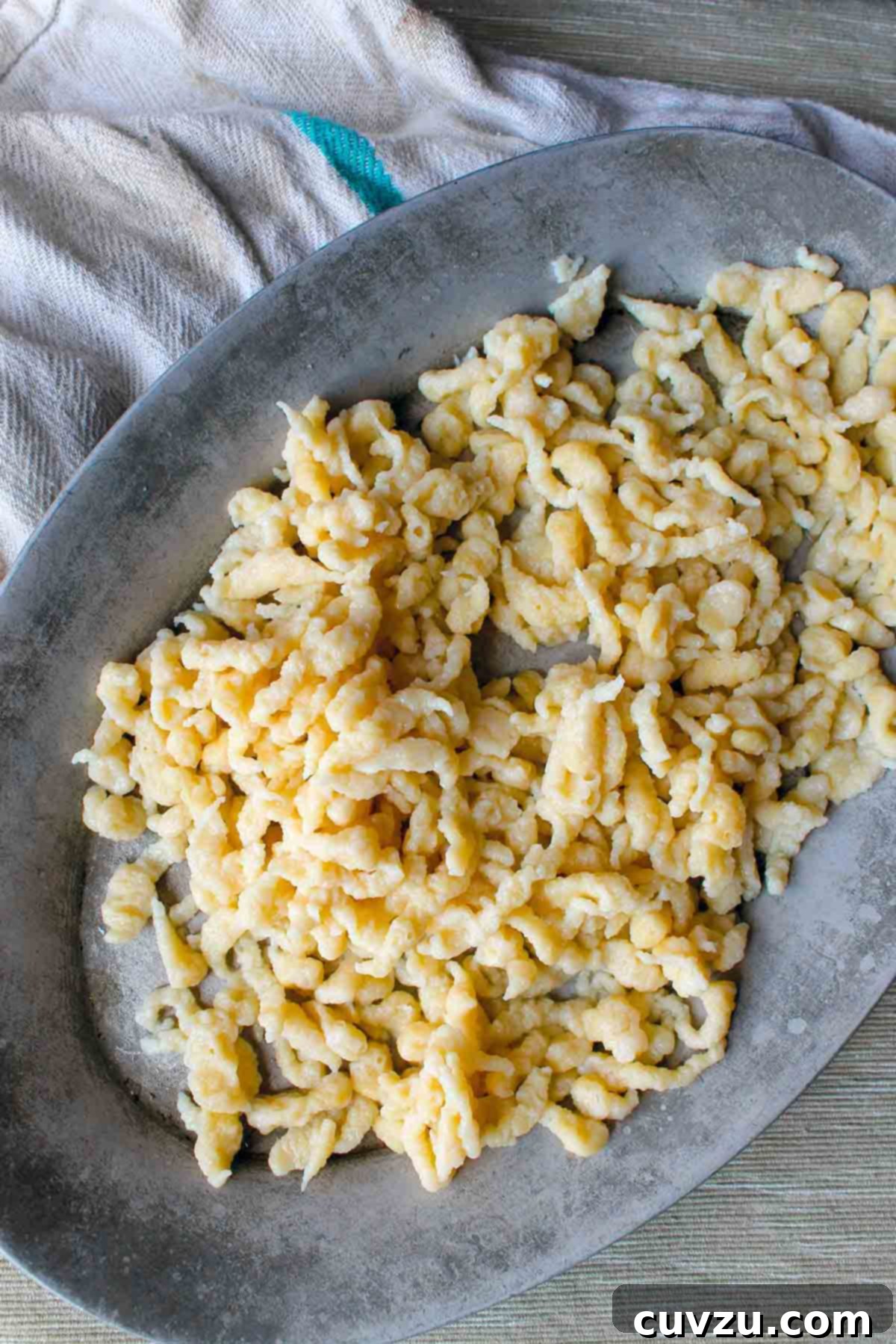
Homemade spaetzle, a delightful fresh pasta made with just flour, eggs, milk, and salt, holds a cherished place in European cuisine, particularly across Germany, Austria, and Switzerland. This guide will walk you through creating these light, pillowy dumplings using a surprisingly simple technique—the colander method. Quick to prepare, inexpensive, and profoundly comforting, homemade spaetzle offers a taste of tradition that’s incredibly satisfying.
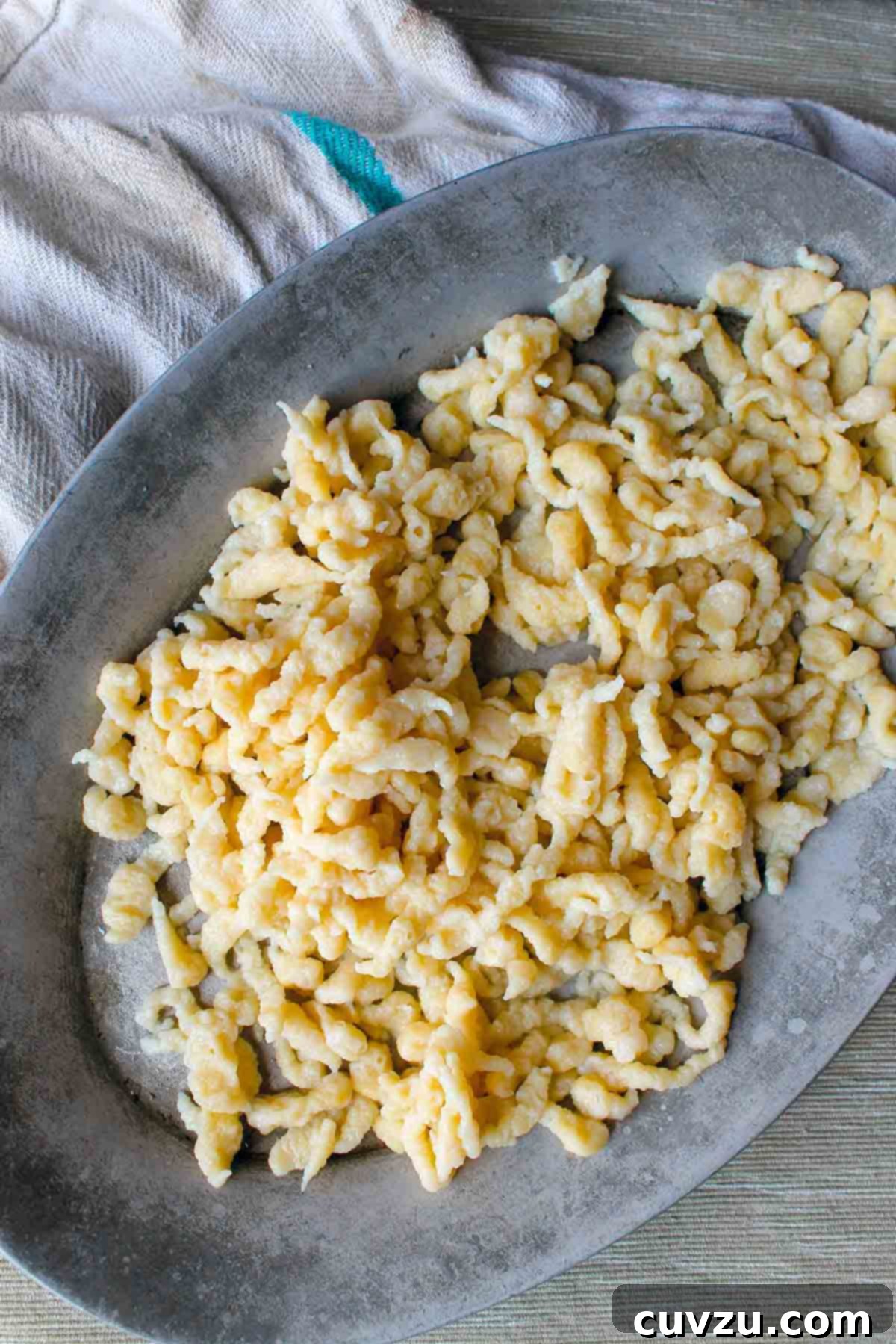
What Exactly Is Spaetzle? A Journey into German Pasta
Before diving into the culinary adventure, let’s clarify what spaetzle truly is. At its heart, homemade spaetzle is a unique form of pasta dumpling—a testament to rustic European comfort food. Crafted from a basic batter of flour, eggs, and milk, these charming morsels boast a distinctly light and pillowy texture when prepared correctly. Unlike traditional pasta, there’s no need for laborious rolling, kneading, or intricate shaping. Instead, spaetzle utilizes a wonderfully unfussy technique to form its characteristic squiggles, most commonly achieved with a specialized spaetzle maker or, as we’ll demonstrate, a simple kitchen colander.
While the process of making spaetzle is far from difficult or expensive, it can be a touch messy, especially for first-timers. But don’t let that deter you! This isn’t a “don’t bother” kind of tricky; it’s a “be prepared for a little floury fun” kind of tricky. The resulting fresh, tender pasta is undeniably worth the minimal effort and any small mess, offering an inexpensive, versatile, and weeknight-friendly addition to your culinary repertoire. It’s a dish that warms the soul and satisfies the palate, proving that some of the best foods are born from the simplest ingredients and techniques.
Why Embrace Homemade Spaetzle? The Joys of Freshness and Simplicity
Choosing to make spaetzle at home opens up a world of fresh flavors and textures that store-bought versions simply can’t match. The immediate gratification of transforming humble ingredients into a delightful meal is incredibly rewarding. Beyond the superior taste and texture, homemade spaetzle is remarkably cost-effective, utilizing pantry staples you likely already have on hand. It’s also an excellent way to introduce a touch of authentic European tradition into your kitchen without needing exotic ingredients or specialized skills. Plus, the process itself, while engaging, is relatively quick, making it a fantastic option for a satisfying meal any day of the week.
Classic Homemade Spaetzle Recipe
David Leite
Sides, Main Course
German, European
4
servings
306
kcal
15 minutes
10 minutes
25 minutes
Equipment
-
Spaetzle maker or a colander (ensure it has holes, not a fine sieve)
-
Large pot
-
Large bowl for mixing
-
Whisk or wooden spoon (or stand mixer with dough hook)
-
Spatula or scraper
-
Slotted spoon
Ingredients
US
Metric
Metric
-
2
cups
all-purpose flour -
3
large
eggs,
lightly beaten -
2/3
cup
whole milk,
plus more as needed - Pinch sea salt (for batter)
-
Pesto or melted butter or brown butter,
for serving -
Freshly ground black pepper,
for serving
Instructions
-
1. Prepare the Batter: In a large mixing bowl, start by whisking together the all-purpose flour and the lightly beaten eggs until partially combined. Gradually add the whole milk, whisking continuously to prevent lumps. For a smoother process, consider using a stand mixer fitted with a dough hook, or a sturdy wooden spoon, as the batter will thicken considerably. Finish by stirring in the pinch of sea salt. The final consistency of your spaetzle batter should be quite thick and somewhat sticky, akin to a very heavy pancake batter or a soft dough that’s too thick to pour but loose enough to fall off a spoon.
-
2. Cook the Spaetzle: Bring a large pot of generously salted water to a rolling boil over high heat. Once boiling, reduce the heat slightly to maintain a gentle, consistent boil. Carefully hold your spaetzle maker or colander (ensure it has relatively large, uniform holes, not a fine sieve) directly over the boiling water. Transfer a portion of the thick spaetzle batter into the maker or colander. Using a spatula or a scraper, press the batter firmly through the holes and into the simmering water below. As the small pasta squiggles emerge, they will cook quickly.
☞ TESTER TIP: This step is often easier and less messy with an extra set of hands! If possible, have one person hold the spaetzle maker or colander steady while the other person pours and presses the batter. This ensures stability and a smoother process. Cook the spaetzle in batches to avoid overcrowding the pot, which can lower the water temperature and lead to unevenly cooked pasta. Each batch should only take a couple of minutes to cook, as the dumplings will float to the surface when done. While some pieces may rise almost immediately, allow them to gently simmer for at least 1 to 1.5 minutes to ensure they are fully cooked through.
-
3. Retrieve and Drain: Once the spaetzle pieces float to the top and have cooked for the recommended time, use a slotted spoon to carefully scoop them out of the boiling water. Transfer the cooked spaetzle to a bowl or a platter. For best results, you may place them on a towel-lined baking sheet to absorb any excess water, preventing them from becoming soggy or sticking together.
-
4. Serve and Season: Immediately after cooking, toss the warm spaetzle with your choice of pesto, melted butter, or rich brown butter. Season generously with additional salt (to taste, as the cooking water was salted) and freshly ground black pepper. Serve hot as a comforting side dish or as the base for a more elaborate meal.
Adapted From
The Kitchen Ecosystem
Buy On Amazon
Nutrition Information (Approximate)
Serving:
1
portion
Calories:
306
kcal
Carbohydrates:
50
g
Protein:
13
g
Fat:
5
g
Saturated Fat:
2
g
Monounsaturated Fat:
2
g
Trans Fat:
0.01
g
Cholesterol:
144
mg
Sodium:
80
mg
Fiber:
2
g
Sugar:
2
g
Nutrition information is automatically calculated, so should only be used as an approximation.
Tried this recipe?
Mention @leitesculinaria or tag #leitesculinaria!
Serving Suggestions and Creative Variations for Spaetzle
While a simple toss with melted or brown butter and a sprinkle of salt and pepper is a classic and utterly delicious way to enjoy homemade spaetzle, its versatility truly shines when you explore other serving options. These tender pasta dumplings are a fantastic canvas for a variety of flavors and can easily be adapted as a side dish or even incorporated into a main course. Consider these ideas:
- Herbs and Cheese: Enhance the basic buttered spaetzle with fresh herbs like parsley, chives, or a hint of sage. A dusting of grated Parmesan, Pecorino Romano, or Gruyère cheese adds a wonderful savory depth.
- Creamy Sauces: Spaetzle pairs beautifully with creamy mushroom sauces, rich gravies, or even a simple cheese sauce (käsespätzle being a prime example of a traditional German dish).
- Meaty Pairings: Serve alongside roasted meats like chicken, pork tenderloin, beef goulash, or sauerbraten to soak up flavorful pan juices. Their sturdy texture holds up well to hearty stews and braises.
- Soup and Salad Boost: Add cooked spaetzle to clear broths for a comforting chicken noodle soup alternative, or chill them and toss into a pasta salad with fresh vegetables and a vinaigrette for a unique twist.
- Browned Perfection: For an extra layer of flavor and texture, sauté the cooked spaetzle in a little butter or olive oil until lightly golden and crisp on the edges. This method creates a delightful contrast between the soft interior and crispy exterior. Try browning them with caramelized onions or crisp bacon bits.
- Pesto Power: As mentioned in the recipe, a vibrant pesto sauce offers a fresh, herbaceous counterpoint to the rich pasta.
Don’t be afraid to experiment with your favorite flavors and ingredients. Spaetzle’s mild taste makes it incredibly adaptable to various culinary styles and preferences.
Insights from Our Recipe Testers: Tips for Perfect Spaetzle
Our dedicated team of recipe testers put this homemade spaetzle recipe to the test, offering valuable feedback and clever tips to help you achieve the best results. From adjusting batter consistency to choosing the right tools, their experiences provide a wealth of practical advice for both novice and experienced cooks.
Helen Doberstein
Helen, whose husband’s German family considers spaetzle a staple, was keen to try this recipe for a large family dinner of 15 people. She successfully doubled the recipe, noting its ease of scalability and the enthusiastic reception from her in-laws, including her mother-in-law, a true testament to its authentic flavor! Helen emphasized that the batter’s consistency is key: “like a really thick pancake batter, too thick to pour off a spoon but thin enough to fall off a spoon.” Her prep work took about 20 minutes for mixing and 40 minutes for cooking the doubled batch. While she had a spaetzle maker, she did experiment with a small colander but found it a bit cumbersome for large quantities. She advises cooking spaetzle in smaller batches at a slow boil to keep them separate and ensure even cooking, allowing for easy removal with a slotted spoon. Helen also suggests placing the cooked spaetzle on a towel-lined baking sheet to absorb excess water before tossing them with traditional brown butter, salt, and pepper. Given its simplicity and delicious outcome, she highly recommends investing in a spaetzle maker, which significantly speeds up the process.
Michelle P.
As someone with Bavarian roots who has enjoyed spaetzle both at home and in Germany, Michelle affirms its status as a true comfort food. She found this recipe remarkably easy to assemble, relying on common kitchen staples. She confirmed the batter’s characteristic thick and sticky texture, noting that achieving a perfectly smooth dough wasn’t the goal. Lacking a specialized spaetzle maker, Michelle opted for a colander, but discovered its graduated holes posed a slight challenge. She recalls her father creating homemade makers from plastic milk jugs with uniform holes, which she suggests as an alternative. Initially, she found the colander awkward and struggled to push the thick dough through. After the first batch, she wisely added about 1/4 cup more milk, which helped the dough pass through the holes much more easily. She observed that the mini dumplings cooked very rapidly, floating to the surface in about 30 seconds, and that leaving them in for an additional minute past the initial float did not adversely affect their consistency. After cooking all batches, Michelle browned butter in her Dutch oven, tossed the spaetzle back in, seasoned it with salt and pepper, and served it with grated Romano cheese on top. Her family devoured it, and she plans to use the leftovers as “noodles” in chicken noodle soup, highlighting spaetzle’s versatility.
Joel Jenkins
Joel, a seasoned spaetzle maker since the mid-’90s, praised this recipe for its simplicity. He noted that while he previously rolled and punched each dumpling by hand for many years, the colander method proved to be a “vast improvement” in terms of efficiency. His crucial advice for using the colander method is to place it over the boiling water and quickly add the batter, as delays can lead to a considerable mess. He strongly recommends cooking the spaetzle in small batches, cautioning against dumping all the batter at once, which can overcrowd the pot and result in overcooked noodles. To prevent the spaetzle from sticking together between batches, Joel suggests rinsing them with cool water. For serving, he shared his preference for making brown butter with sage, then briefly crisping the noodles in the butter rather than simply pouring melted butter over them—a personal touch that adds an extra layer of flavor and texture.
Robert McCune
Robert had a spaetzle “lid” that fits over a pan, yet it remained unused until this recipe inspired him. He found this spaetzle recipe to be easy and yielding “great results.” The batter came together quickly, producing very light pasta dumplings suitable for numerous applications. He experimented with a couple of different serving styles: first, tossing the spaetzle with warm sage-infused olive oil and grated Parmesan cheese, which created a delightful herbaceous profile. Second, he served them with leftover pork tenderloin, allowing the spaetzle to absorb the luscious pan juices, highlighting their ability to complement rich flavors. Robert also suggests tossing spaetzle with pasta sauce, adding them to soups, or incorporating them into pasta salads. He particularly recommends browning them in a little butter and serving them as a hearty side dish, a flavorful alternative to potatoes or rice.
Lila Ferrari
For Lila, making this recipe was a special treat as she rediscovered her long-lost spaetzle maker. She noted a small challenge during the batter preparation: whisking the milk into the flour and eggs proved difficult, suggesting that a sturdy spatula might have been more effective than a traditional whisk for incorporating the thick mixture. Despite this, the resulting spaetzle were wonderfully light. For serving, Lila and her family opted for the classic, simple approach of butter, salt, and pepper—a minimalist choice that nonetheless delivered comforting flavor. Looking ahead, Lila plans to enhance the flavor in future batches by adding a touch of nutmeg, a common spice in traditional German cooking that beautifully complements spaetzle.
Mackenzie Campbell
Mackenzie, a long-time lover of spaetzle since her travels through Germany, was amazed by how simple this recipe was to execute, especially given its recent resurgence on “hip menus.” She noted the dough came together in just five minutes and let it rest for about 30 minutes while preparing other ingredients. The batter was “incredibly sticky, like glue,” a common characteristic. Lacking a dedicated spaetzle maker, she successfully used a large-holed grater, effectively smearing the dough over the holes with a spatula. Her meal preparation involved sautéing the spaetzle with caramelized onions, kale, whole grain mustard, butter, and chicken. She describes this as “one of the tastiest and easiest meals I’ve made lately,” emphasizing that browning the spaetzle in plenty of butter elevated it to a “heavenly dish” once combined with her accoutrements. The entire meal, including prep, took around 40 minutes, solidifying its place in her “weeknight meals folder.” Mackenzie also noted that had she not “selfishly eaten more than her share,” the recipe would have been perfect for four people as a side or integrated into a main dish, underscoring its generous yield.
Linda Pacchiano
Linda highlights the convenience of a spaetzle maker but assures that the recipe is entirely achievable with a colander that has “fairly large holes.” If using a colander without a dedicated maker, she recommends having another person assist with scraping the dough into the boiling water to manage the process more smoothly. She found the recipe quick to assemble and mix, taking approximately five minutes. Linda advises against using a standard whisk once the milk is added due to the batter’s increasing thickness, suggesting a dough whisk or a simple wooden spoon for easier blending. The batter’s appearance was described as a “thick, lumpy cake batter.” The scraping and cooking phase took about eight minutes, bringing the total active time to a mere 13 minutes. Her essential tip for knowing when spaetzle is done? “Just like when you cook pasta, the only way to know if the spaetzle are done is to taste them.” After cooking, she tossed her spaetzle in a couple of tablespoons of butter and seasoned with pepper, finding that no additional salt was necessary thanks to the thoroughly salted cooking water.
Embrace the Comfort of Homemade Spaetzle
Homemade spaetzle is more than just a simple pasta dish; it’s a culinary journey into the heart of European comfort food. With its straightforward ingredients and adaptable preparation methods, it proves that some of the most satisfying meals can be created with minimal fuss. Whether you opt for a traditional spaetzle maker or a trusty colander, the process is an enjoyable and rewarding one, culminating in tender, flavorful dumplings that are perfect for any occasion. Don’t let its slightly messy nature deter you; the delicious outcome is well worth the small effort. So, gather your ingredients, clear your countertop, and prepare to delight your taste buds with this authentic and incredibly versatile dish. Happy cooking!