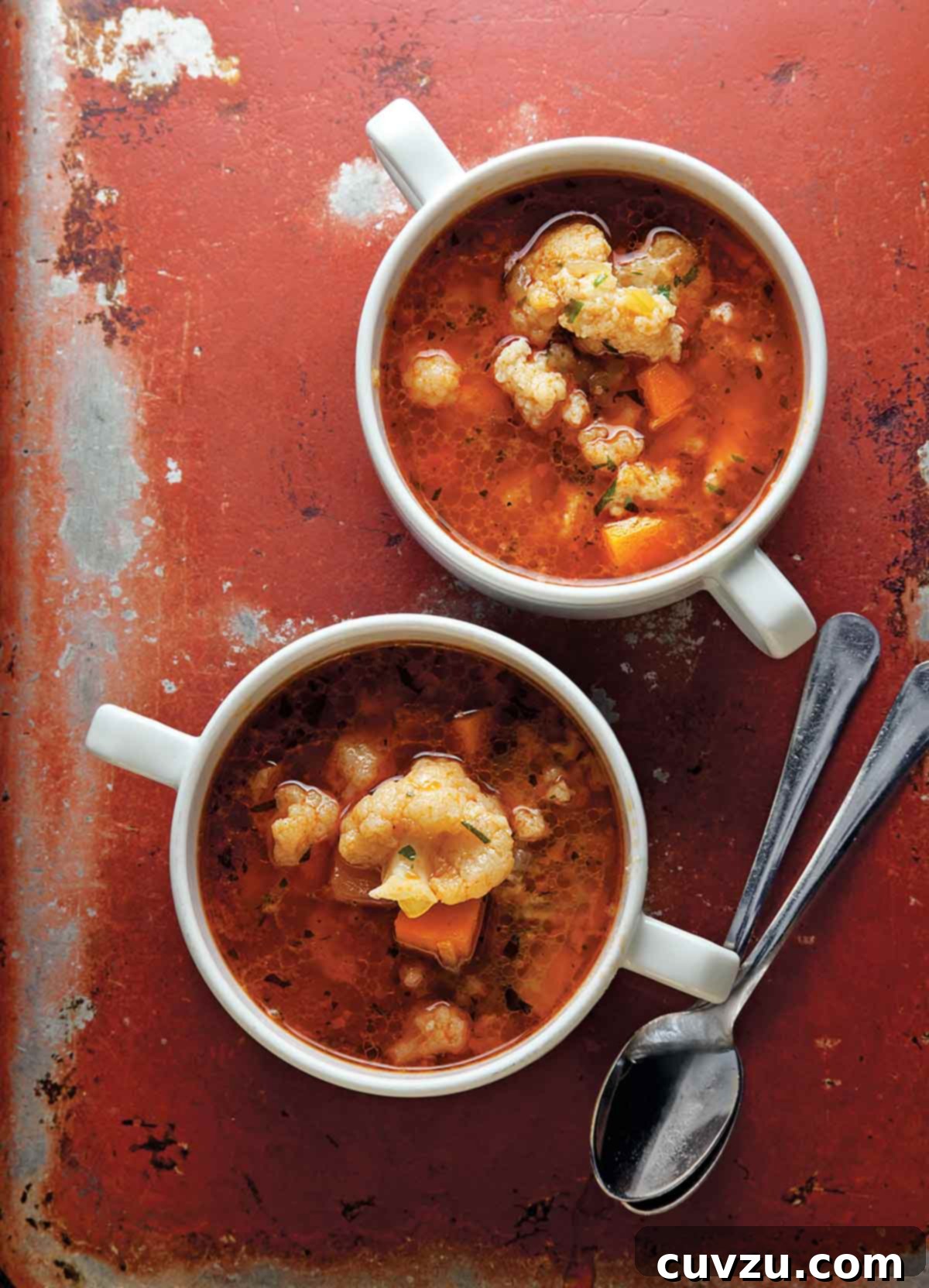
Heartwarming Hungarian Cauliflower Soup (Karfiolleves) with Dumplings: A Rich Tapestry of Flavor
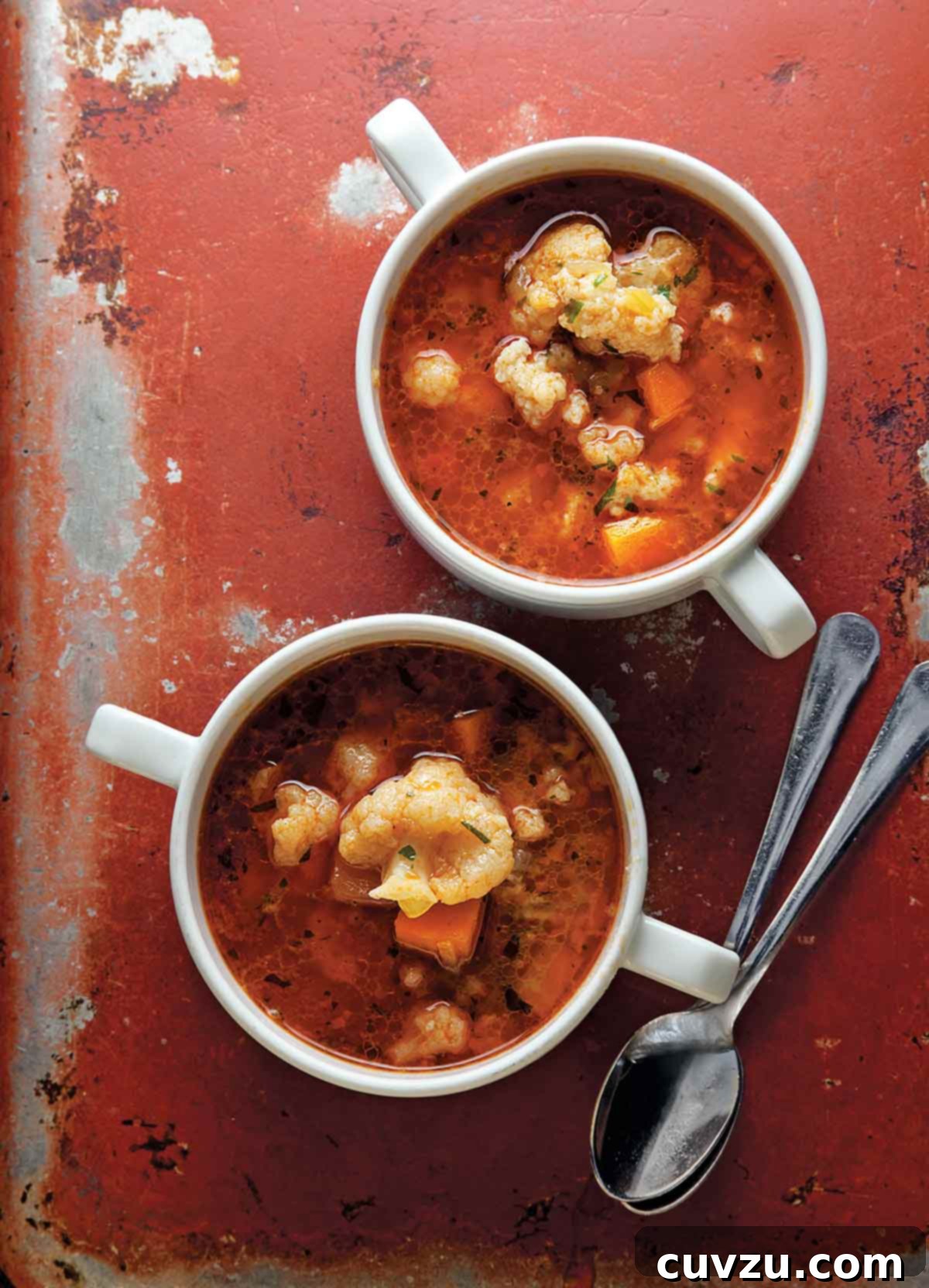
Step into the rich culinary world of Hungary with a truly exceptional dish: **Hungarian cauliflower soup with dumplings**, affectionately known as karfiolleves. This isn’t just any soup; it’s a quick, easy, and incredibly satisfying meal that brings together humble, pantry-friendly ingredients to create a symphony of flavors. What sets it apart is its generous use of paprika, a cornerstone of Hungarian cuisine, which infuses the soup with a warming, brick-red hue and an unparalleled depth that you won’t find in typical soups. It’s a comforting bowl that feels both familiar and refreshingly new, promising a memorable gastronomic experience.
The Soul of Hungarian Soup: A Culinary Journey
There’s a unique enchantment about experiencing a cuisine that transports you to a place you’ve never been. This Hungarian cauliflower soup evokes just such a feeling, stirring a sense of “homesickness” for the vibrant kitchens and traditions of Hungary. It’s a testament to the nation’s profound pride in its soup course, a culinary art form meticulously developed over centuries.
“In Hungary, the soup course is a point of national pride. Hungarian cooks have developed a whole battery of soup-making techniques unknown in other European cooking traditions. One secret behind karfiolleves, a warming, brick-red cauliflower soup, is the handling of the paprika, a spice introduced by occupying Turks in the 16th century and thereafter embraced by Hungarians as their own. Paprika is fat-soluble, so it makes sense to begin by cooking it in butter, but it also releases its flavor quickly and scorches easily, so broth is added to the pot soon after. Whereas cooks elsewhere rely on rich meat or vegetable broths as building blocks of flavor, Hungarians tend to use very light broths or even water. In a soup like this one, the idea is to let the pure flavor of the vegetables shine through.”–Renee Schettler Rossi
As Renee Schettler Rossi eloquently describes, the magic of karfiolleves lies in the masterful use of paprika. This isn’t merely a seasoning; it’s the heart and soul of the soup, carefully bloomed in butter to unlock its full, fat-soluble flavor before being swiftly blended with broth to prevent scorching. Unlike many Western European soups that rely on heavy broths, Hungarian tradition often favors lighter liquids, allowing the fresh, honest flavors of vegetables like cauliflower to truly shine. This approach results in a soup that is both robust and remarkably fresh, a comforting embrace in every spoonful.
Why Karfiolleves Will Become Your New Favorite Soup
This Hungarian cauliflower soup isn’t just delicious; it’s incredibly practical for any home cook. Its simplicity belies its complex taste, making it ideal for weeknight dinners or cozy weekend lunches. Here’s why this recipe stands out:
- Quick & Easy: With a total preparation and cooking time of just 45 minutes, you can have a gourmet-tasting meal on the table in under an hour.
- Frugal & Pantry-Friendly: Made with readily available and affordable ingredients like cauliflower, onions, carrots, and paprika, it’s a smart choice for budget-conscious cooking.
- Complex Flavor Profile: The strategic use of paprika and minimal additions allows the cauliflower and other vegetables to develop deep, nuanced flavors without being overwhelmed.
- Optional, Yet Recommended, Dumplings: The inclusion of delicate, homemade dumplings elevates this soup from a simple starter to a hearty and satisfying main course, adding a delightful textural contrast.
- Versatile & Adaptable: Easily adjusted for spice preference, this soup can be tailored to suit your family’s palate.
Whether you’re new to Hungarian cuisine or a seasoned fan, this karfiolleves promises a culinary adventure that is both rewarding to make and delightful to eat. It’s a keeper, as many who have tried it enthusiastically attest!
Hungarian Cauliflower Soup ~ Karfiolleves
A quick, easy, and deeply flavorful Hungarian cauliflower soup, known as karfiolleves, complete with tender dumplings. This pantry-friendly recipe delivers complex tastes and a unique spicy character, perfect for a warming meal.
By David Leite
Print Recipe
Ingredients
For the dumplings (optional)
- 1/3 cup all-purpose flour
- 1/2 teaspoon kosher salt
- 2 tablespoons (1 oz) cold unsalted butter, cut into small cubes
- 1 large egg
For the Hungarian cauliflower soup
- 4 tablespoons (2 oz) unsalted butter, cold
- 1 1/2 tablespoons Hungarian paprika* (see Note below; adjust to taste based on desired heat and paprika type)
- 1 large yellow onion, finely chopped (about 1 cup)
- 6 cups homemade vegetable stock or canned vegetable broth (or substitute 4 cups stock and 2 cups water)
- 1 small head cauliflower, cored and cut into bite-size (about 1-inch [25-mm]) florets
- 1 medium carrot, peeled and finely chopped (about 2/3 cup)
- 1/2 teaspoon kosher salt, plus more to taste
- Freshly ground black pepper, to taste
- A few sprigs flat-leaf parsley, stemmed and finely chopped, for garnish (about 2 tablespoons)
- Sour cream or crème fraîche (optional but strongly encouraged!)
Instructions
Make the dumplings (optional)
- In a medium bowl, combine the flour and salt. Add the cold butter cubes and, using your fingertips, rub the butter into the flour until pea-sized crumbles form. Add the egg and stir until a somewhat wet, soft, and sticky dough comes together. Don’t worry about the consistency; it will firm up as it chills. Cover the bowl and refrigerate the dumpling dough for at least 30 minutes, or until you are ready to use it.
Make the Hungarian cauliflower soup
- In a 6-quart saucepan or Dutch oven over medium-high heat, melt the butter. Add the paprika and finely chopped onion, and cook, stirring frequently, until the onion softens and becomes translucent, which should take about 5 minutes. Be careful not to scorch the paprika.
- Pour in the vegetable stock (or a combination of stock and water), then add the cauliflower florets and chopped carrot. Season generously with 1/2 teaspoon kosher salt and freshly ground black pepper. Bring the mixture to a boil. Once boiling, reduce the heat to medium-low, cover the pot, and simmer, stirring occasionally, until the vegetables are tender, approximately 15 minutes.
- Once the vegetables are tender, uncover the pot. Using a 1/2-teaspoon measuring spoon, carefully portion out and drop small amounts of the chilled dumpling dough into the simmering soup. Work quickly to ensure even cooking. Cover the pot again and cook without stirring until the dumplings expand slightly, float to the surface, and are cooked through. This typically takes just 2 to 3 minutes.
Serve the Hungarian cauliflower soup
- Taste the soup and adjust seasonings with additional salt and pepper as needed. Ladle the hot soup, along with the tender dumplings if using, into individual bowls. Garnish each serving with fresh, finely chopped parsley and, for an extra touch of richness and to balance the spice, a dollop of sour cream or crème fraîche. Serve immediately and enjoy!
Notes
*Understanding Paprika: Choosing the Right Kind for Your Karfiolleves
The term “paprika” can be surprisingly broad, encompassing a spectrum of flavors and heat levels. For this authentic Hungarian cauliflower soup, the type of paprika you choose is crucial. You’ll encounter labels like “Hungarian Sweet Paprika,” “Hot Paprika,” “Smoked Paprika,” or “Spanish Paprika,” and it’s easy to get confused. While “Hungarian Sweet Paprika” might sound mild, some varieties can actually be quite fiery!
Based on extensive testing, we recommend a cautious approach for your first time. Consider using a blend: half Hungarian paprika and half regular, milder paprika. This allows you to gauge the precise level of heat you prefer for future batches. If authentic Hungarian paprika is hard to find, don’t despair! You can substitute regular paprika and introduce a pinch or up to 1/2 teaspoon of cayenne pepper to achieve a similar warming heat. Experimentation is key to finding your ideal balance. For further reading on the diverse world of paprika, resources like The Kitchn offer excellent insights into the different types and their culinary applications.

Adapted From
Saveur: The New Classics Cookbook
Buy On Amazon
Nutrition Facts (Approximate per serving)
Calories: 163 kcal
Carbohydrates: 14 g
Protein: 2 g
Fat: 12 g
Saturated Fat: 7 g
Monounsaturated Fat: 3 g
Trans Fat: 0.5 g
Cholesterol: 30 mg
Sodium: 1736 mg
Fiber: 3 g
Sugar: 7 g
Nutrition information is automatically calculated and should be used as an approximation. Individual results may vary.
Tried this recipe?
We love to see your creations! Mention @leitesculinaria or tag #leitesculinaria on Instagram!
Expert Insights from Our Recipe Testers
Our team of dedicated recipe testers put this Hungarian cauliflower soup through its paces, offering invaluable feedback that enriches the cooking experience for everyone. Here’s a summary of their collective wisdom and delightful experiences:
Embracing the Paprika’s Power
The star of the show, paprika, received much attention. Many testers, like **Natalie Reebel** and **Rosie Coelho**, discovered that using the full 1 1/2 tablespoons of authentic hot Hungarian paprika could result in a “fiery, killer hot” soup, especially if sourced directly from Hungary. They suggest starting with a blend—perhaps half hot and half sweet or smoked paprika—to achieve a beautiful color without overwhelming heat. **Martha T.** confirmed that “Hungarian sweet” paprika can indeed be hot, advising fellow cooks not to be fooled by the name. However, for those who love a good kick, the full amount was a “delicious” challenge.
Interestingly, **Robert Castagna** experimented with Pimentón de la Vera (smoked sweet paprika from Spain) and found it equally delightful, suggesting an avenue for exploring different flavor profiles while retaining the essence of the soup.
The Delightful Dance of Dumplings
The optional dumplings proved to be a universally loved addition, described as “wonderful,” “spongy,” and even “wee matzo balls” by **Jo Ann Brown**. Several testers shared practical tips for their preparation:
- Dough Consistency: **Martha T.** and **Rosie Coelho** noted the dough is initially very wet but firms up beautifully after chilling. **Lou Ann Traster** and **Ralph Knauth** found they needed a touch more flour (1-2 tablespoons) with extra-large eggs to achieve the perfect consistency, a useful tip for adaptability.
- Cooking Cues: **Martha T.** clarified a common newbie concern: “They float. And they float fast—even 2 minutes is generous.” **Lou Ann Traster** emphasized the importance of *not* stirring the soup while the dumplings cook to prevent them from breaking apart.
- Size Matters: While the recipe calls for 1/2-teaspoon portions, **Helen Doberstein** used a small spoon and found they took closer to 5 minutes to cook, highlighting that slight variations in size will affect cooking time.
The dumplings offer a lovely textural contrast to the soft cauliflower and flavorful broth, making the soup a more satisfying meal.
Flavorful Broth and Vegetable Harmony
Testers praised the soup’s overall flavor, describing it as “dense, rich,” “warm and comforting,” and “surprisingly delicious.” The Hungarian method of using lighter broths or even water allows the vegetables to shine. **Irene Seales** successfully used a mix of chicken and vegetable broth and even substituted small golden beets for part of the carrot volume, noting it worked beautifully. She also highlighted that the rich flavor of the broth is achieved despite the simple list of ingredients, a testament to the paprika blooming technique.
For the cauliflower, **Jo Ann Brown** suggested adding carrots 5 minutes earlier if you prefer your cauliflower slightly more al dente, ensuring both vegetables reach your desired tenderness without overcooking the cauliflower. **Penny Martin** also stressed keeping cauliflower florets small but not “itty-bitty” to avoid mushiness.
Serving Suggestions and Leftovers
The soup is quite versatile in terms of serving. While it makes “4 generous dinner servings,” **Helen Doberstein** calculated it could stretch to “6 average-size servings” or even “8 if serving as an appetizer” as suggested by **Rosie Coelho**. **Trista Smith** echoed this, suggesting smaller portions due to the assertiveness of the paprika, especially if serving alongside other dishes.
A consistent recommendation across the board, even if the soup isn’t overly spicy, is to garnish with a dollop of sour cream or crème fraîche, along with fresh parsley. This adds a creamy tang that beautifully complements the soup’s rich, spicy notes. **Lou Ann Traster** noted that the leftovers held up exceptionally well, even after microwaving, with the cauliflower retaining its texture.
A Keeper for Every Kitchen
From **Martha T.** proclaiming, “No, really, this one got handwritten into a cookbook because we love it that much,” to **Helen Doberstein** calling it a “real keeper for my soup repertoire,” the consensus is clear: this Hungarian cauliflower soup is a fantastic addition to any cook’s collection. It’s “beginner-proof,” “satisfying and deceptively easy,” and a wonderful way to explore new flavors or simply enjoy a comforting, hearty meal.
Whether you crave a super spicy kick, a gentle warmth, or a delightful texture from the unique dumplings, this karfiolleves invites customization and promises a delightful experience. Don’t let the name intimidate you; its charm is in its straightforward preparation and profound flavor.