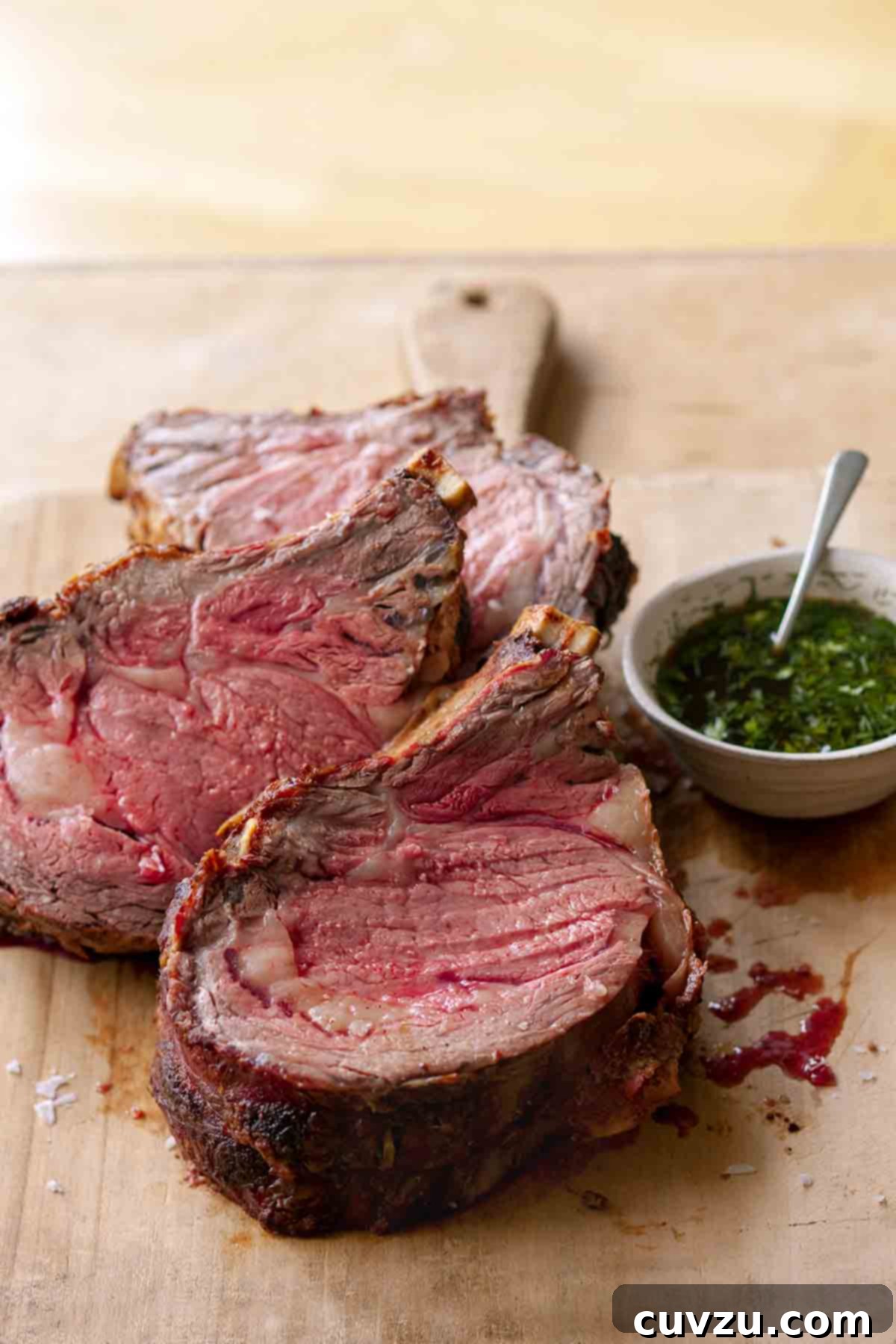
The Ultimate Standing Rib Roast with Herbaceous Jus: A Show-Stopping Dinner Guide
Prepare to impress with a magnificent standing rib roast with jus – a truly show-stopping center-piece for any special occasion. This guide unveils the secrets to achieving a perfectly cooked prime rib, accompanied by an exquisite parsley and dill-infused herbaceous jus that will leave your guests utterly captivated. Get ready to be hailed as a culinary hero!
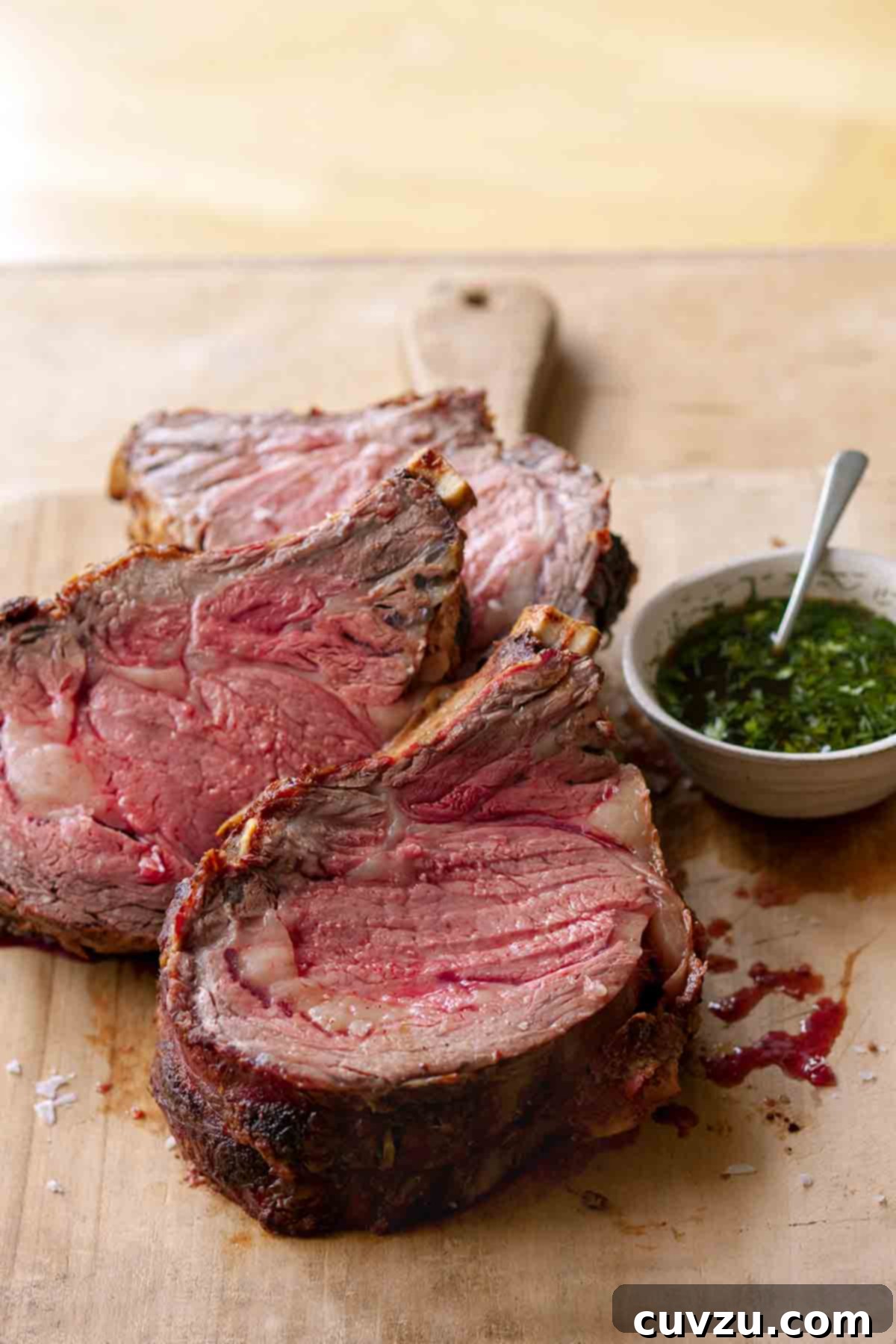
A standing rib roast, often affectionately known as prime rib, stands as one of the most luxurious and sought-after cuts of beef. Its inherent tenderness, rich marbling, and impressive presentation make it the star of holiday dinners, grand celebrations, and other significant special occasions. While its reputation might suggest complexity, our ingenious, virtually foolproof method ensures a sublime result every time. And should there be any delightful leftovers – a rare but welcome occurrence – they transform into exceptional sandwiches or a decadent prime rib hash. Remember to always bring your meat to room temperature before cooking for the best results.
Understanding the Price: Why Premium Beef Cuts Like Standing Rib Roast are an Investment
It’s a common experience to find yourself investing a significant amount in a standing rib roast, and for good reason—it’s an investment in an unforgettable dining experience. The price tag, while sometimes seemingly steep, reflects the unique characteristics and limited availability of this prized cut. A single cow yields a substantial amount of tougher cuts, which are often ground for burgers or slow-cooked for stews. However, the truly tender, succulent, and highly marbled portions, such as the standing rib roast, occupy a much smaller percentage of the animal’s total mass.
This scarcity, combined with the superior eating quality, drives up the cost. What you’re paying for is not just meat, but a culinary experience defined by unparalleled tenderness, rich beefy flavor, and exquisite texture. When you’re dealing with such a significant culinary investment, relying on anything less than proven cooking techniques is simply not an option. This recipe introduces an approach that is not only ingenious but remarkably foolproof, consistently delivering perfection whether you prefer your roast rare, medium-rare, or a touch more done.
Standing Rib Roast with Jus
This standing rib roast with its delectable herbaceous jus is designed to be an absolute show-stopping dinner. The rich, savory meat paired with a fragrant, infused gravy will elevate your meal to unforgettable heights. Get ready to impress!
By David Leite
Mains
American
8 servings
1216 kcal
15 minutes
1 hour 15 minutes
6 hours
Ingredients
For the Standing Rib Roast
- One (11-pound) standing rib roast with 5 or 6 ribs, patted dry and frenched, if desired
- 4 large garlic cloves, cut into thin slivers
- 2 tablespoons (1 oz) salted butter, melted, or grapeseed oil
- Kosher salt and freshly ground black pepper, to taste
- Flour for dusting (optional, for crispier crust)
For the Jus
- 1 1/4 cups homemade beef or veal stock (store-bought high-quality stock can also be used)
- 2 teaspoons flat-leaf parsley leaves, minced
- 2 teaspoons dill leaves, minced
- Kosher salt and freshly ground black pepper, to taste
Instructions
Prepare and Roast the Standing Rib Roast
- Thoroughly pat the standing rib roast dry with paper towels. This step is crucial for achieving a beautiful crust. Place the roast, fatty side up, in a large roasting pan. Drape it loosely with fresh paper towels and allow it to stand at room temperature for at least 2 hours. This ensures even cooking and helps the meat reach optimal internal temperature faster.
- Preheat your oven to a blazing 500°F (260°C). It’s essential to let the oven preheat for a full 30 minutes to ensure it reaches and holds this high temperature. This initial blast of heat is key to developing a deep, flavorful crust.
- While the oven preheats, prepare the roast for flavoring. Using the tip of a sharp knife, make 10 to 15 small, evenly spaced slits all over the surface of the roast. Gently insert the thin garlic slivers into these slits, pushing them far enough so they are nestled beneath the surface of the meat and do not protrude. This infuses the roast with aromatic garlic from within.
- Brush the entire surface of the roast liberally with the melted butter or grapeseed oil. Season it very generously with kosher salt. The salt not only flavors the meat but also aids in developing that fantastic crust. Place the roasting pan in the very center of the preheated oven. Roast for 7 minutes per pound if you are using an electric oven, or 6 minutes per pound if you have a gas oven. This initial high-heat sear sets the stage for perfection.
- Immediately after the initial roasting time, turn off the oven completely. Without opening the oven door at all, let the roast rest inside for a full 2 hours. This gentle, passive cooking method allows the heat to evenly distribute throughout the roast, slowly bringing it to temperature without overcooking the exterior. After the 2 hours, carefully open the oven, remove the roast, and insert a meat thermometer into the deepest part of the roast, avoiding bone. Note this internal temperature. Carefully pour off any accumulated pan juices into a separate heatproof container and reserve them for the jus.
- Assess the doneness. If you desire a truly bloody rare beef, your roast might be ready now. For anything beyond absolute rare, sprinkle the top of the meat with a generous grinding of fresh black pepper and lightly dust with flour. Allow the roast to rest at room temperature while you preheat the oven once more to 500°F (260°C).
- Once the oven reaches 500°F, return the roast to the oven. The final warming time will vary depending on the internal temperature noted earlier and your desired level of doneness. If the internal temperature after resting was around 125°F (52°C), warm the meat for approximately 15 minutes to reach medium-rare. If it was closer to 115°F (46°C), warm it for 20 to 25 minutes for medium-rare. Keep a close eye on it. If at any point (e.g., after 10 minutes) the pan drippings begin to smell burnt, reduce the oven temperature to 450°F (230°C) for the remainder of the cooking time. Use a meat thermometer to confirm desired doneness: 125-130°F (52-54°C) for rare, 130-135°F (54-57°C) for medium-rare, 135-140°F (57-60°C) for medium.
- Once the roast reaches your desired doneness, transfer it to a large platter or carving board. Tent it loosely with aluminum foil and let it rest for a final 15 minutes before carving. This resting period allows the juices to redistribute throughout the meat, ensuring a tender and succulent result.
Crafting the Herbaceous Jus
- While the roast rests, prepare your exquisite jus. In a small saucepan, combine the beef or veal stock with the minced flat-leaf parsley and dill leaves. Place over medium-low heat and gently warm until the liquid is steaming, but not vigorously boiling.
- For an even deeper flavor, you can stir in the reserved pan juices from the roasting pan. Before adding, it’s recommended to skim off any excess fat from the pan juices for a cleaner jus. Taste the jus and adjust the seasonings with kosher salt and freshly ground black pepper as needed.
- To serve, carve the magnificent rib roast crosswise between the bones for impressive, bone-in serving pieces, as beautifully depicted in the accompanying photo. Alternatively, you can slice the roast crosswise into thick or thin boneless portions. Serve immediately with the warm, herbaceous jus on the side for dipping and drizzling.
Adapted From
The Cook and the Butcher
Buy On Amazon
Explore More Culinary Insights
Substitutions
Scale Recipe
Summarize Insights
Nutrition Information
Calories: 1216 kcal
Carbohydrates: 1 g
Protein: 55 g
Fat: 108 g
Saturated Fat: 46 g
Monounsaturated Fat: 47 g
Trans Fat: 0.1 g
Cholesterol: 248 mg
Sodium: 274 mg
Fiber: 0.03 g
Sugar: 0.2 g
Nutrition information is automatically calculated and should be used only as an approximation. Individual results may vary.
Tried this recipe?
Share your culinary triumphs! Mention @leitesculinaria or tag #leitesculinaria on Instagram!
Recipe Testers’ Honest Reviews
Susan Hall
For many years, the thought of preparing a standing rib roast at home filled me with apprehension. The fear of overcooking such an expensive cut of meat often deterred me. However, this particular recipe immediately caught my eye due to its unique cooking method, which promised a foolproof result. I can confidently say it delivered on that promise! The simplicity of the seasoning allowed the incredible flavor of the beef to truly shine, and my husband declared it superior to any prime rib he’d ever enjoyed at a restaurant. If you’re seeking an impressive meal with minimal risk of error, this recipe is an absolute winner.
I utilized my gas oven for the roast, and the recommended timing per pound proved absolutely perfect. After the crucial 2-hour rest in the turned-off oven, the roast was a beautiful rare. As I prefer a medium-rare finish, I reheated the oven to 500°F and returned the roast for an additional 15 minutes. The outcome was nothing short of perfection—tender, juicy, and cooked precisely to my liking.
For the jus, I opted for beef stock and incorporated the reserved pan juices. My one minor misstep was not adequately straining off the fat from the pan juices before adding them to the stock. This resulted in a slightly richer, fattier flavor than I preferred. Next time, I will ensure a more thorough skimming of the fat to achieve a cleaner, more delicate jus that perfectly complements the roast.
Lori Widmeyer
My mother has been the undisputed queen of Christmas prime rib for over three decades, so the idea of trying a new recipe was initially out of the question. However, during her Thanksgiving visit, I showed her this recipe, and her reaction was immediate and enthusiastic: “Oh, that looks so much like mine, but even better!” That was all the convincing I needed—I had to give it a try for our holiday gathering.
I must confess to making one significant oversight. The recipe specifies a five- or six-rib, 11-pound roast, but I was so engrossed in other aspects of the preparation that I failed to double-check the size. My roast was actually seven ribs and weighed a substantial 13.4 pounds, according to the package. Despite this discrepancy, the cooking time outlined in the recipe proved to be absolutely perfect for us. We enjoy our prime rib very red and rare, and every single one of our guests cleared their plates, offering smiles and rave reviews for the exceptionally tender and flavorful beef.
The herbaceous jus was a lovely accompaniment, though I found it almost wasn’t strictly necessary given the incredible flavor of the prime beef itself. I also prepared my usual sour cream, Dijon, and horseradish sauce, which is typically a crowd favorite. However, my personal preference was simply the unadorned prime beef—it was truly perfect on its own. We had remarkably little left over, but what remained was still wonderful when gently reheated the following day and served in small rolls with the jus for dipping. They disappeared so quickly I didn’t even get to try one myself, but I heard unanimous praise for how amazing the meat remained.