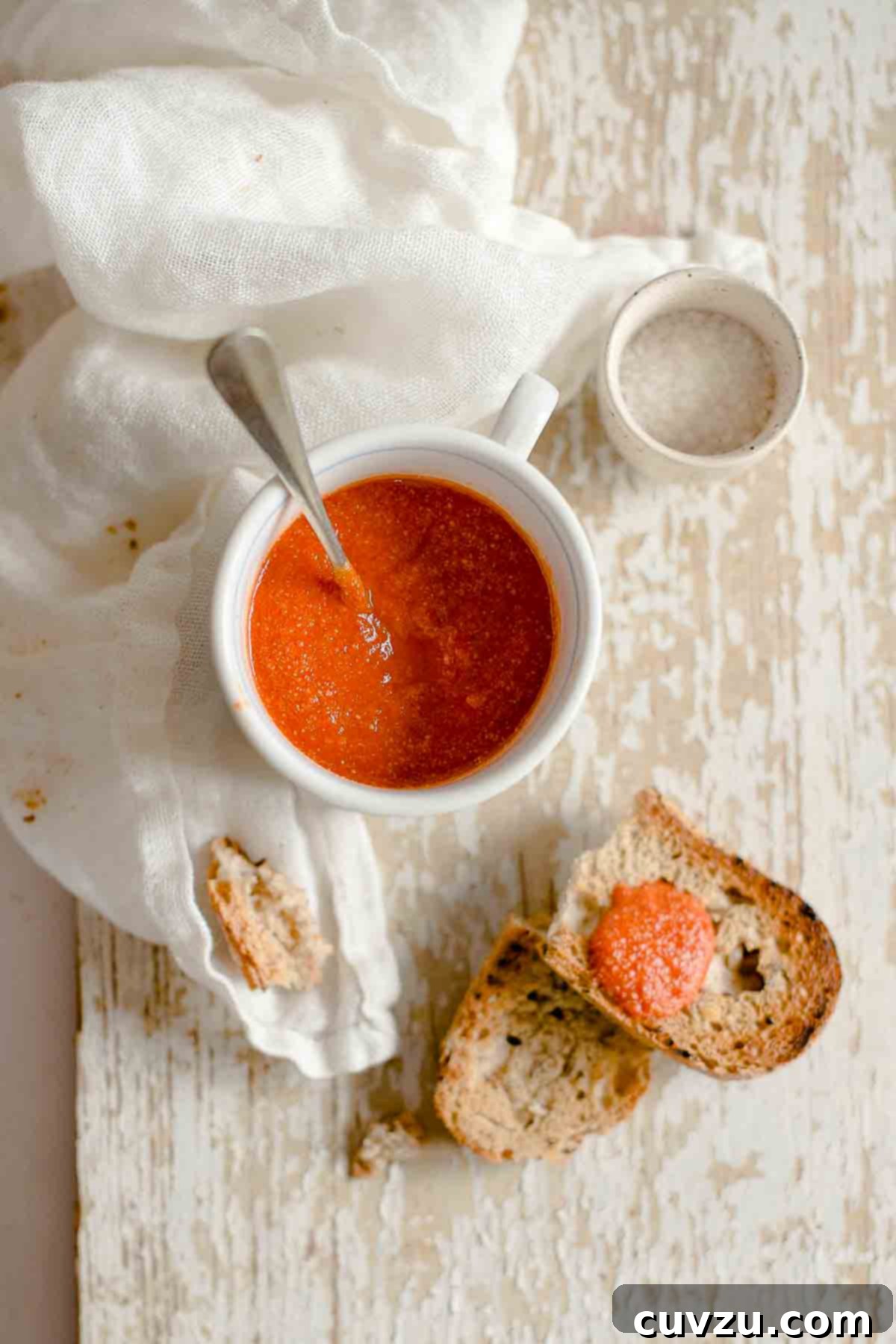
Authentic Catalan Romesco Sauce Recipe: A Versatile Spanish Delicacy
Discover Romesco sauce, a vibrant and flavor-packed culinary treasure from Catalonia, Spain. This exquisite sauce, traditionally a blend of roasted tomatoes, red peppers, garlic, nuts, and olive oil, has gracefully transcended its humble origins as a fishermen’s accompaniment for fish. Today, it’s celebrated worldwide for its incredible versatility, enhancing everything from grilled vegetables and meats to crusty bread and even pasta. More than just a condiment, Romesco offers a journey into the heart of Spanish Mediterranean cuisine, bringing a complex interplay of smoky, nutty, tangy, and subtly spicy notes to any dish. Best of all, this classic is naturally vegan, making it a beloved staple for diverse palates.
What is Romesco Sauce? A Taste of Catalonia
Romesco sauce is much more than a simple spread; it’s a culinary emblem of Catalonia, a region in northeastern Spain renowned for its rich gastronomic traditions. Originating among the fishermen of Tarragona, who would prepare it to complement their daily catch, Romesco has evolved into a beloved staple found in kitchens and restaurants across Spain and beyond. Its foundation lies in a harmonious blend of intensely flavored ingredients: sweet roasted red peppers, ripe tomatoes, pungent garlic, toasted almonds (and often hazelnuts), a hint of vinegar, and the finest Spanish olive oil. The result is a thick, rustic puree that tantalizes the taste buds with its depth and character. The sauce’s distinctive flavor profile comes from the artful charring of vegetables, imparting a smoky sweetness that is beautifully balanced by the acidity of tomatoes and vinegar, and the rich nuttiness of the almonds.
Why You’ll Love This Romesco Sauce
This remarkable sauce is set to become a treasured item in your culinary repertoire, offering a multitude of reasons to fall in love with its charm:
- Unmatched Versatility: While its roots are with fish, Romesco is a chameleon in the kitchen. Spread it generously on warm crusty bread, drizzle it over roasted or grilled vegetables like broccoli, asparagus, or potatoes. It makes a fantastic dip for crudités, a robust pasta sauce, or even a flavorful accompaniment for grilled chicken, lamb chops, or eggs. Its applications are limited only by your imagination.
- Complex Flavor Profile: Experience a symphony of flavors in every spoonful. The initial sweetness from roasted bell peppers gives way to a subtle smokiness (especially if using ancho or poblano chiles), followed by the rich, earthy tones of toasted nuts and garlic. A bright tang from vinegar or lemon juice cuts through the richness, while a whisper of cayenne and smoked paprika adds warmth and depth.
- Naturally Vegan and Wholesome: This traditional recipe is inherently plant-based, making it an excellent choice for vegan, vegetarian, and dairy-free diets. Packed with healthy fats from olive oil and nuts, and vitamins from fresh vegetables, Romesco is as nutritious as it is delicious. It’s a wonderful way to add vibrant flavor and healthy ingredients to your meals.
- Make-Ahead Magic: Romesco sauce is one of those rare culinary delights that actually improves with age. Its flavors deepen and meld beautifully after a day or two in the refrigerator, making it an ideal make-ahead component for entertaining or meal prepping. It also freezes exceptionally well, allowing you to enjoy its goodness for months.
Understanding the Peppers: Enhancing Romesco’s Depth
The choice of peppers is crucial in shaping the final character of your Romesco sauce. While red bell peppers form the sweet, foundational base, the addition of specific chile peppers can elevate its complexity:
- Ancho Chiles: These dried poblano peppers, when rehydrated, lend a distinct sweetness reminiscent of raisins and a mild, earthy undertone. Using ancho chiles will result in a Romesco that is sweeter and fruitier, with a nuanced, less fiery warmth.
- Fresh Poblano Chiles: If you opt for fresh roasted poblanos, expect a more pronounced smoky flavor. Their mild heat and robust, slightly bitter notes contribute a different dimension to the sauce, making it earthier and more intense.
- Flexibility is Key: Don’t hesitate if you don’t have all the specified peppers. The recipe is incredibly forgiving. Even with just red bell peppers, your Romesco will be incredibly delicious and evoke swoons. The optional serrano or jalapeño pepper provides a fresh, bright kick, allowing you to tailor the spice level to your preference. Smoked paprika can also step in to bridge any gap in smokiness if ancho or poblano chiles are omitted.

Romesco Sauce
This gorgeous romesco sauce will go with nearly anything. Earthy red peppers, spicy paprika and chiles, tangy vinegar, and a good amount of garlic make it tasty enough to eat right off the spoon.
David Leite
Appetizers
Spanish
8 servings
167 kcal
20 minutes
20 minutes
Ingredients
- A 1-pound loaf country-style bread
- 1/4 cup olive oil
- 2 red bell peppers, roasted, peeled, and seeded
- 3 dried ancho chile peppers, soaked for 1 hour, drained, seeded, and roughly chopped, or 2 fresh poblano chile peppers, roasted, peeled, and seeded (either pepper is optional, but makes a really nice addition to the resulting sauce)
- 1/2- to 1-inch piece fresh serrano or jalapeño pepper, seeded and minced
- 4 cloves garlic, minced
- 1/2 cup almonds and/or hazelnuts, roasted
- 2 to 3 plum tomatoes, peeled and seeded (I use canned whole plum tomatoes, drained)
- 2 teaspoons red wine vinegar or lemon juice
- 1/2 teaspoon salt
- 1/4 teaspoon cayenne
- 1/4 teaspoon smoked paprika (this, too, is optional, although it’s particularly useful in the absence of the optional ancho or poblano chile peppers)
Instructions
-
In a skillet over medium heat, heat 1 tablespoon oil. Cut a 1-inch-thick slice from the loaf of bread, trim the crusts from the slice, and toss it in the skillet. Let it sizzle until golden on both sides, about 5 minutes total. Transfer to a plate and let cool. Set the rest of the loaf aside. This fried bread will add a crucial body and texture to your Romesco.
-
In a food processor, pulse all of the bell and chile and hot peppers along with the garlic, nuts, and the fried bread slice. Pulse until combined but still chunky. The goal here is a rustic texture, not a completely smooth paste.
-
Add the tomatoes and pulse to combine. Then add the remaining oil and vinegar and pulse. The mixture will emulsify quickly, forming a thick, luscious sauce. Add the salt, cayenne, and smoked paprika, if using. The Romesco sauce should be thick but also have a slightly viscous quality. If it seems on the thick side, add 1 to 2 tablespoons of water, gradually, until you reach your desired consistency. Taste for salt, heat, and acid, and season accordingly. You can cover and refrigerate the Romesco for up to 5 days. It just gets better and better with every day the flavors are allowed to meld, making it an excellent make-ahead option.
-
Slice the remaining loaf of bread, allowing 1 to 2 pieces per person, and grill or toast until lightly browned. Serve generously with the Romesco, either as a dip or spread.
Adapted From
The Meat Lover’s Meatless Cookbook
Buy On Amazon
Nutrition
Calories: 167 kcal
Carbohydrates: 14 g
Protein: 4 g
Fat: 12 g
Saturated Fat: 1 g
Monounsaturated Fat: 8 g
Trans Fat: 0.001 g
Sodium: 160 mg
Fiber: 6 g
Sugar: 7 g
Nutrition information is automatically calculated, so should only be used as an approximation.
Pro Tips for Perfect Romesco
To ensure your Romesco sauce reaches its full potential, consider these expert tips:
- Roast Your Peppers Well: The depth of flavor in Romesco largely depends on perfectly roasted peppers. Aim for slightly charred skins and tender flesh for maximum sweetness and smokiness.
- Toast Your Nuts: Don’t skip roasting the almonds and/or hazelnuts. This simple step amplifies their nutty flavor, contributing significantly to the sauce’s richness.
- Bread for Texture: Frying a slice of bread adds body and helps emulsify the sauce, creating a thicker, more luxurious consistency. Ensure it’s golden and crisp.
- Balance the Acids: Red wine vinegar or lemon juice provides essential tanginess. Taste and adjust to your preference, as the acid brightens all the other flavors.
- Embrace the Waiting Game: While delicious immediately, Romesco truly shines after a day or two in the refrigerator. The flavors meld and deepen, creating an even more profound taste experience.
- Adjust Consistency: Romesco should be thick but pourable. If it’s too thick, add a tablespoon or two of water or extra olive oil. If too thin, you might add a bit more fried bread or nuts, or allow it to sit in the fridge to firm up.
- Canned vs. Fresh Tomatoes: While fresh plum tomatoes are traditional, many chefs (and our testers!) prefer canned whole plum tomatoes for their consistent quality, ripeness, and ease of preparation.
How to Enjoy Your Romesco Sauce: Beyond the Fish
The versatility of Romesco sauce is truly remarkable. While it traditionally accompanied fish, its vibrant flavor profile makes it a superb addition to countless dishes:
- With Seafood: Revisit its roots by serving Romesco with grilled white fish, pan-seared scallops, or even shrimp.
- Vegetable Extravaganza: Drizzle it generously over roasted broccoli, grilled asparagus, baked potatoes, grilled corn on the cob, or a medley of Mediterranean vegetables.
- Bread Lover’s Dream: Slather it on toasted baguettes, artisanal country bread, or use it as a base for bruschetta.
- Protein Power-Up: A dollop of Romesco elevates grilled chicken, steak, lamb chops, or even tofu and tempeh.
- Pasta Perfection: Toss it with your favorite pasta for a quick, flavorful meal. Add some sautéed vegetables or chickpeas for extra protein.
- Egg-cellent Pairings: Spread it on toast with a fried egg for a gourmet breakfast or brunch, or stir it into scrambled eggs.
- Soup Enhancer: A few spoonfuls can be a secret ingredient to deepen the flavor of a vegetable soup.
- Dip It: Serve it as a dip for pita bread, vegetable sticks, or crunchy crackers.
Insights from Our Recipe Testers
Chiyo Ueyama
Chiyo praised its smoky, spicy, and garlicky profile, noting it was “fantastic with every item on our dinner plates,” from lamb chops and roasted potatoes to grilled asparagus. She wisely suggested making a larger batch, as Romesco freezes beautifully for up to three months, making the prep work entirely worthwhile. Chiyo’s version utilized ancho chiles, a jalapeño, hazelnuts, and smoked paprika for a rich, complex flavor.
Robert McCune
Robert echoed the sentiment of its heavenly taste, declaring, “Don’t ask any questions, just double the recipe!” He highlighted its versatility not just as a dip or spread, but also on grilled fish, chicken, pasta, and even as a secret ingredient in soup. Robert favored canned tomatoes for their consistent quality and advised starting with a thicker sauce, which can always be thinned later. He emphasized following the recipe for spice levels initially and found red wine vinegar to be the perfect complement to the peppers’ smoky sweetness.
Carol Anne Grady
Carol Anne found the sauce to be “rich and warming, with a great level of spice and flavor,” confirming that it “definitely improves over time.” She thinned her sauce for a pourable consistency and tossed it with vegetables before roasting. Carol Anne enjoyed using hazelnuts and plans to experiment with almonds in future batches, indicating high enthusiasm for repeat making.
Linda Pacchiano
Linda lauded it as a “delicious sauce” and “very easy to make,” though she offered constructive feedback for refinement. She noted that dried chile pepper skins didn’t break down sufficiently and suggested either scraping the pulp or processing the rehydrated peppers separately first. Linda also found four cloves of raw garlic to be too potent, recommending halving the amount for a more balanced flavor. She agreed that the sauce improves with age, allowing the vinegar to meld, and suggested grating fresh tomatoes for an easier alternative to peeling and seeding.
Jeremy Schweitzer
Jeremy expressed surprise at taking so long to make this “amazing sauce” at home, given that all ingredients were pantry staples for him. He used a mix of almonds and hazelnuts, canned tomatoes, and dried anchos. Jeremy did find the need to adjust the vinegar (doubling it) and add extra water to achieve the desired sauce-like consistency. His delightful discovery was Romesco smeared on toast with a fried egg the morning after, marking it as a “definite repeat item.”
Emma Rudolph
Emma found it “funny that this recipe comes from a vegetarian cookbook” yet declared it “hands down the best side I’ve ever had with steak.” She confirmed that the extensive roasting, peeling, and seeding process is “totally worth it” for the “bursting with complex, smoky flavors” end result. Emma advised using slightly less bread to prevent the sauce from becoming too thick, noting that halving the recipe still yielded a generous 1 3/4 cups.
Sita Krishnaswamy
Sita was “delighted to have stumbled upon this recipe,” calling it “amazing!” and an “ingenious combination of humble pantry staples.” She substituted hazelnuts for almonds and Thai peppers for jalapeño, appreciating the extra kick. Sita showcased the sauce’s remarkable versatility by serving it on day one with pasta, day two with baked chicken, and day three flavoring paneer tikkas. She concluded that its uses are “limited only by your imagination,” making it a new staple in her home.
Frequently Asked Questions (FAQ)
Here are answers to some common questions about making and enjoying Romesco sauce:
- Can I make Romesco ahead of time? Absolutely! Romesco sauce tastes even better after a day or two in the refrigerator as the flavors meld and deepen. This makes it an ideal condiment for meal prepping or entertaining.
- How long does Romesco sauce last? When covered tightly and refrigerated, your homemade Romesco sauce will keep for up to 5 days. For longer storage, it can be frozen in an airtight container for up to 3 months. Thaw in the refrigerator before using.
- What if I don’t have all the peppers specified in the recipe? Don’t worry! Red bell peppers form the sweet, foundational base of the sauce. You can omit the ancho/poblano chiles if necessary, or enhance the smokiness with an extra pinch of smoked paprika. Feel free to adjust the fresh hot peppers (serrano or jalapeño) to your preferred level of heat.
- Can I make it nut-free? While almonds and hazelnuts are traditional and contribute significantly to the texture and flavor, for a nut-free version, you could experiment with sunflower seeds or pumpkin seeds. Be aware that the flavor profile will change, but it can still be a delicious alternative.
- How do I adjust the consistency of the sauce? Romesco should be thick but spoonable. If your sauce comes out too thick after blending, add a tablespoon of water or extra olive oil at a time, pulsing until you reach the desired consistency. If it’s too thin, you can try blending in a bit more fried bread or nuts, or allow it to sit in the fridge, as it often thickens upon chilling.
From the sun-drenched coast of Catalonia to your kitchen, Romesco sauce is a testament to the power of simple, high-quality ingredients transformed into something extraordinary. This versatile, flavorful, and naturally vegan spread is sure to become a cherished addition to your culinary repertoire. Whether slathered on bread, tossed with pasta, or accompanying your favorite grilled dishes, Romesco offers a burst of Mediterranean sunshine in every bite. Enjoy the process of creating this Spanish gem, and delight in its endless possibilities.
Tried this recipe?
Mention @leitesculinaria or tag #leitesculinaria!