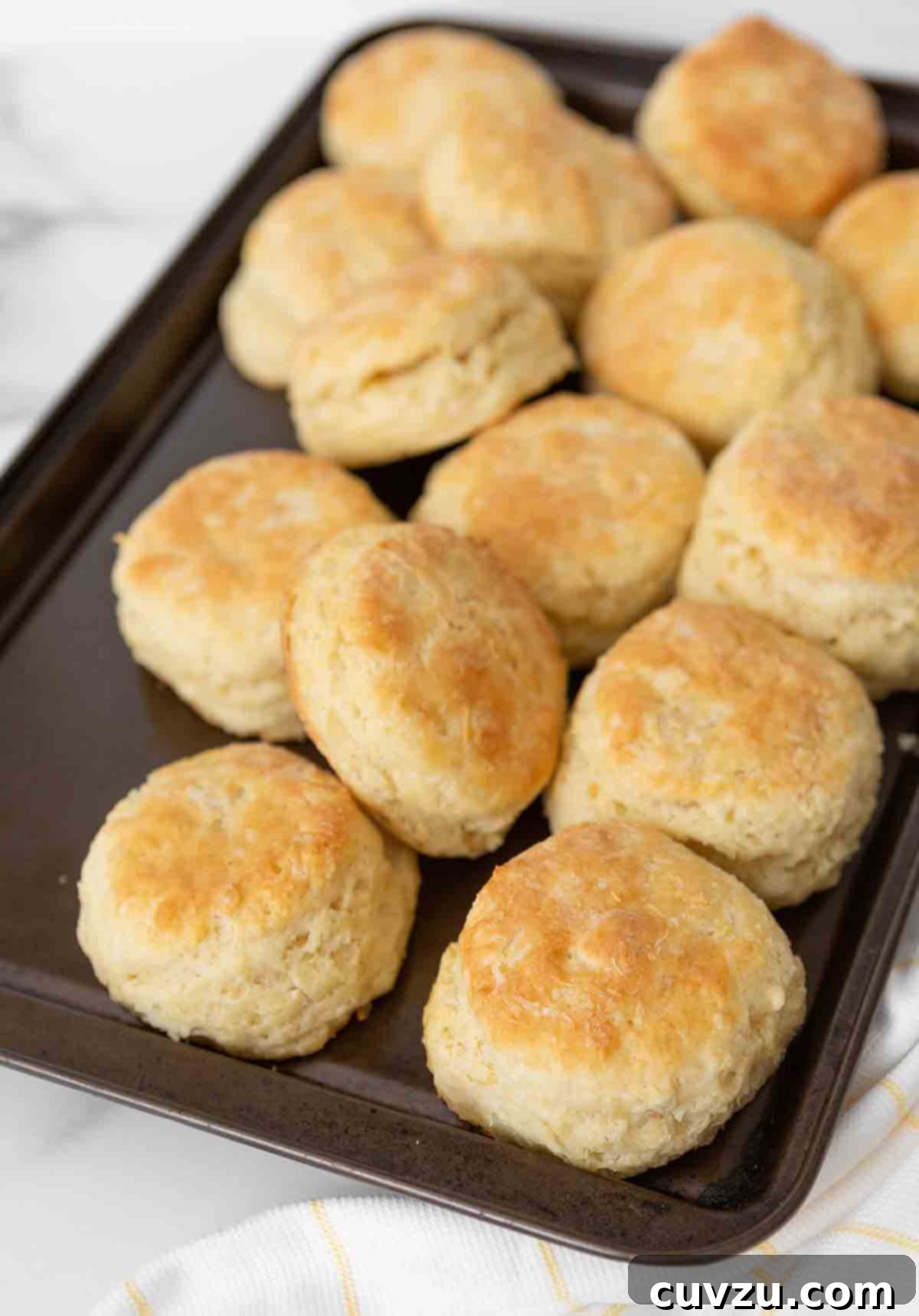
Discover the secret to effortlessly perfect biscuits with Nathalie Dupree’s incredibly **easy cream biscuits** recipe. Made with just two foundational ingredients—self-rising flour and heavy cream—this method strips away the complexities of traditional Southern biscuit making, making it accessible even for the most novice baker. Forget about cutting in shortening or intricate rolling techniques; these biscuits defy convention to deliver remarkably airy, fluffy, and utterly delicious results every time. They are a testament to the idea that simplicity can indeed lead to culinary perfection, offering a warm, tender bite that melts in your mouth and leaves you craving more. This recipe isn’t just easy; it’s revolutionary for anyone seeking the authentic taste of homemade Southern biscuits without the fuss.
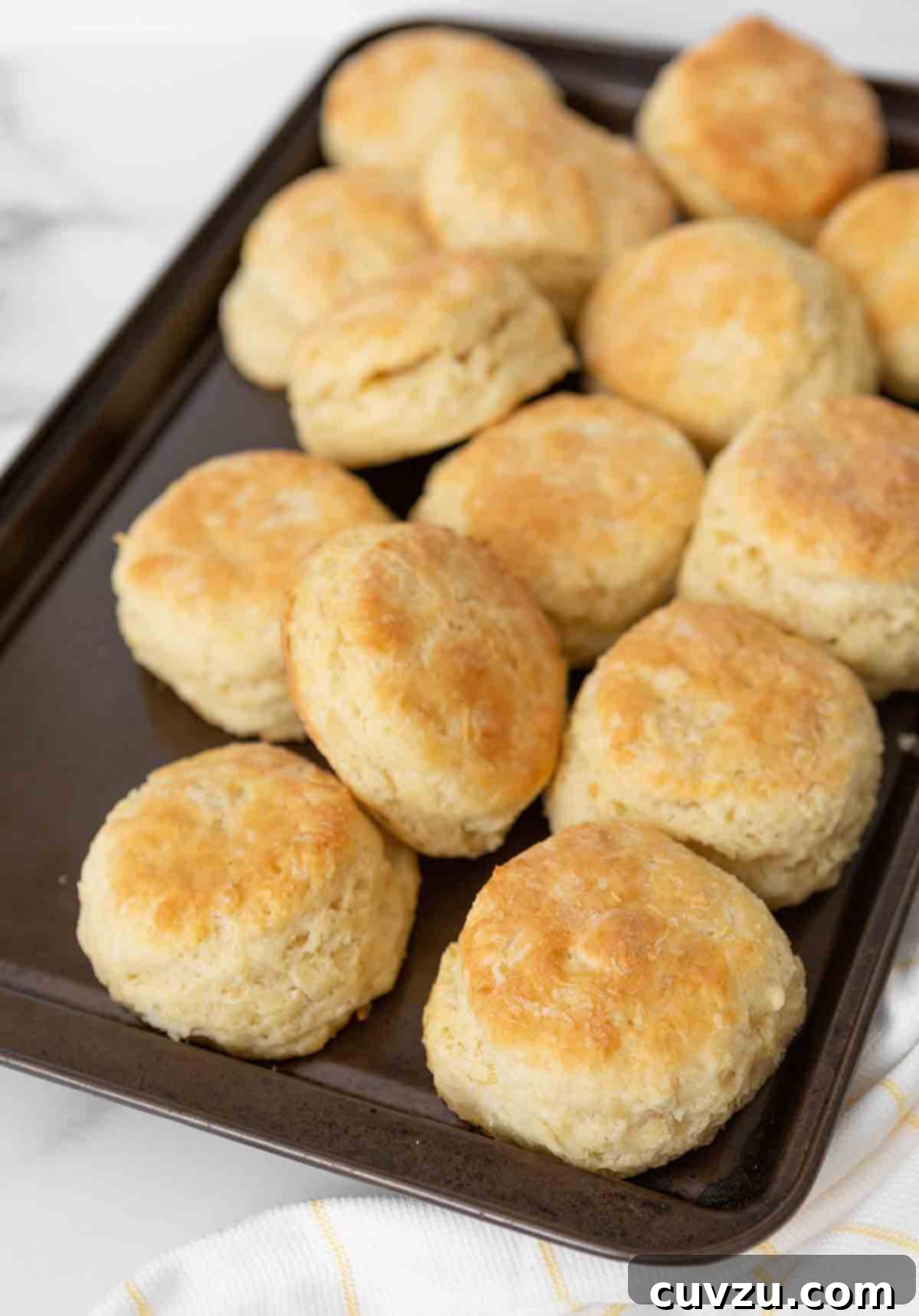
The promise of “easy” in this cream biscuits recipe is not just advertising; it’s a culinary truth. With a mere two ingredients, this method consistently yields biscuits that are surprisingly light, wonderfully airy, and genuinely delightful. It’s a revelation for many who have shied away from biscuit making due to perceived difficulty. This approach originates from a lesser-known, yet incredibly impactful, Southern biscuit tradition that the esteemed chef and author Nathalie Dupree encountered through various sources. Her journey led her to discover this elegant simplicity both within the pages of a 1964 edition of the classic *Joy of Cooking* and during her formative years as a culinary student across the Atlantic in England. This blend of traditional Southern wisdom and international culinary insight forged a recipe that is both authentic and incredibly straightforward.
Nathalie Dupree often references Atlanta chef Gena Berry, who perfectly encapsulates the essence of this recipe: “A respectable homemade biscuit is an essential art of the Southern table, and this scandalously simple recipe makes turning out the perfect biscuit a snap.” Berry’s words highlight the profound impact of this straightforward method, elevating it from a mere convenience to a revered technique. This particular recipe dares to challenge almost every conventional rule of Southern biscuit making. You won’t find yourself meticulously cutting shortening into flour, a step often considered indispensable for flaky biscuits. Furthermore, the dough doesn’t even require rolling out, eliminating another common hurdle for home bakers. The outcomes, despite these “shortcuts,” are nothing short of remarkable. Even a complete novice can effortlessly produce fluffy, perfectly risen biscuits in mere minutes, showcasing the genius behind its simplicity. As David Leite aptly concludes, “Would a respectable Southern lady bend recipe rules, defy convention and use sneaky shortcuts all in the name of turning out a hot, homemade biscuit? You better believe it!” This recipe not only delivers exceptional results but also empowers home cooks to embrace the joy of freshly baked biscuits without intimidation.
The Unsung Hero: Understanding White Lily Flour
Our dedicated recipe tester, Eydie Desser, recently had the distinct pleasure of conversing with the delightful Nathalie Dupree herself regarding this very cream biscuits recipe, a gem featured in Dupree’s acclaimed cookbook, Southern Biscuits. During their chat, Nathalie shared invaluable insights, emphasizing the pivotal role of flour in achieving truly exceptional biscuits. She expressed a strong preference for working with **White Lily Flour**, an iconic “Southern belle” of the baking world. What sets White Lily apart is its notably low gluten content. Unlike standard all-purpose flours, which tend to have a higher protein count, White Lily is milled from soft winter wheat, resulting in a finer texture and a delicate gluten structure. This characteristic is precisely what contributes to biscuits that are invariably lighter, fluffier, and more tender than those made with conventional, harder flours. The minimal gluten development during mixing ensures a tender crumb rather than a chewy one, which is the hallmark of a truly great Southern biscuit.
For those outside the Southern United States or unable to find White Lily, Nathalie Dupree provided practical alternatives. If White Lily (or other comparable self-rising, low-gluten Southern flours like Martha White or Midstate Mills) isn’t readily available in your local grocery store, you can achieve very similar results by substituting an equal measure of self-rising cake flour. Cake flour, by its nature, is also ground from soft wheat and has a lower protein content, mimicking the qualities of Southern biscuit flour. The outcome will be remarkably close to indistinguishable, ensuring that geographical location doesn’t prevent you from enjoying these delightful cream biscuits.
Even if your pantry only contains standard-issue self-rising flour, there’s still a simple trick to adapt this recipe for success. Nathalie advises scaling back the amount of flour by precisely two tablespoons. This minor adjustment helps to compensate for the higher gluten content found in typical self-rising flours, bringing the overall flour-to-liquid ratio closer to that intended for a truly tender Southern biscuit. This clever adaptation ensures your biscuits will closely emulate the light and fluffy texture achieved with specialized flours. It’s a neat solution that underscores the adaptability and forgiving nature of this recipe.
How to Make Your Own Self-Rising Flour
Understanding that self-rising flour isn’t a universal staple in every kitchen, we want to empower you with an incredibly easy method to create your own from common pantry ingredients. This ensures that a lack of specialized flour will never stand between you and a batch of warm, homemade biscuits. The simple equation to remember is: **1 cup of self-rising flour = 1 1/2 teaspoons baking powder + 1/2 teaspoon salt + 1 cup all-purpose flour.** This formula allows you to quickly convert regular all-purpose flour into a functional self-rising substitute, ready for your baking adventures.
Applying this formula specifically to Nathalie Dupree’s easy cream biscuits recipe, which calls for 2 1/4 cups of self-rising flour, the conversion works out perfectly. If you’re opting to make your own self-rising flour for this recipe, you’ll need: **1 tablespoon of baking powder + 3/4 teaspoon salt + 2 cups plus 2 tablespoons of all-purpose flour.** This precise measurement ensures that your homemade self-rising flour provides the ideal leavening and seasoning for light, airy, and flavorful biscuits, mirroring the intended results of the original recipe. You’re welcome!
Easy Cream Biscuits
David Leite
- PIN
Ingredients
- Butter for the baking sheet and brushing
- 2 1/4 cups self-rising White Lily Flour or 2 cups plus 2 tablespoons homemade self-rising flour (See Note Above)
- 1 1/4 cups heavy cream
Instructions
-
Preheat the oven to 450°F (232°C). Adjust the oven rack to one of the top positions, setting the rack one shelf above the middle shelf but not so close to the top of the oven that the biscuits will bump into it as they rise.
-
For a soft biscuit exterior, select an 8- or 9-inch cake pan, pizza pan, or ovenproof skillet. The biscuits will nestle together snugly, helping each other stay tender but rise while baking. Brush the pan with butter.
For a crisp biscuit exterior, select a baking sheet or large baking pan where the biscuits can be spaced wide apart, allowing air to circulate and creating a crisp exterior. Brush the pan with butter. -
In a large bowl, fork-sift or whisk 2 cups flour. Make a deep well in the center of the flour. Pour 1 cup cream into the well and stir with a rubber spatula or large metal spoon, using broad circular strokes to quickly pull the flour into the cream. Mix just until the dry ingredients are moistened and the dough becomes sticky and begins to pull away from the sides of the bowl. If flour remains on the bottom and sides of the bowl, stir in 1 to 4 tablespoons of the reserved cream, just enough to incorporate the remaining flour into the shaggy, wettish dough.
-
Lightly sprinkle a cutting board or other clean surface with some of the reserved flour. Turn the dough out onto the board and sprinkle it lightly with flour. Flour your hands and then fold the dough in half. Pat the dough into a round about 1/3- to 1/2-inch-thick, using a little additional flour if the dough is sticky.
-
Fold the dough in half a second time. If the dough still seems clumpy, pat and fold it a third time. Pat the dough into a 1/2-inch-thick round for a normal biscuit, 3/4 inch thick for a tall biscuit, and 1 inch thick for a giant biscuit. Brush any visible flour from the top.
-
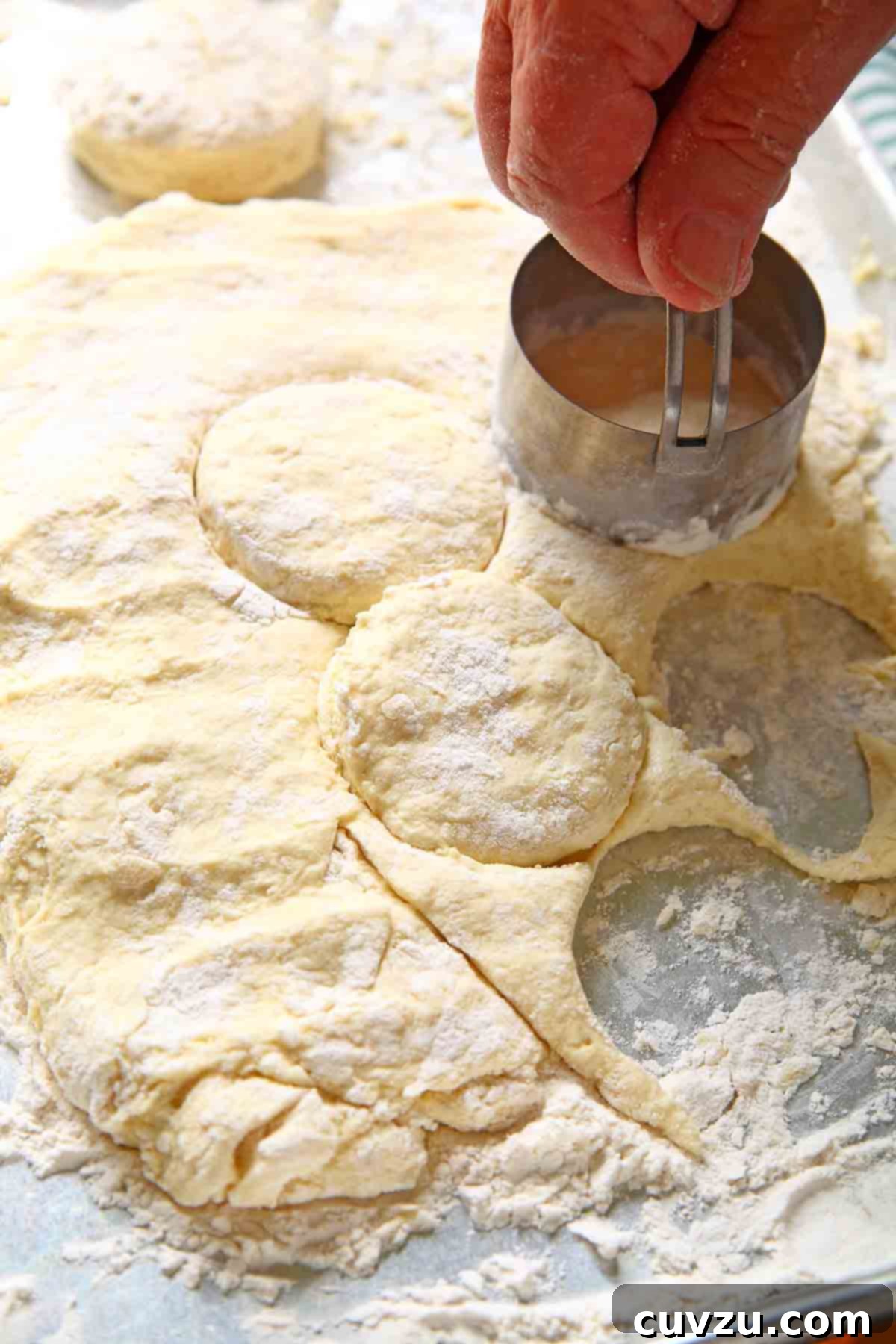
Dip a 2 1/2-inch biscuit cutter into the reserved flour and cut out the biscuits, starting at the outside edge and cutting very close together, being careful not to twist the cutter. Re-flour the cutter after each biscuit. (The scraps may be combined to make additional biscuits, although the scraps will result in tougher biscuits.)
-
Using a metal spatula, move the biscuits to the pan or baking sheet. Bake the biscuits for 6 minutes and then rotate the pan so the front is now turned to the back. If the bottoms are browning too quickly, slide another baking pan underneath to add insulation. Continue baking another 4 to 8 minutes, until the cream biscuits are lightly golden brown, a total of 10 to 14 minutes.
-
When the biscuits are done, remove from the oven and immediately brush the top of the biscuits with softened or melted butter, using a light touch. Turn the biscuits out upside down on a plate to cool slightly. Serve while still hot, right side up.
Explore More with AI
Nutrition
Nutrition information is automatically calculated, so should only be used as an approximation.
Recipe Testers’ Reviews
Trudy Ngo-Brown
Trudy Ngo-Brown approached this recipe with skepticism, finding the absence of traditional fats like butter or shortening unusual for a Southern biscuit. However, she was quickly converted, praising the heavy cream for its “magic” in achieving an awesome result, declaring she might never revert to butter-cutting methods. She emphasized the importance of minimal dough handling for a light biscuit and even suggested an intriguing variation with shredded Cheddar for an even richer flavor.
Lauren P.
Lauren P. hailed this as a fabulous recipe for perfect biscuits in a snap, especially appreciating its two-ingredient simplicity. Unable to find White Lily self-rising flour, she successfully created her own by adding 3 teaspoons of baking powder and 1 teaspoon of salt to all-purpose flour. She noted the dough was exceptionally easy to work with after adding the full amount of cream, yielding perfect, soft but not sticky dough after two folds. Her biscuits were hot and flaky in just eleven minutes.
Beth Price
Beth Price, a Southerner who once harbored a fear of biscuit making due to the daunting traditional steps, found liberation in this recipe. She described it as easy, fast, and virtually foolproof, resulting in delicious biscuits that are tempting to eat straight from the oven. Beth shared two crucial tips: always cut straight down with the biscuit cutter without twisting to ensure a good rise, and fold the dough at least twice to promote layers, enhance rise, and make splitting the biscuit easier for fillings like butter, whipped cream, and jam.
Rebecca Marx
Rebecca Marx’s initial skepticism about a two-ingredient biscuit vanished halfway through baking as the biscuits puffed up, emitting an irresistible aroma. The final product delivered on this promise, yielding incredibly tender, fluffy, and savory biscuits that tasted as if they contained buttermilk, butter, or even lard. She confirmed the recipe worked exactly as written, needing only a couple of extra tablespoons of cream for her dough, which was less sticky than anticipated. Rebecca folded the dough once and produced 12 blissful biscuits and a few dough blobs in a 9-inch round cake pan, baking them for the full 14 minutes. She highly recommended the recipe for all skill levels, suggesting they become a pantry staple for their unfussy yet intensely satisfying results.
Lisa O.
Lisa O. found these biscuits both easy and delicious, admitting her doubts about a two-ingredient recipe were unfounded. She praised their taste, lightness, and suitability for spreading butter or jam, even suggesting them as perfect for summer shortcakes. While the first taste out of the oven was sublime, they held up well an hour later. Lisa advised caution with oven rack placement, as the top position can be too close in some ovens, causing excessive browning. She successfully used a Silpat on a baking sheet, eliminating the need for buttering the pan and preventing dark bottoms.
Sheri C.
Sheri C. declared these biscuits the perfect, uncomplicated version of what a Southern biscuit should be: light, tender, and with an excellent rise. She provided the helpful tip for making homemade self-rising flour (1 cup all-purpose flour sifted with 1 1/2 teaspoons baking powder and 1/2 teaspoon table salt). Sheri noted the salt amount was perfect for her preference but suggested reducing it if one prefers less saltiness.
Trista C.
Trista C. was impressed, stating that her oven took longer to preheat than it did to make these biscuits. She highlighted the simplicity of the two-ingredient recipe (or four if making self-rising flour from scratch) and the easy, detailed instructions that make it accessible to anyone. Halving the recipe, she yielded 5 biscuits that were slightly crumbly but tender and delicious, rising beautifully and baking perfectly in 12 minutes.
Steve Taylor
Steve Taylor, while not a biscuit snob, found this recipe to be incredibly easy and yielded a final product that served as an excellent vehicle for rhubarb jam at a Mother’s Day brunch. His mother, though initially unimpressed by their rise, agreed they were much lighter, more tender than they appeared, and very tasty. He concluded that while he lacked the experience to rate it a “great” biscuit, it was certainly a “very good” and exceptionally easy one to make.
Karen Depp
Karen Depp, growing up with diverse family biscuit recipes, planned to claim this one as her own “secret family recipe” due to its outstanding results. She enthusiastically recommended everyone try it, predicting it would lead to daily biscuit baking. Karen also suggested adding brown sugar to the dough for a delicious shortcake variation, calling the recipe a “real winner” and thanking Nathalie Dupree for her genius.
Bette Fraser
Bette Fraser unequivocally declared this the easiest biscuit recipe ever, suggesting that if more beginning cooks learned this method, they would abandon canned biscuit dough entirely. While she noted a slight miss of the rich buttery goodness of more traditional recipes, she advocated for this biscuit to be taught to every grade-school child in America as a fundamental American culinary skill, due to its simplicity and consistent results.
Tracey G.
Tracey G. confessed to a mix of longing and fear when it came to biscuit recipes, having experienced many disappointments and worries about temperature, overworking dough, or biscuits failing to rise. This recipe, however, provided her with newfound biscuit confidence. The dough came together perfectly with the specified amount of heavy cream, yielding a “shaggy” but cohesive texture, precisely as described by the author. She enjoyed light, tasty biscuits in under 25 minutes, praising the quick bake time.
Cindy Zaiffdeen
Cindy Zaiffdeen highlighted the recipe’s ultimate simplicity, transforming two ingredients into magically light and flavorful biscuits with minimal effort. She opted for the soft exterior version, which resulted in incredibly tender and airy biscuits. She likened the dough folding technique to creating puff pastry, layer upon layer, and confirmed that using the three-fold method yielded biscuits that were “as light as can be.” Cindy found them heavenly with homemade jam, and perfect for either a quick dinner addition or a warm weekend breakfast treat.
Ellen Fuss
Ellen Fuss turned to this simple recipe to complete a meal of barbecued chicken, surprising her guests with fluffy, light, and perfect biscuits that took only about 15 minutes to prepare. She advised careful monitoring of baking color, as biscuits can quickly go from golden to overdone. Ellen suggested placing them in the top third of the oven, not the very top rack, and noted her yield was 8 biscuits that nestled perfectly in an 8-inch round cake pan. She confirmed the benefit of sliding another baking pan underneath to prevent premature browning of the bottoms.
Eydie Desser
Eydie Desser confirmed Nathalie Dupree’s promise, finding the biscuit recipe a snap to make, yielding very tender and delicious results with spot-on baking time. She shared valuable tips from Nathalie herself: use a very large bowl for quick mixing to ensure tenderness, and remember that self-rising flour already contains salt. For those without White Lily or Martha White brands, decrease flour by 2 tablespoons to mimic Southern flour, or use self-rising cake flour without adjustment. Eydie’s enthusiasm for this “loveable” biscuit was palpable.
Helen S.
Helen S., a Southerner who once feared biscuit making, found this recipe to be super simple, easy to understand, and a delightful antidote to “hockey puck” horror stories. She praised the biscuits’ very tender crumb, advising thicker dough if planning to cut them in half to prevent disintegration. Helen successfully made her own self-rising flour and suggested adding 1 to 2 tablespoons of sugar for a sweeter biscuit, or herbs and a dash of powdered mustard for savory variations, making the recipe versatile.
Cindi Kruth
Cindi Kruth liked the biscuits but expressed mild annoyance at recipes claiming few ingredients when one (self-rising flour) contains multiple components. She used her own proportions for homemade self-rising flour and confirmed that the resulting biscuits were perfectly simple, light, and tasty, as she had expected from her 40+ years of making similar cream biscuits. Cindi emphasized a light touch when blending and noted that the “clumpy” instruction might indicate insufficient cream for some. She found that 1-inch thick biscuits required an additional 4-5 minutes of baking time, correcting the suggested range, and preferred splitting and buttering giant biscuits over the final brushing and upside-down cooling method.
Carrie S.
Carrie S., who previously disliked biscuits made from mixes, found this simple recipe a revelation. The resulting biscuits were surprisingly light and tender with a subtle flavor that complemented other foods, a significant improvement over the “terrible” mix-made versions of her childhood. She enthusiastically endorsed this recipe as a superior alternative to mixes, planning to convince her mother to adopt it. Carrie saw it as a win-win-win: as easy as a mix, significantly better tasting, and eliminating the need to feign a low-carb diet to avoid inferior biscuits.
Jean Moats
Jean Moats praised the simplicity and delicious results of this recipe. She achieved the crisp version by spacing the biscuits apart on the cookie sheet, noting that dark baking sheets accelerate baking and that rotating the pan is crucial for even browning. What she particularly loved was the versatility: serving hot biscuits for one meal and using leftovers for strawberry shortcake. Jean considered it a great recipe worthy of adding to her cookbook.
Jo Ann Brown
Jo Ann Brown celebrated the “easy peasy” nature of these biscuits, noting she could make them half-asleep on a Sunday morning. She described them as airy, releasing a puff of steam when broken, making them an ideal accompaniment for gravy or creamy sauces. The biscuits paired beautifully with her custardy scrambled eggs, and she was tempted to make sausage gravy, certain they were the perfect match. Jo Ann also appreciated the absence of shortening, which lightened the biscuits, making them perfect for holiday meals alongside buttery turkey and festive fixings.
Linda Pacchiano
Linda Pacchiano found these biscuits simple and delicious, crediting the self-rising flour for doing all the work. She stressed the importance of achieving the correct dough consistency and ensuring all flour is thoroughly moistened by the cream. Linda needed about 1 tablespoon of reserved cream to achieve the specified wettish dough, and while her initial mix had clumps, three folds before shaping helped achieve a smoother consistency. Her baking time and yield matched the recipe exactly.
Raye Tiedmann
Raye Tiedmann described the biscuit making process as a quick stir of heavy cream, a few folds, and rolling out beautiful dough that rose impressively high. She opted for crisper biscuits by separating them and double-panning to prevent fast browning, a hint she found effective. Enjoyed hot from the oven with a smear of butter, they made for a content morning, especially paired with fluffy scrambled eggs. Raye planned to experiment with cheese and fresh herbs for future brunch variations.
Terri D.
Terri D. found these cream biscuits exceptionally easy to bake, yielding delicious, fluffy results that would readily replace her usual “pop open” biscuits. She considered adding a little something extra, such as cheese and/or garlic powder, for additional flavor in future attempts, but affirmed that it stands as an excellent basic recipe on its own.
Sarina Mohanty
Sarina Mohanty delivered a concise review, praising the great biscuits for their crisp exterior and moist interior, exactly what one would expect from a cream biscuit. She noted their quick, easy, and fast preparation, though she suggested they might benefit from an additional 1 to 2 minutes of baking time beyond the recipe’s recommendation.
Caroline Chang
Caroline Chang confirmed the recipe’s ease, noting that the biscuits rose and browned perfectly. She utilized the cake pan method and experienced no issues with over-browning on the bottom, serving her biscuits with butter and raspberry jam. However, she observed that her recipe only yielded 9 biscuits, a slight deviation from the stated yield, but still delicious.
Niharika S.
Niharika S. found the recipe simple and generally effective, though noted that flour type significantly impacts the outcome. Not residing in the US, her local flour had more fiber, requiring her to use 1 and 3/4 cups of cream to moisten the dough adequately. Her biscuits rose well, achieving a golden, crisp exterior and a soft interior. A second batch with extra cream resulted in a slightly denser biscuit, despite good rise. She concluded the recipe would work exceptionally well with lower-protein all-purpose flour commonly found in the States.
Lori Widmeyer
Lori Widmeyer found it hard to believe these biscuits only had two ingredients, describing them as incredibly light and fluffy with a slightly crunchy, buttery exterior—the epitome of a perfect biscuit in her mind. She considered it such an easy recipe with amazing results that she was tempted to make them far too often. Paired with local honey, the warm biscuits were a delight, making the recipe a true “treasure.”
Bev B.
Bev B. highly recommended this recipe for its ease, minimal effort, and lack of shortening or extensive measuring. She praised the well-written and descriptive instructions, particularly the guidance on dough folding. Thankfully, her dough was smooth and easy to work with, rather than shaggy or clumpy. She liked thick biscuits, rolling the dough to 3/4 inch, yielding 7 regular biscuits and one “monster” biscuit from scraps, appreciating not needing a rolling pin. The baking time was perfect, and turning biscuits upside down to cool helped maintain their height and fluffiness. While she personally prefers butter in biscuits, she acknowledged this recipe as an excellent beginner-friendly option for a passable biscuit with just self-rising flour and cream.
Larry Noak
Larry Noak boldly challenged the notion that “a biscuit without butter can not be a biscuit” after trying this recipe. He enthusiastically declared it an easy-to-make, delicious biscuit that even the most skilled cooks would be proud to serve, demonstrating that simplicity can indeed yield remarkable results.
Joan Osborne
Joan Osborne expressed disbelief at how good these biscuits were with only flour and cream, finding them simple yet divine. She used her hands instead of a metal spatula to transfer them and baked them in a cast iron skillet, close together, for a soft exterior. Her 7 rather tall biscuits came out perfect and were quickly devoured with strawberry jam for breakfast. She also enjoyed a couple of split, buttered and toasted leftovers, affirming she would make them again.