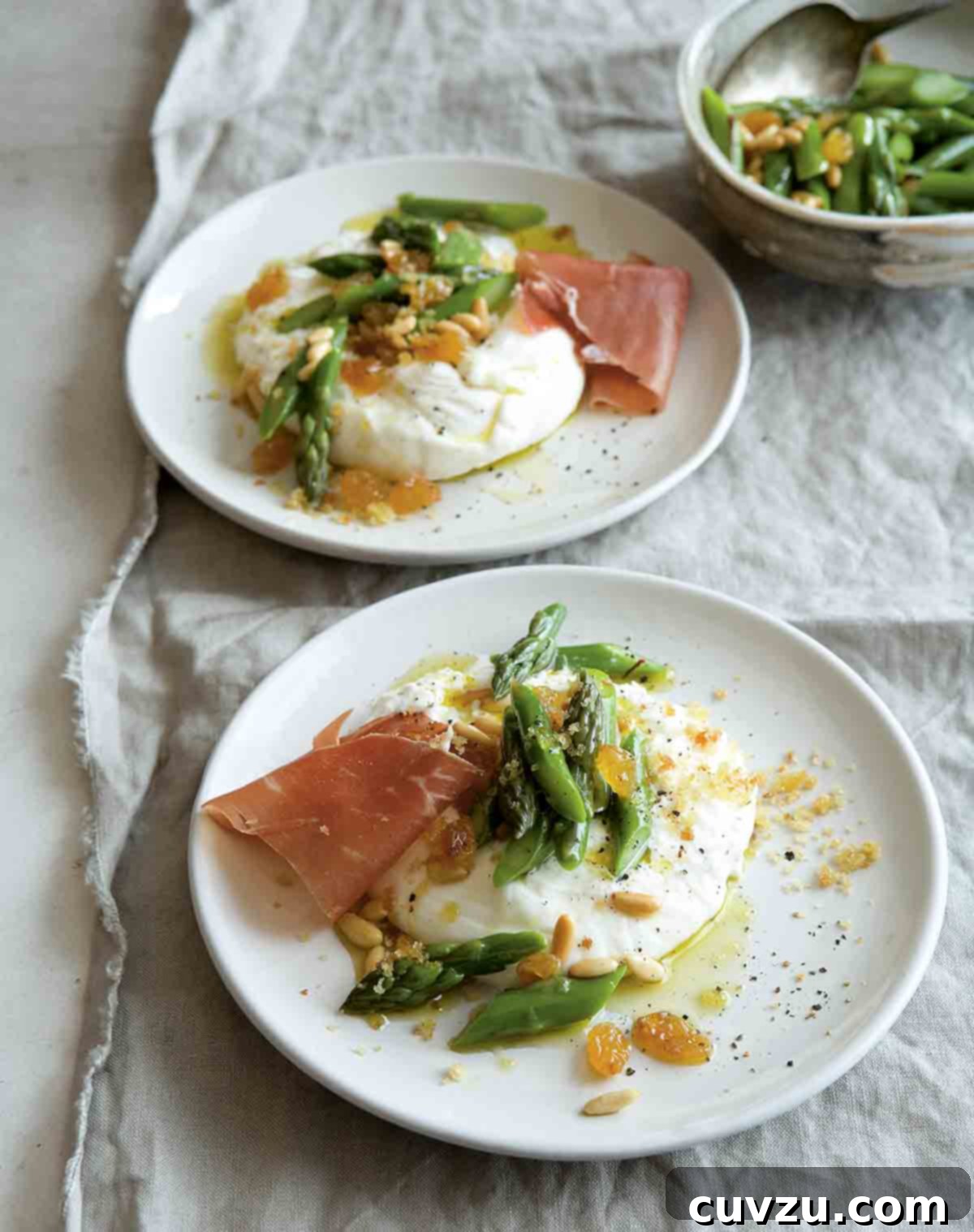
Burrata Cheese with Asparagus: An Elegant and Unexpected Appetizer
Discover the delightful simplicity of Burrata Cheese with Asparagus, an exquisite appetizer that marries fresh, creamy burrata with tender asparagus, sweet raisins, crunchy pine nuts, and savory prosciutto. This dish is a symphony of flavors and textures—salty, sweet, earthy, and utterly lovely—designed to impress with minimal effort. It’s an easy, elegant, and truly unexpected culinary experience that promises to elevate any meal.
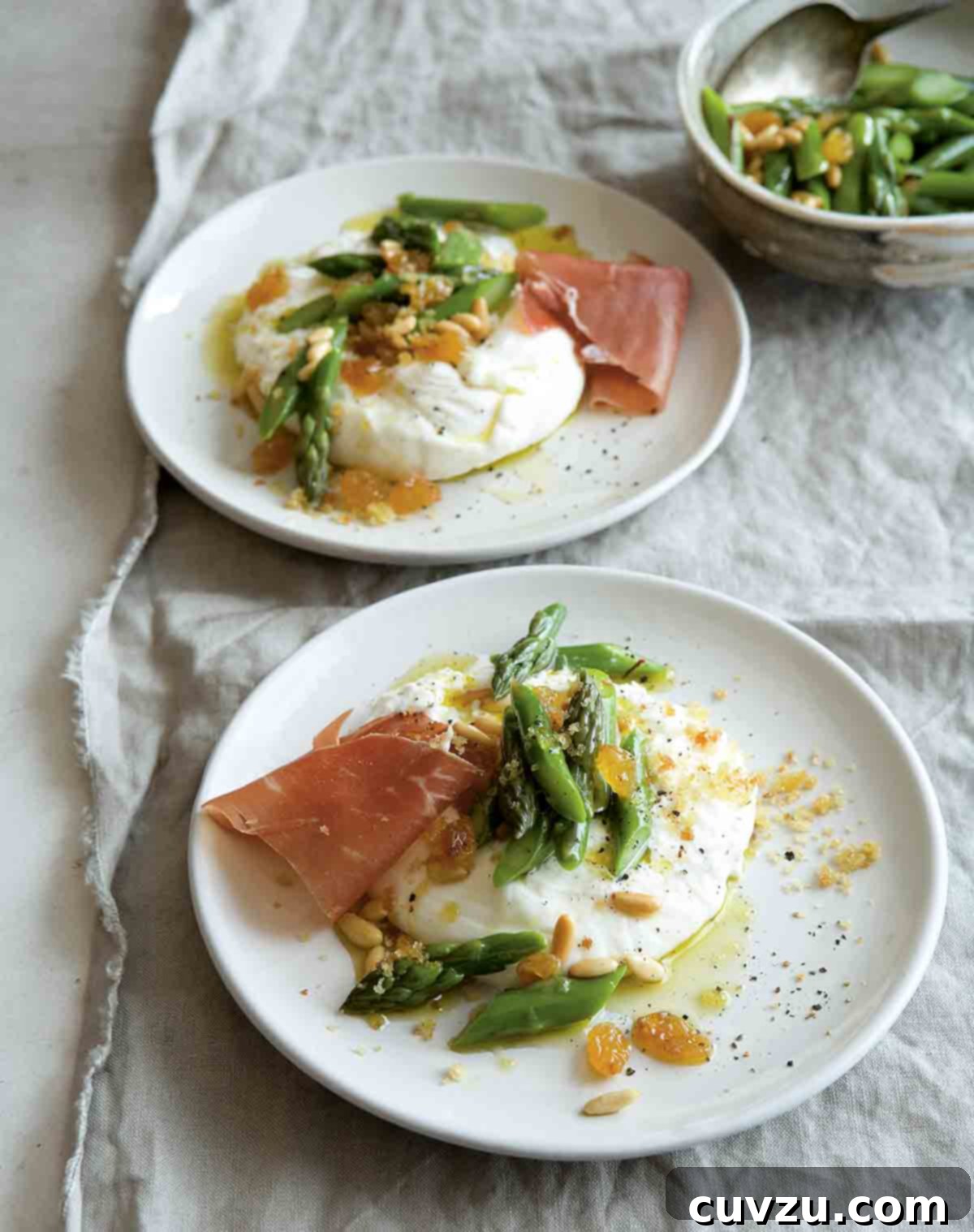
This Burrata with Asparagus recipe masterfully blends seemingly disparate ingredients to create a truly incredible effect. For those who have had the pleasure of tasting burrata, the ridiculously rich and unthinkably creamy cousin to fresh mozzarella, you already understand its allure. Its luxurious texture and delicate flavor elevate every other component on the plate, making it an unforgettable foundation for this unique appetizer. As Renee Schettler Rossi aptly puts it, words can barely describe it; you simply must try it to experience its magic firsthand.
What Exactly is Burrata? The Cream-Filled Delight
Hailing from Italy, where its name translates to “butter,” burrata is a fresh Italian cheese made from mozzarella and cream. Traditionally crafted from buffalo or cow’s milk, it’s distinguishable by its two distinct layers. The outer shell is solid mozzarella, while the interior holds a luscious, soft blend of stracciatella (stretched curd, fresh cheese scraps) and rich cream. This creamy core gracefully oozes out when the cheese is sliced, creating a surprising and delightful presentation. Its soft, smooth texture and decadent interior make burrata a truly special ingredient, cherished for its ability to transform simple dishes into gourmet experiences.
Why You’ll Love This Burrata and Asparagus Appetizer
This recipe isn’t just a dish; it’s an experience. It brings together contrasting elements that dance harmoniously on the palate. The cool, firm snap of perfectly blanched asparagus provides a crisp counterpoint to the warm, yielding creaminess of the burrata. Sweet golden raisins burst with a natural fruitiness, while toasted pine nuts add an earthy depth and a satisfying crunch. The optional addition of prosciutto di Parma introduces a delicate saltiness, rounding out the flavor profile with an irresistible savory note. It’s an appetizer that feels gourmet, yet is surprisingly simple to prepare, making it ideal for entertaining or a special weeknight treat. The visual appeal alone, with its vibrant colors and artful arrangement, is enough to entice any diner.
The Perfect Pairing: Spring Asparagus
Asparagus, particularly slender spring asparagus, is the ideal seasonal partner for burrata. Its vibrant green hue and slightly earthy, sweet flavor provide a refreshing balance to the rich cheese. When selecting asparagus, look for firm, bright green spears with tight, closed tips. Thinner spears tend to be more tender and require less cooking time, making them perfect for this quick blanched preparation. Asparagus is not only delicious but also packed with vitamins K, A, C, and folate, making this appetizer as nutritious as it is tasty. The key to perfect asparagus in this recipe is careful blanching—cooking it just until tender-crisp to retain its bright color and delicate crunch, then plunging it into an ice bath to stop the cooking process and preserve its texture.
Burrata Cheese With Asparagus Recipe
Rated 5 out of 5 stars by 3 users
David Leite
Ingredients
- 2 tablespoons golden raisins or sultanas
- 8 ounces slender spring asparagus
- 2 tablespoons pine nuts
- 1/2 cup best-quality extra-virgin olive oil
- 6 saffron threads, (optional)
- Salt and freshly cracked black pepper, to taste
- 1/4 cup fresh bread crumbs
- Two (6-ounce) balls burrata cheese*
- 4 slices prosciutto di Parma, (optional)
Instructions
Soak the Raisins
- In a small bowl, place the golden raisins or sultanas. Pour enough warm water over them to cover completely. Let them soak for at least 5 minutes until they are plump and rehydrated. Drain the plumped fruit thoroughly and gently pat them dry with a clean kitchen towel or paper towels to remove excess moisture.
Trim and Cook the Asparagus
- Prepare the asparagus by snapping off the woody ends and discarding them. This ensures only the tender parts are used. Fill a large bowl halfway with ice water; this will be your ice bath. Bring a pot filled with ample salted water to a rolling boil. Carefully plunge the trimmed asparagus spears into the boiling water. Cook them for just 2 to 4 minutes, depending on their thickness, until they are tender-crisp and barely begin to yield when pinched near the tip. It is crucial not to overcook the asparagus to maintain its vibrant color and delightful crunch.
- Immediately transfer the blanched asparagus from the boiling water into the prepared ice bath. This step, known as shocking, halts the cooking process and preserves the asparagus’s bright green color and crisp texture. Once cooled, drain the asparagus completely and pat thoroughly dry. Cut the asparagus on a sharp angle into pieces that roughly resemble the size and shape of penne pasta.
Toast the Pine Nuts
- In a large, dry skillet set over low heat, gently warm the pine nuts. Toast them until they are lightly golden brown and release a fragrant, nutty aroma. Remember to shake the pan occasionally to ensure even toasting and prevent burning. Once toasted, immediately tip the pine nuts onto a clean plate to cool down; they can continue to cook and burn if left in the hot pan.
Toast the Bread Crumbs
- Return the same skillet to medium heat. Pour in 1/4 cup of the extra-virgin olive oil and allow it to heat until it shimmers but does not smoke. Add the fresh bread crumbs to the hot oil and cook, shaking the pan vigorously and constantly, until the crumbs turn a light golden color and become wonderfully crisp. This usually takes about 1 minute. Transfer the crisped bread crumbs to a separate plate to cool, preventing them from over-browning.
Assemble the Burrata with Asparagus
- In a spacious mixing bowl, combine the drained, plumped raisins, the prepared asparagus pieces, the toasted pine nuts, and the saffron threads (if using). Drizzle with 2 tablespoons of the remaining best-quality extra-virgin olive oil. Season generously with salt and freshly cracked black pepper to taste, tossing gently to combine all the flavors.
- To serve, carefully cut each burrata ball in half. Place one half on each of four individual serving plates, with the cut side facing down to best showcase its creamy interior when broken. Artfully strew the prepared asparagus mixture over and around the burrata. Sprinkle the crisped bread crumbs evenly over the top for added texture. Drizzle with the remaining olive oil to finish. If desired, delicately drape a thin slice of prosciutto di Parma over each salad for an extra layer of savory flavor. Serve this exquisite appetizer either cold or at room temperature for the best enjoyment.
Adapted From
The Cheesemonger’s Kitchen
Buy On Amazon
Nutrition Information
Calories: 546 kcal
Carbohydrates: 14 g
Protein: 18 g
Fat: 52 g
Saturated Fat: 16 g
Monounsaturated Fat: 21 g
Cholesterol: 60 mg
Sodium: 52 mg
Fiber: 2 g
Sugar: 6 g
Nutrition information is automatically calculated, so should only be used as an approximation.
Tried this recipe?
Mention @leitesculinaria or tag #leitesculinaria!
Recipe Testers’ Reviews: Real Feedback for Real Cooks
Our recipe testers have put this Burrata with Asparagus through its paces, offering valuable insights and tips to ensure your success. Their experiences highlight the dish’s versatility, ease of preparation, and unique appeal.
Jennifer V.
Jennifer found this burrata with asparagus to be an elegant salad, perfect for advanced preparation. The simplicity of the dish was a major plus, with the main challenge being to avoid overcooking the asparagus (and not eating all the burrata while assembling!). She suggested that a thin slice of prosciutto, though optional, adds a welcome saltiness. A drizzle of good balsamic vinegar could further enhance the dish. For future attempts, Jennifer is considering keeping the asparagus spears whole for a different presentation and sprinkling the pine nuts and raisins over the burrata. To prep ahead, she advises completing all steps up to combining the ingredients and waiting until just before serving to plate everything.
Julie T.
Julie raved about the incredible contrast between the crunchy asparagus and silky burrata, calling it “simply divine in your mouth!” She proclaimed the recipe a winner and served it alongside a crusty bread and a sun-dried tomato pesto, finding the combination simply yummy.
Anna Scott
Anna found this burrata with asparagus to be a very unique and enjoyable recipe, having never cooked with or tasted burrata before. Despite a slight difficulty in sourcing the cheese, she eventually found it at a farmers market. The creamy cheese paired with crunchy bread crumbs (she used panko) created a delightful texture combination, complemented by the crisp bite of the asparagus. She appreciated the vivid imagery used to describe cutting the asparagus “like penne pasta,” which helped her visualize the preparation. The saffron provided a nice taste and overall warmth. Interestingly, Anna noted the recipe’s lack of explicit salt mention, but found it wasn’t needed thanks to the inherent saltiness of the cheese. Overall, she highly enjoyed the recipe for its taste and uniqueness, inspiring her to seek out more burrata recipes.
Rebecca Marx
Rebecca hailed this burrata with asparagus as an inspired combination, even suggesting it’s the only reason to buy asparagus in winter! It makes a great appetizer or a light meal with some crusty bread. She highlighted its ease of assembly, making it ideal for a weeknight. Her sole critique was a desire for more saffron; she felt six threads were insufficient for the quantity of other ingredients. Rebecca emphasized that saffron is crucial for distinguishing and harmonizing the dish, so using a generous amount is important for its full effect.
Natasha Roetter
Natasha praised the burrata with asparagus recipe for being easy to prepare, palatable to diverse tastes, and a refreshing way to begin a meal. She found the instructions simple to follow with minimal upfront prep. However, Natasha stressed that the true key to success lies in using high-quality ingredients, particularly good olive oil and burrata cheese. In her view, if one isn’t willing to splurge on these premium ingredients, the recipe isn’t worth making, as their quality is paramount to the dish’s success.
Carol S.
Carol found the combination of ingredients in this burrata cheese with asparagus recipe intriguing and was willing to try it, despite her usual aversion to fruit with savory food. She was pleasantly surprised, noting that the burrata harmonized wonderfully with both the asparagus and the raisins. Soaking the raisins subtly mellowed their flavor, allowing them to blend seamlessly. The toasted pine nuts, like the cheese, bridged the sweet and savory elements perfectly, adding a welcome crunch. Carol acknowledged the extra step of toasting, but found it minimal, especially since the pan was already hot from the bread crumbs. She opted to cook the asparagus slightly longer than recommended for her preferred tenderness. She concluded that saffron wasn’t worth the splurge unless already on hand, but insisted on the cracked black pepper, which provided the perfect accent. Carol plans to make this dish again, but only with fresh, in-season local asparagus, recommending it as a quick weeknight dinner or salad course.
Nancy A. Mosher
Nancy enjoyed the interesting combination of ingredients and flavors in this salad, particularly the burrata cheese with asparagus, despite having to “hide” the out-of-season asparagus in her shopping cart. She found the pairing excellent, with the pine nuts adding a good crunch and flavor, and the bread crumbs being a fantastic addition. Her only reservation was with the raisins, suggesting that something tarter like cranberries or citrus segments (orange or grapefruit) might be a better fit. She also plans to leave the asparagus in whole spears next time, believing it would enhance the presentation, especially since the cheese is not served in bite-sized pieces.